
Best Screen Rant pitch meeting video of all time….seriously. Two years old, and I’ve only just watched it.
Daily
Awkward Instant
And the first animal is jettisoned.
I’m sorry but as much as I wanted Farahani Edit’s mostly-pink Barbenheimer-and-Nazis trailer to delight and transport, it doesn’t. It stops and starts and the sound drops out a couple of times. Fatal errors!
HE Prefers Obama-Era Greta Gerwig to Present Incarnation
I still haven’t seen Barbie, of course, but being reminded yesterday of Greta Gerwig’s co-authoring of Disney’s seemingly woke-as-fuck Snow White bummed me out. This plus her reported interest in directing a Chronicles of Narnia film and her apparent general leanings as a writer-director since 2019’s Little Women, which seemed to signal an ardently feminist chapter…a proverbial turning of the page as she began to swim in a politically ideological stream…
Gerwig is obviously an inventive and visually exacting filmmaker, but I’m less taken with the incarnation that has come to be seen, felt and heard over the last four or five years than who she seemed to be (and with whom I fraternized two or three times) during her Obama-era output…her Greenberg, Frances Ha, Mistress America and Lady Bird period (2010 to 2017) when she was radiating a curiously appealing take on 21st Century life…truly imaginative and wonderfully peculiar…among the most idiosyncratic and organically rooted creative minds out there.
“Antonioni Gerwig,” posted almost exactly ten years ago:
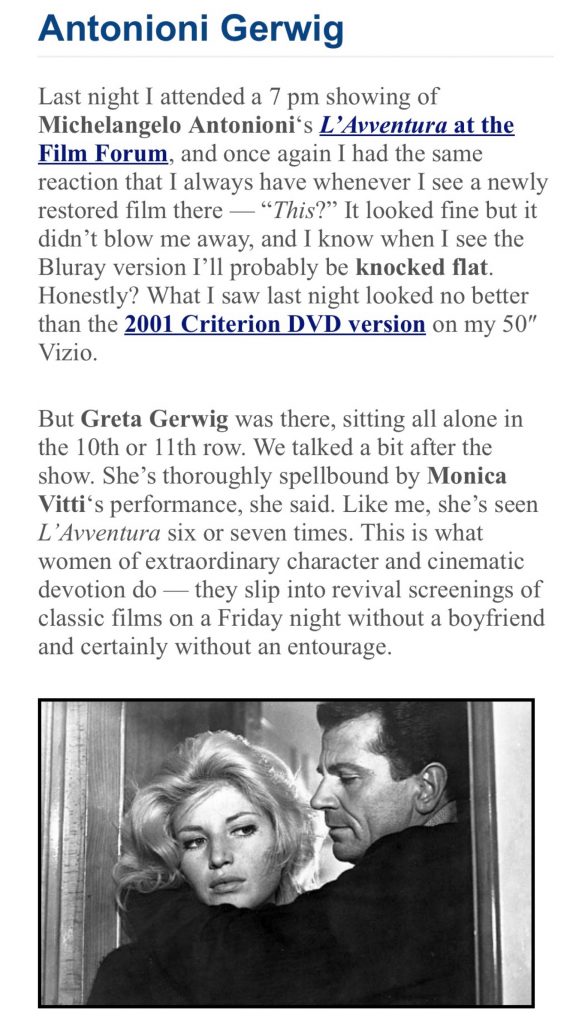

Snow Zegler and Seven Diverse Individuals
I’m sorry — I meant to title this article “Snow Zegler and Seven Diverse Individuals Seeking To Craft and Fulfill Their Unique Identities and Aspirations.”
It seems (emphasis on the “s” word) as if Disney’s forthcoming Snow White (3.22.24) is some kind of reconstituted, anti-classical, woke-Stalinist nightmare — a Khmer Rouge-y, dwarf-less, political re-education camp reimagining of Walt Disney’s animated Snow White and the Seven Dwarfs (’37)…good God almighty!
Written by co-scenarists Greta Gerwig and Erin Cressida Wilson and directed by Marc Webb, you can smell the woke garlic from a thousand miles away.
No dwarves, no diamond mine, no 19th Century fairy-tale mythology, no poisoned apple, no “mirror mirror on the wall”, no handsome Prince awaking Snow White from a coma-like slumber…actually I’m not sure that all or even most of these story elements have been eliminated but I do know for sure that the dwarves have been tossed.
Rise up, all ye traditional, had-it-up-to-here American parents!…rise up and push back against this revisionist, musical-minded serving of politically correct mush and send it to the same box-office dungeon or recovery clinic where Lightyear, Elemental, The Little Mermaid and Indiana Jones and the Dial of Destiny are currently licking their wounds…if for no other reason than to feel the sheer adrenalized joy of revolt and rejection against the elite Marxist social visionaries.
In short, please tell the Disney wokesters to shove it…yes, once again.
Bugsy Siegel: “20 dwarves took turns doing handstands on the carpet…20 dwarves took turns doing handstands on the carpet…20 dwarves took turns doing handstands on the carpet,” etc.
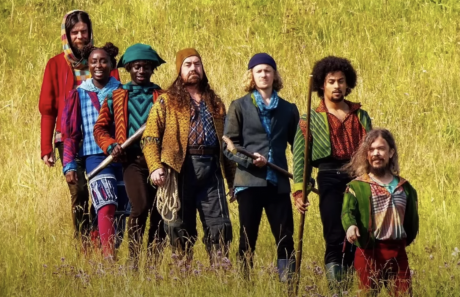
All Hail Frank McRae
I don’t mean Gerrit Graham, although he’s great also. I mean the heavy-set guy in the purple costume (i.e., “High Prices”). McRae also stood out in 1941, 48 HRS., Red Dawn, Farewell to the King, Another 48 HRS., Last Action Hero.
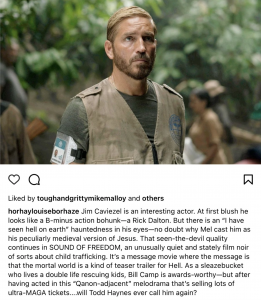
“Quiet and Stately Film Noir”
Posted by filmmaker Matthew Wilder, director-writer of American Martyr, cowriter of Paul Schrader’s Dog Eat Dog:
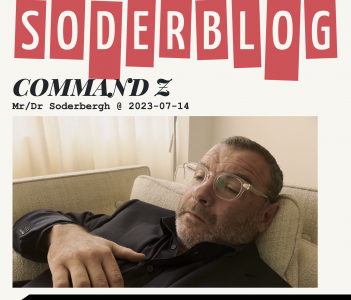
Soderbergh’s “Command Z”
With Steven Soderbergh and Ed Solomon‘s Full Circle having begun to stream on Max yesterday (7.13), a trailer for a new Soderbergh feature, Command Z, is now viewable. Except I can’t find an embed code so feel free to click through.
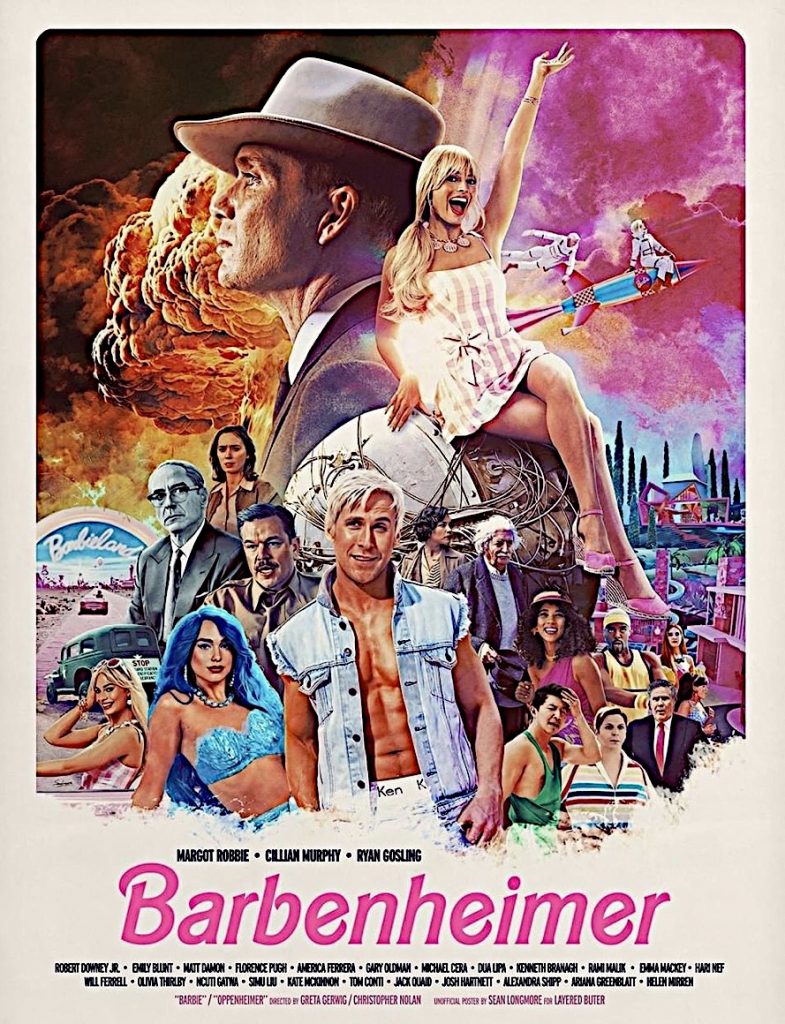
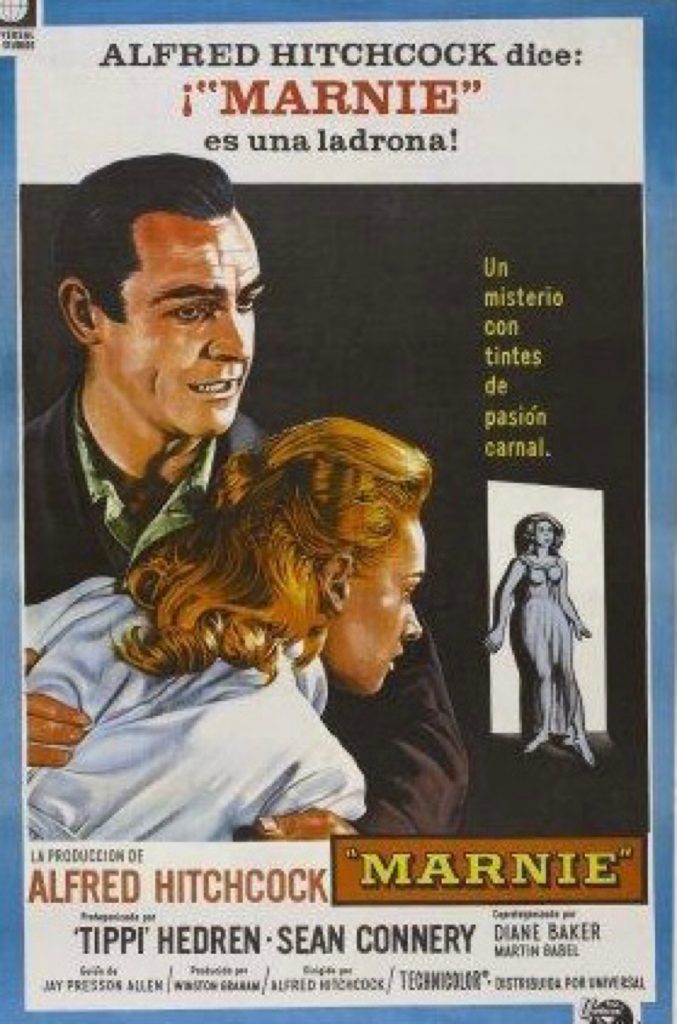
Marnieheimer
This may sound silly and it probably is, but a voice out of the space-time continuum is telling me that Alfred Hitchcock’s Marnie (‘64) can and should be rebranded, rejuvenated and re-culturalized by merging original Marnie poster art with the ironic girlie bullshit kitsch design of Barbie marketing and more particularly “Barbenheimer.”
There’s always been something vaguely suffocating about Marnie; it’s simply a matter of saying “okay, let’s add apocalyptic to suffocating and substitute red for pink and see if the cat licks it up.”
I can’t explain where this idea has come from exactly, and I certainly haven’t worked out any of the thematic details. I only know that in some strange way Barbie and Marnie have begun to bleed together in my mind. I’m 97% certain that Marnie cultists (Richard Brody, Dave Kehr, Glenn Kenny, et. al.) would somehow approve. .



A Frowned-Upon “Elmer Gantry” Scene?
Richard Brooks‘ Elmer Gantry (’60), an adaptation of Sinclair Lewis’s 1927 novel about an opportunistic evangelist hustler, has never been remade.
But if someone were to try, this church gospel scene would most likely be dropped. Wokesters would probably fault it for conveying a slightly patronizing view of black churchgoers and an overly flattering (or even an enobling) opinion of a white interloper.
Plus there are very few actors who can deliver the charisma that Burt Lancaster had in his heyday (late ’40s to mid ’60s). He was 46 or 47 when the film was made, but seemed a decade younger.
Lancaster’s performance won the 1960 Best Actor Oscar, which was handed out on 4.17.61 at the Santa Monica Civic Auditorium. He also won the New York Film Critics Best Actor Award for same; ditto a Golden Globe award.
Gantry contains one unintentionally funny scene. When Lancaster’s titular character manages to seduce Sister Sharon Falconer (Jean Simmons), an evangelist based on the real-life Aimee Semple McPherson, Andre Previn‘s orchestral score thunders with summonings of sin and doom.
Brooks, Simmons’ husband at the time, was evidently a thumping moralist, at least as far as his feelings about a religious figure enjoying carnal relations outside of wedlock were concerned.
Leo Gorcey’s Final Acting Credit
Many boomers know who Leo Gorcey was, but relatively few GenZ-ers recognize his name. (Forget Millennials and Zoomers.) The pugnacious actor, probably the best known of the Dead End kids (aka the Bowery Boys) but a lifetime boozer, died of liver failure on 6.2.69, one day shy of his 52nd birthday.
Gorcey could’ve achieved greater fame by becoming one of the many faces on the cover of Sgt. Pepper’s Lonely Hearts Club Band, but he was jettisoned when he said “sure, pay me.” Gorcey’s Bowery Boys partner Huntz Hall said okay for free, and thereby achieved immortality
Origins of the “Aaaaggghhh!!!”
I don’t know how many comedies or half-comedies have resorted to a certain overworked bit, but many dozens have done so.
I’m talking about two or three or four characters realizing that something awful or calamitous or mortifying has just happened, and their uniform response is to scream “aaaaagggghhhhhh!”
If I’ve seen this once I’ve seen it 80 or 90 times, maybe more. And I’ve never laughed, not once.
If a bearded wizard were to come up and say “if you want, I can erase every last ‘aaaagggghhhhhh!’ scene that’s ever been used” I would say “yes…please!”
Question: Four or five decades ago some director invented an “aaaaggggghhhhh!” scene. It must have gotten a huge laugh the first two or three times or people wouldn’t still be drawing from that well.
So what film was the first? Was Bob Clark the responsible party?
I got started on this because there are at least two “aaaggghhh!” moments in Barbie apparently, at least according to a couple of trailers I’ve seen.
“Aaaaggghhh” almost certainly started in the early 1940s black-and-white era with (a) Bud Abbott and Lou Costello, (b) the Three Stooges and (c) Joan Davis in Hold That Ghost! (’41), arguably the all-time greatest Abbott and Costello comedy.
A friend says that Our Gang‘s Alfalfa (Carl Switzer) let go with a few “aaaggghhh!” screams in his day; ditto Leo Gorcey and Huntz Hall in one or two Bowery Boys shorts.
But “aaaggghhh!” didn’t become a repeated, profoundly irksome cliche until much later.
Inner voices had been telling me that “aaaggghhh!” was launched around the dawn of the early ‘80s hormonal sex comedies, otherwise known as the tits ‘n” zits genre which began with Risky Business (‘83), which wasn’t itself tits ‘n’ zits but actually an urbane and sophisticated adult comedy.
But “no, wait, hold on,” a more probing voice recalled.
The more I thought about it, the more I became convinced that “aaaaggghhhh!” actually began sometime in the mid to late ‘70s.
Someone has mentioned an early incarnation in Steven Spielberg’s 1941 (‘79), particularly from the bellowing larynx of Ned Beatty.
Then it hit me there were at least one or two big “aaaggghhh!” moments in I Want To Hold Your Hand, a 1978 slapstick screwball comedyabout the Beatles’ first U.S. arrival in February ‘64, directed by a young eager-beaver Spielberg protege named Robert Zemeckis. The under-appreciated cult film and box-office whiff costarred Nancy Allen and the always reliably hyper Eddie Deezen.
There were also a couple of full-throated “aaaggghhh!” moments in Zemeckis’s Used Cars (‘80), most memorably from the late, great Frank McRae (who passed in ’21) and the legendary Gerrit Graham.
I’m not 100% sure but I seem to recall (although I may be mistaken) a Gerrit Graham “aaaggghhh!” in Brian DePalma’s Phantom of the Paradise (‘74).
Boiled down, the principal responsible parties are most likely Zemeckis, DePalma, Graham, McCrae and Deezen. But mainly Zemeckis.
The most egregious and agonizingly unfunny “aaaggghhh!” moment (as in “will you assholes please shut the fuck up?”) is in Joel and Ethan Coen‘s Raising Arizona — a moment shared by twin beefalos John Goodman and William Forsythe.
Best Richard Rushfield Column in Months
Portions of Richard Rushfield‘s “Impeach The Poobahs,” posted on 7.13.23…a column about the two strikes (WGA, SAG-AFTRA):
“Well, geniuses, you’ve done it again.
“If the goal here is to set some kind of leadership record for the most trainwrecks, meltdowns and catastrophes on one generation’s watch, then we’re on a good track.
“Or perhaps they are conducting a science experiment to show how lack of leadership can actually become a quantifiable negative force, like a black hole, sucking all matter —- in this case, the entertainment industry —- into its doom.
“If that’s the case, my hat is off to you all. The Nobel Committee awaits. But beyond that, this is now beyond infuriating.

“I’m aware that the entertainment industry isn’t a democracy. There’s no mechanism in the Hollywood by-laws to impeach our CEOs, but some kind of general ‘no confidence’ vote is very much in order.
“Our poobahs are starting to resemble the GOP establishment who met the Trump onslaught with the fierce conviction that…there would always be another day to deal with it. Or it would be best left for someone else down the road.
“In our case, swap for ‘Trump’, ‘Wall Street’, ‘tech bromides’, ‘master of the new universe pack thinking’ and ‘defeatist, reductionist death-spiraling detachment from their own product’. And then the analogy holds pretty nicely.
“Any CEO out there who wants to be the hero of the moment, the floor is yours.
“Step right up and lead us out of this. And now would be a good time.
“For the rest of you, it’s time for us to really start asking…what good are you?
“Now we’ve got two unions in this. The entire industry shut down. Tens of thousands out of work, many to most of whom are still recovering from the shutdown just past. On your watch. While words about getting artists thrown out of their homes fly around.
“Tell me how this isn’t a catastrophe for the industry? How a stand against the Guilds is greater than the harm this does to an already-teetering business and community?”