Pain Dungeon

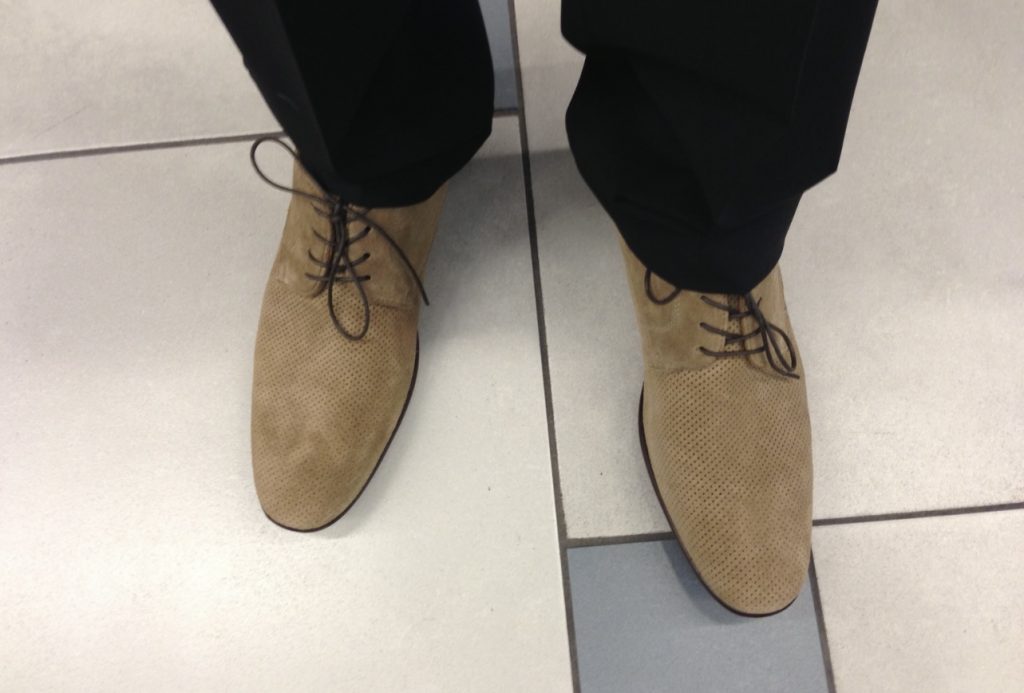
Today (2.17.23) is the fourth anniversary of Hollywood Elsewhere’s worst physical injury episode…actually the worst of my entire life. I slipped and fell and bruised the shit out of my rib cage. It happened on Sunday, 2.17.19 in the Sierra Nevada foothills, a 20-minute drive out of Lone Pine. It was my fault for wearing Italian suede lace-ups as I walked down a gentle slope covered by icy, fresh-fallen snow.

When I was nine or ten years old a friend and I had lugged a large boulder to the top of my parents’ backyard garage. (I think we wanted to drop it off and maybe crush something below.) The garage roof was shingled and slightly peaked. I can’t explain what happened precisely, but I somehow managed to fall off the roof and the boulder, insanely, rolled off a few seconds later and landed on my upper thigh. I howled and cried; it hurt like a sonavubitch and left an awful purple bruise. But later that day I was kind of hobbling around; I’d almost forgotten about it by the end of the week.

But the Sierra foothills tragedy dropped me into a pit of hurt and grief for a good four or five weeks. Oxycodone, walking with a cane, wearing a chest-wrap device. Just getting out of bed in the morning was awful.

Stevens’ Peak Role Came From Sam Peckinpah

If some kind of soothsayer or fortune-teller had declared 50 years ago that Stella Stevens and Raquel Welch would die within two days of each other in February 2023, somebody would have said “well, that would be coincidental,” given that both actresses were more or less at their marquee-brand, sex-symbol peak in early ’72. But Welch was a bigger name then, and her legend looms larger now.

I was always respectful of Stevens’ fame, atractiveness and sense of humor, but I never thought she was especially good in anything except Sam Peckinpah‘s The Ballad of Cable Hogue (’70). Film-lore-wise Stevens got lucky three times — Jerry Lewis‘s The Nutty Professor (’63), Cable Hogue and Irwin Allen‘s dreadful The Poseidon Adventure (’72). Otherwise, not so much but then again each and every day she was “Stella Stevens”…a pretty good deal for a few decades.

Roughly seven years ago Stevens moved to a long-term Alzheimer’s care facility in Los Angeles. I didn’t know that and I’m sorry. She passed from Alzheimer’s earlier today at age 84. Hugs and condolences.

Sic Semper OId Fartis

Cognitive Decline,” the guy who’s apparently been pretending to be a drooling old fart coping with personal hygiene issues, has been shown the HE door. He was warned eight or nine times to cease and desist, and refused to abandon his schtick, which basically boiled down to “pay no mind to whatever the topic at hand is…what matters are personal issues known to persons who are residing in an assisted living facility.” Never again will an HE commenter mention adopt such a persona. For mine is the sword that smiteth!

“Sometimes There’s God, So Quickly”

Yesterday trans-allied bully signatories of that two-day-old GLAAD protest letter to the N.Y. Times were basically told by management to pound sand…hah!

The message could be reasonably translated as individual Times employees are hereby advised that further protests against Times management under the aegis of an outside political agenda org will not end well for them…do not mess with us in this fashion again.”

Read more

Prime Nikki Haley

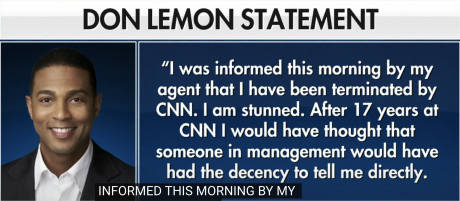
This morning CNN This Morning‘s Don Lemon said 51 year-old Nikki Haley isn’t in her prime. Women, he said, are in their prime in their 20s, 30s and early 40s —- an obvious reference to their sexual peak, which is demeaning as hell when you’re talking about a Presidential candidate or any woman serving in any professional capacity. Haley is very much in her prime in that respect. So it’s true — Lemon (who’s since apologized) not only hurt himself, but he gave Haley a tremendous boost on both sides of the spectrum.

Amusing Superstar Face-Off

The Cowboy and the Samurai, a just-released short, dramatizes an alleged excerpt from the reportedly tumultuous relationship between Jack Nicholson and John Belushi during the filming of Goin’ South in early ’78 or thereabouts.

Directed by Jake and Sam Lewis (who play the freaked-out producers), The Cowboy and the Samurai costars Jamie Costa as Jack and and Sandy Danto as John.

The Nicholson-Belushi interplay is pretty good — well written, decently played. I love the Lewis brothers’ attempt to make the film look like it was copied off a 40 year-old VHS tape.

Goin’ South wasn’t Nicholson’s directorial debut — 1971’s Drive He Said was — so that needs fixing. But otherwise not half bad.

From “John Belushi Had A Major Grudge Against This A-List Celebrity,” a Giant Freakin’ Robot article by John Kotz: “Jack Nicholson’s Goin’ South was a western, directed by the star himself, in which he played horse-thief Henry Moon, who is soon caught by a posse and through a weird series of loopholes, has to get a woman living in town to agree to marry him.

Mary Steenburgen, then an unknown actress, accepted the role of Julia Tate, while Belushi and Christopher Lloyd played town deputies and Ed Begley Jr. played Whitey Haber, one of the locals.

“Nicholson strived to create an open atmosphere [with] everyone part of the family and working towards a common goal, etc. Goin’ South was Belushi’s first film following the success of Animal House, and the comic’s growing ego as a successful Hollywood star led to him bossing around members of the crew, arguing with other members in the cast, and worst of all, partaking in what was described as “a significant amount of cocaine” on a near-daily basis with Ed Begley Jr.

“Belushi was the type of Hollywood personality that Nicholson was hoping he could mentor, but the belligerent comic was faced with a steadily shrinking role in the film due to his bad behavior.”

Here’s a portion of Bob Woodward’s 1984 Washington Post piece about Belushi.

Read more

Thoughts About Trans-Defending Bullies

Yesterday a team of pro-trans, anti-mainstream-liberal activists wrote a complaint letter to the N.Y. Times. The beef is that the Times has passed along alleged “dangerous inaccuracies” in its reporting about trans issues.

As I explained in an intro to Jeff and Sasha’s latest podcast, it seems strange that the N.Y. Times, which has been prioritizing progressive activism alongside boilerplate gray-lady news reporting for the last four or five years and is totally in the woke progressive camp on pretty much all fronts, is being attacked like this.

What these woke bullies seem to be saying to the Times is “don’t report fairly and dispassionately on trans issues…that’s not good enough and that’s not what we want…you need to JOIN THE TEAM!”

Here’s a letter I wrote this morning to one of the signatories:

“I’m presuming that you think there’s a difference between the trans terrorist bullies who’ve signed that letter and the Red Guard who tormented and humiliated God knows how many hundreds of thousands of Chinese citizens during the Great Cultural Revolution of the mid ’60s to early ’70s.

“I’m not seeing much of a difference, but maybe you can assist.

“Everyone makes their own choices and sets upon their own path once they enter puberty, although it’s probably a good idea to allow a certain degree of emotional maturity to settle in before moving on to mutilating surgeries.

“However, when it comes to minors (pre-puberty), the application of puberty blockers, hormone replacement therapy and gender⁠-⁠affirming surgeries — which the fanatics claim have been “standard forms of care for cis and trans people alike for decades” — is, in the view of myself and many others, nothing short of grotesque and fiendish.

“Like, I’m guessing, 95% of the signatories, you’re probably just going along to get along. Like 95% of China’s youthful Red Guard a half-century ago. Like 95% of the people who went along with harsh punitive measures during the anti-Communist scare of the ’50s. All I can say is, the day when the crazies realize they’ve overplayed their hand and are forced to run for cover in order to protect their careers…that day can’t come soon enough for me. I relish the thought. I’m half tumescent about it.

“Oh, and all hail Pamela Paul!”

Read more

Raquel Welch Mattered A Great Deal

It feels strangely unreal and almost spooky that Raquel Welch, whose erotic vibrancy seemed so overwhelming and ice cream sundae-ish back in the day, has actually died. She had a poised and occasionally brittle quality, but more essentially a pulse and a presence you could actually feel through the big-screen membrane. Alas…

Born into a Bolivian family in 1940, Jo Raquel Tejada (Welch was an acquired last name through an early marriage to Richard Welch) grew up in the San Diego / La Jolla region. Her beauty and hot bod opened many doors during her late ‘50s to mid ‘60s struggling period, but she always resisted attempts by filmmakers to over-exploit her sexuality.

It is HE’s humble judgment that the best film in which Welch starred or at least costarred in was Richard Lester‘s The Three Musketeers (’73), in which she played Constance Bonacieux, the live-wire ally and girlfriend of Michael York‘s D’Artagnan.

Geraldine Chaplin had the more central or commanding female role, but Welch and Faye Dunaway were strong seconds. Plus Welch’s performance won a Golden Globe Award for Best Actress — Motion Picture Comedy or Musical.

It should also be acknowledged that the deerskin bikini that Welch wore in One Million Years B.C. made her into an iconic figure in the mid ’60s. (Are we allowed to acknowledge the long-ago existence of glammy sex symbols? Will the Khmer Rouge commissars put an asterisk next to our names if we do?) And yes, she was pretty good in Bedazzled, I suppose, and in 100 Rifles with Jim Brown. And there was Myra Breckenridge, of course. And Bandolero!

Yes, she acquired the backstage rep of a difficult bitch during the making of The Last of Sheila (’73) and especially following her dismissal from Cannery Row (‘82).

But the only truly good, triple-A film that Welch was part of (and to her eternal credit) was the first Musketeers film. I never cared as much for the darker-flavored second one, The Four Musketeers (’74), in which Welch’s character was strangled to death by Faye Dunaway’s ruthless Milady de Winter.

The idea of Welch and Tom Luddy strolling through that Heaven Can Wait soundstage, knee-deep in those clouds and being asked to get in line and provide their names to the gray-suited checklist guy as they wait to board that white Concorde jet…

Posted on 8.22.22: Perhaps it’s time for Raquel Welch, now 82, to step up to the plate and explain what happened a half-century ago during the making of The Last of Sheila (’73). Is she going to let the statements of costars James Mason and Ian McShane go unchallenged, or does she have fresh information that might alter the classic narrative?

According to an 11.12.72 Chicago Tribune piece titled “Raquel Plans Suit Against Director”, there were also complaints about Welch’s behavior. Welch announced she was suing director Herbert Ross for assault and battery as a result of an incident in her dressing room. She claimed she had to flee to London during the shoot “to escape physical harm”. Warner Bros later issued a statement supporting Ross and criticizing Welch for her “public utterances”.

Excerpt: “Shooting the monastery sequence just off Cannes proved to be troublesome for Welch. Gale force winds and rain disrupted the night shoot, and Welch was reluctant to leave her Venice hotel for fear of getting stuck in the storm.”

Mason said that Welch “was the most selfish, ill-mannered, inconsiderate actress that I’ve ever had the displeasure of working with”.

McShane: “Raquel Welch isn’t the most friendly creature. She seems to set out with the impression that no one is going to like her.”

Body Positivity Activists to Vanity Fair: “Where’s Our Representation?”

Twelve progressive artists-celebrities featured on the cover of Vanity Fair‘s 29th annual Hollywood issue, and not one of them with a Jabba bod or at least one that tips the scales a bit? Slimness is a form of elitism, and we are here to shut that shit down!

The VF cover stars are Selena Gomez, Jonathan Majors (“yo!…bad guy in the shitty new Ant-Man flick!”), Austin Butler (“I might win!”), Ana de Armas (“everyone hated the film but at least they respected my performance!”), Florence Pugh (“Held onto an old grudge with my Don’t Worry Darling director, Olivia Wilde, and kept it going right up through the Venice Film Festival”), Keke Palmer (“refused to specifically clarify or deny that the Bill Murray thing had nothing to do with me, and then tried to land a Best Actress nom based on a force-of-personality performance that was okay at best”), Aaron Taylor-Johnson (the next James Bond?), Julia Garner (sociopathic teen bitch in Ozark), Rege Jean-Page (Bridgerton heartthrob + another possible James Bond), Emma Corrin (totally non-binary trans-abdominals), Hoyeon (South Korean model whom I had to Google to identify) and Jeremy Alan White (Chicago sandwich king).

Andrea Riseborough + Duelling Concepts of Meritocracy vs. Equity

We’re all familiar with the recent complaints about the Oscar nominations by the sore-loser quartet — Till director Chinonye Chukwu and lead actress Danielle Deadwyler, along with Woman King director Gina Prince-Bythewood and its star, Viola Davis.

In their minds they all got blanked by embedded white elitism or misogynoir or some other racist variant.

In response Everything Everywhere All At Once‘s Michelle Yeoh, a Best Actress nominee, suggested that they should cool their jets and wait their turn.

Prince-Blythewood: “There is no groundswell from privileged people with enormous social capital to get behind Black women. There never has been.” Deadwyler: “We’re talking about misogynoir. It comes in all kinds of ways. Whether it’s direct or indirect, it impacts who we are.”

The essence of the lament seemed to be “we’re looking for some equity here and we haven’t received it…progressive Academy members know that the BIPOC narrative is about giving us the respect and adulation that is our due for the work but also in a payback sense, considering the decades upon decades of racist exclusion in this industry…we know we delivered first-rate work and yet we got shut out…some of you won’t say what happened but we can smell it in the wind…Andrea Riseborough‘s white supporters pushed her though but perhaps at our expense, or so it seems.”

In short, the sore losers were saying that in this time of revolutionary overhaul and the diminishing of Hollywood’s white-male heirarchy, equity needs to count as much as meritocracy (and perhaps even a bit more) in terms of handing out Oscar nominations.

In an exclusive Hollywood Reporter interview with Seth Abramovitch, Andrea Riseborough has addressed the sore losers with two statements — one sympathetic and understanding, and the other a bit more frank.

A.R.’s compassion and sympathy responise: “The film industry is abhorrently unequal in terms of opportunity. I’m mindful not to speak for the experience of other people because they are better placed to speak, and I want to listen.”

A.R.’s plain-spoken statement: “Awards campaigning is as acerbically exclusive as it has always been. I do not yet know which measures will best encourage meritocracy [but] I’ve been working toward discovering them and will continue to.”