my r kelly joke pic.twitter.com/yQc4l2Ozf4
— gianmarco (@GianmarcoSoresi) March 22, 2022

And nature abhors a vacuum.
This whole Olivia Wilde thing reminds me of the Whitney Cummings thing reminds me of so many recent incidents in Hollywood where white women have revealed that they acquire power in the industry not because they challenge norms but tout female empowerment while changing nothing. https://t.co/6fi86MhjKD
— Imani Barbarin, MAGC | Crutches&Spice ♿️ (@Imani_Barbarin) August 27, 2022
At ZCN Ticket, we put artists first.
The news regarding Olivia Wilde goes against this guideline of ours, and as a result we are removing her as the debut subject of ICONS. pic.twitter.com/g5HoDGDtOk
— ZCN Ticket (@zcnticket) August 27, 2022
— alice🐇 (@wasabluebird) August 26, 2022
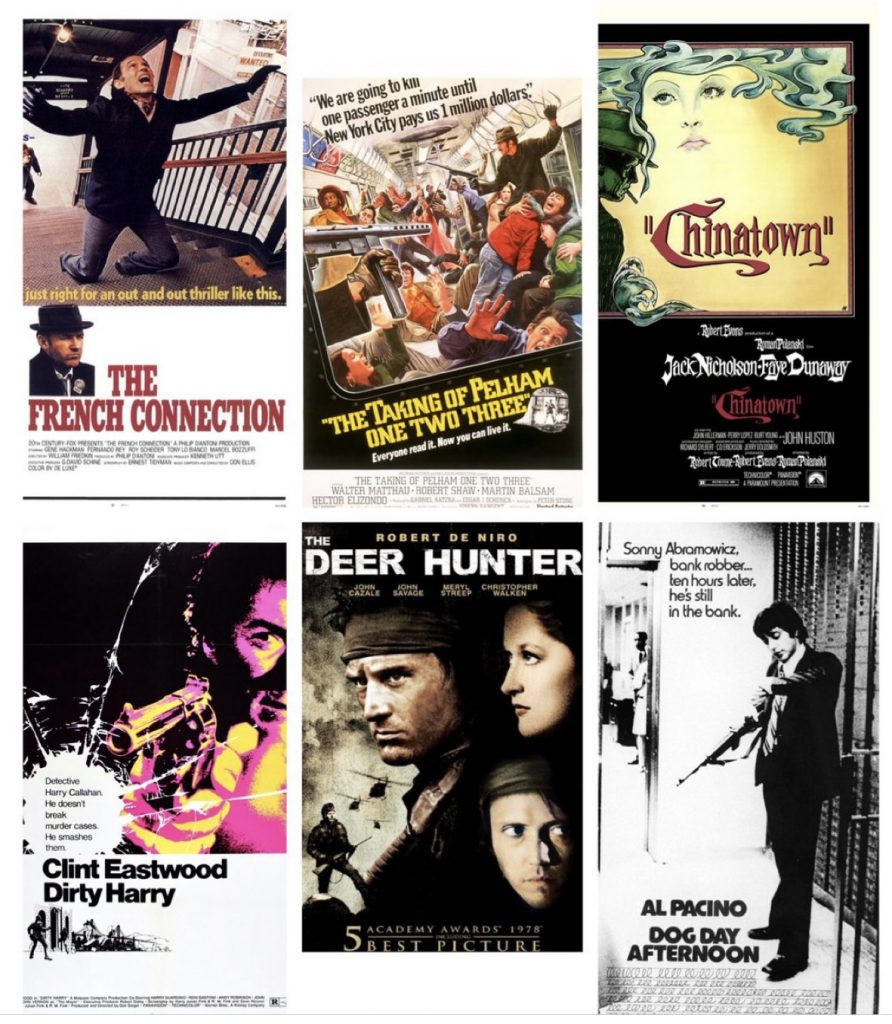
One film to never, ever see again — a decision to be completely at peace with forever. And that film would be the bottom middle, man.
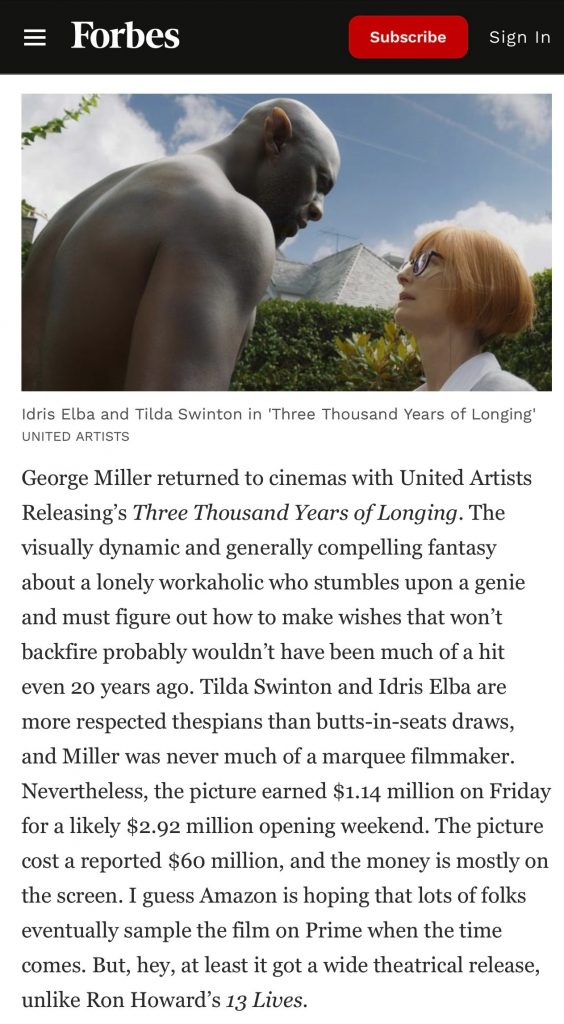
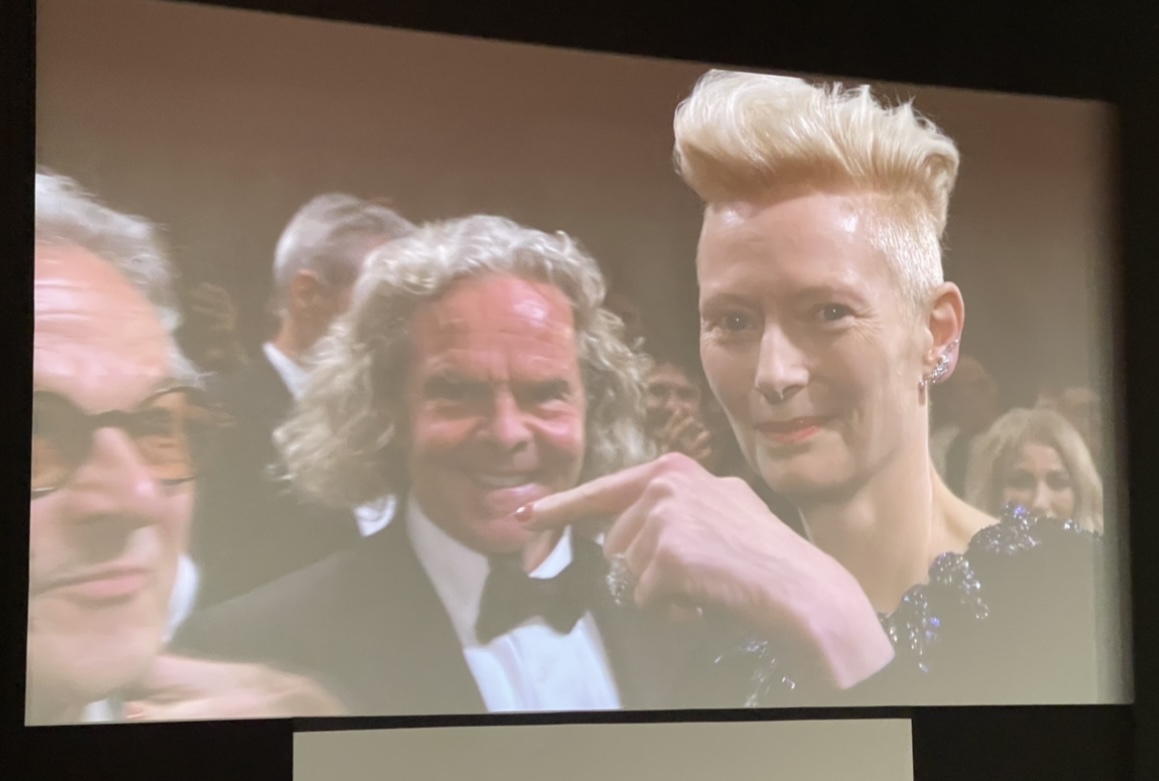
The whirling dervishy George Miller, the Spock-eared Idris Elba, the British given-to-shuddering-orgasm Tilda Swinton…shut down like that. Not even given half a chance…bye! That’s harsh, man. Harsh and unfair. Because the adult relationship aspects really reach in and touch bottom.
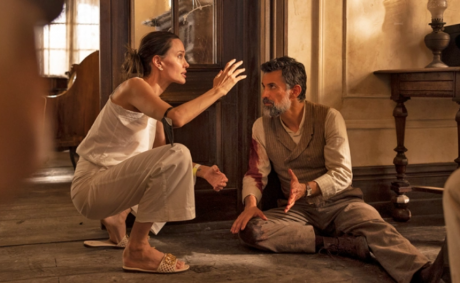
As a director, Angelina Jolie has been repeatedly drawn to stories about savage brutality visited upon innocent protagonists. Over the last 11 years she’s made four films in this vein.
They are In The Land of Blood & Honey (’11) — Serbs brutalizing Bosnian Muslims. Unbroken (’14) — Japanese soldiers brutalizing American POWs. First They Killed My Father (’17) — the fanatical Khmer Rouge brutalizing and murdering two million Cambodians in agrarian work camps.
And now her latest, an adaptation of Alessandro Baricco’s short novel “Without Blood”, about a young girl who witnesses the savage murder of her father and brother by his enemies, only to confront one of the killers as a middle-aged adult.
The film, due for release in late ’23, is set in a Mexico-like country during the early to mid 20th Century.
Variety‘s Nick Vivarelli has posted an interview with Jolie (8.26). They met while she was directing Without Blood at Rome’s Cinecitta Studios. Vivarelli doesn’t note the streak of fierce brutality that runs through all four of her films. He manages, however, to fling mud at Jolie’s ex-husband, Brad Pitt, with a slimey insinuation.
“Told in a series of flashbacks, Without Blood is a…complex work about violence, war and choices,” Vivrelli explains. Jolie: “This film raises different questions. There is no clear good and bad in this film, even though there is clearly bad, horrible, horrific and criminal behavior.”
Vivarelli’s next paragraph — a parenthetical — follows a train of thought: “This interview was conducted before an FBI report from 2016 leaked last week where Jolie alleged that Pitt assaulted her on a plane ride, leading to their divorce,” he writes.
In other words, with Jolie currently focusing on a film about “bad, horrible, horrific and criminal behavior,” she’s also grappling with memories of possibly similar behavior from her ex-husband aboard a private plane back in 2016.
This is called yellow journalism.
From an 8.26 N.Y. Times editorial, “Donald Trump Is Not Above the Law“:
“Donald Trump’s unprecedented assault on the integrity of American democracy requires a criminal investigation.
“The disturbing details of his post-election misfeasance, meticulously assembled by the Jan. 6 committee, leave little doubt that Mr. Trump sought to subvert the Constitution and overturn the will of the American people. The president, defeated at the polls in 2020, tried to enlist federal law enforcement authorities, state officials and administrators of the nation’s electoral system in a furious effort to remain in power. When all else failed, he roused an armed mob that stormed the Capitol and threatened lawmakers.
“Mr. Trump’s actions as a public official, like no others since the Civil War, attacked the heart of our system of government. He used the power of his office to subvert the rule of law. If we hesitate to call those actions and their perpetrator criminal, then we are saying he is above the law and giving license to future presidents to do whatever they want.
“Aside from letting Mr. Trump escape punishment, doing nothing to hold him accountable for his actions in the months leading up to Jan. 6 could set an irresistible precedent for future presidents. Why not attempt to stay in power by any means necessary or use the power of the office to enrich oneself or punish one’s enemies, knowing that the law does not apply to presidents in or out of office?
“More important, democratic government is an ideal that must constantly be made real. America is not sustained by a set of principles; it is sustained by resolute action to defend those principles.”
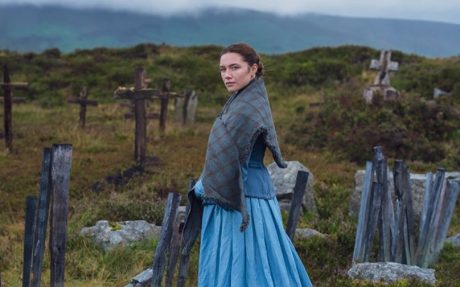
The word around the campfire is that Florence Pugh, currently grappling with a reputation as an arch-backed sorehead and something of an Attitude Mama because of her allegedly chilly and contentious relationship with Don’t Worry Darling director Olivia Wilde, is quite good in a non-showy way in Sebastián Lelio‘s The Wonder (Netflix), which will have its first domestic peek-out at Telluride.
Described last year as a “psychological thriller,” The Wonder is an adaptation of Emma Donoghue’s same-titled 2016 novel.
Synopsis: “Set in southern Ireland in 1859 over a period of two weeks, Lib Wright (Pugh) is a widow and a nurse — trained by Florence Nightingale, a veteran of the Crimean War. Wright travels to Ireland to observe 11 year old Anna O’Donnell, who has not eaten in four months. A local committee wants to know if this is a hoax or divine intervention, as Anna’s family claims. The child reports that she receives manna from heaven. Wright is out of place in Catholic Ireland and is convinced that the whole thing is a trick.”
To put it in the most banal terms imaginable, Pugh’s Wonder performance may “save” her from the Don’t Worry Darling debacle.
Asked about the Academy’s “inclusion standards,” which basically say that a given film will not be eligible for Oscars unless the cast and crew are seriously and specifically diverse (i.e., no films like Ordinary People ever again), Academy CEO Bill Kramer has been quoted by The Hollywood Reporter‘s Scott Feinberg as follows:
“We don’t want to legislate art” — HE says bullshit. “That’s not what this is about” — ditto. “We want filmmakers to continue to make the films they want to make” — bullshit. “I’m very happy to announce that the best picture nominees from this past year all would have qualified under our inclusion standards” — terrific! “At the all-member meeting we’ll be talking more about that because that’s a big point of discussion for our members, and we want to be very clear that we don’t want this to be onerous or punitive — we want this to be collaborative” — bullshit.
The Academy’s inclusion standards are a form of institutional terror or, if you will, paranoid, watch-your-back virtue signalling. Because if you don’t support the inclusion standards 100% and with all your heart and soul, you’re either an out-and-out racist or a closeted one.
Awards Daily‘s Sasha Stone, posted this morning (8.26): “A friend of mine called the way the Oscars featured almost all Black performers and presenters as a ‘new kind of blackface.’
“The Academy is 80% white. America is just under 60% white. America is also 95% heterosexual. Americans believe in God by about 80%. These stats are starting to shift, no doubt. GenZ tends to be the generation that is more LGBTQIA, less religious, and more ‘woke’ for sure. But we’re still talking about the minority pop, not the majority.
“The Oscars can’t draw the majority because they are singularly obsessed with their outward image, as with most of the top 1% that runs Hollywood. They have almost ceased being able to tell good stories and now much find ways to tell good stories under the thumb of fundamentalism. It is wrong to police art in this way, and I don’t care what Twitter thinks about that. It is simply the truth, proven century after century. Dogmatic art is not art — it’s propaganda.
“Executives are deathly afraid of being called out for racism. It is bad press they don’t believe they can afford with an army of Orwellian Children Spies breathing down their necks. The Oscars, and much of the films that will pass their required standards, reflect the paranoia in the white community, not the actual power in that community. In other words, how much of it is simply ‘virtue signaling,’ and how much of it is actual change? And if it is change, what is it changing exactly?
“Yes, they are trying to legislate art. All the executives at all studios who make content are legislating art. They’re forcing artists to reflect a specific ideology that serves their newfound religion and gets them off the hook. Remember, the people at the top who hold power are still the same — across all institutions of power in this country. They are, therefore, allowing marginalized groups to be presented as proof that they are prioritizing activism.”

I keep getting this feeling that Don’t Worry Darling (Warner Bros., 9.23) is that train in The Greatest Show on Earth, hurtling towards those circus animal-filled freight cars…Lyle Bettger yelling “stohhhhpp!…stohhhhpp!…can’t you see the lights?“…and then kehr-SMASSH-bong-deedee-lamp-BONG-BAAHHRR-BANG-BOOM-rowr-screeeech-aaagghh.
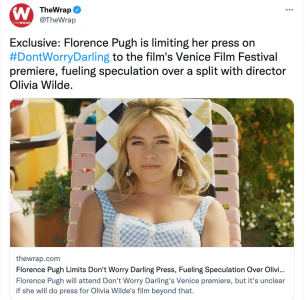
And it’s not so much about the film as the Florence Pugh vs. Olivia Wilde catfight…what a shit show!
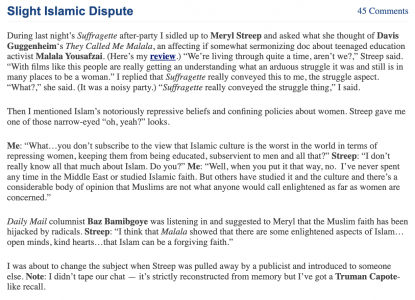
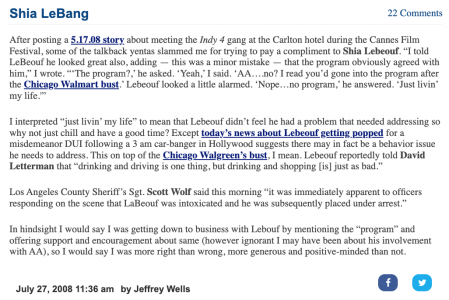
First it was Pugh strangely saying she somehow resented Wilde’s on-set affair with Harry Styles**. Then refusing to reciprocate Wilde’s positive Instagram posts. And then it became clear that Don’t Worry Darling would be ducking all stateside film festivals. And then Pugh, filming the Dune sequel in Budapest, refused to talk to Variety‘s Elizabeth Wagmeister for a Wilde profile piece. And now Shia Labeouf (originally cast in the Styles role) is claiming that he was not fired by Wilde, and that it partly boiled down to some kind of conflict with Pugh. (In a text/email Wilde alluded to unsettled vibes between LaBeouf and Pugh…“You know, I think this might be a bit of a wake-up call for Miss Flo“.)
Will the huffy Pugh show up for the Venice premiere, or will she again beg off over Dune 2 duties in Budapest?
There’s so much sturm und drang surrounding Don’t Worry Darling that it’s easy to assume…dammit, no assumptions, no coasting along on gossip. Is it fair or unfair to call it a hopelessly doomed film? Unfair, I’d say. Seriously, who’s actually seen it? And what have they said?
Could Olivia Wilde be the new Ida Lupino? I sorta kinda doubt it but maybe she is. We can all smell trouble but who knows? I know nothing.
Most of us understand that the negative advance buzz on Don’t Worry Darling has become so bad that the Venice Film Festival reviews might actually turn out to be kind, given that everyone is expecting a calamity.
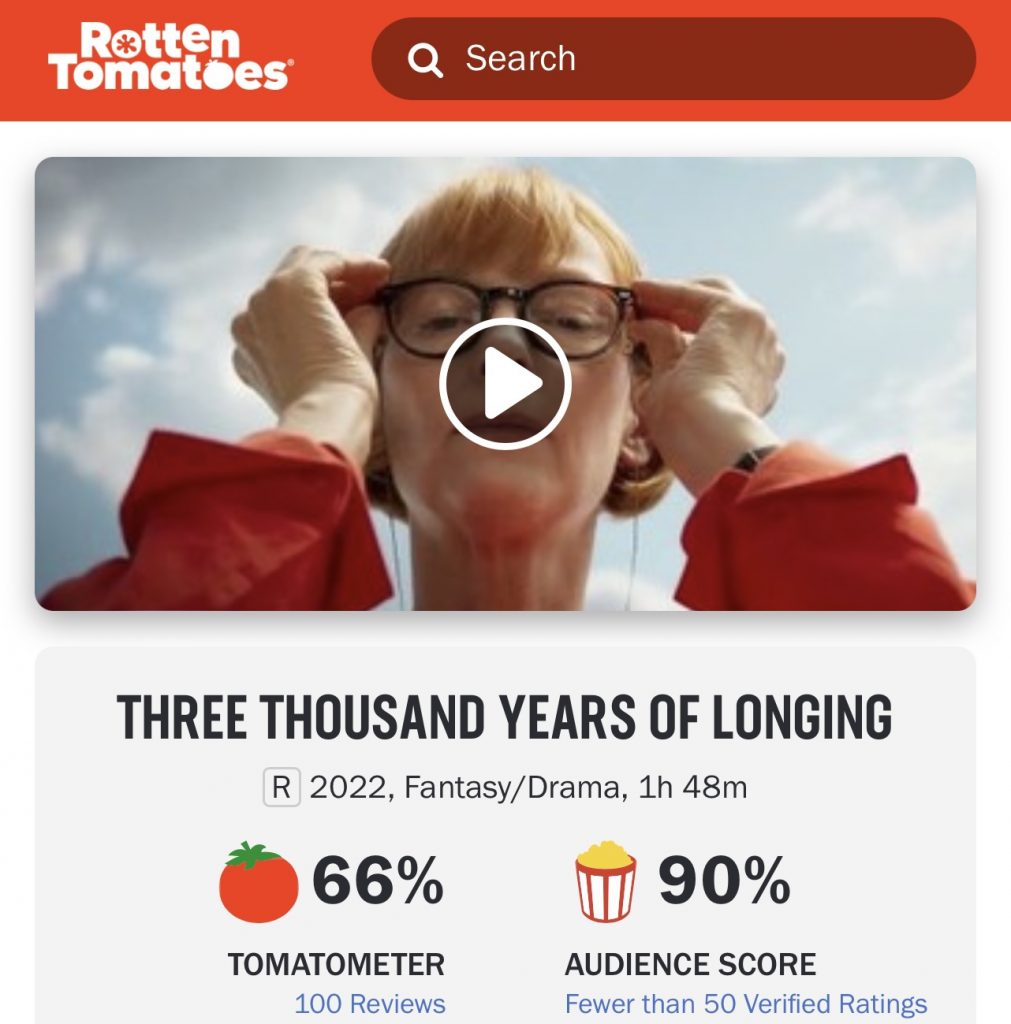
Friendo to HE: “3000 Years of Longing is a weird, strange, $60M art film with bits of Terry Gilliam tossed in. Too slow for the Joe and Jane Popcorn crowd. Some great art direction, costumes and visual FX but not for the mainstream. George Miller’s most self-indulgent film to date.”
From Manohla Dargis N.Y. Times review:
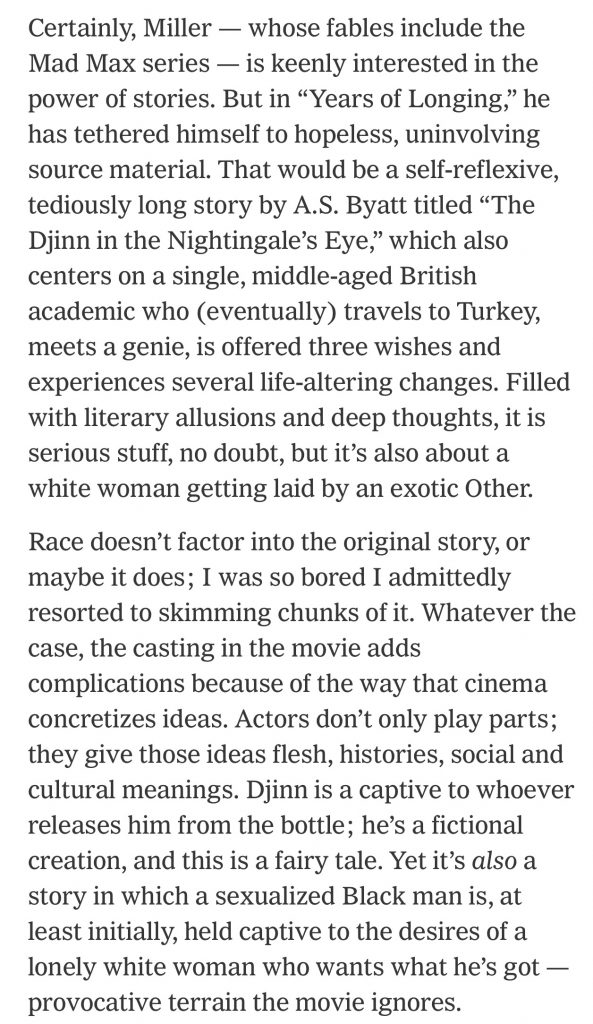
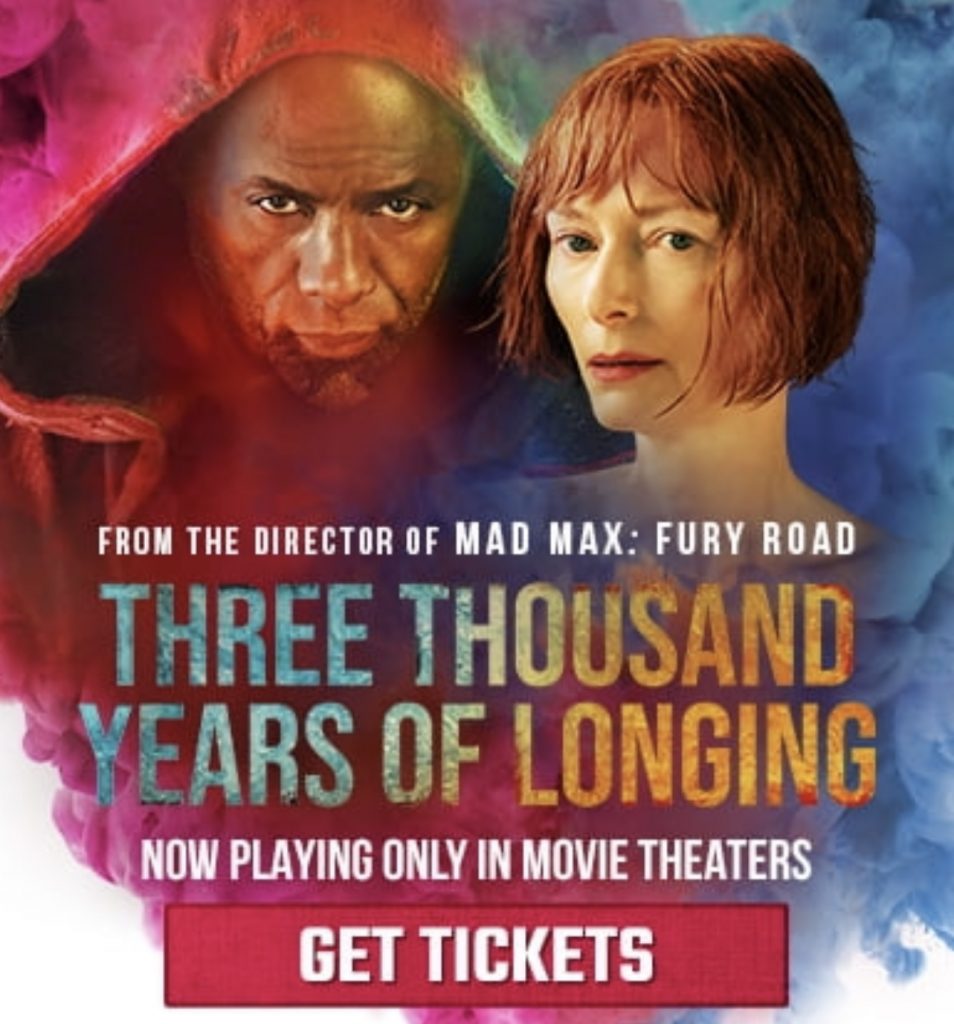
Files from Cannes on 5.20.22: You can’t say George Miller‘s Three Thousand Years of Longing isn’t trippy or eye-popping or CG-swamped or…okay, a bit florid.
But it also touches bottom with a poignant, imaginative and very adult current of romance, discovery and even transcendence.
Much of Miller’s film is invested in a 21st Century CG-meets-Michael Powell and The Thief of Baghdad aesthetic, but it’s framed by a highly unusual and touching love story between Tilda Swinton‘s English writer — whipsmart, spinsterish — and Idris Elba‘s hulking and thoughtful Djinn (i.e., magic genie).
I can’t say that Longing is a supreme G-spot experience — too much is submerged in the Djinn’s fantastical history, which is devoid of story tension — but the film has something of real emotional value while Swinton and Elba are holding the screen.
I was praying that the film wouldn’t stay inside the genie bottle and smother us with CG fantasy mush. But during the last 15% or 20% it leaves the CG palaver behind and focuses on the grown-up love story, which is one of the gentlest, most other-worldly and spiritually driven I’ve ever experienced.
Elba and Swinton are wonderful — seasoned, grounded, playing-for-keeps actors at the peak of their game. I was scared at first, but Longing turned out much better than I expected. A mixed bag with an intriguing beginning and a payoff that feels (or felt in my case) sublime.
Elba’s gentle and reflective genie reminded me, of course, of Rex Ingram‘s Djinn in The Thief of Baghdad (’40). What a contrast between this exuberant, rip-roaring, loin-clothed giant and Ingram’s quiet, tradition-minded “Tilney” — servant to Ronald Colman‘s Supreme Court nominee in George Stevens‘ The Talk of the Town (’42).
Friendo to HE: “I swear to God during one scene involving morbidly obese naked women I said to myself, ‘Oh boy, Jeff is gonna hate this scene. The Shirley Stoler seduction scene in Seven Beauties times ten.”
HE to Friendo: “I ignored the obesity out of politeness.”