Bad Calls I’m appalled (and

Bad Calls

I’m appalled (and I’m not alone) that two of the absolute finest, no-argument-tolerated docs of the year — Xan Cassevettes’ Z Channel: A Magnificent Obsession and Jonathan Caouette’s Tarnation — have been excluded from the list of 12 semi-finalists for the Best Feature Documentary Oscar.
One of the docs that made the cut is Stacy Peralta’s Riding Giants , an honest, open-hearted film about surfing that is nonetheless a bit too fan-maggish in toasting the champions of the sport. Sorry to sound harsh, but there’s no way this is a stronger, more accomplished work than Z Channel or Tarnation. Giants doesn’t begin to approach their realm in terms of passion, intelligence, soul.
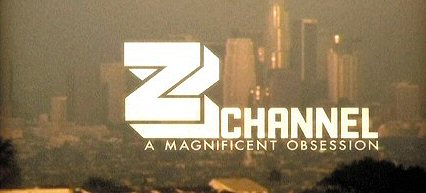
And what about Kevin McDonald’s Touching the Void, a movie that has its roots on both sides of the aisle, making the cut? There is no bigger fan of Void than myself, but in an ideal world it should be a Best Picture nominee. I’ve had it on my Best Picture list in the Oscar Balloon section for months.
< ?php include ('/home/hollyw9/public_html/wired'); ?>
I sympathize with the motives of those who put Void on the semi-final list, but it’s not a documentary. It’s mainly a docu-drama…a recreation. It uses actors who speak lines. It’s about a mountain-climbing adventure that happened in South America, and yet the bulk of it was largely shot in the Swiss Alps. The only thing that makes it feel like a doc is the talking-head footage of the real mountain-climbers.
Among the docs that made the short list are Morgan Spurlock’s Super Size Me (fully deserved), Mark Wexler’s Tell Them Who You Are (a tribute to Mark’s cinematographer dad Haskell, in the vein of last year’s My Architect), Zana Briski and Ross Kauffman’s Born Into Brothels and Jessica Yu’s In the Realms of the Unreal.
Other deserving hopefuls that got the shaft were Joe Berlinger and Bruce Sinofsky’s Metallica: Some Kind of Monster, Robert Stone’s Guerilla: The Taking of Patty Hearst and Sara Price and Chris Smith’s The Yes Men.
Guerilla friend Fredel Pogodin said this morning that “given the monumental task that Stone went through to find the footage for this film, and to track down Russell Little and all the others, it is indeed a surprise that doc filmmakers who understand the difficulty in doing this did not put it on the short list.”
And yet, on the whole, “It’s a great time for documentaries. There’s an amazing amount of them that qualified this year. And the selection process has changed — the rules are now that only filmmakers in the documentary branch can name the semi-finalists. That’s an improvement from years before.”

Backstroke

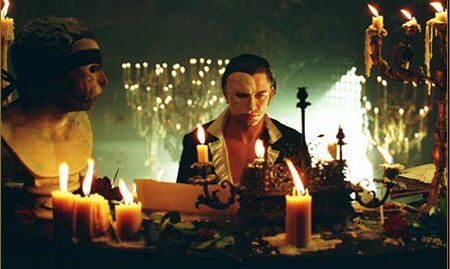
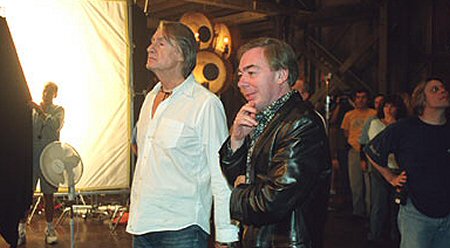
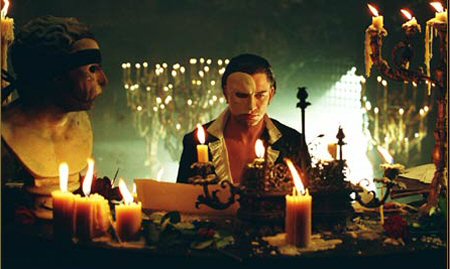
I’ve been saying snide and dismissive things about the idea of The Phantom of the Opera being the strongest Best Picture candidate around right now, and because of this I feel I ought to say what I now believe, having seen it a couple of nights ago:
It ain’t my particular cup of tea, but Phantom delivers a big wham, regular folks are going for it, and it will almost certainly make the cut as a Best Picture nominee. Hell, it might even go all the way.
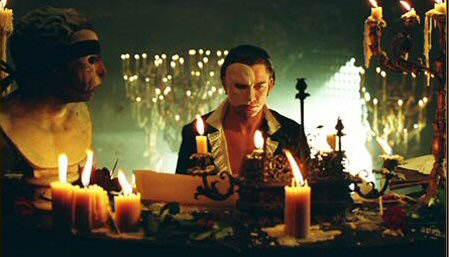
I’d rather not see that happen, being a Sideways man all the way, and (who knows?) maybe a Spanglish convert waiting to happen, as well as a Motorcycle Diaries) admirer, a worshipper of Maria Full of Grace, a Fahrenheit 9/11 protest-the-election-of-Bush guy and a devout believer in Collateral, not to mention Touching the Void.
If Phantom wins I will not be in pain, like I was when Chicago won two years ago. I will not agree, but I will understand.
I was down on the prospect of its Oscar ascension due to three factors. One, my general discomfort with emotionally bombastic films that send you over the waterfall (although I really liked Evita). Two, a reluctance to trust the notion that director Joel Schumacher has it in him to deliver a truly worthy Best Picture contender, given several disappointments with his past films. And three, stuff that I’ve been hearing over the past couple of weeks from colleagues.
I’m not saying the people who aren’t fans of this film are wrong, and I’m not going to get into a point-for-point review of any kind, but at least give Phantom this: it is not half-hearted.
You can bring up subtlety issues, and I’m sure some will address this down the road, but by any measure of committed filmmaking it takes Andrew Lloyd Webber’s stage musical and really rocks the house. Call it cornball, but it heats up the emotional essence of the piece and wears its heart on its sleeve. The actors hold their own, the musical sequences all swing for the fences, and John Mathieson’s cinematography is rich and painterly. The film plays like a Baz Luhrman musical on a mild sedative, and by that I mean it doesn’t make your head explode.
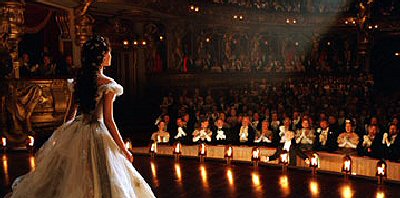
I suppose I sound like a square to some of you right now, but with that big 60-piece orchestra sawing away and the knockout production design and the sound cranked up and the film playing on a big screen with an appreciative crowd, the “whoa” factor is definitely there. In terms of the overall effort, I mean.
And so in the final analysis and various reservations aside, I’ve resigned myself to the likelihood of a Best Picture nomination because it satisfies the middle-class emotional criteria that Academy members tend to look for and respond to.
Picking over the particulars is for sometime next month. I just had to say this and set things straight. You can go with Phantom or not, but movies like this have their place. It’s not a crime to accept what they’re selling and go, “Yeah, I get it.”

Musical vs. Musical?

A friend thinks there’s some Academy mentality no-no about putting two musicals up for Best Picture in the same year. He says if this attitude holds it’s going to be an either-or between Ray and The Phantom of the Opera.
I don’t buy this. Ray is not a musical — it’s a biopic with a lot of musical numbers. And I reminded him that My Fair Lady was nominated for Best Picture against Mary Poppins in ’65, and Oliver against Funny Girl in ’69. (They were released in ’64 and ’68, respectively, but the nominations happen in January.)
And how strong a contender is Ray anyway? The talk I’ve heard all along is that Jamie Foxx is a lock for Best Actor, but that the film is an enjoyable and respectable thing but nothing to go out into the street naked and shout about.

Big Tinted Glasses

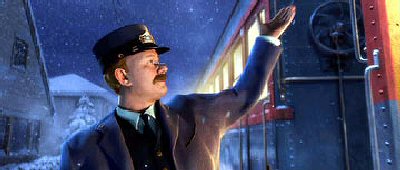
Last weekend I went up to Universal City Walk, a sickening corporate environment that mixes The Fall of the Roman Empire with Animal House, and shelled out $15 bucks to see The Polar Express in IMAX 3-D. It was worth it. However the movie plays in regular presentations (I hadn’t seen it before), this has to be better. This is a movie about digital technology first and all the other stuff second, but I didn’t mind because it looked so big and cool.

Okay, I had some quibbles. How many roller-coaster thrill ride sequences does this film have? Three? Four? It feels like one too many. The young African-American girl (the one with the leadership qualities) does look like she’s from Village of the Damned . And Manohla Dargis is right — that big red bag of gifts does look like a giant scrotum. But I have to say I thought Tom Hanks’ performance as the train conductor was note perfect. It’s not a big reach thing, but he handles it with just the right emphasis.

Prick Up Your Ears

Eddie Smith of Bainbridge Island, Washington, was the first to correctly identify all three of Friday’s (11.12) sound clips.
Clip #1 is Steve McQueen and Simon Oakland discussing the aftermath of a mob hit in Peter Yates’ Bullitt (’68) (b) Clip #2 is James Dean and Corey Allen standing on the bluff just before their chicken run in Nicholas Ray’s Rebel Without a Cause (’55); and (c) Clip #3 is Thomas Gomez talking to Humphrey Bogart in an early scene from John Huston’s Key Largo (’48).
Today’s Clip #1 is a philosophical riff that most over-40s will probably recognize in a heartbeat; (b) Clip #2 and Clip #3 are taken from the same scene in a relatively recent film; and Clip #4 is not from a Gene Kelly musical or an Adam Sandler comedy.
I’ll post the winner in the column in next Wednesday’s column.

Authorship

Too many people who write in fail to sign their names at the bottom of the e-mail. I copy and paste the letter into A Word file for a new column (which always includes letters), and the name of the writer isn’t there. I could afford a down payment on a new car if I had a dollar for every time I had to go back to an e-mail to search for the f***ing writer’s name. Spare me this exercise the next time you write a comment or whatever.

Hot Legs

“Why are you on your cell at Pavilions pontificating about the Oscars? This act is one of the reasons L.A. is the most shallow place on earth. As if you can’t go food shopping without cluttering people’s head with your thoughts, let alone a topic so useless as `what’s going to be nominated’?

“Have you no ability to see yourself from an objective angle? It’s so disspiriting that you can’t go about a normal errand without ranting about the friggin Oscars. Don’t you realize there are homosexuals trying to pick each other up there? They don’t want to be bothered with your Oscar jibberish — well, unless you were wearing short shorts.” — Larry Fisch
Wells to Fisch: Any hip gay guy at Pavilions with functional “gaydar” should be able to read me as one of those anguished hetero types from 100 yards off. I go to Pavillions partly for the hot 30ish women, if you really want to know.

Passion Fruit

“Like too many Oscar handicappers, you’re overlooking a big, ugly elephant in the room. There is one film that is a definite lock for a Best Picture nomination no matter what, and that is The Passion of the Christ.
“Not that it’s a good film, of course. In fact, it’s a lousy film. And not that the Academy is likely to have much affection for a nearly-plotless s&m-tinged propaganda film for pre-Vatican II Catholic regressionism/evangelical fundamentalism. But the Academy makes political nominations often enough, and I’m convinced that they’ll nominate Mel Gibson’s opus for just such a reason.
“A huge part of the volunteer marketing effort for The Passion was the spewing by religious-right media personalities of a baseless conspiracy theory that the film and Gibson were under attack by the liberal/gay/Jewish/secular media “cabal” that supposedly controls Hollywood and the media, and that it was believer’s Christian duty to get out and support the film to stick it to them.
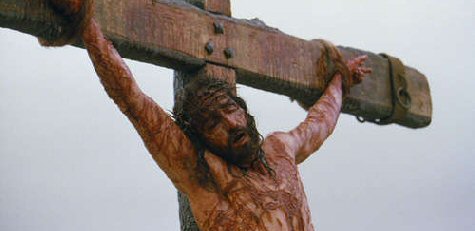
“The Academy doubtlessly is aware of this, and even though they’ve surely got no intention of handing the Big Prize to this film, they are aware that if they don’t nominate Gibson’s vision the likes of James Dobson, Pat Robertson and Jerry Falwell will whip up an anti-Oscar media firestorm, claiming that the film is being denied a nod because the liberal Academy hates Christians!”
“It’l be too bad if of all the worthy films this year, at least one will be denied a place because of the Academy won’t risk the wrath of Evangelical extremists, and if I’m right it’s a depression situation indeed.” — Rufus T. Firefly
“I originally wasn’t very high on seeing The Incredibles because I wasn’t that nuts about Brad Bird’s Iron Giant and I thought The Incredibles would be more of the same. Instead, it’s a very witty take on superhero lore as well as the joys and foibles of family life. It’s one of the nuttiest movies I’ve seen about being normal in a long time but it works.
The Polar Express, on the other hand, is an amazing bomb not only because it is really creepy. Who on earth dreamed up the North Pole stuff with Nazi elves? They reminded me of the African-American midget from Bad Santa. It’s also a crashingly boring and predictable movie.
The Incredibles has people going back a second time to catch all the stuff they missed or enjoy it again. You see Polar Exprss once and that’s all you need, unless you do want to go catch it in 3-D, where it ought to be…well, incredible.” — M.

Predictions

“Some random thoughts on the Oscars…
“(1) Ray shouldn’t be seen as a serious contender for Best Picture. It offers a moderately good impersonation of Ray Charles by a moderately good actor but it’s a essentially a mediocre TV biopic. Why won’t anyone acknowledge this?
“(2) I know it will never get a nomination but Kill Bill Vol. 2 definitely deserves awards consideration in several categories: director, actress, supporting actor, cinematography, etc. Can somebody please make at least a modest push for this, the best crafted film of the year so far?
“(3) I Heart Huckabees won’t win or get nominated for anything. Too many people hate it.
“(4) As someone who has seen The Assassination of Richard Nixon, Sean Penn better get another nomination for this. It’s an infinitely better film and he gives a better performance in it than Mystic River but I assume nobody will see it.
“(5) Why does everyone assume that every Scorsese film is an automatic Oscar contender? This becomes the criteria by which they’re judged and some excellent movies (i.e. Casino) get dismissed because they don’t fit into the very limited Oscar package. I hope The Aviator is great and I hope it gets awards but I’d much rather see a solid, intelligent character study than a half-baked piece of Oscar bait like Ray.
“(6) I know there’s resistance to Sideways but don’t rule it out. It may not win best picture but it will definitely be nominated. Mark my words.
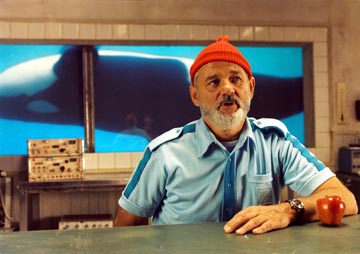
“(7) The Life Aquatic with Steve Zissou should not be forgotten. Movies that win Oscars are always very showy in their use of the tools of filmmaking (photography, costumes, sets, locations, actors, music, etc.) because then they appeal to a broad range of voters. The main thing against Sideways is that it doesn’t show off in these areas as much as the Academy likes. The Life Aquatic does. Admittedly, it may be a little too weird for Academy voters but it’s making people cry and that’s important. I know a few people who cried like babies when they saw it. Plus, don’t forget that Anderson is obsessed with American movies from the 30s, 40s, and 50s, the same era of films that the influential older Academy members made and/or grew up with.
“And by the way, why haven’t you seen/written about Undertow yet? It’s a real 70s throwback and may be up your alley, although I fear it may be too poetic for your taste (i.e. Lost in Translation). Still, you should check it out. ” — Jonathan Doyle

Bad Calls I’m appalled (and

Bad Calls

I’m appalled (and I’m not alone) that two of the absolute finest, no-argument-tolerated docs of the year — Xan Cassevettes’ Z Channel: A Magnificent Obsession and Jonathan Caouette’s Tarnation — have been excluded from the list of 12 semi-finalists for the Best Feature Documentary Oscar.
One of the docs that made the cut is Stacy Peralta’s Riding Giants, an honest, open-hearted film about surfing that is nonetheless a bit too fan-maggish in toasting the champions of the sport. Sorry to sound harsh, but there’s no way this is a stronger, more accomplished work than Z Channel or Tarnation. Giants doesn’t begin to approach their realm in terms of passion and intelligence.

And what about Kevin McDonald’s Touching the Void, a movie that has its roots on both sides of the aisle, making the cut? There is no bigger fan of Void than myself, but in an ideal world it should be a Best Picture nominee. I’ve had it on my Best Picture list in the Oscar Balloon section for months.
< ?php include ('/home/hollyw9/public_html/wired'); ?>
I sympathize with the motives of those who put Void on the semi-final list, but it’s not a documentary. It’s mainly a docu-drama…a recreation. It uses actors who speak lines. It’s about a mountain-climbing adventure that happened in South America, and yet the bulk of it was largely shot in the Swiss Alps. The only thing that makes it feel like a doc is the talking-head footage of the real mountain-climbers.
Among the docs that made the short list are Morgan Spurlock’s Super Size Me (fully deserved), Mark Wexler’s Tell Them Who You Are (a tribute to Mark’s cinematographer dad Haskell, in the vein of last year’s My Architect), Zana Briski and Ross Kauffman’s Born Into Brothels and Jessica Yu’s In the Realms of the Unreal.

Other deserving hopefuls that got the shaft were Joe Berlinger and Bruce Sinofsky’s Metallica: Some Kind of Monster, Robert Stone’s Guerilla: The Taking of Patty Hearst and Sara Price and Chris Smith’s The Yes Men.
Guerilla friend Fredel Pogodin said this morning that “given the monumental task that Stone went through to find the footage for this film, and to track down Russell Little and all the others, it is indeed a surprise that doc filmmakers who understand the difficulty in doing this did not put it on the short list.”
And yet, on the whole, “It’s a great time for documentaries. There’s an amazing amount of them that qualified this year. And the selection process has changed — the rules are now that only filmmakers in the documentary branch can name the semi-finalists. That’s an improvement from years before.”

Backstroke

I’ve been saying snide and dismissive things about the idea of The Phantom of the Opera being the strongest Best Picture candidate around right now, and because of this I feel I ought to say what I now believe, having seen it a couple of nights ago:
It ain’t my particular cup of tea, but Phantom delivers a big wham, regular folks are going for it, and it will almost certainly make the cut as a Best Picture nominee. Hell, it might even go all the way.

I’d rather not see that happen, being a Sideways man all the way, and (who knows?) maybe a Spanglish convert waiting to happen, as well as a Motorcycle Diaries) admirer, a worshipper of Maria Full of Grace, a Fahrenheit 9/11 protest-the-election-of-Bush guy and a devout believer in Collateral, not to mention Touching the Void.
If Phantom wins I will not be in pain, like I was when Chicago won two years ago. I will not agree, but I will understand.
I was down on the prospect of its Oscar ascension due to three factors. One, my general discomfort with emotionally bombastic films that send you over the waterfall (although I really liked Evita). Two, a reluctance to trust the notion that director Joel Schumacher has it in him to deliver a truly worthy Best Picture contender, given several disappointments with his past films. And three, stuff that I’ve been hearing over the past couple of weeks from colleagues.
I’m not saying the people who aren’t fans of this film are wrong, and I’m not going to get into a point-for-point review of any kind, but at least give Phantom this: it is not half-hearted.
You can bring up subtlety issues, and I’m sure some will address this down the road, but by any measure of committed filmmaking it takes Andrew Lloyd Webber’s stage musical and really rocks the house. Call it cornball, but it heats up the emotional essence of the piece and wears its heart on its sleeve. The actors hold their own, the musical sequences all swing for the fences, and John Mathieson’s cinematography is rich and painterly. The film plays like a Baz Luhrman musical on a mild sedative, and by that I mean it doesn’t make your head explode.

I suppose I sound like a square to some of you right now, but with that big 60-piece orchestra sawing away and the knockout production design and the sound cranked up and the film playing on a big screen with an appreciative crowd, the “whoa” factor is definitely there. In terms of the overall effort, I mean.
And so in the final analysis and various reservations aside, I’ve resigned myself to the likelihood of a Best Picture nomination because it satisfies the middle-class emotional criteria that Academy members tend to look for and respond to.
Picking over the particulars is for sometime next month. I just had to say this and set things straight. You can go with Phantom or not, but movies like this have their place. It’s not a crime to accept what they’re selling and go, “Yeah, I get it.”

Musical vs. Musical?

A friend thinks there’s some Academy mentality no-no about putting two musicals up for Best Picture in the same year. He says if this attitude holds it’s going to be an either-or between Ray and The Phantom of the Opera.
I don’t buy this. Ray is not a musical — it’s a biopic with a lot of musical numbers. And I reminded him that My Fair Lady was nominated for Best Picture against Mary Poppins in ’65, and Oliver against Funny Girl in ’69. (They were released in ’64 and ’68, respectively, but the nominations happen in January.)
And how strong a contender is Ray anyway? The talk I’ve heard all along is that Jamie Foxx is a lock for Best Actor, but that the film is an enjoyable and respectable thing but nothing to go out into the street naked and shout about.

Big Tinted Glasses

Last weekend I went up to Universal City Walk, a sickening corporate environment that mixes The Fall of the Roman Empire with Animal House, and shelled out $15 bucks to see The Polar Express in IMAX 3-D. It was worth it. However the movie plays in regular presentations (I hadn’t seen it before), this has to be better. This is a movie about digital technology first and all the other stuff second, but I didn’t mind because it looked so big and cool.

Okay, I had some quibbles. How many roller-coaster thrill ride sequences does this film have? Three? Four? It feels like one too many. The young African-American girl (the one with the leadership qualities) does look like she’s from Village of the Damned . And Manohla Dargis is right — that big red bag of gifts does look like a giant scrotum. But I have to say I thought Tom Hanks’ performance as the train conductor was note perfect. It’s not a big reach thing, but he handles it with just the right emphasis.

Prick Up Your Ears

Eddie Smith of Bainbridge Island, Washington, was the first to correctly identify all three of Friday’s (11.12) sound clips.
Clip #1 is Steve McQueen and Simon Oakland discussing the aftermath of a mob hit in Peter Yates’ Bullitt (’68) (b) Clip #2 is James Dean and Corey Allen standing on the bluff just before their chicken run in Nicholas Ray’s Rebel Without a Cause (’55); and (c) Clip #3 is Thomas Gomez talking to Humphrey Bogart in an early scene from John Huston’s Key Largo (’48).
Today’s Clip #1 is a philosophical riff that most over-40s will probably recognize in a heartbeat; (b) Clip #2 and Clip #3 are taken from the same scene in a relatively recent film; and Clip #4 is not from a Gene Kelly musical or an Adam Sandler comedy.
I’ll post the winner in the column in next Wednesday’s column.

Authorship

Too many people who write in fail to sign their names at the bottom of the e-mail. I copy and paste the letter into A Word file for a new column (which always includes letters), and the name of the writer isn’t there. I could afford a down payment on a new car if I had a dollar for every time I had to go back to an e-mail to search for the f***ing writer’s name. Spare me this exercise the next time you write a comment or whatever.

Hot Legs

“Why are you on your cell at Pavilions pontificating about the Oscars? This act is one of the reasons L.A. is the most shallow place on earth. As if you can’t go food shopping without cluttering people’s head with your thoughts, let alone a topic so useless as `what’s going to be nominated’?

“Have you no ability to see yourself from an objective angle? It’s so disspiriting that you can’t go about a normal errand without ranting about the friggin Oscars. Don’t you realize there are homosexuals trying to pick each other up there? They don’t want to be bothered with your Oscar jibberish — well, unless you were wearing short shorts.” — Larry Fisch
Wells to Fisch: Any hip gay guy at Pavillions with functional “gaydar” should be able to read me as one of those anguished hetero types from 100 yards off. I go to Pavillions partly for the hot 30ish women, if you really want to know.

Passion Fruit

“Like too many Oscar handicappers, you’re overlooking a big, ugly elephant in the room. There is one film that is a definite lock for a Best Picture nomination no matter what, and that is The Passion of the Christ.
“Not that it’s a good film, of course. In fact, it’s a lousy film. And not that the Academy is likely to have much affection for a nearly-plotless s&m-tinged propaganda film for pre-Vatican II Catholic regressionism/evangelical fundamentalism. But the Academy makes political nominations often enough, and I’m convinced that they’ll nominate Mel Gibson’s opus for just such a reason.
“A huge part of the volunteer marketing effort for The Passion was the spewing by religious-right media personalities of a baseless conspiracy theory that the film and Gibson were under attack by the liberal/gay/Jewish/secular media “cabal” that supposedly controls Hollywood and the media, and that it was believer’s Christian duty to get out and support the film to stick it to them.

“The Academy doubtlessly is aware of this, and even though they’ve surely got no intention of handing the Big Prize to this film, they are aware that if they don’t nominate Gibson’s vision the likes of James Dobson, Pat Robertson and Jerry Falwell will whip up an anti-Oscar media firestorm, claiming that the film is being denied a nod because the liberal Academy hates Christians!”
“It’l be too bad if of all the worthy films this year, at least one will be denied a place because of the Academy won’t risk the wrath of Evangelical extremists, and if I’m right it’s a depression situation indeed.” — Rufus T. Firefly
“I originally wasn’t very high on seeing The Incredibles because I wasn’t that nuts about Brad Bird’s Iron Giant and I thought The Incredibles would be more of the same. Instead, it’s a very witty take on superhero lore as well as the joys and foibles of family life. It’s one of the nuttiest movies I’ve seen about being normal in a long time but it works.
The Polar Express, on the other hand, is an amazing bomb not only because it is really creepy. Who on earth dreamed up the North Pole stuff with Nazi elves? They reminded me of the African-American midget from Bad Santa. It’s also a crashingly boring and predictable movie.
The Incredibles has people going back a second time to catch all the stuff they missed or enjoy it again. You see Polar Exprss once and that’s all you need, unless you do want to go catch it in 3-D, where it ought to be…well, incredible.” — M.

Predictions

“Some random thoughts on the Oscars…
“(1) Ray shouldn’t be seen as a serious contender for Best Picture. It offers a moderately good impersonation of Ray Charles by a moderately good actor but it’s a essentially a mediocre TV biopic. Why won’t anyone acknowledge this?
“(2) I know it will never get a nomination but Kill Bill Vol. 2 definitely deserves awards consideration in several categories: director, actress, supporting actor, cinematography, etc. Can somebody please make at least a modest push for this, the best crafted film of the year so far?
“(3) I Heart Huckabees won’t win or get nominated for anything. Too many people hate it.

“(4) As someone who has seen The Assassination of Richard Nixon, Sean Penn better get another nomination for this. It’s an infinitely better film and he gives a better performance in it than Mystic River but I assume nobody will see it.
“(5) Why does everyone assume that every Scorsese film is an automatic Oscar contender? This becomes the criteria by which they’re judged and some excellent movies (i.e. Casino) get dismissed because they don’t fit into the very limited Oscar package. I hope The Aviator is great and I hope it gets awards but I’d much rather see a solid, intelligent character study than a half-baked piece of Oscar bait like Ray.
“(6) I know there’s resistance to Sideways but don’t rule it out. It may not win best picture but it will definitely be nominated. Mark my words.
“(7) The Life Aquatic with Steve Zissou should not be forgotten. Movies that win Oscars are always very showy in their use of the tools of filmmaking (photography, costumes, sets, locations, actors, music, etc.) because then they appeal to a broad range of voters. The main thing against Sideways is that it doesn’t show off in these areas as much as the Academy likes. The Life Aquatic does. Admittedly, it may be a little too weird for Academy voters but it’s making people cry and that’s important. I know a few people who cried like babies when they saw it. Plus, don’t forget that Anderson is obsessed with American movies from the 30s, 40s, and 50s, the same era of films that the influential older Academy members made and/or grew up with.
“And by the way, why haven’t you seen/written about Undertow yet? It’s a real 70s throwback and may be up your alley, although I fear it may be too poetic for your taste (i.e. Lost in Translation). Still, you should check it out. ” — Jonathan Doyle
Bad Calls I’m appalled (and

Bad Calls

I’m appalled (and I’m not alone) that two of the absolute finest, no-argument-tolerated docs of the year — Xan Cassevettes’ Z Channel: A Magnificent Obsession and Jonathan Caouette’s Tarnation — have been excluded from the list of 12 semi-finalists for the Best Feature Documentary Oscar.
One of the docs that made the cut is Stacy Peralta’s Riding Giants , san honest, open-hearted film about surfing that is nonetheless a bit too fan-maggish in toasting the champions of the sport. Sorry to sound harsh, but there’s no way this is a stronger, more accomplished work than Z Channel or Tarnation. Giants doesn’t begin to approach their realm in terms of passion, intelligence, soul.

And what about Kevin McDonald’s Touching the Void, a movie that has its roots on both sides of the aisle, making the cut? There is no bigger fan of Void than myself, but in an ideal world it should be a Best Picture nominee. I’ve had it on my Best Picture list in the Oscar Balloon section for months.
< ?php include ('/home/hollyw9/public_html/wired'); ?>
I sympathize with the motives of those who put Void on the semi-final list, but it’s not a documentary. It’s mainly a docu-drama…a recreation. It uses actors who speak lines. It’s about a mountain-climbing adventure that happened in South America, and yet the bulk of it was largely shot in the Swiss Alps. The only thing that makes it feel like a doc is the talking-head footage of the real mountain-climbers.
Among the docs that made the short list are Morgan Spurlock’s Super Size Me (fully deserved), Mark Wexler’s Tell Them Who You Are (a tribute to Mark’s cinematographer dad Haskell, in the vein of last year’s My Architect), Zana Briski and Ross Kauffman’s Born Into Brothels and Jessica Yu’s In the Realms of the Unreal.

Other deserving hopefuls that got the shaft were Joe Berlinger and Bruce Sinofsky’s Metallica: Some Kind of Monster, Robert Stone’s Guerilla: The Taking of Patty Hearst and Sara Price and Chris Smith’s The Yes Men.
Guerilla friend Fredel Pogodin said this morning that “given the monumental task that Stone went through to find the footage for this film, and to track down Russell Little and all the others, it is indeed a surprise that doc filmmakers who understand the difficulty in doing this did not put it on the short list.”
And yet, on the whole, “It’s a great time for documentaries. There’s an amazing amount of them that qualified this year. And the selection process has changed — the rules are now that only filmmakers in the documentary branch can name the semi-finalists. That’s an improvement from years before.”

Backstroke

I’ve been saying snide and dismissive things about the idea of The Phantom of the Opera being the strongest Best Picture candidate around right now, and because of this I feel I ought to say what I now believe, having seen it a couple of nights ago:
It ain’t my particular cup of tea, but Phantom delivers a big wham, regular folks are going for it, and it will almost certainly make the cut as a Best Picture nominee. Hell, it might even go all the way.

I’d rather not see that happen, being a Sideways man all the way, and (who knows?) maybe a Spanglish convert waiting to happen, as well as a Motorcycle Diaries) admirer, a worshipper of Maria Full of Grace, a Fahrenheit 9/11 protest-the-election-of-Bush guy and a devout believer in Collateral, not to mention Touching the Void.
If Phantom wins I will not be in pain, like I was when Chicago won two years ago. I will not agree, but I will understand.
I was down on the prospect of its Oscar ascension due to three factors. One, my general discomfort with emotionally bombastic films that send you over the waterfall (although I really liked Evita). Two, a reluctance to trust the notion that director Joel Schumacher has it in him to deliver a truly worthy Best Picture contender, given several disappointments with his past films. And three, stuff that I’ve been hearing over the past couple of weeks from colleagues.
I’m not saying the people who aren’t fans of this film are wrong, and I’m not going to get into a point-for-point review of any kind, but at least give Phantom this: it is not half-hearted.
You can bring up subtlety issues, and I’m sure some will address this down the road, but by any measure of committed filmmaking it takes Andrew Lloyd Webber’s stage musical and really rocks the house. Call it cornball, but it heats up the emotional essence of the piece and wears its heart on its sleeve. The actors hold their own, the musical sequences all swing for the fences, and John Mathieson’s cinematography is rich and painterly. The film plays like a Baz Luhrman musical on a mild sedative, and by that I mean it doesn’t make your head explode.

I suppose I sound like a square to some of you right now, but with that big 60-piece orchestra sawing away and the knockout production design and the sound cranked up and the film playing on a big screen with an appreciative crowd, the “whoa” factor is definitely there. In terms of the overall effort, I mean.
And so in the final analysis and various reservations aside, I’ve resigned myself to the likelihood of a Best Picture nomination because it satisfies the middle-class emotional criteria that Academy members tend to look for and respond to.
Picking over the particulars is for sometime next month. I just had to say this and set things straight. You can go with Phantom or not, but movies like this have their place. It’s not a crime to accept what they’re selling and go, “Yeah, I get it.”

Musical vs. Musical?

A friend thinks there’s some Academy mentality no-no about putting two musicals up for Best Picture in the same year. He says if this attitude holds it’s going to be an either-or between Ray and The Phantom of the Opera.
I don’t buy this. Ray is not a musical — it’s a biopic with a lot of musical numbers. And I reminded him that My Fair Lady was nominated for Best Picture against Mary Poppins in ’65, and Oliver against Funny Girl in ’69. (They were released in ’64 and ’68, respectively, but the nominations happen in January.)
And how strong a contender is Ray anyway? The talk I’ve heard all along is that Jamie Foxx is a lock for Best Actor, but that the film is an enjoyable and respectable thing but nothing to go out into the street naked and shout about.

Big Tinted Glasses

Last weekend I went up to Universal City Walk, a sickening corporate environment that mixes The Fall of the Roman Empire with Animal House, and shelled out $15 bucks to see The Polar Express in IMAX 3-D. It was worth it. However the movie plays in regular presentations (I hadn’t seen it before), this has to be better. This is a movie about digital technology first and all the other stuff second, but I didn’t mind because it looked so big and cool.

Okay, I had some quibbles. How many roller-coaster thrill ride sequences does this film have? Three? Four? It feels like one too many. The young African-American girl (the one with the leadership qualities) does look like she’s from Village of the Damned . And Manohla Dargis is right — that big red bag of gifts does look like a giant scrotum. But I have to say I thought Tom Hanks’ performance as the train conductor was note perfect. It’s not a big reach thing, but he handles it with just the right emphasis.

Prick Up Your Ears

Eddie Smith of Bainbridge Island, Washington, was the first to correctly identify all three of Friday’s (11.12) sound clips.
Clip #1 is Steve McQueen and Simon Oakland discussing the aftermath of a mob hit in Peter Yates’ Bullitt (’68) (b) Clip #2 is James Dean and Corey Allen standing on the bluff just before their chicken run in Nicholas Ray’s Rebel Without a Cause (’55); and (c) Clip #3 is Thomas Gomez talking to Humphrey Bogart in an early scene from John Huston’s Key Largo (’48).
Today’s Clip #1 is a philosophical riff that most over-40s will probably recognize in a heartbeat; (b) Clip #2 and Clip #3 are taken from the same scene in a relatively recent film; and Clip #4 is not from a Gene Kelly musical or an Adam Sandler comedy.
I’ll post the winner in the column in next Wednesday’s column.

Authorship

Too many people who write in fail to sign their names at the bottom of the e-mail. I copy and paste the letter into A Word file for a new column (which always includes letters), and the name of the writer isn’t there. I could afford a down payment on a new car if I had a dollar for every time I had to go back to an e-mail to search for the f***ing writer’s name. Spare me this exercise the next time you write a comment or whatever.

Hot Legs

“Why are you on your cell at Pavilions pontificating about the Oscars? This act is one of the reasons L.A. is the most shallow place on earth. As if you can’t go food shopping without cluttering people’s head with your thoughts, let alone a topic so useless as `what’s going to be nominated’?

“Have you no ability to see yourself from an objective angle? It’s so disspiriting that you can’t go about a normal errand without ranting about the friggin Oscars. Don’t you realize there are homosexuals trying to pick each other up there? They don’t want to be bothered with your Oscar jibberish — well, unless you were wearing short shorts.” — Larry Fisch
Wells to Fisch: Any hip gay guy at Pavillions with functional “gaydar” should be able to read me as one of those anguished hetero types from 100 yards off. I go to Pavillions partly for the hot 30ish women, if you really want to know.

Passion Fruit

“Like too many Oscar handicappers, you’re overlooking a big, ugly elephant in the room. There is one film that is a definite lock for a Best Picture nomination no matter what, and that is The Passion of the Christ.
“Not that it’s a good film, of course. In fact, it’s a lousy film. And not that the Academy is likely to have much affection for a nearly-plotless s&m-tinged propaganda film for pre-Vatican II Catholic regressionism/evangelical fundamentalism. But the Academy makes political nominations often enough, and I’m convinced that they’ll nominate Mel Gibson’s opus for just such a reason.
“A huge part of the volunteer marketing effort for The Passion was the spewing by religious-right media personalities of a baseless conspiracy theory that the film and Gibson were under attack by the liberal/gay/Jewish/secular media “cabal” that supposedly controls Hollywood and the media, and that it was believer’s Christian duty to get out and support the film to stick it to them.

“The Academy doubtlessly is aware of this, and even though they’ve surely got no intention of handing the Big Prize to this film, they are aware that if they don’t nominate Gibson’s vision the likes of James Dobson, Pat Robertson and Jerry Falwell will whip up an anti-Oscar media firestorm, claiming that the film is being denied a nod because the liberal Academy hates Christians!”
“It’l be too bad if of all the worthy films this year, at least one will be denied a place because of the Academy won’t risk the wrath of Evangelical extremists, and if I’m right it’s a depression situation indeed.” — Rufus T. Firefly
“I originally wasn’t very high on seeing The Incredibles because I wasn’t that nuts about Brad Bird’s Iron Giant and I thought The Incredibles would be more of the same. Instead, it’s a very witty take on superhero lore as well as the joys and foibles of family life. It’s one of the nuttiest movies I’ve seen about being normal in a long time but it works.
The Polar Express, on the other hand, is an amazing bomb not only because it is really creepy. Who on earth dreamed up the North Pole stuff with Nazi elves? They reminded me of the African-American midget from Bad Santa. It’s also a crashingly boring and predictable movie.
The Incredibles has people going back a second time to catch all the stuff they missed or enjoy it again. You see Polar Exprss once and that’s all you need, unless you do want to go catch it in 3-D, where it ought to be…well, incredible.” — M.

Predictions

“Some random thoughts on the Oscars…
“(1) Ray shouldn’t be seen as a serious contender for Best Picture. It offers a moderately good impersonation of Ray Charles by a moderately good actor but it’s a essentially a mediocre TV biopic. Why won’t anyone acknowledge this?
“(2) I know it will never get a nomination but Kill Bill Vol. 2 definitely deserves awards consideration in several categories: director, actress, supporting actor, cinematography, etc. Can somebody please make at least a modest push for this, the best crafted film of the year so far?
“(3) I Heart Huckabees won’t win or get nominated for anything. Too many people hate it.

“(4) As someone who has seen The Assassination of Richard Nixon, Sean Penn better get another nomination for this. It’s an infinitely better film and he gives a better performance in it than Mystic River but I assume nobody will see it.
“(5) Why does everyone assume that every Scorsese film is an automatic Oscar contender? This becomes the criteria by which they’re judged and some excellent movies (i.e. Casino) get dismissed because they don’t fit into the very limited Oscar package. I hope The Aviator is great and I hope it gets awards but I’d much rather see a solid, intelligent character study than a half-baked piece of Oscar bait like Ray.
“(6) I know there’s resistance to Sideways but don’t rule it out. It may not win best picture but it will definitely be nominated. Mark my words.
“(7) The Life Aquatic with Steve Zissou should not be forgotten. Movies that win Oscars are always very showy in their use of the tools of filmmaking (photography, costumes, sets, locations, actors, music, etc.) because then they appeal to a broad range of voters. The main thing against Sideways is that it doesn’t show off in these areas as much as the Academy likes. The Life Aquatic does. Admittedly, it may be a little too weird for Academy voters but it’s making people cry and that’s important. I know a few people who cried like babies when they saw it. Plus, don’t forget that Anderson is obsessed with American movies from the 30s, 40s, and 50s, the same era of films that the influential older Academy members made and/or grew up with.
“And by the way, why haven’t you seen/written about Undertow yet? It’s a real 70s throwback and may be up your alley, although I fear it may be too poetic for your taste (i.e. Lost in Translation). Still, you should check it out. ” — Jonathan Doyle
Obsessions It’s said to be

Obsessions

It’s said to be a problem when gifted filmmakers (and only the gifted fall prey to this) get caught up in the jib-jab of their brushstrokes and lose sight of the painting.
You know what I mean…movies that always seem to be emphasizing how hip and clever the director is, or how vast and ambitious his/her efforts were. There are more of these films in mainstream theatres toward the end of the year, naturally.

I love brushstrokes for their own sake. I can be half-sold on an entire film if there’s an exceptional contribution or two (photography, music, a performance). I’m not saying that excessive brushstroking isn’t distracting. I’m saying I find it easy to segregate my enjoyment of particular elements that work, even if the overall fails.
I just saw a movie that I can’t talk about yet, but I loved the main title sequence plus the dialogue in an epilogue scene at the very end. I will always feel warmly about this film for these two ingredients, regardless of any followup judgements I may render.
< ?php include ('/home/hollyw9/public_html/wired'); ?>
The reigning example of this syndrome, according to what nearly everyone is saying, is Robert Zemeckis’ The Polar Express (Warner Bros., playing everywhere). The rap is that this $165 million feel-good Christmas movie has invested more heavily in digital performance-capture technology than in the story-telling, character-building aspects, let alone the imaginative fun so abundant in The Incredibles.
It’s being said in some quarters that Wes Anderson’s The Life Aquatic with Steve Zissou (Disney, 12.25) is caught up in cleverness and style issues here and there. To what degree I can’t say, but a Wes Anderson film without style issues wouldn’t be a Wes Anderson film. I totally worshipped those live, non-digital, opening-curtain shots he used to begin each chapter of Rushmore.
Jean Pierre Jeunet’s A Very Long Engagement has a fair amount of stylistic archness, but so did Amelie and Delicatessen. A friend who thinks it’s a great banquet of a movie wrote a day or two ago asking why there isn’t more buzz about it. “[Jeunet’s] direction is stylish and exquisite, the production design is A-plus…is it because it’s French?” A certain know-it-all says the lack of excitement is over brushstroke issues.

There’s a certain self-referencing cleverness all through I Heart Huckabees, but like all credentialed art it’s steady and consistent, like the frenzied brushstrokes of Vincent Van Gogh. It’s all of a piece and I don’t care if it’s only made $10 million so far. This is one of those films that gets better and better the more you think about it, and one that absolutely improves if you see it a second time.
But the clever-dick aspects in Michel Gondry’s Eternal Sunshine of the Spotless Mind have always bothered me. I actually started to hate it because of this, despite my admiration for Charlie Kaufman’s script. It underlined my belief that when it comes to filming a Kaufman, Spike Jonze = good and Michel Gondry = less so.
Any other films that have bothered anyone for these reasons?

All Alone

I usually send these queries out by e-mail, but I’ll just plop this in. I was talking to a critic friend last night about the number of times he’s championed films that almost everyone else has hated. He had a fairly long list to recite from.
I don’t think a critic is worth much unless he/she experiences at least an occasional stand-alone episode. TV critics almost never do, and guys like Armand White and Jonathan Rosenbaum have these episodes every other week.
I remember admiring the crap out of Eric Blakeney’s Gun Shy, an early 2000 release with Liam Neeson, Oliver Platt and Sandra Bullock (and which Bullock helped to produce). Almost no one except New York Times critic Elvis Mitchell agreed.
It’s hard to get critics to admit to these episodes, but I’ll bet there are plenty of great stories to be told about what it felt like to stand all alone in the cold stiff wind with everyone (including your editor) looking at you like something’s gone seriously wrong because you stood up and led the charge for the “wrong” film.
If anyone wants to send in a recollection…

Down to This

There’s all this stuff happening in the Best Picture race suddenly. This film ascending, that film dropping out. And now our friend David Poland at Movie City News is saying “the only movie that can keep The Phantom of The Opera from winning Best Picture is The Aviator.”
No comment as I haven’t seen either film, but good God. Bush wins the election and now this. I’m just not a fan of any “lush, glitzy, over-the-top, overwrought” musical, which is how a friend has described Phantom. Is my friend the bringer of the last and final word on this Joel Schumacher film? No, and I could wind up liking it. It’s possible…but I don’t especially want to.
I keep hitting on this same point, which is that bigger and more grandiose and more thundering films are…aaah, forget it.
There’s no point. No point saying Sideways has it all because people keep saying nope, it’s not enough. It’s not enough to be insightful, adult, touching, funny, heartbreaking, emotional, soulful…and to be about average people living recognizable lives. No, cries the mob…we need more.

Poland emphasized in his Phantom prediction that this “is not about what I like.” For what it’s worth, he agrees with me about Sideways.
Best Picture Oscars are about emotion. The ones that deliver an emotional sandwich you can sink your teeth into and get a little choked up over or, failing that, say something simple but profound about life, something we all recognize as perceptive and truthful — these are the ones that tend to win it.
Why, then, did the awful Chicago win it two years ago? What did that film actually say? That we’re all users, abusers and bamboozlers, and that’s what makes the world go’ round?
American Beauty was the last people-sized movie to win the Best Picture oscar, but it was serene at the finish and said something bedrocky about our day-to-day, which is that we don’t pay enough attention to the beauty around us.
Sideways doesn’t quite choke you up, but it comes close when Paul Giamatti listens to Virginia Madsen’s voice message near the finish. And the knock on her door that directly follows says volumes about the life force, positivism, hope, love and refusing to fold up your tent.
Of course, it’s only a small masterpiece. Nothing to put your chips on. Broad and breathless is always better.

Prick Up Your Ears

Paul Matwychuck of Edmonton, Alberta, was the first to correctly identify all three of Wednesday’s (11.10) sound clips.
Clip #1 is Ben Kinsley hammering at Ray Winstone in Jonathan Glazer’s Sexy Beast; (b) Clip #2 is Terrence Stamp speaking to John Hurt in Stephen Frears’ The Hit ; and (c) Clip #3 is the brilliant Oskar Werner presenting his case to an East German tribunal in The Spy Who Came in From The Cold.
Today’s Clip #1 is from an urban cop film (obviously); (b) Clip #2 has some ambient noise effects, but the dialogue is detectable; and (c) Clip #3 — my favorite — is from a film based on a play, if that’s any help.
I’ll post the winner in the column in next Wednesday’s column.

Radiant

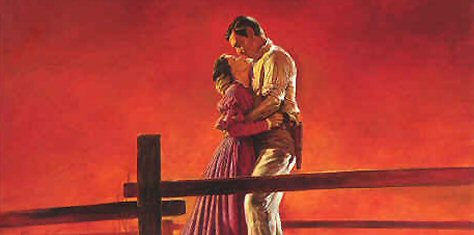
The color and detail in the new Gone With the Wind DVD box set that hit stores last Tuesday is mouth-watering. It’s the ripest and most sharply focused version I’ve ever seen. It probably looks better than the version GWTW‘s producer David O. Selznick and director Victor Fleming knew. I’m not exaggerating.
Even the hardcore restoration master Robert Harris (Lawrence of Arabia, Vertigo, Spartacus), who’s always very tough when I ask him to size up this or that digital makeover, says this new Gone With the Wind is “perfect…absolutely perfect…the most beautiful rendition I’ve ever seen.”
I don’t have the time or space to get into the others merits of this four-disc set, released by Warner Home Video, but they’re plentiful, trust me.

The idea-guy behind this GWTW‘s new look is a Warner Bros. technology executive named Chris Cookson. Three years ago he came up with an idea called edge detection, which involved digitally scanning the three different film strips that Gone With the Wind‘s Technicolor cameras used to capture the red, blue and yellow elements in each scene. But there was always a very slight fuzzy element in prints if the three strips were not perfectly aligned.
“The realization was that if we could just get these things to align [more precisely], we’d find detail and information that’s always been there but never visible,” Cookson says on a disc #3 documentary called “Restoring a Classic.”
The people who wound up writing the software for this process, which is known as Ultra-Resolution, were image scientists Sharon and Karen Perlmutter of America Online. Warner Bros. Senior Systems Engineer Paul Klamer put the team together and made sure everyone was on the same page.
What they did with Gone With the Wind, says Klamer, “is like taking the walnut oil off the Rembrandt paintings.”
“Not only is it aligned at least as good as the film was when it was originally released,” says Warner Bros. senior vp of production technology Rob Hummel, “[but] we believe we’ve probably achieved a level of alignment and registration that probably has never seen before.
“The result is actually beyond what we had hoped to see,” says Cookson. “A degree of detail that we didn’t even know to expect.”

Kool Aid

I’m running this excerpt from Manohla Dargis’s review of The Polar Express in the New York Times because I couldn’t agree more with what she says about the influence of George Lucas and other powerful tech-head types, and because she says it well.
“Directed by Robert Zemeckis, who wrote the film with William Broyles Jr., The Polar Express is a grave and disappointing failure, as much of imagination as of technology. Turning a book that takes a few minutes to read into a feature-length film presented a significant hurdle that the filmmakers were not able to clear.
“Animation is engaged in a debate that pits traditional and computer-assisted animation against computer-generated animation. The idea that anyone loves Finding Nemo because it was made wholly on a computer is absurd, but behind this debate lies a larger dispute not only about animation, but film’s relationship to the world as well.

“On one side of the divide are Pixar visionaries like [The Incredibles director] Brad Bird and the Finding Nemo co-director Andrew Stanton, who either know they can’t recreate real life or are uninterested in such mimicry, and so just do what animators have always done: they imaginatively interpret the world.
“On the other side of the divide are filmmakers like George Lucas who seem intent on dispensing with messy annoyances like human actors even while they meticulously create a vacuum-sealed simulacrum of the world.
“It’s worth noting that two important contributors to The Polar Express Doug Chiang, one of the production designers, and Ken Ralston, the film’s senior visual effects supervisor, worked for years at Mr. Lucas’s aptly named company, Industrial Light and Magic. There’s no way of knowing whether they drank the company Kool-Aid.
“Still, from the looks of The Polar Express it’s clear that, together with Mr. Zemeckis, this talented gang has on some fundamental level lost touch with the human aspect of film. Certainly they aren’t alone in the race to build marvelous new worlds from digital artifacts.
“But there’s something depressing and perhaps instructive about how in the attempt to create a new, never-before-seen tale about the wonderment of imagination these filmmakers have collectively lost sight of their own.”

Thunder of Hoofbeats

“Glad to see you mention The Rapture. I saw it when it was first released at an early screening in Atlanta that included an invitation-only audience of local churchgoers. Mimi Rogers and Michael Tolkin were there to take questions from the audience at the end of the movie.
“In the South, of course, the Rapture is just a given. It’s not uncommon to see cars with bumper stickers that read `In case of rapture, this car will be unoccupied.’ When I was in Junior High, the big book that everyone was reading was a tome about the rapture by Ernest Angsley (you remember him, he’s the televangelist/faith healer Robin Williams used to parody — “Say Baaa–by! Be HEALED!”).
“Almost everyone in the audience spoke of enjoying the movie and its “message” (presumably the depiction of the rapture) but complained of the excessive nudity during the opening sequences. No one spoke of the decision of Mimi Rogers’ character to kill her daughter and finally reject God’s salvation. Michael Tolkin tried to get people to talk about religion, but that sort of thing just isn’t done down here.” — Reed Barker, Peachtree City, Georgia.
“That’s a pretty cheap shot to take at Christians in your little piece about The Rapture. I’m sorry that your guy didn’t win the election, but let it go. Before you start saying that you’re afraid of Christians, you’d better do some serious reading. I certainly missed the Bible passage that states “shoot your child to send them to Heaven.”

The Rapture is a movie, just like The Omen or The Exorcist. Are these films thrilling and entertaining? Sure. Do these films represent Christian doctrine? Absolutely not. Honestly, I feel sorry for you if you would let one film “push you into permanent atheism.” It one thing to say “I read the Bible and just don’t buy it”, but its another to say “I saw this movie, made by a guy who might have his own agenda, and now I know that Christians are all creepy.” That’s really objective.” — Jeff Horst.
Wells to Horst: I can’t think of the last time I’ve gotten to know anyone who answered to being a Christian. I guess it’s the circles I’ve travelled in over the last 20-plus years. But I’ve known a few, and I think they’re nice enough but also a bit creepy. And 90% of them seem to be righties. Every time I meet them, I think of that Dustin Hoffman line in Straw Dogs: “There’s has never been a kingdom given to so much blood as that of Christ.”
I reject with every gram of brain matter and every fibre of my being the notion that our time on earth is all about what happens to our souls after we pass on, and Michael Tolkin’s film just seemed to solidify these feelings, or ratchet them up a notch. The basic tenets of Christianity are a blessing to anyone who understands them and takes them into his or her heart, but I despise how Christianity has somehow become culturally aligned in this country with bedrock conservativism.
I just hate their uptightness and rigidity and aura of fearfulness…and that repugnant smugness they all seem to have about being plugged into and receving the world of our Lord Jesus, and always delivered with those gleaming eyes and awful toothy smiles. If I were a Roman Emperor and this was, say, 200 A.D., I’m not sure I would overturn the practice of throwing them to the lions in the Colisseum.”
Horst back to Wells: I understand the type of Christian that you’re talking about. If those are the people that you are citing, then you need to say that. Just saying `born-again Christians’ is painting with a really wide brush, and encompasses a lot of those people who really do try to live by those basic tenets that you referred to in your reply. It’s an important distinction.
“I hope its clear that I’m not saying that you have to believe in anything. That’s where well intentioned people usually go wrong. Everyone needs to believe in what they feel is right, as long as it doesn’t harm others. That’s supposed to be the whole point of this country that we are fortunate enough to live in.”

Originality

“In anticipation of their 2004 recaps, entertainment blurb writers everywhere are trying to suitably illustrate the sludge that Tom Hanks√¢‚Ǩ‚Ñ¢ star has slammed into — the worst Coen Brothers movie ever, one of Spielberg√¢‚Ǩ‚Ñ¢s poorest conceptions, and now maybe the all-time epic Christmas dud (with apologies to Ben Affleck). Please, blurb writers — try and come up with something better than √¢‚Ǩ≈ìHanks Express Derailed: 3 Audience Killers leaves fan base looking Terminal.” — Mark Frenden

Vega Obliqua There’s always a

Vega Obliqua

There’s always a faint air of suppression when a successful European actress turns up in a Hollywood film.
If the actress is known on her native soil for being soulful, carnal, cerebral or feisty, she always seems a bit congealed and worked over after submitting to the big American studio machine. Not misunderstood or mishandled, exactly…but slightly under-utilized and at the same time made over in a kind of broadly accessible way, like she’s been told to adopt an attitude and a vibe that would fit right into a chit-chat session on “The View.”

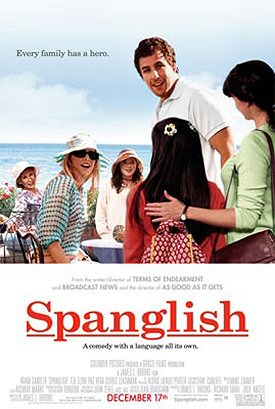
I’ve been getting this feeling, vaguely, after watching the enticing Spanish actress Paz Vega in the trailer for James L. Brooks’ Spanglish (Columbia, 12.17).
Nobody I know has seen this highly anticipated domestic comedy-drama, which costars Adam Sandler, Tea Leoni and Cloris Leachman. And if I know anything about the ultra-perfectionist Brooks, nobody will until early December.
< ?php include ('/home/hollyw9/public_html/wired'); ?>
But I feel as if I know the 28 year-old Vega from her knockout performance role in Julio Medem’s Sex and Lucia. This 2001 film was quite the erotic testament and a favorite with a lot of women I know, and Vega was extremely open and passionate and emotionally varied in that film (as well as….well, energetic).
Anyone who’s seen and enjoyed Lucia has, I’m sure, felt the same disconnect I’ve gotten from the Spanglish trailer.
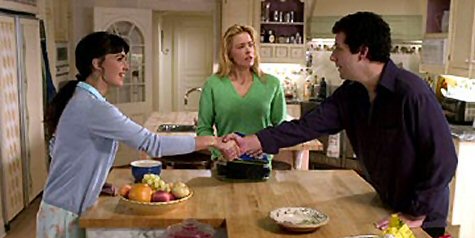
Vega plays Flor, a young Mexican emigre who’s come to Los Angeles with her daughter Christina (Victoria Luna) and has been lucky enough to find a live-in housekeeping gig with the affluent John and Deborah Clasky (Adam Sandler, Tea Leoni). Certain cross-cultural issus arise, plus some non-cultural ones. John is a top-tier chef with concerns about his industry status; Deborah has lost her job and is suffering a spiritual crisis.

According to the trailer, the film is largely about the Clasky’s neurotic hang-ups and work-related anxieties, and the contentious relationship between Leoni and her formerly alcoholic, blunt-spoken mom (Leachman). There’s an implication that things in the Clasky household change and go through some kind of spiritual uplift due to the influence of Flor, and yet…
Vega hardly says a word in the trailer (she doesn’t speak any English when she first lands the Clasky job — Vega didn’t speak it either, and had to learn it for the film)…
The trailer never seems to focus on anything that Flor is feeling or doing on her own — it’s all about the Clasky’s reacting to her or talking about her….
And Vega doesn’t seem to do anything in the trailer except turn to the camera and fluff her hair and gaze at the Clasky’s with this beatific, wide-eyed Mexican earth-mother expression.
Who is she? What is the story and what does she bring to the table? Why doesn’t the trailer show Flor saying just one clean sentence that expresses a single direct emotion about anything?
There’s a clip with Leachman telling Leoni she’s going to lose her husband, which seems to imply that some kind of affair develops between Sandler and Vega, although Leachman could be referring to something else entirely.
So there’s all this vagueness and obliqueness from the trailer, and yet I’ve been told that Spanglish is essentially about Vega’s character, and that the story more or less turns on her.

No mystery here. The Columbia trailer guys have obviously decided it’s easier to sell Sandler, Leoni and Leachman than Vega, but it makes for a weird piece. You can feel that the great Brooksian dialogue spoken by the Clasky family is not conveying what’s really going on, and that something of substance (almost certainly having to do with Flor) happens in this film, but the trailer won’t say what this might be.
I know — okay, trust — that Spanglish will be a smart and emotionally affecting film, because I feel I know and trust Brooks. It’s just odd the way the trailer leaves you hanging.
There’s a one-page VANITIES piece about Vega on page 323 in the current December issue of Vanity Fair.
“When Jim talks about the movie,” Vega tells writer Kista Smith, “he says `realistic comedy.’ It’s really, really fun, but sometimes you can cry at the same time.”
Vega was born Paz Campos Trigo on January 2, 1976, in Seville. She left school at age 16 and got herself accepted to Seville’s Centro Andaluz de Teatro acting school, where she spent two years and then studied journalism for another two. At age 22 she moved to Madrid, changed her last name to Vega (her grandmother’s) and went on auditions.
In 1999, she snagged a major role in Zapping, in which she played a hottie who steals another woman’s husband. She eventually landed a large role in the Spanish TV series, 7 vidas. This resulted in a lead role in Mateo Gil’s Nobody Knows Anybody, which caught Julio Medem’s attention and resulted in Vega’s career- making role in Sex and Lucia.
This, in turn, led to Pedro Almodovar giving her a small role in Talk to Her (’02) and then landing a part in the Spanish musical romantic comedy, The Other Side of the Bed (’02). The sum of this, of course, led to Spanglish.

Does Brooks have some kind of emotional susceptibility for south-of-the-border working-class women with struggling English skills? I’m wondering out loud.
Remember Lumi Cavazos’s wonderful “Inez” character in Bottle Rocket ? Brooks was the executive producer on that film, and developing Inez — a Venezuelan maid at a small Texas motel — was a major passion of his. Brooks labored for a few months on the script with director Wes Anderson and costar-co-screenwriter Owen Wilson, and insisted they develop the romantic subplot between Inez and Anthony (Luke Wilson) until every last drop of appropriate emotion had been squeezed out.
This effort paid off, if you ask me. This is one reason why I trust Brooks. He really sweats his scripts.

The Horror

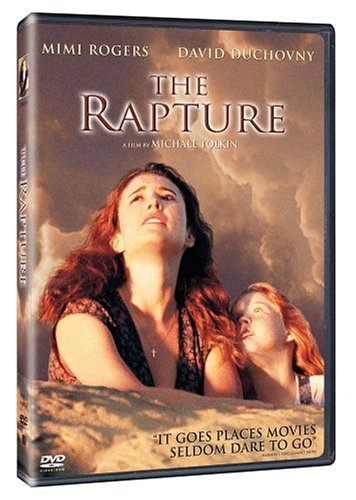
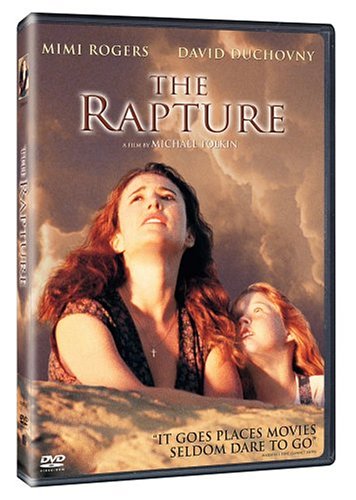
On Election Day, 11.2 — a dark day for millions of decent people with solid moral values — one of the strangest and creepiest religious films ever made arrived in DVD stores, courtesy of New Line Home Entertainment.
Michael Tolkin’s The Rapture is a kind of horror film. It’s initially about an emotionally hungry woman named Sharon (Mimi Rogers) who’s into swinging, and then discovers that God fills her more profoundly. His light makes her shine and smile and go into bloom. But then she feels the End of Days approaching, and starts to go a little crazy.
She goes into the desert to wait for the big moment. Not long after (and I won’t explain the blow-by-blow) Sharon fires a bullet into her daughter’s head. In her spiritually desperate and cranked-up state, she believes this is a way to send her little girl straight to God.

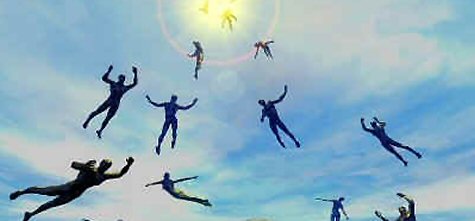
Then comes the literal Apocalypse. The sounds of charging horses and Gabriel’s trumpet fill the skies. God and His angels are portrayed by Tolkin as warriors, spiritual avengers, terrible horsemen…forces ready to trample. But the after-shock of her daughter’s death persuades Sharon to reject God just as she’s being literally lifted up to Heaven. She’s furious that her devotion to God led her to slaughter her own, and so she refuses His embrace.
The Rapture is an odd, terrifying, occasionally serene, infuriating, deeply upsetting film. You can argue about it with yourself for days, weeks, months. I still haven’t completely settled down about it, and it’s been thirteen years.
More than any other single factor, The Rapture convinced me that born-again Christians and conservative word-of-God testifiers are creepy people. It persuaded me that anyone who talks about the rapture and ascending to Heaven is invested in something I don’t ever want to get close to, much less buy into.
The Godly terms laid down in The Rapture are not about love or goodness or caressing celestial compassion. They’re about black and white absolutes. Are you on the bus or not? Have you paid your dues and settled up with the Almighty, or are you a lost person? If you’re square with God, welcome. If you’re not, tough.
If you’ve never seen it, and you’ve been teetering on the religious-philosophical fence in recent years and you need a movie to push you into permanent atheism and skepticism about religious nutbags, The Rapture is a film to see.

I’m not saying it’s totally on the side of religious doubters or atheists (it seems to be of two minds for a good portion of it), but if Roman and Minnie Castevet had lived longer they would have loved The Rapture .
I love the idea of Red State religious types renting or buying this thing in hopes of watching a spiritual film that really understands what it means to be a true believer. It apparently has that reputation in some circles. Booiinngg!
If there really is a vengeful God up there in the clouds who’s planning to get on a mighty steed sometime around 2013 and gallop down to earth and smite the sinners, Michael Tolkin is one of the first people he’ll pay a visit to. Then he’ll come after people like me. And then he’ll visit the White House for tea and tuna-fish sandwiches.

Prick Up Your Ears

Susan Snyder of Chicago, Illinois, was the first to correctly identify all three of Friday’s (11.5) sound clips.
Clip #1 is from Alfred Hitchcock’s Foreign Correspondent (1940), and is mostly dominated by the voice of George Sanders as British journalist Scott ffolliott. Clip #2 is the voice of Tom Dunson (John Wayne) saying bitter words to Matthew Garth (Montgomery Clift) in Howard Hawks’ Red River (1948), and Clip #3 is a scene between Elliott Gould and George Segal in Robert Altman’s California Split (1974).
Today’s excerpts are all Europe-based: (a) Clip #1 is a bit compromised by the sounds of breaking surf, but the dialogue is too good to pass up; (b) Clip #2 has a certain serenity to it; and (c) Clip #3 is so brilliantly delivered by such a superb actor, it makes me want to re-hear the entire scene.
Send in your answers quickly, and I’ll post the winner in Friday’s column.

Eyes Averted

I had trouble last Friday writing about a documentary called Imaginary Witness: Hollywood and the Holocaust, and here I am still having trouble. As I watched it I was going “yup, yup….good stuff…uh-huh, yup,” and now my head is crashing into the keyboard every time I try to write a line about it.
All right….grim up, focus, cut through it.
Funded by the American Movie Channel and shown yesterday (Tuesday, 11.9) at the AFI Film Festival, Daniel Anker’s 92-minute documentary is a thorough, professionally assembled thing. It’s basically about how Hollywood ignored the Holocaust when it was happening, but then came started to pay atention 14 or 15 years after the end of World War II, and then really started to mine the territory in the `90s.
I talked to Anker about it last week. He’s a frank and friendly guy. His film is well thought out (relatively) and full of newsreel clips I’d never seen before. The subject of the film, he said, is basically “what did we know and when did we know it? Specifically it’s about what each film that dealt in any way with the Holocaust actually said or uncovered about it, and how these films portrayed the time sin which they were made.”

Anker does a perfectly acceptable job of showing how Hollywood films explored the realities of European life in the 1930s and just after it. Pressure was put on Hollywood to refrain from taking sides in the European conflict. Jewish studio heads were told that any kind of advocacy might backfire in some way. Their reticence seems amazing from today’s perspective.
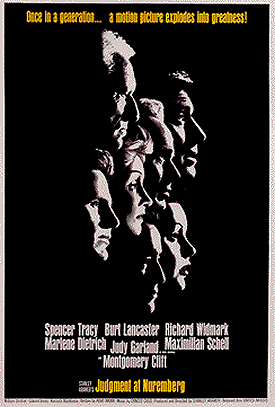
Although a group of studio chiefs were invited by Gen. Dwight D. Eisenhower to inspect German concentration camps around the war’s end, there was almost no depictions of concentration camps in movies until….well, I can’t precisely remember, but one of the first instances, I think, was when camp footage showed up in the TV version of Judgement at Nuremberg in ’59 or thereabouts, on CBS’s “Playhouse 90.”
Stanley Kramer’s better-known feature film version hit screens in ’61.
“The footage in the TV presentation was much more graphic and honest than [Kramer’s] version,” Anker says. “It was incredibly graphic…it was surprisingly harsh for television. TV in the `50s was much more honest about the Holocaust than Hollywood was.”
Another graphic televised depiction was provided by War and Remembrance, Dan Curtis’s 30-hour miniseries, in the late 1970s.
Variety‘s review noted that Anker ignored serious B-movie explorations of the Holocaust, among them Sam Fuller’s “sensationalistic” Verboten (1959).
Steven Spielberg’s Schindler’s List (1994) took viewers on the strongest and most penetrating emotional journey into the Holocaust, and is presented as such in the doc.
A lot of people in this town feel Holocaust-ed out from all the docs about this or that Holocaust angle, many of which have been nominated for Oscars. I hear that — there’s such a thing as overplaying a hand — but I’ve never been less than riveted by any half-decent account of this ghastly history. There’s no such thing as hearing too much about it.

War Between the States

“I think in your various pro-Blue, anti-Red blurbs, you and others dismissed the Undecideds as simply intellectually vacuous wafflers who couldn’t come down on one side or the other on one of the most black and white issue in recent memory.
“I really don’t think that is the case. I live in Norty Carolina, which is one of the oddest of Red states, since we vote Republican nationally and Democratic on a state level. I’m a Republican, but evaluate candidate by candidate who I should choose based on policies and positions I agree with. And I didn’t really agree with either.
“What I finally came down to was a sports analogy. There is a time in every losing season where you consider the rest of the year a lost cause and start looking to the next season. That’s basically what I did. I voted based on who I figured could screw up the least for the next four years until there was a better choice.

“Because of that I voted for Kerry (the first time I’ve ever voted Democratic for President). I figured, though he would be ineffective in a way to rival the Carter Administration, his lack of a strong vision would, if nothing else, maintain the status quo.
“Other Purple Voters, as I figure we should be called, came down on the opposite side of that equation, figuring that Bush ended up with one or two more tick marks in his column than Kerry. I’m sure, like me, they were looking for that legitimate and good reason to vote for Kerry, as opposed to just not voting for Bush.
“You, yourself, in your many columns devoted to this issue, rarely if ever said why we should vote for Kerry — just why we shouldn’t vote for Bush. For me and others, the rhetoric got old. We got the point. Bush is evil. Now tell us why to vote for your guy.” — Charlotte, North Carolina guy who asked fo ranonymity
Wells to North Carolina guy: You’re a German citizen in the mid ’30s and you don’t have the ability to see what will happen under Hitler over the next few years, but you can vaguely sense it. And Hitler has decided not to suspend elections and be fair about it and run again in ’36 or ’37.
You’re telling me that unless a guy comes along whose only campaign pitch is that he’s not Adolf Hitler — and is therefore a much less damaging person to have in the top spot — you’re going to be on the fence about it? Unless this other guy offers specific reasons to vote for him, and not just reasons to vote against Hitler, you might not be persuaded to vote against Hitler…that a negative vote isn’t enough of a reason?
I’m not analogizing Bush with Hitler. Well, I am a little bit, I suppose. I’ve just found that people tend to listen up when you use Nazi Germany as an example.

Issue

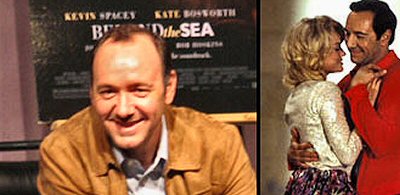
If I were Kevin Spacey, I’d be thinking about doing some repair work right about now. Some guys look completely fine or at least marginally okay with seriously thinning hair or even a shaved head, but Spacey isn’t one of them. (Neither am I, actually.) Not a big deal. Remedies are available.

Posting Later Today… Wednesday’s column

Posting Later Today…

Wednesday’s column will be up sometime around 3 or 4 pm this afternoon (okay, maybe not until 5 pm). I will overcome this late-posting problem somehow. I want to, I mean. I’m thinking of buying this high-energy powdered stuff called Superfood. A friend has told me about it. Has anyone tried it?

Knockout

Life is suddenly full of sparkle and possibility when a movie surprises and delights you. I live for moments when it all comes together in the dark and you’re suddenly part of an off-the-page experience, when the spark plugs are firing and everything has kicked in and it’s all a smooth groove.
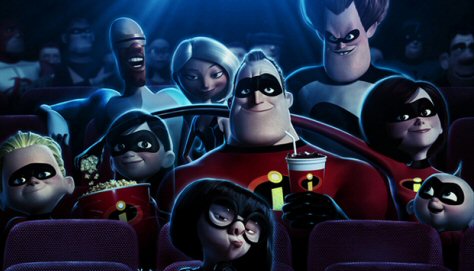
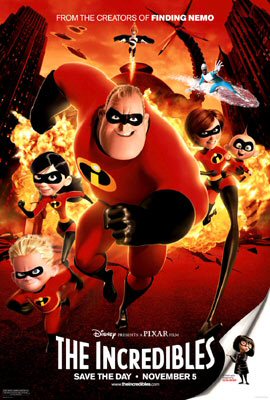
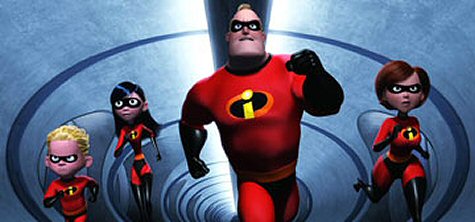
You’re hearing and reading it everywhere and the buzz is not exaggerated. Brad Bird’s The Incredibles (Disney, playing everywhere) is a major wow and easily one of the coolest films of the year. It’s got the stuff and the attitude that super-hits are made of.

My willingness to invest in big-studio animated features over the years has been, shall we say, restrained. Their relentless brightness and bouncing imagery is, for me, headache food.
But every so often one comes along that’s especially rich and witty (i.e., 80% of the jokes geared to adults) and revved-up in a “familiar” but totally fresh way — The Little Mermaid, Toy Story, Alladin, Shrek. Or it’s an exception to the rule in some gentler, more soulful vein, like Iron Giant.
< ?php include ('/home/hollyw9/public_html/wired'); ?>
The Incredibles is one of these and a lot more. Being my usual show-me self on top of feeling incredibly bummed by the election, I went to see this Pixar-produced film two nights ago with an attitude. I tried to feel bored or irritated by it, but it wouldn’t cooperate. It’s simply too well written, too sharp, too synched-up.
I never thought I’d feel this jazzed about a family movie. It’s not just an exceptionally good animated flick — it’s X-factor. It doesn’t just fill the screen; it seems to reinvent notions of what a family-type entertainment can be. If only they were all this hip and plugged in and given to flight. They’re not, of course, and that’s the reality that gives The Incredibles a truly exceptional profile.
The two things that keep paying off like a slot machine are Bird’s script — funny, fairly original, truthful, Simpsons-like — and Pixar’s absolutely dazzling and eye-popping digital animation, which has become an entire trip in itself.
I tried to speak to some tech guy at Pixar about the astonishing leaps their digital animation has made over the past few years, but the p.r. bureaucracy was overloaded with the film opening the next day, so take it from me on faith: the hard-drive imagery in The Incredibles is so vivid and startling that it looks almost psychedelic.

There hasn’t been an attempt in The Incredibles to simulate organic reality as a form of sensual me-too-ism. The idea, rather, seems to have been to digitally reconstitute everything in a way that seeks to constantly persuade the viewer that Pixar’s version is better. The textures of the spandex superhero suits, the strands of hair…the look of nature itself ….the flora and heaving seas….everything has been revised into a vast alter-reality that doesn’t pay tribute to as much as compete with the real thing.
I urge everyone who cares about absorbing these amazing images to the max to see The Incredibles in a theatre equipped with digital projection. The general color-pop, texture-throb elements are mind-blowing in this way. Digital delivers a certain hyper-sensuality that’s hard to describe, but once you’ve been there there’s no going back to the farm.
Bird’s script is basically about the rejuvenation of middle-age, which in itself doesn’t sound particularly kid-friendly. This is why I liked it, of course, but I can’t imagine any kid over the age of seven or eight who wouldn’t feel the same.
The happily-ever-after story is fantasy, of course, but rooted in what feels to me like hard middle-class experience. It’s not just a lot of bullshit ideas thrown in because they’re funny, like they’re making some Will Smith movie. The script has an undertow. The underlying message is that parenting doesn’t necessarily amount to a banishment of adventure and vitality, and that a family in a rut can rediscover and replenish itself.
Mr. Incredible (voiced by Craig T. Nelson) and Elastigirl (Holly Hunter) are onetime super-heroes sidelined by lawsuits (some of the people they’ve saved are resentful of their heroism and have turned to shyster lawyers to try and clean up) and middle-aged responsibilities. They’re just a couple of parents trying to cope and keep it together with three kids, bills and lethargy to cope with.
To escape the drudgery, Mr. Incredible and his former superhero pal Lucius (Samuel L. Jackson) — known in his heyday as Frozone, a spandex guy who can turn water into ice — listen to a police-band radio at night in order to find life-threatening situations they can jump into and be heroic in, just to feel the old juice.

The action kicks in when Bob is offered some freelance superhero work after getting fired from his dead-end insurance-company job. Elastigril gets the idea he may be cheating on her. It turns out his new employers are baddies with the usual sinister motives, which lead to Mr. Incredible being in jeopardy. This results in Elastigirl and their two teenage kids, Violet (Sarah Vowell) and Dash (Spencer Fox), donning the superhero attire and jetting off to the Jurassic Park-like island in the Pacific where Dad is being held.
Hence the third act with the family fighting a diseased wannabe-superhero creep (Jason Lee) and his giant spider-like killing machine, both on the island and then back in the big city, etc. A bit predictable…okay, more than a bit…but rousing and satisfying and funny all the way.
The Incredibles isn’t just a great animated feature in the mainstream vein. It’s a deeply satisfying movie-movie (and that term is used alot without much sincerity). I wouldn’t call it blazingly profound or super-original, but it passes along some fundamental truths about families and middle-age and the need for a sense of vitality in life, and that’s no small thing. And it ties the bundle together with wit, humor and splendorous style.

Fahrenheit Redux?

Like everyone else, I’ve been assuming over the last several weeks that if Bush won the election Michael Moore’s Fahrenheit 9/11 would be dead as a Best Picture contender. If Bush had lost, nominating the Moore doc “would have been a way for Hollywood to celebrate itself and its influence,” a journalist friend recently said.
It may not have had much of a real chance regardless, despite its phenomenal financial success. Some have posed questions about Fahrenheit‘s thoroughness and veracity, and there’s the effect of all those right-wing Moore-slamming docs to consider. But ironically, it may be that Bush’s electoral triumph has actually improved its Oscar standing.

Here’s the scenario, as advanced by industry tipster Pete Hammond:
Academy voters, who are overwhelmingly liberal and, like most people I’ve spoken to around town over the last two days, probably deeply depressed over Bush’s triumph, may decide to nominate Moore’s film for Best Picture as a way of saying or doing something in response to the election, instead to wandering around and looking like they’ve been kicked in the stomach.
Nominating this anti-Bush doc, which the Cannes Jury was not alone is calling a first-rate piece of filmmaking, would be at least that….a retort, a nice tidy little f***-you to the Reds or, more to the point, the Karl Rovies. We will not lie down, acquiesce, go along. What this film says is valid and verified, and it links to core convictions that most of us share.
“My thinking a long time ago was that if Bush should win it would take all the heat out of Fahrenheit,” Hammond told me Thursday afternoon. “Then I changed my mind, and now I’ve really changed my mind. Now that there’s even a more intense feeling about Bush and everything this film was about, it may actually help the movie.”
Nominating Fahrenheit 9/11 would be “the most collective statement that the Hollywood community could make,” Hammond believes. “And remember they only really need a [marginal] number of votes to nominate it, and Academy members may look at this as not only a deserving film but a way to say something…I think it could be in a stronger position than if Bush hadn’t won.”

Former Universal Pictures honcho Tom Pollock, whom I briefly spoke to outside Hollywood’s Arclight theatre last evening, disagrees. “I happen to be one of those who supports a film for Best Picture based on its artistic merits, and not on any political baggage or import that goes with it,” he says. “And my interest, right now, is on other films.”
Marketing veteran Marvin Antonowsky, also an Academy member, doesn’t believe in the Hammond scenario either. “I don’t think it’s going to happen,” he said Friday morning.
I don’t know if it’ll come about either, but emotionally it would feel awfully damn good if it did. It would also be, in my humble view, an artistically justified thing. Just ask Quentin Tarantino or Tilda Swinton.
Fahrenheit 9/11 is an extremely persuasive piece of hard-core agitprop. It was the year’s second-biggest cultural lightning rod movie (after The Passion of the Christ). It made motion picture history by becoming the first documentary to pass the $100 million barrier. And it cut through the sludge and, in the view of many millions, said something right and valuable and brave.

Creasy’s Legacy

Paul Doro has sent in an interesting piece that analogizes voter attitudes with the import of two Denzel Washington films that opened earlier this year:
“It may surprise you, but two Denzel Washington characters hold the key to this year’s election, and particularly the whole red state/blue state issue,” Doro begins. “What happened can be summed up, or at least echoed on some level, by Tony Scott’s right-wing Man on Fire and Jonathan Demme’s liberal-minded The Manchurian Candidate.
“On one level or another, Bush vs. Kerry was like Scott vs. Demme. Or Creasy vs. Marco.
“Although it was a major summer thriller about a live-wire topic, Candidate managed a gross of only about $65 million, and thus was seen as a disappointment. Fire , released in April, managed to hit a slightly spunkier figure of $78 million. Neither was a monstrous hit or a huge disaster, but they paralleled the election, which also had a clear winner despite being a close contest.

“Creasy, Denzel’s Man on Fire character, went on a brazen mission of cold, calculated revenge in the film’s third act. He killed (i.e., slaughtered) without remorse in order to accomplish what he felt was absolutely necessary or at least deserved, which was delivering justice to the kidnappers of a little girl he’d come to love.
“Creasy’s attitude was clear: collateral damage be damned. If you got in his way, tough shit. He was righting a wrong. Completely a black-and-white issue. Old school and Old Testament. An eye for an eye. When someone strikes at those close to you, you strike back. That is easily understood and digested. You appeal to people’s base emotions and make it difficult for them to see it any other way. Good must prevail over evil and order must be restored.
“Just like the United States did in Iraq, Creasy essentially did it all solo. He didn’t care what anyone else thought about what he was doing. He wasn’t going to listen to what anyone else had to say. He received a little help here and there, but it was ultimately his mission. He didn’t require allies or approval.
“And audiences that showed up, ate it up. They took comfort in seeing Denzel seek vengeance (and is it any coincidence that his character quotes the Bible?). They loved watching him mercilessly torture and kill in order to rescue the little girl.
“It was pure and it was simple. Everyone cheers for a righteous man who has a troubled past (remind anyone of anyone?) but is trying to do right. No one stopped to question the moral issues. Complexity is not in the building. He did what had to be done. For Red State voters, what’s not to love?
“On the other hand, the vastly superior The Manchurian Candidate (in my opinoon, of course) didn’t exactly set the summer box office ablaze. Maybe that was because last summer was busier and more competitive than usual, but you can’t say that it didn’t disappoint at least a little.
“Denzel’s Cpt. Marco falls into the gray area. He’s a much more complex man than Creasy . And despite being a military man (Kerry), he has a tough time winning people over. Maybe he just lacks charisma. Or he seems a little distant. Maybe he’s too smart for his own good and comes off as an elitist. Whatever it is, people don’t immediately warm up to him. They are skeptical and take convincing.

“Intelligent and thoughtful, Marco’s methods are quite different from Creasy’s (as is their respective situation). He gathers evidence and seeks facts. He asks questions first and pulls the trigger later. Maybe he never gets around to pulling the trigger. Maybe he finds other ways to accomplish his goals. Maybe he can find allies and work with them to achieve things. Better to make friends than enemies.
“There is evil in the world, Marco believes, but it isn’t obvious. It doesn’t always announce itself. You have to look for it and calmly, carefully attempt to stop it. There are lives at stake. You don’t want to cause any unnecessary harm. Quite the opposite. Better to be certain about what you’re doing. Better to know exactly who your friends and enemies are.
“Ask people why they voted for Bush, especially moderate, non-religious freaks. Stoppping gay marriages might have been a hot-button factor, but their vote really boiled down to terrorism. Not wanting to change presidents while we’re at war. Not really believing that Kerry could protect us. Believing that Bush could do a better job of keeping us safe, despite all the evidence to the contrary.
“In short, people wanted the man who shoots first and asks questions later. The man who is simple and sees things in black and white. The man who will do whatever it takes to find the bad people and destroy them, consequences be damned. They made their decision at the box office, and at the polls.”

Prick Up Your Ears

Michael Bergeron of Houston, Texas, was the first to correctly identify all three of Wednesday’s sound clips.
Clip #1 is Burt Lancaster’s J.J. Hunsecker speaking about Tony Curtis’s Sidney Falco in Alexander McKendrick’s Sweet Smell of Success (1957). Clip #2 is Cary Grant and Ingrid Mergman in a third-act scene from Alfred Hitchcock’s Notorious (1946). And Clip #3 is Kirk Douglas and George Macready in a scene from Stanley Kubrick’s Paths of Glory.
Here are today’s dialogue clips. Clip #1 is from Walter Hill’s Streets of Fire….kidding! It’s actually the easiest of the three, and features a certain debonair actor who committed suicide over, if memory serves, a profound case of boredom. Clip #2 ought to speak for itself, and Clip #3 is a tiny bit harder than the other two, but not by much.
Harder and harder clips will follow in the weeks to come. Send in your answers quickly and include a JPEG photo, and I’ll post the winner in the column in next Wednesday’s column.

Linney

“I love Laura Linney as much as you do, and maybe even more, but surely the
unmitigated commercial failure of Newmarket’s P.S. sends her chances of a Best Actress nomination completely down the gurgler? And is it certain that Searchlight won’t push for her in the leading category for Kinsey?” — Australian Exhibitor Guy
Wells to Australian Exhibitor Guy: The movie died, eh? Toast? Off to video? I guess Laura Linney’s great performance doesn’t deserve a Best Actress nomination then. Really too bad. I wish P.S. had been more successful because if it had been, Linney’s performance would be a contender.

Lefties

“In Wednesday’s column you said your spirits needed a lift. I’ve been trying to find some small consolation in the fact that we’ll probably never have to see or hear George W. Bush again.
“Now that he’s a lame duck, we won’t have to watch him campaign again. Now that he’s no longer accountable to voters, he’ll refuse to give press conferences. And now that he has an even larger Republican majority in the Senate and House, there will be nobody to hold him accountable with public hearings for the inevitable scandals that usually bog down second terms.
“I expect the laziest president in history will spend much of the next four years on vacation at his ranch (out of sight, out of mind) while the world goes to hell.” — Mike Scholtz, Duluth, Minnesota.

“I’m a little surprised at the election as I figured Kerry would win by a narrow margin. Bush is riding on the coattails of the evangelical crowd, since I guess any Christian who at least thinks about going to church has a moral inclination toward Bush since he considers Christ his main man.
“In any case, nothing can be done. It’s over and nothing really ever changes anyway. Life just goes on. Try to stay out of trouble, I guess. I know the Kerry win meant a lot to you. I guess this also means Fahrenheit 9/11 is not going to be nominated?” — Kathyrn Garcha.

Youth

“The Youth Vote is the Fool’s Gold of Elections. The Democrats know they don’t vote. The Republicans know they don’t vote. This hasn’t changed. And it likely never will change. So why did Kerry try so hard to get the youth vote? And just months after that strategy clearly failed Howard Dean.
“Sure, they’ll vote for ya… on msnbc.com, yahoo.com, or cnn.com. But will they show up at the polls? Well they haven’t done it yet, and there is no reason to believe that they will anytime soon.
“I imagine that standing in a two-hour line at the polls is similar to standing in a two hour long line at the DMV, but without the obvious benefit of walking out with a drivers license. The `I voted’ sticker is cute, but just isn’t enough to entice the young voters who are now, more than ever, expecting things to be quick and easy… two things that voting is not.
“And I say this as a voter that fits into the coveted 18-29 age group… as someone who woke up at 5:00 AM on Tuesday to get to the polls by the time they opened… as someone who voted for the president of the United States for the third time… and as someone who voted for Bush.
“As for your extreme fear of the way that the country is choosing it’s leaders, rest assured that while some dumb people voted for Bush for the wrong reasons, some dumb people voted for Kerry for the wrong reasons too (like the mythical draft). Generally it evens out. Libertarians (who make more sense to me than the Republicans or the Democrats) tend to vote Republican because we don’t have a viable alternative. The lesser of two evils, in our view.

“If you wanna blame something original, blame the same-sex marriage initiatives that were on the ballot in 11 states. Evangelical Christians weren’t voting for Bush based on his DUI in 2000. Well this year in swing states such as Michigan and Ohio same-sex marriage initiatives were on the ballot. That initiative may have gotten them to the polls and while they were there they probably voted for Bush.” — Derrick Diemont , Yorktown, VA.
“Why did the Blues lose? Maybe if people who happen to disagree with them politically weren’t automatically labeled as fascists or Bubbas or gun-toting, three-tooth rednecks who hate all them queers. Maybe if people like Nick Kristof and Lewis Beale would stop complaining about Red Staters ‘voting against their own interests.’
“And perhaps, just perhaps, people who vote Republican know what their own interests are better than Nick Kristof. and they think it’s the height of arrogance for him to tell them what they should think is important. Maybe if people who support the President weren’t diagnosed as psychotic.
“Gee, I can’t imagine anyone getting all that thrown at them and not wondering if the accusers have just a hint of elitism. If you stopped spending all your time disparaging such a large percentange of the voters, they might swing your way every once in a while. Just a thought.” — Bryan Farris, Baton Rouge, LA.
Wells to Farris: You’re right, Bryan. It’s mean and dismissive of Blues to suggest that Reds don’t respect the rights of gay people. Reds have long been known for their respect for gay rights, and it was lax of me to ignore this.

Righties

“How sad you are! To me, you’re just another wacko liberal living among other wacko liberals who really believe that people living in La La Land know what’s best for the country. You people live in a bubble, feeding off each other’s discontent. It must really hurt you folks to have to come to the realization that your opinions carry zero weight in America.” — Louis L. Orlando.
“Stick to movies. Your politic rants are for the birds.” — Bicycle Bob
“Maybe its time for you to admit liberalism is dying a slow and tortured death in this country. It’ll hang around in [the] big cities and Massuchucetts but it’s dead everywhere else. And why? Because it is out of touch with modern America.” — Mindy Cohn
“Did you pack your bags for Canada yet? You and Alec Baldwin can catch the flight together.” — Mark Zeigler.

From a Friend

“A little patience, and we shall see the reign of witches pass over, their spells dissolve, and the people, recovering their true sight, restore their government to its true principles.
“It is true that in the meantime we are suffering deeply in spirit, and incurring the horrors of a war and long oppressions of enormous public debt.
“But if the game runs sometimes against us at home we must have patience till luck turns and then we shall have an opportunity of winning back the principles we have lost, for this is a game where principles are the stake. Better luck, therefore, to us all; and health, happiness, and friendly salutations to yourself.” — Thomas Jefferson , 1798.

Late Again Apologies to all

Late Again

Apologies to all in confessing that Friday’s column won’t be up until 3 or 4 pm Pacific. Hooray for The Incredibles, a possible new potency acquired by Fahrenheit 9/11, first peeks at Alexander this weekend, new dialogue audio clips, etc.

After the Fall

I was goaded early this morning by a conservative woman friend. (Yes, there are righties in Beverly Hills — they just don’t announce themselves). I had initially provoked her in an e-mail yesterday, telling her to grim up for a Kerry win. Now she was calling back to gloat over the Bush win, which she said was driven by moral reasons on the part of right-thinking Americans.
This beautiful fascist blonde was puffed up like a toad about a near-surreal state of affairs. The Reds so despise the perceived elitism and morally jaded attitudes of the Blues, she was more or less saying, that they’ll cut off their nose to spite their face.

“One of the Republican Party’s major successes over the last few decades has been to persuade many of the working poor to vote for tax breaks for billionaires,” Nicholas Kristof says in a New York Times column published this morning.
The final outcome of the election was uncertain as Kristof wrote the piece, but “John Kerry’s supporters should be feeling wretched about the millions of farmers, factory workers and waitresses who ended up voting — utterly against their own interests — for Republican candidates,” Kristof added.
< ?php include ('/home/hollyw9/public_html/wired'); ?>
The Red’s went for Bush for “moral reasons”? Am we all co-starring in a Twilight Zone episode? Is that Rod Serling standing off to the side of the sound stage, being cryptic and grinning and smoking an unfiltered cigarette?
Who were the pollsters talking to? And what about those exit polls we were all told about yesterday showing Kerry taking the election?
In his concession speech a minute or two ago (it’s now 11:19 am), Kerry just said, “America only moves forward.” I know he doesn’t believe that the election results has supported this statement. Tens of millions in this country, I’m sure, feel that the opposite has just kicked in.

I get it on one level. To be elected President these days you have to have at least a touch of that Andy-of-Mayberry quality, and Kerry was badly cast. Too tall, too rich, too much of an Easterner. He didn’t energize the youth vote. He turned out to be a taller Michael Dukakis. If Bill Clinton had been allowed to run, he would have won hands down.
I’m trying to keep myself from throwing up as I write this. I don’t want to succumb to negativity, but I despise Bubba Nation and the thinking that led to what happened last night. And yet I know that hate is futile and will get me nowhere, and that it’s time to turn the page.
“If people want to vote against their own best interests, it’s gonna come back and bite them in the ass,” a journalist friend, Lewis Beale, wrote me this morning. He said that while researching a just-published George Romero story in Toronto, “Every Canadian I spoke to thought a Dubya victory would prove that America was absolutely psychotic. Time Canada published a poll in which 56% of Canadians said the word would be `worse off’ if Bush won.”
If there’s any reason to think otherwise, I’d sure like to hear it. My spirits need a lift, as there’s obviously no comfort to be gotten from Ilsa of Beverly Hills.

Bunker Blues

Speaking of facism, Adolf Hitler is back. The Austrian corporal may not mean very much in terms of significant box-office, but he obviously still has the power to greenlight movies. Thematically he is still the gift that keeps on giving.
There was that four-hour CBS biopic, The Rise of Evil, that aired last year, plus that ’03 documentary called Blind Spot: Hitler’s Secretary. There was also Menno Meyjes’ Max (’02), a low-budgeter about a young and unsettled Hitler in old Vienna.
And now comes Downfall, a smart, vividly rendered, highly convincing ensemble drama — funded, filmed and performed by Germans — about the last few days of the Hitler regime, focusing yet again on spiritual and cultural collapse as the last of the loyal huddle in an underground bunker in Berlin.

This is nothing new for anyone with any mileage. There’s already been two respected, reasonably accomplished Hitler-in-the-bunker dramas — Hitler: The Last Ten Days (’73) with Alec Guiness in the lead role, and The Bunker (’81), a TV pic with Anthony Hopkins as Adolf.
But it’s been 20 years plus since the Hopkins film (which I never saw), and a couple of generations have grown up since. And Downfall has a certain cultural authority due to the fact it’s the the first German-funded film to tackle the subject head-on since G.W. Pabst’s Der letzte Akt (1956), which nobody has heard of, much less seen.
But what kind of currents can A. Hitler be expected to stir among U.S. audiences? And especially within the Academy?
This is obviously one question facing Downfall‘s producer and screenwriter Bernd Eichinger, who’s also the head of the Los Angeles-based Constantin Film.
Using the perspective of Junge, the young woman who worked for Hitler from ’42 until the end and whose recollections were the entire focus of the Blind Spot doc, is one thing that sets Downfall apart. (An excerpt from the respected ’03 documentary is used at the end of Downfall.)
Directed with workmanlike efficiency by Oliver Hirschbiegel, Downfall is based on “Inside Hitler’s Bunker: The Last Days of the Third Reich,” a book by Joachim Fest, and the memoir “Until the Final Hour: Hitler’s Last Secretary” by Traudl Junge (the Blind Spot subject) and Melissa Mueller.

The result is an exceptional historical piece. It’s all about detail, detail and more detail — not so much a Hitler character study as a Guernica-sized, pointillist portrait of the last remnants of Nazi culture collapsing into itself.
Plus it has an extremely feisty and snarly (if not entirely unfamiliar) Hitler portrayal by Bruno Ganz, along with a supporting cast that delivers one memorable drill-bit moment after another.
I don’t know where to start in praising them all, but the stand-outs include Alexandra Maria Lara (as Traudl Junge), Corinna Harfouch (as Maga Goebbels, the wife of the famed Nazi propaganda minister), Ulrich Matthes (as Goebbels), Thomas Kretchmann (as a morally dissolute soldier), Heino Ferch (as Albert Speer), Juliane Koehler (as Eva Braun), Michael Mendl (as a tough German general), Goetz Otto (as Hitler’s personal adjutant) and Donevan Gunia (as a Hitler youth dodging Russian bullets).
Downfall was favorably reviewed several weeks ago out of the Toronto Film Festival. Variety’s Derek Elley called it “classy upscale fare” and “a cumulatively powerful Goetterdammerung.” And it has done well commercially since opening in Germany, Austria and German-speaking Switzerland in mid September.
And yet Downfall appears to have a problem in Los Angeles. There doesn’t seem to be enough of a receptive mood among the early-viewing industry crowd, which will have something to say about whether Downfall has any kind of shot at being nominated for a Best Foreign Language Film Oscar.

Downfall hasn’t yet found a U.S. distributor, which surely says something about the mood out there.
On Tuesday I wrote that Eichinger hadn’t hired a savvy, plugged-in public relations veteran (someone like Fredel Pogodin or Nancy Willen, say) to rep Downfall with the Academy’s foreign branch and, less importantly, the Hollywood Foreign Press, which hands out the Golden Globe Awards. But today (Thursday, 11.4) I was told by publicist Anna Gross that Karen Fried (formerly of Rogers and Cowan, the Angelotti Company) is being brought in to handle this.
And there’s an idea out there — pretty much groundless, if you ask me — that the film portrays Hitler with too much sympathy.
Derek Elley said that Downfall “will undoubtedly raise discussion in some quarters for its coolly objective, humanistic approach.” I echoed this view myself in my 10.22 column. I had been told that the film depicts Hitler in a way “that may seem overly sympathetic (i.e., too vulnerably human) to industry mainstreamers, which, if true, means it’s toast.”
I’ve seen Downfall and it isn’t toast. It deserves respect and allegiance. And it doesn’t soft-pedal the venality of Adolf Hitler in the slightest.
Gnomish and bent-over, Ganz’s Hitler is a raging misanthrope who sometimes screams about being betrayed or poorly served, is sometimes in denial about his troops’ ability to resist advancing Russian troops, and sometimes wants to pull the proverbial temple down on his (and everyone else’s) head.
Most of the story is about the last ten days of Hitler’s life, from his 56th birthday on 4.20.45 to his suicide on 4.30.45. But a lot of fascinating stuff happens all through the film that doesn’t concern Hitler, and there’s almost an entire act lasting about 40 minutes that unfolds after he and Eva Braun are gone.

There’s a devastating sequence in which Goebbels’ wife Magda poisons their six children before she and her husband commit suicide by pistol.
You’re led to assume that Lara’s Traudl Junge will be a key character, since the film begins with her being landing the Hitler secretary job in 1942. And the film does stay in touch with her, but it pays attention to so many other characters as well.
I don’t know what else to add, except to reiterate that Downfall is in no way a Hitler-coddling thing, or even a slightly oblique one.
Okay, there’s one device in this movie that tries to vaguely humanize the guy. It shows us that Hitler loved his dog, a German Shepherd named Blondi. And yet just before he kills himself Hitler gives orders for Blondi to be given poison, and we see this happen and we hear the poor dog cry out just as the poison is being put in her mouth. So the hint of that regular-guy, dog-loving thing is pretty much cancelled out.

Prick Up Your Ears

Here are three dialogue clips. Listen to `em all and try to identify, but you can’t just say the movie title – you have to identify the actors too. They’re all fairly easy, if you’re any kind of movie buff.
Clip #1 is, I think, fairly legendary and rooted in the lore of yesteryear nocturnal Manhattan, Clip #2 is pretty hard to miss if you’re a fan of intelligent thrillers, and Clip #3 should also be easy to spot (and I’m not gonna say why).
Harder and harder clips will follow in the weeks to come. Send in your answers quickly and include a JPEG photo, and I’ll post the winner in the column as soon as he/she is known.

Election

I’m being told that I was too harsh last night in condemning the 18 to 29 year olds for their weak turnout, which, according to MSNBC, amounted to the same percentage of youths who voted in 2000. But the fact is that voting levels yesterday were higher across the board, including the 18 to 29 group, so it was all proportional.
So okay, I over-reacted. But obviously the youth vote still wasn’t high enough. They could have changed things and they didn’t, and the slackers know who they are.
“Before you deride an entire age group as `scumbags,’ you may want to look at your statistics. Even though the 18-29 voting group represented 17% of the electorate, as it did in 2000, the fact is that many, many many more voters in that age group came out to vote this time, but so did older voters so the percentages did not change. It also appears that the voters in the 18-29 age range voted much more convincingly Democratic than they did in 2000.

“Apparently the large numbers of older voters who came out in 2004 but not 2000 were able to offset those Democratic votes. You may want to point your ire at these older voters, but that would not fit in with your pattern of deluded but cranky nostalgia for the survivors of the 60s and 70s.” — Marc Reiner, New York, N.Y.
Wells to Reiner: I don’t have any particular nostalgia for the `60s and `70s, although I’m a huge fans of ’70s movies. Especially ’70s crime movies. Which reminds me: Charley Varrick is showing this Saturday at the American Cinematheque.
“Okay, yes — fuck Red America and its President. But take it easy on the kids. 17% is a decent turnout from any 10-year demographic slice. And if the percentages held from 2000 it means 20% more of them did get out.
“If you’re looking for a goat this morning I’ll offer Bin Laden. That egomaniac’s sudden appearance on Friday spooked the sheep enough to carry the day for Bush.
“But it’s a hard morning. I’ve never been more proud to be an Illinoisan; I wish I could say the same about being an American.” — Joe Greenia, Chicago.
“One reason why that youth vote number is so low (at least for the lower half of the demographic) is that most people of that age are out at college. Often, that means they are a good distance from their polling place and don’t go to the polls. If they vote, it is via absentee ballot, which that poll wouldn’t account for. Neither me, nor my wife voted in ’92, when we were in college.

“Stronger arguments can be made that Kerry failed because just saying that you are not Bush isn’t good enough for a lot of people. Also, having a personality of a stump doesn’t help. Whether we like it or not, how personable a candidate is is more important than how intelligent he is.” — Jason Birzer.
“The under-29 crowd voted in the same numbers as it did before. However, since more people voted in this election than in the last election that statistic represents a larger number of people. So there were in fact more under 29’s who voted this time than last time, just not enough to insure a Kerry victory. It might be a good thing that a lot of them didn’t show up, since not all young people are Democrats.
“Still, if you want to be pissed at someone, be mad at the kids at Ohio State University. If they had all gone and voted in Ohio rather than sending in absentee ballots in their home states, the state might have swung blue.” — Bradley G. Sims.
“I would save my venom for people like Michael Moore. Fahrenheit 9/11 cost….what? About as much as an average episode of Friends? It made over $100 million in the theaters and became the biggest selling DVD of 2004. And yet Moore continually refused to let it get a free showing prior to the election. He would only permit pay-per-view or pay webcasts. It shows where his priorities truly lie.
“However, I doubt if Moore is doing an Oskar Schindler right now, agonizing over what more he could have done to change he election. Now he gets four more years of profitable bitching.” — Rich Swank.
“I wrote to you last week in a very optimistic way about the youth vote, but clearly my fellow young Americans fucked me. We did show up in record numbers (seeing as how the voter turnout was extraordinary and my demographic maintained the same % of voters as we did in 2000), but it wasn’t enough. If only a dense atmosphere of apathy didn’t surround the beautiful havens of passionate and informed democracy, like my university.

“As for myself I was there at the Connecticut polls at 5:45 AM with Kerry propaganda to represent my age group, but apparently I didn’t represent them accurately. Thanks for your clear perspective on the whole thing and I can’t wait to commiserate or celebrate with you in ’08. Until then let’s hope the movies are good.” — David Ehrlich, Columbia University, New York, N.Y.
“I woke up very early this morning with a sense of hope. I hoped that maybe, just maybe, there was a silent coup just waiting to bre and boil over. But as I sit awake at 3:10 AM CST, I’m left wondering, what happened?
“How is it that Bush stands such a great chance of winning? How is it that this man that really does represent so many bad causes has such a strong base of support? How is it that a country that makes Fahrenheit 9/11 the highest-grossing documentary of all time, something that really does show that there is a strong part of the country dissatisfied with our current leadership, let the film’s subject stick around?
“How is that possible? How did this happen? And wwho knows what will come next? Where will we send our war on terror next? How many more will die in Iraq? How many Americans will suffer at home through Bush economic policies, education policies, and civil rights violations? Four more years. How anyone could be so irresponsible to not vote is beyond me.
“I will wake up in roughly five hours to attend classes for the day. The world I wake up in will remain unchanged. And I will feel sick to my stomach. To Bush supporters, congrats. I applaud your passion and your desire to see this man remain in office. You have your beliefs and you stuck by them all the way to the end. To Kerry supporters, we tried. To the undecided that chose not to vote, thanks.
“I’m angry. I’m opinionated. I’m trying to remain calm. But if the young voters didn’t quite show up in the droves that people expected them to, I wonder how they will feel if the draft is reinstated. I’m just wondering what the hell happened.” — Andy, Vermillion, South Dakota.

“Come on Jeff — split the country? Is it really that bad? Do you really feel so harmed and disillusioned and assaulted by this regime that you feel the country should be split in two? This is just getting ridiculous.
“I know people care for what they believe in, but the madness that has taken place over this past election cannot go much further. I am probably considered the enemy by you. I am in that 18-29 group that didn’t vote but would have voted for Bush. Its not that I really like Bush — it√¢‚Ǩ‚Ñ¢s that it√¢‚Ǩ‚Ñ¢s a choice between what I felt was the lesser of two evils. I find that Kerry seemed to be a weak person with follower qualities written all over him. The democrats shot themselves in the foot with having someone as mediocre as Kerry as their choice.
“My generation will not be remembered as the Generation of Shame because we chose not to vote in this, anyone closely related to your thoughts should be. I just find it to be a horrible travesty to consider splitting the country over this, or that this election needs to be as divisive for the general public as it is shown to be by people of your stripe. I have many friends who are hard-line blue like you, and guess what, we are still friends. We may have differences but we stick through them. You need to learn that this is not the end of the world.” — David Harper.
√¢‚Ǩ≈ìIn regards to your comments that all 29-and-unders are a Generation of Shame and that it is their fault for yesterday’s election, go fuck yourself. Last election it was all Nader’s fault, and now it is young people√¢‚Ǩ‚Ñ¢s. Maybe Democrats should think about creating a stronger, clearer message, and stop looking for scapegoats when they lose elections. Your comments reek of sore losing. By the way, these comments are coming from a Shame Generation 22 year old Kerry Voter.√¢‚Ǩ¬ù — Dan Morfesis.
“If you ask me, the American people let us down. The whole world, I mean. We were
expecting a change. Americans should be aware that their Presidential election affects every other country, and they should be able to see beyond their fears. They should carry the title of ‘strongest nation in the world’ with more dignity. Instead of starting wars all over the world to help us all to be ‘free,’ they could simply avoid wars…or better yet, avoid the President who seems so eager to start them. That would be much more helpful.” — Alexandro Aldrete, Monterrey, Mexico.

Roar of Greasepaint

Roar of Greasepaint

I predicted this a few weeks ago, and now it’s coming to pass: Joel Schumacher’s The Phantom of the Opera (Warner Bros., 12.22) is making its way, buzz-wise, into the Best Picture Oscar race.
This lavishly produced (I’m told) musical, which almost no one has seen but is based, as everyone knows, on the popular Andrew Lloyd Webber stage musical, has become a big Best Picture “maybe” largely due to a story written by New York Times reporter Sharon Waxman that ran yesterday (10.28).

“You know it’s going to be a strange year for the Oscars when November is just around the corner and the talk in Hollywood is about The Phantom of the Opera,” her story began.
Schumacher, Waxman continued, “is not exactly an Oscar habitu√ɬ©, never having been nominated before. But the need for buzz, any kind of buzz, is very real, and a sure sign of Oscar desperation.”
< ?php include ('/home/hollyw9/public_html/wired'); ?>
I haven’t seen Phantom either, but knowing Schumacher’s work as I believe I do, and having spoken to a bright fellow who has in fact seen Phantom, it sounds to me like the sort of Best Picture nominee that the squares and the blue-hairs will rally ’round, like they did last year for Chicago.
I’m inclined to believe this (although, to repeat, I know absolutely nothing first-hand) because my source has told me that Phantom, although well performed, richly assembled and probably very commercial, is glitzy and overwrought. He also doubts it’ll become a critical darling “and you need critics in an Oscar race.”
Oscar talk is building nonetheless, one gathers, because red-state moviegoing tastes are as much in evidence in Beverly Hills as they are in Mobile or Duluth, and we all know (or at least suspect) that folks who think red tend to applaud emotionally grandiose “art.”
For Academy members of this persuasion, an emotional plunging-over-the-waterfall experience — i.e., one that’s not necessarily abundant in terms of delicacy or succinctness or representations of plain-truth reality, but is lathered in faux-emotional foam — is what Oscar-bequeathing is all about.

Here’s what my guy says, precisely:
“I think [Waxman’s] out of her mind,” he began. “This is a big, over-the-top, glitzy Joel Schumacher special. It’s a theatrical construct that Joel has chosen not to turn it into something realistic, but into a visually lush, overwrought Hollywood musical.
“It’s just a question of taste…of being over the top and a little campy…a little bit of the Batman syndrome…it’s a little `much.'”
“It’s very commercial, actually. It’s a very commercial movie. I just don’t see it as an Oscar film because the critics are going to be hard on it. I could be wrong. [A friend] saw it with me, and we both didn’t think it was going to be an Oscar film. One of the problems is Gerard Butler, who plays the Phantom, but Emmy Rossum and Miranda Richardson are very good.
“I could be wrong about the Oscar chances. It could be a Chicago thing all over again, with people of discriminating taste saying no but Academy members loving it anyway – it’s a gorgeous film to look at, it’s absolutely stunning, and Academy members tend to love that and tend to fall all over themselves in admiring the craft of it.”
Set in 19th Century Paris, the story concerns an obsessive mask-wearing hideaway named Erik (Gerard Butler), and his growing impassioned love for a pretty young opera singer named Christine (Emmy Rossum).

“Everyone knows this, but thematically, of course, it’s a beauty and the beast tale,” the guy continues. ” It says we should get beyond the superficial appearance of things, and Butler plays one of those damaged outsiders. You’re supposed to see the beauty of his soul, and there’s a musical connection, an artistic connection, between [he and Rossum], and there’s this great realm that the two of them inhabit in Paris.”
Most of the Phantom action takes place at the Paris Opera house (the old one at Place de L`Opera, not the relatively soulless one at Place Bastille). The film was shot at England’s Pinewood Studios and in London.
I’m not saying Joel Schumacher hasn’t sometimes risen to the occasion. His best films — Falling Down, The Client, Tigerland — show he’s capable of this. I really loved one of his earliest films, D.C. Cab. It’s got a great spirit, and Gary Busey gave one of his career-best performances in it.
But the idea of the director of A Time to Kill, Flatliners, Dying Young, Batman Returns, Batman and Robin, Flawless and Veronica Guerin having supposedly found something new and vital within himself and directed a film that genuinely warrants Best Picture consideration…I don’t know. That’s a tough one to process.

More Balkanizing

Here’s how the rest of yesterday’s Sharon Waxman piece breaks down in terms of red state vs. blue state movies. I may have hit on a new permutation here. Movies and politics have been bleeding into each other for a long time, so it’s not surprising to hear handicappers using similar terminology.
Bottom line: the Academy is made up almost entirely of blue staters who tend to lean red when handing out Best Picture Oscars.
Red being, of course, indicative of common emotional themes that Average Joe’s with pot bellies and baseball caps can easily understand and relate to and digest, and blue referring to stories and emotional matters reflecting the lives of folks with better educations, tonier lifestyles and cultivated lefty attitudes.

There’s nothing new or trail-blazing in the observation that a lot of the Best Picture Oscar winners — Titanic, Braveheart, etc. — have been red. I guess I’m also saying that a blue movie, no matter how good it is, will always have an uphill fight.
The Phantom of the Opera is almost surely a red-state movie — allegedly broad, lavish, grandiose emotions worn on its sleeve, etc.
Alexander Payne’s Sideways, which Waxman acknowledged as a critical favorite (read: not necessarily Oscar-worthy), is without question the most deserving Best Picture candidate so far. It’s a soulful, mature, quietly emotional film about love and pain and the whole damn thing, etc. It’s got it all (including some great laughs), and the Hollywood mainstreamers Waxman spoke to for her piece are going, “Eh.” Why? Because it’s blue.
Martin Scorsese’s The Aviator is about a blue-state kind of guy (the hard-driving, OCD-ish Howard Hughes) and directed by a hard-core blue-stater (Martin Scorsese), but it supposedly has an escapist entertaining mood, which is kind of a red-state concept (keep your head down, live in your own self-created zone, go into denial and be “happy,” etc.). So it’s kind of a red-blue mix.
Oliver Stone’s Alexander is basically about redeeming courage and life being for the stout-of-heart few, but it’s also selling itself as a bloody action thing, so that makes it mainly a red-state package.

Walter Salles The Motorcycle Diaries (viva Che!) is, of course, a total blue-stater. Ditto Jean-Pierre Jeunet’s A Very Long Engagement (soldiers ducking out of battle, searching for a lover), Pedro Almod√ɬ≥var’s Bad Education (same-sex soap opera) and Alejandro Amen√ɬ°bar’s The Sea Inside (assisted suicide).
Eastwood’s Million Dollar Baby, a surrogate father-daughter relationship piece about a lady boxer, seems to have a populist red-state mentality, for the most part. Sports movies in and of themselves tend to be red, and don’t forget that Eastwood’s a longtime rightie.
Fahrenheit 9/11 — obviously blue through and through. Finding Neverland is blue. Richard Linklater’s Before Sunset is blue. The sexually frank Kinsey is totally, obviously blue. Maria Full of Grace, blue. Mike Nichols Closer and James L. Brooks Spanglish, both blue.
The rousing, relatively uncomplicated, all-American Ray is red. The small town, football-worshipping Friday Night Lights is obviously red. The Passion of the Christ, drenched in the sticky stuff, is clearly the reddest of the bunch.

Let It Go

A couple of weeks ago I was talking about throwing sound clips into the column on a semi-regular basis, and of course I haven’t done it since. So here’s a supplement to the defunct What’s That Line? page, which I jettisoned a month or so ago. Just listen to this guy and tell me what movie it’s from. I made it deliberately easy, so no complaints about this. Harder ones are soon to come.

Root of It

Apologies to David O. Russell and the Independent Film Channel for not putting this article about Soldiers’ Pay up until now. I tried last Friday but the clock and the schedule said no.
Soldiers’ Pay is a 35-minute documentary that was shot by Russell, Tricia Regan and Juan Carlos Zaldivar last summer, and then edited by Russell. Essentially about a strange discomforting episode experienced by certain G.I.’s in Iraq after the fall of Saddam Hussein, it’s set to air three times on IFC on Monday, 11.1, as part of an Election Eve marathon.
The doc tells a real-life story that echoes the story of Russell’s Three Kings, which was about three Gulf War soldiers trying to make off with gold bullion worth many millions. The Soldiers’ Pay version is about the actual finding of hundreds of millions in cash while G.I.s searched homes of this or that Hussein Baghdad loyalist.
The temptation was severe and some soldiers pocketed whatever loot they could. Some of them were found out and paid the price. By telling their story Russell is trying to shed light on the various corruptions going on over there, and the matter of who’s making out and who isn’t. He calls their story a “holographic paradigm…it’s a part representing the whole.”

The intention was to “just let these guys tell their story,” Russell said in a phoner last Friday morning.
The doc asks “whether we went there to defend the oil, and says if we treat this arena as a supermarket for our own oil needs, then this [mentality] trickles down.”
Russell, Regan and Zaldivar didn’t just interview veteran noncoms, but native Iraqis, journos like the New York Observer‘s Nicholas von Hoffman, politicos (Republican Rep. David Dryer), psychologists, and Major General J. Michael Myatt, a Gulf War veteran who delivers the film’s saddest and most emotional moment.
Russell said he hoped the doc “might make a difference before the election.” The plan was for the doc to be included on a new DVD of Russell’s Three Kings , but Warner Bros. marketing execs kibboshed this when the doc’s pronounced political import was highlighted in a Sharon Waxman New York Times article that ran last August.
Soldier’s Pay will be distributed on DVD by Cinema Libre, the distribution arm of leftie documentarian Robert Greenwald. Russell said he didn’t know precisely when the DVD will come out, but I would imagine sometime fairly soon. The three 11.1.04 IFC airings will happen at 9:35 pm, 12 midnight and 2:15 am EST, or 6:35 pm, 9 pm and 11:15 pm Pacific.

Good Guy

I’m late on this, but like everyone else I’m very sorry about the passing of Golden Apple Comics owner Bill Liebowitz, a good hombre who died suddenly last Wednesday, 10.27.
Bill wasn’t a friend, but he sometimes helped me with an occasional story and was always ready to help with anything. He was gracious, accommodating and spirited as hell. There was no missing his quickness and aliveness, or the size of his heart.

Liebowitz’s Melrose Avenue Golden Apple store (the other one is in Northridge) is one of the greatest retail-level pop culture meccas ever created. Crammed with comic books, action figures and all kinds of movie-related products and promos, it will remain a tribute to the guy who put it all together.
Liebowitz said on his website that his goal was “to develop Golden Apple as the world’s greatest comic book store… and more. We are constantly changing and experimenting with new ideas, and we don’t intend to stop. We’re very proud of what we’ve achieved, and where we are today.”
My sympathies to his wife Sharon and the rest of the Golden Apple crew.

Revival

Vincent, Tom Cruise’s hit-man character in Collateral, is diamond-like — hard and sharp and full of glints and reflections. For me it’s a hot-cold thing…acting that burns through not because of some forced intensity, but an artful hold-back, cold-steel strategy.
Cruise, never much for passivity, wants a Best Actor nomination for this tour de force. He’s not out of line. His Vincent is a monster and a cripple, but at the same time a kind of tough-love therapist. By the end of the film he’s saved the life of Jamie Foxx’s procrastinating Max as surely as if he’d taken a bullet for him. (Which he does, in a way.)

The more you think about Tom/Vincent, the more the ironies accumulate. Deftly played by a guy known for his own hard-wired intensity, this gray-suited assassin seeps through as a fairly sad figure despite Cruise barely revealing his emotional cards. Sad but oddly charitable, almost evangelical.

Cruise won’t win. The top contenders are Jamie Foxx’s Ray Charles performance in Ray and Paul Giamatti’s touchingly morose wine connoisseur and failed novelist in Sideways. But he deserves to be one of the five finalists, along with Javier Bardem in The Sea Inside and Liam Neeson in Kinsey.

This, in any event, is why Cruise showed up at UCLA’s Royce Hall on Monday evening. To goose his Oscar chances…without appearing to be precisely doing that.

It was billed as an American Film Institute event called “An Evening with Tom Cruise.” MTV personality and journalist Chris Connelly was the moderator. There were two soft leather chairs at center stage, and a huge screen just behind them for showing film clips. The tickets were $20 bucks a pop. The auditorium was just about filled, but not quite.

There was a lavishly catered press reception before the event. Dressed entirely in dark brown (his sister-publicist LeAnn Devett swore that his close-cropped hair hadn’t been dyed that color, but it looked that way to me) and wearing a two or three-day stubble, Cruise stood near the main entrance and talked to anyone who had the patience and the moxie to wait 15 to 20 minutes to push through and wait their turn.

I’m too aloof for that kind of grovelling. What would I say if I got to the guy? I guess we could talk about our mutual friendships with Cameron Crowe and Robert Towne. And I could ask why his Last Samurai character managed to survive that samurai-on-horseback charge straight into a hailstorm of machine-gun bullets. And I guess I could float my pet theory that Cruise’s character was actually a werewolf — i.e., killable only with silver bullets.
A journalist friend who’d interviewed Cruise at press junkets was complaining that “he doesn’t give you anything.” A lot of journos feel that Cruise’s patter is too much about precision, exactitude, presentation. He never relaxes, never lets his guard down.

His fans see things differently. It’s one thing to look at the big grosses for Cruise’s films in the pages of Variety, and another to actually feel the ardor. The fans at Royce Hall were squealing, whooping…it felt almost Beatle-esque when Cruise walked on stage just after 8 pm. “We love you!,” cried a group of college-age girls to my left. “We love you too!” said another group to the right.

Cruise was obviously “on,” but he seemed fairly open to the give and take. He didn’t act or sound like an especially icy type. He seemed more in the realm of being intense, focused….not so much a controller as an uber-regulator. He showed an obvious liveliness of spirit and seemed eager to really listen to people, although perhaps a bit too eager to laugh at times. I forgave him for that.

The show lasted just under two and a half hours. Every 20 minutes or so, the house went dark and Cruise clips were shown. And yet no clips from All The Right Moves or The Outsiders or Curtis Hanson’s Losin’ It. And no acknowledgements than any of these films might have been letdowns for the audience, or for Cruise, which of course happens from time to time.

I couldn’t hear any groans when they ran clips from Days of Thunder (i.e., Top Car) and Far and Away, but then the sound levels were high.
Connelly was crisp, polished and TV pitchman-like. Always going for the jovial chummy tone. Cruise said at one point that he used to imitate Donald Duck as a youth, and Connelly urged him to do it for the crowd. Cruise gave it a shot and made a sound like a duck farting. Connelly to crowd: “What about that? Not bad!”

Cruise is a pretty good mimic though. He did an excellent Jack Nicholson a while later (i.e., acting the bar-rage scene from The Last Detail). I read somewhere he’s great at doing an Al Pacino/Tony Montana. He did a first-rate imitation of Jon Heder doing his Napoleon Dynamite voice.

The place went wild when they showed the famous clip of Cruise dancing in his underwear in Risky Business. The crowd was clapping in time to that Bob Seger beat. “I’ve never done anything like this in which they show clips,” Cruise said later on. “This is pretty amazing.”


Cruise posing for photos with fans after Monday’s AFI Royce Hall event

Cruise recalled that when he first got to Los Angeles and hadn’t worked anywhere, he went to an open audition and read some lines. The casting director asked him, “New to California?” Cruise said yes. “Staying long?” Depends, Cruise answered. The casting director said, “Get a tan.”

He was also told during this stage, “Do movies. You’re too intense for television.”
Connelly asked him about always being recognized and dealing with the fame game. He quoted a line from Bob Dylan’s recently released book: “Privacy is something you can sell, but you can never buy it back.”

The clips reminded me that Cruise was on the physically chunky side in the early to mid `80s, and that he suddenly slimmed down when he appeared in Rain Man in ’88. Cruise said he became a Scientologist right around (or was it right after?) doing Martin Scorsese’s The Color of Money in ’86. I guess he went on some kind of Scientology diet.

“Before making The Color of Money, I had seen Raging Bull five times,” he said at one point. “If I like a movie I see it over and over. Now with DVD I sometimes just sit and re-watch scenes.”

He recalled that when he started shooting Taps and didn’t know how well he or the film would perform, he said to himself, “If this is it, then this is it…enjoy it for what it is.”

“I was always the kid who climbed to the top of the tree in a rainstorm,” he said later. “I’ve always wanted to risk it all.”

Cruise said more than once that “money doesn’t matter” to him as much as going for the challenge and the creative excitement. He said he only wants “a fair exchange in regard to what I’m worth.” Monetarily, he declared, “I’m doing okay.”

“I’ve never met a normal person,” he said toward the end of the chat. “Every person is unique. Every person has a story to tell. Films are personal, character is personal…”

When he was younger he always used to call people “sir.” His publicist Andrea Jaffe finally told him, “Look, you’re freaking people out. Stop saying ‘sir’ and ‘yes sir.'”
He told an amusing story about the months-long shooting of Stanley Kubrick’s Eyes Wide Shut, and how long it took his costar Sydney Pollack (who’d directed him in The Firm) to understand that sometimes Kubrick was more into blocking and thinking things through than actually filming. But EWS only cost $250,000 per week to shoot, or $1 million a month, he said. (That’s relatively cheap for a big-studio film.)

After many, many months of shooting, Cruise went up to Kubrick and said, “I gotta go, Stanley.” Kubrick said okay “and I left,” said Cruise. “And the movie was done.”
He said his goal is to climb Mount Everest. He said he was open to doing a musical. He said he was also willing in doing a straight play, although he seemed a little hesitant about this. His most emphatic statement of the night was, “I was born to make movies,”

Right now he’s doing final pre-production work on Steven Spielberg’s War of the Worlds, which starts shooting in early November and will be out next June. Then he’ll start work on Mission Impossible 3. During the q & a portion near the end I wanted to ask Cruise about the creative conflicts that resulted in Narc director Joe Carnahan’s leaving that project, but I wasn’t chosen.

An agent friend said to me later that evening, a couple of hours after the show was over, that the fans love him because Cruise projects regular-guy vibes — “He’s someone they feel they can relax with over a drink” — and because women think he’s cute and guys want to be like him.

“But he’s not that guy,” my friend argued. “He’s royalty and acts like royalty. He always gets the biggest perk packages when he shoots a film. He lives in a royal realm. He’s not an average type of guy at all.”

Okay, I said, but isn’t that what made him a star in the first place? Not being average?
And don’t people like worshipping royalty? Isn’t that built in to our genes? The urge to show obeisance before power?

“I’m just saying he’s not the guy he presents himself to be,” she said.

To the Wolves?

It’s no secret that I really like Charles Shyer’s Alfie. I don’t think it plays well; I know it does. It may not have the jolt or punch that the original Michael Caine version had in `66, but it’s a believably acted, exquisitely edited, richly scored character piece. It’s not quite Rules of the Game, but it’s a long way from a burn.
I especially liked that Alfie has the character and intelligence not to go all mushy at the end and deliver a conventionally happy turnaround ending. This despite the fact that one of Paramount’s Alfie trailers seems to suggest that Jude Law’s lead character, a hard-core hound who casually hurts women’s feelings through the film, hooks up with costar Marisa Tomei at the end and makes like a father to her young son, etc.
The problem is this: I was told earlier this week that Alfie is “not tracking.” This means it isn’t showing up in moviegoer surveys as something that a good-sized percentage of the audience wants to see. Apparently Law’s name isn’t enough of a draw on this score. He’s seen as more of an “industry star” than a public one.

The standard way to raise awareness and create want-to-see with an upcoming film is to show nationwide “sneaks” the weekend before it opens so people will see it, like it and spread the word. The only reason you don’t do this is if distribution execs are concerned that the word of mouth may not be so hot, which could result in the opening weekend tally coming in lower.
Paramount is apparently not planning any Alfie sneaks this weekend, so draw your own conclusions. I understand why, and at the same time I don’t. This movie sells itself and doesn’t screw anyone over. Law gives his most movie-star-ish performance ever. He really leaves that character-actor attitude in the dust.
I think distribution should be like parenting. Your love should always be absolute and bountiful. Especially when it’s time for your child to meet the world and fend for himself. You shouldn’t raise, bathe, feed, nurture and teach your little boy only to push him out the front door on his very first day of school and say, “Okay, buddy…the bus is down the street….see ya later!” You have to stand by your child, hold his hand, show support and keep showing it.
It’s not just that deceptive trailer. The Alfie one-sheet is also a bit lame. By emphasizing only the fact that Jude Law is good looking and not indicating there are all kinds of layers to this film (which there are), they make it look like lightweight fluff.
Alfie isn’t that. It’s a far better film than what Paramount marketers are trying to suggest, and I just can’t imagine average filmgoers seeing this en masse and going “eh.”

Courage

“Dude, you have to calm down about the election. Kerry is going to win this thing and win it big. When you see these poll numbers that don’t look good for Kerry, take a look at the internals. They invariably oversample GOP voters (assuming more Republicans will turn out to vote than Democrats).

“That’s not the case. It wasn’t the case in 2000, when all the polls had Bush winning by 6-8% and he wound up *losing* the popular vote. And it certainly isn’t the case this year, when Democrats are more fired up than they’ve ever been and millions of first-time voters will pick Kerry. Hang in there.” — Clay Clifton

Last Lap

I ran into the mythical producer’s rep Jeff Dowd (a.k.a. “the Dude”) Tuesday night at the Grove. He told me he was on his way to Ohio today to do some kind of get-out-the-vote work for the Kerry campaign. Dowd’s positivism about what he’s certain will happen next Tuesday is almost a contact high.
Dowd also told me that George Butler’s Going Upriver: The Long War of John Kerry is now viewable for free online. The URL is www.thekerrymovie.com.


Big Lebowski star Jeff Bridges (l), original “Dude” and one-man Kerry vote-driver Jeff Dowd

Dowd had nothing do with the following, but here’s a well-reasoned endorsement from the pages of The New Yorker:
“[John] Kerry’s performance on the stump has been uneven, and his public groping for a firm explanation of his position on Iraq was discouraging to behold. He can be cautious to a fault, overeager to acknowledge every angle of an issue; and his reluctance to expose the Administration’s appalling record bluntly and relentlessly until very late in the race was a missed opportunity.
“But when his foes sought to destroy him rather than to debate him they found no scandals and no evidence of bad faith in his past. In the face of infuriating and scurrilous calumnies, he kept the sort of cool that the thin-skinned and painfully insecure incumbent cannot even feign during the unprogrammed give-and-take of an electoral debate.
“Kerry’s mettle has been tested under fire — the fire of real bullets and the political fire that will surely not abate but, rather, intensify if he is elected — and he has shown himself to be tough, resilient, and possessed of a properly Presidential dose of dignified authority. While Bush has pandered relentlessly to the narrowest urges of his base, Kerry has sought to appeal broadly to the American center.
“In a time of primitive partisanship, Kerry has exhibited a fundamentally undogmatic temperament. In campaigning for America’s mainstream restoration, Kerry has insisted that this election ought to be decided on the urgent issues of our moment, the issues that will define American life for the coming half century.
“That insistence is a measure of his character. He is plainly the better choice. As observers, reporters, and commentators we will hold him to the highest standards of honesty and performance. For now, as citizens, we hope for his victory” — New Yorker editors.


Xan Cassevettes, director of Z Channel: A Magnificent Obsession, after last Monday’s Movie City News screening at the Pacific Design Center. MCN is holding a series of weekly screenings of possible/likely Oscar-worthy films and they’re open to all awards voters including AMPAS, SAG, WGA and BFCA members. I have a problem with the seating (there’s not enough leg room) at the PDC auditiorium, but it’s otherwise a very agreeable amtosphere for seeing films.

Maybe Baby

Maybe Baby

Take this with a very small grain, but remarks from a couple of actresses have upped my interest in Clint Eastwood’s Million Dollar Baby (Warner Bros., 12.15).
Paul Haggis’s script is a surrogate father-surrogate daughter relationship piece. It’s about an aged ex-prize fighter (Eastwood) who decides to train a young woman (Hilary Swank) who’s determined to box. Morgan Freeman plays Eastwood’s longtime pal and confidante…the character with the pithy sayings and sage ringside commentary.
Haggis’s script is said to be based upon two short stories from the novel “Rope Burns,” by F.X. Toole. The plot has always sounded to me like a riff on Karyn Kusama’s Girlfight, with maybe a tad less emphasis on the girl boxer and a bit more on her trainer.
< ?php include ('/home/hollyw9/public_html/wired'); ?>


Clint Eastwood, Hilary Swank in Million Dollar Baby

Laura Linney, whom I interviewed last Monday regarding her just-opened film P.S. (Newmarket, 10.15) and who played a blue-collar Lady Macbeth in Eastwood’s Mystic River, has told me Million Dollar Baby is “really good.”
Linney said this with a certain conviction. Not in some deadly earnest, you-must-believe-me way, but in a tone of voice that said, “Well, yeah…of course…what else would you expect?”
An agent friend who sat down with Hilary Swank the other day says Swank is starting to think Eastwood might snag a Best Actor nomination for his portrayal of the haggard ex-boxer. Her remark wasn’t intended for journalistic absorption, so maybe she meant it.
This is all just talk, of course, but hearing these comments in the same week made me go, “Hmmm…maybe.”
You know going in that an Eastwood film will have a planted focused quality… that down-to-it, no-funny-stuff sensibility he brings to all his films. Maybe this will have a bit more.
The 12.15 Million Dollar Baby opening will be platformed — New York, L.A., Chicago, Toronto. It’ll break wide in January `05.

Ethnic Impurities

Easily, without question, Maria Full of Grace (Fine Line) is one of the best films released this year, one of the finest foreign-language movies I’ve ever seen, and a great woman’s film bar none.
Maria is one of those deserving indie flicks — quiet, character-driven, no stars, Spanish-speaking — that needs all the help it can get. A few Oscar noms in January would help.
The story’s about a poor, independent-minded 17-year-old girl from rural Colombia (Catalina Sandino Moreno) who accepts a gig as a drug mule in order to escape a dead-end life. Being a mule involves swallowing 60 or so sealed pellets of cocaine just before flying off to an American city (New York City, in this instance), and then crapping them out when she arrives. For this she gets $5000, minus expenses.
The film shifts into second gear when Maria embarks on her maiden voyage. On the same trip is Lucy (Giulied Lopez), an experienced mule whom Maria has befriended. Things get tense and then tenser, then somebody dies and tough calls have to be made.


(l. to r.) Maria costars Guilied Lopez, Catalina Sandino Moreno, director Joshua Marston, costar Yenny Paola Vega at Sundance Film Festival Fine Line party, January ’04

Joshua Marston, the film’s director-writer, wrote a totally solid script, and got superb performances out of each and every player, Moreno in particular. It seems especially remarkable that the U.S.-based Marston made Maria feel like an organic, hand-made Colombian right down to the bone.
His story is about Colombian characters, and wholly believable ones at that. 99% of it was acted in Spanish by a mostly Colombian cast, with slightly more than half of it filmed in Bogota, Colombia, and in Amaguacha, Ecuador. (A bit less than half was shot in Queens, New York, in the Colombian section of town, and on a set simulating a Manhattan-bound jet.) It’s a movie that looks brown, talks brown, thinks brown.
But it’s ineligible for a Best Foreign Language Film Oscar because the money and the behind-the-camera talent was too white.
This was essentially conveyed yesterday when the Academy of Motion Picture Arts and Sciences released their list of submitted foreign-language-feature entries.
Marston is a California Anglo (he went to the same high school as Angelina Jolie, Nic Cage, Lenny Kravitz, et.al.), a lot of the crew members were American, and four out of five companies that put up production cash were U.S.-based.
The Academy’s rejection of Maria Full of Grace as a Colombian film is “just technical,” says Fine Line marketing vp Marian Koltai-Levine. “It’s truly a technicality.”
The country of Colombia “supported it” and “wanted to submit it,” she adds.
Fine Line is unbowed, says Koltai-Levine. “We’re still running Academy campaigns on Catalina as Best Actress and Josh as Best Director, and Best Original Screenplay…we’re going for it.”

Foreigners

Which of the 49 films submitted for the Best Foreign Language Film Oscar have the most heat? I asked around yesterday, picked up some hints.
The two films most likely to be nominated are Alejandro Amenabar’s The Sea Inside (Fine Line), a Spanish-produced right-to-die drama with an Oscar-calibre lead performance by Javier Bardem, and Yimou Zhang’s House of Flying Daggers (Sony Pictures Classics), a visually operatic actioner from the Chinese director of Hero.
After these two it gets dicey.
Jan Hrebejk’s Up and Down, submitted by the Czech Republic, is said to be “a humanist cycle-of life” movie that “may play a bit too familiar…it’s good but has been done and seen before.”
Jorgen Leth and Lars von Trier’s The Five Obstructions, a Danish entry and a critical favorite at film festivals over the past year or so, is being dissed as too much of an elitist, smarty-pants exercise to draw any kind of groundswell support.

Bernd Eichinger’s Downfall, a German feature about the last days of Hitler (played by Bruno Ganz) in the Berlin bunker, is said to depict the Nazi leader in a way that may seem overly sympathetic (i.e., too vulnerably human) to industry mainstreamers, which, if true, means it’s toast.
The general Hollywood Jewish community rule is that Hitler can be portrayed only as a warhead of pure evil, straight from the molten caverns of hell. Downfall is based on the documentary Blind Spot: Hitler’s Secretary, based solely on the recollections of Traudl Junge, a Hitler assistant who was with him right to the end.
Nimrob Antal’s Kontroll, a Thinkfilm release from Hungary, ought to be one of the five. It’s a strong, stylistically nervy thing with a richly developed theme…except that Academy handicappers think it’s too strong and nervy, and they apparently feel the murky underground-subway milieu is a bit much. Go figure.
Brazil’s Olga, a true-life tale with a Holocaust undercurrent, is said to be shamelessly cornball, so it may have a chance. (HE’s Pablo Villaca wrote about this in his “Burden of Dreams” column two or three weeks ago — he said it was embarassing that the Brazilians bigwigs had submitted it.)
Timur Bekmambetov’sNight Watch, a big-budget submission from Russia, is kind of a Hollywood-style special effects fantasy thriller. A publicist tells me it’s set in present-day Moscow and is about “aliens who come down.” The IMDB says it’s about “forces that control daytime and nighttime doing battle.”
Night Watch has been a big hit in Russia, but will the Academy’s foreign branch want to salute a non-nativist Russian film trying to ape Big Hollywood? Fox Searchlight is releasing it sometime in ’05 — they couldn’t say when.

Blue Dog

I was finishing up the column this morning (10.22) and having a perfectly miserable time FTP-ing the photos when a Fed Ex guy came by with a package from Universal — a VHS of the new Meet the Fockers trailer. So I stopped working and popped it in.
Uh-huh, uhm-hmm, funny, funny, uh-huh…yeah, yeah, okay…whoa, FUNNY! A mix of toilet water and pet cruelty, and I was laughing for 15 or 20 seconds after the spot ended. I ran the tape three more times just to replay this one bit.
Except now it’s out there (I guess the trailer will be online before too long) and everyone will know about it going in, and so the movie won’t be quite as funny now.

That’s the trailer business for you — give away the money material in hopes that the audience will pay to see the film in order to get more. One hopes.
The invisible subtitle of this film is “Meet the Jews, Accept Them Into Your Family, and Sacrifice the Purity of Your Wonderbread Bloodline.”
The premise has been drilled into everyone’s head, but maybe someone’s been napping.
Having given their blessing to their daughter Pam’s (Teri Polo) wedding to neurotic male nurse Greg Focker (Ben Stiller), ex-CIA wacko Jack Byrnes (Robert De Niro) and wife Dina (Blythe Danner) travel to Detroit to meet the Greg’s touchy-feely liberal wacko parents, Bernie and Roz Focker (Dustin Hoffman, Barbra Streisand).
Meet the Fockers (Universal) opens on 12.22.

North, Part 2

Here I am finally writing about the entirely agreeable, smoothly run Mill Valley Film Festival, which I visited last weekend. It began on 10.7 and wrapped on 10.17…the usual ten days of screenings, q & a’s, parties, etc.
Mark Fishkin, the festival’s founder and executive director, picked up the phone last Sunday morning to suss things out a bit. The main subject was how Fishkin and his team managed to keep the festival going despite the collapse of the roof of one of the theatres inside the festival’s prime venue, Mill Valley’s Sequoia Theatre, in mid August.
The Sequoia’s owner, Century Cinemas, “was extremely optimistic that they could have it repaired before the festival began,” says Fishkin, “and the optimism was so great that there was no hint that it might not happen in time. As it was, we were told this about two hours before the press conference began.”
Century partly made up for this by providing two screens at the Century Northgate in northern San Rafael.

The rest of the festival schedule played at the first-rate San Rafael Film Center, which is owned and operated by the Film Institute of Northern California (also the parent org of the annual MVFF). The theatre is located on 4th Street in downtown San Rafael, and is know for its top-notch projection and sound quality. (I can attest to these personally.)
Switching everything around at the last-minute cost the festival an extra $20,000, says Fishkin.
I Heart Huckabees director David O. Russell showed up on opening night. Mike Leigh and likely Best Actress Oscar nominee Imelda Staunton dropped by to talk about Vera Drake. Alfred Maysles visited and gave a “master class” on documentary filmmaking. Laura Linney flew in for a day to talk about P.S.. Gena Rowlands stopped by, and so did Kinsey director Bill Condon.
Fishkin founded the MVFF in 1977. The festival has twelve regular staffers based in Mill Valley. The work force goes up to 27 or so in June, and then up to 100 during the festival run, along with the efforts of some 300 volunteers.

“It’s like making a movie every year, but you don’t end up with a negative,” Fishkin says.
Tom Luddy’s semi-secluded, non-competitive Telluride Film Festival was Fishkin’s inspiration when he started the MVFF in ’77. “Our atmosphere is still like that of a destination festival, but the numbers are more like an urban festival,” he says. The attendance this year was 40,000. The highest ever tally was 43,000.
Fishkin acknowledges the obvious fact that film festivals have exploded across the American landscape over the last decade. “First everyone wanted to write the Great American Novel, and then direct their own Hollywood movie,” he says. “Now everyone wants to manage their own film festival.”

Hell You Say

I nominate Tom Cruise to play the part of Lars Von Trier’s spiritually anguished American biologist in Antikrist,, which the provocative Danish helmer plans to shoot after finishing Manderlay, the second part of his Amerika trilogy.
In fact, I insist on this happening…even if Cruise can’t fit it into his schedule.
Peter Aalbek Jensen, von Trier’s producer, said earlier this week (I popped this into the WIRED column on Thursday morning) than the plan is to finish Antikrist in time to show it at the 2006 Cannes Film Festival.
This means Cruise probably can’t do it, since he’ll be making Steven Spielberg’s War of the Worlds and then Mission Impossible 3 through most of ’05. Because he’ll need to do something solemn and arty after these two, and a good von Trier would be just what the doctor ordered.

The Cruise idea is just a floater from Sweden, but von Trier is looking for a major American actor for the lead, and he went with Nicole Kidman for Dogville, so why wouldn’t he try for Cruise?
Jensen called Antikrist a “horror film.” Knowing von Trier, I’m guessing the horror will be more of a philosophical than a hair-raising thing.
Jensen told a Swedish reporter that Antikrist will “put an end to the big lie that God created the world,” and explore the more compelling view is that “it was Satan who created the human race and the world.”
There’s no script yet apparently, but according to a story in the Danish daily Berlingske Tidende , the plot will be about an American biologist who develops a fear of nature, finding it to be a place of evil, and starts seeking therapeutic help.
As Antikrist develops, von Trier’s theory of Satan being the true father and creator will be explored.
There’s a more detailed piece about this in the Swedish newspaper daily Dagens Nyheter .

Aristotle and Alexander

“Your question about whether Oliver Stone’s Alexander might capture “the bedrock faiths and realities of the time and culture in which he lived is a good one. But is Aristotle a significant player in the film? He should be. The `father of rational thinking’ certainly had a hand in creating the world conqueror, as he was Alexander’s personal tutor during his early teen years.
Aristotle believed in the City State idea, and this thinking was diametrically opposed to the philosophy Alexander later adopted. Aristotle believed that the Greek citizen was superior to others, and he held a condescending attitude towards other cultures, particularly Persians. Alexander came to embrace other cultures, albeit through conquest.
“When Alexander, in the name of cultural harmony, ordered several thousand of his Greek soldiers to take Persian wives, and to consummate their marriages by fornicating on the side of a hill, Aristotle must have come unglued. (I’ll bet that scene isn’t in the film).” — Ron Cossey, Studio City.

Distant Drum

“I’m not surprised that Charles Taylor hated Sideways I went to college with the guy (Connecticut College, class of ’83) and in those days he pretty much despised all contemporary filmmakers except Brian De Palma. (He put Dressed to Kill and blow out in the same category as The Godfather and Nashville.)
“I like Charlie and I think he’s a good writer, but calling Alexander Payne `a pretentious wiseass’ is like calling David O. Russell `formulaic.’ It makes him look stupid.” — C. Hashagen
Wells to Hashagen: DePalma acolytes are a weird bunch. They’re like born-again Christians. They’ve seen the light and you haven’t.

Ancient Tides

Ancient Tides

The fundamental yea-nay on Oliver Stone’s Alexander (Warner Bros., 11.25) will hinge, I’m guessing, on one basic thing.
Has Stone sufficiently channeled the times of Alexander — the beliefs and core values that provided a sense of identity, cohesion and destiny to players in the period from 356 to 334 B.C.? Has Stone sufficiently imbedded his film in the bedrock faiths and realities of that time and culture?

And in so doing (that’s if he’s accomplished this), has Stone resisted inevitable studio pressures that he (a) reimagine Alexander’s life so it unfolds in synch with the attitudes of 2004 youths, and (b) that he adopt a competitive video-game attitude in the shooting of action scenes (i.e., make it play like The Matrix by stuffing in all kinds of inorganic CG crap, like Wolfgang Petersen did here and there in Troy).
In short, if Stone has shown more loyalty to the legend of Alexander than to his own fortunes, the movie will probably satisfy.
< ?php include ('/home/hollyw9/public_html/wired'); ?>
I’m thinking this way because I watched the new MGM Home Video DVD of Robert Rossen’s Alexander the Great on Tuesday night. There are some vaguely underwhelming or unsatisfying elements in this 1956 film, but it does feel like some kind of realistic visit to a long-gone ancient era, and not just some 1950s Eisenhower-era revamp.
It’s interesting (and perhaps encouraging) that the same basic theme has been used in Stone and Rossen’s films.
The marketing slogan for Alexander is “fortune favors the bold.” Rossen’s film begins with the voice of his Alexander (i.e., Richard Burton) saying, “It is men who endure toil and dare danger who achieve glorious things. And it is a lovely thing to live with courage and to die leaving behind an everlasting renown.”
Rossen delivers a truly riveting scene around the two-thirds mark, following Alexander’s defeat of the Persian forces led by Darius.
Knowing they’ve been beaten and not wanting to be executed, a few top-level Persian officers kill Darius as a kind of warped tribute to the victor. A few hours later Alexander arrives and finds the slain body of Darius. He assembles some captured Persian officers and stands before them. Here’s how the scene plays from here on:

Alexander: Let the man who slew my enemy come forward, for I seek to honor him.
No response.
Alexander: Let him fear not, for I swear by the gods and by the life of my mother Olympias that I will make him renowned and exalted over my troops.
A Persian general clops forward a step or two on horseback.
Alexander: Why did you betray, make prisoner and finally murder Darius?
Persian general: I did not act alone! We all agreed that such an act would win favor in your eyes.
Alexander: And the crown of Persia which you had the arrogance to place upon your head. You won hatred and death.
Persian general: You swore falsely!
Alexander: No. You. For he was both your lord and your kinsman, and you swore loyalty to him. I repeat my oath. You will be exalted above my troops. Impaled upon a stake and there be left for all men to see and remember that only a king may slay a king.

Ben Agonistes

I’ve been feeling sorry for Ben Affleck for a while now. And now he’s gone from being a guy in need of career corrections to a man sinking in quicksand.
After the indisputable triumph of his Changing Lanes performance two and half years ago, the impression (if not the actual economic reality) is that Affleck has been in one thud-like film after another — Gigli, Daredevil, The Sum of All Fears, Paycheck, Jersey Girl.
And God help him, but he may never get that Jennifer Lopez relationship skunk-smell off his clothes. It’ll take ten years for people to forgive him for that…if ever.

And now there’s Surviving Christmas (DreamWorks, 10.22), which has the earmarks of another wipe-out.
I missed the screening earlier this week, but a respected Los Angeles critic who didn’t told me yesterday that it’s close to being a total failure.
The printed reviews so far haven’t been Gigli-level, but they’re in the vicinity.
Village Voice critic Jessica Winter is calling it “a horror show….a ghastly comedy [emitting] the subliminal whine of a sucking chest wound,” adding that “the sorriest sight is Affleck himself, who helplessly yelps, mugs, and bugs his eyes, his face frozen in a panicked rictus as if J.Lo were screaming at him from off-camera to bring her cuticle cream.”
And Cinema Blend’s Michael Brody has called it “an offensive, unfunny lump of coal masquerading as a charming stocking-stuffer.”
Affleck plays a well-off guy who tries to reconnect with old Xmas memories by paying a family occupying his former childhood home $250,000 to let him stay with them during the holidays.
I know all about this. That’s partly why I don’t want to see Surviving Christmas. We all want what we used to feel about Christmas when we were nine years old. The answer to this is “bah, humbug.” Get in touch with your inner Scrooge McDuck and ignore those f***ing sleighbells. It’s the only way. I look at Xmas the way I look at Abraham Lincoln’s birthday.
The only good thing Affleck has done in a long while was play political commentator on MSNBC and CNN in Boston during last summer’s Democratic National Convention. He was fantastic in that guise. It almost felt like a rebirth.

I’m totally serious in suggesting that Affleck run for President ten or fifteen years from now. By the time he’s in his mid 40s the country will be ready. If Reagan can do it, so can Ben, and he’s got a few million more brain cells than Reagan ever had. He should run in either 2016 or 2020.
There is one hopeful Hollywood sign on the horizon right now. Affleck’s next feature is Man About Town, about a Hollywood talent agent whose groove comes undone when he discovers his wife is cheating on him and that his journal has been swiped by a reporter out to trash him.
I’m encouraged for two reasons. One, it sounds like there’s a Changing Lanes dynamic in this (i.e., a chance to play another yuppie prick suffering a life crisis). And two, the writer-director is Mike Binder, whose most recent film, The Upside of Anger (New Line, early ’05), is well thought of.

Sputtering

My car — a 1991 Nissan 240 SX — has seen better days. It’s lately become a metaphor for my daily Hollywood Elsewhere routine. It has a cool-looking hot-car facade with a sputtering engine desperately in need of a good mechanic. Better yet, I need a visit from the makeover artists with MTV’s Pimp My Ride. Yeah, I know…they only upgrade beaters belonging to under-25s.
My car starts up decisively and has a fair amount of power, but it needs a lot of valve work. The timing is off. You should hear it try to impress the other cars when we’re sitting at a light…impress them by not stalling out, I mean. But the black paint job looks moderately cool and presentable as I’m rolling down Beverly Boulevard.
Sometime later today (Wednesday, 10.20) I have to transcribe a hotel-room interview I did yesterday with Laura Linney, and then a couple of audio-taped interviews I did with the Sideways crew up in Santa Barbara a few weeks back.

Sideways finally opens this Friday, but I think I should leave this alone. I’m kind of Sideways-ed out at this stage. If I say one more time it’s one of the year’s finest films and an absolute must-see, somebody out there might get resentful and some kind of ripple effect could kick in.
All right, here’s my last Sideways plug.
It’s possible to resent a film without having seen it. I feel this way about Peter Jackson’s King Kong and it’s only three or four weeks into shooting.
I wanted to vent my suspicions about this film with a column called “Kong Watch,” but I was strong-armed into submission by Jackson goons who told me bluntly that if I ran “Kong Watch” I would suffer greatly. Jackson can put out those online video reports about the progress of filming down in New Zealand all he wants, but a contrary view from me and it’s off to the rack.
I will not be silent. Beware this film. Beware the body-suit acting of Andy Serkis. Beware Jack Black’s balls-to-the-wall Carl Denham. Beware any director of a Kong remake who’s said he wanted to give the line “it was Beauty who killed the beast” to the late Fay Wray. Beware these things and more.

That Sinking Feeling

“Grow some cojones about the election, will ya? Jeez, every week you get all weak-sister about how `Oh, my, the election is over. The Dems are losing it,’ etc. The one losing it is you.
“Here are three things to consider to help you grow some hair on your balls, for fuck’s sake:
“(1) Yes, undecideds/swing voters tend to break for the challenger.
“(2) A recent electoral tally put it at 175 Kerry, 169 Bush, and each getting 63 from states said to be leaning towards one or the other. Then comes the 16 battleground states, where in recent polls Kerry has been on top in 13 of them.
“(3) This year will set a record for newly registered voters, millions from two very key groups, youth and minorities, that historically get missed in polls. Think Minnesota ’98. Mark my words, come Nov. 3rd you’re gonna see a helluva lot of new stories that everybody should have looked more closely at this.” — Kenny NotG.
“Relax, Jeffrey. All is well. Go to electoral-vote.com. Our boy is in fine shape. This is shaping up to be the exact inverse of 2000, in that Bush may win the popular vote and lose the electoral college, in one of the greatest cosmic fuck-you’s of all time. We’re going to prevail. Good always triumphs over evil…c’mon. Don’t you believe in the pictures anymore?” — David Koepp, director-screenwriter (War of the Worlds, Secret Window).

Trip North

Apologies to Mark Fishkin, executive director of the Mill Valley Film festival, but the story I was going to run in today’s column about my visit there last weekend will have to wait until Friday. The guy you told me to e-mail about photos never got back to me.
Here’s a shot taken Sunday afternoon of my rental car parked on the side of Route 25. I was on my way back to Los Angeles when I was suddenly hit with a massive urge to pull over and go to sleep. I did just that and conked out for 45 minutes.
The other two pastoral shots are of crop fields a couple miles east of San Juan Batista. The final one was taken at the corner of Larabee and Sunset on Sunday evening, about an hour after I returned.

Mean Streets

The arrival of Gillo Pontecorvo’s The Battle of Algiers on a Criterion DVD last Tuesday is one of the most fascinating historical echo events in a long time.
A nearly 40 year-old account of guerilla warfare waged by the Algerian Liberation Front against French colonialists on native soil in the late 1950s, Pontecorvo’s astonishing film is a primer on what U.S. forces are grappling with now in Iraq.
If the movie itself doesn’t make this clear, there’s a 25 minute featurette on the DVD’s third disc that spells it out further. Former anti-terrorism official Richard Clarke, the tough-minded guy who accused the Bushies of bungling the war on terror in his book “Against All Enemies,” discusses the echoes with former State Department expert on counter-terrorism Michael Sheehan and ABC News investigator Christopher Isham.
The parallels aren’t just close, they’re spooky.

Political currents are everywhere this weekend. The election is less than three weeks off, the last Presidential debate happened two nights ago, the bullshit levels are peaking and the bombings in Iraq are happening non-stop. And now there are two big political movies awaiting your attention — Pontecorvo’s and Team America: World Police, an undeniably hilarious comedy that’s essentially a conservative message piece disguised as a satire of Jerry Bruckheimer-type action films.
< ?php include ('/home/hollyw9/public_html/wired'); ?>
The Battle of Algiers would obviously be the cooler thing to watch (it’s totally cooks as a melodramatic thriller), but this is Amurrica, dude…
Shot in 1965 and released two years later, The Battle of Algiers is a fairly even-handed, ultra-realistic account of what was happening in 1957 Algeria. It initially focuses on the recruiting of a young street criminal named Ali La Pointe (Brahim Haggiag) by the F.L.N. But as the canvas becomes broader and more painted with observation, the revolution itself becomes the story.
Algiers was scripted and staged with a story, characters, fake explosions and all the rest. But it feels as authentic as the funkiest down-and-dirty documentary ever made…seemingly loose and random, like something caught on the fly.
And it’s not a one-sided account. Pontecorvo is obviously partial to the rebels, but he doesn’t overly romanticize them and he also shows respect for their French opponent- oppressors. The film ends with the rebels suffering a defeat and losing tactical ground, although the French gave up and let Algeria have its independence in 1962.

Algiers basically shows the hellish extremes that dedicated men in such a conflict will resort to when push comes to shove. Bombings, torture, assassinations….nothing is too malicious if the plan is to weaken your opponent’s spirit by any means necessary. Human life is a commodity to be erased at will. And woe to the combatants and their sense of 24/7 hell.
“Five people were killed today when two separate explosions were set off inside the heavily-controlled Green Zone in central Baghdad,” the New York Times reported yesterday (10.14).
“Three Americans were among the dead,” the story went on. “The first blast was set off by a suicide bomber near a cafe. The second occurred in or near a bazaar, or market area, a spokesman for the First Cavalry Division, Maj. Philip J. Smith, said by telephone from Baghdad. It was unclear whether that blast also involved a suicide bomber.”
“The Green Zone is home to the the United States military, the interim Iraqi government and a number of embassies. But it is also home to `thousands of Iraqis,’ Major Smith said.”
U.S. forces in Iraq may not see themselves as the bad guys, and the Iraqi snipers picking off soldiers and blowing up civilians aren’t the good guys…but the whole situation is starting to feel like a lose-lose. We started out as the good guys, but now we’re the black hats — the cultural oppressors who don’t belong, who will leave sooner or later (but probably not for years)…the inspiration for a whole new generation of terrorists.
Admit it — deep down we all know or strongly suspect that the seeds for the next 9.11 are being sewn right now in Iraq.

Criterion’s Battle of Algiers DVD is on the pricey side, but it’s a three-disc set with seven documentaries, so it’s not like they’re ripping you off.
The film itself, shot in black and white, isn’t supposed to look dynamic and sparkling — that’s not the idea — but it looks better than the last time I saw Algiers at the Bleecker Street Cinema 20-odd years ago.
There’s an excellent, too-short testimonial doc on disc two called “Five Directors.” It’s basically Oliver Stone, Steven Soderbergh, Mira Nair, Spike Lee and Julian Schnabel talking about their respect for Pontecorvo’s film, how innovative it was for its time, how relatively recent films (like Soderbergh’s Traffic) have followed its example, and so on. I just wish it could have gone on for an hour or so.

Near-Death Trip

Has a movie or more precisely a DVD ever gotten into your dreams and resuscitated an old nightmare?
This happened to me last weekend after watching James Marsh’s Wisconsin Death Trip, which came out on DVD last Feburary. It’s an adaptation of Michael Lesy’s cult book about an ugly-vibe plague that descended upon the Wisconsin town on Black River Falls in the 1890s. Economic depression and a diphtheria epidemic brought about all kinds of horrors — murders, insanity, infant deaths, etc.
Marsh does a decent job of bringing the book to life (so to speak), although I didn’t like the re-enacted footage as much as the old photographs.

A day or so after watching it, I had a nightmare about something that happened to me in Wisconsin when I was just out of high school. It’s funny how memories from long ago suddenly return and tap you on the shoulder and say, “Hey.”
The scariest thing about this nightmare wasn’t the fact that myself and two friends came close to dying in a car crash that almost happened…but didn’t. The fact that this happened isn’t so bad. I can live with that.
The freaky part was re-living that godawful horrifying feeling as I waited for the car we were in — a 1958 Chevrolet Impala convertible — to either flip over or slam into a tree or hit another car like a torpedo, since we were sliding sideways down the road at 70 or 80 mph.
It happened just outside Fond du Lac, Wisconsin. A classmate named Bill Butler was driving, another named Mike Dwyer was riding shotgun, and I was in the back seat. It was 1 am or so, and we were coming from a beer joint called the Brat Hut. We’d all had several pitchers of beer and were fairly stinko.
We were five or six miles out of town and heading south towards Markesan, where we had jobs (plus room and board) at the Del Monte Bean and Pea plant. To either side of us were flat, wide-open fields and country darkness.
Butler, a bit of an asshole back then, was going faster and faster. I looked at the speedometer and saw he was doing 90, 95, 100. I was about to say something when the road started to curve to the right, and then a lot more. Butler was driving way too fast to handle it and I was sure we were fucked, especially with nobody wearing seat belts and the top down and all.

But thanks to those magnificent Chevrolet engineers, Butler’s Impala didn’t roll over two or three times or slam into a tree or whatever. It just spun out from the rear and slid sideways about 200 feet or so. Sideways! I remember hitting the back seat in panic and looking up at the stars and hearing the sound of screeching tires and saying to myself, “You’re dead.”
The three of us just sat there after the car came to a halt. There was a huge cloud of burnt-rubber smoke hanging above and behind us. I remember somebody finally saying “wow.” (Dwyer, I think.) My heart began beating again after a few seconds.
I don’t remember saying much to Butler or Dwyer after the near-accident that night, but I sure feel like saying something now.
I realize I’m a little late getting in touch with my emotions, but if Butler is reading this (he’s alive and well and living somewhere near Redding, Connecticut), I want him to know I’m really furious about this. Butler almost took away my becoming a journalist and loving my kids and going to Europe and everything else, and all because he had some idiotic anger issues and tended to dare-devil it after the ninth or tenth beer.
I don’t know why this is hitting me now, but it is. And it’s not just because I watched Wisconsin Death Trip. That was just the doorway.
Maybe some 17 year-old kid with issues similar to Butler’s will read this and think twice the next time he’s out with friends and starting to tromp on the gas.

Errol Again

MoveOn.org is pushing those great Errol Morris spots with Republican and independent voters venting their Bush frustrations. I ran this a few weeks ago, but here’s the link again: www.moveonpac.org/donate/switchad_winners.html.
Please pass this email on to any swing voters you happen to know. They’re really great spots — brilliant, really. MoveOn.org is trying to raise money to get them on television over the next couple of weeks, and you know the rest.

Sex, Death and House Flies

I wrote the following article in ’97 for the L.A. Times Syndciate, and for some reason I have a special affection for it. And since I have to drive up to San Francisco this afternoon (Thursday, 10.14….trying to leave around 2:30 or 3 pm), I’d thought I’d post it just for fun:
Say what you will about Bliss, Lance Young’s film about love and sexuality — that housefly-on-the-fan shot is awesome.
Young marrieds Craig Sheffer and Sheryl Lee are lying in bed and mulling over their troubled sex life. Lee’s psychological history is at the nub. One of her problems is a bug phobia — she’s always scrubbing under the sink and hunting around for creepy-crawlies.
Anyway, the camera rises up from their bed, climbing higher and higher until it comes to an overhead propeller fan. And we suddenly notice a fly sitting on one of the blades.

How did Young get that little bugger to just sit there, waiting for his big moment?
Answer: he was too cold to move because his legs and wings had been numbed because he’d been put into a freezer for five minutes just before Young yelled “action!” Even if he’d been able to fly away he would’ve failed, due to a thread of tungsten wire — thinner than a human hair — tied to his midsection and holding him down.
The one who arranged all this was “fly wrangler” Anne Gordon, whose company, Annie’s Animal Actors, was hired by the Bliss shoot in Vancouver.
The Bliss fly is actually a flesh fly — the kind that feeds on meat, and is about two or three times larger than your average house fly. Gordon bought 100 to the set on shooting day but only used “about a dozen” to get the shot.
A different chilled fly was used per take, she says, because it would be cruel — not to mention impractical–for the same fly to be sent back to the freezer after each shot. The optimum time to shoot a chilled fly is four minutes after the ice chest, she says. They’re usually warmed up and able to fly around after seven minutes.
Another way to get a fly to sit still is to “cover him with a special mixture of milk and honey,” says Mark Dumas of the Vancouver-based Creative Animal Talent. “That way it’ll stay there a while and groom itself.”

The overhead ceiling fan shot was “tough,” says Gordon, and not just because of the fly-preparation issues. She says she felt a bit awkward looking down at a couple doing a love scene all day. “They’re down in the bed doing their thing and I’m up on the ladder,” she says. “They hardly had anything on.”
Of course, the main issue when it comes to bug actors isn’t sex but death — i.e., not getting killed during takes.
The fact that flies are small and pesky and murdered by the tens of thousands each day by humans the world over cuts no ice on movie sets. SPCA rules require that any visible insect used in any shot be treated with the same care afforded to any large animal.
Dorothy Sabey, a Vancouver-based humane officer for the SPCA who watches out for animal safety during shoots, understands the hard realities of insect life. She just wants them suspended during filming. No bugs have ever been harmed on her watch.
“I just have to make sure they can fly away,” she says. Or scamper away. Sabey recalls working on a TV movie that had a scene in which a shoe is seen stepping on a cockroach. Death was averted, she says, by hollowing out the shoe sole “so the cockroach was quite safe.”
It goes without saying that no Bliss flies were sprayed, swatted or flattened during production.
Their safety was matter of particular pride for Gordon. “We cannot kill a fly for any purpose if it’s being used in a shot,” she says. “This rule includes mosquitoes and maggots, even. I know maggots are really awful looking, but then again they’re baby flies.”
As Dorothy Sabey explains, “If any life form is in front of a camera, it’s an actor…and we don’t kill actors, do we?”

Yeah, but we do freeze them. As long as we’re going to get all extra-sensitive and p.c. about it, doesn’t this constitute some kind of cruelty? Would any filmmaker or animal wrangler ever consider putting a dog or a cat into a freezer to keep them still in front of a camera?
“It’s a gray area,” Sabey admits.
Even grayer is the SAPCA rule that after shooting the flies used by the wrangler have to be returned to the storage laboratory from which they’ve been brought.
Given the average fly’s lifespan of about 30 days, the decent thing would be to set them free after putting in a hard day on a soundstage. Instead it’s back to the lab and a convict-like confinement, killing time and just waiting for the end.
Sabey says she’s willing to forgive if a bug is accidentally killed. “If it happens anyway then it really is an `oops’ because everybody tries hard,” she says.
“Of course if somebody kills a fly around the block, that’s different.”

Matt and Trey vs. Liberals

“I don’t think that the celebrity big-mouths know how much political damage do when they publicly criticize the president. I am an average middle-age American who is very likely to vote for John Kerry. I have never before voted for a Republican presidential candidate.
“Are lefty celebrities so egotistical that they think they are actually going to convert Bush supporters to Kerry supporters? They are more likely to do the opposite. I don’t know if you realize this, because you may be so deeply entrenched in the Hollywood scene, but most people are turned off by this sort of celebrity rhetoric. I know I am. They almost make me want to vote for Bush.
“I am not saying that they are or are not well informed. What I am saying is I don’t like to hear what their opinion is regarding political issues. Entertain me. That’s what I want and is the reason I spend my money to see their movies, etc. So please, wake up. Get your head out of the, uhm…sand. Why don’t you write and tell them to just shut up and do their jobs? The people mentioned in your recent column about the new puppet movie are just a bunch of pompous liberal blowhards who need to keep their opinions to their selves. Or I might just change my mind and vote for…” — Thomas Cochrane .
Wells to Cochrane: Yeegods….don’t do it! I hear you, I hear you.

“You’re right on Team America. Some very funny stuff ridiculing the genre, but politically Parker and Stone have their heads up their asses. Their attacks on Hollywood liberals come from the same place as their apparently serious suggestion that `ignorant’ people should stay away from the polls.
“On one hand they attack actors for being ignorant, and on the other for `reading things in the newspaper and presenting them as our own opinions’ (or words to that effect).
“Tim Robbins especially can be awfully insufferable, but compared to an overtly
mendacious Presidental administration, a few mouthy, semi-informed celebs hardly seems like a problem worthy of frontal assault, especially in a movie that seems to find the Team Americans’ bellicosity (i.e. blowing up the EiffelTower and the Louvre to get to a few Arab terrorists) more endearing than upsetting.
“Stone and Parker have always styled themselves as equal-opportunity offenders, but there’s a nastiness to their attacks on famous left-wingers thatv is unrivaled by anything on the other side of the ledger. Michael Moore as a hot dog-waving suicide bomber? Unfair and, more importantly, unfunny. Maybe it’s ridiculous for people to take Sean Penn’s word on what’s happening in Baghdad, but it’s not Sean Penn’s fault that people report what he has to say.
“In a perfect world, Seymour Hersh would be a regular guest on Leno, but that’s not
American culture as we know it. Maybe Parker and Stone should take their own advice and keep mum on things they know nothing about.” — Sam Adams, Movies Editor, Philadelphia City Paper.
“Thank you so much for finally making it perfectly clear: Hollywood types who spout liberal dogma are enlightened icons who should be relied upon for all of our political knowledge. However, Hollywood types who seem to spout conservative views are idiots who are wrong and should be chastised! Why didn’t I see it!?
“Don’t you see that what you are saying in your column is exactly the type of pomposity that Parker and Stone are attacking in their movie? The problem with Hollywood liberals is that they think because they are famous we should care what they think, even worse, that their opinion is the ONLY viable one. That is why regular people, for the most part, wish Sean Penn and company would just shut the fuck up.
“It really frightens me that someone might ir vote for Kerry because Spicolli said them he da man.” — Chris
Wells to Chris: I didn’t say Hollywood liberals are the end-all and be-all. I essentially said the stated reason for Stone and Parker’s trashing them in Team America (i.e., because “they don’t know shit,” as one of them told the New York Post‘s Megan Lehmann) struck me as brusque and short-sighted and slanted.
How does a person acquire enough knowledge about the Bushies and the running of the Iraqi War these days to speak out about same, according to Stone and Parker? Penn went to Iraq before the war and looked around on his own, but they still think he’s an asshole. Moore, Robbins, Garafalo and the others have presumably read up on these topics from books, newspapers, academic authorities, etc. But they can’t speak out about these things because they’re ignorant and/or annoying, according to Parker and Stone.
Given these criteria, you’d think Matt and Trey would also trash 9/11 Republican Ron Silver, since he’s just another actor who probably gets his information from more or less the same sources that the liberal wankers rely on. But somehow I don’t think this will happen. Do you?

“I’ve heard Team America described as an equal-opportunity offender (I haven’t yet seen it), but is it really? I guess a case could be made that Parker-Stone are slamming Bush’s war-waging, but that seems kind of tenuous at best, and, from all I’ve read, the only real-life targets lampooned by Stone and Parker are the U.N. and liberal actors who speak out against the war. The latter seems particularly absurd, as these actors are artists just like Stone and Parker, and who’s to say that only certain artists should express their opinions?
“Artists have a long history of commenting on current events — take Picasso’s Guernica, for example. And it’s doubly ironic that Republicans criticize outspoken entertainers so much (‘no one cares what you have to say!’), but the party has elected far more entertainers into office than have Democrats — Arnold Schwarzenegger, Sonny Bono, Clint Eastwood, Ronald Reagan. I guess actors are only out-of-line when they’re Democrats, huh?” — Kyle Buchanan
“Do a search for ‘South Park Republicans’ and although you’ll find a lot of right-wingers overselling how close South Park is to their thinking, you’ll get a sense of the libertarian place that Parker and Stone are coming from.
“One of the things about youth is that it likes to rebel against whatever it perceives as the prevailing, and often suffocating, culture. In 1968 that meant the Establishment and Suburbia. But for at least a notable minority on college campuses today, the establishment, the prevailing culture is the leftist orthodoxy. It’s
middle-aged professors who hate America and capitalism but have never had a job that wasn’t with the state.
“It’s the victim culture that creates rules for sex which presume male guilt, and speech codes that allow leftists to suppress rightwing views on campus. And it’s the Democratic party rolling over for the RIAA and Jack Valenti (to get to
the issue that really matters– reproductive freedom for my iPod, man!)
“Maybe a lot of that’s exaggerated or simple-minded, but I’ll bet not everything the Yippies said about LBJ would stand up in a court of law either. The point is, if you believe that Saddam rather than Bush comes closest to being another Hitler, and that free-market capitalism and personal responsibility are better systems to live under than hypersensitive, politically correct nanny-statism, South Park has been your show and your way to laugh back at your profs and your extremely serious Chomsky-spouting dorm-mates for a long time.
“The only thing new about Team America is the puppets.” — Mike Gebert

Idea

“Love the new site and your ambition. Hope you’re getting some sleep.
“The letter from Kenya made me think that you should have a column alternating with Visitors. Call it Visitations or some such. Have your international readers describe their home towns and the Hollywood and local films that have been shot there.
Heck, get Nebraskans who want to comment on Alexander Payne’s movies–just no one from NY, LA, Toronto or Vancouver. If you archived them by continent, country and city, it would be a fun place to look up before taking a trip abroad.” — Jack Cheng, Boston, MA.