Due Respect, But “A Star Is Born” Must Be Stopped

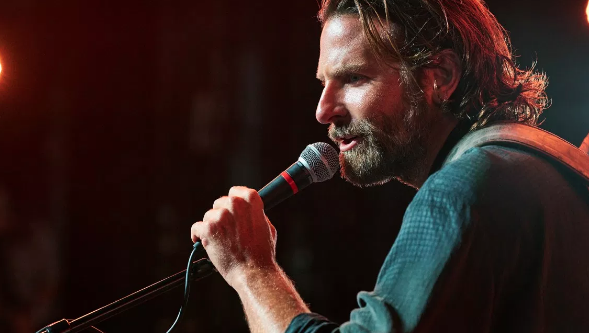
21 out of 30 Gold Derby spitballers have Bradley Cooper‘s A Star Is Born in their top position, and I think it’s time to bring out the big guns and the big buckets and say “hold on, wait a minute…don’t do this.” It’s time to beg all of those Academy members who care about the historical importance of the Oscars to pull back on the reins and go “whoa, nelly!” and ask themselves if they really want to give the Best Picture Oscar to a remake of a remake of a remake of a remake. Because that’s what they’re apparently on the verge of doing.

Now is the time for Academy and guild members to stop and take a hard look at things. The first half of Cooper’s film is very good, of course, and Cooper and Lady Gaga are better than pretty good, and even with the somewhat weaker second half (and you know ASIB has this problem, that it doesn’t deliver great cards and that the Bradley URINE TROUBLE, MISTER! downswirl scenes aren’t really believable, not in today’s reach-out realm)…yes, it’s still a better-than-decent film…and yes, Hollywood Elsewhere has been saying all along that it’s the best of the four versions of this age-old Hollywood saga (five if you count What Price Hollywood?).

But ask yourselves, “Is this who we are? Are we really going to give a Best Picture Oscar to the fifth version of a showbiz saga that dates back 85 years?”

Alternate lament: “Are we really going to give a Best Picture Oscar to a generally admirable, well-made film because it’s made $200 million? Wouldn’t that make us the People’s Choice Awards if we do that?”

Best Picture Oscar winners ought to be about the times from which they sprang — about whatever cares or currents or passions were stirring in the soup when they were written, made or released. Some kind of zeitgeist connection, some kind of “this is what life seemed to be like when we made this” element.

This representational belief system was shattered into pieces when Chicago won the Best Picture Oscar. Again with The Artist and The King’s Speech. Remember how terrible it felt the morning after these films won? Do you want to feel that feeling again?

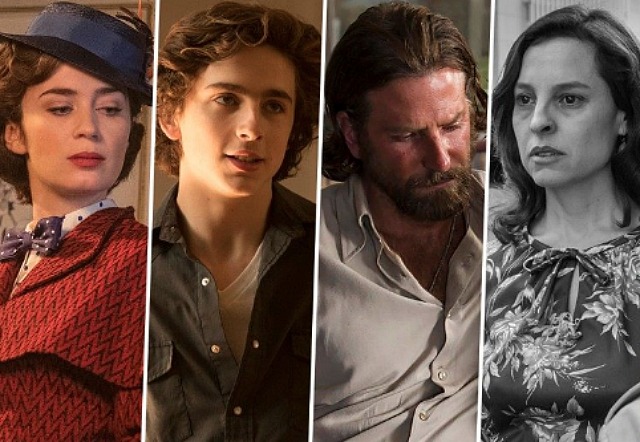
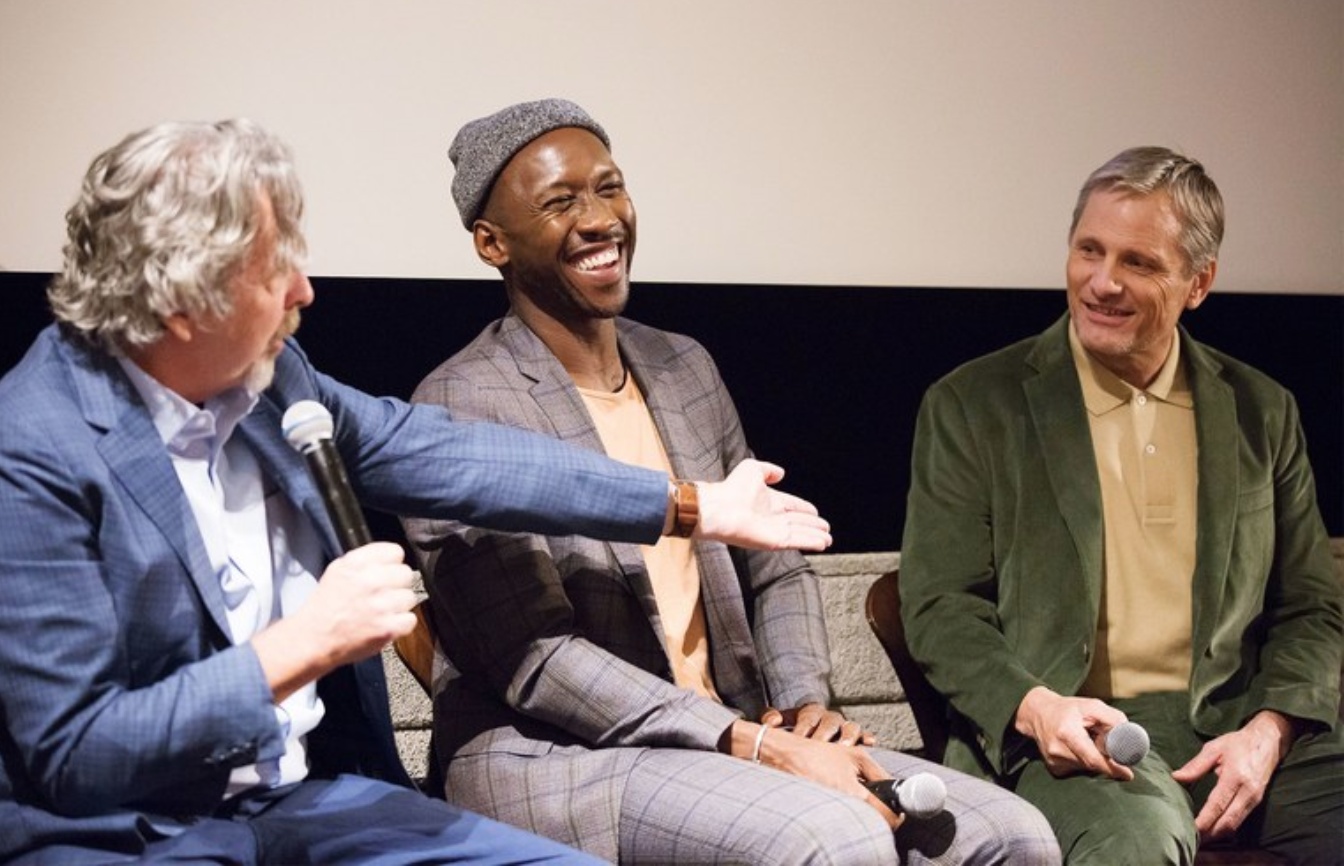
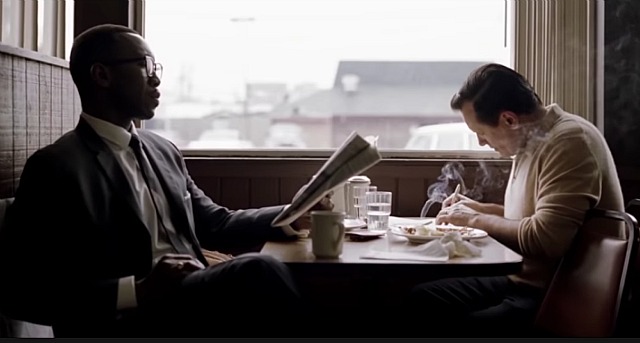
I’m sorry but A Star Is Born must become a respected also-ran. If for no other reason than to rebuff that way-too-early, excessively smug prediction by Variety‘s Kris Tapley. Give the Best Picture Oscar to the obviously deserving Roma, to the socially transformative blockbuster Black Panther, to the perfectly finessed and emotionally affecting Green Book, to the witty and pointed The Favourite, to Can You Ever Forgive Me?…to anything but A Star Is Born.

Please, please, please think this over.

The Gold Derby gang knows nothing. They’re finger-to-the-wind cowards who are putting A Star is Born in their top position because it feels like an easy default — because they know no one anywhere will raise an eyebrow. The Gold Derby gang is all about going along with the current and avoiding taking a strong stand about anything.

Roma, Black Panther, Green Book, The FavouriteRoma, Black Panther, Green Book, The FavouriteRoma, Black Panther, Green Book, The Favourite. Choose one of these four and you’ll feel better about yourselves in the morning. Don’t tumble for A Star Is Born…please.

Defiant Message, Murky Lighting

Posted sometime around 1:30 pm eastern. YouTube commenter: “I don’t know what that was, but I definitely enjoyed it more than season 6 of House of Cards.”

On the other hand The Boston Globe is reporting that Kevin Spacey has been charged with felony sexual assault in Massachusetts. He allegedly sexually assaulted “the teenage son of former Boston WCVB-TV news anchor Heather Unruh at a Nantucket bar in July 2016,” according to Matt Rocheleau’s story.

Musicals By Any Rhyme or Reason

I was so taken the other night by Springsteen on Broadway, which I regard as a piece of one-man musical portraiture, that I thought I’d assemble a roster of my 25 all-time favorite musicals. How am I defining a musical? Any presentation of any kind (filmed narrative musical, stage musical live or captured on film/video, filmed concert) in which a minimum of five or six musical numbers are performed, for any reason or within any scheme.

1. Springsteen On Broadway

2. John Carney‘s Once

3. Lars von Trier‘s Dancer in the Dark

4. Sunday in the Park with George (1999 taping of B’way stage musical)

5. Damien Chazelle‘s La La Land

6. Richard Lester‘s A Hard Day’s Night

7. Alex Gibney‘s Mr. Dynamite: The Rise of James Brown

7. Alfred and David MayslesGimme Shelter

8. D.A. Pennebaker‘s Monterey Pop

9. Carousel (Live From Lincoln Center)

10. Michael Wadleigh‘s Woodstock

Read more

Photogenic Values

Yesterday I posted a riff about how Joe Biden‘s 2020 Presidential campaign will probably turn out better if he acquires a Clint Eastwood jawline. Right away some commenters started calling me shallow and whatnot, essentially declaring that attractive appearances don’t matter in politics.

One question: Imagine if during the 1960 Presidential election John F. Kennedy didn’t have his thick, wavy, reddish-brown hair but a thinning Biden-like thatch. Not to mention a pasty-faced complexion instead of his regular Florida tan. Plus a bulky, pot-bellied, Tip O’Neil physique due to a thing he had for ice cream, cheesecake, pasta and Pabst Blue Ribbon. Would his appearance have made any difference in the polling? Would he have still edged aside Richard M. Nixon?

See what I mean?

Sundance Trump vs. HE Acosta

At the risk of boring the regulars, HE’s legendary Sundance disenfranchisement has happened in two stages. Two years ago Sundance decided to withhold the Press Express Pass they had very generously allowed me to use for five years straight (Jan. ‘12 to Jan. ‘16) and demote me to grunt status. I was also given a grunt press pass last year.

And then a few weeks ago they zotzed me altogether out of press-pass accreditation. For the first time since 1993 (or was it ‘94?) I’ll be A Man Without A Sundance Press Pass.

I’m re-stating this to officially announce that I’ll be attending anyway and catching what I can through the good graces of publicist and producer pallies.

At least I’m good with the Slamdance gang and will be able to catch Steven Soderbergh‘s High Flying Bird, among other Slamdance attractions.

I trust we’re all in favor of an egalitarian press-pass approval process. Like Toronto began to do in earnest last September, Sundance is trying to spread press-pass access evenly and liberally, giving passes to younger critics, POC critics, woman critics, gay and trans critics…generally lowering barriers, opening the doors and trying to breathe with the times.

In line with this, I was informed last night that a certain midwest blogger who’s never been to Park City before is not only good for a Sundance ‘19 press pass but approved for an Press Express Pass — i.e., the kind of pass that for years has been de rigueur for Owen Gleiberman, Todd McCarthy, Eric Kohn, Anne Thompson, Kyle Buchanan and others at the top of the heap, given their general prominence and years of shrewd, diligent reviewing, industry assessments and backing from major print or web publications.

What does this tell us about where Sundance is at this year? Blowing me off entirely after attending and reporting on Sundance festivals for 25 years and yet giving a novice first-timer a coveted Press Express Pass? This is what a “woke” festival walks and talks like in The Year of Our Lord 2019.

An egalitarian festival, it seems, should really try to be an egalitarian festival. There should be room at the inn not just for hard-working and impassioned midwest critics but also, in a fair-minded, even-handed world, for hard-working, strongly opinionated, less than fully “woke” columnists like myself.

I’m just glad, given the cultural currents of our times, that the good people behind the Toronto, Cannes, Telluride, Berlin, New York, Slamdance and many other festivals subscribe to a different attitude and philosophy.

Read more

They Done Him/Her Wrong

Hollywood Elsewhere approves of eight of the Academy’s nine shortlisted foreign film contendersPawel Pawlikowski‘s Cold War (Poland), Cristina Gallego and Ciro Guerra‘s Birds of Passage (Columbia), Gustav Moller‘s The Guilty (Denmark), Florian_Henckel von Donnersmarck‘s Never Look Away (Germany), Hirokazu Kore-eda‘s Shoplifters (Japan), Nadine Labaki‘s Capernaum (Lebanon), Alfonso Cuaron‘s Roma (Mexico), and Lee Chang-dong‘s Burning (South Korea).

It’s not that I disapprove of Sergey Dvortsevoy‘s Ayka (Kazakhstan), which is ninth on the list — I just haven’t seen it.

HE strongly disapproves, however, of the Academy having blown off Lukas Dhont‘s Girl (Netflix). Winner of Un Certain Regard performance award and the Camera d’Or prize, Girl is the most finely assembled and emotionally affecting drama about a transgender person I’ve ever seen.

Read more

Become The Bear

In his review of Vice, Variety‘s Owen Glieberman complains that Adam McKay‘s film never answers the big question, which is “who is Dick Cheney? How did he get to be the singular domineering bureaucrat-scoundrel he is? What is it that makes this scheming man tick?”

Gleiberman hasn’t been paying close attention. There’s one simple answer, not just about Cheney but all conservatives. The answer is ice-cold fear.

Fear of the dark and terrible unknown. Fear of the beast. Cheney needs to keep that bugger away from this doorstep. He woke up one day and felt the hot breath of the grizzly bear and saw that huge, terrible claw about to come down and rip half of his face off, and Cheney screamed and said “no! I won’t be destroyed! I will instead become the bear and I will snarl and smite others, and they will bow down and show obeisance before my power, and that will make me safer. Me and my fellow grizzlies. It’s a kill-or-be-killed world out there, and you simply have to decide which kind of animal you are.”

HE to Gleiberman: Now you know.

Another way of examining Cheney is that he became the bear to hold onto Lynne Vincent, a young Wyoming girl who became his wife.

N.Y. Times critic A.O. Scott: “The way Vice tells it, Dick Cheney, who would go on to become the most powerful vice president in American history, started out as a young man in a hurry to nowhere in particular. After washing out of Yale, he retreated to his home state of Wyoming, pursuing his interests in booze and cigarettes and working as a utility-company lineman on the side. Dick was saved from ruin — or at least from the kind of drab destiny unlikely to result in a biopic — by the stern intervention of his fiancée, Lynne Vincent, who told her wayward beau that they were finished unless he pulled himself together.

“Her reading of the romantic riot act would have far-reaching consequences. In that pivotal moment, Dick (Christian Bale) looks Lynne (Amy Adams) in the eye and swears he’ll never disappoint her again. The thesis of this film, written and directed by Adam McKay, is that Dick kept his promise. And that everyone else — including his daughter Mary (Alison Pill), thousands of American soldiers, hundreds of thousands of Iraqi civilians and just about everyone on the planet with a care for justice, democracy or simple human decency — paid the price.”

Woody Christina Manhattan

A few hours ago The Hollywood Reporter posted a Gary Baum-authored profile of former Woody Allen girlfriend Christina Engelhardt, and more precisely her eight-year relationship with the director-writer-actor-comedian that began in late ’76 and ended in ’84.

She was Allen’s secret sexual partner between the ages of 17 (although they first met when she was 16) and 24. No public dates, no dinners at Elaine’s — just furtive assignations at his Fifth Avenue apartment.

Engelhardt was one of two inspirations for Mariel Hemingway‘s Tracy character in Manhattan; the other was Stacey Nelkin, who hooked up with Allen when she was attending Stuyvesant High School in ’77 or thereabouts. Engelhardt tells Baum that she felt badly about how her Allen relationship came through in the film; it hurt to consider how Allen had objectified her or kept her at a distance.

But think about it — Tracy is the most centered and least neurotic or deceptive character in Manhattan.

Engelhardt’s Allen relationship was unequal and certainly exploitive on his end, but show me a relationship between any famous film-industry hotshot and any “civilian” that wasn’t similarly unfair or lopsided, especially in the context of the ’70s and ’80s when a whole different set of rules and assumptions were in effect.

Plus the Allen alliance opened a few doors. After they went their separate ways Engelhardt became a kind of half-employee and half-platonic muse for Federico Fellini. She’s currently working for producer Robert Evans and living in the Beverly Hills flats.

Baum’s article is smoothly written, carefully phrased, seemingly well-researched and for the most part fair-minded.

But at the same time a tad clueless. Because it applies a #MeToo filter to a story that happened during a time when urban upscale lah-lahs were frolicking in an almost I, Claudius-like culture that in some ways was more sexually impulsive and freewheeling and live-as-let-live than anything happening today. Which doesn’t seem quite fair.

The idea, at least on the part of Baum’s THR editor, seems to have been to “get” Allen by furthering the #MeToo-linked narrative that he used to be a manipulative and to some extent unscrupulous fellow who used his fame and power to get what he wanted from women. But Engelhardt doesn’t exactly cooperate with this goal. “I’m not attacking Woody,” she tells Baum. “This is not ‘bring down this man.’ I’m talking about my love story. This made me who I am. I have no regrets.”

Engelhardt was right in the thick of things when Allen began a somewhat committed relationship with Mia Farrow in ’80 or thereabouts. I’m using the term “somewhat” because Woody, Mia and Christine enjoyed a menage a trois thing for a while. Baum: “Despite the initial shock of jealousy, Engelhardt says she grew to like Farrow over the course of the ‘handful’ of three-way sex sessions that followed at Allen’s penthouse as they smoked joints and bonded over a shared fondness for animals.”

Not Repeated Often Enough

It’s awfully damn hard to make a film that even half-works. It’s probably just as hard to make something that stinks. Everyone is always trying to like hell to make a film that will do them and their parents proud. Even makers of dumbshit comedies and genre spoofs. So what does it take to make something that’s actually, seriously good? Serious talent or the ability to channel divine inspiration…whichever is available. And the ability of above-the-line creatives to keep sweaty, thick-fingered, Sam Spiegel-ish producer types as far away as possible from the creative levers.

Language Aside, “The Mule” Delivers With Honor

WB publicists have been adopting a qualified-hands-off posture with Clint Eastwood‘s The Mule because they’re scared of reactions to casually racist dialogue spoken by Clint’s p.c.-oblivious character, the 90-year-old Earl Stone (based upon real-life drug runner Leo Sharp).

They’ve presumably been fearful that the outrage brigade (a member of which would seem to be Variety‘s Peter Debruge) would howl about what an offense Earl’s vocabulary is to our delicate ears. An old white coot talking like an old white coot…horrors!

Debruge is all but apoplectic about Earl’s racist vocabulary — his review is almost a parody of knee-jerk woke-ism. “Most white Americans have a relative like Earl, who’s old enough to remember a time when good old boys ran the country and everyone else was their inferior,” Debruge notes. So when they start “spewing politically incorrect garbage, most of us let it slide, accepting that you can’t teach an old dog new tricks. Except you can and we must.

“There’s nothing inherently wrong with presenting bigoted people on-screen, since heaven knows they exist in real life,” Debruge goes on, “but the trouble with The Mule is that it invites audiences to laugh along with Earl’s ignorance. From here, it’s no great stretch to imagine a movement — call it ‘Make Hollywood Great Again’ — advocating for movies in which politically incorrect characters like the ones Eastwood has played for most of his career will be free to speak their minds again.”

Debruge is like Sessue Hayakawa‘s Colonel Saito in The Bridge on the River Kwai. There’s a part of him that would like to put Eastwood, his producing partners and screenwriter Nick Schenk into tin-box cages and let them bake in the sun.

Yes, there is a kind of amiable, jocular tone in the way Clint’s character tosses off politically incorrect racial terms and other inappropriate-isms, and it does make you half-flinch or at least shake your head. Yup, there are crotchety old guys who think and talk like this, and yeah, they probably voted for Trump, but at the same time they don’t appear to be emissaries of Satan as much as indifferent about whether or not guys like Peter Debruge approve.

As is usually the case with the 80-plus set, it’s best to just offer them a chair and a glass of lemonade and hope for the best.

The bottom line is that The Mule is a very decent, nicely handled film about family, aloofness, guilt and facing one’s own nature.

Indiewire‘s David Ehrlich says it’s Clint’s best in “more than 25 years” — better than Unforgiven? — but I’m playing it safe and calling it his finest since Gran Torino. It’s a plain-spoken, well-ordered saga of a guy coming to terms with his failures as a man and a father — a selfishly-inclined fellow who’s always preferred work over being with family, etc. I think it’s an entirely decent film in this respect, and a well-structured one to boot.

Read more