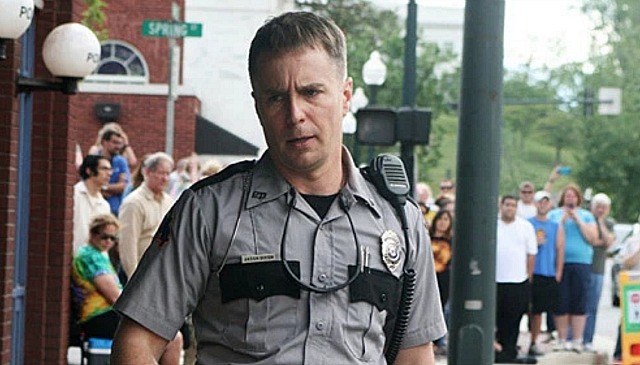
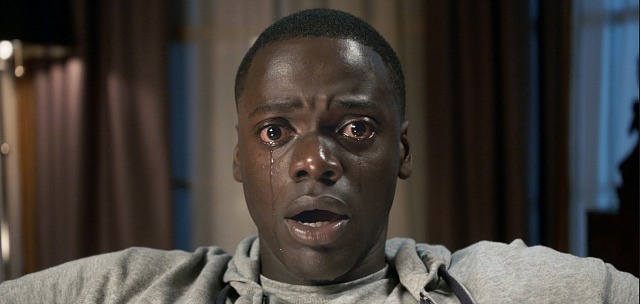
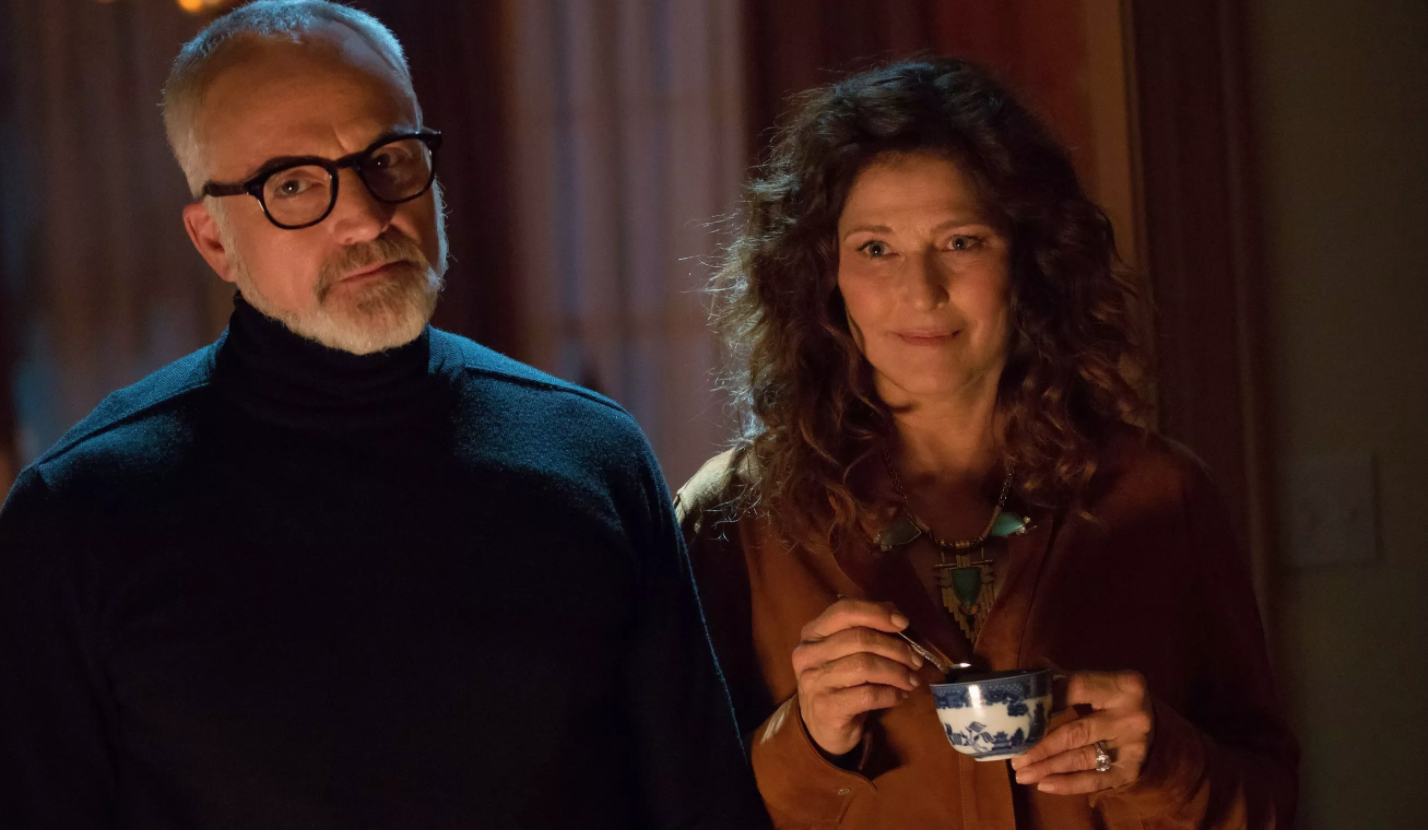
I’m almost teary-eyed with nostalgia for time I spent in New York City during the 2013 Christmas holiday. Six or seven days, whatever it was. I took a friend to see The Wolf of Wall Street at the gone-but-not-forgotten Ziegfeld on a Saturday night, and it was just heaven. The whole night was actually. The energy, the air, the aromas…all of it. Christmas isn’t really Christmas unless you’re roaming around midtown and lower Manhattan at night, and then maybe taking a train to visit friends in the suburbs for a day or two. Or if you’re roaming around London, which I was lucky enough to do in December of ’80. Nippy weather, overcoat, gloves, etc. The chillier the air, the better the holiday.
Remember those dim-bulb Academy members who harangued Martin Scorsese and Leonardo DiCaprio after that first Academy screening because they didn’t get the satirical thrust behind all the coarse vulgarity (which was delivered both literally and within “quotes”)? And how Scorsese and DiCaprio had to attend screening after screening and patiently explain that they were depicting the louche adventures of Jordan Belfort and his cronies to make a point about the character of the buccaneers who have fleeced this country and will definitely fleece again? Remember the brief shining moment of Hope Holiday?
Yesterday on FacebookPaul Schrader threw some left-handed shade upon Steven Spielberg‘s The Post, which opened yesterday in New York and Los Angeles. And then Bret Easton Ellis followed suit.
The Post, said Schrader, “feeds the myth that the system actually works. That the events of 1971 could be repeated today. I can hear Trump/Fox chuckling: yeah, let Hollywood and the media believe that myth if it keeps them pacified. We fixed that. It will never happen again.”
Ellis: The Hillary Clinton of prestige movies: lost in a bubble, smug, completely clueless, made by the establishment. [And conveying] a refusal to understand Trump’s appeal. This is the kind of lost and naive movie that unknowingly explains exactly why the mainstream media are where they are now — this story from 1971 has absolutely nothing to do with what is going on in 2017 (we are in a much more complicated moment) and yet it pushes a theory that is so flattering to journalists that despite the glaring weaknesses of the movie (and its thesis) they are going crazy over it. The Post is a myth only left-wing millionaires could buy.”
Village Voice critic Bilge Ebiri: “I disagree that The Post is all that convinced it can happen again. The hazy nostalgia with which it depicts bustling newsrooms is very pointed — it’s making a case that the kind of journalistic institutions that allowed for this kind of reporting are dinosaurs. It’s a very sad movie, in that sense.”
Excerpt from HE review, posted on 12.6: “A smartly written, well-performed tale of how and why Washington Post publisher Katharine Graham (Meryl Streep) decided to man up and a grow a pair in the thick of the Pentagon Papers episode of June 1971, The Post is far and away my favorite Spielberg film since Saving Private Ryan. Call it Spielberg’s best, certainly his least problematic, in two decades.
“The critical verdict hasn’t been unanimous but I fell for it, and I mean all the way through and not just during the manipulative third act, which, if you have any stored-up sentiment about the glory days of 20th century dead-tree journalism, will definitely melt you down. I knew I was being sold a Spielbergian bill of goods but I bought it anyway. I gushed out some thoughts the day after, and a New York friend replied, ‘Calm down, Tonto…it’s very good but not great.'”
Another critic friend: “It never made me tingle the way Spotlight or All the President’s Men did. Plus it has too many Spielberg-y touches: the little girl selling lemonade (Jesus!), that [redacted] ending. It all felt forced rather than organic, despite strong performances from Streep and Hanks.”
“It was also two hours of people going ‘We can’t do that!’ and others saying ‘We have to do that!’
A couple of hours ago Glamour‘s Abby Gardner, speaking on behalf of the “woke” Twitter comintern, lambasted the editors of a just-published L.A. Times‘ Envelope issue (dated 12.21) for excluding actresses of color from the cover and the conversation.
The issue celebrates six top contenders for the Best Actress Oscar — Lady Bird‘s Saoirse Ronan, I, Tonya‘s Margot Robbie, In The Fade‘s Diane Kruger, Film Stars Don’t Die in Liverpool‘s Annette Bening, Wonder Wheel‘s Kate Winslet and Molly Game‘s Jessica Chastain. All of them fair-skinned with blonde or ginger-colored hair…shame!
Gardner’s complaint is, of course, complete bullshit for two reasons: (a) the idea was apparently to highlight leading Best Actress contenders, and (b) this year there are, lamentably, no non-white actresses in serious contention for that trophy. (Best Supporting Actress is a different story — Mudbound‘s Mary J. Blige, Girls Trip‘s Tiffany Haddish, Downsizing‘s Hong Chau, Shape of Water‘s Octavia Spencer.)
The only woman of color who might have made it into the 2017 Best Actress circle is Natalie Paul, who was excellent in Matt Ruskin‘s Crown Heights but who never really campaigned or found traction of any kind.
If there’s a “problem” with the Envelope cover it’s because three leading contenders — The Post‘s Meryl Streep, The Shape of Water‘s Sally Hawkins and Three Billboards Outside Ebbing, Missouri‘s Frances McDormand are missing. And honestly? The only actresses on the current cover who really count and deserve the highest consideration for the Best Actress Oscar are Ronan and Kruger.
Okay, you could maybe add Robbie to the hottie list, but Bening, Chastain and Winslet aren’t happening.
Mike Nichols and Buck Henry‘s The Graduate, perhaps the most culturally on-target, stylistically audacious and emotionally affecting relationship comedy in Hollywood history, opened exactly a half-century ago — on 12.22.67. But guess what? It’s time for a significant portion of that respect and glorification to go away, and for two reasons. I’m presuming that HE readers can guess the first without reading any further.
Just as former New York Post critic Lou Lumenickproclaimed a couple of years ago that Gone With The Wind has become a disreputable and even odious film because it reflects unfortunate racial attitudes of the late 1930s, Vox’s Alissa Wilkinsonannounced yesterday that it’s time to take The Graduate down a peg or two, partly because of recent allegations of sexual harassment and assault against Dustin Hoffman, and partly because Benjamin Braddock is a dullard — a far less interesting character than Anne Bancroft‘s Mrs. Robinson or even Katherine Ross‘s Elaine Robinson.
HE response #1: Deplorable as Hoffman’s behavior is alleged to have been during certain encounters in the ’80s, when The Graduate was shot he was a 29 year-old actor doing his damnedest to make the Braddock character sympathetic and engaging, and for the last half-century just about the entire civilized world has agreed that he achieved that goal. You can’t come along 50 years later and say “But Hoffman acted like a sexist asshole in the ’80s!” and so everything he did creatively before, during and after the Reagan era has to be darkly re-assessed.
HE response #2: On top of which Nichols and Henry, The Graduate‘s director and screenwriter, deliberately portrayed Braddock as confused, unfocused, de-politicized and largely inarticulate for the first 65 minutes. That was all a set-up for the big pivot point when Benjamin realizes he loves Elaine and is determined to end his affair with her mother. The first hour and change is about a bumbling guy in a passive-reactive state of mind, and the last 35 or 40 minutes is about this guy struggling to achieve a goal and attain a kind of emotional fulfillment.
The main costars are Jake Gyllenhaal and Carey Mulligan as the married Jerry and Jeanette Brinson; the secondary performers are Ed Oxenbould as their son Joe, and Bill Camp as — here comes the rough part — an older, richer guy named Warren Miller whom Jeanette, believe it or not, has an affair with when Jerry, having lost his country-club job, leaves the homestead to become a firefighter.
Carey Mulligan and Bill Camp? The mind reels, convulses.
Carey Mulligan as Jeannette Brinson in Paul Dano‘s Wildlife, which will debut during Sundance ’18.
“‘In the fall of 1960, when I was 16 and my father was for a time not working, my mother met a man named Warren Miller and fell in love with him.’ So begins Richard Ford‘s disturbing new novel, ‘Wildlife’. In it, Mr. Ford seems to have bitten off more than he can chew. Its action takes place in Great Falls, Montana. The theme, too, is a familiar one in Mr. Ford’s work, a love triangle involving a mother, a father and a son.
“The 16-year-old narrator is Joe Brinson. His father is a professional golfer who teaches at a country club in Great Falls. He is a natural athlete ‘with delicate hands and a short fluid swing that was wonderful to see but never strong enough to move him into the higher competition of the game.’ This is a perfect image for the searching innocence of Joe’s father, who has brought his family from Lewiston, Idaho, ‘in the belief that people — small people like him — were making money in Montana or soon would be, and wanted a piece of that good luck before all of it collapsed and was gone in the wind.’
A damning portrait of arrogant male power and the ultimate abuse of a female subordinate, Chappaquiddick (Entertainment Studios, 4.6.18) is obviously its own raison d’etre. The story of the 1969 Chappquiddick tragedy is well-known and has been well-investigated, but producers Mark Ciardi, Chris Fenton and Campbell McInnes, screenwriters Taylor Allen and Andrew Logan and director John Curran wanted to deliver a concise but take-no-prisoners version of this cold, tragic tale in a narrative theatrical form.
Chappaquiddick has the cojones to call a spade a spade about a late, much beloved political figure, a respected liberal deal-maker and the most powerful and longest serving representative of what was, for decades, American’s premiere political family — the closest thing we ever had to a version of the British royals.
But over the last couple of months, Chappaquiddick has unwittingly slipped into the here and now. Without design or anticipation, what Chappaquiddick said last year during its making, the portrait it created of a world-famous power abuser and blame-shifter suddenly fits right into what’s happening now with this and that alleged sexual abuser being taken to task and made to walk the public plank.
There’s no question that the film is dealing straight, compelling cards, and that it sticks to the ugly facts as most of us recall and understand them, and that by doing so it paints the late Massachusetts legislator and younger brother of JFK and RFK in a morally repugnant light, to put it mildly.
All along I’ve been hoping that Curran would just shoot the script efficiently, minus any kind of showing off or oddball strategies that might diminish what was on the page. This is exactly what he’s done. Curran has crafted an intelligent, mid-tempo melodrama about a weak man who commits a careless, horrible act, and then manages to weasel out of any serious consequences.
I tried to pick 20 or 25 of HE’s best 2017 photos. Not every shot was taken with my iPhone 6 Plus, but 97% were. Anyway, I couldn’t do it — had to go for 39.
I’m afraid that Ridley Scott‘s All The Money In The World is one of my picks of the litter, and so HE’s Best of 2017 roster has to be once again recalculated:
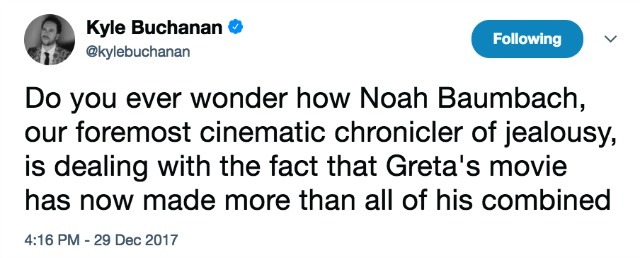
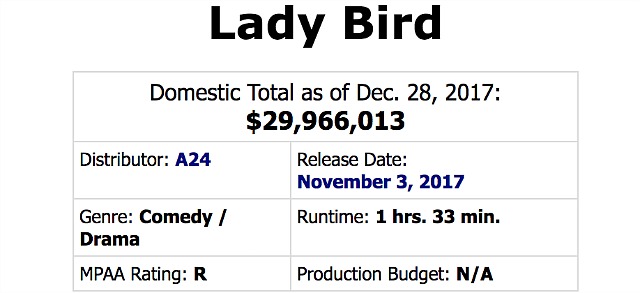
Top ten: (1) Luca Guadagnino‘s Call Me By Your Name, (2) Chris Nolan‘s Dunkirk, (3) Greta Gerwig‘s Lady Bird, (4) Darren Aronofsky‘s mother!, (5) Ruben Ostlund‘s The Square, (6) Matt Reeves‘ War For The Planet of the Apes, (7) Oliver Assayas‘ Personal Shopper [2016 holdover], (8) Michael Showalter’s The Big Sick, (9) Steven Spielberg‘s The Post, (9) Ridley Scott’s All The Money in the World, and (10) Cristian Mungiu‘s Graduation [2016 holdover].
Honorable fraternity: (11) Andrey Zvyagintsev‘s Loveless; (12) Martin McDonagh‘s Three Billboards Outside Ebbing, Missouri, (13) Edgar Wright‘s Baby Driver, (14) Sean Baker‘s The Florida Project, (15) Guillermo del Toro‘s The Shape of Water, (16) David Lowery‘s A Ghost Story, (17) David Gordon Green‘s Stronger, (18) Fatih Akin‘s In The Fade, (19) Brad Pitt‘s War Machine, (20) Joseph Kosinski‘s Only The Brave, (21) Paul Thomas Anderson‘s Phantom Thread, (22) Jordan Peele‘s Get Out, (23) Denis Villeneuve‘s Blade Runner 2049, (24) Patti Jenkins‘ Wonder Woman, (25) Taylor Sheridan‘s Wind River, (26) Steven Soderbergh‘s Logan Lucky, (27) Geremy Jasper‘s Patty Cake$ and (28) John Curran‘s Chappaquiddick (saw it in Toronto, opening in April ’18).
By the way: I didn’t know until today that All The Money stars Mark Wahlberg and Michelle Williams worked “for free” when Ridley Scott flew back to England and Rome to re-shoot 22 scenes with Kevin Spacey replacement Christopher Plummer. You can bet, however, that their travel, hotel and per-diem expenses were covered.
On 12.14 I made it clear that I had no problem with the Academy’s foreign-film branch leavingRobin Campillo‘s BPM: Beats Per Minute off the shortlist. I respect BPM — it’s fleet and sharp and well cut — and I admire, of course, the balls-out militancy of the ACT UP movement in the late ’80s and ’90s. But to me Campillo’s felt too strident, too hectoring and a little too Taxi Zum Klo.
Yeah, that’s right — I prefer gay movies (i.e, Call Me By Your Name) to queer cinema. I guess that makes me a bad guy in some quarters, right?
Variety‘s Guy Lodge has dutifully passed along the elitist disappointment about the BPM snub. “More conservative voters in the general branch might not warm to the film’s length, talkiness and frankly queer sensibility, it was reasoned,” GL wrote, “and when the film got frozen out of the Golden Globes last week, we were given a hint that it wasn’t a universal favorite outside the critical enclave. [For] the general verdict from onlookers was that the Academy had erred badly by passing on Campillo’s film.”
Translation: Those who didn’t vote for BPM are likely homophobes, and they need to work through that. Group therapy, night classes, etc.
Guys like Mark Harris and Vanity Fair‘s Richard Lawson can lament this, but there’s no law that I know of stating that you have to be moved by, say, a scene in which an AIDS-ravaged guy gets a death-bed hand job. “Reform is desperately needed here,” tweeted Harris. “And the fact that it’s a gay movie…this is a stain.”
Presumably the foreign language committee as well as the Academy at large understand that the next queer movie that comes along needs to be embraced with a bit more fervor. If not, more charges of homophobia!
Don’t forget that Van Sant was all but covered in shit after the critical drubbing that his last film, The Sea of Trees, received in Cannes two and a half years ago. It just goes to show that if you keep hustling and don’t let failure get you down, you’ll eventually find yourself back on top or close to it. Maybe. If you’re X factor to begin with.
Pic stars Joaquin Phoenix as Callahan, and costars Rooney Mara, Jonah Hill, Jack Black, Mark Webber and Udo Kier. Amazon will open the period drama stateside on 5.18.18.
Excerpt #1: “Something happens” at the end of a climactic lightsaber duel in Jedi “that echoes a famous death from the original 1977 Star Wars. It’s a ‘whoa!’ kind of moment, but…turns out to be merely the set-up for a much bigger ‘whoa!” moment.
“That mega, super-ultra ‘whoa!’ is designed to blow our minds, and in one sense it does. It leaves the audience with popped eyes and dropped jaws, going ‘Geez, I didn’t know the Jedi could do that!’
“But approximately two seconds after you’ve taken the moment in, it also leaves you with the feeling that the reason you didn’t know they could do that is that the film is making up its rules as it goes along. The moment is arbitrary, breathless but superimposed — spectacular in a monkeys-might-fly-out-of-my-butt sort of way. It seals the experience of The Last Jedi, a movie in which stuff keeps happening, and sometimes that stuff is staggering, and occasionally it’s quite exciting, but too often it feels like the bedazzled version of treading water.
“Yet you hang on and go with it, because you’re yearning for something great, and this is what the Star Wars universe, in its sleek retro-fitted corporate efficiency, has come down to: Making stuff up as it goes along.”
I’ve had the BFI Bluray of Ken Russell‘s Women In Love (’69) on my bookshelf since August 2016. Yesterday it was announced that Criterion will be releasing its own version on 3.27.18. The Criterion will almost certainly look identical to the BFI. Both are 4K scans of a BFI-restored print from 2015; both using a 1.75:1 aspect ratio and running 131 minutes.
The Criterion jacket features a painting of drowned lovers, taken right from the film. More alluring than the still images on the BFI Bluray.
Women in Love is Russell’s greatest work — a perfectly captured, brilliantly written period romance that pulls you in immediately with a feeling of Lawrentian eloquence and authenticity. Not as shocking or inflammatory as The Devils but richer and more flavorful and more spiritually open, not to mention erotic. Billy Williams‘ cinematography is dazzling — the pictorial detail and robust colors on the BFI Bluray are worth the price in themselves.
Released just over 48 years ago but looking fresh from the lab, Women in Love is one of the most lusciously captured films ever made about men, women and relationships (and I’m not just talking about the nude wrestling scene between Alan Bates and Oliver Reed), and one of the most articulate portrayals of the sadnesses and frustrations that plague so many lovers.
It’s also one of the first mainstream films to fully explore and dramatize the lives and longings of free-spirited, semi-emancipated 20th Century women (i.e., Glenda Jackson‘s Isadora Duncan-like Gudrun and Jennie Linden‘s more conservative Ursula) in a historical context.
Posted on 8.21.16, but applicable right now: “If Women in Love had never appeared in ’69 and yet was somehow recreated by a fresh creative team and released this fall by Focus Features or Fox Searchlight, it would instantly vault into the Best Picture category. Because nobody and I mean nobody makes brainy, pulsing period dramas as good as this for the theatrical market any more.”