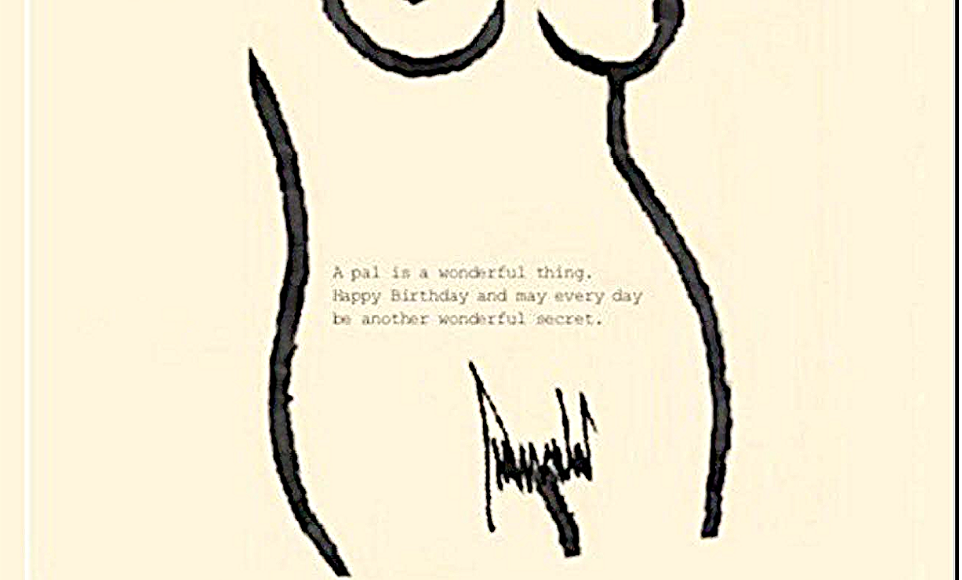
Presuming that the WSJ has 100% confirmed that Donald Trump drew this, Trump obviously has a thing for women with nice boobs, zaftig bods, no “innie” navels and well-trimmed pubic hair.
His pubic hair signature tells us he’s into oral, because this is actually fairly well drawn…it has a certain professional flair, a certain facility. Some people can’t doodle at all — Trump isn’t half bad.
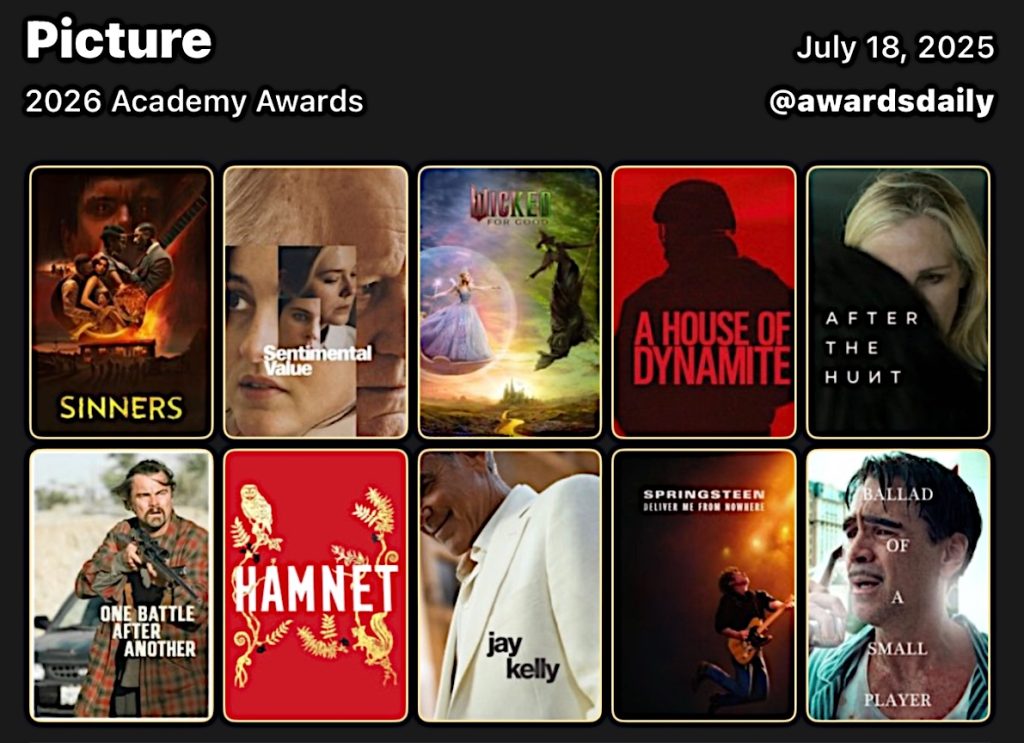
All hail the 2025 Venice Film Festival (Wednesday, 8.27 thru Saturday, 9.6) for having decided to not show Chloe Zhao’s Hamnet, which will probably debut at Telluride before hitting TIFF….spared from another Paul Mescal endurance meditation!
But I’m also genuinely sorry that Scott Cooper‘s Bruce Sringsteen biopic, Deliver Me From Nowhere, won’t have its premiere screening on the Lido. Ditto Edward Berger‘s Ballad of a Small Player. The latter two, I’m guessing, will probably also debut in Telluride.
And seven or eight years after completing principal photography, when oh when will Terrence Malick‘s The Way of the Wind finally peek out? What an indecisive coward-flake.
Otherwise HE is pleased and gratified by most of the official Venice selections (29 HE standouts), which popped early this morning and almost all of which were forecast by HE on 7.17:
Competition faves: (a) The Wizard of the Kremlin (d: Olivier Assayas), (b) Jay Kelly (d: Noah Baumbach), (c) A House of Dynamite (d: Kathryn Bigelow), (d) In the Hand of Dante (d: Julian Schnabel), (e) The Testament of Ann Lee (d: Mona Fastvold), (f) Father Mother Sister Brother (d: Jim Jarmusch…shockingly turned down by Cannes), (g) Bugonia (d: Yorgos Lanthimos…cuidado…bald Emma Stone), (h) Orphan, (d: László Nemes), (i) No Other Choice (d: Park Chan-wook…HE is no fan of this guy, who is almost all DePalma hat and not much cattle), (j) Sotto Le Nuvole (d: Gianfranco Rosi); (k) The Smashing Machine (d: Benny Safdie). (11)
Competition sans any particular interest or excitement: Frankenstein (d: Guillermo del Toro…no offense but how many times can we go to this same damn well?), L’Étranger (d: François Ozon); and La grazia (d: Paolo Sorrentino) (3)
Sans competition faves (fiction): (a) After the Hunt (d: Luca Guadagnino), (b) The Last Viking (d: Anders Thomas Jensen), (c) Dead Man’s Wire (d: Gus Van Sant). (3)
Sans compettion faves (documentaries): Cover-Up (d: Laura Poitras and Mark Obenhaus); Kabul, Between Prayers (d: Aboozar Amini),(b) Marc by Sofia (d: Sofia Coppola), (c) Ghost Elephants (d: Werner Herzog), (d) Nuestra Tierra (d: Lucrecia Martel); (e) Kim Novak’s Vertigo (d: Alexandre Philippe), (f) Broken English (d: Jane Pollard and Iain Forsyth), (g) Notes of a True Criminal (d: Alexander Rodnyansky and Andriy Alferov); (h) Director’s Diary (d: Aleksander Sokurov. (8)
Sans competition faves (shorts): How to Shoot a Ghost (d: Charlie Kaufman). (1)
Horizons faves: (a) Rose of Nevada (d: Mark Jenkin), (b) Late Fame (d: Kent Jones); (c) Human Resource (d: Nawapol Thamrongrattanarit). (3)
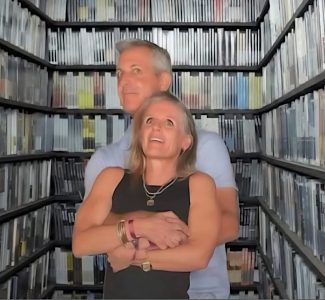
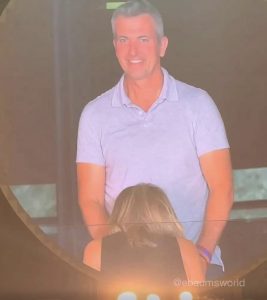
The social-media response to Coldplaygate (i.e., a playfully roaming kisscam exposing an apparent affair between former Astronomer CEO Andy Byron and the company’s not-yet-fired chief HR officer KristinCabot) took an exceptionally cruel turn when some in the chorus referred to Cabot as Byron’s “sidepiece.”
What kind of vulgar crap is that? What do these jackals know about it? Maybe Byron and Cabot had been gradually, seriously falling in love — the head-over-heels, what’s-wrong-with-me?, real-as-it-gets kind — and, given the tendency of some lovers to succumb to barking insanity…maybe this crazy feeling of theirs led to that incredibly bone-headed decision to be openly demonstrative that night. Who knows?
All I can tell you is that I’ve been there. (A People magazine affair between early ‘98 and late ‘00.) I know how it feels to have wings on your heels, and so did Rodgers&Hammerstein.
Maybe….make that probably the sex between them was amazing, breathtaking, heart–stopping, etc. It’s really extra shitty of YouTubers and Instagram-ers to cynically imply that the Byron-Cabot affair was just some kind of rip-roaring fling…one of those brief, self-destructive manifestations of ridiculous teenage hormones between consenting 50somethings…a guilty blowjob in Byron’s parked car on the company lot after hours…pure impulse, no plan, no poetry, no heart.
Well, that’s a seriously cheap and rancid thing to say, assholes. At least speculate positively. Have a little faith.
Byron and Cabot have only one play in this social media maelstrom, and hiding out and hoping it’ll blow over is not it. They should co-author a shortnovelette about the affair..,how it began, how they completely and gloriously lost their minds, how long they knew deep down that their mutual lust and longing was unsuppressable…how long it simmered, how long they fought it, A real-life Damage or Betrayal or a combination of the two.
Once the book has been written or even while it’s being written, the movie rights should be sold, and I mean to a classy, A-level producer…the reformed and semi-exonerated Scott Rudin, say, or somebody in that realm. Persuade the great David Cronenberg (he really knows how to shoot first-rate, deliciously perverse sex scenes) to direct it. Hire VincentCassel to play Byron, and…I don’t know, maybe JenniferAniston to play Cabot.
Shoot the film quickly but earnestly. And put the film into select theatres or least into a grade-A streaming feed within a year or less .
Sinners (a Samuel Z. Arkoff vampire + cunnilingus + Delta blues + ghost of Robert Johnson film just doesn’t warrant Best Picture hoopla) + WickedForGood (enough! go away!) Plus I’m nursing doubts about Hamnet because of the dreaded PaulMescal factor.
…during my first and only viewing 36 years ago, in the fall of ‘78. So I gave it another whirl last night on the Criterion Channel, and I couldn’t even pay attention to the particulars because the late Berry Berenson prominently costars, and I couldn’t stop thinking about the last few minutes of her life.
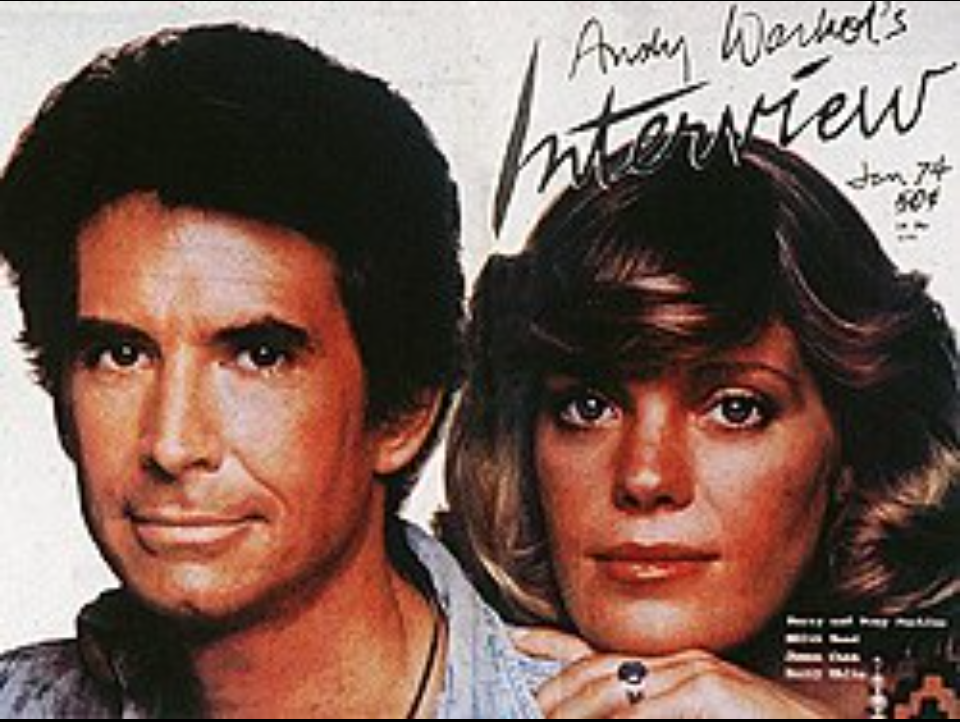
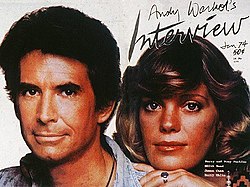
The sister of Barry Lyndon’s Marisa Berenson, Berry was married in theRudolphfilm and in real life to RememberMyName costar Tony Perkins, whom I saw and rather admired in a B’way stage version of Equus in ‘77 or thereabouts. (He died in ‘92 from AIDs-related maladies.) Geraldine Chaplin (34 then, 80 now) is the nutter lead. Berry is/was the mother of horrordirectorOz Perkins.
Anyway I tried and tried but couldn’t get past the 9/11 association.
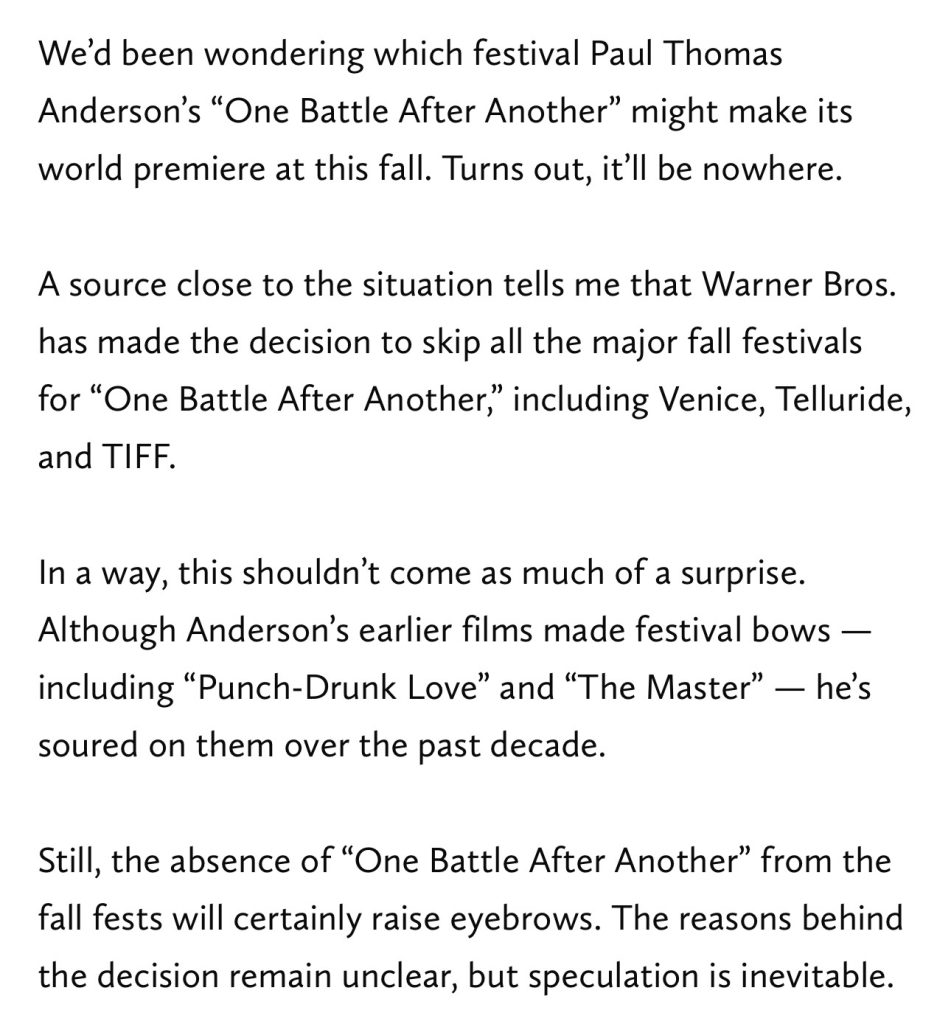
Ah duh-duh-deedah-luh, deedah-luh, deedah-luh…that’s all, folks! At least as far as the Venice Film Festival is concerned. Or any festival for that matter. Or so reports World of Reel’s Jordan Ruimy
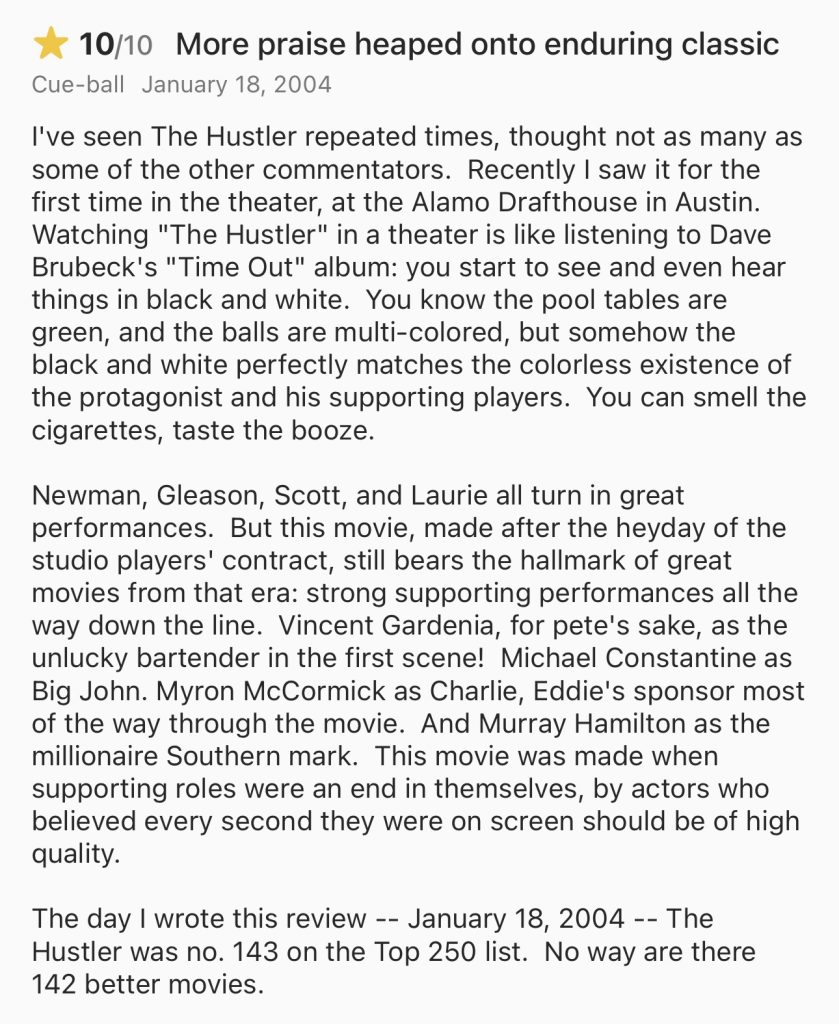
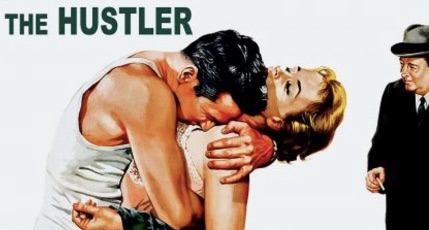
The tragic suicide of Piper Laurie’s Sarah in Act 3 of TheHustler, while obviously devastating on its own terms, struck most sensible viewers as a WTF? As nonsensical nihilism.
Sarah felt jilted and abandoned by Eddie Felson’s (Paul Newman) intention to train to Louisville with Bert Gordon (GeorgeC.Scott) so to chill or placate her Eddie invited Sarah along.
So what does she do once the train pulls out of Penn Station? She promptly proceeds to radiate scowling vibes in Bert’s direction and generally behave like a downer and a party pooper.
Why? The idea behind the trip is to win big-time money from Murray Hamilton’s Finley or a rich mark like him. What is so awful or degrading about winning money during a private game of billiards? Nothing whatsoever, and yet Sarah is determined to be JohntheBaptist and point accusational fingers. She behaves like a 16 year old alcoholic with a toxic and judgmental attitude…disdain and superiority.
Bert may not be the kindest and gentlest fellow, but at least he’s not a phony — he’s honestly avaricious and, yes, parasitic as far as Eddie is concerned. But his social behavior (aside from openly disliking and sneering at Sarah) is more or less gentlemanly. Albeit crusty and curt.
I’ve always felt a vague kinship with the chilly, flinty Bert because at least he’s behaving like a sensible adult. Lushy, judgmental, guilt-tripping Sarah should have simply stayed in NYC, and all would have been well enough when Eddie returns. She’s unquestionably a drag, and not just in the realm of Bert and Eddie but to me, Jeffrey Wells, sitting in row #11.
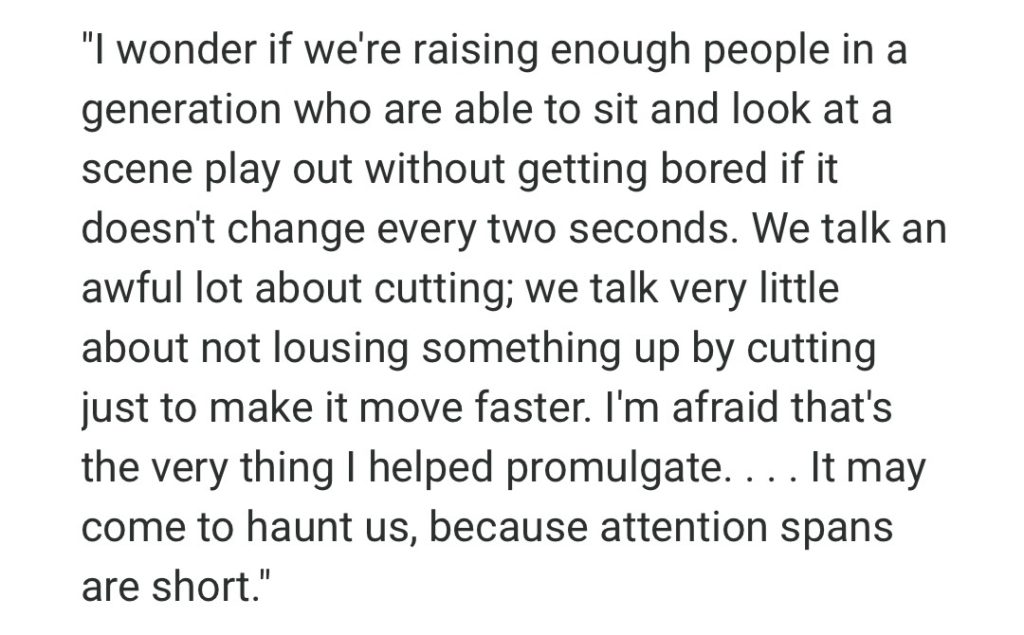
20 or 25 years ago legendary editor Dede Allen bemoaned needlessly rapid or heebie-jeebie cutting for its own sake. She would almost certainly be gobsmacked by the cutting of F1.
The death of legendary editor Dede Allen, 86, naturally requires an acknowledgment of her innovations. Those would be (a) shock or jump cuts and (b) running sound from a forthcoming scene before actually cutting to it — i.e.. “pre-lapping.”
And yet the biggest feather in Allen’s cap has always been (and always will be) her cutting of the country-road massacre finale from Bonnie and Clyde. Still a knockout but truly astonishing back in the day.
I’ve never forgotten and never will forget that clip of a briefly exhilarated Faye Dunaway looking up at the flying birds just before the roar of gunfire.
My favorite description of the carnage what followed was from Pauline Kael — i.e., a “rag-doll dance of death.”
The irony is that Allen allowed assistant Jerry Greenberg to do the actual cutting on this sequence. Allen supervised, of course, but “she let him do that,” says Warren Beatty biographer Peter Biskind.
The legend is that Allen borrowed her jump cuts and shock cuts from French nouvelle vague films. And yet Biskind says Allen told him this wasn’t so. “She said she never watched very many French new wave films and that she basically got these techniques from working on TV commercials,” Biskind recalled this morning.
I’ve spent the last half-hour searching around for a visual tutorial that explicitly shows how Allen applied her innovations, but no dice so far. You’d think someone would have cut one together by now.
Allen has been on the map since 1961, after all, when she landed her first solo editing credit on Robert Rossen‘s The Hustler. In the ’60s, ’70s and ’80s Allen’s name was a signifier of elegant class-act cinema. Her credits beside Bonnie and Clyde and The Hustler included significant films by Arthur Penn (Alice’s Restaurant, Little Big Man, Night Moves and The Missouri Breaks), Paul Newman (Rachel, Rachel, Harry & Son), Warren Beatty (Reds, which was co-edited by Craig McKay), Sidney Lumet (Serpico, Dog Day Afternoon, The Wiz), George Roy Hill (Slaughterhouse-Five, Slap Shot) and Robert Redford (The Milagro Beanfield War).
From 1958’s Terror From The Year 5000 through ’08’s Fireflies in the Garden, Allen edited or co-edited some 31 films. She bailed on editing 1992 to 2000 after taking the job of head of post production at Warner Bros.
Claudia Luther‘s L.A. Times obit says Allen “was the first film editor — male or female — to receive sole block credit on a movie for her work,” and that “this honor came with Bonnie and Clyde.” Okay, maybe…but why does Allen have sole credit as the Hustler editor on the IMDB? I was home I’d run the DVD and double-check. (I’m currently sitting in a motel room on Route 7 in Ridgefield, Connecticut.)
I’ve always loved the opening-credit sequence in The Hustler, which I presume Allen had something to do with. It basically used footage from various scenes throughout the film (which a first-time viewer obviously wouldn’t have the first contextual clue about) and freeze-frame them when the credit pops up — i.e., “directed by Robert Rossen.” I don’t know for a fact that Allen came up with this idea, but it would fit into her profile if she did.
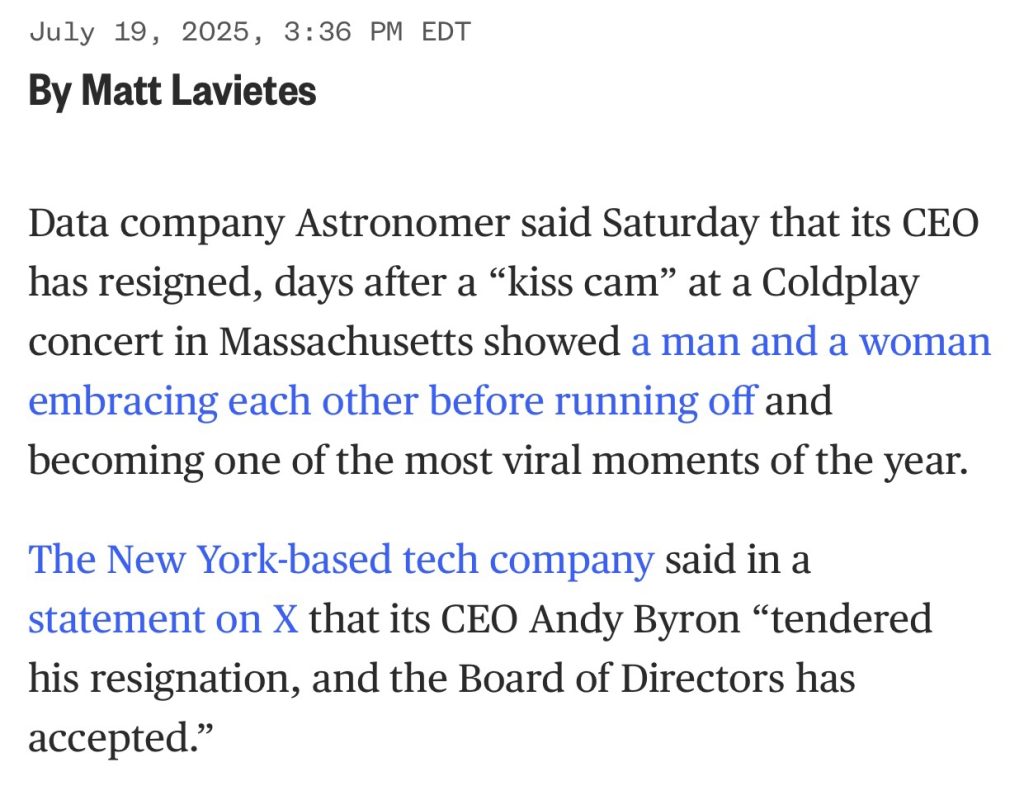
If you’re a hotshot CEO and you’re “ doing” a woman who works for you — a married, silver-haired HR exec — rule #1 is that you don’t engage in PDA inside a crowded sports arena during a rock concert. You confine your get-togethers to hotels, motels and dark, smokey places…duhhhhh!
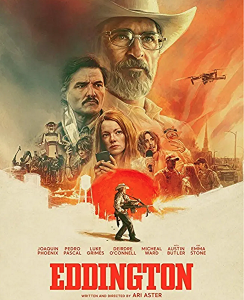
Presumably a fair percentage of the HE chorus saw Ari Aster‘s Eddington yesterday. I’m presuming that many are agreeing with my judgment from last May’s Cannes Film Festival, which is that it’s a strange, mildly interesting civil war drama that, boiled down, is a dull horror sinkhole laced with political satire…a pandemic atmosphere downer dive.
I should probably bend over backwards by re-watching it this weekend, but I really, really didn’t derive much enjoyment, much less any sense of cinematic satori, two months ago.
I’ve jumbled up some previous comments and thrown them out on the floor like Mia Farrow playing scrabble in Rosemary’s Baby…
Bingo #1: I’ll admit to feeling aroused or at least awoken during the last 45 when Eddington abandons all sense of restraint and it becomes The Wild Bunch on steroids.
Bingo #2: Yes, this is a smart and aggressive political satire of sorts, but it’s basically just a narrative version of the same X-treme left vs. X-treme right insanity that we’ve all been living with since the start of the pandemic, if not 2018 or ’19…
Bingo #3: I’m not calling it a “bad” or ineffective film or anything, but it’s basically unexciting and kind of drab and sloppy and not much fun, really. And the chaos is…well, certainly predictable. It has some bizarre surreal humor at times, but mostly it’s a fastball thrown wide of the batter’s box.
Bingo #4: Joaquin Phoenix‘s performance as Joe Cross, the rightwing-ish, initally not-too-crazy, anti-mask sheriff of Eddington, New Mexico…Joaquin’s performance is fairly weak…it’s almost like he’s playing Napoleon again, and that’s not even taking his thigh-slapping schlong prosthetic into account. I simply didn’t like hanging with the guy. There’s something flaccid and fumbling about him. He’s not “entertaining”.
Bingo #5: A smart, increasingly intense, ultimately surreal reflection of the stark raving madness of the COVID years. If you remove the over-the-top violence, it’s basically a movie about the same polarizing rhetorical shit we’ve all been living with since 2020 (or, in my head at least, since 2018). JUST YOUR BASIC AMERICAN POLARIZED MADNESS. Take away the bullets and the brain matter and it reminded me of the comment threads from Hollywood Elsewhere over the last five or six years.
Bingo #6: Pedro Pascal‘s performance as Ted Garcia, the sensibly-liberal mayor of Eddington, is much more grounded and appealing than Joaquin’s.
Bingo #7: The thing Eddington was selling never plugged in, never spoke to me beyond the obvious. It’s all about X-treme left bonker types vs. gun-toting, righty-right over-reactions.