The second half of yesterday’s chat between myself and Awards Daily‘s Sasha Stone was about Bernardo Bertolucci’s Last Tango in Paris (’72), which — I’m guessing here — the vast majority of under-45 viewers have probably never heard of, much less seen. But God, it feels so nourishing to recall the richest, most provocative (the butter scene was just one thing) or saddest portions of this landmark film.
The discussion began with Sasha skimming over a projection about which 2025 films will wind up being Oscar favorites. The idea of Wicked: For Good becoming a Best Picture favorite…don’t say this! And Paul Thomas Anderson, bless him, doesn’t make Academy=friendly films….never has, never will.
“Her perceptive intelligence and tough-minded assessments aside, Sasha’s essence has always been her everyday personableness…her warmth, humility, kindness. She’s the kindliest earth momma I’ve ever known in my life. These photos absolutely negate that.
“The editor who chose them apparently doesn’t like Sasha’s political, anti-woke allegiances. He/she chose these photos as a way of saying, ‘This woman is a judgmental hellion‘ — a really shitty thing to do.
“There are ways of visually flattering a subject, of disguising this or that flaw, of emphasizing this or that aspect of a personality. The right kind of Vittorio Storaro-like lighting can accomplish wonders. The person who chose these photos decided to make Sasha look like someone you really don’t want to to run into in a back alley….period.
“What a feeling it must be to be visually assassinated in the paper of record!
Indications are that Paul Feig‘s The Housemaid, based on Freida McFadden‘s three-year-old novel, a feminist potboiler that has since grown into a multi-book franchise, is going to be a bit of a groaner…perhaps even a forehead-slapper.
All feminist airport fiction is based upon a single premise, which is that the principal male character is a toxic piece of shit who has made his own bed and deserves all the bad karma that’s sure to come his way.
It certainly seems unlikely that Feig’s film will deliver the intrigue and complexity of Im Sang-soo‘s The Housemaid (’10), which I recall as being half-decent.
Both versions have vaguely similar plots with the husband banging (or at least looking to bang) the housemaid, and the wife freaking out and the usual blowback kicking in.
The Housemaid costars Sydney Sweeney as the titular character; Amanda Seyfried and Brandon Sklenar (the bearded, nice-guy suitor in It Ends With Us) are her wealthy employers.
Feig began filming The Housemaid only a couple of months ago; Lionsgate will open it on 12.25.25.
Fake dialogue: “I may not belong here, but I’m not leaving without the truth.”
This stripped-down performance, posted three months ago by “Deirdre”, was recorded 58 years ago. Paul McCartney‘s sublime bass-playing can be more fully appreciated without his lead vocal track. That’s all I’m saying. Eliminating lead vocals can do wonders for an old song.
Generally speaking films with excellent, stylistically innovative opening-credits sequences (North by Northwest, Se7en, Dr. No, Raging Bull, Psycho, Dr. Strangelove, Goodfellas, Butch Cassidy and teh Sundance Kid, Fincher’s The Girl With The Dragon Tattoo) tend to be excellent films in their own right. One tends to go with the other.
The opening credits sequence for Martin Scorsese‘s The Color of Money is an exception to the rule — one of the very few times when an opening credit concept is much, much better thqn the film itself.
Scorsese narration: “Nine-ball is rotation pool. The balls are pocketed in numbered order. [But] the only ball that means anything, that wins it, is the 9. Now, the player can shoot eight trick shots in a row, blow the 9, and lose. On the other hand, the player can get the 9 in on the break, if the balls spread right, and win. Which is to say, that luck plays a part in nine-ball. But for some players, luck itself is an art.”
Intriguing if not fascinating…hooked! But if memory serves, luck (artful or otherwise) has virtually nothing to do with the story and characters in The Color of Money. Not a single damn thing.
Why haven’t I re-watched The Color of Money in the nearly 40 years since it opened (10.17.86)? Because it’s not very good, that’s why. Because it’s widely regarded as one of Scorsese’s weakest films.
Yes, Paul Newman‘s performance as a graying, moustachioed Eddie Felson won him a Best Actor Oscar, but all I remember are the fake-outs. Ignoring advice about how to lose, intentionally losing, winning too fast or slow, making bets, losing money, trying too hard…is this what the film’s going to be about? This?
I remember seeing Money at an all-media screening in Westwood, and the crowd couldn’t have been more jazzed at first. But within the first 35 to 45 minutes that energy had all but evaporated.
Which social conditions and attitudes tend to define general “happiness“, for the most part?
I’ve been all around and the eternals that define happiness the most are (a) high-end classic architecture (especially the centuries-old stuff), (b) access to good music (public concerts), (c) a general feeling of social fairness and stability (aka chill factors), (d) affordable access to elegant clothing, (e) lower obesity levels, (f) first-rate wifi,(g) good movies, (h) plenty of parks, hiking trails and wide-open spaces, (i) reasonable prices, (j) reasons to believe that things are improving somewhat or at least are better than they were in the past, (k) knowing that reptile predators (Venezuelan gang members) are constrained by sensible government moderates, (l) fair opportunities for advancement, (m) vacations.
In short, a general feeling of sanity, fairness and order.
I for one feel tremendously bummed by the astronomical cost of seats at sporting events and concerts, and the absurdity of even thinking about buying tickete to a good Broadwsy play or musical.
Happpiness-wise, the United States of America isn’t exactly a shithole country — it’s ranked 24th in the current World Happiness Report — but I understand, I think, why Americans feel doleful and downish about where things are and seem to be headed.
It’s because people are sensing that the good things (trust, fairness, optimism, hope) are eroding, and because the diametrically opposed MAGAs and wokies are over-dominating and throwing things out of balance. Especially the despised wokies, many of whom have fled into the forest.
And yet two of my all-time favorite countries — France and Italy — are respectively ranked in 27th and 41st place. Never in my darkest dreams could I imagine natives of those countries feeling worse about their culture than Americans do about theirs. This makes no sense. You’re walking around Piazza Navona on a warm summer night and you’re feeling shitty about things?
I’ve strolled around a fair-sized number of the so-called happiest countries — not Finland (the happiest of them all) but Denmark, Iceland, the Netherlands, Costa Rica, Norway, Austria, Switzerland, Belgium, Canada, Slovenia, the Czech Republic, etc. And generally the happiest seem to be the Bernie Sanders social-welfare countries. Societies that are invested in mellow governance and good, first-rate public transportation + dependable cradle-to-grave health care.
Miserable Afghanistan sits at the very bottom of the list (#147). Just behind are four woe-is-us countries — Sierra Leone, Lebanon, Malawi and Zimbabwe.
CNN quote: “The decline in the U.S. in 2024 was at least partly attributable to Americans younger than age 30″ — coddled Zoomers — “feeling worse about their lives. Today’s young people report feeling less supported by friends and family, less free to make life choices and less optimistic about their living standards.”
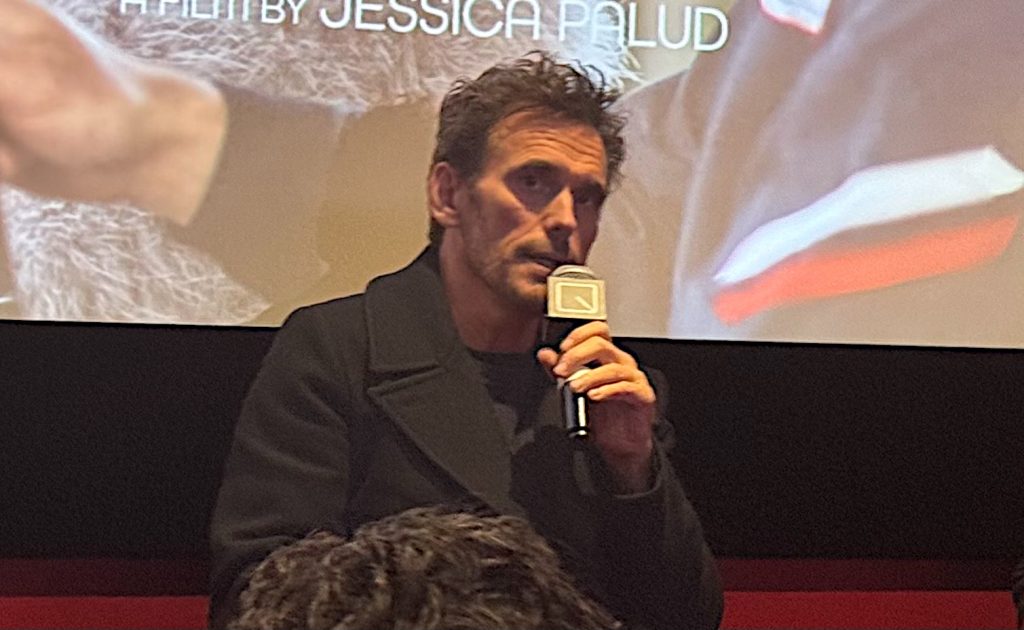
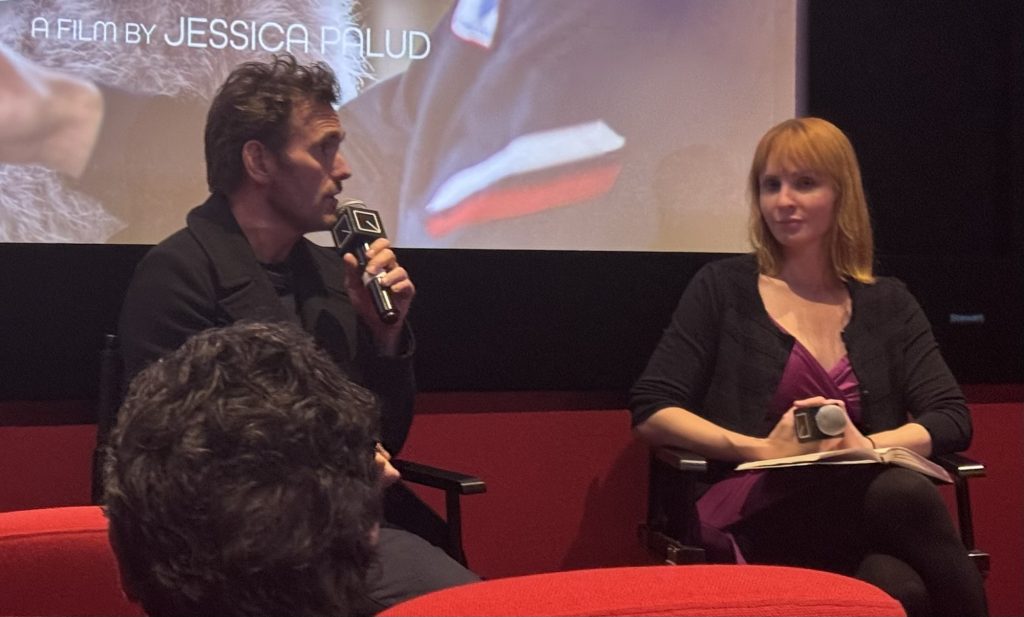
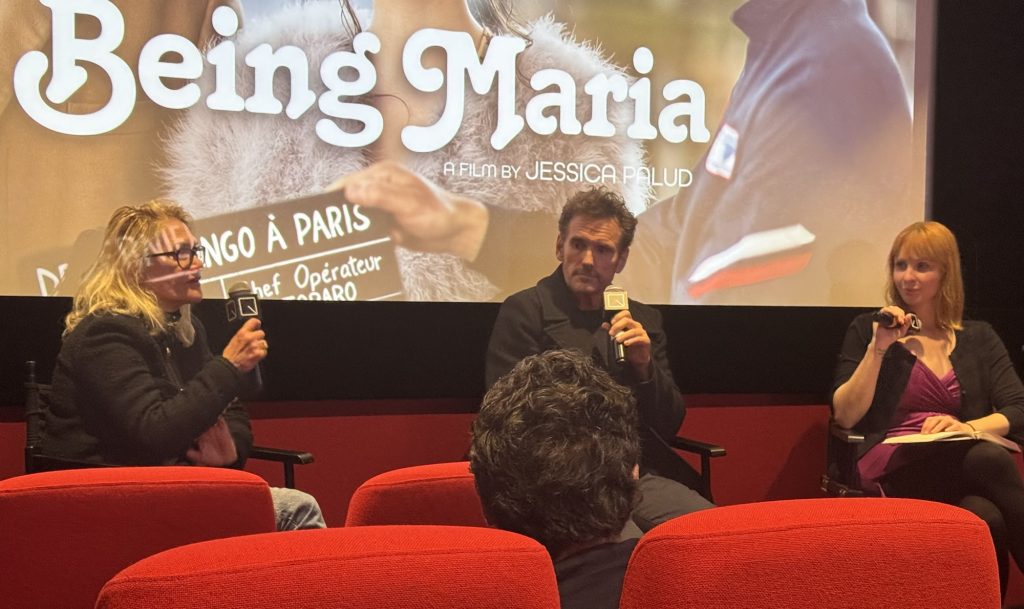
Following Thursday evening’s 7:15 pm screening of Jessica Palud’s BeingMaria at the Quad, HE was 100% prepared to get into the whole Being Maria vs. LastTangoinParis vs. BernardoBertolucciaccuracydispute.
I was cranked and ready to go into my shpiel about the content of the original LastTango shooting script and how a sizable portion of the sexual assault scene wasonthepage, etc.
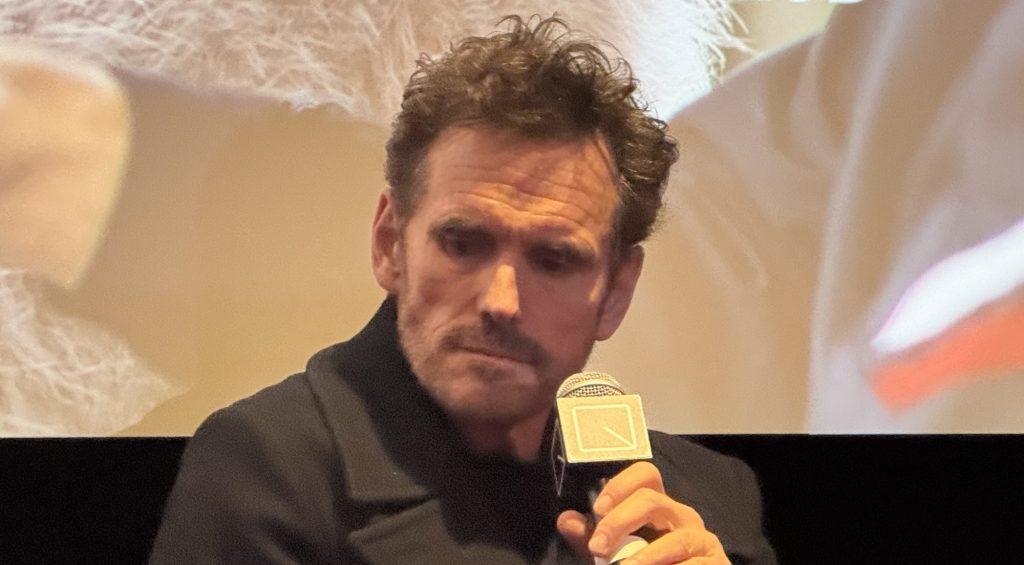
But the ginger-haired moderator of the BeingMaria discussion restricted participation to herself, costar Matt Dillon (who plays Marlon Brando) and producer Marielle Digou. No questions from the schmoes!
After it ended I caught up with the moderator (didn’t catch her name) and asked why questions weren’t permitted. “I don’t know,” she replied, adding “Are you going to blog about this?” I wasn’t sure what she meant but I said, “Ialreadyhave.”
I later told her about the originalshootingdraft, etc. She said she’s also read the original Tango script but she was mistaken — she’s actually read a published dialogue transcript of the 1972 film.
I also buttonholed Dillon, who was loose and cool, and asked if he had read the original script and he said nope. I explained about the sexualassaultscene, etc. I also told him I thought his Brando performance was first-rate, which it is.
I recorded almost everything. I’ll upload the mp3 when I get around to it. Probably late Friday.
I’ve just seen the newly restored version of Frank Perry‘s Play It As It Lays (’72), and I’m fairly certain I was the only one in the theatre (Film Forum, room #4) who noticed that the film has a 1.66:1 aspect ratio. It’s very clearly masked on the sides to produce that particular rectangular shape — slightly boxier and certainly a bit taller than 1.85.
This is a highly unusual shape for an American-produced feature of that era. Certain European and British films made in the early to mid ’70s (Stanley Kubrick‘s Barry Lyndon, John Schlesinger‘s Sunday Bloody Sunday) were intended to be shown in 1.66, but things were different in the States. Beginning in 1953 the hard and fast rule on this side of the Atlantic was to shoot and project in 1.85. (The obvious exception being films that were shot in Scope or 2.39:1.)
I don’t know precisely when 1.66 was all but totally phased out in this country, but I know it’s quite the rarity these days. 1.66:1 is still HE’s all-time favorite aspect ratio.
Full respect and a fond farewell for poor Mr. Hauser, who’s left the earth at age 77. I did a phone interview with Hauser when I was writing the Cannon press kit for Tough Guys Don’t Dance back in ’87…good man, witty, kind soul.
That makes a huge difference. I had thought all along that this loose adaptation of Thomas Pynchon‘s Vineland was set in the ’80s, but no….it’s apparently set in the horrific 2020s.
That said, it’s very easy to generate intrigue with automatic rifle fire.