This is a masterstroke as (1) “Ooh La La” instantly Anglicizes or Americanizes this Oslo-produced family drama, and thus relaxes any resistance that Academy members might harbor about Value being a fitting Best Picture contender, (b) it recalls Wes Anderson‘s brilliant Rushmore (’98), which was the last film to use “Ooh La La” on its soundtrack, and (c) it alludes to personal growth, self-knowledge and finding wisdom, which Sentimental Value is fully concerned with. A perfect song for a perfect trailer.
Neon’s trailer says Sentimental Value will open stateside in November…nothing more specific than that. Obviously a prime Oscar consideration platform.
Friendo: “Looks great. Why can’t Hollywood make movies like this? Because they mostly don’t see personal relationships out there — they only see gender and skin-color power dynamics.”
Sentimental Value opens in France on 8.20.25, in its home country of Norway on 9.12.25, and in Sweden on 10.3.25.
Forget ’ems: Bugonia (Focus Features, d: Yorgos Lanthimos, too weirdo-oddball); Frankenstein (Netflix, d: Giuillermo del Toro…can’t); F1 (Apple, d: Joseph Kosinski, Jerry Bruckheimer…too popcorn for Best Picture category}; Sinners (Warner Bros., d: Ryan Coogler…too schlocky, too exploitation-ish, too many TikTkok ayeholes singing its praises); Wicked: For Good (Universal Pictures…can’t do this again…go away!); The Smashing Machine (A24, d: Benny Safdie…Benny films are too self-absorbed, too hyper-crazy, not Academy friendly). (6)
Maybes, Probables: Hamnet (Focus Features, d: Chloe Zhao); Late Fame (d: Kent Jones); Springsteen: Deliver Me From Nowhere (Searchlight, d: Scott Cooper); Sentimental Value (Neon; d: Joachim Trier) (4)
While Greenwich Entertainment delays (drags ass?) on releasing its English-language trailer for Michel Franco‘s Dreams, there’s a Czech-subtitled trailer out now. The Czech title is Nebezpečné sny, or Dangerous Dreams. Great sex madness…that’s obvious. HE to Greenwich: Get the lead out, fellas!
Disclaimer: this is an unauthorized fan-made video made by The Tapes Archive. The words are Tarantino’s, but the voice is generated by AI. The script is taken from Tarantino’s ‘Cinema Speculation’ chapter on Bullitt. Some of the pages were cut for the video to hopefully encourage people to buy his book.”
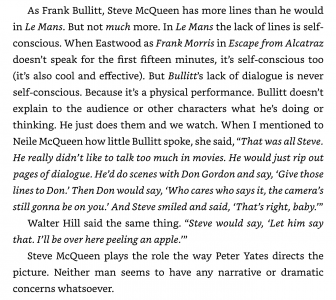
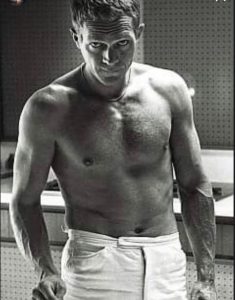
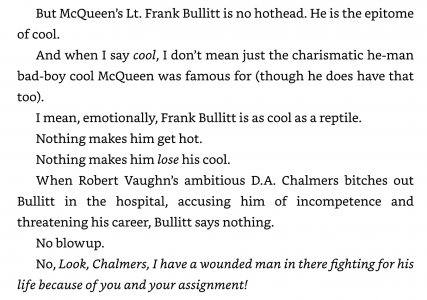
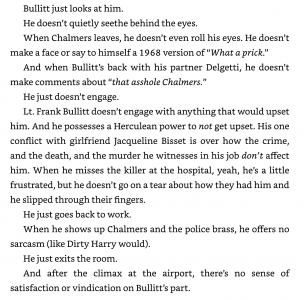
From Quentin Tarantino‘s “Cinema Speculation“: “Steve McQueen as Frank Bullitt keeps moving forward while Peter Yates, the director, follows him here and there as we, the audience, sit back and let them do our thinking for us. As pure cinema, Bullitt is one of the best directed movies ever made.”
I love it when IndieWire‘s David Ehrlich pans something, but his 6.30 review of Jurassic World: Rebirth (Universal, 7.2) doesn’t go batshit enough.
Just remember that even if Rebirth is, as some are claiming, the best Jurassic flick since the 1993 original, it’s still made for people of a very low sociological order, and that, in this instance, includes you. Films like this are intended to make you feel a bit stunted and slimey.
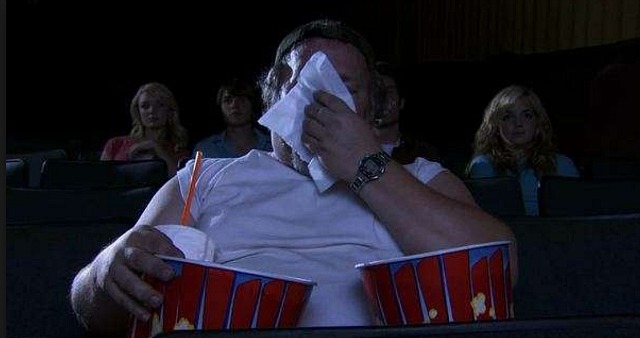
Last night I tried to catch a 7 pm all-media screening of Jurassic Park: Fallen Kingdom (Universal, 6.22) at the AMC Century City, but I almost didn’t make it. It happened in theatre #2, where two previous screenings had occured at 10 am and 3 pm. I arrived around…oh, 6:50 pm but all the seats seemed to be taken. I asked a Universal staffer if I should leave and she said, “No, no…we’ll figure it out.” Things didn’t look at all hopeful.
On top of which the crowd looked kind of mongrelish to me — overweight, T-shirts, jeans and sweat pants. There were a lot of kids there, and they all seemed to be wolfing down popcorn, candy and super-size soft drinks. A typical mall mob, the kind you’d see at Magic Mountain or Disneyland or Knotts Berry Farm. A thought went through me — “Do I want to sit with these awful-looking people? I don’t see any of my critic friends here. This is not my kind of scene.”
But I shook myself out of that mindset, manned up and decided to do my job, even without a seat. After a while I walked up the left-side aisle and sat down on the steps.
Ten seconds later a nice 30ish woman said, “We have a seat here.” It was five or six in from the aisle. “Oh…thank you so much!,” I said. I shuffled my way in and sat down, and right away felt a twinge of concern. On my right was a 20something woman of no particular distinction, but to my left…good God…was a Jabba-sized Latina who was sitting with a similar-sized friend. And Jabba Latina was eating, eating and eating. The movie began and she kept chowing down like someone who hadn’t eaten in days.
Her first course was some kind of chicken salad, tomato and cucumber dish inside a deep plastic container. Then came the second course — a butter-soaked tub of popcorn and a big slurpy drink. Then she opened up a bag of Doritos.
I didn’t say a word. I didn’t give her the HE stink-eye. I just sat there like a sphinx and tried to concentrate on the film. But every now and then I snuck a peek.
I couldn’t ignore the fact that Jabba Latina’s reactions were extremely coarse and downmarket. I was reminded of those close-ups of Collisseum cheap-seat serfs watching Christians get eaten in Cecil B. DeMille‘s The Sign of the Cross.
Every time a person got eaten by a dinosaur, Jabba Latina went “oooh, hoo-hoo-hoo-hoo!” Movies like Fallen Kingdom are obviously made with this kind of person in mind. She really loved the huge alligator-like dino that leapt out of the sea to eat a squealing 20something guy who was trying to climb into a hovering helicopter — “Eeeeee-hee-hah-hah!” Anything and everything that happened of a stupid or low-rent or pandering nature, Jabba Latina was in movie heaven.
Yes, I focused on the film and took mental notes all through it, but I couldn’t completely divorce myself from the Jabba Latina factor. I mostly pushed it aside but I kept twitching when she laughed. I’ve said this dozens of times over the years, but hell is truly other people.
Bring your own pre-popped Jiffy Pop in a pear-cake bag, and then use their liquid butter machine. And bring your own drinks. Simple.
AMC trailer reels run between 17 and 20 minutes. Okay, I’ll allow for the possibility of 22 or 23 if you count Nicole Kidman. They certainly don’t run a half-hour.
Instant blind hate for Project Hail Mary (Amazon/MGM, 3.20.26). From the geek brains of Phil Lord and Chris Miller, another jerkoff galactic lone-schlubbo-protagonist plot from the guys who wrote The Martian. (original novel by Andy Weir, adaptation by Drew Goddard). Ridiculous egoistic glorification of oafish, sympathetically flawed solitary man charged with saving the world. Words can’t express how much I loathe and despise this film, sight unseen. Five seconds after I began watching this fecking trailer I wanted Ryan Gosling to die…painfully, I mean. Howling agony.
Poor Sandra Huller!
Synopsis: “Astronaut Ryland Grace awakens on a spacecraft with no memory of himself or his mission. He slowly deduces he is the sole survivor of a crew sent to the Tau Ceti solar system in search of a solution to a catastrophic event on Earth. In his search for answers, Grace must rely on his vast array of scientific knowledge, sheer ingenuity, and human will– but he may not have to search alone.”
Three strategic logic issues with the second half of The Bridge on the River Kwai, initially posted on 10.25.10:
1. When Jack Hawkins and Geoffrey Horne chase an armed Japanese soldier into the jungle, Hawkins orders Horne to “use your knife, man, or we’ll be shooting each other.” Use your knife to kill a a guy with a loaded rifle? What kind of sense does that make?
2. Why does the commando team have to blow up the bridge at the precise moment when the train’s about to cross? Who cares about the train? Wouldn’t this action guarantee that Japanese troops not killed in the blast would hunt the commandos down and almost certainly kill them? How could they expect to escape when they’re positioned so closely? It’s a hopeless suicide mission.
The more sensible approach would be to blow up the bridge in the dead of night and then hightail it into the jungle while the Japanese are still waking up. Not getting killed in the aftermath of the explosion isn’t against the rules, is it? Isn’t it better to complete the mission, escape and live to fight another day?
3. Near the end Hawkins tells Horne to set up the detonation plunger on the far side of the river and then “swim back” after the explosion. Swim back? He’ll get shot. The smarter thing would be for Horne to scamper into the jungle on his side of the river and then meet up with Hawkins and the others at a rendezvous point a few miles away.
Chase Kahn
15 years
“Simply blowing up the bridge during the night while everyone is sleeping wouldn’t give us much ‘madness'”.
moviemorlock
15 years ago
“Blowing up the train on the bridge eliminates supplies and reinforcements, not just the supply line. It also adds a rescue mission for troops on the ground with far more distractions and the ability for prisoner escapes. I never had a problem with this. Plus–it’s a movie and one hell of a climax.”
Jeffrey Wells
15 years ago
“I thought the train was just carrying dignitaries, and was also going to take the sick men to a hospital. Who says the train is carrying supplies and reenforcements? I don’t recall that.”
TheCahuengaKid
15 years ago
“If the empty bridge is blown up in the middle of the night, then David Lean has no awesome climax for his movie.”
the analog kid
15 years ago
“The train carries VIPs and troops. It is specifically stated in the film. One could infer there are supplies on it as well.
“They actually talk about blowing the bridge with timers, but they decide to trigger it manually so they can get the train as well.”
“And they blow up the train because it would be ‘something’ if they did.”
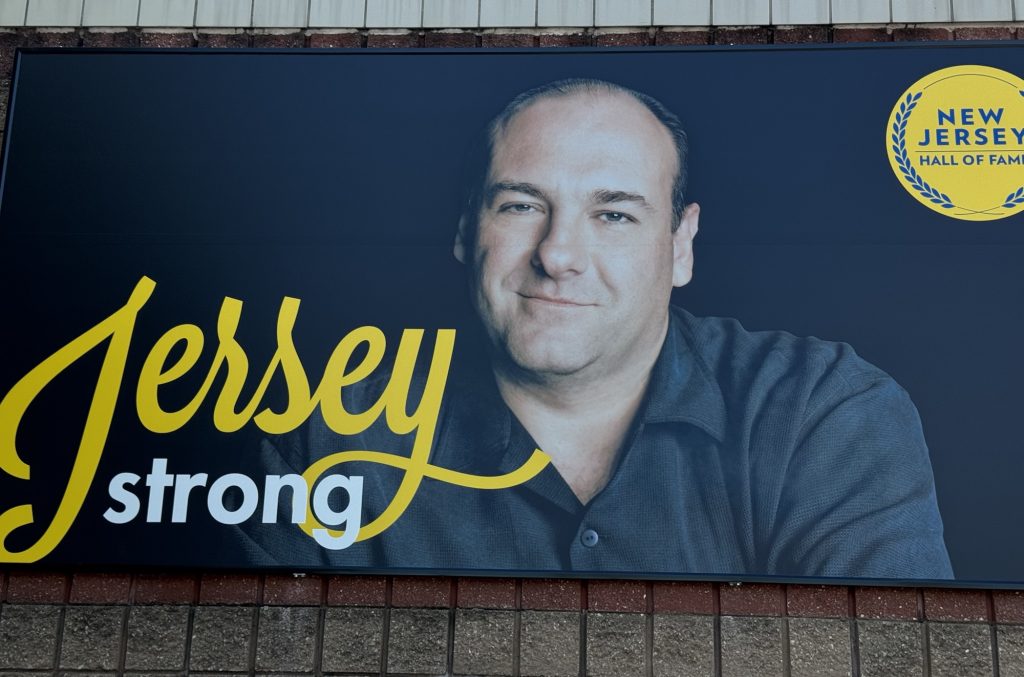
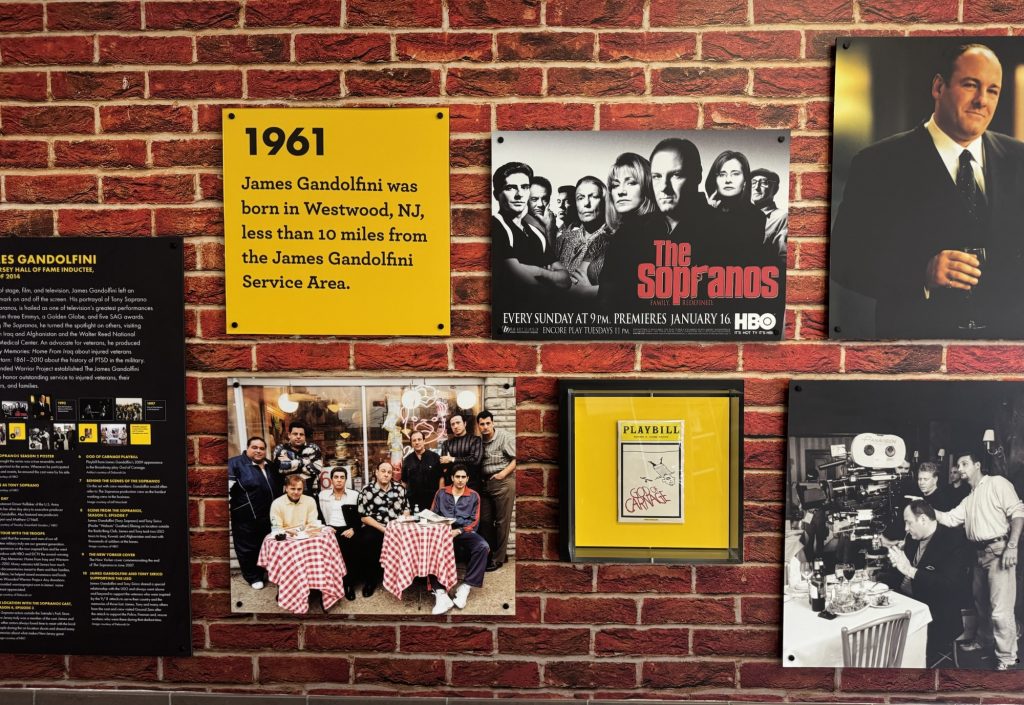
Located in Montvale, New Jersey, the Garden State Parkway’s James Gandolfiniservicearea feels like a place of semi-solemn observance — well north of Satriale’s pork store in Kearny, northeast of Saddle River, northwest of Gandolfini’s birthplace of Westwood, just south of the New York State line.
It’s not quite on the level of Thomas Jefferson’s Monticello or JFK’s Hyannisport or FDR’s Hyde Park, but it’s a place that seems to culturally matter…”take your hat off, they serve hot dogs here.”
Gandolfini was a very young boomer (born on 9.18.61**, technically a member of GenerationJones, a cusp between boomers and GenXers). Way too young to have been a ground-floor Beatles or Bob Dylan fan or to have even sniffed the hippie thing…came of age in the early Reagan era…B-52s, Blondie, The Police, Journey’s “Don’tStopBelievin’”.
Gandolfini was 37 when season #1 of TheSopranos began filming in mid ‘98, and only 51 when he died in Rome of a heart attack on 6.19.13.
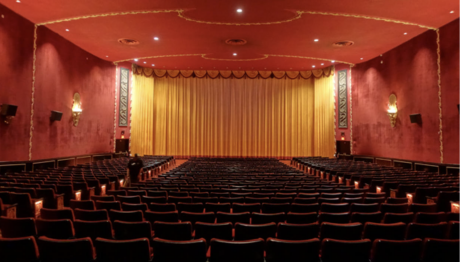
When you think of the most exciting, triple-wowser screenings of your life, it’s always a combination of (a) a knockout film, (b) a great crowd and (c) the film playing at a big-city, big-screen, technically tip-top theatre.
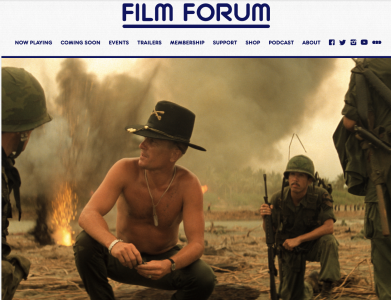
I saw the original Apocalypse (147 minutes, give or take) at the Ziegfeld theatre two or three times in August and September of ’79, and the big-screen presentation was aurally and visually wonderful, especially in terms of sharp, punctuating fullness of sound.
Apocalypse Now was presented at the Ziegfeld within a 2:1 aspect ratio, which Vittorio Storaro insisted upon through thick and thin.
As we began to listen to The Doors’ “The End” while staring at that tropical tree line, John Densmore’s high hat could be heard loudly and crisply from a Ziegfeld side speaker. Before that moment I had never heard any high-hat sound so clean and precise.
Remember that “here’s your mission, Captain” scene with G.D. Spradlin, Harrison Ford and that white-haired Filipino guy? When that scene abruptly ends, we’re suddenly flooded with electronic synth organ music…it just filled your soul and your chest cavity.
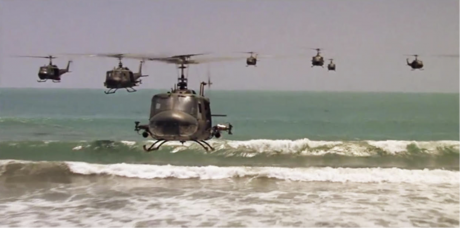
When Martin Sheen and the PBR guys first spot Robert Duvall and the Air Cav engaged in a surfside battle, Sheen twice says “arclight.” In the Ziegfeld the bass woofer began rumbling so hard and bad that the floor and walls began to vibrate like bombs were exploding on 54th Street…the hum in my rib cage was mesmerizing.
As Duvall’s gunship helicopters take off for the attack on a Vietnamese village (“Vin Din Lop…all these gook names sound the same”), an Army bugler begins playing the cavalry charge. The “tirrah–tirrah–tirrah” was clear as a bell in the Ziegfeld.
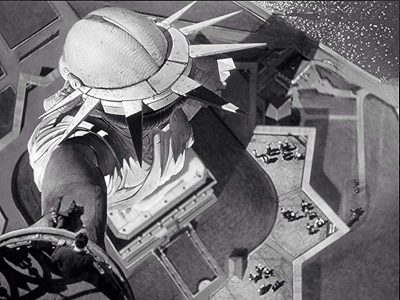
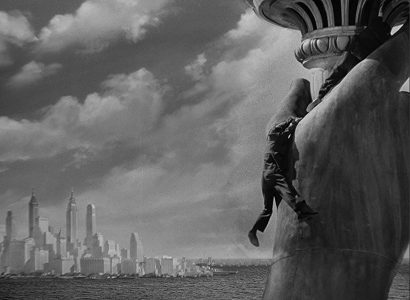
Norman Lloyd‘s falling finale would’ve been better if Alfred Hitchcock hadn’t relied on that fake-looking process shot.
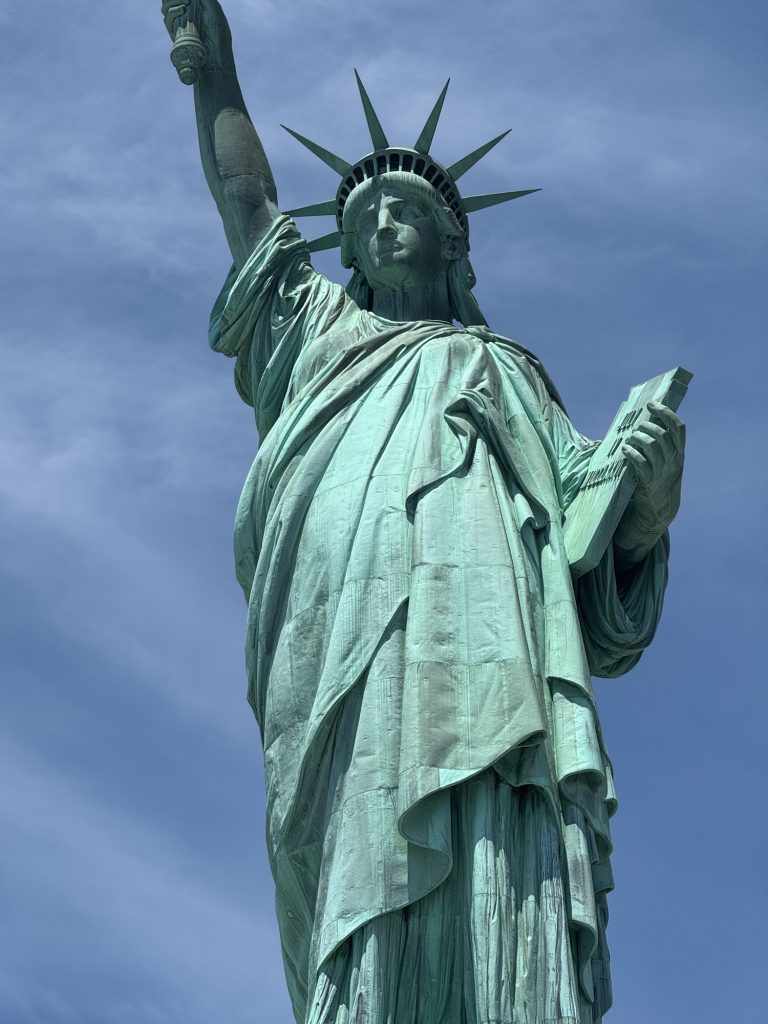
If I’d been in Hitchcock’s shoes, I would’ve had Universal’s prop department build a special wind-up mechanical dummy, one capable of moving its arms and legs a bit. Then I would’ve mounted the downward-facing camera on the railing of the actual Statue of Liberty torch, and then I would’ve simply dropped the dummy and filmed the long fall.
Then, in the editing phase, I would’ve shown Lloyd losing his grip and starting to fall, then a quick shot of Robert Cummings‘ horrified expression, and then cut to the falling dummy and stay with it until hits the pavement below. I would also have recorded the sound of a pair of tied-together watermelons slamming into the pavement from a height of, say, four or five stories.
Happy 104th #NormanLloyd Saboteur, 1942, directed by Alfred Hitchcock. Robert Cummings and Norman Lloyd. "Statue of Liberty" scene. pic.twitter.com/T4NDXyQWUD