David Lynch (1946-2025)

I’m just going to be flat-out honest about eccentric filmmaker extraordinaire David Lynch, whose untimely passing at age 78 (four days short of his 79th birthday) was reported earlier today. But I’m going to speak in generalities.

Lynch was basically a fascinating, unconventional, gut-hunchy, marquee-brand surrealist artist who excelled as an auteur filmmaker for roughly a quarter-century (from ’77’s Eraserhead to ’01’s Mulholland Drive).

In HE parlance Lynch didn’t exactly peak for that whole 25-year stretch but he certainly flourished creatively for most of that period– Eraserhead, The Elephant Man (sturdy, compassionate period piece), Dune (not admired), Blue Velvet (arguably his only truly great theatrical film), Wild at Heart, the groundbreaking Twin Peaks TV series (’90 and ’91), Twin Peaks: Fire Walk with Me, Lost Highway (in my book his second best feature), The Straight Story (fourth best…spare, earnest and true) and Mulholland Drive (third best).

Yes, Lynch continued to work excitingly or at least imaginatively in the 21st Century (Inland Empire, the 2017 Twin Peaks reboot for Showtime, paintings and musical collaborations and whatnot) but if you ask me his main creative effort / handle / identity over the last 15 or so years was projecting his testy, feisty, snappy-ass personality in YouTube and TikTok videos…his John Ford cameo in Steven Spielberg’s The Fablemans was a standout for most, but for me the clips of Lynch losing his temper over this and that are wonderful. The iPhone rant, the “what is this shit about the length of a scene?” rant…all are magnificent.

So he was basically a prolific signature-level director over the last quarter of the 20th Century (face it…the ’80s were his glory years), and a sometime filmmaker but mainly a great, irascible, cranky-as-fuck personality from the late aughts until just recently.

A lifelong smoker, Lynch stated last November that emphysema had gotten the better of him. And yet his poor health was exacerbated, it seems, by the ongoing L.A. firestorms. Sometime last week Lynch evacuated one of his Los Angeles homes (he owned three on or near Mulholland Drive) due to the fires. He went downhill soon after.
Read more

Son of Lore of Cocaine Movies

The 1.10.25 death of Sam Moore somehow led me to re-watch John Landis’s The Blues Brothers (6.20.80). Yeah, I know…weak linkage, only in white-guy land.

Initially posted on 5.14.12:

The Blues Brothers (6.20.80) was about John Belushi and Dan Aykroyd having dry, sardonic fun with the “white musicians looking to generate authenticity by performing the Chicago blues” concept.

This kind of thing was originally personified with utter sincerity by the scowling, grittily-posed, Rayban-wearing Paul Butterfield Blues Band.

The Blues Brothers act was nervy and funny when I first saw Belushi-Aykroyd perform it on Saturday Night Live in April 1978. They doubled down on this when I saw them live at Carnegie Hall later that year (or was it sometime in ’79?).

But the coolness went all to hell with the release of John Landis‘s Blues Brothers flick.

What was it about this Universal release that obliterated and suffocated? Oh, I don’t know. Maybe the fact that it was an unfunny, over-emphatic, overproduced super-whale that was made on cocaine (or so the legend went)?

I asked Landis about this wildly inflated, pushing-too-hard aspect when I interviewed him in ’82 for an American Werewolf in London piece.

It was over breakfast at an Upper East Side hotel (Landis was hungrily wolfing down a plate of scrambled eggs and home fries), and I said that the “enormity” of The Blues Brothers seemed “somewhat incongruous with the humble origins of the Chicago Blues.”

That hit a nerve. “It wasn’t supposed to be a documentary about the humble origins of the Chicago Blues!” Landis replied. But the essence of the Chicago blues wasn’t about flamboyant energy and huge lavish musical numbers and car chases or mad slapstick, I said to myself. And your movie seemed to take that Paul Butterfield pose and amplify it beyond all measure or reason.

I didn’t literally say this to Landis, of course, but he knew what I meant. Nor was I impolitic enough to call it “a cocaine movie” but that’s what it damn sure felt like.

As Landis argued with me the Universal publicist sitting at the table started making “no, no” faces, indicating that I should tone it down.

In any case I mostly hated The Blues Brothers from the get-go, and here it is 45 years later and after giving it a fresh re-watch last night, I’m still not a fan.

Why didn’t Sam and Dave have a cameo? Everyone else did.

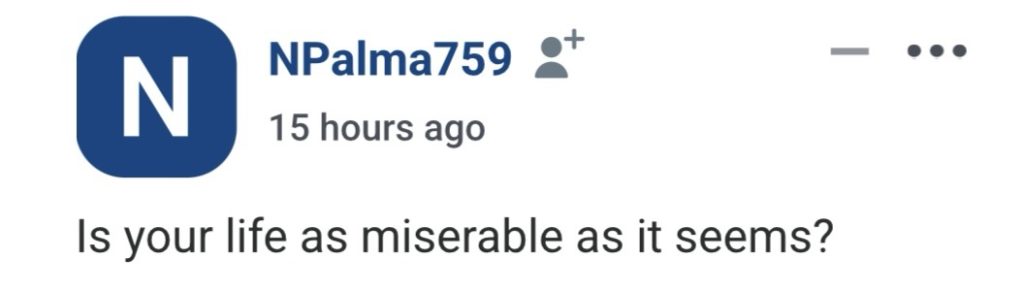
I Feel Sorry For Guys Like “NPalma759”

HE reply: Outside of the super-wealthy, the blissfully ignorant and the simply-lacking-sufficient-brain-cells crowd, life itself is a kind of misery index. If you’re living an examined one, I mean.

That old Annie Hall joke about human experience being categorized by the horrible for some (afflicted with ghastly disease, suffering in concentration camps) and the miserable for everyone else? It got a big laugh when I first saw Woody Allen’s classic film in the spring of ‘77.

Life is occasionally punctuated with deeply satisfying accomplishment breathers or mountain-peak highs or blissful peace-outs (family dinners, silent communings with nature, pet affection, great music, early-morning airport arrivals in Europe) or fizzy champagne cocktail moments (and who doesn’t love these?) but otherwise is mostly about pushing the plow through rocky soil and slogging through as best we can. I wish it were otherwise, but then again misery and anxiety and sore shoulder muscles build character.

Obscure Title Will Scare Audiences Away

Barry Levinson‘s The Alto Knights (Warner Bros., 3.21.25) would sell more tickets if it was called Wise Guys (original title), Goombahs, Vito and Frank or Old Fuckheads.

Okay, those aren’t very good titles either, but what the hell does The Alto Knights mean?

The Alto Knights Social Club was the original name of Little Italy’s’s Ravenite Social Club (247 Mulberry Street). Founded in 1926, the joint was a hangout for Charlie “Lucky” Luciano and Albert Anastasia. (The name “Alto Knights” came from the Order of Saint James of Altopascio.)

The screenplay is by Nicholas Pileggi (co-author of Goodfellas).

The Alto Knights stars 81-year-old Robert De Niro in a dual role as mob bosses Vito Genovese and Frank Costello. Debra Messing, Cosmo Jarvis, Kathrine Narducci and Michael Rispoli play supporting roles.

Wolf It Up, Fuzzball

If someone were to offer me a clean, crisp $100 bill in exchange for my agreeing to sit through the entirety of Leigh Whannell‘s Wolf Man, I honestly wouldn’t know how to respond. I think I’d hold out for $250. I would sit through this obviously poisonous film for that amount.

I’ve never seen Terence Fisher‘s Curse of the Werewolf (’61), which starred Oliver Reed and was set in 18th Century Spain. (Although it was shot in England.) It was the first werewolf film to be shot in color. Stills indicate that Reed’s makeup wasn’t bad.

For the last 30 years my all-time favorite werewolf flick has been Mike NicholsWolf (’94), which has an excellent screenplay by Jim Harrison (whom I met and hung out with on a warm evening in March ’96 at the premiere of Carried Away, which was based on Harrison’s “Farmer”) and Wesley Strick. I didn’t like the last half-hour of Wolf, of course — nobody did. But the first 90 minutes moved along nicely.

Jolie Is Toast

Remember Scott Feinberg’s enthusiastic Angelina Jolie promotions? All the gush? Well, none of that panned out. No SAG or BAFTA noms…sorry. That’s because of the horrible recriminations against Brad Pitt by Jolie and the kids. It’s called karma.

Bodies Bodies

In the comment thread for HE’s Best Films of 1986 piece (posted late last night), it was argued that Tim Hunter’s River’s Edge and Rob Reiner’s Stand By Me, dual ‘86 releases about kids finding a dead body and debating what to do about it, are of equal classic stature.

River’s Edge technically isn’t a 1986 film but I let that slide. Shot between January and March of ‘86, it premiered at the 1986 Toronto Film Festival (9.10.86 — a month after Reiner’s film appeared in theatres) but didn’t commercially open until May ‘87.

Hunter’s film is far more haunting, not to mention realistic and mature — a major, deeply unsettling arthouse film about a zombie virus that had begun to permeate stoner teen culture (it’s based upon a 1981 murder that happened in Milpitas) in the early Reagan era. A couple of critics described it as a kind of moral horror film.

Based on a 1982 Stephen King novella, Stand By Me is basically a sentimental flick about adolescent friendship and the veil of nostalgia. I hated, hated, HATED the title (the revered 1961 Ben E. King song has NOTHING to do with the plot), and I sorta kinda despised the presence and performance of chubby-ass Jerry O’Connell, who was 11 or so during filming.

No offense but Reiner’s film, which I regard as no more than decent as it is pure popcorn, shouldn’t be mentioned in the same breath with Hunter’s.

Please Just Stop It

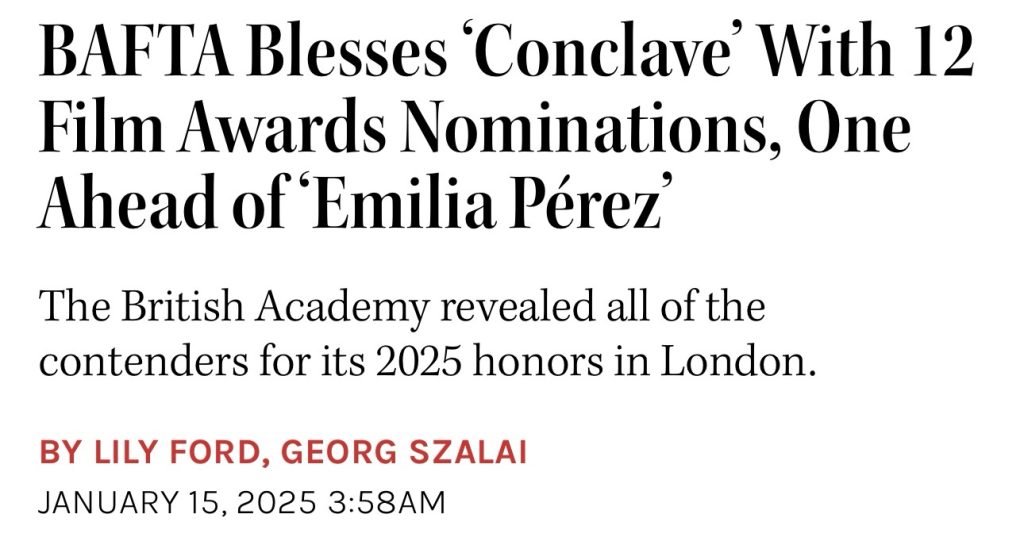
Will a BAFTA Best Picture win lock in Conclave’s frontrunner status and finally put an end to sick, delusional stateside fantasies that Wicked or Emilia Perez or, God forbid, The Brutalist might snag the golden Oscar ring?

The Brutalist, which received nine BAFTA noms this morning, is a film designed to make viewers feel awful. This is not a strongly contested opinion. I would feel differently if (this is an absurd fantasy) A24 had offered complimentary snorts of high-grade heroin to select viewers in order to lessen the glum mood, but that’s water under the bridge.

Conclave’s 12 BAFTA nominations have affirmed its leading heavyweight status, at least for now. And yet nipping at the heels of Edward Berger’s Vatican drama is Jacques Audiard’s diverting-but-not-good-enough Emilia Perez, which has landed 11 BAFTA noms…will you guys please stop this? Put a cap on it.

Both the Movie Godz and the Joe and Jane Popcorn community have spoken, and the time has come to put a respectful halt to the Perez hoopla.

There’s no questioning that it’s an audaciously conceived film (Mexican trans drug cartel musical) but without the second word in that five-word description there’s no way it would be a Best Picture headliner (voting for it makes people feel safer), and we all know this.

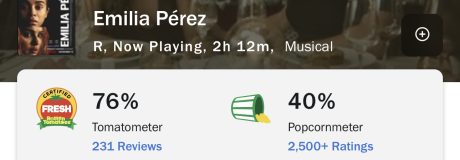
Not to mention those underwhelming RT scores (both critics and ticket buyers).

Queer’s Daniel Craig getting edged out of a Best Actor nomination by Heretic’s Hugh Grant is absolutely not right and certainly not cool. Craig’s performance as the William S. Burroughs-like lead character in Luca Guadagnino’s film is shattering.

And congrats to The Apprentices Sebastian Stan for landing a BAFTA Best Actor nom for his spot-on, half-sympathetic-during-the-first-half performance as Donald whack-ass Trump. Hooray also for Stan’s costar, Jeremy Strong, snagging a Best Supporting Actor nomination.

Dead Man Walking

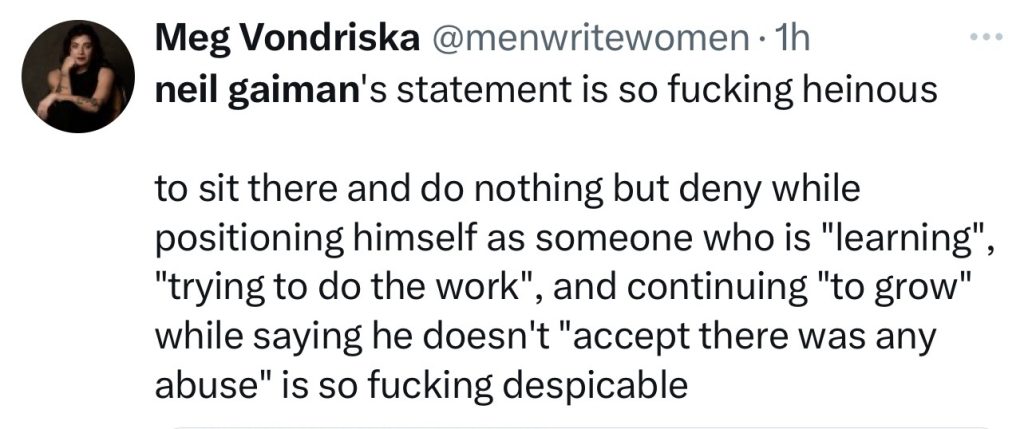
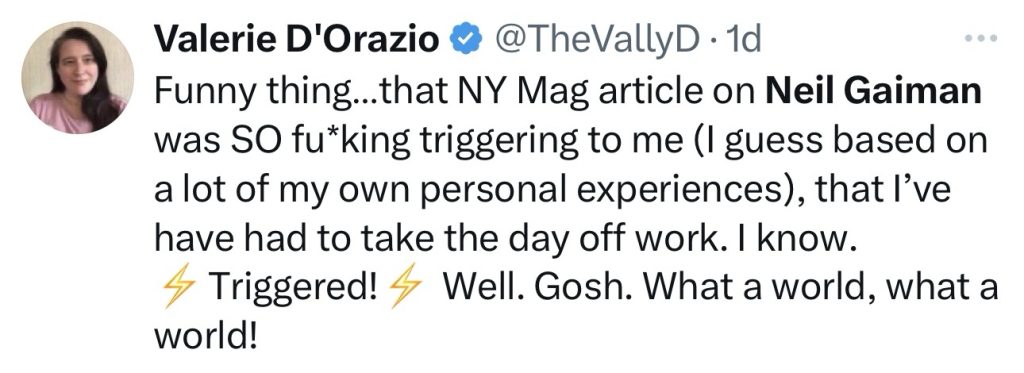
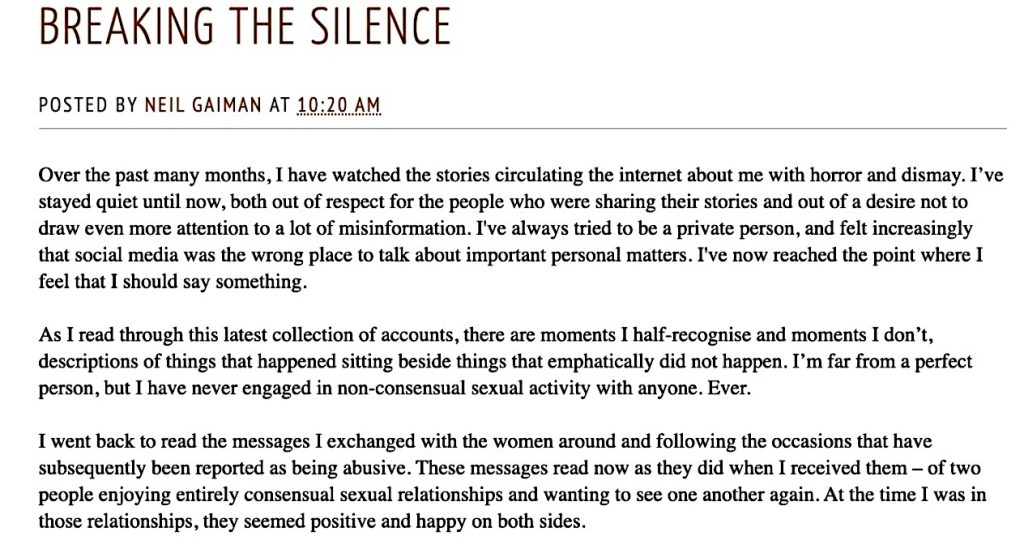
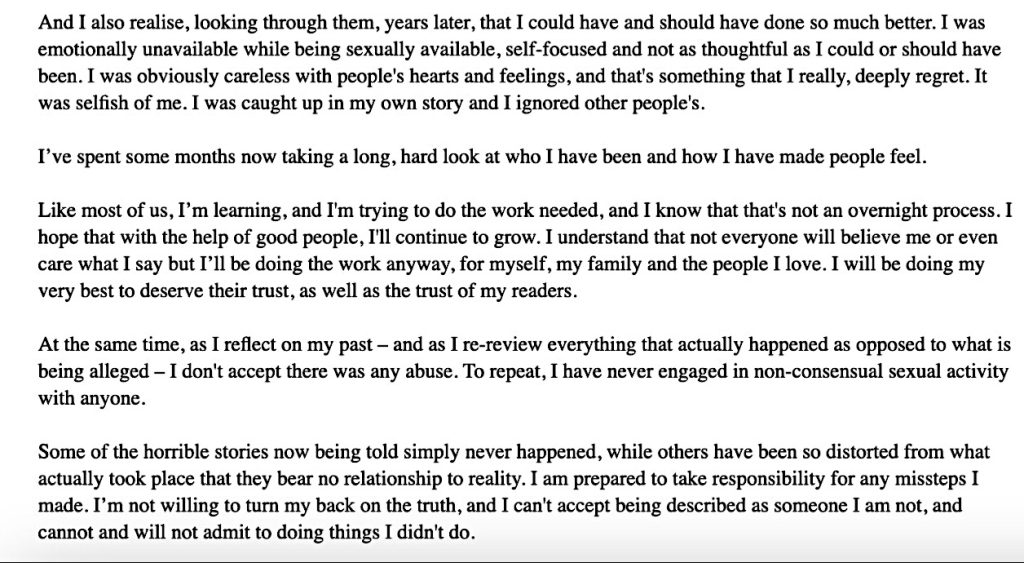
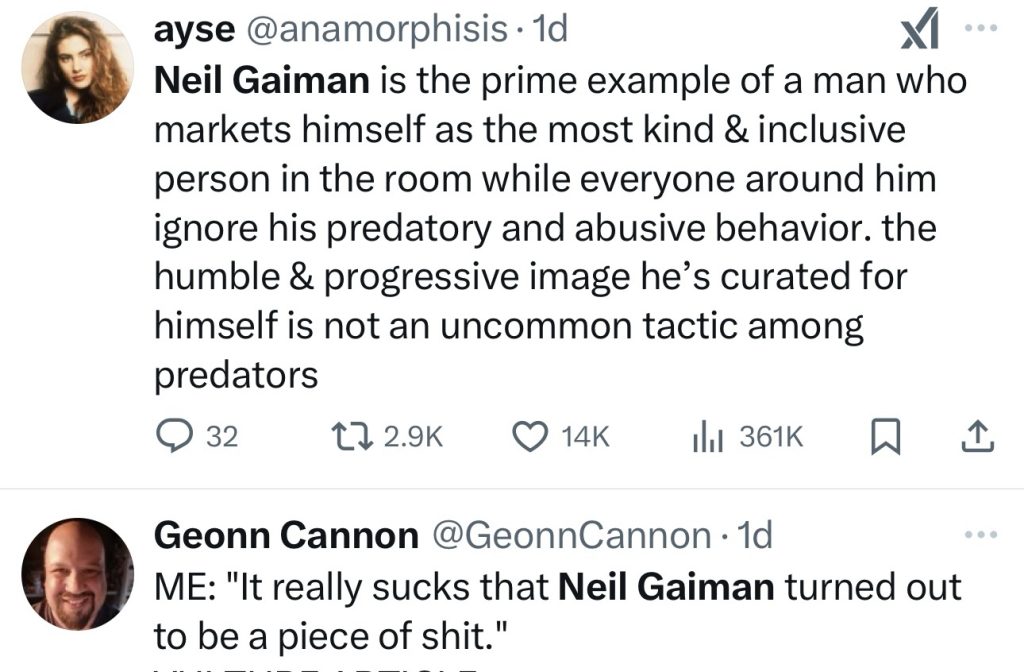
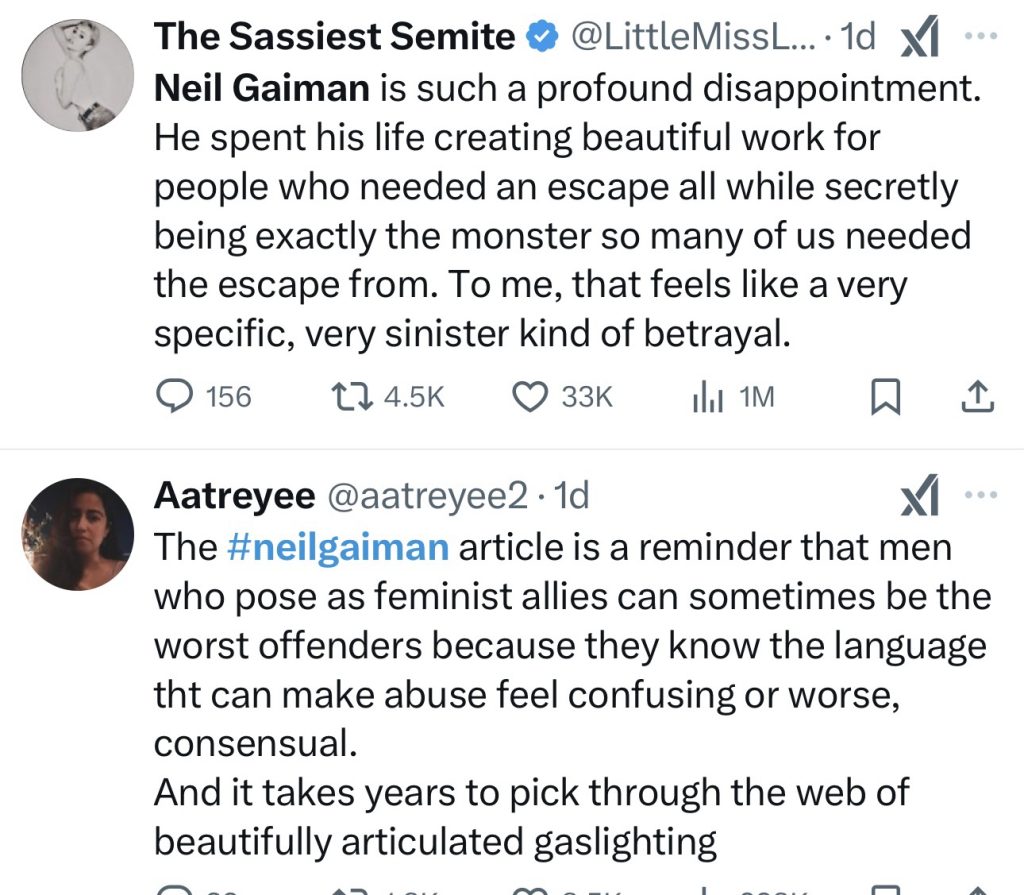
Time and again guys with abusive tendencies have seemingly tried to immolate themselves — almost trying to taunt #MeToo women as an exercise in self-destruction. Please vent about my appalling sexual behavior on social media…please! This is how I want to die.

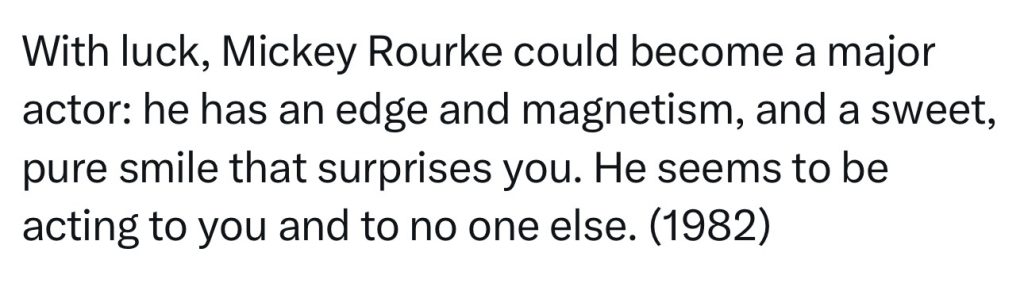
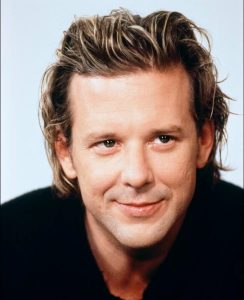
When Mickey Rourke Seemed Destined For Greatness

I’m fairly certain this famous Pauline Kael quote is from her New Yorker review of Barry Levinson’s Diner (‘82), although it could’ve been sparked by a scene in Lawrence Kasdan’s Body Heat (‘81) in which Rourke, initially glimpsed lip-synching to Bob Seger’s “Feel Like A Number”, played a soft-voiced, settled-down felon who’d begun to think twice about…everything.

Rourke seemed to be in a state of charmed, almost magical ascendancy back then. I could go on and on about what happened or didn’t happen, but the glow had begun to fade by the late ‘80s. His last truly alluring performance that decade was in Alan Parker’s Angel Heart (‘87). Then came the early ’90s and boxing.

.