As much as I’ve loved Joe Jackson’s music for the last 40-odd years, I always found his Pee-Wee Herman dress sense (nerd collars, pants pulled up to his chest, Clarabelle suspenders) more than a bit odd. Jackson turned 70 last August, and currently bears a distinct resemblance to Joe Biden.
Honor Is A Private Matter Within
In the comment thread for yesterday’s Sean Connery piece (“Connery In The Flesh“), an HE regular posted an anecdote from a woman friend who told him she “did” Connery way back when, and that his package was unimpressive.
I hate that kind of cheap snark so I deleted the post. Today the guy asked why.
HE to Connery disser: “I despise any and all comments that try to belittle someone’s reputation by claiming their schlong was smallish. James Ellroy once wrote that JFK was ‘hung like a cashew’…fucker! It doesn’t get much lower or scummier than that.”
Connery disser to HE: “You seem pretty obsessed with masculinity, yet when I point out that someone doesn’t measure up in a certain area, whether that yardstick is valid or not, you become really upset. Seems kinda funny to me. And BTW, the woman [who fucked Connery] is totally credible.
HE to Connery disser: “It’s a shitty thing to say. Besides almost all guys are growers. Very few have hefty animal members in repose.”
Hey, Good-Lookin’…Whatcha Got Cookin’?
In Pablo Larrain‘s Spencer (Neon, 11.5), Kristen Stewart‘s Diana says that “beauty is useless, beauty is clothing.”
That is one of the most full-of-shit lines I’ve ever heard in a film…hell, in my entire life on this planet.
We all understand that good looks won’t do much for a person unless accompanied by sufficient smarts, social skills, a healthy lifestyle and some sort of gift or ability that can be understood and appreciated in the marketplace. But when you’re young and just starting out in whatever field (and even after you’ve gotten going), good looks are a golden passport, and they always have been. They open doors, turn people on, pave the way.
Diana became Prince Charles‘ bride because of her looks plus all the other alluring qualities. But definitely because of her looks. I mean no disrespect when I say that Charles would have never proposed if Diana had looked like, say, the quietly attractive Sally Hawkins.
If Paul McCartney had looked like Gerry Marsden (of Gerry and the Pacemakers) and John Lennon had looked like Ed Sheeran, the Beatles would have had a much tougher time of it…okay?
I really hate having to explain this, much less argue it, but there are some out there who seem to sincerely believe that looks aren’t necessarily a ticket to ride. They’re actually offended by the notion that attractiveness matters.
Five years ago IndieWire‘s David Ehrlich shrieked like a p.c. banshee when I tweeted to Jessica Chastain that an aspiring film critic not only needs to be talented, tenacious and willing to eat shit, but that it would “help” if he/she is “fetching.”
Ehrlich was appalled that anyone would even suggest that an attractive appearance might have something to do with how you’re received in mixed company or by potential employers. I called him a delusional little bitch, of course.
Bill Maher on 5.4.18: “News flash: People just like the physically attractive better. Sorry. The taller candidate usually wins the election. Studies show that the better-looking person, all things being equal, usually gets the job. Even babies prefer to look at attractive faces.”
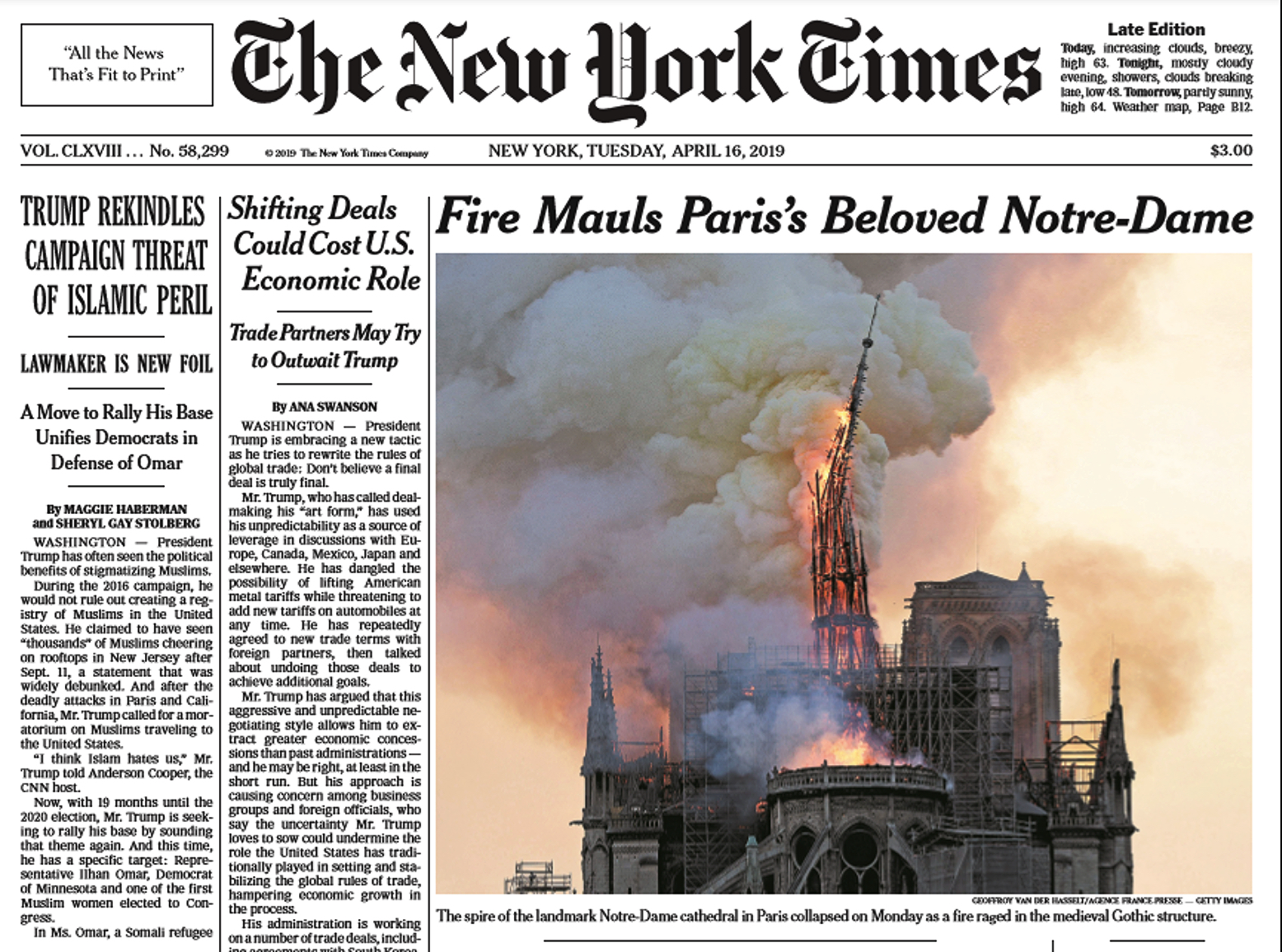
Restored Notre Dame Looks Too Clean — Seemingly Shorn of Medieval Textures
The last time I gazed upon the Notre Dame cathedral in Paris was in mid-May of 2019. The devastating fire (which was almost certainly caused by embers flicked by some labor-union, cigarette-smoking douchebag) had happened only a few weeks before. And now it’s restored and open for business again…wonderful. But the interiors look too spruced up or scrubbed down, too 21st century film set…they didn’t try to make those glorious architectural interiors (nave, transept, apse, stained glass, Romanesque sculptures) appear marked by the centuries.
“Cold” Ain’t So Hot
Originally posted on 8.30.15: “The older Richard Brooks‘ In Cold Blood gets, the more Hollywood-ized it seems.
“Much of the film has always struck me as an attempt by Brooks to almost warm up the Perry Smith and Dick Hickock characters (played by Robert Blake and Scott Wilson) and make them seem more ingratiating and vulnerable than how they were portrayed in Truman Capote‘s nonfiction novel.
“You can always sense an underlying effort by Brooks and especially by Robert Blake to make the audience feel sorry for and perhaps even weep for Perry Smith. That guitar, the sad smile, the traumatic childhood. Take away the Clutter murder sequence and at times Blake could almost be Perry of Mayberry. Scott Wilson‘s Dick Hickock seems a little too kindly/folksy also.
“These are real-life characters, remember, who slaughtered a family of four like they were sheep. I realize that neither one on his own would have likely killed that poor family and that their personalities combusted to produce a third lethal personality, but I could never finally reconcile Blake and Wilson’s personal charm and vulnerability with the cold eyes of the real Smith and Hickock (which are used on the poster for the film).
“In Cold Blood is nonetheless a striking, reasonably honest, nicely assembled re-telling of the Smith & Hickock story. I respect it. I worship Connie Hall‘s cinematography. I love the editing. Quincy Jones‘ blues combo score is partly haunting and even mesmerizing and partly laid on too thick at times. The film is certainly a cut or two above mainstream fare of the ’60s. But it’s not a great film. It feels a bit too cloying and manipulative too often. Those memory and dream sequences (the sound of the mother’s voice going “Perrrry!”) are a bit much.
HE reader Michael Gebert posted this in response: “Yes, I think this is right and well put. It’s made at kind of the last moment of postwar FDR-Kennedy liberalism that was idealistic about the possibility of reforming, well, everything, if we can catch it early enough with a big dose of Freud.
“It’s sometimes referred to as noir, just because it was one of the last big-studio features in black-and-white, but it’s the complete opposite of noir, which assumes that society is as dirty as the criminals and that chance bets against you. In Cold Blood is a throwback to New Deal crime films like 20,000 Years in Sing Sing or Angels Have Dirty Faces. Within a few years that idealism would be completely overthrown, criminals would be taunting maniacs like Manson or Andy Robinson‘s Zodiac type in Dirty Harry, a lower species in need of wiping out.
“It’s kind of amazing to think that in five years, social attitudes could change so rapidly.
“So yes, it’s exceedingly well made, but lives in such a different world that it’s hard to relate to. It’s certainly hard to find any sympathy for the mindless thugs who killed the Clutters like cattle in their basement.”


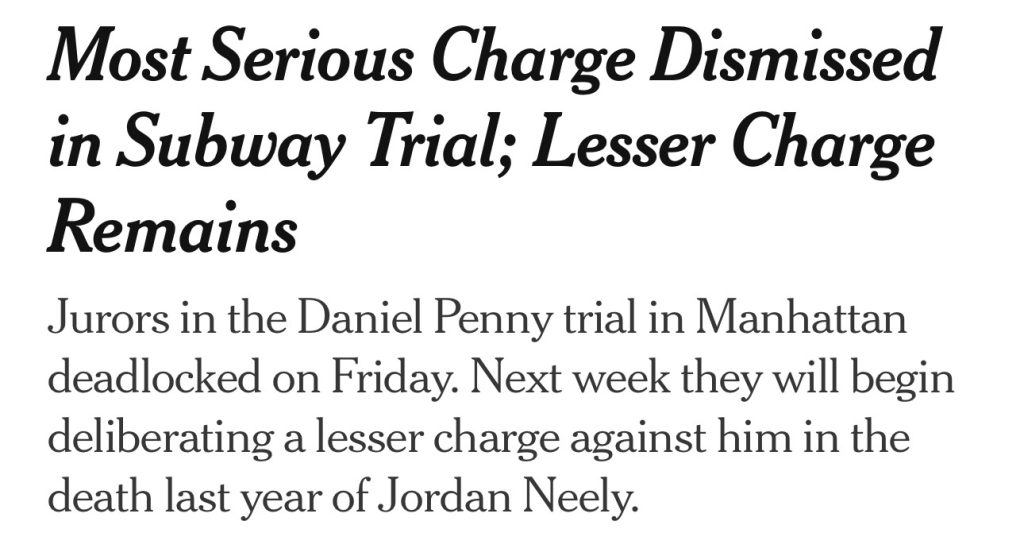
Anyone Who Approves of That Manslaughter Charge Against NYC Subway Choke-Hold Guy
…being dropped because of hung jurors…anyone who approves of the prosecution of Daniel Penny being downgraded to criminally negligent homicide is almost certainly a racist and probably a Trumpie.
Okay, not really.
Seriously, any veteran NYC subway commuter who’s had encounters with aggressive mental wackos was on Denny’s side from the get-go.
Maybe the legions of other wackos out there will ponder the sad fate of Penny’s choke-hold victim, Jordan Neely, and mutter to themselves, “Hmmm, maybe I should make a greater effort henceforth to not make subway riders cringe and cower when I go into my routine?”

Connery In The Flesh
In all my years on this planet I spoke to Sean Connery only once, during a roundtable at a 1982 New York press junket for Richard Brooks‘ Wrong Is Right.
I wasn’t much of a fan of the film (nobody was) but it was thrilling to absorb the vibe and smell the aroma of the manly, bigger-than-life Connery.
He wasn’t much of a kidder but he had an engaging smile. Every answer he gave was straight from the shoulder, bordering on blunt.
The word around the campfire at the time was that Connery had made a successful advance upon a female journalist during a hotel-room interview, although not necessarily during his Wrong Is Right activities.
We all have impulses, of course, but we control them for the sake of decency and our careers and reputations. But if you were Sean Connery back in the day, perhaps not each and every time.
Restrained but affirming machismo will always be cool. The calm, sensible mindset of a guy who wields a certain kind of rugged glamour and a certain amount of entertainment industry dominance…it was good for the soul to sense that, and even taste it through close proximity.
Connery was clearly a gentleman and imbued with a certain diplomatic finesse, and he was very handsomely-dressed in that hotel room, and he smelled good (soap, subtle musk cologne) and wore newish, polished, well-crafted footwear**.
When I was sitting three or four feet away from the then-52-year-old Connery I felt the right kind of vibes. This is a good place to be, I said to myself.
The world was a whole different place during the early Reagan era. Urban gay culture had begun to flourish (the Studio 54 heyday had happened only three or four years earlier) while AIDS was only beginning to be whispered about, but notions of abundant diversity had yet to manifest (the Central Park Five injustice was only a year old at the time) and white hetero straight guys like Connery were, unlike today, not regarded as inherently problematic or regressive or morally arrested — they held a certain sway. And fine sexual opportunities for young heteros like myself were rather wonderful, I don’t mind saying.
Merit ruled over equity (what’s equity?), transitioned biomales weren’t competing in women’s sports, Oscar handicappers didn’t know from identity campaigns, woke merely referred to not being asleep, etc. E.T., The Verdict, Blade Runner, Tootsie, First Blood, Five Days One Summer, The Year of Living Dangerously, etc. I would have that time again.
** Nobody wore whitesides in 1982 — civilization had been spared as they hadn’t been invented yet — but if by some bizarre quirk of time-shifting style or fashion Connery had somehow been wearing whitesides that day, the whole subdued machismo thing would have been shattered.
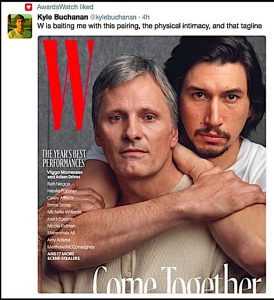
Adam Driver Needs To Go Away For A While
HBO-wise Adam Driver peaked with “Girls” but theatrical feature-wise he peaked with his Stephen Sondheim-singing moment in “Marriage Story” — I loved him in that scene.
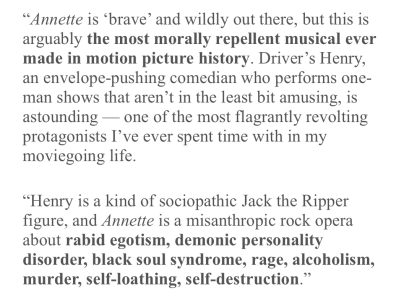
But then he all but assassinated himself by starring as one of most loathsome, thoroughly demonic characters in cinema history in Leo’s Carax’s “Annette”.
Then he played a morose pot-bellied academic flabby-ass in “White Noise”.
And then he played two — two! — Italian business-brand magnates (Maurizio Gucci, Enzo Ferrari) within a couple of years of each other. And I really liked Ferrari as far as it went.
And then he delivered the self-annihilating coup de grace by wearing James Mason-in-“Julius Caesar” hair in Francis Coppola’s mind-blowingly awful “Megalopolis.”
And then Driver appeared in a Kenneth Lonergan play at the Lucille Lortel theatre wearing GOLD-TOE socks, and that’s what really did it, I think.
Driver is finished for now. Not altogether but he needs to lay low. He’s certainly living proof that nothing recedes like success. He’s a good actor but I don’t want to ever, EVER sit through a histrionic, definitive-statement, large-personality Adam Driver movie EVER AGAIN.
AMC Kidman Spot Rewrite
We come to this place out of habit. Some of us, at least. To lament what we no longer have. To contemplate the grim milieu…a once-stirring art form that obviously has no interest or faith in the soul of things.
We used to come to movie theatres for magic. Once upon a time.
Back when movies were much better in general…craftier, sturdier, richer, less “sensitive”, less instructive, nervier, more explorational.
Movies that were more into quality for its own sake, and less about…it’s depressing to even describe , much less endure.
The better movies used to be about how life actually felt for people living it day by day…hah!
Movie theatres once had an aura of worship…some of us actually saw them as churches…hah!

We used to come to theaters to laugh, to cry, to care. Because we need that, all of us.
We need that easy-to-describe feeling we all get when the lights begin to dim.
That feeling is…hello?…simply called irrational anticipation.
We’ve heard on social media that the film we’re about to watch is a problem of some kind, as most films are these days.
But against all reason we want to believe in ecstasy, or least in luminous possibility…that it might be a kin of The Godfather or The Verdict or A Separation, or maybe another Anora.
If there’s one thing that 95% of movies mostly don’t do these days, it’s taking us somewhere we’ve never been before.
The person who wrote that “movies today do more than entertain, but make us feel somehow reborn”? That person needs to be taken out behind the stables and horse-whipped.
Empty dazzling images on a sizable screen.
Sound that we can feel in our ribs….fine.
“Somehow heartbreak feels good in a place likе this”? Once in a blue moon, if at all. Please.
“Our heroes feel like thе best part of us, and stories feel perfect and powerful”? Bullshit.
Why Wasn’t “September 5” Included in AFI’s Top Ten?
Earlier today the American Film institute released a Ten Best Movies of the Year roster (i.e., Motion Pictures of the Year).
The ten include Anora (yay!), The Brutalist (booo!), A Complete Unknown (yay!), Conclave (yay!), Dune: Part II (approvable), Emilia Perez (highly ambitious trans-identity piece…entirely decent but calm down), Nickel Boys (stylistically audacious), A Real Pain (Yay!), Sing Sing (more of a documentary than a narrative) and Wicked (aggressively impactful).
What’s missing? Tim Fehlbaum and Scott Feinberg‘s September 5. Why is it missing? Sasha Stone posted the following speculation five weeks ago (i.e., late October):
“The problem with [September 5] right now is obvious. Much of Hollywood, or at least the loud half, is anti-Israel now. They believe our government is involved in genocide. They are angry enough that Jonathan Glazer devoted his whole Oscar acceptance speech to this subject last year. On the other hand, there are probably lots of Oscar voters who feel differently but who aren’t comfortable speaking out. So that’s a problem. The other problem is that the Oscars are ruled by actors and generally like movies with lots of stars in them.
The other reason (unmentioned by Sasha) is that while September 5 is sturdy, gripping and highly watchable, it doesn’t blow your socks off.

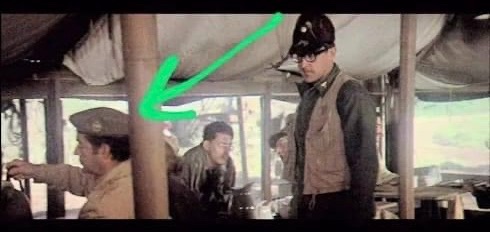
For A Day’s Work, Stallone Pocketed Around $30
Elliot Gould about working on Robert Altman‘s M.A.S.H. (’70), quoted on mash.fandom.com: “Sometimes Bob would get flustered. We were fighting the clock and he [was facing the pressure of having] to do it a certain way by a certain time otherwise you got into golden hours.
“And I remember this scene in M.A.S.H. — it was actually a scene that Sylvester Stallone, whom I’ve only met a couple of times, appears in…Stallone has said he doesn’t admit that he was ever an extra in any movie but he admits that he was an extra in M.A.S.H. And when I told that to Bob he said, “No, I don’t accept that Sylvester Stallone was in my movie…I don’t accept it.”
A 1.2.70 N.Y. Times story by Bernie Weinraub (“For Film Extras, Variety Is Certain, Stardom Isn’t“) reports that movie extras were “paid a daily minimum of $29.15.”
Altman once claimed that M.A.S.H was the first major studio film to use the word “fuck” in its dialogue.[ The word is spoken during the football game near the end of the film by Walt “Painless Pole” Waldowski when he says to an opposing football player, “All right, bud, your fucking head is coming right off!”