
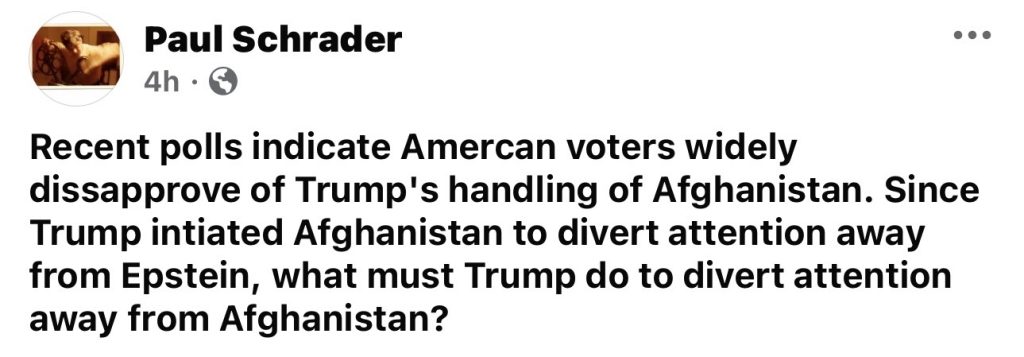
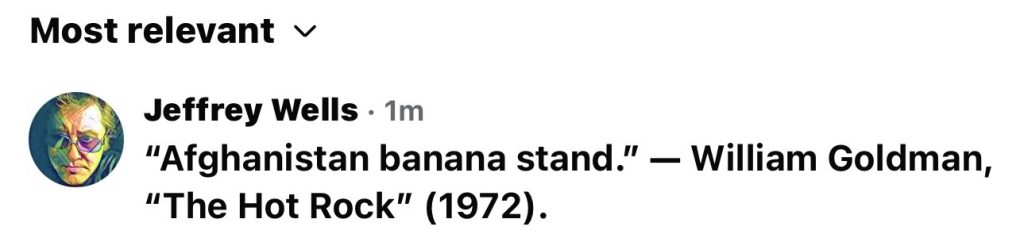
Not to mention one “s” in disapprove and three uses of “i” in initiated.

Not to mention one “s” in disapprove and three uses of “i” in initiated.
Sent just before 1 am, addressed to the latest Gatecrasher roster — Scott Menzel, Jeff Sneider, William Mccuddy, Kristi Coulter, Bee Garner, Christian Toto, Chris Gore, Joran Ruimy, Edward Douglas, John Nolte, et. al.
Oh and by the way, I’m effing stoned right now (two gummies) so everything’s moving much more slowly than usual…a whole different bag in terms of perceptions alone. My mind wanders, dawdles and dilly-dallies.

Six days before the Oscars and this is it, bros…this is NOW — and it’s almost a kind of cliffhanger We really do have to weigh in with our Best Picture and Best Actor insights and persuasions.
Persuasions or intuitions or whatever…stomach-acid hunches, little devils and angels sitting on our shoulder, hairs standing up the back of your necks…here’s a final chance to be concise and forthright about the whole underwhelming ’25 and early ’26 season, and to hold high the Gatecrasher banner before it goes into seven or eight months of hibernation.
[URL for access to Gatecrasher ballot]
For the first time in a long time, there’s an actual genuine suspense element in two major categories. Talking about the last-minute Sinners surge, and Ryan Coogler and his co-producers possibly snagging a Best Picture Oscar…the buzz is humming but maybe just among the 4500 or 5000 souls who focus on this stuff.
Will Sinners take the Best Picture Oscar? While PTA has the Best Director Oscar sewn up, but…aahh, too much hyperbole.
All I know is that I was relatively uninterested in the’25/’26 award race. And then the BAFTA awards took place in London…bingo! When the John Davidson kerfuffle happened, everything changed.
If Sinners wins the Best Picture Oscar, no one will give any credit to Davidson, but he’s certainly been the key Oscar influencer for the last couple of weeks. Davidson blurting out the N-word more than once while Michael B. Jordan and Delroy Lindo were on-stage, I mean…that was seismic.
Please try to fill our your ballot and send it back by Wednesday, Thanks so much.
[URL for access to Gatecrasher ballot]
Jeffrey Wells, HE
Until last night I hadn’t even heard of Shane Atkinson‘s Laroy, Texas. Apparently it’s a primitive action thing about crude backwater Texas trash. Then again it costars Dylan Baker, which implies a veneer of intelligence.
It’s presumed that costar John Magaro, who mostly specializes in playing sensitive cerebral types (i.e., wimps), doesn’t play one of the primitives.
Pic opened at the Tribeca Film Festival almost 33 months ago, and then opened commercially via Brainstorm on 4.12.24. Mostly positive reviews all around, but it quickly died. I’m presuming it’s at least semi-watchable.
Indiewire‘s Christian Zilko: “Watching LaRoy, Texas is a lot like the seedy motel affairs that all of its characters seem to be having –two hours of fun, followed by a tragic feeling of emptiness and a desire for a shower.”
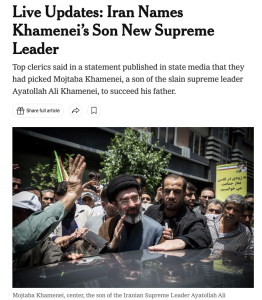
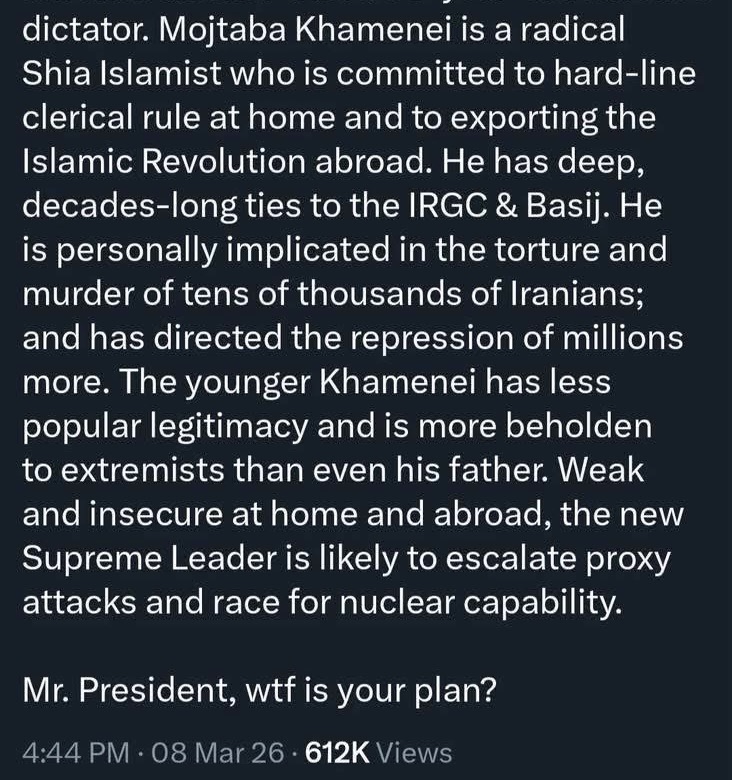
Trump and Netanyahu want this guy reduced to bony barbecue chunks within the next 48 hours, and preferably sooner.
No support or agreement implied. I’m simply stating a strategic fact. If you’ve taken the huge, irrevocable step of killing Ali Khamenei, Iran’s 80-something-year-old hardline supreme leader, and then a week or so later his 50-something-year-old son, just as much of a clerical hardliner as dad if not more so, steps in and replaces dad and says “meet the new boss, same as the old boss,” the son is fated to be slaughtered and butchered and turned into barbecued steer meat.
The basic principle is “in for a penny, in for a pound”.
My favorite Country Joe moment…a study in casually laid-back rockstar aloofness.
1. Adopting a certain yeah-yeah enthusiasm, Joe asks the crowd “so how you guys doin’ out there?” 2. Crowd: “Great!…yeah!…whoo-hoo!” 3. Joe quickly shifts into a kind of smooth-cat, half-bored attitude…”Oh, yeah?”
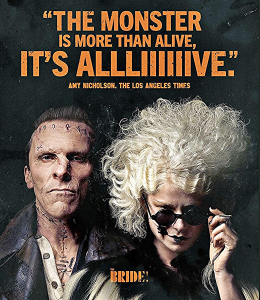
Even if The Bride! had opened a couple of weeks ago, Jessie Buckley still would have been locked to take the Best Actress Oscar next Sunday (3.15).
I can’t wait to effing hate this film…literally drooling in anticipation. Unless, of course, it turns out to be good or half-decent. Which is conceivable, I suppose.

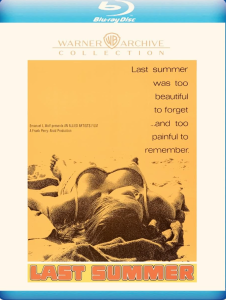
I’m not exactly moist with anticipation for Warner Archives’ forthcoming restored Bluray of Frank Perry‘s Last Summer. I’ve never really liked this effing film, which is basically about impulsive callousness and cruelty among young boomers on Fire Island. Who would kill a seagull? What kind of brute beast would rape a withdrawn, obviously neurotic mouseburger? Adapted by Frank’s then-wife Eleanor Perry…thanks all the same.
Over the last 13 years Ryan Coogler has directed one truly searing and formidable drama — the riveting, socially impactful, fact-based Fruitvale Station (’13) — followed by four urgent, high-octane exercises in glossy, unsubtle formula fare — Creed (’15), Black Panther (’18), Black Panther: Wakanda Forever (’22) and Sinners (’25).
There’s nothing wrong with being a director of audience-friendly, social-metaphor genre films that make money. Coogler is a bit like Don Siegel or Sam Fuller or Clint Eastwood in this respect. Or The Ox–Bow Incident‘s William Wellman. No shame in this.
If Coogler’s first four films had been Creed, the two Panthers and Sinners, and then he’d suddenly upped his game by directing and releasing Fruitvale Station in ’25, nobody would be be cheering louder or arguing more passionately for Fruitvale winning a Best Picture Oscar than myself.
I’m sorry but Sinners just isn’t an Oscar-worthy Best Picture thang — it’s a Arkoffian exercise in formulaic, manipulative, mass-audience Jiffy popcorn (Delta blues, paleface Irish vampires, cunnilingus, KKK yokels).
It’s obviously been impactful and has made a shitload of dough-ray-me, but it lacks the vibrational spirit and resonant, rock-solid integrity of a true-blue Best Picture winner. It’s basically a pricey exploitation film, and Academy POCs and wokeys don’t care. They just want to feel good about themselves, or they want their team to prevail or whatever.
God help us, but One Battle After Another, which I admire for the chops at least, might lose out to the mulchy Sinners.
I get the idea of Sinners, an allegory about the blight of rural, old-time racism and deep-fried African-American culture and the musical-spiritual tradition of Robert “Crossroads” Johnson…I get all that.
But it lacks an artful pedigree. It’s obviously powered by an undercurrent, but it’s basically a coarse drive-in movie. It’s not all that different from Jack Sholder‘s The Hidden (’87), one of the greatest action-driven, social-metaphor monster films ever made, only Sholder’s film (which is easily as important as Siegel’s Invasion of the Body Snatchers) is smarter and funnier.
Like I said on 3.3.26, Sinners could have saved itself if Coogler had gone with a darkly comedic attitude…if he’d had injected some Hidden-like humor.
Friendo: “I think the first hour of Sinners is great. The vampire half, less so. The last third…a mess. But I was never bored.”
HE sideview: There is irony in Sasha Stone, who is as anti-woke as they come (takes one to know one), pimping Sinners as God’s gift to cinema while excoriating the woke degradation of Hollywood movies that began eight or nine years ago.
The irony is that Sasha doesn’t seem to realize that Sinners — the movie itself, the critical acclaim for it, the apparent likelihood of it winning the Best Picture Oscar a week from today (Sunday, 3.15.26) — Sinners is the very quintessence of the malignancy that she’s been deploring since ’18 or ’19 or certainly since the Great Awokening of ’20.
Sasha replies at 1:30 pm: “What you’re saying applies to One Battle After Another. Sinners is not about wokeness. Its success is not about wokeness. Absolutely not true. Sinners made more money, and has earned better reviews, both from critics and audiences, than any other film in the Best Picture lineup. One Battle After Another is a box-office failure with an asinine, simpleton plot. Wokeness isn’t about black movies. It’s about white people using minority groups to elevate themselves through virtue signalling.”
A couple of hours later Sasha posted a lengthier response on awardsdaily.com. Here it is
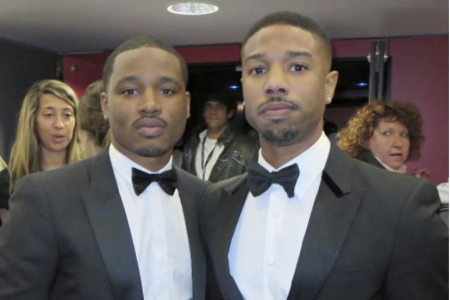
Coogler-Jordan pic snapped by HE inside the Salle Debussy, May 2013:
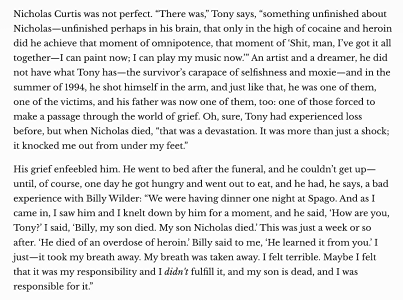
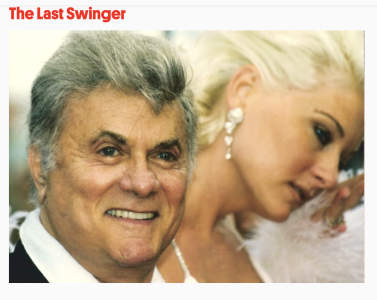
From Tom Junod‘s “The Last Swinger“, a GQ profile of Tony Curtis published 30 years ago (April 1996):
From “The Bride! Is the Latest Example of a New Wave of Feminist Horror,” a Variety piece by Kennedy French, posted on 3.6.26:
“When Maggie Gyllenhaal sat down to rewatch The Bride of Frankenstein, the 1935 James Whale classic, she wasn’t prepared for what she didn’t see. The Bride appears for only two minutes. She says nothing. She looks at the creature she was built to love, screams once and is blown up. She was made for a man who disgusted her, in a world that gave her no say in the matter. And then she was gone.
“’She finds herself in such an insane situation,’ Gyllenhaal said in a press conference promoting the film. ‘Having been brought back from the dead without her consent to be the wife of someone that she’s never met.’ That absence — a character conjured into existence, denied everything and eliminated — fueled The Bride!, her new film starring Jessie Buckley and Christian Bale.
“The film’s ambition, in Gyllenhaal’s words, is sweeping: ‘A celebration of all of the parts of all of us that will not fit into the box that we’ve been told we need to fit into.'”
HE reply: Gyllenhaal and French are imagining things. Boris Karloff‘s monster doesn’t want Lanchester to become his bride or satisfy him sexually…not at all. He’s simply looking for gentle friendship — the same kind of humanitarian caring that the old man in the forest offered him…a warm fire, soup, wine, bread, a cigar. Karloff doesn’t paw or stroke or even caress Lanchester. He certainly doesn’t try to use or dominate her sexually. He simply holds her hand and whimpers “friend?…friend?”