

I’m persuaded that a Los Angeles-residing friend came up with the above goof line — a riff on Robert Duvall‘s actual Mastercard slogan, “I choose it because I use it.” I could be wrong, of course, but for the last four decades I’ve associated that “abuse it” line with Duvall, and it’s always made me chuckle a bit. Yesterday I called the guy who may have come up with the joke line during the Reagan administration, and he said he didn’t recall doing so. WHAT?
“Oohohh, I’m On Fire’
All hail the life, deeds, eloquent rhetoric and cherished memories of Jesse Jackson, the once-incandescent black spokesperson and social-justice firebrand who made his name as an activist (Rainbow PUSH Coalition), politician and ordained Baptist minister.
Jackson was as much of a superstar-of-color during the mid-to-late 20th Century as Barack Obama was in the 21st Century.
He peaked from the mid ’60s until his extra-powerful 1984 and slightly less riveting 1988 presidential campaigns. He continued to symbolically matter into the ’90s and aughts.
Jackson was there at the Lorraine Motel in Memphis when Dr. Martin Luther King was murdered. He was a super-influential earth-mover and power broker during the 1972 Democratic Convention in ’72. He famously wept in Chicago when Barack Obama was elected 11.4.08. The 1984 “hymietown” remark probably killed his presidential aspirations, but he never stopped being a leading civil rights torch-bearer of the late 20th and early 21st centuries. Not to mention his Saturday Night Live visits.
Jackson disappointed me personally by not standing up against woke fanaticism during the terror (2017 to 2024), but since “woke” began as a BlackLivesMatter thing he probably felt that he couldn’t divest himself.
Jackson, Robert Duvall, Frederick Wiseman…legends are suddenly dropping like flies.
The Impostors
Will ya look at the McCartney-eluding or anti-McCartney argument in those Mescal eyes? That jaw? That hawknose? A 30something failing to align with a 20something spirit.
Duvall Run-Ins Over The Years
My first encounter with Robert Duvall was in the lobby of Manhattan’s Mayflower Hotel (15 Central Park West, demolished in ‘04). Early ‘80s. Nothing verbal; more of an observance. Duvall was hugely pissed about something as he exited the elevators in the main lobby….”God-dammit!” Everyone froze. We all lose it from time to time. I felt a certain empathy.
The second time was in a backstage press area during a Gotham Awards ceremony in 2010 or thereabouts. I forget what award he’d received or was nominated for; maybe he was presenting. Duvall was posing for the paparazzi and people like me. The usual razzmatazz ensued. I barked out a “yo, Bob!” and said I’d recently re-watched John Flynn’s The Outfit (‘73) and that it was still top-tier. Duvall perked up, turned in my direction and said “yeah, good one!” plus something or other about Flynn or costar Joe Don Baker.
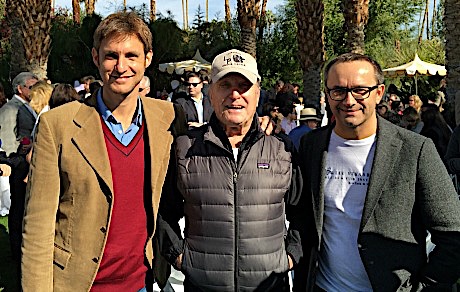
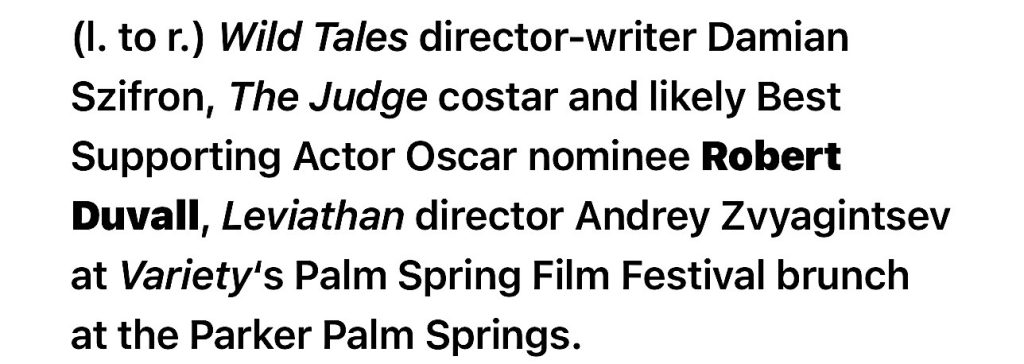
The third time was during the January 2015 Palm Springs Film Festival, at a Variety Creative Impact Awards brunch at the Parker Palm Springs. Duvall was there to promote David Dobkin’s The Judge , which had opened the previous October. I was shooting the shit with Duvall, Variety’s Stephen Gaydos, Leviathan director Andrej Zvyaginstsev, two or three others. At one point I asked if I could snap a group shot. “Yeah, let’s do it,” said Duvall.
Duvall Had A Big Fat, Big Tittied Career…Peaked For 41 Years
The late, great Robert Duvall soft-peaked for 41 years, from his Boo Radley in Kill A Mockingbird (’62) to Boss Spearman in Kevin Costner‘s Open Range (’03). He hard-peaked for roughly a dozen years, between George Lucas‘s THX-1138 (’71) and Bruce Beresford‘s Tender Mercies (’83). But he was always first-rate in everything…absolutely everything he did.
One of 20th Century’s All-Time Greatest Actors Now Belongs To The Ages
Robert Duvall is good every time at bat. Open Range, Lonesome Dove, Frank Hackett, Boo Radley, the taxi driver in Bullitt, The Apostle…always right on the mark. When luck and the angels are with him, he’s great.
But the marriage of Duvall and Mac Sledge was perfect. I despise country-style Christians for the most part, but I sure related to them here. Tender Mercies is probably the greatest getting-sober-and-turning-your-life-around movie of all time.
And yet when it opened in ’83, audiences mostly blew it off. It cost over $4 million to make, and only made $8 million and change.
Wiki excerpt: “The post-screening feedback was, in the words of director Bruce Beresford, ‘absolutely disastrous.’ As a result, Universal executives lost faith in the film and made little effort to promote it.
Screenwriter Horton Foote said of the studio, ‘I don’t know that they disliked the film. I just think they thought it was inconsequential. I guess they thought it would just get lost in the shuffle.’ Others in the film industry were equally dismissive; one Paramount Pictures representative described the picture as ‘like watching paint dry‘.”
Conspiracy Theory
Here’s a reptilian, depths-of-hell, bad-breath Beelzebub scenario that some might find triggering.
The deep-state bad guys, the super-rich gargoyles who really control things, are actively prolonging the Nancy Guthrie investigation and would be totally okay with the whereabouts of Savannah’s mom continuing to be a mystery for several more weeks, if not months.
Why? Because the Guthrie case distracts from the attention that might otherwise be focused on the Epstein files. The still unreleased stuff that Attorney General Pam Bondi is sitting on, I mean. The roughly three million files that allegedly contain deeply ugly videos, images and whatnot showing minors and perhaps even children being subjected to God knows what.
Prediction: The Guthrie case will continue to drag on and on, and the Bondi suppression will also continue until the rancid stuff will somehow leak out, possibly from European sources.

French Were Just As Queer For This Song As Americans
Allegedly written by Reginald Hall, who was Fats Domino‘s brother-in-law, “You Talk Too Much” was a 1960 single by r&b singer Joe Jones (1926-2005). The song reached #3 on the Billboard Hot 100. Later that year the song was adapted into French by Georges Aber as “Tu parles trop” and was a hit for Johnny Hallyday in early 1961.
Demme’s Masterful “Lambs” Has Nothing To Atone For
Little was known about transgenderism when Jonathan Demme’s The Silence of the Lambs was released 35 years ago. “Trans” may or may not have been a term back then, but it certainly wasn’t commonly used.
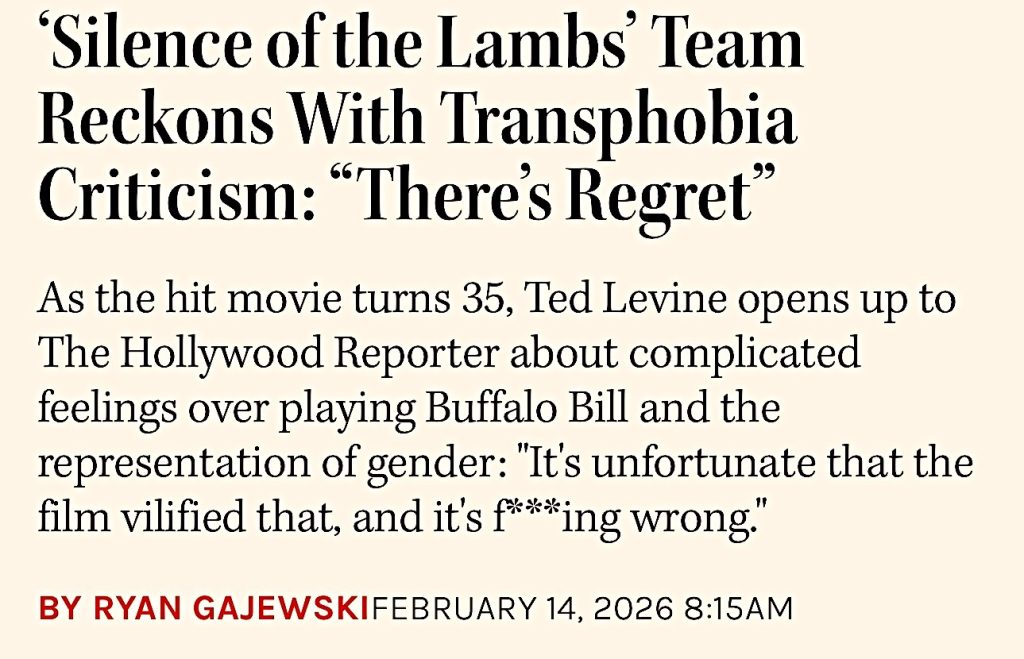
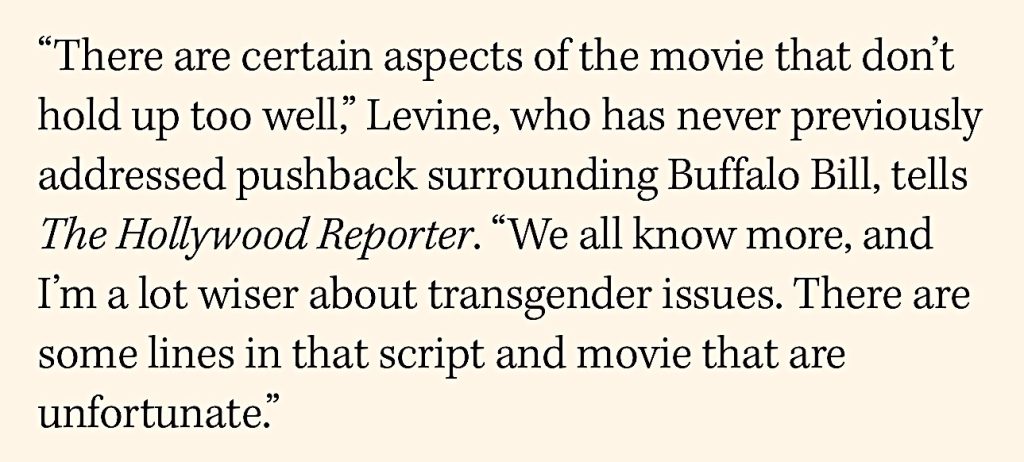
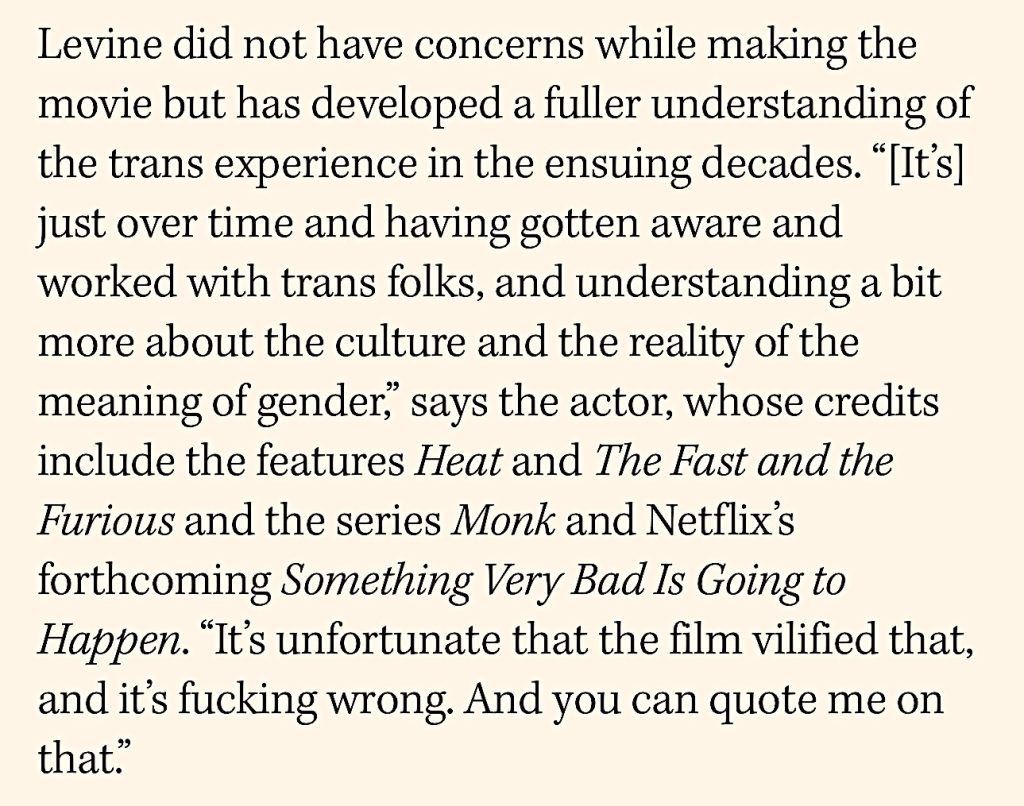
Ted Levine, who played Lambs’ sexually perverse, cross-dressing serial killer Jame Gumb a.k.a.”Buffalo Bill”, has told THR’s Ryan Gajewski that he feels unsettled about Lambs having instilled a negative image of gender nonconforming trans folk.
Was Jame Gumb a transgender whatever? Not as I recall. He wore lipstick and eyeliner at home, but he sure as hell looked and talked like a regular dude when Jodie Foster’s Clarice Starling paid him a visit in Act Three.
Then again it’s not as if the real-life record of trans loners and depressives is completely unblemished.
While rightwing social media types have been pushing claims that trans persons are disproportionately responsible for mass shootings, snopes.com says this is false — it reports that the vast majority of mass shooting wackos have been straight or “cis” males.
Then again trans or trans-allied shooters have been associated with at least five horrific mass shootings (the recent Canadian school slaughter and the 2023 Memphis school shooting among them).
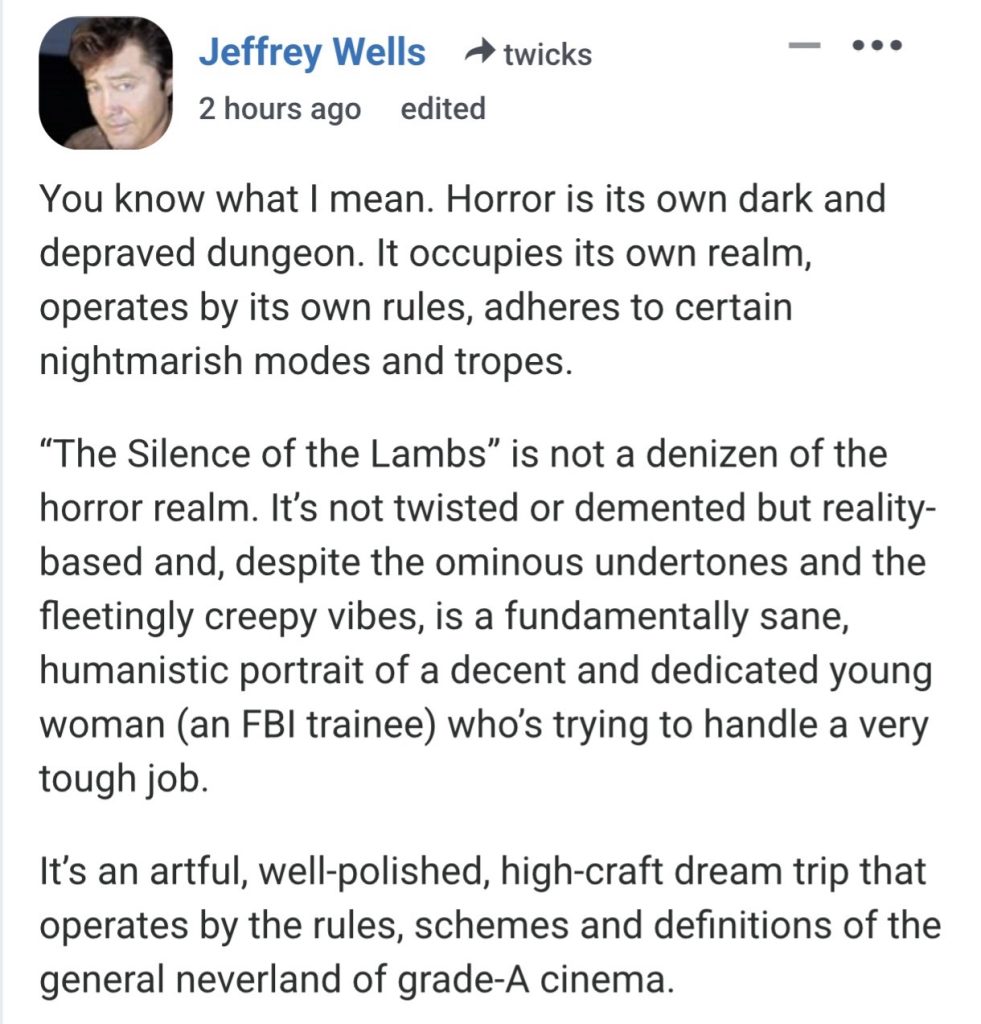
The Silence of the Lambs, by the way, is not a horror film — it’s a chilling, character driven, high-octane investigative thriller.
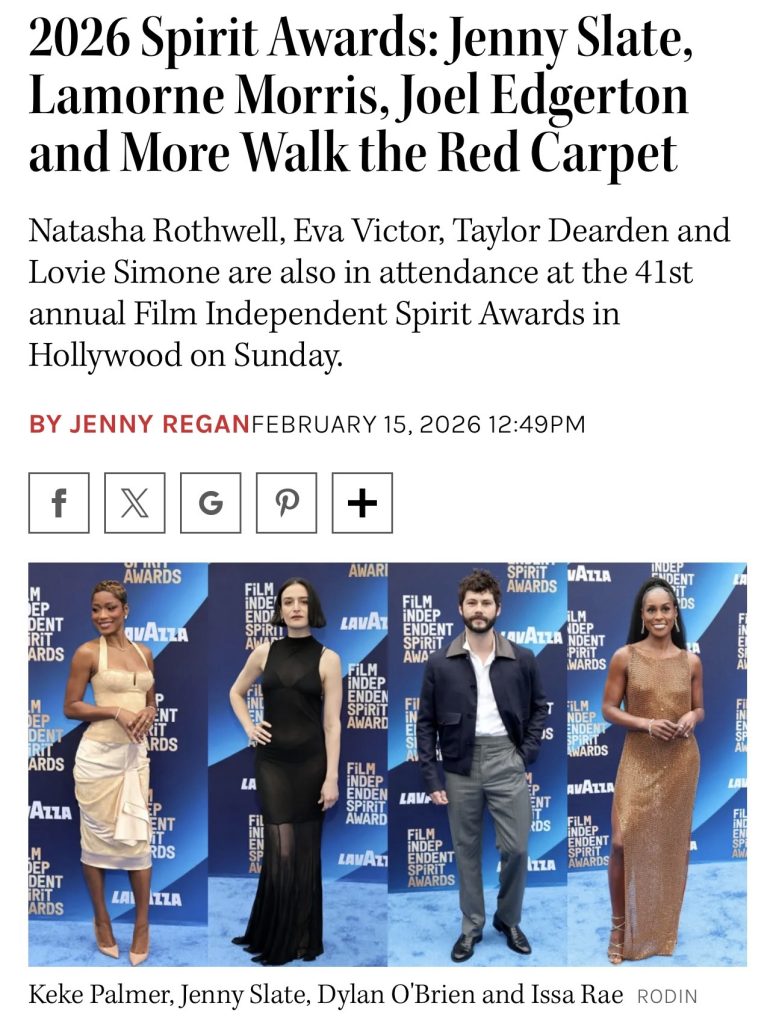
Nobody Gives A Damn About The Superfluous, Wackazoid, Gender-Fluid, Branch Davidian Spirit Awards
Woked and nutbagged themselves into a corner.
Monkey Laughter Drives Me Up The Wall
If imitation is the sincerest form of flattery, monkey laughter is easily the least in this regard.
Monkey laughter is basically forced reactive giggling — a suck-up tactic used by vaguely fearful employees or kiss-assers of any stripe…a way of flattering bosses or admired colleagues or anyone they’re looking to get in good with.
It could be argued that almost all social laughter is untrustworthy, to this or that degree. Which is why I always slightly flinch or recoil when I hear or see it. I usually mutter to myself, “There goes another phony…performance giggling…another attempt at some form of social advancement.”
Movie-theatre laughter is 100% honest. Ditto the “watching TV in the living room” kind. Ditto reading something or other.