All Hail Donald Sutherland

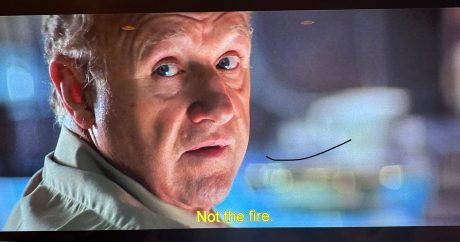
Like Caesar, He Is Surrounded By Enemies“,” posted on 8.7.16: I’m not saying this was Donald Sutherland‘s best scene ever, but when I think of his 50-year career it’s the strongest recollection I have. Mr. X in JFK (’91) was certainly his best performance since his exceptional bad guy in Eye of the Needle (’81) and his big-hearted dad in Ordinary People (’80).

Sutherland’s greatest period was that ’70 to ’73 four-year streak — M.A.S.H. (’70), Alex in Wonderland (’70), Little Murders (’71), Johnny Got His Gun (71), Klute (’71), Steelyard Blues (’72) and Don’t Look Now (’73). And to think of him lowered by a paycheck role in The Hunger Games! For actors in particular, old age is not for sissies.

Deals Straight Cards, Doesn’t Do Froth,” posted on 11.9.17:

“Like most podcasters, Variety‘s Kris Tapley likes to keep things loose, chatty and breezy when he interviews a Hollywood guest.

“It’s fair to say that this mindset didn’t quite mesh with 82 year-old Donald Sutherland, star of Sony Pictures Classics’ The Leisure Seeker (1.19.18) and a trophy recipient at this weekend’s Governor’s Awards.

“Sutherland is a truthteller, a take-it-or-leave-it reality guy. He gushes about co-workers like anyone else, but if he didn’t get along with someone during the making of a film and still has a bad taste in his mouth about it, he doesn’t mince words.

He went there this morning during a chat with Tapley, and it sounded to me as if Sutherland’s candor threw his host off-balance.

“In this morning’s “Playback” podcast, Sutherland dissed (a) the late Great Train Robbery director Michael Crichton, basically calling him a cold, heartless prick; (b) spoke about what a shit director Richard Marquand was for arranging for Sutherland to smash his hand through real glass during the shooting of Eye of the Needle (’81); and (c) expressed disdain for the late Robert Altman when producer Ingo Preminger told him that Altman was against casting Sutherland in M.A.S.H. and, when told Sutherland was a keeper, said he didn’t want Sutherland to get top billing.

“Sutherland also talked about what a serious and personal heartbreaker it was when the Dodgers’ Rick Monday hit a home run against the Montreal Expos in ’81.

“‘This is not the detour I was expecting,’ Tapley said. ‘

“‘Why would you expect a detour?,’ Sutherland replied. ‘What’s the point of expecting anything? You just concentrate.’

“Sutherland is currently shooting James Gray‘s Ad Astra, which costars Brad Pitt, Tommy Lee Jones and Ruth Negga. Films containing my favorite Sutherland performances, in this order: (1) Ordinary People, (2) Don’t Look Now, (3) JFK, (4) Little Murders, (5) Steelyard Blues, (6) M.A.S.H., (6) Klute, (7) Eye of the Needle and (8) Space Cowboys.”

Between the Lines, Baby

Posted earlier this afternoon by Outkick:

“It’s a not-so-well-kept-secret that the Walt Disney Company often prioritizes skin color in hiring over things like experience, ability and qualifications.

“A damning video captured by O’Keefe Media Group, founded by James O’Keefe, shows a Disney executive, Michael Giordano, telling an undercover reporter all about the discriminatory practices.

“‘Certainly, there have been times where there’s no way we’re hiring a white male for this,’ Giordano said.

“The reporter suggests that this was an ‘unspoken’ agreement, but Giordano shared that it’s actually been said in front of him. However, he said that they are careful how they message those things to outside parties, like talent agents.”

If The Academy Abandons Gender-Based Acting Oscars

…the ball game will be over. That will be The End.

Academy honcho Bill Kramer hasn’t said that the Academy Awards will go gender -neutral. He’s told Variety’s Clayton Davis that this option is merely being explored and that “we’re investigating how it could look,” but those words sound a little scary in and of themselves.

If Kramer does this…if he rolls over for a micro-sized community of trans activists, you can stick a fork in the Oscars. It’ll be totally over. A huge “eff you” to Oscar traditionalists. Ratings suicide.

>

Karla Sofia Gascon Might Win An Oscar But…

It’s generally agreed upon that come Oscar season, Emilia Perez costar Karla Sofía Gascón, a transgender actress who plays the titular character, is in an excellent position to compete for an acting Oscar.

The question is what category she’ll run in — Best Actress or Best Supporting Actress.

The smart play for Netflix, I wrote yesterday, will be to campaign Gascón in the supporting actress category. Because while she’s playing a vivid figure whose name is the title of the film, Gascon is in fact playing a supporting character.

As a Mexican drug mafioso, named Juan “Small Hands” Del Monte, who wants to disappear from the cartel world by becoming a woman, she instigates the plot and pops into the narrative from time to time, but she’s not really the lead.

The actual lead character in Emilia Perez is Rita Moro Castro (Zoe Saldana), a Mexico City attorney whom Del Monte hires to facilitate his transition.

Castro is unquestionably the main protagonist, the central figure, a woman upon whose shoulders the story is carried. Del Monte and his female manifestation, Emilia Perez, are vivid supporting characters who arrest your attention, but they don’t engage your allegiance.

Practically speaking it makes sense to run Gascon in supporting because nobody knows her, for one thing, and we all know the chances for a win are much greater when an outsider or an ingenue (like Hawaii‘s Jocelyne LaGarde or Sayonara‘s Miyoshi Umeki) doesn’t try for a Best Actress Oscar.

Just ask Lily “I may not have played a lead character but you should vote for my identity” Gladstone.

Plus if Gascon runs for Best Actress some voters will surely have an issue about handing a Best Actress Oscar to a biomale competing against natural biological female actresses whose performances may or may not be deemed worthy of an Oscar.

Here’s a discussion I had this morning with a guy who saw Emilia Perez in Cannes and is a huge Gascon fan.

Cannes guy to HE: “How in the world could you credibly say Karla is playing a supporting role? The movie is called Emilia Perez. She plays both halves of the character, remarkably. It is her story soup to nuts (sorry). Can you name anyone whose character is the title of the film who won in supporting actress?”

HE to Cannes guy: “How about Vanessa Redgrave in Fred Zinnemann‘s Julia (’77)? Then again Jane Fonda was clearly the lead character (Lillian Helman) as she drove the story. Just as Zoe Saldana drives the story in Emilia Perez. You saw it — the film starts with her perspective and stays with her all through. She’s clearly the lead.”

Cannes guy: “I would say Zoe Saldana and Karla Sofía Gascón are co-leads. Selena Gomez (who plays Jessi Del Monte, the drug dealer’s wife) and Adriana Paz are supporting.”

HE: “Nope — Karla’s character is a strong supporting. Plus there’s NO WAY IN HELL Karla wins a Best Actress Oscar. Nobody is going to believe the film anyway — a macho cartel leader wants to become a woman so she can escape the crime realm? I didn’t believe it for a second.

“Okay, Karla could try to ‘game the system’ by running as a lead while discussing trans stuff, the same way Lily gamed the system in order to draw attention to the plight of Native Americans. “

Cannes guy: “But the amazing thing is that Karla plays both roles. I couldn’t believe this was the same performer when I saw the movie. I just kept looking for the credit of who played the male role. Plus Linda Hunt won a Best Supporting Actress for playing a man. What’s the difference? In this case you have to recognize the performer as a (trans) woman playing a man, in part at least. It would be historic.”

HE: “Yes, it would be historic. But for political reasons, not artistic ones. My advice is for you to take the woke needle out of your arm. You mentioned Linda Hunt, who was great in The Year of Living Dangerously. But did she get nominated for Best Supporting Actor?”

Cannes guy: “No, she won for Best Supporting Actress. She is a woman. It doesn’t matter what the gender of character is. What matters is how good is the person playing the character.”

HE: “They’ll be able to pull it off if they campaign Karla in supporting. Karla could get away with that. You may not like hearing this, but there are bumblefucks in the Academy who aren’t quite as progressive about trans issues as you might expect or prefer. If Netflix wants to win, they should go supporting.”

“Thelma Isn’t Half Bad — A Reprise

Josh Margolin‘s Thelma, a low-key dramedy starring June Squibb and the late Richard Roundtree, is opening Friday, 6.21.

It’s basically about an old woman who’s scammed out of $10K, and is determined to find the scammers and get her dough back. Parker Posey, Clark Gregg, Fred Hechinger and Malcolm McDowell costar. Magnolia is distributing.

My Sundance review (“Thelma Isn’t Half Bad”) ran on 1.20.24.

Thelma is a mostly mild situation dramedy about the pitfalls, sadnesses and surprising turn-arounds of a chubby old biddy (the 94 year-old June Squibb, in her first starring role) when the going gets tough.

“It makes for a reasonably decent sit, although I didn’t like it at first because of the hugely annoying Fred Hechinger (The White Lotus), who plays Squibb’s flaky-loser grandson.

“Squibbs’ titular character is also 90something and, as you might presume, suffering from the usual intellectual and physical diminishments. Sissies need not apply.

Thelma is about the white-haired Squibb getting scammed out of $10K (which actually happened to Margolin’s real-life grandmother), and how she refuses to take this humiliation lying down and soon after becomes a dogged investigator and push-backer on her own steam and tenacity.

“The reason I didn’t like Hechinger, whose dipshit Zoomer character has been told by his mom and dad (Parker Posey and Clark Gregg) to look after Squibb and keep her out of trouble, is because his performance had me half-convinced that he was in on the scam. (I hate guys like Hechinger…I really do.)

“After going to the cops and getting no help, Squibb locates the post office box address that she sent the $10K to by envelope. (A voice on the phone told her to do so or Hechinger would be in deep shit, and she bought it.)

“She makes her way to a nearby assisted living facility to seek the assistance of old buddy Ben (Richard Roundtree), which boils down to Thelma borrowing his mobility scooter, except Ben won’t let her drive alone.

“They visit the home of an old out-to-lunch friend, and during this stopover Thelma discovers and pockets a loaded pistol. (Not worth explaining.) They get back on the scooter and wind up at a gas station, but then Thelma forgets to engage the parking brake…

“With Posey, Gregg and Hechinger in hot pursuit…Jesus, I can’t do this. What am I gonna do, spill the whole story?

“Eventually Thelma and Ben get to the bottom of things, and I was quite amused to discover that the principal scammer is none other than the white-haired 70something Alexander DeLarge.

“The situation is resolved a little too easily but by that time I had decided that Thelma is an above-average thing, not quite on the level of Little Miss Sunshine but occasionally so.

Thelma is not a comedy — it’s a half-and-halfer. It certainly declines to go goofy or silly. There are elements of real pain and stress and sadness woven in. Now and then it’s actually touching, which surprised me. I’m giving it a B-plus.”

Art and Politics Are Separate Realms

Here’s an interesting rant from a recent “The Rest is Entertainment” podcast (dated 6.17.24). It specifically addresses the recent Fossil Free Book vs. Baillie Gifford contretemps, which led to BG boycotting all book festivals. The rant also alludes to wokesters and Polanski pitchforkers in particular and their particular brand of insanity.

The Guardian‘s Marina Hyde went off on protestors and explained the quaqmire of art, politics and “the contraction of the mind” that occurs when everything is placed within the bucket of activism.

Hyde’s speech starts at 4:11:

“One of the things I particularly don’t admire is the suggestion that everything is politics, and that art is the same as politics. Now some art is political, and much art is born of its time and therefore can have that sort of relationship to politics. But art and politics are not the same.

“And if you insist that all art must be politicized and that all artists must make statements all the time, then what you are essentially wishing for is a contraction of the human experience. A contraction of human possibility. Because you’re saying that art and politics essentially and semantically map onto each other. And this is absolute nonsense, okay?

Art can exist just for its own sake. The pleasure of these things, just for their own sake, must be allowed to exist.” [HE interjection — Like Roman Polanski‘s An Officer and a Spy.]

“When I think of these people, I think these are the sort of people who would have confronted William Shakespeare and said ‘Do you, William Shakespeare, condemn Elizabeth the 1st’s brutal suppression of the uprisings in Ireland (1593 to 1603)? And if you do, why haven’t you said anything? Why haven’t you signed a letter protesting this? Because if you don’t sign it, William Shakespeare, then this new play of yours, The Taming of the Shrew, we’re going to protest this.’

“Throughout the whole of human history awful things have been happening, but art must be allowed to exist, in and of itself. And it doesn’t have to answer qny questions.”

Here’s a link to Hyde’s rant.

John Fogerty’s “Centerfield’

A few of us were playing a summer softball game. I was in center field and a guy at the plate really tagged one, and I was running farther and farther back and figuring I’d miss it, and at the last second I reached out with my mitt and somehow caught it, and everyone was impressed. I distinctly recall feeling quite proud, especially when a guy from the other team called me “Mayonnaise” — talk about major respect. It was like being compared to Babe Ruth or Ted Williams or Mickey Mantle.

Lifelong Fear of ‘Hawaii”

I decided at a very young age to avoid seeing Hawaii (’66), and I’ve never seen it since. It was directed by George Roy Hill, who was 44 during filming, when the more seasoned Fred Zinnemann withdrew.

As a kid I’d always hated going to church on Sundays, and so I really didn’t want to submit to Max Von Sydow‘s Reverend Abner Hale character, a classic stick-up-his-ass preacher character. I never wanted to know the story or anything, and until today I didn’t know Julie Andrews‘s Jerusha Bromley Hale character dies in Part Two. I only just learned today that Gene Hackman and Carroll O’Connor had costarred. I never knew Bette Midler had a non-speaking background role.

A friend has seen it and swears Richard Harris‘s performance as Capt. Rafer Hoxworth, a whaler, was “really underrated”. The Bluray has both the roadshow version (189 minutes) as well as the general release version (161 minutes),

Mindbender

I forgot to mention yesterday that Lionsgate has acquired U.S. and Canadian distrib rights to Francis Ford Coppola’s Megalopolis. The $120 million mindfuck flick will open theatrically on 9.27.

Seven observations from my 5.16.24 Cannes review

(a) “Coppola has seemingly lost his mind. Watching Megalopolis just now and listening to random moo-cow boos as the closing credits began to roll was a very sad and sobering experience. It’s not just an embarassment and a calamity — I almost feel like weeping for the poor guy — it’s a film that hasn’t a prayer of attracting any Average Joes or Janes whatsoever, and you can totally forget any sort of fall awards campaign or any distributor even flirting with paying for same…no way, man!”

(b) “On the other hand…Jesus, I don’t know what to say or think as I don’t want to dump on a film that is so nervy and creatively ludicrous and out-there bonkers. I’m not surprised by how Megalopolis played with the Salle Debussy crowd, and I’m certainly not angry about having sat through it, but holy fucking moley.”

(c) “It’s such a head-in-the-clouds goofball thing with such an overload of pompous-sounding, smarty-pants dialogue that it’s almost like a 1965 philosophical psychedelic fantasy flick by the Merry Pranksters, shot in 16mm and edited by a guy who’d been chewing peyote buttons.”

(d) A friend has compared portions of the dialogue as well as the narration (voiced by Larry Fishburne) to Ed Emshwiller‘s “Unveiling The Mystery Planet.” HE is hereby advising the readership to see Megalopolis while tripping. (Not acid necessarily but maybe some soft mescaline?)

(e) Jon Voight‘s Crassus character, adorned in black silk pajamas, during a third-act comic-detour scene: ““Whadaya think of this boner I’ve got here?”

(f) “All this said, I feel MUCH better about having seen Megalopolis than having seen Fast X or any of the shitty, soul-draining, post-Iron Man franchise movies because at least it’s about something other than the usual corporate bullshit and is at least alive with quirky indivduality, and that ain’t hay.”

(g) Journalist friend to HE five minutes after Megalopolis ended: “What the fuck was that?”

Best of 1966 Update

With the suggestions and admonishings of the HE commentariat, I’ve added seven films to my 1966 roster for a total of 22.

My hands-down choice for 1966’s three finest are Michelangelo Antonioni‘s Blow-Up, Robert Bresson‘s Au Hasard Balthazar and Richard BrooksThe Professionals.

My second group of 12 include Robert Wise‘s The Sand Pebbles, Bernard Girard‘s Dead Heat on a Merry Go-Round, Fred Zinnemann‘s A Man For All Seasons, John Frankenheimer‘s Grand Prix and Seconds, Jack Smight‘e Harper, Mike NicholsWho’s Afraid of Virginia Woolf?, Arthur Penn‘s The Chase, Irvin Kershner‘e A Fine Madness, Charles WaltersWalk, Don’t Run, Claude Lelouch‘s A Man and a Woman and Billy Wilder‘s The Fortune Cookie.

The third group of seven include Gillo Pontecorvo‘s The Battle of Algiers, Sergio Leone‘s The Good, the Bad, and the Ugly (I didn’t post it yesterday because I’ve never liked Leone, but I have to at least recognize this film’s iconic status), Ingmar Bergman‘s Persona (I’m ashamed for having forgotten it), Jiri Menzel‘s Closely Watched Trains (intriguing Czech new-waver), Michael Anderson and Harold Pinter‘s The Quiller Memorandum, John Ford‘s 7 Women (saw it once back in the ’80s — a respectable ensemble film), Jean-Pierre Melville‘s Le deuxième souffle

I’ve never seen Milos Jancso‘s The Roundup. Howard HawksEl Dorado didn’t open stateside until 6.7.67 so it doesn’t count. Jean-Luc Godard‘s Made in USA doesn’t count because it was blocked for over four decades over a rights issue and wasn’t released until 2009.

Read more

Caustic Holocaust Tour

Wait…Jesse Eisenberg‘s A Real Pain doesn’t open until 10.18, or four months from now? I’d like to see it right now. It premiered six months ago at Sundance but this shouldn’t prevent it from playing at Telluride…right?

From Owen Gleiberman’s 1.21.24 Variety review: “Keiran Culkin‘s Benji is a loose cannon — a bro who never grew up, the kind of dude who says ‘fuck’ every fifth word, who advance-mails a parcel of weed to his hotel in Poland, and who has no filter when it comes to his thoughts and feelings. He’ll blare it all right out there.

“Since he’s a brilliant and funny guy who sees more than a lot of other people do, and processes it about 10 times as fast, he can (sort of) get away with the running monologue of hair-trigger nihilist superiority that’s his form of interaction. He can also be quite nice, and knows how to play people. Yet he is, at heart, an anti-social misfit, one who’s clinging to the recklessness of youth just at the moment he should be leaving it behind.”