“Ballet dancer Michaela Mabinty DePrince, who came to the United States from an orphanage in war-torn Sierra Leone and performed on some of the world’s biggest stages, has died, her family said in a statement. She was 29.”
What a terrible tragedy…a woman who endured so much strife and trauma during her hardscrabble childhood and yet accomplished so much and ascended to such heights in the ballet world.
Naturally no one is even speculating about what may have happened. The only clue is a passage in her Wiki bio, to wit: “In September 2020, DePrince took time off from her career to grieve and deal with her mental health through therapy.”
The apparent implication is that she died by her own hand. What a sad, sad tale.
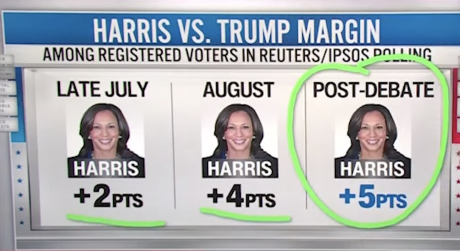
If Kamala Harris wants to expand her lead (and why wouldn’t she?), she needs to do three things right away.
One, make clear through surrogates what too few people seem to understand, which is that she had/has no real agency as vice-president under Joe Biden — vps are ceremonial stooges who parrot what the president wants or says — the term is “strictly backup” as no vice-president except Dick Cheney has ever significantly influenced any president’s policy or decisions.
Two, admit that the Biden administration made a few mistakes (i.e., Afghanistan withdrawal, overly liberal immigration policy, too accommodating to crazy wokesters on gender stuff and pregnant men) but that she’s learned from these errors and here’s how she feels now.
Three, in line with admitting these mistakes she needs to do what vice-president Hubert Humphrey did during his 1968 presidential campaign, and that’s break with the president on this or that matter of policy. Announce that when she becomes president she’ll be going her own way and calling her own shots. Humphrey didn’t rise in the polls until he broke with LBJ over the Vietnam War. If he’d announced his differences with LBJ earlier in the campaign HHH might have prevailed over Richard Nixon.
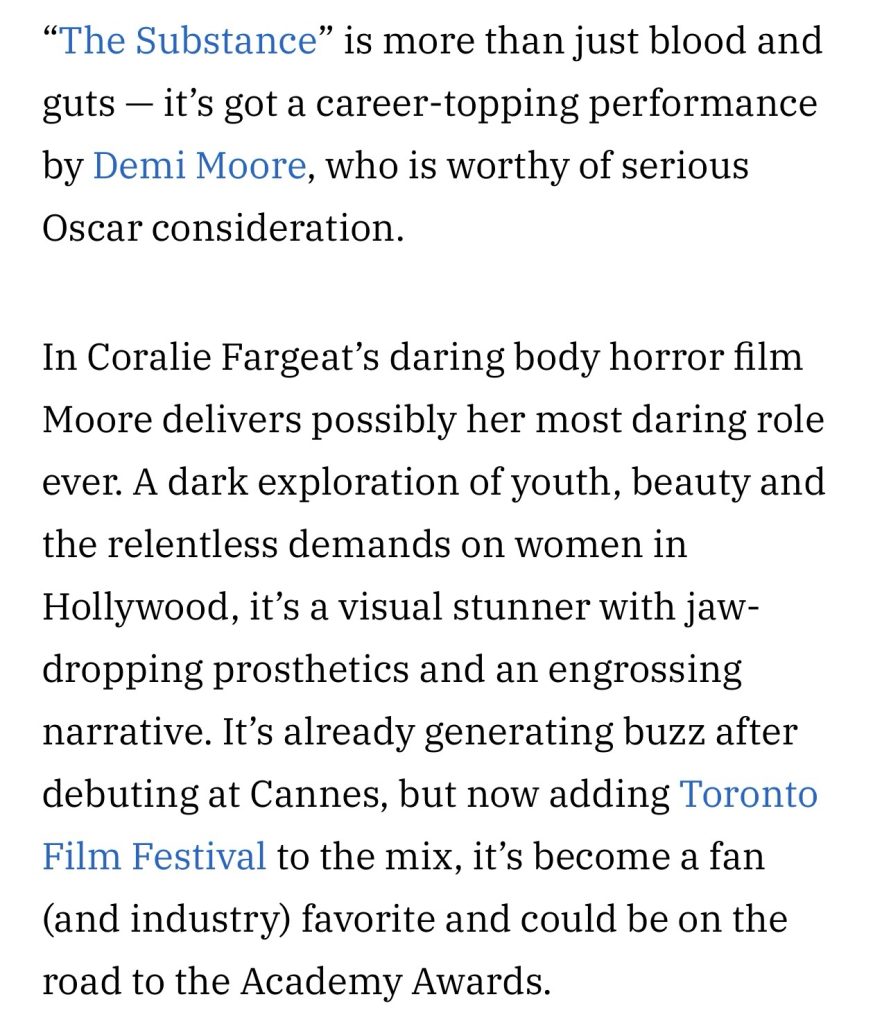
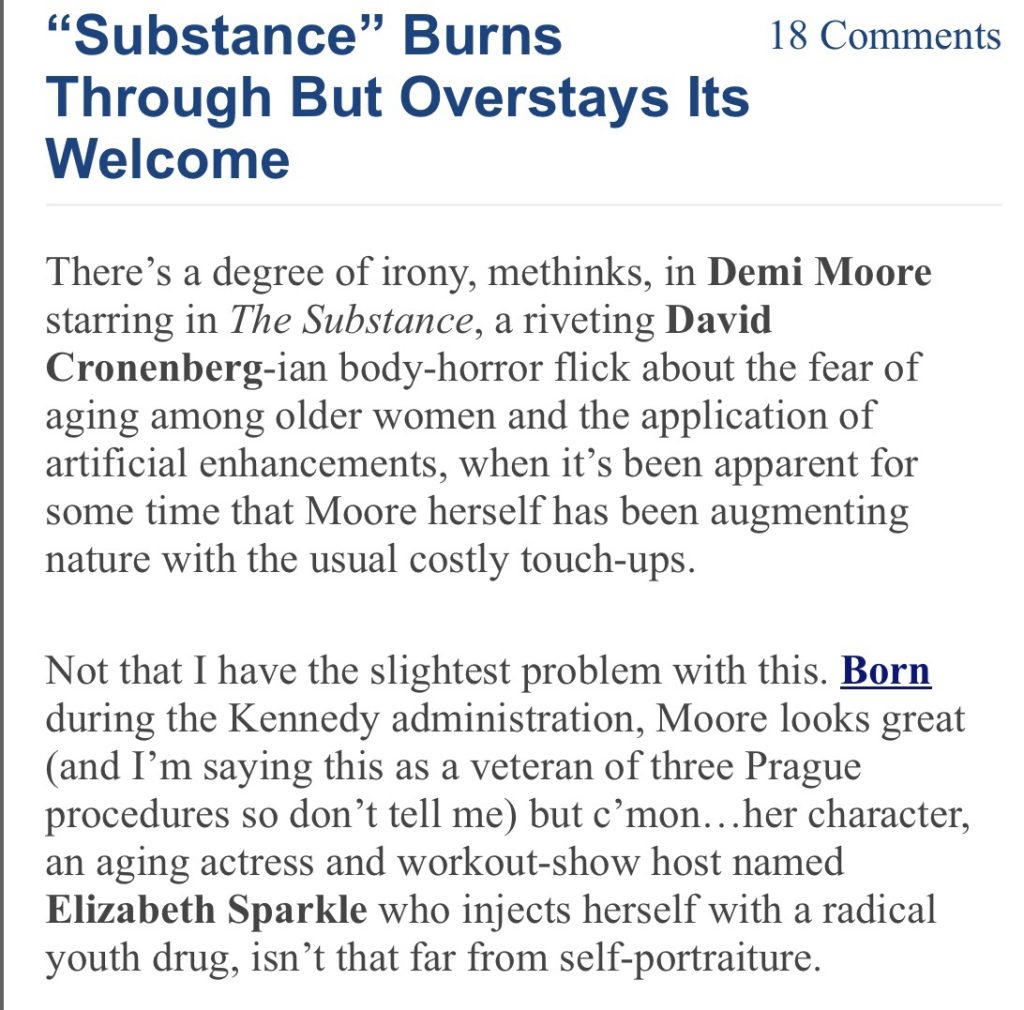
If Demi Moore scores an Oscar nom for going all body horror in TheSubstance…fine. But it’ll be one of those gold-watch, career tribute deals…a gesture that says “40 years, Demi!…we’ve all loved you since your Brat Pack heyday (About Last Night, St. Elmo’sFire) and your ‘90s heyday (Ghost, Striptease, IndecentProposal, G.I. Jane) and here you still are,” etc.
TheSubstance is basically a slick, David Cronenberg-ian, anti-male-asshole social satire, and it doesn’t ask Moore to do much more than deliver extreme reactions to the extreme things that happen more and more to her body. It’s not a heart-and-soul thing — it’s a freak-out thing.
ChadMcQueen, the son of SteveMcQueen who, like all sons of Hollywood superstars, shouldered a certain spiritual burden, has passed at age 63. He lived 13 years longer than his famous dad, who departed in 1980 at age 50.
I interviewed a hung-over Chad nine years ago at the Beverly Hills hotel. The topic was an excellentdoc that he co-produced about Steve McQueen’s arduous experience while making LeMans (‘71). Here’s the article that resulted.
“HoveringMcQueenGhost,” posted on 11.24.15 (two years before the first stirrings of woke terror):
We convened in the Polo Lounge inside the Beverly Hills hotel, and sure enough a guy started playing piano halfway through the chat and half-ruined the recording. And Chad, who was late for the interview due, he said, to having enjoyed a little too much liquid cheer after the doc’s premiere the night before, was entirely amiable and loose-shoe but also seemed a tiny bit…uhm, baked.
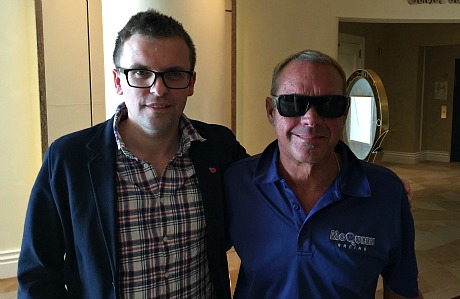
(l.) John McKenna, co-director of Steve McQueen: The Man & Le Mans, and producer Chad McQueen — Thursday, 11.12, 11:40 am — in lobby of Beverly Hills hotel.
But it was thrilling to commune with the son of one my all-time heroes and to throw out a few thoughts and asides…whatever came to mind. Chad’s eyes are covered by dark shades, but he seems to have inherited a few of his dad’s physical traits, including his hair, jawline and manner of speech. Plus he has that watchful thing, that vibe…a chip off the old McQueen undercurrent.
I was silently saying to myself, “What a hallowed California moment…chilling in the Polo Lounge and talking about Steve McQueen with his only living son and shooting the shit about this and that and Junior Bonner“…yeah.
I learned two interesting things: (a) While I had no issues with the 112-minute running time when I saw the doc in Cannes (unlike, say, The Hollywood Reporter‘s Todd McCarthy, who suggested a trimming), the film is now down to 102 minutes, which naturally makes me want to see it again; and (b) McKenna said that McQueen wanted to do his own driving and actually compete in the real-deal 24 Hours at Le Mans race in the summer of ’70, which is when the film was shot. But studio insurers said no. This turndown, McKenna suspects or believes, created frustration in McQueen and perhaps a bit of anger that may have contributed to the disarray during production.
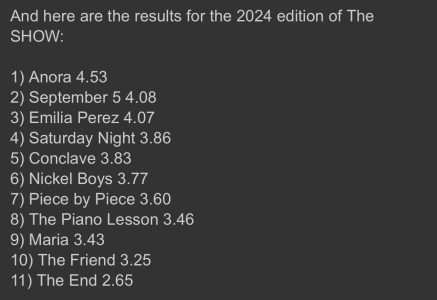
Michael’s Telluride Blog has polled several know-it-alls and asked them to rate recently screened Telluride hotties. They corrrctly put Sean Baker’s Anora at the top of the heap, but strangely rated Edward Berger’s ultra-brilliant Conclave in fifth place.
Trust me, trust me, trust me — the second-place September 5, the third-place Emilia Perez and the fourth-place Saturday Night are not — repeat, NOT — better than Conclave. They’re all commendable but aren’t quite as good as indicated here.
I began hearing about an anti-Conclave snobbery virus hours after the first showing. Snoots! These wankers (including Awards Watch’s Eric Anderson) definitely have their heads lodged in their posteriors. Don’t trust them! I know whereof I speak.
The first Telluride T-shirt was supposed to be for three year-olds, but the storekeeper sent an infant-sized one instead. So I called the store to report the error, and asked them to please send a second shirt in the correct size. It cost me an extra $20 or so.
Clint Eastwood‘s Juror No. 2 seemed like an obvious fall release, but then word began to circulate that perhaps Warner Bros. might delay the opening until sometime in early ’25. Which was deflating news.
Now we’re told that the jury deliberation drama will (a) be the closing night attraction at AFI Fest, screening on Sunday, 10.27, and then (b) will open modestly on Friday, 11.1 (technically on Thursday night, 10.31).
Five days between the AFI closer and the first screening at your local AMC? Will there be critic screenings before the AFI Fest debut, or will WB keep the film totally under wraps before 10.27?
I’m not sensing great churning emotion or excitement from Team WB on this puppy. I’m sensing “okay, fine, we’ll release it already but calm down.”