Woody’s “Coup de Chance” Is A Low-Flame Thing, Cool and Menacing

I saw Woody Allen’s Coup de Chance (now playing) a few weeks ago. It’s basically about unstated but acted-out things, and I was pleased most of the way through because I couldn’t tell where it was going. I knew something unpleasant was in the pipeline, but there are no real tip-offs and I couldn’t guess what what the third act might actually bring. So in that sense I was fully engaged.

But I have to say (although I can’t explain the particulars, which is what most of my notes are focused on) that I didn’t care for the ending.

I would love to explain why the ending didn’t feel right or satisfying to me, and I’d really like to share my own solution (i.e., my own scenario) but I can’t. But overall this is a better-than-decent Woody — not Match Point good but reasonably diverting. And I totally concur, by the way, with Kyle Smith‘s 4.5 Wall Street Journal piece — “Woody Allen’s Cancellation Is a Crime Against Culture.”

Boilerplate: Lou de Laâge‘s Fanny, a young French wife, is feeling empty or even sterile within a marriage to Melvil Poupaud‘s Jean, an exacting and persistent rich guy in his early 40s…one of those “demanding in a quietly ruthless way” sort of guys. Fanny is more or less content because of the affluent comforts and whatnot, but at the same time she’s sensing that this overly comfortable, mostly bloodless relationship is slowly draining her of something vital.

And so despite all the perks and by a stroke of good (or bad) luck she finds herself hanging with Niels Schneider‘s Alain, an ex-boyfriend, and then naturally having sex with him and whatnot. And then all the stuff that inevitably happens when a wife or husband starts regularly lying and covering up…it all kicks in and then some.

I have to add that Woody’s Coup de Chance screenplay often feels a bit on-the-nose and first-drafty, like almost every film he’s written since the turn of the century. I’ve been complaining about this off and on for 20, 25 years. I’ve been saying all along that Woody needs a sharp writing partner…a 40something whippersnapper…a Marshall Brickman or a Douglas McGrath…someone to tell him that in 2023 there’s no such thing as an “only copy” of a novel in progress.

I was fine with Schneider’s boyfriend (a writer) although he’s something of a bland stock character…written rather conventionally, no edges or undercurrents, etc. And Lou’s cheating young wife struck me as brittle and wound too tightly, and she definitely didn’t radiate any of those magnificent-in-bed Grace Kelly vibes. I took one look at her and said “nope…not worth the trouble.”

The Way Most Fair-Minded Americans Feel

Gay people are 100% cool but watch out for the trans-gender nutters, especially when it comes to their influence upon kids of various ages, including surgical stuff and school curriculums and whatnot.

This isn’t HE talking (I’m fairly easy with everyone in a facetime sense, hard only on HE commenters) but a cross section of Middle Americans….just listen.

Condon Is An Irish Treasure

Earlier today I wrote that Kerry Condon‘s performance in Robert Lorenz‘s In The Land of Saints and Sinners (Samuel Goldwyn, 3.29) amounts to “one of the greatest female villains ever…a feisty, take-no-shit-from-anyone IRA firebrand.”

There’s no rolling your eyes or waving this woman away — she holds eye contact, means every feckin’ word and is full of absolute conviction and a fair amount of controlled rage. Condon’s character, Doireann McCann, won’t take “no” or “maybe” from anyone about anything, and her eyes are fierce and flaming. Talk about a fascinating lady from the word “go.”

In The Land of Saints and Sinners is “a Liam Neeson movie,” and we all know what that means — a steady and stalwart Neeson fellow who’s not looking for trouble and in fact would like to back off into a shelter or backwater of some kind, and then a slow burning, a gradually tightening situation, implications of tough terms, bad people up to bad stuff (including the threat of serious harm to a couple of innocent characters as well as to Neeson’s guy) until it all blows up in the end.

But the story, set in rural Ireland in the mid ’70s, pulls you in bit by bit, and the script has been carefully and compellingly written by Mark Michael McNally and Terry Loane, and the shaping of Condon’s character is exceptional. You can call Doireann a volcanic madwoman, but that would be selling her short or at least putting it too simply. She’s a villain, all right, but she doesn’t believe in playing it cool or fair or even-steven. You can’t help but believe every damn word she says, and at least respecting whatever it was that put so much acid into her blood. Not a woman to be trifled with.

I certainly didn’t see Doireann as some kind of broad charicature or cliche…some kind of Irish Cruella de Ville. She’s way too blistering for that.

All I know is that I sat up in my seat when Condon came along and start giving orders and barking questions and challenging and intimidating pretty much everyone, and I’m thinking of watching the film again just for her performance.

A Middle-Aged Ripley

The only vaguely “off” thing about the exquisitely composed, visually ravishing Ripley (Netflix, now streaming) is that Andrew Scott seems a bit old to play the lead. He’s early 40ish looking, or 12 or 13 years older than the 28 year-old Matt Damon was in The Talented Mr. Ripley (’99) and 16 or 17 years older than Alain Delon was in Purple Noon (’60).

But it’s only a slight bother.

Dennis Hopper was almost exactly Scott’s age — around 40 or 41 — when he played Ripley in Wim WendersThe American Friend. Ripley was shot in 2021, when Scott was 40 or 41.

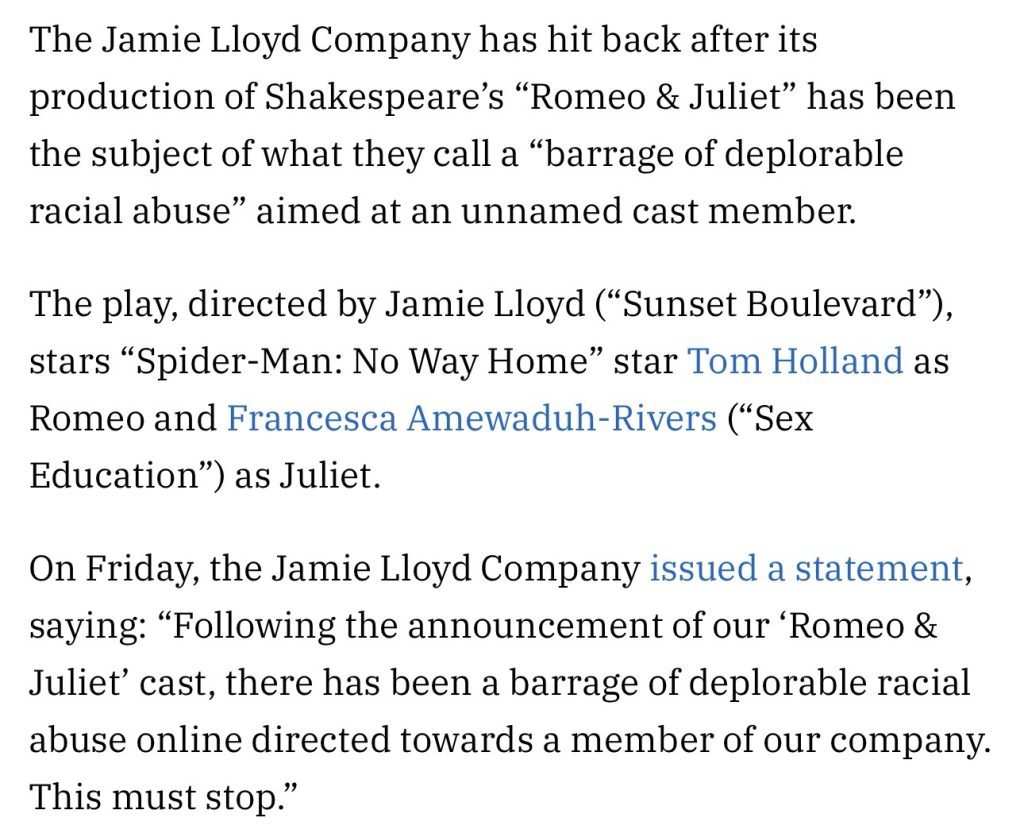
What “Barrage of Deplorable Racial Abuse”?

Last Tuesday (4.2) HE shrugged at the notion of the forthcoming interracial London stage production of Romeo and JulietTom Holland and Frances AmewudahRivers…another “woke casting stunt”, “wealthy London liberals will eat this shit up,” etc.

I happened to agree with a reader comment that a Zendaya-like actress would have been a better fit match-wise or looks-wise (i.e., Amewudah-Rivers isn’t quite on Holland’s level). Otherwise any blatantly racist criticisms (I haven’t read any but I’ll take the Jamie Lloyd Company’s word for it) are deeply unfortunate and probably best ignored.

Read more

Muddy Waters’ “You Shook Me”

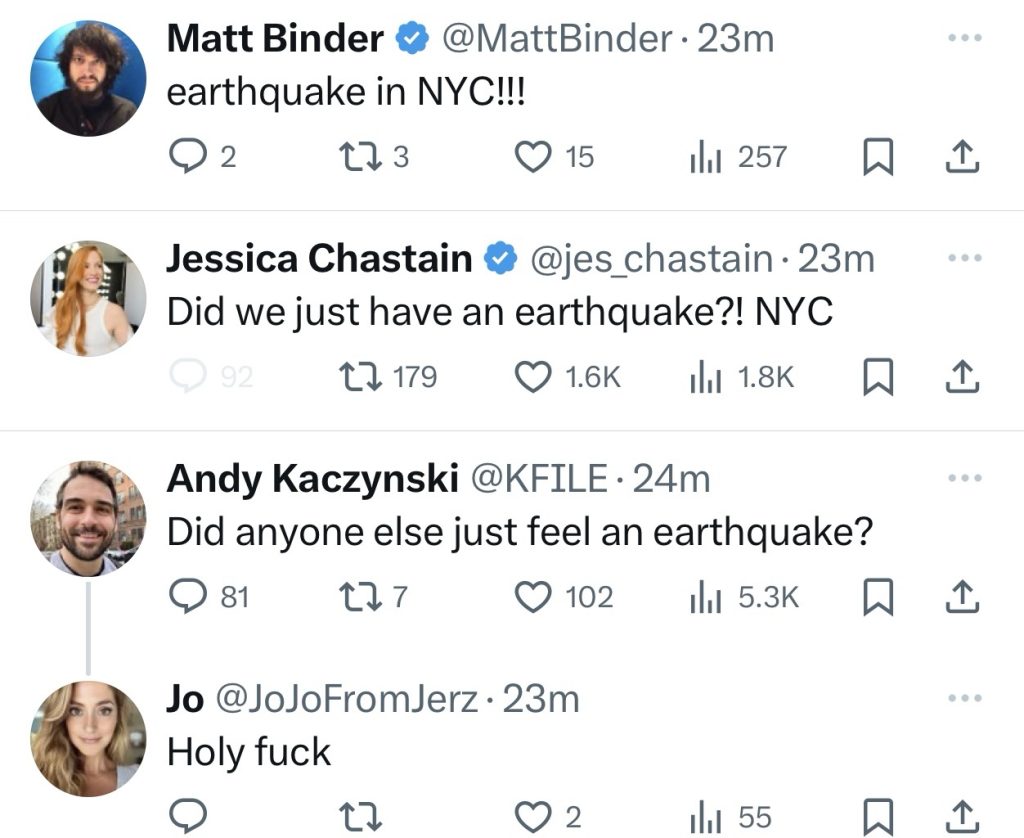
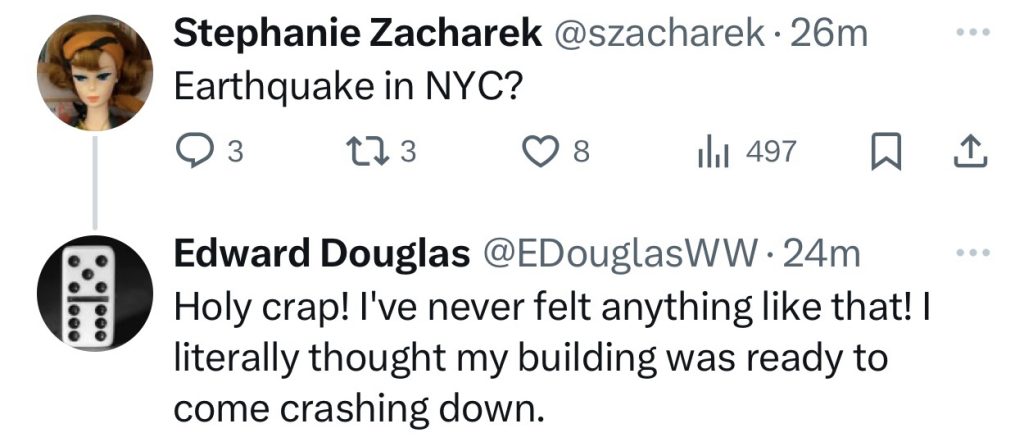
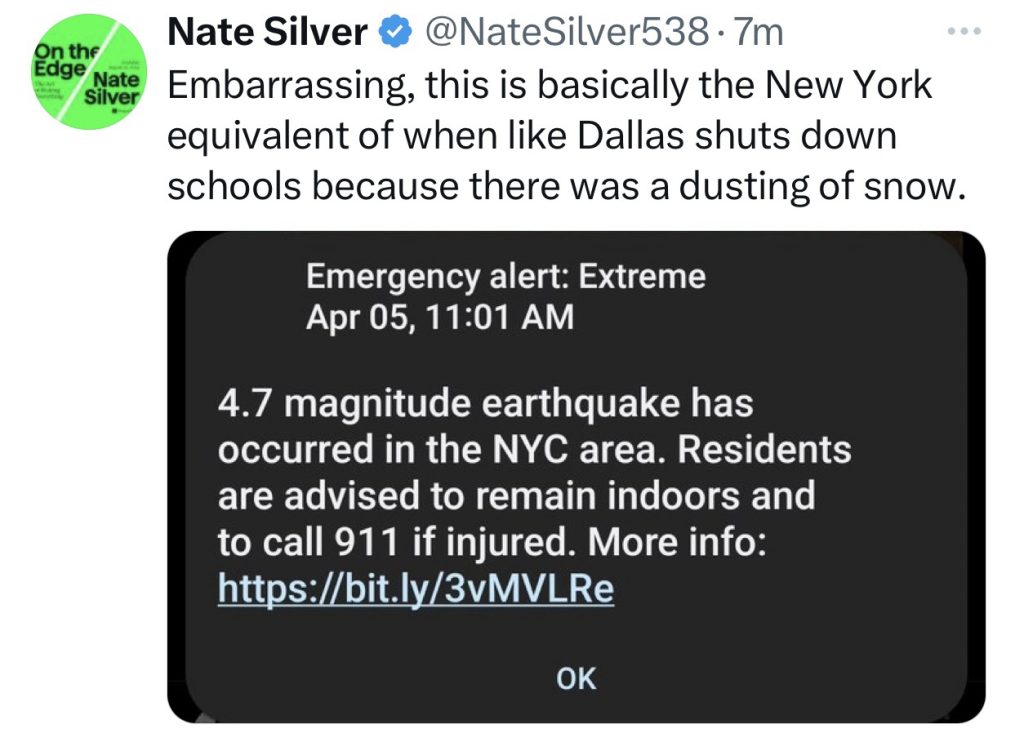
An actual earthquake just happened in Wilton, Connecticut, and apparently all over the tristate area. Not a major shaker but it lasted a good eight to ten seconds. Felt like 5.5 or thereabouts. Reports are calling it a 4.8. Centered in Lebanon, New Jersey.

Suddenly Two Winners

Out of the blue I sat through a pair of wowser thrillers last night, both mature and well-measured and absolutely not aimed at the popcorn hooligans, and one of them, surprisingly, was a formula-adhering Liam Neeson film.

There’s nothing like the pot high of suddenly seeing a good movie or two on an unexpected (or not necessarily anticipated) basis, and just feeling more and more ripped as they proceed. And you know that most of the low-lifes out there will ignore these films or give them short effing shrift.

These are just iPhone jottings…I’ll expand in a few hours.

Steven Zallian’s Ripley (Netflix, 4.4) is a stunning work of visual art — one of most beautiful monochrome films I’ve seen this century or ever. All hail dp Robert Elswit! I watched episode #1 last night. (Eight episodes in all.) Haunting, quietly eerie and creepy and deliciously atmospheric. A knockout performance by Andrew Scott, and fascinating cameo performance by Kenneth Lonergan. It’s a completely gourmetlevel serving, and I loved the careful attention to period detail. (It’s set around the time of Rene Clement’s Purple Noon, which opened in France in March 1960.)

Set during “the troubles” (‘74 or thereabouts), In The Land of Saints and Sinners (which isn’t an especially good title) is a way-above-average Liam Neeson film. Restrained and solemn and well-plotted, and it gets better and better as it moves along. Directed by longtime Clint Eastwood producer Robert Lorenz, it follows the basic Neeson-flick formula but the writing and particularly the character-sculpting are of a very high calibre, and the magnificent Kerry Condon delivers one of the greatest female villain characters ever — a feisty, take-no-shit-from-anyone IRA firebrand. What an actress!

Gene Wilder’s 13 Glory Years

When you boil it all down, the great Gene Wilder, who lived for 83 years, enjoyed a peak period of 13 years (’67 to ’80). Performance-wise he knocked it out of the park seven times but four of these happened in ’67 and ’74 — his super-peak years.

One, his genius-level cameo as the giggling excitable undertaker in Bonnie and Clyde (’67). Two, Leo Bloom in The Producers (’67)…”Max, he’s wearing a dress.” Three, the doctor who has a sordid affair with a sheep in Woody Allen‘s Everything You Always Wanted to Know About Sex (’72). Four and five, his double-whammy performances in Blazing Saddles and Young Frankenstein (both in ’74). Six, George Caldwell in Silver Streak (’76). And seven, Skip Donahue in Stir Crazy (’80).

And that was it. Wilder gave other noteworthy or beloved performances (Willy Wonka, The Woman in Red, The Frisco Kid) but they weren’t as good as the hallowed seven.

No, I haven’t seen Remembering Gene Wilder.

Remember “The Front Runner”?

I could never fully understand why Jason Reitman‘s The Front Runner, which opened five and a half years ago, was blown off by nearly everyone. The Sony Pictures docudrama is about the tragic fall of Presidential contender Gary Hart during the 1988 primary campaign.

I completely fell for it after the Telluride ’18 debut. It featured a commanding lead performance by Hugh Jackman and several delicious supporting performances. And it all but completely flopped — cost $25 million to make, earned $3.2 million theatrically, and was pretty much ignored on during the 2018 award season.

Seriously, what happened?

Posted on 9.19.18: Less than ten minutes into my first viewing of Jason Reitman‘s The Front Runner, I knew it was at least a B-plus. By the time it ended I was convinced it was a solid A.

It’s not a typical Reitman film — it doesn’t deliver emotionally moving moments a la Juno and Up In The Air. It is, however, a sharp and lucid account of a real-life political tragedy — the destruction of former Colorado Senator Gary Hart‘s presidential campaign due to press reports of extra-marital womanizing with campaign volunteer Donna Rice.

The Front Runner is an exacting, brilliantly captured account of a sea-change in press coverage of presidential campaigns — about a moment when everything in the media landscape suddenly turned tabloid. Plus it feels recognizable as shit. I immediately compared The Front Runner to Michael Ritchie’s The Candidate, Mike NicholsPrimary Colors and James Vanderbilt‘s Truth. It is absolutely on the same wavelength and of the same calibre.

Hugh Jackman delivers a steady, measured, well-honed portrayal of Hart, but the whole cast is pretty close to perfect — every detail, every note, every wisecrack is spot-on.

Why, then, are some critics giving Reitman’s film, which is absolutely his best since Up In The Air, the back of their hands? The Front Runner easily warrants scores in the high 80s or low 90s, and yet Rotten Tomatoes and Metacritic aggregate tallies are currently in the high 60s — over 20 points lower than they ought to be.

I’ll tell you what’s going on. Critics can be cool to films that portray journalists in a less than admirable light, which is what The Front Runner certainly does. The Miami Herald reporters who followed Hart around and broke the Rice story are depicted as sleazy fellows, and the relationship between the Miami Herald and Hart is depicted as deeply antagonistic, especially on the Herald’s part. Hart screwed himself with his own carelessness, but the Herald is depicted as being more or less on the same level as the National Enquirer.

You can bet that on some level this analogy is not going down well with certain critics. Remember how Vanderbilt’s Truth (’15), a whipsmart journalism drama, was tarnished in the press for portraying the collapse of Mary Mapes‘ faulty 60 Minutes investigation into George Bush‘s National Guard history and alleged cocaine use? A similar dynamic is happening right how.

Read more

Kindness and Decency

The principle behind my imminent submission to Monkey Man roughly parallels my sense of resignation and obligation to see Ken Loach‘s The Old Oak. I can’t wall myself off — I have to engage.

It’s obvious what kind of cards are being dealt here — resentful old Loachian guys in England’s northeastern region vs. Syrian refugees. And I know I’m probably going to struggle to hear a portion of the dialogue. (I’ve never seen a Loach film that wouldn’t have been improved by subtitles.) This is Loach’s last film, however, and I feel I owe it to him.

Favorite Loaches: The Wind That Shakes The Barley, Looking For Eric, My Name Is Joe, Poor Cow.

This Is Going To Hurt

An HE commenter said the other day that I need to engage more with ongoing spring product, and therefore need to settle into Dev Patel‘s Monkey Man (Universal, 4.5), aka “John Wick in Mumbai” — the same revenge formula with a dunking of Indian nativist class rage…rage and revenge. I realize I have to endure it, but it’s obviously going to be painful. Patel: “I wanted to give it real soul, real trauma, real pain…and I wanted to infuse a little bit of culture.”