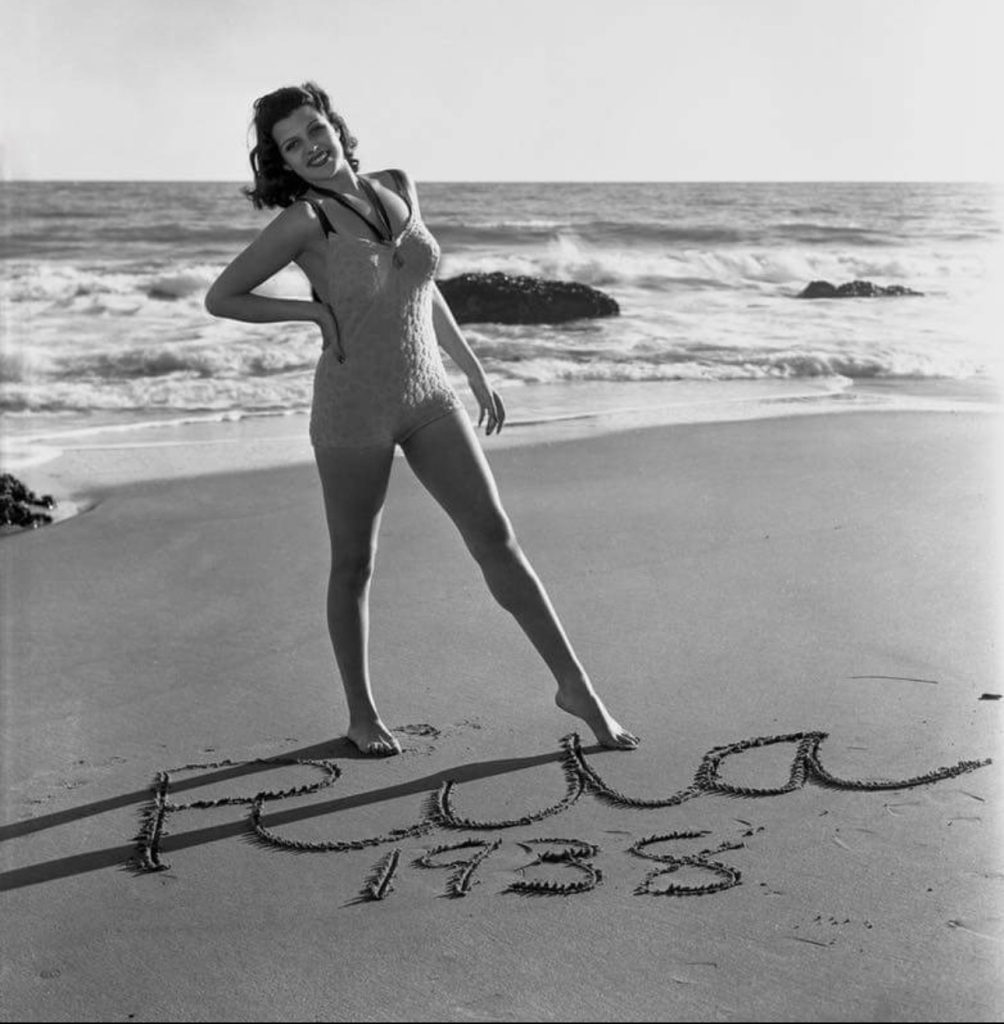
It’s somehow comforting to note the timeless backdrop in this 86 year-old Rita Hayworth photo, which was probably snapped on one of the upper Malibu beaches (El Matador, La Piedra, El Pescador). Because this location — trust me — looked and sounded exactly the same a thousand years earlier. Or 10,000.
Just ask the vacationing Roman elites who stood upon the beaches of Capri during the reign of Tiberius. Orask Charlton Heston’s Taylor, the time-stranded astronaut in PlanetoftheApes (‘68) — when his spacecraft splashed into a large body of water he thought the date was 11.25.3978, and the seaside location he rode upon at the very end of Franklin Schaffner’s film didn’t seem to argue with this.
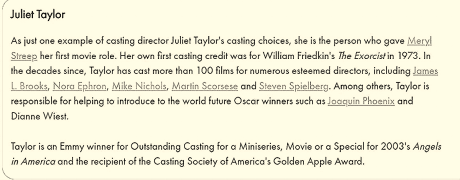
To be precise, over the last 49 years casting maestro Juliet Taylor has assembled the casts of 42 Woody Allen films. (Or is it 43?)
Those Woodies are Love and Death, Annie Hall, Interiors, Manhattan, Stardust Memories, A Midsummer Night’s Sex Comedy, Zelig, Broadway Danny Rose, Hannah and Her Sisters, Radio Days, Another Woman, Crimes and Misdemeanors, Allen’schapterin New York Stories, Alice, Shadows and Fog, Husbands and Wives, Manhattan Murder Mystery, Bullets over Broadway, Mighty Aphrodite, Everyone Says I Love You, Deconstructing Harry, Celebrity, Sweet and Lowdown, Small Time Crooks, The Curse of the Jade Scorpion, Hollywood Ending, Anything Else, Melinda and Melinda, Match Point, Scoop, Cassandra’s Dream, Vicky Cristina Barcelona, Whatever Works, You Will Meet a Tall Dark Stranger, Midnight in Paris, To Rome with Love, Blue Jasmine, Magic in the Moonlight, Irrational Man and Cafe Society.
Last Thursday (6.12) the Academy of Motion Picture Arts and Sciences announced that Taylor will be given an honorary Governor’s Award later this year.
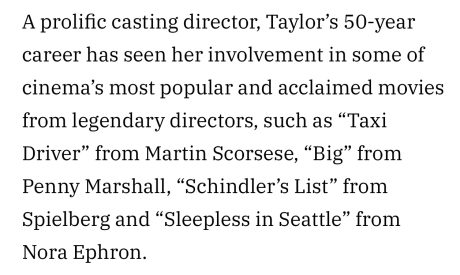
Here’s how the Academymonsters have summarized Taylor’s career in a press release:
The loathsome, flea-infested dogs who told the public relations staffers not to mention Allen’s Taylor-cast films need to be slapped around but good. Bitch-slapped, I mean. Remind those contemptible ayeholes who and what they are.
I’m sorry but “How Can I Be Sure?” is one of the most touching and well-sung ’60s love anthems ever recorded. Co-penned by Felix Cavaliere and Eddie Brigati, it wouldn’t have worked if the composers had been in their 30s or early 40s — it’s a young guy’s song, and gap-toothed Brigati really knew how to sell it…pipes, presence, confidence.
I also love Cavaliere’s obviously close resemblance to mid ’70s Martin Scorsese.
A 6.15 story by Washington Post reporters Adriana Usero and Glenn Kessler has exposed an RNC deepfake G7 video that indicates — fraudulently — that President Biden was wandering off and talking to ghjosts or what-have-you.
“On Thursday, 6.15, the Republican National Committee RNC posted a clip captioned, ‘What is Biden doing?’ The post has been viewed more than 3 million times. Biden is seen with other Group of Seven leaders watching skydivers in Italy, carrying the flags of the nations. Biden turns and walks a few steps to chat with one of the parachutists, the only leader to do so. Then Italian Prime Minister Giorgia Meloni turns him back to the other leaders.
“In one feed distributed by news services — the one used by the RNC — it’s not entirely clear who Biden is talking to, but an alternative feed, also distributed by news services, makes it clear that Biden is having a conversation.
“The New York Post jumped on the RNC clip, posting a story less than two hours later and embedding the RNC post. When the White House cried foul, saying the video had been taken out of context, the newspaper buried that comment in the bottom of the story,
“The Post went on to make the fake story the cover of its print edition.”
THIS IS THE FAKE MISLEADING VIDEO, posted by London’s Telegraph:
You know something? The deepfakes don’t matter. A significant percentage of prospective voters believe that Biden is out to lunch, and they’re going to keep on believing it. I’m convinced that Biden is almost certainly going to lose. It kills me to say this but it’s true. The only way to stop Trump is for Biden to bail and Gretchen Whitmer to step in. He neeeds to face reality and quit now. It’s the only way to stop The Beast.
“Overflowing with insight; stuffed with revelatory interviews and anecdotes and archival footage; as bursting with flavor as a baked ziti; and as immersive, in its way, as the show itself, Wise Guy: David Chase and the Sopranos is Alex Gibney’s sensationally artful and engrossing two-hour-and-40-minute documentary about the greatest show in the history of television.”
When will Gibney’s doc begin streaming on Max? They haven’t decided yet but probably later this summer….right? They can’t wait until the fall.
Gleiberman has the nerve to say that the last few seconds of the final episode are ambiguous. Maybe Tony sleeps with the fishes, Owen says, and maybe he and Carmela are living quietly in Belize or Guatemala. Chase did’t make the ending clear, see, and sobyou’ll never really know!
Smart, strategic, well-ordered cinema rarely fucks with people’s heads like the final Sopranos scene did. I explained why many were confused or uncertain about what had happened. It was because of the EDITING — Chase’s decision to not play by basic editing rules.
Each and every waking minute I’m considering and comparing the content of strong, impactful cinema (smarthouse, popcorn, the entire gamut) with the repetitive, complex, meditative, often demanding, occasionally grueling nature of actual, day-to-day life, and the cross-pollination (in my head at least) is not only constant but illuminating.
For me good films are not just helpful in understanding the unruly cacophony of things (ironic, euphoric, tragic, symphonic, soul-deadening, absurd, comedic, existential) — they are essential guideposts in that effort.
Even a popcorn film like Speed offers a measure of perspective or a yardstick by which the tumultuous nature of things can be broken down and simplified or at least considered in a way that has value. Life and movies have always bled into each other. Everything’s everything.
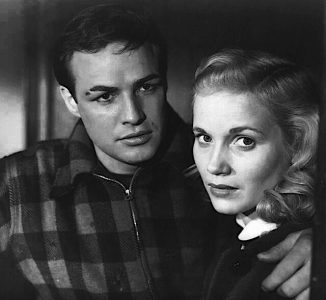
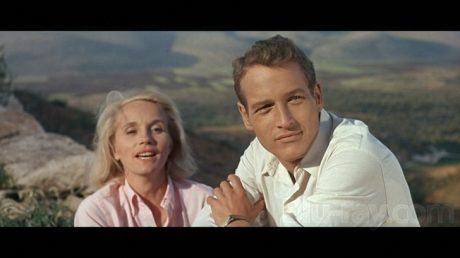
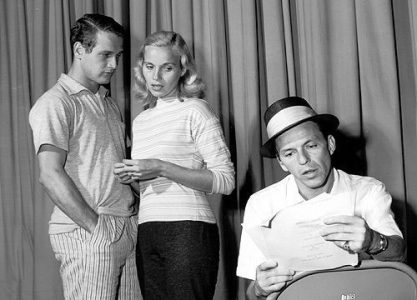
Exactly three weeks hence, Eva Marie Saint will celebrate her 100th birthday — 7.4.24. Which is kind of a big deal. She was the belle of the ball between the early ‘50s and mid ‘60s — On TheWaterfront (herperformanceinthis1954classicresultedinaBestSupportingActressOscar), AHatfulofRain, NorthbyNorthwest, Exodus, GrandPrix. She and George Segal were memorable as an unhappily married couple in Irvin Kershner’s Loving (‘70).
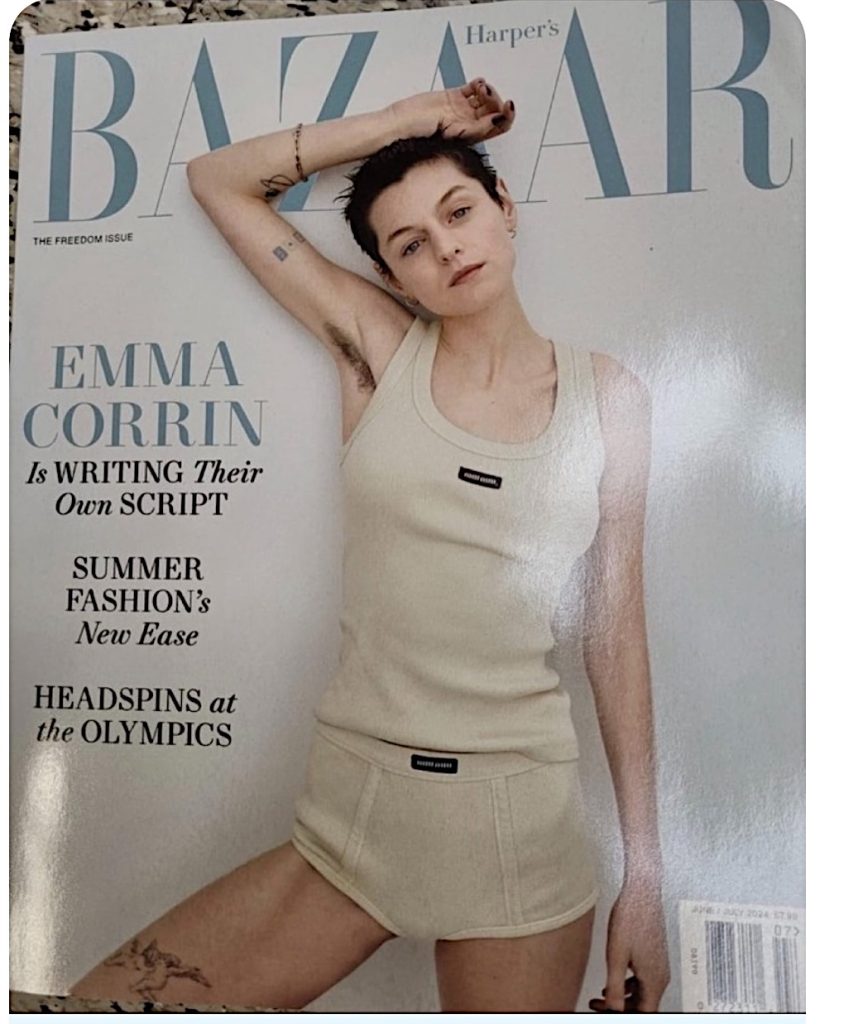
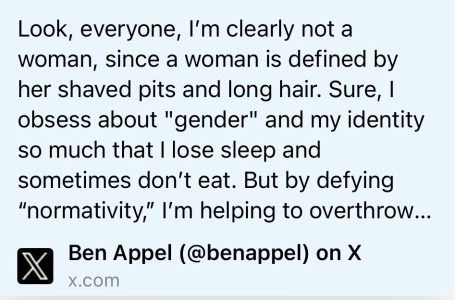
…to Emma Corrin’s hairy armpits and everything that accompanies this aesthetic…butchy demeanor, choppy hair, plural pronouns, all that stuff…a non-judgmental decline….. As Samuel Goldwyn
once said, “Include me out.”
Doug Liman‘s The Instigators, produced by Ben Affleck and Matt Damon‘s Artists Equity, is a half-comic heist thriller….give it to me. Written by Chuck Maclean and Casey Affleck, and starring Casey, Matt and Hong Chau, Michael Stuhlbarg, Paul Walter Hauser, Ving Rhames and Alfred Molina.
Will anyone see it theatrically when it opens on 8.2.24? Of course not. Because Apple Tv+ will begin streaming it a week later (8.9.24).
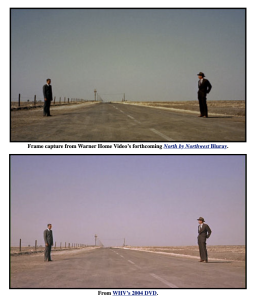
I had a reasonable expectation that the restorationists had enhanced Alfred Hitchock’s 1959 classic with a distinct visual bump effect (as in “whoa, this looks better than ever before!”).
This would have been due, I figured, to their having sourced the original 8-perf 35mm VistaVision camera negative with all restoration work completed in 6.5k, and then overseeing the creation of a 65mm negative and finally having Fotokem create a 70mm film print.
That 70mm print was what was shown at the Village East last night, and I have to be honest — it looked very nice but it didn’t blow me away, and it certainly didn’t make my eyeballs go “boinnnggg!” There was absolutely no “bump” effect, and I was sitting there going “what the fuck?” and “why am I not looking at the very best NXNW ever created or projected…not since the waning days of the Eisenhower administration but ever, especially given the 8K VistaVision negative scan?”
I’m not saying that Jim Hemphill’s 6.11 IndieWire piece on the NXNW restoration is bullshit, but…okay, I guess I am calling it bullshit because it makes you think “whoa, here’s my chance to see a great Hitchcock classic in the best visual condition ever!”
What I saw yesterday evening was just…very nice. Approvable. Agreeable but nothing to bounce up and down about on a trampoline.
Here’s why: 70mm presentations are no longer the cat’s meow. Creating a 70mm NXNW print is a fine, excellent thing in terms of archival preservation, but the sharpest and most vibrant way to present a digitally restored film (NXNW was scanned at 13K but restored at 6.5K, whatever the hell that means) upon a large screen is via 4K digital projection.
You’re losing two generations of clarity by (a) creating a 65mm negative and then (b) creating a 65mm print, so right away audiences are being shown a less-than-optimum image. And then you’re at the mercy of the projection standards at whatever given theatre (proper or improper foot lambert levels, sufficiently sharp or underwhelming sound).
The cropduster sequence, also, has now been tinted with a slight amber-light brown effect, which struck me as affected.
In short, if you want to see the very best rendering of this new Film Foundation-approved restoration, wait for the Bluray, which will “street” later this year.
As I was walking uptown after the screening, I felt like Sterling Hayden‘s General Jack D. Ripper in that Dr. Strangelove scene right after the Burpleson Air Force base surrender. Speaking to Peter Sellers‘ Group Captain Lionel Mandrake, Hayden says, “Those boys were like my children, Mandrake, and now they’ve let me down.”