Daniel Petrie's "Lifeguard" ('76) Finally Doesn't Satisfy
December 9, 2025
Before Last Night's 45th Anniversary...
December 9, 2025
Now That Netflix Is Finally Streaming “Jay Kelly”
December 8, 2025
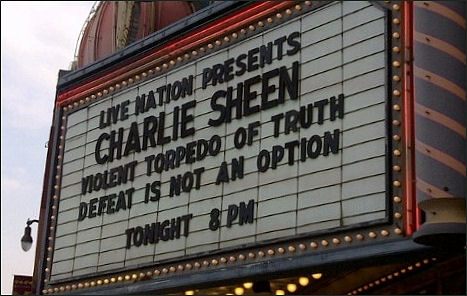
This is really “beat up on poor Charlie Sheen” day, isn’t it? First Mark Ebner‘s 1998 Details piece about the old poontang days, and now an account of Sheen’s disastrous debut show (“boos…walkouts..unmitigated disaster”) in Detroit by Entertainment Weekly‘s James Hibberd.
Update: Here‘s the first YouTube clip I could find. Posted six or seven hours ago. Tiger blood. Cranked. A man on a mission to…what? Prove to the world that he still matters commercially despite the loss of his TV series? To spread the gospel of an egoistic theology called “winning”? I’m guessing it starts near the beginning of Charlie’s set. 8 likes, 18 dislikes. But the girl who recorded this from somewhere in the balcony (or her friend) was obviously charmed.
As I’ve heard it (but take this with a grain), the problem with The Hangover 2 is that it primarily feels like The Hangover transposed to Thailand. No deepening intrigue. “Here we go again!” in spades. What do I actually know? Nothing.
“Your suspicions about Your Highness (Universal, 4.8) were correct — it’s pretty lousy,” says a trusted reader. “It’s one of the laziest films I’ve ever seen. I suspect the geeks will attempt to explain this as a kind of purposeful charm but I’d just call it shitty. It has some great lines but they gave most of them away in the first red-band trailer. It’s essentially 30 iterations of Danny McBride saying stuff with an olde English accent with an f-bomb tossed in.”
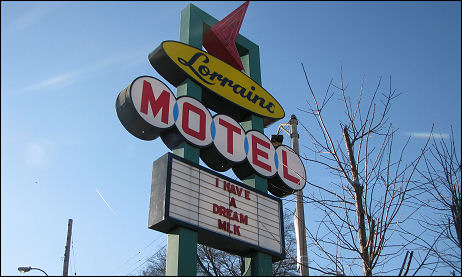
I for one would have loved to see Memphis, the Paul Greengrass-Scott Rudin project about Martin Luther King that Universal has just scuttled, possibly over “factual liberties” taken by Greengrass’s script but more likely about the MLK estate having sided with a competing MLK DreamWorks project that has a script by Ronald Harwood (The Pianist). Rudin and Greengrass are presumably shopping Memphis around so here’s hoping.
I’ve written that Greengrass’s shakycam shooting style has run its course, but something tells me it might work very well on a script that focuses on the hours before and after King’s assassination on 4.4.68. I’m presuming, incidentally, that the “factual liberties” and “controversial directions” that the MLK estate reportedly has issues with in Greengrass’ script involves King’s legendary tomcatting…but maybe not. Anyone who can toss me PDFs of either the Greengrass or the Harwood would have my sincere gratitude.
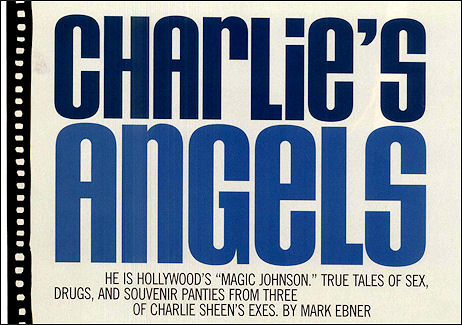
In 1998 Details magazine hired Mark Ebner to track down and interview Charlie Sheen‘s ex-girlfriends. It was an assignment “as simple as walking out my front door,” Ebner writes on Hollywood Interrupted. Ebner says he “found no shortage of women willing to get honest about their experiences with a shell of a man who has proven incapable of being honest about himself.” But the Details article only mentions three.
A line in Steve Pond‘s 4.1 Wrap interview with Win Win producer Michael London made me wince a little. The topic is Win Win‘s modest expansion this weekend to 149 theatres, and then 200 next weekend. Pond says London “always figured” that Tom McCarthy‘s small-town dramedy, which is easily the best film out there right now, “would be a tough sell to mainstream audiences…with the film shifting tone from drama to comedy” and back again.
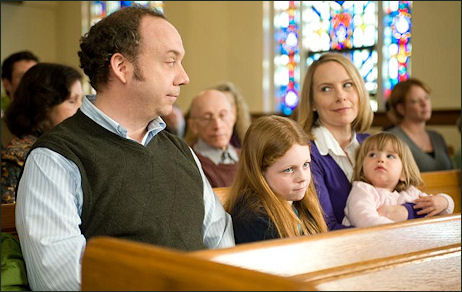
Win Win costars Paul Giamatti (l.) and Amy Ryan (far r.).
That’s not entirely true. Win Win is mostly about sly humor, wise observations, community values and comme ci comme ca we’re-doing-okay moods. “One of the things that really helps is that it plays as a comedy,” London says. “If a movie makes you laugh, you don’t care if it’s an indie movie or a studio movie — you just laugh, and some of those rules go out the window.”
Nonetheless there’s clearly a suspicion among hinterland moviegoers about any film that doesn’t deliver in a strong one-note fashion — i.e., comedy-comedy or drama-drama. HE to Joe and Jane: Movies that insist on a tonally uniform approach are frequently unsatisfying or problematic because they feel as if they’re painting their material (story, theme, emotional undercurrents) with one overall color, and that is not life-like — not the way God’s good humor tends to occur or unfold. Mixtures of drama and comedy are the day-to-day norm, not the exception.
One other thing: Win Win does, in a sense, have one overall color, and that is the color of perceptive intelligence provided by director-writer Tom McCarthy. The film has wit, warmth, peculiarity, simplicity, honesty — it’s a “movie” that entertains and engages, and but you never feel you’re missing out on something true or necessary in a story or character sense, or that some kind of comedic or dramatic agenda is being force-fed. Win Win is mostly populated by likable but sharp small-town characters, and it just kinda happens in its own way.
McCarthy, Pond reports, has been touring with the film across the country (18 cities and counting) “and reporting back that the movie connected in a way that his previous films (both critical favorites) had not. ‘I don’t know if it’s the wrestling or the fact that it’s the only movie out there to deal with how hard it is to make ends meet these days,” London says, “but audiences are responding.”
Earlier today Awards Daily‘s Ryan Adamslinked to a 4.1 reel3.com story by Jason Haggstrom that has a clip of the original sexual metaphor finale from Alfred Hitchcock‘s North by Northwest (i.e., the train going into the tunnel). The best part is an “excerpt” from Hitchcock/Truffaut that explains it.
I’m not one of those literalists who demands practical, reasonable answers for everything he sees in a film, but how exactly does a vampire attain stiffitude? Don’t you need warm blood rushing to the loins, etc.? I’m not arguing with the notion of Edward and Bella doing it — it’s fine, and thank God the series is almost over — but did Stephanie Meyer ever try to explain how Edward manages the act? Not criticizing — just asking.
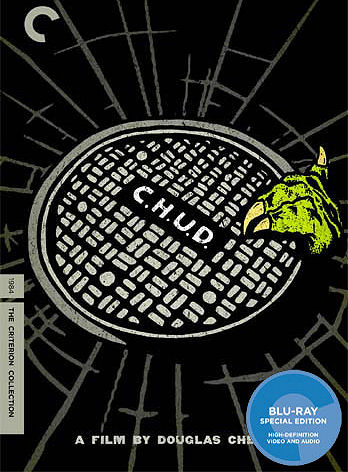
Every now and then…well, actually on very rare occasions Criterion decides to lower itself into the vaguely disreputable, ball-scratching realm of popcorn cinema (Armageddon, The Rock) as a way of sloughing off their elitist, butt-plugged, too-cool-for-school reputation. Their latest release in this realm will be Douglas Cheek‘s CHUD (1984), which Criterion will street on July 12th. One question: why?
True fact: In 1983 I sat one evening at a table in a West 72nd bar with CHUD star John Heard and at least one other CHUD costar (Daniel Stern?) plus a couple of other actor friends including Keith Szarabajka. I distinctly remember Heard explaining to someone at the table that CHUD would be (and I’m writing this from memory) “kind of a subversive, side-pocket, slider-ball type of thing….it’ll be what it’ll be when it opens, and then it’ll be something else in ten or twenty years.” Not a big moneymaker and nothing close to an Oscar-type deal, but possibly destined for coolness and significantly above the level of a Troma Film.
Criterion’s jacket copy: “A rash of bizarre murders in New York City seems to point to a group of grotesquely deformed vagrants living in the sewers. With its surprisingly gritty depiction of urban life, noirish cinematography by Peter Stein (Ernest Goes to Jail), and groundbreaking makeup effects, this Reagan-era chiller remains one of the truest depictions of Cannibalistic Humanoid Underground Dwellers yet put on film.”
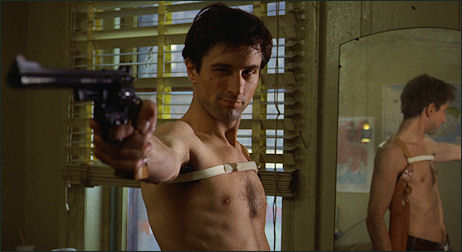
Sony Home Video’s Taxi Driver Bluray (out 4.5) is easily the best non-theatrical version of this film ever seen. It’s very celluloid-looking, thickly colored, like you’re watching a freshly-struck 16mm print in your darkened living room. It’s nothing to jump up and down about, but it’s as good as this ratty little classic — shot on 16mm (or was it a combo of 16mm and 35mm?), appropriately reflective of the slimey tones and textures of mid ’70s Manhattan — is ever going to look.
I haven’t even touched the extras but I’m hearing they’re top-of-the-line.
22 days ago I reviewedDuncan Jones‘ Source Code, and here’s a re-posting to link with today’s opening: “This is an engaging, somewhat sentimental and yet trippy, spiritual-minded sci-fi thriller that deserves a thumbs-up for several reasons, but I was especially delighted that it hasn’t been dumbed down.
(l. to r.) Source Code costars Vera Farmiga, Michelle Monahan and Jake Gyllenhaal, and screenwriter Ben Ripley (far right) on stage at Austin’s Paramount theatre following this evening’s screening.
“It’s an exciting nail-biter, but is essentially cerebral in the manner of an above-average Twilight Zone episode from the early ’60s, and is not what anyone would call fanboy-catering or CG-driven, thank God.
“The rumors were true: this isGroundhog Day with a bomb. Plus a little Sliding Doors, Rashomon (as screenwriter Ben Ripley acknowledged during the q & a) and a touch of Run Lola Run. Notions of reality are constantly being supposed, redefined, fiddled with and scrambled around. It keeps you on your toes but never frustrates or irritates. Jones (Moon) and Ripley work hard to involve viewers but also keep them working, and the pace and the balance are just right.
“Jake Gyllenhaal plays a military chopper pilot who doesn’t know if he’s dreaming or dead or what the hell is happening…at first. All he initially knows is that his last memory involved serving in Afghanistan, but now he’s on a Chicago-bound commuter train in a sequence that loops and re-loops and re-loops in eight minute portions. And that a pretty girl (Michelle Monaghan) whom he apparently knows somewhat is sitting opposite him every time. And that some other guy is staring back at him when he glances at a bathroom mirror. And that the loop will always end with a bomb going off and scores of passengers being ripped to shreds.
“Between each segment Gyllenhaal finds himself in a small padded isolation chamber of some kind and speaking to an Air Force officer (Vera Farmiga) about what he remembers and what he’s learned. The basic idea, he realizes early on, is to try and eventually figure out who the bomber is, and how to stop him. Because the train bomb is only a prelude, he’s told, and that the bomber, whoever he or she is, intends to explode a nuclear device somewhere in downtown Chicago, so he/she has to be busted in what might as well be called a repeating Source Code realm in order to be stopped in real life.
Source Code director Duncan Jones is on the far left.
“What technology allows the train-bomb sequence to be played and replayed over and over? Is Gyllenhaal’s helicopter pilot dreaming, or perhaps a figment of some computer programmer’s imagination? Does Source Code-tripping provide a mere reflection of a fragment of what’s already happened and is locked in, or does it have some vague potential to reconfigure or change the future?
“That’s as far as I’m going to go in explaining the basics, but it’s remarkable that so much information is packed into a mere 95 minutes or thereabouts, and yet the film doesn’t feel congested or maddeningly detailed or anything along those lines. Source Code is obviously intended to tickle and tease, but it’s not Rubik’s Cube — bright but non-genius types (like myself) won’t be driven mad.
“The only mildly bothersome element is that the CG train explosions could be a little better looking (they don’t seem fully refined), and that two or three trains cars explode in flames despite the oft-demonstrated fact that there’s only one big bomb causing the destruction. And there’s a tone of alpha-emanating happiness at the end that isn’t…how to say this?…absolutely rock-solid necessary and perhaps is a little too happy-fizzy. But it’s part of a worked-out karma uplift element that ties in with death and fate and momentary eternities , and is therefore not much a problem.”
“Will Ferrell does a serious turn in Everything Must Go with mixed results,” Hollywood Reporter critic Kirk Honeycuttwrote during last September’s Toronto Film festival. “Playing an alcoholic at a crucial crossroad in his life, he uses his middle-age slacker persona well to convey a guy lost in his own immaturity and low self-esteem. And he nicely finds humor in an otherwise pathetic situation.
“But the performance is too one-note. Using an acting muscle hitherto ignored, Ferrell isn’t able to track the ups-and-downs in the story’s dramatic beats. Instead he falls back on physical humor and facial expressions that don’t quite get to the bottom of what ails his character.
The film, written and directed by commercials director Dan Rush from a Raymond Carver short story, is likewise a mixed blessing. It doesn’t try to shake off its literary roots. Rush intends a fable-like quality to his tale about a guy literally forced to live several days on his suburban front lawn. Yet the protagonist is such a sad sack an audience has to do much too much work to like this guy at all. You don’t even get the impression that if he stopped drinking, he would necessarily be a better person.”