

I Sing Better Than James Franco
I do. Really. Listen to the Oscar telecast co-host singing “You Haven’t Seen The Last of Me” from Burlesque. It doesn’t matter if he’s naturally dreadful or if he’s doing an Andy Kaufman thing. Awful is awful. “They pulled this from the Oscar show,” Franco tweeted. “Damn it.”
Any way you slice it, bad singing is torture. Decent singing is about being able to (a) hit notes and to (b) phrase — to use your voice, however good or mediocre it is, to its best advantage. During her Velvet Underground days Nico, who had a fairly mediocre voice, sang within her limits very nicely.
I would never go within 75 feet of a karaoke bar, but I can sing “Be-Bop Baby” and “Your Smiling Face” in a reasonably competent way, mainly because they don’t challenge my abilities and because I can perform half-decent imitations of the original Ricky Nelson and James Taylor recordings.
For The Record
“If I were still doing ‘If We Picked the Winners’ with Gene Siskel, my preference for best film would be The Social Network,” Roger Ebert wrote about 12 days ago. “It was not only the best film of 2010, but also one of those films that helps define a year. It became the presumed front-runner on the day it opened, but then it seemed to fade. Oscars often go to movies that open after Thanksgiving. It’s called the Persistence of Memory Effect.
“There’s another factor. A lot of academy voters don’t choose the ‘best’ in some categories, but ‘the most advantageous for the movie industry.’ Hollywood churns out violent crap every weekend and then puts on a nice face by supporting a respectable picture at Oscar time. I mean that not as a criticism of The King’s Speech, which is a terrific film, but as an observation. A British historical drama about a brave man struggling to overcome a disability and then leading his people into World War II looks better to the academy than a cutting-edge portrait of hyperactive nerds.”
"Goodbye, George"
“If The Social Network wins Screenplay, Editing, Directing but then loses Best Picture it will join the ranks of only two movies in Oscar history to do so: A Place in the Sun and Traffic.” — Sasha Stone, Awards Daily, sometime last night. The film that beat George Stevens‘ Sun, along with Elia Kazan‘s A Streetcar Named Desire, was the very pleasant and colorful An American in Paris. Shameful.
Can't Wait
This clip reminds that Anne Hathaway will be absolutely guns blazing as Judy Garland. In that 2013 or ’14 Weinstein-produced adaptation, I mean, of Gerald Clarke‘s “Get Happy: The Life of Judy Garland.” Glorious, manic-nutso, Oscar-calibre…the whole shot.
Garland in her downswirl phase, that is, starting with the making of A Star Is Born in ’53/’54 and ending with her death in 1969 at the ripe old age of 47.
It was reported last December that production on the Garland biopic “has been pushed back to allow the actress and movie executives extra time to deal with the ‘sensitive project,'” whatever that means. “Work on the movie has yet to begin and Hathaway reveals production may not start until late 2012, to make sure the film correctly portrays Garland’s life story.
“Speaking on BBC Radio Four’s Front Row radio show, the actress says, ‘It’s a very sensitive project and there have been so many stories told about her life that we’re really trying to get it right. So we’re taking our time with it. I know it seems like it’s sort of an endless process but it’s very, very slow incremental steps. I had a meeting about it a couple of weeks ago and we’re all very motivated.’
Hathaway added that “I certainly don’t sing like Judy Garland…but I think people might cry murder if they don’t get to hear Judy’s beloved voice so the talk is for me to sing but I don’t know if that’s exactly what will happen.” Forget it — just use Garland’s voice and everyone will be down with that. Just because Hathaway has phenomenal pipes doesn’t mean she has to do her own singing. And she’s right — people will scream bloody murder if her Garland tunes don’t sound exactly right.
Hitchens vs. Seidler, Part 2
In a recent interview with the Huffington Post‘s Patricia Zohn, The King’s Speech screenwriter David Seidler “has gone far beyond the original misrepresentation and falsification that lie at the heart of the film, and has become a propagandist for the Munich faction,” in the view of Slate‘s Christopher Hitchens.
“As I wrote [on 1.24], The King’s Speech is an excellently made movie that features (with the awful exception of Timothy Spall‘s Churchill) generally first-rate acting. Oscars should go to those who entertain and amuse. But if the academy gives an award to Seidler, a man who absurdly fancies himself subject to persecution when confronted with the historical record, it will have conferred approval on something, and someone, extremely shabby.”
Different
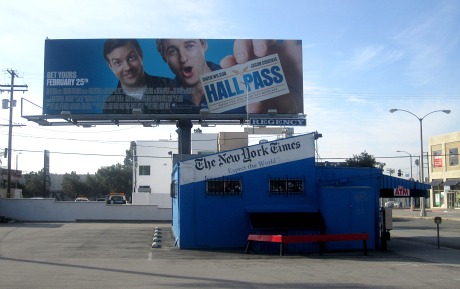
It was sunny and clean today in Los Angeles. Not “warm” but certainly pleasant jacket weather. It’s hard not to say to yourself “life is better out here — greener, cleaner, prettier and less taxing in some respects” when you’ve just come from a cold and windy New York City with garbage scraps strewn over the sidewalk near my Brooklyn building. I’ll always be a New Yorker (or a Parisian or a Roman) in spirit, but I had these thoughts regardless.
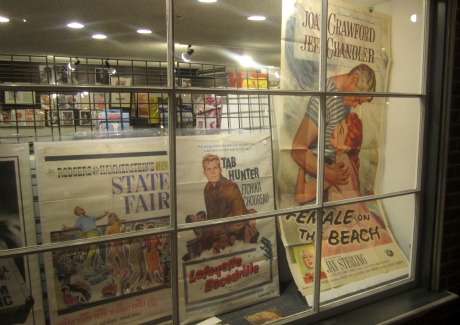
Display in foyer of French Quarter restaurant, Santa Monica Blvd., West Hollywood — Monday, 2.21, 8:20 am.

Distractions
Several kids were romping around in a back yard a couple of hours ago. School’s out (i.e., President’s Day ) and it was somebody’s birthday party. All to say it’s hard to concentrate when kids are having fun outside and you can hear every last yelp, chuckle and scream. I know what that sounds like, but…all right, maybe I should shut up. They eventually stopped.
And then the dog started snoring. You can barely hear it on the video soundtrack, but dog snoring is just as persistent and annoying as the human kind. When you’re trying to write, I mean.
"We Don't Tell Stories Any More"
David know-it-all Poland‘s diss of Mark Harris‘s GQ article called “The Day The Movies Died” is BOOOR-ing! Harris is obviously coming from a non-Pollyanic, half-empty-rather-than-half-full perspective, but he’s not blowing confetti out of his ass when he talks about “how stifling and airless and cautious the [Hollywood] atmosphere is, how little nourishment or encouragement a good new idea receives, and how devoid of ambition the horizon currently appears.” Ask anyone.
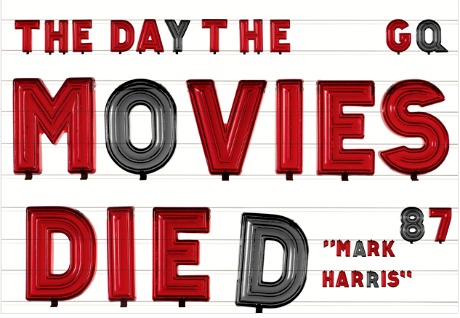
Wells to Poland: Pauline Kael wrote a fairly similar piece in 1980 called “Why Are Movies So Bad? or, The Numbers.” The article was dead-on. Having spent some time working at Paramount for Warren Beatty and on Love and Money, she knew something about the way things were constituted back then. BOOOR-ing also?
Social Network and True Grit producer Scott Rudin tells Harris that “the scab you’re picking at is called execution. Studios are hardwired not to bet on execution, and the terrible thing is, they’re right. Because in terms of execution, most movies disappoint.”
And with little or no faith in execution, what choice do the suits have (leaving aside the occasional exceptions) but to be “more interested in launching the next rubberized action figure than in making the next interesting movie”?
And Harris doesn’t blame it on all on Don Simpson and Jerry Bruckheimer‘s high-powered formula hits of the ’80s, although they were, are and will always be emblematic of the big Hollywood dumb-down cycle that kicked in during the early ’80s. Harris says “there’s no overarching theory, no readily identifiable villain, no single moment to which the current combination of caution, despair, and underachievement that defines studio thinking can be traced.” And then he says, “But let’s pick one anyway: Top Gun.” As in “a dozen or fifty or a hundred different factors contributed to what I’m writing about, but let’s simplify by digging into a movie a lot of us hated back then and despise all the more now…and have a little fun in the bargain.”
Focus Features honcho James Schamus tells Harris that “fear has descended, and nobody in Hollywood wants to be the person who green-lit a movie that not only crashes but about which you can’t protect yourself by saying, ‘But at least it was based on a comic book!'”
I’ve always blamed the audience more than the studio guys, most of whom do very little to put the good stuff on the table, true, but are primarily reacting to ticket sales. On 7.17.06 I wrote that “some may see going to a just-opened movie as a kind of cathartic Southern Baptist service (talking back to the screen, letting it all out, etc.), but most people probably see movies as a kind of sporting event or mass video game or amusement ride.
“There’s an analogy between what I’m saying and Norman Mailer‘s feelings of reverence about the moon. During a 1971 promotion tour of his book ‘Of a Fire on the Moon,’ and particularly during a visit to The Dick Cavett Show, Mailer sharply criticized astronaut Alan B. Shepard for hitting three golf balls on the moon’s surface during Apollo 14’s expedition, calling it a desecration of holy ground and a demonstration of American arrogance.
“I think that today, 35 years hence, American moviegoers probably have more in common with Shepard’s attitude than Mailer’s. Very few regard movie theatres as churches. They see them as a kind of pit stop for temporary go-go diversion — places to meet friends in and eat popcorn and chug soft drinks and check their text messages as they wait for the latest audio-visual blast-ride to begin. Nourishment, contemplation, meditation…? Dude, what are you on about?”
Minor NXNW Wrongo
I noticed something last night when I glanced at a North by Northwest frame capture. It was the date on a newspaper — 11.25.58 — being read by one of Leo G. Carroll‘s alphabet soup cronies about Roger O. Thornhill being wanted after knifing a UN diplomat. Every last scene in Alfred Hitchcock‘s 1959 film, shot in Manhattan and Long Island’s North Shore and Chicago and Illinois and Rapid City, makes it clear that the weather is quite warm — shirtsleeves and light jackets, no coats or scarves in sight. So there you are.

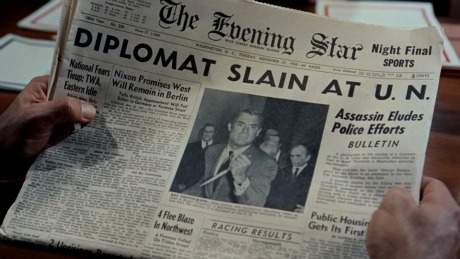
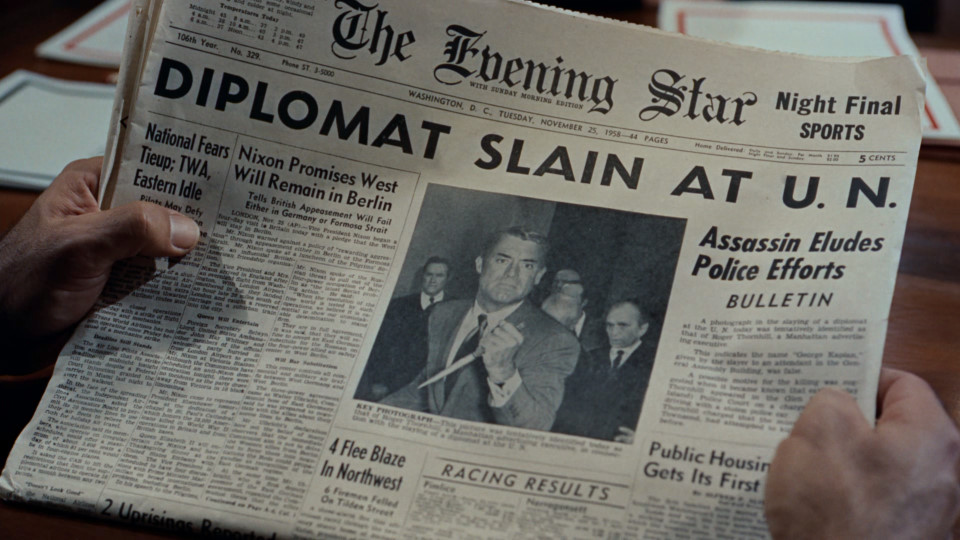
To my knowledge this is the second significant wrongo spotted in Hitchcock’s film, the first being the kid plugging his ears in advance of Eva Marie Saint “shooting” Grant in a Mount Rushmore cafeteria.
My Head Is Splitting
About a week ago Film Detail‘s Ambrose Heron began posting a series of 25 mp3 recordings containing about twelve hours‘ worth of the original interview tapes between Alfred Hitchcock and Francois Truffaut that were recorded in 1962, and later used as the basis for Hitchcock/Truffaut, the definitive “Hitchcock speaks” book that every film buff in the world has read.
Truffaut’s English was fairly nonexistent so he hired Helen Scott (of Manhattan’s French Film Office) to act as translator. It’s quite irritating to listen to, frankly, with Scott, looking to keep pace with both, constantly talking over (i.e., concurrent with) Hitchcock and Truffaut as they listen to and answer each other. Listen to the embedded recording above and you’ll realize it’s a wonder that Hitchcock was able to stand it for so many hours. He had to listen to sentence fragments and then reply in sentence fragments while Scott spoke French at the same time. I understand why, of course — it would have taken much longer if she hadn’t. But what a process.
I was just thinking how cool it would be if Ambrose Heron’s last name was Chapel.
It Came To Pass
With the help of Awards Daily‘s Sasha Stone, Radheyan Simonpillai of Ask Men has written a concise, well sculpted history of the last five or six years of Oscar history, and explained how the surprise Best Picture victory of Crash six years ago was a seminal event. Nothing new overall but a good satisfying read.