“Strained and Pointless”

N.Y. Times critic A.O. Scott begins his Shutter Island review as follows: “[The film] takes place off the coast of Massachusetts in 1954. I’m sorry, that should be OFF THE COAST OF MASSACHUSETTS! IN 1954! since every detail and incident in the movie, however minor, is subjected to frantic, almost demented (and not always unenjoyable) amplification.”
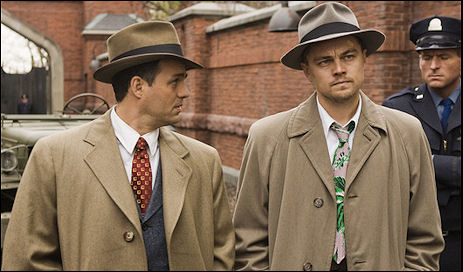

Mark Ruffalo, Leonardo DiCaprio in Martin Scorsese’s Shutter Island.

“The wail of strangled cellos accompanies shots of the titular island, a sinister, rain-lashed outcropping that is home to a mental hospital for the CRIMINALLY INSANE! The color scheme is lurid, and the camera movements telegraph anxiety. Nothing is as it seems. Something TERRIBLE is afoot.

“Sadly, that something turns out to be the movie itself.

“The full dimensions of [this] catastrophe come into view only gradually. At first everything is fine, or at least not quite right in a way that seems agreeably intriguing. Mr. Scorsese uses his considerable formal dexterity — his intimate, comprehensive understanding of how sound and image work together to create meanings and moods — to conjure a tingly atmosphere of uncertainty and dread.

“[But] you begin to suspect almost immediately that a lot of narrative misdirection is at work here, as MacGuffins and red herrings spawn and swarm. But just when the puzzle should accelerate, the picture slows down, pushing poor Teddy into a series of encounters with excellent actors (Emily Mortimer, Jackie Earle Haley, Patricia Clarkson) who provide painstaking exposition of matters that the audience already suspects are completely irrelevant.

“Mr. Scorsese in effect forces you to study the threads on the rug he is preparing, with lugubrious deliberateness, to pull out from under you. As the final revelations approach, the stakes diminish precipitously, and the sense that the whole movie has been a strained and pointless contrivance starts to take hold.

“[Scorsese] seems to have been unable to locate what it is in this movie he cares about, beyond any particular, local formal concern. He has, in the past, used characters whose grasp of reality was shaky — or who stubbornly lived in realities of their own making — as vehicles for psychological exploration and even social criticism. But both Teddy’s mind and the world of Shutter Island are closed, airless systems, illuminated with flashes of virtuosity but with no particular heat, conviction or purpose.”
Go Easy

In his brutal pan of Martin Scorsese‘s Shutter Island, N.Y. Times critic A.O. Scott writes that “there are, of course, those who will resist this conclusion, in part out of loyalty to Scorsese, a director to whom otherwise hard-headed critics are inclined to extend the benefit of the doubt.”

In a thread following a 2.15 riff called “Rally Round,” I wrote that “Scorsese occupies a hallowed place in the hearts of the older, brainier, more thoughtful critics, and that it’s usually in keeping with the character of this crowd to cut Marty some slack whenever a new Scorsese film comes out. [Many of them] very much wanted to like Shutter Island when they sat down in their screening-room seats. And then they saw it. And then they found a way to sing praises.”

“We All Got It Comin’, Kid”

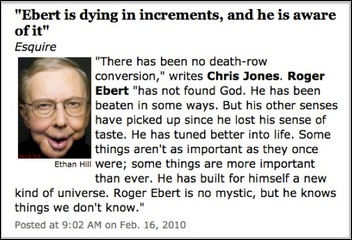
Roger Ebert has written a response to Chris Jonestouching profile of his situation and the state of his soul in the current Esquire. Roger is fairly laid back about it, although he takes exception to the line that he is “dying in increments.”

“Well, we’re all dying in increments,” he writes. “I don’t mind people knowing what I look like, but I don’t want them thinking I’m dying. To be fair, Chris Jones never said I was. If he took a certain elegiac tone, you know what? I might have, too. And if he structured his elements into a story arc, that’s just good writing.

“I knew going in that a lot of the article would be about my surgeries and their aftermath. Let’s face it. Esquire wouldn’t have assigned an article if I were still in good health. Their cover line was the hook: Roger Ebert’s Last Words. A good head. Whoever wrote that knew what they were doing. I was a little surprised at the detail the article went into about the nature and extent of my wounds and the realities of my appearance, but what the hell. It was true. I didn’t need polite fictions.

“[Jones] wasn’t precisely an eyewitness the second night after Chaz had gone off to bed and I was streaming Radio Caroline and writing late into the night. But that’s what I did. It may be, the more interviews you’ve done, the more you appreciate a good one. I knew exactly what he started with, and I could see where he ended, and he can be proud of the piece.”

“I mentioned that it was sort of a relief to have that full-page photo of my face. Yes, I winced. What I hated most was that my hair was so neatly combed. Running it that big was good journalism. It made you want to read the article.

“I studiously avoid looking at myself in a mirror. It would not be productive. If we think we have physical imperfections, obsessing about them is only destructive. Low self-esteem involves imagining the worst that other people can think about you. That means they’re living upstairs in the rent-free room.”

Teabag Suicide

A blog on Austin’s The Statesman website says that the guy who this morning crashed a plane into a cluster of federal offices in Austin (including an IRS office) had posted an online diatribe, and that the site is registered to one Joe Stack of San Marcos, Texas.

If Joe is/was the suicide pilot, he seems to fit the profile of a Tea Party wingnutter. Or…you know, some variation of this psychosis. Leave the good people alone, Ayn Rand without the intellectual wherewithal, screw the government, etc. He was especially angry at the IRS, it seems.

One passage from Joe’s manifesto: “I can only hope that the numbers quickly get too big to be white-washed and ignored that the American zombies wake up and revolt; it will take nothing less. I would only hope that by striking a nerve that stimulates the inevitable double standard, knee-jerk government reaction that results in more stupid draconian restrictions people wake up and begin to see the pompous political thugs and their mindless minions for what they are.”

I for one am looking forward to Keith Olbermann ‘s commentary tonight, and I absolutely can’t wait to see how Glenn Beck and Sean Hannity respond.

The spirit of Timothy McVeigh persists.

“Are We In Inglewood?”

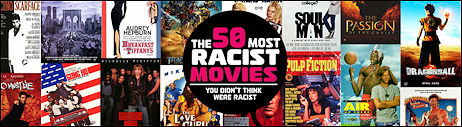
According to a list of the 50 Most Racist Movies of all time, Breakfast at Tiffany’s is the #1 mofo, Planet of the Apes is the runner-up, and Soul Man is in third place. I don’t want to dispute or disparage, but there’s above-board racism (i.e., the kind that Tarantino practices) and subterranean racism, which is the kind that needs to be pointed out and admonished. There are many films on this list that qualify as above-board and are therefore not so bad.

Anyway, White Chicks is sixth, Scarface ranks 14th, Dangerous Minds is 17th and…wait, Bottle Rocket is 49th? Because of Inez, the non-English-speaking cleaning girl whom Luke Wilson fell in love with? That seems like a huge stretch.

There’s a third kind of racism, of course — the journalistic kind resulting from the use of plain language to describe offensive appearances or behavior. If a woman has taken her two year-old daughter to a showing of Hostel 2 and you mention that she’s Hispanic, you’re a racist. But if you mention that a female judge who’s been nominated to the Supreme Court is of Hispanic descent, nobody will say anything. If you write that there’s a Swedish or Norweigan guy living upstairs who throws noisy foot-stomping parties that last until 3 or 4 in the morning, nobody says boo. But if you mention that he’s Hispanic, you’re a racist. HE p.c. haters know all about this system.

Cannes Spitball

Screen Daily has posted a list of the likeliest titles up for selection at the 2010 Cannes Film Festival. The possible US entries include Woody Allen‘s You Will Meet A Tall Dark Stranger, Darren Aronofsky‘s Black Swan, John Cameron Mitchell‘s Rabbit Hole, Sofia Coppola‘s Somewhere, Jodie Foster‘s The Beaver, Terrence Malick‘s The Tree Of Life and Bruce Robinson‘s The Rum Diary.

Not to mention Oren Peli‘s Area 51, David O. Russell‘s The Fighter, Julie Taymor‘s The Tempest, and Peter Weir‘s The Way Back.

Oh, and Sylvester Stallone‘s The Expendables. (This wouldn’t be included in the festival…would it? More of a rue d’Antibes market screening type deal.)

The Spanish entries could include Alejandro Gonzalez Inarritu‘s Biutiful and Julio Medem‘s Room In Rome.

The possible/likely British submissions include Stephen FrearsTamara Drewe, Mike Leigh‘s latest valentine to British working-class grotesques, Kevin Macdonald‘s Eagle Of The Ninth, David Mackenzie‘s The Last Word, and Peter Mullan‘s Neds. (Wait — will the Mullan film have subtititles?)

Likely French entries include Julian Schnabel‘s Miral, Bertrand Tavernier‘s The Princess Of Montpensier, Jean-Luc Godard‘s Film Socialism, Bertrand Blier‘s The Clink Of Ice, Isabelle Czajka‘s Living On Love Alone, Rachid Bouchareb‘s Hors-La-Loi, Lola Doillon‘s Sous Ton Emprise and Julie Bertucelli‘s The Tree.

Possible Asian submissions include Johnnie To‘s Death Of A Hostage (Hong Kong), Takashi Miike‘s Thirteen Assassins (Japan), and Im Sang-soo‘s The Housemaid (Korea).

And from Canada, the possible appearance of Xavier Dolan‘s Love, Imagined.

The Deplorables

I missed Keith Olbermann‘s President’s Day (2.15) message to the Tea Baggers due to travel and whatnot. But he nailed it cold. It deserves a thorough listen.

Magnificent Ghost

Roman Polanski‘s The Ghost Writer (Summit, 2.19) is a brilliant and masterful adult thriller. I just saw it this evening, and less than ten minutes after it began I knew I was once again in the hands of perhaps the most exacting filmmaker alive today, and as sharp as he’s ever been. This film is so gloriously not run-of-the-mill-Hollywood I can barely stand it.


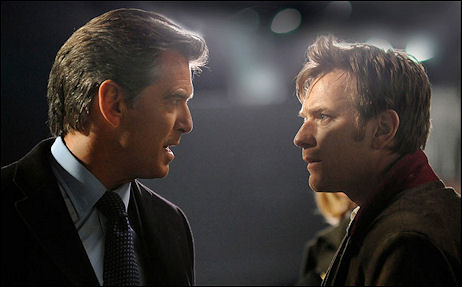
Pierce Brosnan, Ewan McGregor in Roman Polanski’s The Ghost Writer

Anyone who says “very well made but not enough action, not emotional enough and not a big enough payoff” is asking for commonality from the wrong guy. Polanski has never been one to massage and titillate the Eloi. He makes films for people who get what he’s up to. The Ghost Writer knows exactly what it’s doing and how to play cerebral thriller chess. It really is a masterpiece of its type.

It’s now a settled issue in my head that Variety‘s Derek Elley is a highly unreliable reviewer. I’m basing my judgment on the fact that Elley wrote that Polanski “brings not a jot of his own directorial personality or quirks” to The Ghostwriter. That is a complete flabbergast. The film throbs with Polanski’s personality and mentality. The same calmly intelligent approach to story — the sharp dialogue, subtle hints and clues, exacting narrative tissue, patient accumulation of facts and intuitions — that characterized Repulsion, Rosemary’s Baby and Chinatown are here in abundance.

I’m in an Upper West Side cafe that’s closing down but I’ll write more about this tomorrow. I haven’t had such a complaint-free time with a thriller of this type in ages. The crowd I caught it with was totally enraptured — I could feel the concentration in the room — although I suspect that the Eloi will sidestep it for the most part. (Isn’t that what they generally do? Avoid intelligent adult fare?)

So often the protagonist in this type of thriller will be slow on the uptake or speak clumsily or be tongue-tied in some way when the occasion calls for the opposite, but Ewan McGregor‘s lead character — a bright and astute Brit hired to ghostwrite a political memoir for an ex-Prime Minister in the Tony Blair mold (Pierce Brosnan) — is wonderfully alert and articulate all the way through, even when he’s scared or uncertain or conflicted.

And the story never loses or confuses you. It moves along step by intelligent step. I can’t for the life of me figure why Marshall Fine called the middle sections “frustrating.” The film is never that. As long as you’re not looking for a Michael Bay or Martin Campbell-esque experience, The Ghost Writer delivers a kind of heaven that smart moviegoers will flutter over.

The only bad element during the screening was a 60ish asshole with swept-back gray hair who kept going “uhm-hmm” out loud whenever a significant detail or direction was revealed. He was sitting on the other side of my aisle — seven or eight feet away — and he really wanted everyone in his vicinity to know that he was getting all the twists and turns. I hate guys like this. Every so often I would look over and burn death-ray beams into the left side of his head.

The Big Shift

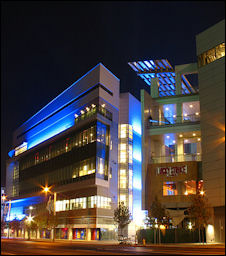
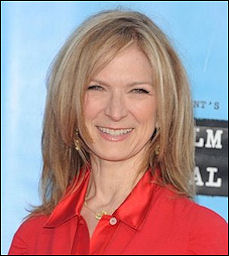
I spoke a couple of hours ago with FIND exec director Dawn Hudson about the swanky new downtown venue for the annual Spirit Awards. For years the independent film award show has been happening under a huge tent on a beach-adjacent parking lot in Santa Monica. This year it’s moving downtown to a “panoramic event deck” atop a building at L.A. Live, AEG’s downtown Los Angeles’ events complex. And on the evening of Friday, 3.5, rather than the usual Saturday afternoon. Two nights before the Oscars rather than 24 hours.


An alleged shot of L.A. Live’s facade; FIND exec director Dawn Hudson

The Spirit Awards will air live on IFC at 8 pm Pacific and 11 p.m eastern. Hudson says that the evening idea was mainly about attracting a larger televised audience. She also believes that “late-night is primetime on IFC” so the 11 pm slot is no sweat. In fact, it’s party time!

What the actual Spirit Awards rooftop space will look like is a bit of a mystery. There are no photos, or at least none of the actual temporary venue.

L.A. Live is adjacent to the Staples Center — I know that much — but there are too many names and acronyms associated with this damn place. AEG, L.A. Live, Nokia Theatre, Regal…blah-dee-blah. Why don’t they just call it one thing? This is big-swagger corporatism for you — corporatism and territorial markings and no sense of bijou showmanship.

Here’s a link with directions.

Hudson says there will be seating for 1500 to 1600 people, which is a bit more than what the Santa Monica tent used to hold.

It’s apparently somewhat cheaper to hold the event at the AEG multi-acronym, multi-named mystery venue rather than pay for a tent to be put up plus all the other expenses. But Hudson says she mainly wanted to avoid a feeling that the event was going stale, and felt it best to start anew before that feeling settled in.

So to sum up, the Spirits are heading downtown because (a) it’ll be somewhat cheaper, (b) there’s an ability to accommodate more people, (c) the nighttime viewing audience will/may be larger, (d) swankier setting, and (e) no worries about going stale.

I think that just about covers it. I’d like to attend myself but it means hauling my ass out there on a jet and spreading it around to the tune of six or seven hundred bucks. When I lived in West Hollywood it didn’t cost me a thing.

“Got A Smoke?”

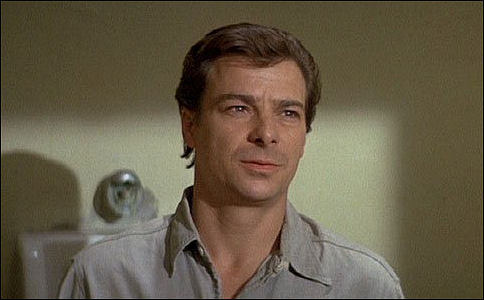
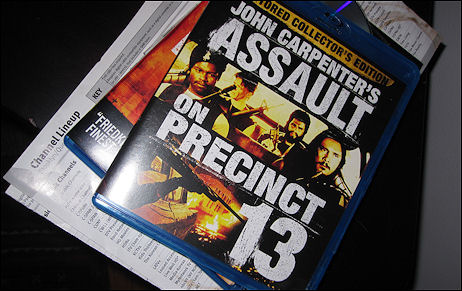
It’s been 33 or 34 years since I first saw John Carpenter‘s Assault on Precinct 13. It’s a well-admired…make that beloved Howard Hawks/wild-in-the-‘hood exploitation film, of course, but is especially memorable for Darwin Joston‘s tersely sardonic Napoleon Wilson — a performance that encompassed a kind of studly melancholia, ironic machismo, flitting comic asides and a riveting aura of existential cool. And delivered with a sort of movie-conscious, wink-winky tone, but no less legendary for that.

I just watched Assault on Blu-ray last night, and was reminded what a beautifully iconic hard-boiled egg Joston and Carpenter managed to create in Wilson. I would have a guy like Joston in movies today. I really miss that steely-folksy quality of his — that steady, working-class, no-bullshit and not-too-beautiful Warren Oates vibe.

A New York-trained actor who hailed from North Carolina, Joston kicked around and then got lucky with Assault but never caught on like he should have, and movies of the ’80s and ’90s were poorer for that. He was 38 or 39 when he made Assault — he was 61 when he died of lukemia in 1998.

A little less than two years ago Matthew Kiernan of Headquarters 10 wrote a great Joston tribute. Here’s a portion:

“Joston started in the late 60s with roles on numerous TV shows like Rat Patrol and bounced around the industry like a lot of other actors, sometimes popping up in small roles in low budget movies but mostly sticking to the TV scene until he retired from acting to work behind the scenes (in film transportation) until his death from leukemia in 1998. Joston probably would have gone on to be another one of many forgotten actors if fate hadn’t placed him into the starring role in Assault on Precinct 13, the first real feature from writer/director John Carpenter.

“Joston happened to have been Carpenter’s neighbor in the same apartment complex, where the two became friends, and Carpenter wrote the role of Napoleon Wilson specifically for Joston, who Carpenter claims had inspired the character. You hear a lot of times about certain roles being written for certain actors, but that doesn’t mean they’re always perfect fits; however, Napoleon Wilson turned out to be the role that Joston was born to play, and even though the film lead to big things for Carpenter, whose next film ended up being Halloween, Joston went back to being another actor waiting for his big break.

“Although Carpenter gave Joston a small role in The Fog and planned to cast him as John Rainbird in his proposed film version of Stephen King‘s Firestarter (which obviously never happened), Joston never had a role that good again. But goddamn if he didn’t make something out of it when he did.

“While the actual star of Assault on Precinct 13 is Austin Stoker (who is also very good), Joston gets the best role, a villain with a set of principals who may not be the nicest guy in the world but is certainly the person you want on your side when your police station is under siege by street gangs.

“The entire film is Carpenter’s homage to Howard Hawks’ Rio Bravo, with Joston sort of in the Dean Martin role (he sure ain’t Ricky Nelson), but the whole film is also Carpenter’s tribute to the entire western genre and the Children of George and Steven should take ample note of it because this is what a fucking genre homage is supposed to be like.”