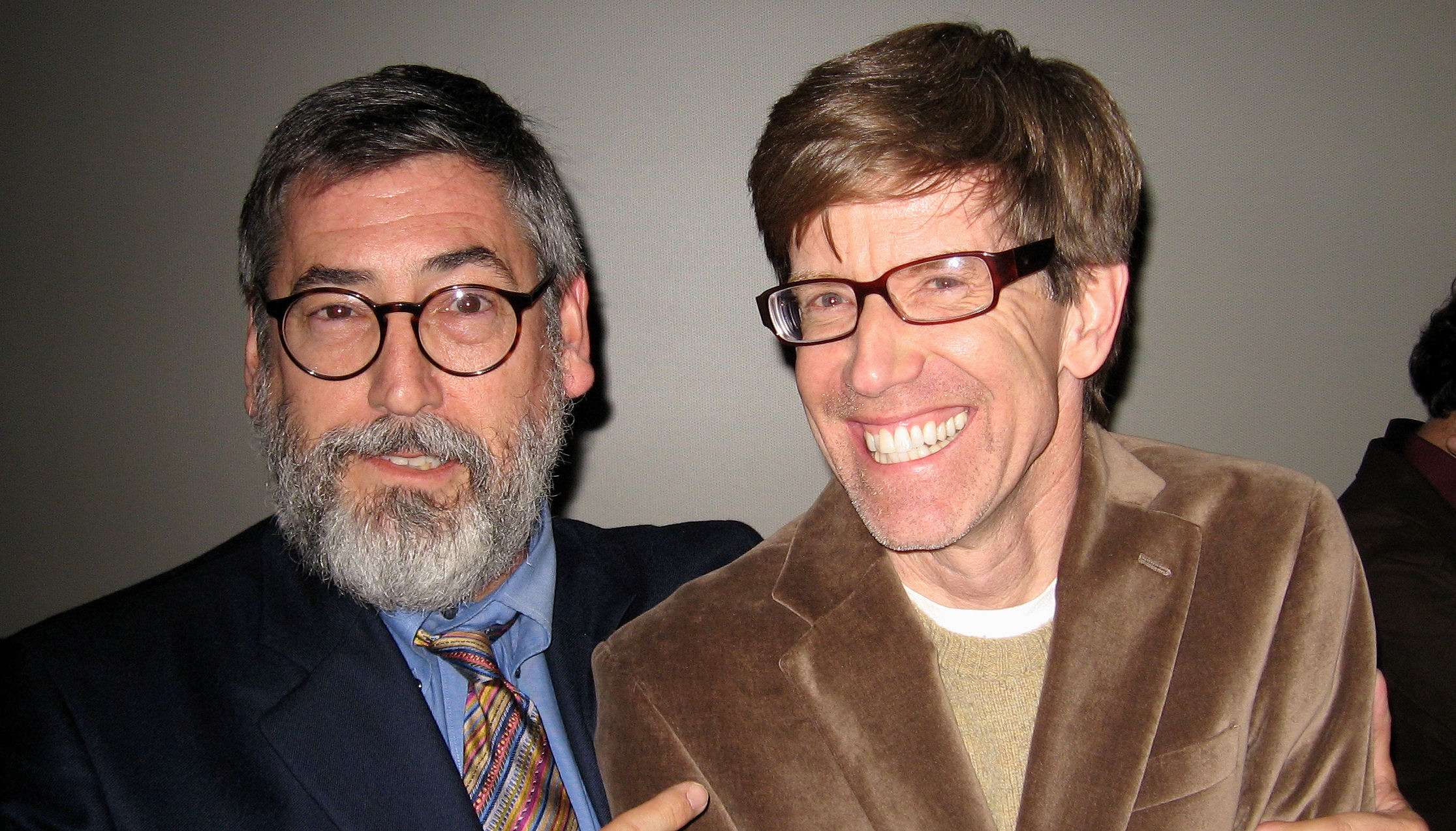
Jacket art for Paramount Home Video’s “Director’s Cut” edition of Zodiac, a two-disc affair that’s due on 1.8.09


Jacket art for Paramount Home Video’s “Director’s Cut” edition of Zodiac, a two-disc affair that’s due on 1.8.09
With Saturday’s figures now in, one will argue with the concept of Fred Claus being a major flop, especially in relation to cost. The total weekend projection for the Warner Bros. release has been lowered to $17,781,000, or about $2 million less than Friday’s projection. A popular family film usually gets a bump of about 50% on Saturday, but Claus only went up about 20%. It’ll be a push to make $50 million on this thing, which won’t begin to match the combined production and marketing costs. Plus it stannds a good chance of suffering a drop of over 50% next weekend (11.16) with Mr. Magorium’s Magic Emporium expected to snag a large piece of the family trade.
The problem is Claus star Vince Vaughn, whom the family audience apparently sees as an R-rated motor-mouth (the Wedding Crashers persona) and therefore not kid-friendly, even if he’s portrayed as a grinning 8 year-old riding around on a kid’s tricycle in the one-sheet. WB marketers tried but couldn’t sell Claus to big enough portion of the family audience. A guy told me he went to see it yesterday and saw a few parents and kids but mostly twentysomethings. Yesterday’s haul was $7,600,000, which was up about 20% from Friday.
Oh, and the per-screen average for No Country for Old Men is $41,000, which translates to a total weekend tally of $1,151,000. A sensational opening, to say the least. Of course, the Coen Brothers film is playing to hip urban audiences. No one knows what will happen when it starts playing for the dumb-asses in Redville on 11.21.
Dead Claus Postcript: Variety‘s box-office story projects an estimated $19.2 million — very optimistic! (“Christmas movies are a marathon, not a sprint.”) MCN’s Len Klady has estimated $18.5 million. A friend who knows this game pretty well is predicting the low 18 range.
“While Daniel Day-Lewis may appear a bit rough, his demeanor is courtly,” writes N.Y. Times profiler Lynn Hirschberg. “You have to possess something utterly to push it away, and whether it’s his extreme good looks, which he obscures beneath the trappings of a bohemian pirate, or his cultured background, which he disparages, Day-Lewis has an intense attraction to the opposite of whatever he came by easily.
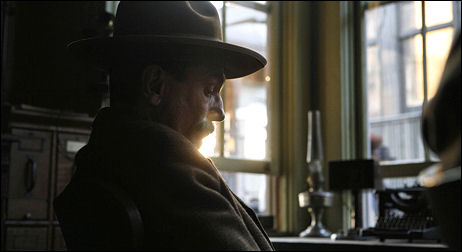
“He is particularly compelled by the idea of spontaneity, but there is nothing sloppy or haphazard about him, and that lends Day-Lewis, despite his careworn clothes, a quality of grace. He is most voluble and passionate on the subject of film. He loves even bad movies and likes to analyze the work of actors past and present. Day-Lewis reveres the greats — Brando, DeNiro — but he is intrigued by all kinds of performances. He dislikes John Wayne, loves Gary Cooper, prefers the Jimmy Stewart of Capra’s classic pictures to the Stewart of Anthony Mann‘s westerns and is fascinated by Clint Eastwood.
“‘I used to go to all-night screenings of his movies,’ Day-Lewis recalls. ‘I’d stagger out at 5 in the morning, trying to be loose-limbed and mean and taciturn.’ He paused. ‘My love for American movies was like a secret that I carried around with me. I always knew I could straddle different worlds. I’d grown up in two different worlds and if you can grow up in two different worlds, you can occupy four. Or six. Why put a limit on it?’
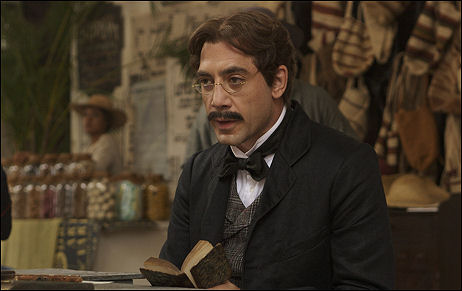
A critic friend who recently saw Mike Newell‘s Love in the Time of Cholera (New Line, 11.16) said that in the wake of No Country for Old Men that it was difficult to fully accept Javier Bardem as Florentino Ariza, a romantic-minded guy who’s conflicted but more or less normal. The critic said he had a hard time blocking memories of Anton Chigurh. Ariza is about sadness and unrequited love, but the critic couldn’t stop thinking about that gas-powered stun-gun.
I’m sure this is temporary, but what other actors have been so indelible in a certain role that critics and audiences have had trouble buying them as anyone else?
I’ve been hoping to avoid seeing Love in the Time of Cholera. A little voice has been telling me I’m going to hate it. (The critic didn’t care for it much.) But it’s the closing-night screening at the AFI Film Fest tomorrow night. It’ll be derelict of me not to see it. I need to grim up and get it done.
Mr. Magorium’s Wonder Emporium (20th Century Fox, 11.16), directed and written by the once-hot Zach Helm and costarring Dustin Hoffman and Natalie Portman, is a family film that most likely blows on some level. But I wasn’t sure how bad it was until I heard today that Fox publicists made it clear to critics (or at least one unnamed critic I spoke to) that they would physically block them from attending today’s 2 pm Denver Film Festival showing at the Ellie Caulkins Opera House.
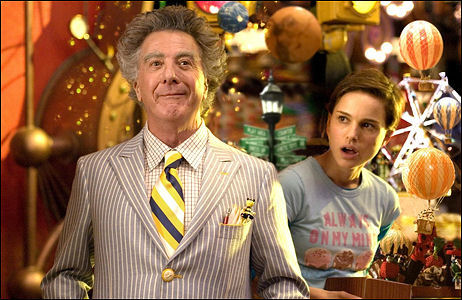
The ticket-buying public was free to attend the showing. There was an ad promoting it in a local Denver paper. But when this critic asked about attending the show, he was told “forget it” by the local Fox rep. But it’s a film festival open to the general public, he argued. Anything that shows at a film festival is fair game for critics — those are the rules. The Fox rep was adamant — no entry for critics. “Does that mean you’re actually going to physically block me for going in if I have a ticket?” the critic asked. Yes, the Fox rep said. We will physically block you.
When was it exactly that 20th Century Fox — big Fox, not Fox Searchlight — became a goon studio? It’s SOP for studios to blow off press screenings of mediocre movies before the opening, but strong-arm tactics are something new. What if the unnamed critic had worn a wig and a beard and slipped through and then was recognized by the Fox goons? Would they tackle him? Would they use tasers? “Noooo….don’t taser me! No…aaaahhhh!”
The critic told me that the Denver Film Festival reps “are nice people…they’re caught in the middle of this.” Maybe, but they’re not very responsive. I e-mailed Britta Erickson, the festival’s media & industry relations director, three or four hours ago and no reply.
Norman Mailer‘s passing this morning feels to me like the loss of a beloved uncle. He wasn’t much of a filmmaker, but he was a genius, a great writer and a literary superstar for the ages. And a very decent and considerate fellow to interview and share thoughts with.

Mailer had the reputation in his middle-aged years of being susceptible to hubris and brutality, but he became a much better human being when he got older. (As many of us fortunately do.) I developed a sense in the late 1980s and ’90s, in fact, that he’d matured into one of the gentlest and wisest men in American literary life. I’ve always felt closer to him emotionally than I ever have to my father, and so this morning’s news left me with a feeling that I’d lost someone I truly knew and had cared for.
Listen to this passage from the American Experience documentary about Mailer that aired in 2000. It tells you a little bit about who he was in terms of the literary influences upon his generation. He was a wonderfully articulate man in conversation.
I began admiring Mailer’s writing when I was 17 or 18, in part because I sensed genius in him, but largely because his lion-like, sometimes reckless tough guy manner struck a chord. His observations seemed to drill right into the molten core in a way that sometimes brought an almost religious clarity to things. So it naturally meant a lot when I worked with him on the press kit for Tough Guys Don’t Dance, which he directed for Cannon Films (where I worked for two years in the mid ’80s) and which opened in September 1987.
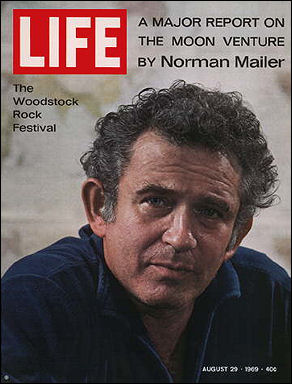
He was in a pissy mood when I called him to do the initial interview. But we eventually got rolling and he gradually came to realize I wasn’t an idiot. By the end of our 45 minute chat he said he was sorry for having an attitude earlier. I later faxed him a rough draft of the piece I wrote from our discussion, and I remember what a thrill it was for the great Norman Mailer to be telling me what words to eliminate and what substitutions to use and where to put the commas and so forth. We met and spoke a few weeks later, but that editing session was the greatest.
A year or two later I went to see him speak at UCLA. Peter Rainer was also there. I remember Mailer reading a portion from Ancient Evenings.
I’ve read most of Mailer’s books and essays, and yet, oddly, never The Naked and the Dead or The Deer Park. I’ve especially loved Armies of the Night, The Executioner’s Song, Miami and the Siege of Chicago and The Prisoner of Sex.
I sympathized with his dislike of the word “relationship,” which he regarded as arid, clinical and officious. I still love his idea about a child’s strength of spirit being a result of how impassioned the sex was between the parents at the moment of conception. And I love that sentence Mailer wrote in his review of Last Tango in Paris about Marlon Brando having “cashed the check that Stanley Kowalski wrote 25 years ago” with that stand-up overcoat sex scene between himself and Maria Schneider.
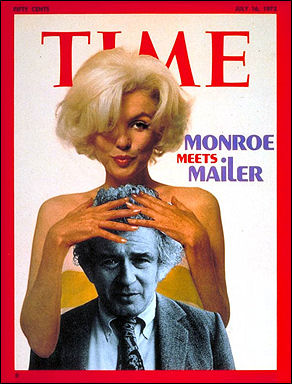
And Tough Guys Don’t Dance was an interesting film. Avant garde in a sense. Telluride Film Festival chief Tom Luddy called it “Tarantino before its time…long, florid dialogue punctuated by grotesque violence followed by more long, florid dialogue and then more grotesque violence.” (The quote is from a Mark Singer New Yorker piece about a Tough Guys Don’t Dance reunion that happened last year.)
Mailer lived a rich life, 84 years worth, and there’s no inherent tragedy when a journey comes to an end. But his death is one of those events that makes the passage of time feel a bit more ominous and unnverving.
Mailer’s candor was unusually giving and generous. “Writers aren’t taken seriously anymore,” he once said, “and a large part of the blame must go to the writers of my generation, most certainly including myself. We haven’t written the books that should have been written. We’ve spent too much time exploring ourselves.”
Read The Gospel According to The Son, particularly the last chapter, and tell me this isn’t a guy who understands the all of it. It’s a modest work, yes, but very delicate and beautiful. I haven’t even read his Hitler book, but I intend to. Some of the things he said about Marilyn Monroe (in that coffee-table essay he wrote about her in the ’70s) have stayed with me for decades.
It was going to be neck-and-neck between Fred Claus and American Gangster with both in the mid 20s…wrong. Claus is going to come in third with $19,463,000, and will probably end up in the $50 million range, at best, which makes it a shortfall in relation to production costs. A stumbler, a groaner…an occasion for long faces.
And they’re going to get longer next weekend. Mr. Magorium’s Emporium will be strong family-trade competition starting next weekend (11.16), and then Enchanted opens on 11.21, not to mention the Claus word-of-mouth effect. (It’s not very funny –critics despise it.) Exhibition has only two more weekends of business anyway. The over-30s start to disappear after Thanksgiving and don’t return until just before Xmas. So the big weekend box-office story is the death of Claus.
Jerry Seinfeld‘s Bee Movie has held decently and will be the weekend’s #1 film with $25,22,000 by Sunday night, give or take. American Gangster, off about 46% from last weekend, will be #2 with a little more than $25 million. Robert Redford‘s Lions for Lambs will end up with $6,667,000 — $3000 a theatre in 2200 situations.
No Country for Old Men‘s limited opening (28 theatres) will wind up with a little more that $29,000 a print, which is spectacular. Every last seat was apparently sold at every Arclight show yesterday except for the final late-night one.
It’s not a stretch, not a reach, and pretty much incontestable that David Fincher‘s Zodiac is one of the five best films of 2007. I don’t mind reminding people of this obvious fact. It’s a blazingly original, perfectly made, deeply haunting landmark film that’s not only about an obsessive search for an elusive serial killer, but has the genius to embody its own theme by being obsessive itself — an amazing synchronicity that echoes back and forth into infinity.
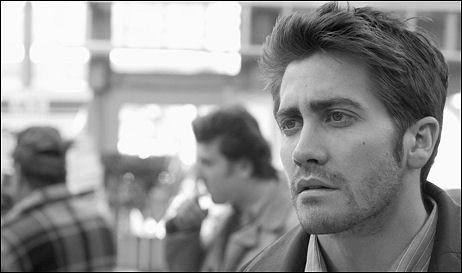
Ten years from now most of the films being talked up for Best Picture will on the tip of people’s tongues or flat-out forgotten, but Zodiac will be just as vivid in people’s minds as Heat is today. Naturally, of course, no one’s saying anything about it right now. I think it’s an affront to the Movie Gods that you have to rattle cages to get people to say, “Oh, yeah….Zodiac. Right. Came out last March. Great film.”
And you guys call yourselves film worshippers? Devout movie catholics? And you can’t be bothered to pay tribute to an indisputable classic — one of the greatest investigative procedurals-slash-art movies ever made?
Paramount seems to believe in Zodiac‘s Oscar potential. The Envelope‘s Pete Hammond reported yesterday that the studio “spent around $300,000 on trade ads on 10.24, including two glossy double gate-folds that added up to 8 pages of rave quotes in Variety.”
Paramount “has also sent director’s cut DVDs to hundreds of awards voters and taste-makers in addition to the film’s regular ‘For Your Consideration’ DVD to Academy members,” Hammond adds.
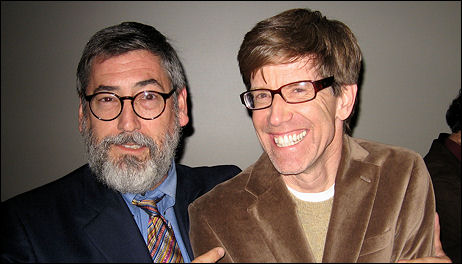
Here I am late as usual in posting stuff, but Todd McCarthy‘s Pierre Rissient: Man of Cinema — an affectionate tribute to one of the craftiest and most unapologetically fierce-minded cineastes in motion picture history — is playing at the AFI Film Fest three hours from now (at 6:30 pm). Then comes John Landis‘ Mr. Warmth, a “pretty great” documentary about Don Rickles. On top of which these guys could be separated-at-birth twins. A fairly spirited double bill with in-between time for some fast food.

With its 94% rating, No Country for Old Men is Metacritic’s second-best reviewed film of ’07 (Ratatouille being the slightly higher-rated with a 96% score) as well as the tenth-best reviewed film in the site’s entire database.