Sometime last spring I bought a relatively inexpensive pair of Sony wireless headphones. Nothing special but good enough. Six or seven weeks ago they disappeared. Being the occasionally-absent-minded-professor type, I sometimes leave things of value in cafes, libraries, movie theatres, 7-11 stores, etc. I checked and called around everywhere but couldn’t find the damn things.
So after a brief period of mourning I bought a pair of black Apple “Dr. Dre” beats. A bit more costly than the Sonys but very nice to have.
Yesterday I was driving north on Wilton’s Route 7 when the car in front of me (a sensible Volvo wagon) abruptly slammed on the brakes…dead stop. I naturally slammed my own a millisecond later. After recovering from the trauma (it could be been a serious banger if I hadn’t reacted as quickly as I did) I looked down and saw the effing Sony headphones. They’d been under the driver’s seat the whole time. I’d checked the car top to bottom during my initial search, but obviously not thoroughly enough.
Now I have two pairs. Maybe Sutton would like the Sonys — they’re relatively new.
I don’t want to draw too many analogies between the sagas of Donald Trump and James Cagney‘s Cody Jarrett. Both are sociopaths, of course, but the world is full of those. It struck me yesterday that Trump appears to be going through a kind of last-stand defiance that resembles Jarrett’s during the final five minutes of White Heat (’49).
“They think they’ve got Cody Jarrett,” Cagney says with a kind of madman chuckle. “They haven’t got Cody Jarrett!”
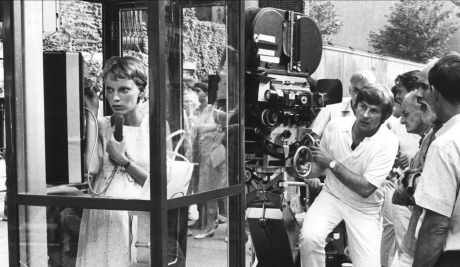
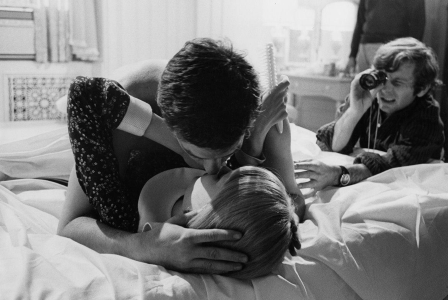
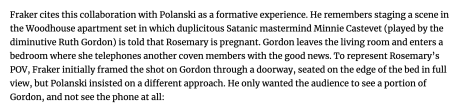
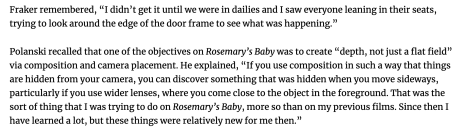
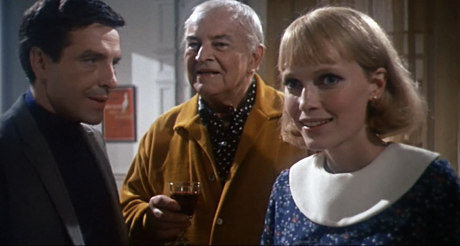
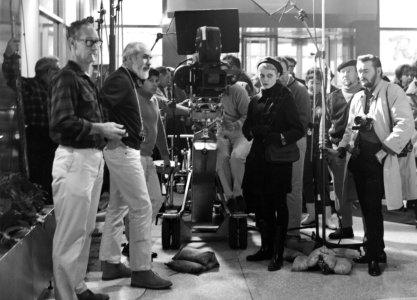
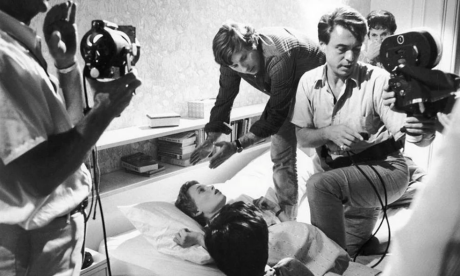
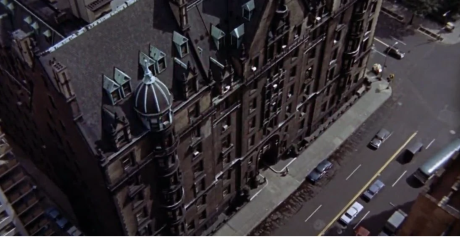
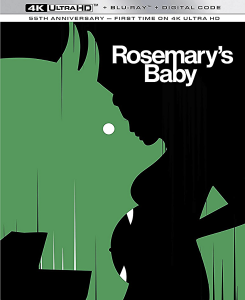
This 47-minute Criterion Collection documentary about the making of Rosemary’s Baby is drop-dead brilliant — a huge turn-on about a perfectly made film. I’ve been watching this 1968 classic for over half a century. Easily among the best horror flicks ever made, and one of the best films of any genre or era, directed by anyone or anyhoo.
If you haven’t seen the Criterion doc, please remedy that. Now, for example.
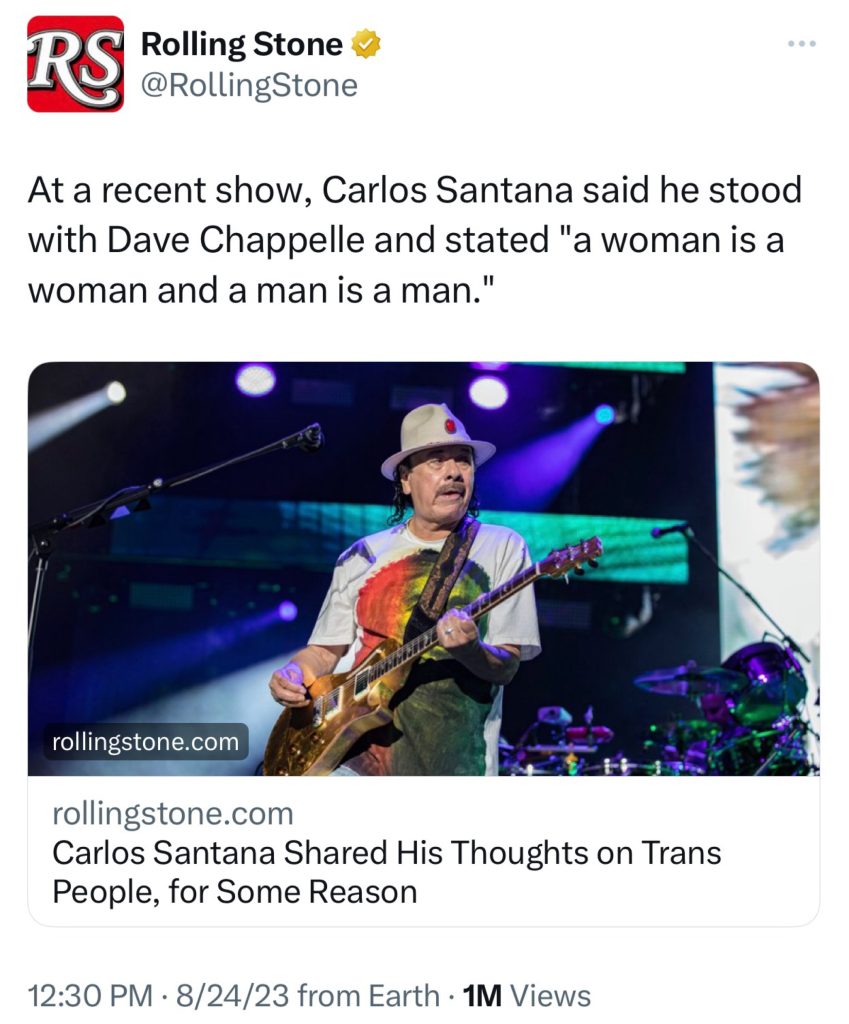
It’s two-day-old water under the bridge and not that big of a deal, but Carlos Santana folded like a coward. He said it straight and plain like any doctor or biologist or sane human would have said it prior to the Crazy Town takeover, and then his nervous nelly manager and agent got to him (i.e., read him the riot act) and he recanted like a good widdle boy.
Yes, Ozzy Osbourne actually bit a bat’s head off –a cruel and atrocious act. Bats deserve as much of a shot at health and happiness as any other species. I’m sorry but I feel much closer right now to Carlos the pussy than Ozzy the biter.
Preface: The insanity out there is such that anyone sharing sensible, scientific views about transgender issues has become, in the eyes of some wokesters, extra-heinous due to the recent horrific murder of Laura Ann Carleton, 66, in Cedar Glen (just east of Lake Arrowhead) by Travis Ikeguchi, a 27-year-old wackjob who was killed by police in a shootout.
In other words, if you hold sensible, moderate opinions about trans choices and lifestyles you’re an accessory to murder. This is why the term “Crazy Town” has caught on these days; because some on the extreme left have completely lost their minds. [End of preface]
“But what really amazes me is the sheer volume of zealots who descend upon you every time you post your anti-woke stuff.
“I can’t get over this. You’d think the ratio of woke to anti-woke would be the opposite of what it is — 20% woke vs. 80% anti-woke, let’s say, or at worst 50/50.
“But nope — it’s more like 90% woke-favoring vs. 10% sensible and grounded in reality.
“Would you have seen this coming as recently as ten years ago?
“Imagine if someone had said the following to you back in 2013: “Jeff, let’s say that in the near future, cross-gendering and cross-dressing becomes a political football. Let’s imagine that in 2023, you wrote a comment in support of a rock star who affirmed the idea that there are only two genders and that basically roosters and roosters and hens are hens.
“If you had to guess, what percentage of your readership would AGREE with your support of this man, and what percentage would CONDEMN it?”
“Wouldn’t you have guessed (as I would have) that at least 80-90% of your readership would come down on the side of common sense? That is, in SUPPORT of the gender binary?”
I’ve just finished reading an IndieWire Emmy-hype interview with The Last of Us co-showrunner Craig Mazin.
Written by Ben Travers, it gets right into the divided reactions to Episode 3, which was titled “Long, Long Time.” Divided, I mean, between heartfelt admiration (although some critics were afraid of going negative for fear of being called homophobes) and serious squeamishness, especially in the matter of Nick “please don’t drop that towel!” Offerman.
Posted on 2.1.23: “So the producers of The Last of Us decided to abandon the basic zombie apocalypse narrative in order to tell a domestic love story (a sad one) between two middle-aged men with hairy chests and beards.
“It’s very well finessed all around (I half-chuckled at the gay strawberries scene until it led to smooching) but I’m afraid I’ve been permanently traumatized by that sex scene in the upstairs queen bed.
“Watching a prelude to the naked-ass Bartlett giving naked-ass Offerman a blowjob…good God in heaven and Jesus H. Christ! I’m not endorsing the IMDB review bombing, but I understand it. I’ll be having nightmares about this, and about images of bear sex in particular.
“I will never, ever derive the slightest amount of anything from watching older bearded guys…I don’t want to think about it.
Travers excerpt: “When The Last of Us released its third episode, ‘Long, Long Time,’ reactions surfaced faster than fungi on an infected host.
“Many (including IndieWire) praised the episode for its aching love story, wherein Bill (Nick Offerman), a survivalist holed up in a makeshift fortress, and Frank (Murray Bartlett), a stranger who wanders into one of Bill’s traps, fall in love and — despite their post-apocalyptic environs — build a life together. Seeing that life unfold marks a pivot (or departure) from the original plot, tracking new characters whose story can stand on its own, even when it eventually loops back to our primary leads.
“Not everyone liked it. Today’s day and age of second-screen viewing paired with snap judgements doesn’t always reward atypical TV structure, and ‘Long, Long Time’ faced its share of backlash.
Mazin: “Some people didn’t like Episode 3 because, you know, gay stuff. And then they kind of retroactively try and come up with a [different and inoffensive] reason why. [But] one of the complaints I saw was, ‘Oh, it’s just a filler episode…it doesn’t advance the story.’ And I was like, ‘I think this episode advances the story more than any other episode we have’ — because it’s not plot, it’s character. It’s the letter Bill leaves behind to Joel that powers the rest of the show.”
…a critic I know posted an image that belittled Chris Christie. I wrote the following in response: “Why are you showing hostility to the only Republican candidate who has bluntly labeled Donald Trump a sociopath criminal? Nikki Haley has criticized Trump but none of the others have said in so many words ‘this guy is obviously an unbalanced hooligan and unfit to be president.” And you’re TRASHING him? What’s wrong with you? Christie has, yes, in some ways shown himself to be a transactional opportunist, but what he’s been saying about Lex Luthor is balls-up.”
The last time I heard a film character use the term “balls-up”, by the way, was in John McNaughton‘s Mad Dog and Glory (’93) — David Caruso‘s “Mike” telling Robert DeNiro‘s “Wayne” that he did a brave thing when he came upon a store robbery in progress. Now that I think of it, I don’t recall anyone using this term at all in any context. The screenplay was written by Richard Price — maybe Price coined it.
I’m trying to recall the first time I heard the above line, which has to be one of the most familiar men-in-war cliches of all time.
A voice is telling me it’s either from (a) Howard Hawks‘ Red River (i.e., a spooked Walter Brennan spooked before an Indian attack, or possibly Noah, Berry, Jr. saying the same thing later in the film), or (b) Cy Endfield‘s Zulu (Michael Caine or Stanley Baker spooked by a possible dawn attack by Zulu warriors), or (c) a World War II pre-battle scene (possibly Raoul Walsh‘s Objective, Burma! or Lewis Milestone‘s A Walk in the Sun).
I know for a fact that a version of this line is heard near the end of George Roy Hill‘s The Little Drummer Girl (’84). In a pre-dawn moment Kalil the Palestinian terrorist (Sami Frey) and Charlie the conflicted heroine (Diane Keaton) are sleeping in a remote country cottage that has been surrounded by Mossad special forces who intend to either capture or kill Kalil. Frey suddenly wakes when he realizes that the usual early morning sounds of nature are absent…he says something about not hearing birds or grazing cows. (No, I never got around to watching the 2018 BBC version, in which Keaton’s role was played by Florence Pugh.)
My other favorite line of this type is “I don’t like it when things go too good, and I don’t like it when things go too bad…I like ’em in between.” This line was definitely spoken by Hank Worden‘s “Sims Reeves” character in Red River.
Preface: The insanity out there is such that anyone sharing sensible, scientific views about transgender issues has become, in the eyes of some wokesters, extra-heinous due to the recent horrific murder of Laura Ann Carleton, 66, in Cedar Glen (just east of Lake Arrowhead) by Travis Ikeguchi, a 27-year-old wackjob who was killed by police in a shootout.
In other words, if you hold sensible, moderate opinions about trans choices and lifestyles you’re an accessory to murder. This is why the term “Crazy Town” has caught on these days; because some on the extreme left have completely lost their minds. [End of preface]
Every sane person feels an alignment with Carlos, of course, but liberal-minded types are afraid to say otherwise for fear of wokester retribution.
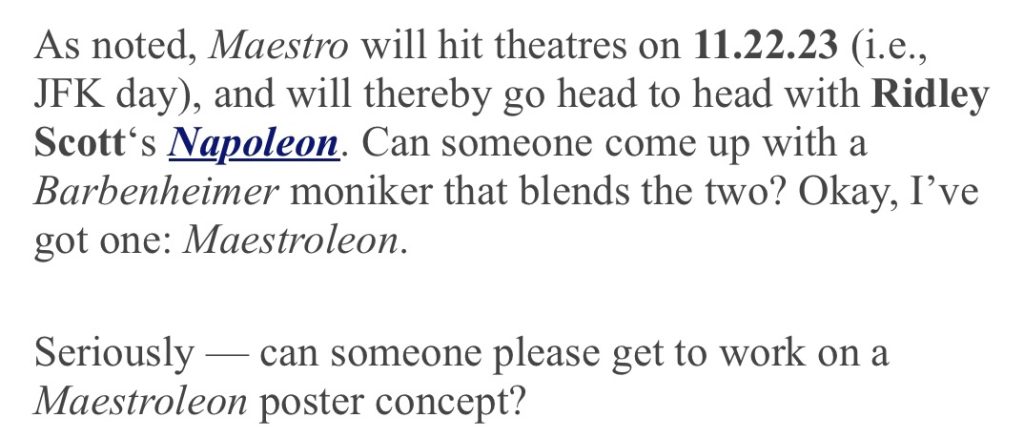
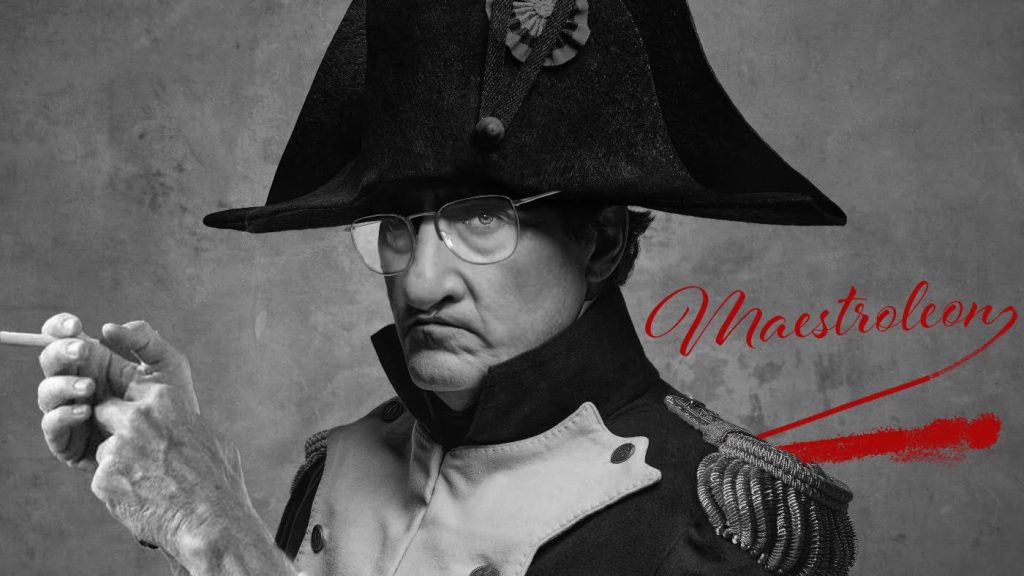
Maestroleon concept poster is, at the very least, an excellent start. Visual designer: “I couldn’t find a good high-rez Leonard Bernstein so I just enlarged Joaquin’s nose and gave him glasses.”
I know this expression. I’ve worn it myself a few times. It says “I’ve been practicing this hard-ass glare in my Bedminster bathroom since this morning.”
He clearly rehearsed and refined the glare and achieved a certain “don’t tread on me” theatricality.
He’s an animal but you have to give the devil his due — he’s been performing in front of cameras for decades and knows what works and what doesn’t in terms of conveying that tough mafia boss persona.
What wasn’t intended but came through anyway: the man looks cornered, like a defiant rat. James Cagney’s Cody Jarrett on top of that huge oil refinery tank — “Come and get me!”
A possibly wiser way to go would have been to flash that big, beaming, pasted-on smile that he uses when posing with fans and allies. That would have said “they can book me but they can’t deter me or quash my spirit.”
He’s well past “playing it smart”, of course. His basic psychology took over a long time ago.