Good Comedies Are Quite Difficult To Bring Off

“It’s very difficult to do comedy because if they don’t laugh when they should laugh, you are there with egg on your face, and that’s sad. In a serious picture you don’t hear them being bored, but in a comedy you can hear them not laughing. You tried so hard and the guy did the pratfall, but nothing — and you wish you were dead.” — Billy Wilder.

I really wanted to have a great bawdy old time with No Hard Feelings (Sony, 6.23), a casually coarse sex comedy about an “inappropriate age gap” relationship between Maddie (Jennifer Lawrence), a 32 year-old Montauk bartender in a financial hole, and Percy (Andrew Barth Feldman), an introverted 19-year-old who’s about to become a Princeton freshman.

Percy’s helicopter parents (Matthew Broderick, Laura Benanti) are concerned about his lack of outgoingness plus the fact that he’s still a virgin, so they place an ad in Craigslist that says “looking for a 20something woman who can pull our son out of his shell” — the implication being that they want this woman to sexually initiate the lad and generally prepare him for the social pressures of college.

They’re slightly concerned about Maddie being (a) 13 years older than Percy and (b) something of a low-rent townie, but they figure a woman who’s been around and has some mileage will handle him with care, etc.

So the premise isn’t bad and right off the top you can see that the laughs will come out of the somewhat impatient, blunt-spoken Maddie feeling increasingly frustrated and even irate as her attempts to seduce the reticent, romantic-minded Percy lead nowhere. You can also see from the get-go that Maddie and Percy will soon get past the sexual initiation and performance stuff and start relating to each other as vulnerable humans, etc.

To his credit, director and co-screenwriter Gene Stupnitsky balances the lewd and rude material with moments of introspection and truth-telling.

The problem is that as willing as I was to laugh and cut loose, too many of the jokes and gags simply don’t “land” or have been clumsily set up. The movie clearly wanted to do the thing that I wanted it to do, but it too often lurches and stumbles and doesn’t quite get there. It’s not that the jokes never connect — the crowd I was with responded with a fair number of yaw-haws — but Stupnitsky and Lawrence are going for bull’s-eyes (naturally) and the arrow rarely hits dead center.

Wilder knew what he was talking about — comedy is really quite hard. It has to work just so or it doesn’t work. Under-sell and it doesn’t connect — if the director-writer pushes too hard it can miss the mark to an even greater degree.

All I can tell you is that time and again during last night’s sneak preview of No Hard Feelings the funny stuff kept missing — sometimes to a very slight degree (and was therefore half-successful or at least smirk-worthy), and at other times it missed entirely. There are maybe two or three jokes that actually work, but the rest kind of fizzle or fall short in some way.

I loved that Lawrence was back with a truly spirited performance — a force-of-personality act in the vein of her Tiffany character in Silver Linings Playbook — but at the same time I felt shattered that the film wasn’t funnier. I was sitting there going “wow, this isn’t coming off…what a shame because I want it to…I’d love to join in the merriment but the movie won’t let me.”

I was especially invested in this prospective enjoyment because the woke bluenoses had already ganged up on No Hard Feelings, based on the trailer. Movie.com’s Archie Fenn complained about “the central elements of grooming and sexual harassment” being odious and worthy of condemnation, etc.

Well, guess what, Archie — No Hard Feelings traumatizes no one. 19 year-olds aren’t children and are old enough to figure out whether they want to drop trou or not, and…okay, I won’t spill the beans but there’s nothing in this film that will give the wokesters much concern.

I’ll post some more specific complaints later this week.
Still Kind Of a Cocaine Song

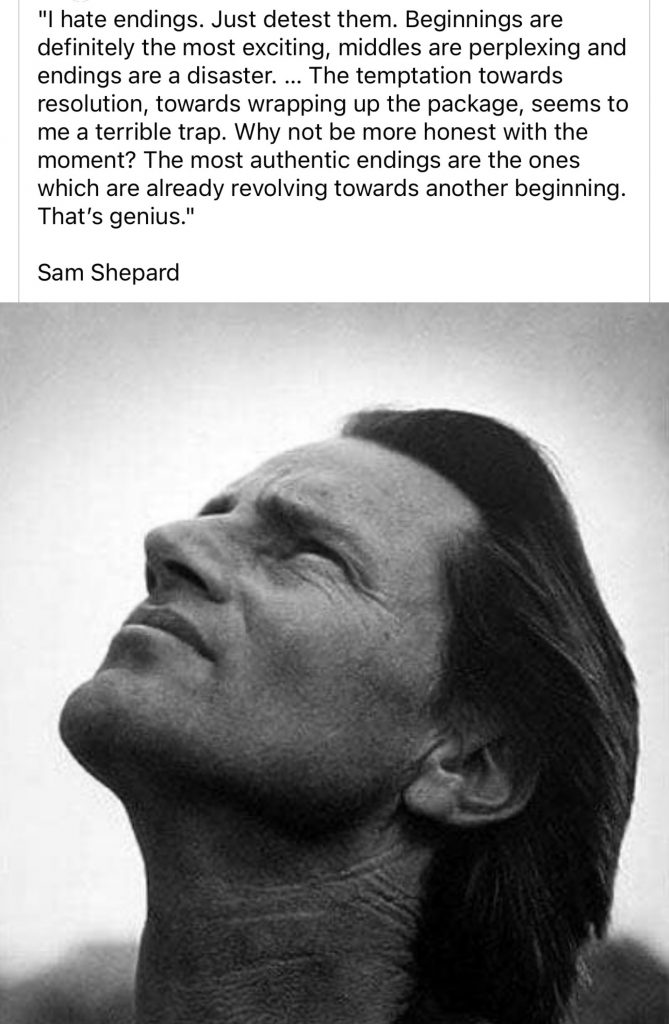
Even now, over 40 years later and buried under a dense swirl of a thousand memories, I can almost taste the cocaine residue in my nasal passages when I listen to Donald Fagen‘s I.G.Y. (What a Beautiful World).

I was never a deranged cokehead (mostly because I couldn’t afford it), but like everyone else in the early Reagan era I indulged on weekends and whatnot, and when I first heard I.G.Y., which instantly struck me as an ironic-satiric song about shallow people celebrating materialistic bliss, I was blissfully throbbing on the stuff, and in my mind this Fagen song (which was part of Fagen’s “Nightfly” album) and Bolivian nose candy have always been on the same spiritual plane.

My other big cocaine song from that era was Spirits in the Material World, which was released on 10.2.81, or exactly one year before I.G.Y..

Read more

Better Than Decent Colorizing

You Were Never Lovelier (released on 11.19.42) was the second of two Fred Astaire-Rita Hayworth collaborations; the first was You’ll Never Get Rich (9.25.41).

It’s been said that Hayworth was Astaire’s all-time favorite dance partner. Yes, more so than Ginger Rogers, Cyd Charisse and Barrie Chase.

Those creamy amber-beige tones are fake, of course, but they remind me of early-era Technicolor. The color in William Wellman‘s Nothing Sacred (’37) looks like this in the outdoor scenes.

Read more

More Disney Propaganda

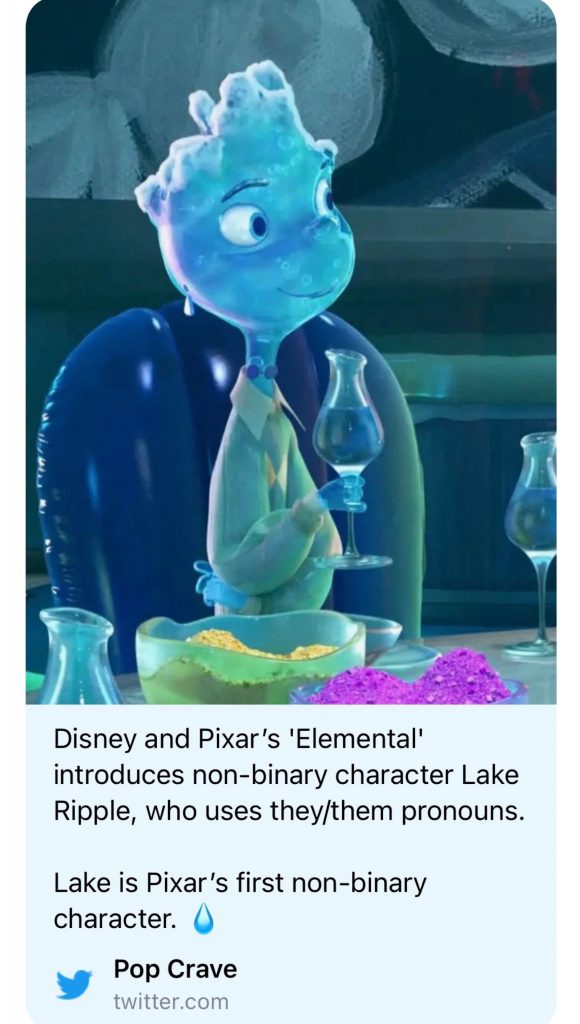
Why would average parents trust Disney these days? Disney used to be family-friendly — now they’re Chinese communists pushing radical gender ideology. They’ve become the woke brain police, waving Mao’s little red book.

Starting With Letter J

There aren’t many first-rate films that start with the letter J, or the first letter of my first name. John Wick, Jurassic, Jumanji, Jack Frost, Jason Goes to Hell, Jack, Judas and the Black Messiah, Jarhead, Jackass: The Movie, Justice league, Jingle All the Way, Jennifer’s Bodyforget it.

As far as I can discern there are only ten worth mentioning, and in this order: (1) Jerry Maguire, (2) Jackie Brown, (3) Judgment at Nuremberg, (4) Jaws, (5) Juggernaut, (6) Joker, (7) Jack Reacher, (8) Jesus of Nazareth, (9) Johnny Guitar and (10) JFK. Okay, 11 if you add Jeremiah Johnson.

Deadpan Day in “Asteroid City”

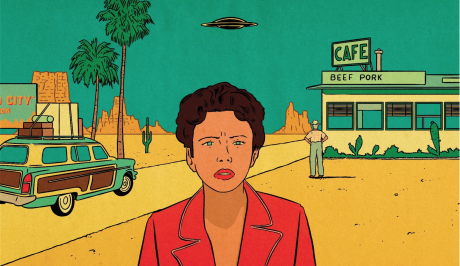
“All the characters in Asteroid City seem to have attended Anderson School, so to speak, where the need for underreaction, clipped and quick, has been drummed into them; that would explain why Augie’s young daughters barely flinch, let alone cry, when they hear of their mother’s demise. Such a conceit — that emotions can be as stylized as clothes — is not a fault so much as a sly strategy. (You encounter it all the time in Restoration comedy.)

“Now and then, however, I couldn’t help yearning for the tough, sombre inhabitants of Bad Day at Black Rock: Spencer Tracy, Robert Ryan, Ernest Borgnine and Lee Marvin. When Tracy, one-armed and clad in funereal black, strikes Borgnine and sends him reeling through the doorway of a bar, with Ryan holding steady at the pinball machine beside them, the director, John Sturges, positions his figures with Andersonian care, but there’s a meaty moral tension in the fray. These guys are not fooling. Who, in Asteroid City, can make that sort of impact?” — from Anthony Lane’s 6.16 New Yorker review.

Read more

Kael on Williams in “Prince of the City”

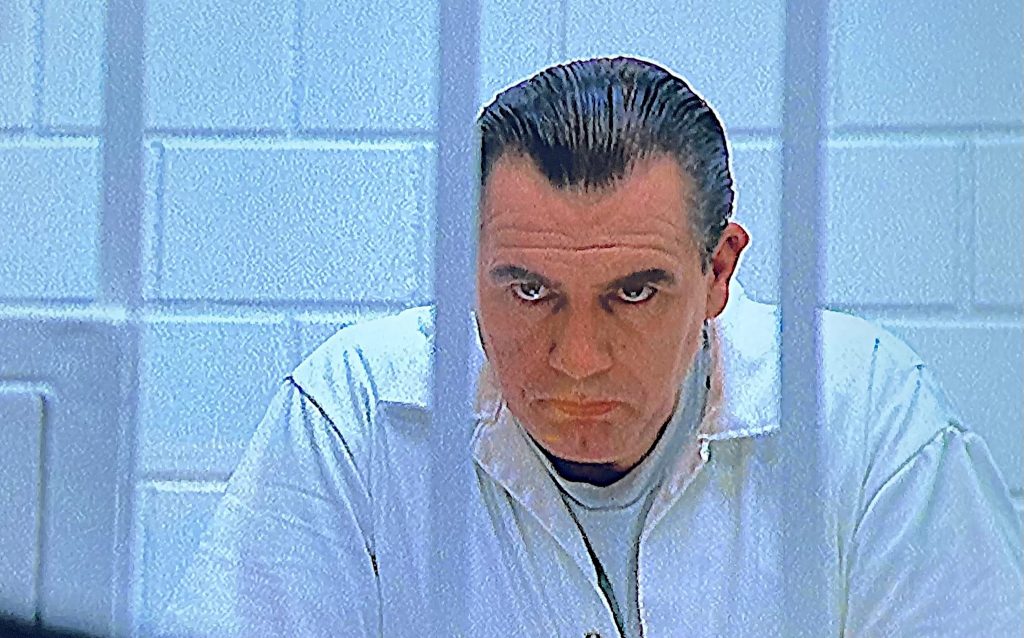
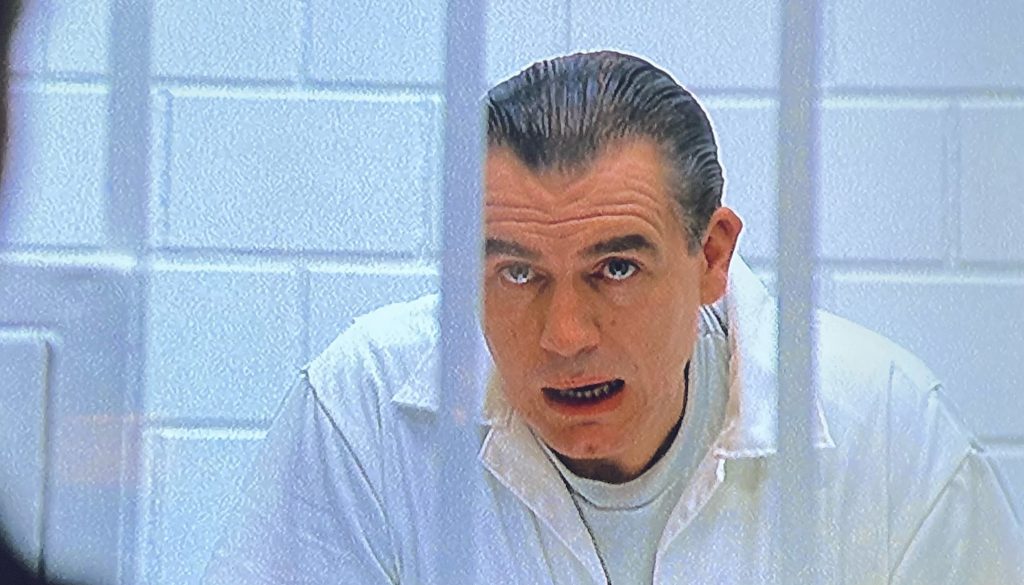
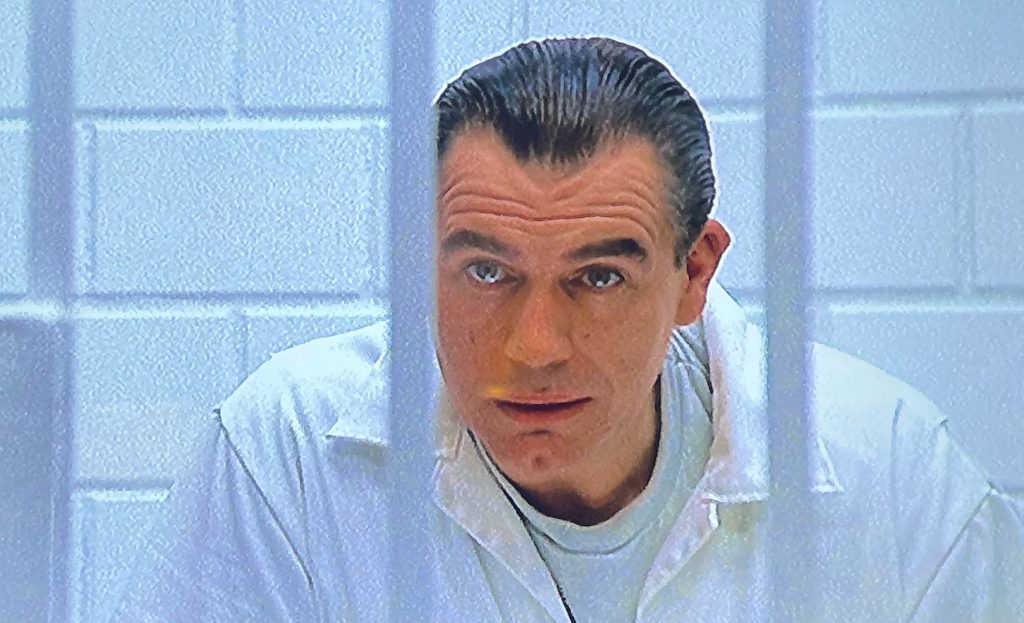
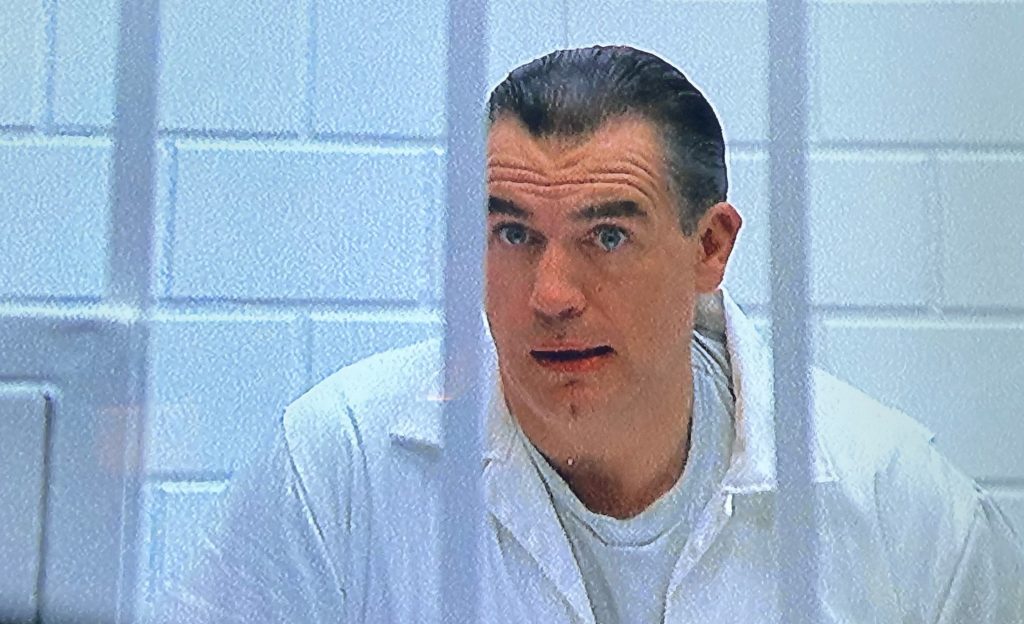
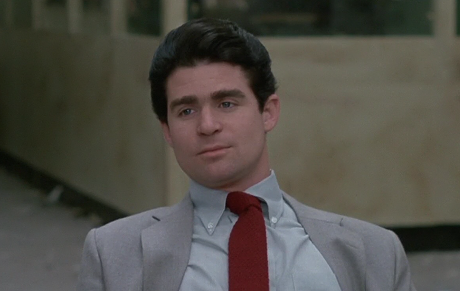
Yesterday (Thursday, 6.15) I wrote that as much as I’ve long admired Treat Williams‘ lead performance as Danny Ciello, a morally conflicted detective of Italian-American descent, in Sidney Lumet‘s Prince of the City (’81), what Williams does in this landmark film is “more about pushing than being.”

In her “5001 Nights At The Movies” review excerpt book, Pauline Kael says the following:

 “Treat Williams has a very closed face — the kind of opaque face that is like a brick wall in front of the camera.  And that may be why Williams, as a New York City police officer who agrees to be wired and to obtain evidence about corruption in his unit, plays each scene as an acting exercise — going through so much teary, spiritual agony that you want to throw something at him.  

“[Williams] acts all over the place yet the movie — 2 hours and 47 minutes of pseudo-documentary seriousness — is so poorly structured that you keep wondering what’s going on and why he has agreed to inform on his friends.  Things don’t begin to come together until you’re headed into the third hour, when the cross suspended from Williams’ neck lights up, like a balloon over his head, announcing ‘Penance! Absolution!’

“There’s one remarkable performance (it’s mostly in the last section): Jerry Orbach, as the tough-minded cop Gus Levy, acts with such sureness and economy that while Williams is flailing about Orbach magnetizes the camera.  

“Directed by Sidney Lumet, the film has a super-realistic overall gloom, and the people are so ‘ethnic’ and yell so much that you begin to long for the sight of a cool blonde in bright sunshine.”

I disagree with Kael about Prince in a fundamental way. It’s completely committed to the hardcore process of internal investigations and the unloading of personal guilt, and especially to Ciello grappling with the double-edged morality of exposing corruption while simultaneously (and rather mystifyingly) bringing more and more ruin and torment into the lives of his friends..slowly and gradually.

It’s half-amazing and half-baffling the way the film keeps going and going with scene after scene of district attorneys and prosecutors sifting through tapes, transcripts and testimony…it’s spellbinding in a ballsy sort of way…a way that perhaps no other cops-and-bad-guys film has ever quite equalled.

Like I said a couple of days ago Prince of the City convinced me that no feeling of moral cleansing or purification justifies what Ciello (i.e., Robert Leuci in real life) did to his SIU partners.

But Kael has a point about Williams’ performance.

Attuned Minds Think Alike

Speaking a day or two ago at the Annecy Animation Festival, Guillermo del Toro said the following:

HE-posted on 6.20.16: “On a certain level I believe that family-friendly corporate animation is almost demonic in that it has a subversive agenda. It delivers family narcotic highs when your kids are young, but it acts as a kind of childhood sedative that leads to placated thinking and zombie lifestyles.

“Corporate animation is mainly about injecting and reenforcing blandly positive, middle-class consumerist attitudes and values. Watch corporate animation as a kid, live your tweener and teenaged life in malls, sign a college loan that will keep you in a kind of jail for half your life, and eternally invest and submit to American McMansionism — an Orwellian system if there ever was one.

Childhood was a huge gulag existence when I was a kid, and Disney mythology was a key aspect of that. Comforting but phony emotion dreams do you no good as a 7 year-old — you’ll just have to unlearn them when you get older. And my parents played right along. Everything they did and said to shelter me from things they felt I was too young for constituted a huge minus in the end. It took me years to unlearn the lessons and impressions they passed along in the name of parental compassion.

Read more

“Barbie” = “Don’t Worry Darling”

Take the domestic robot nightmare vibes from Olivia Wilde‘s Don’t Worry Darling and remove the dark undertow stuff and paint it all pink, and you’ve got Barbie. Or so it seems.

Posted on 5.26.23: “I’ve never forgotten LexG saying [in 2013] that he liked The Wolf of Wall Street ‘for the wrong reasons” — i.e., he’d had so much fun with the party-boy behavior that the moral message barely registered.’

“The latest trailer for Greta Gerwig‘s Barbie seems to be following suit. On one hand it’s clearly a satire of girly-girl shallowness and empty Coke-bottle personalities and pretty-in-pink aesthetics, but on the other hand many who will pay to see it (are we allowed to say that younger women are apparently the target audience?) will be adoring the abundant plastic materialism and smiley-face attitudes that the film is telling its audience to maybe think twice about.

“Trust me, there will be millions who will love Barbie ‘for the wrong reasons.'”