“I’d Wake Up And There’d Be Nothing”

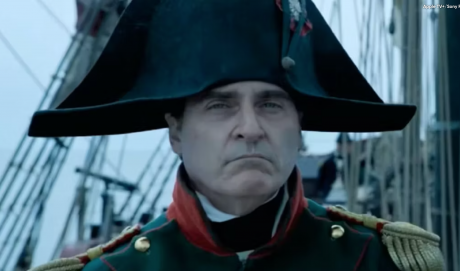
Reportedly Ridley Scott‘s Napoleon (Apple, 11.22) isn’t a chapter-and-verse history of the rise and fall of the mercurial French emperor (Joaquin Phoenix), but a story of “Napoleon’s rise to power through the lens of his addictive and volatile relationship with Empress Josephine (Vanessa Kirby).”

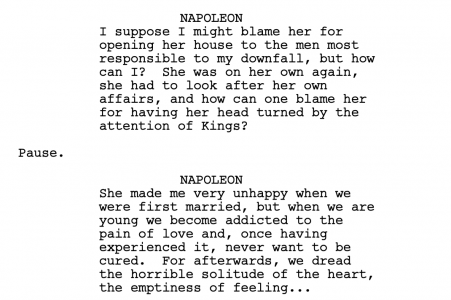
With this in mind, I was struck yesterday by a passage from Stanley Kubrick‘s Napoleon script, which of course was never filmed. It appears near the end of the story, and is basically Napoleon’s conveyance of the heart of his relationship with Josephine when they were both young.

The idea is that the pain and torment of a love affair is preferable to its absence — that nothing is worse than the void.

First Impression

“This Page Six article is so misleading,” an attorney friend wrote yesterday. “He, Elliott Page, did not have the affair with Olivia Thirlby. Ellen Page did. The article’s use of pronouns to me is totally misleading.”

The article is drawn from an excerpt from “Pageboy,” the trans actor’s recently published memoir.

I was recalling last night how things were 15-plus years ago, back when Page, 36, was Ellen, 20 or 21, and the blogaroos (myself included) were having a field day with her/his/whatever’s performance in Jason Reitman‘s Juno.

Page’s performance was peppy and upfront and fully relatable, but I always had trouble with her (am I guilty of dead-naming Page by recalling the old days?) as a sexual being, which is to say a person who generates stirrings along said lines.

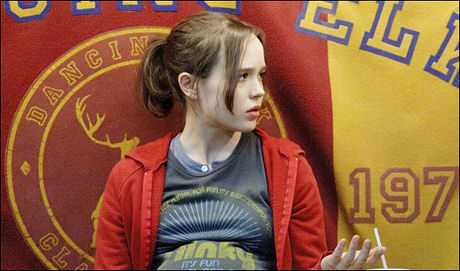
Posted on 12.16.07: Ellen Page‘s Juno performance is highly likable and sympathetic. You’re with her from the get-go because of her indefatigable spunk and pizazz. But the first time I saw Juno (at the Toronto Film Festival), I had a thought that wouldn’t leave me alone. It’s going to sound a little oddball but here it is. My first thought was ‘how and why did Page’s character get pregnant?’

More to the point, why did director Jason Reitman cast an actress based on her sass and spirit, but with no regard for the fact that in the real world a young woman who looks like Page — midget-sized, on the scrawny side, looking like a feisty 11 year-old with absolutely nothing about her that says ‘alluring breeding-age female’ — most likely wouldn’t exactly be fighting off the attentions of hormonally-crazed teenage boys, including nice-guy dweebs like Michael Cera‘s character?

Unfortunate pregnancies happen to young girls of all shapes and sizes — obviously, sadly — but I kept saying to myself (and I’m writing this having once been 16 and 17 years old) that Page is the super-bright girl you want for a good friend — someone you can talk to at 12:30 ayem on a school night when you’re depressed or in trouble or enthusing over a band you just heard. But she’s not what any teenaged boy would call a hot package. She’s got the soul and the wit and the attitude of a Dorothy Parker (and the value that comes with such a person is priceless), but Juno is about an accidental breeder, and certain qualities need to be evident for this to happen in most circumstances.

Every time I’ve seen a too-young pregnant girl in real life I’ve quietly remarked to myself for this or that reason, “Too bad, but I can sorta see how that happened.” I’m just saying it didn’t quite calculate when I first laid eyes on Page. I’ve been sitting on this impression for three months now, and didn’t express it because I knew people would call me a dog. But it’s a fair thing to say, I think. Page is great on her own, but she doesn’t seem right for the role. Or rather, she’s right in every way except physically.

Read more

Concrete Under Your Feet

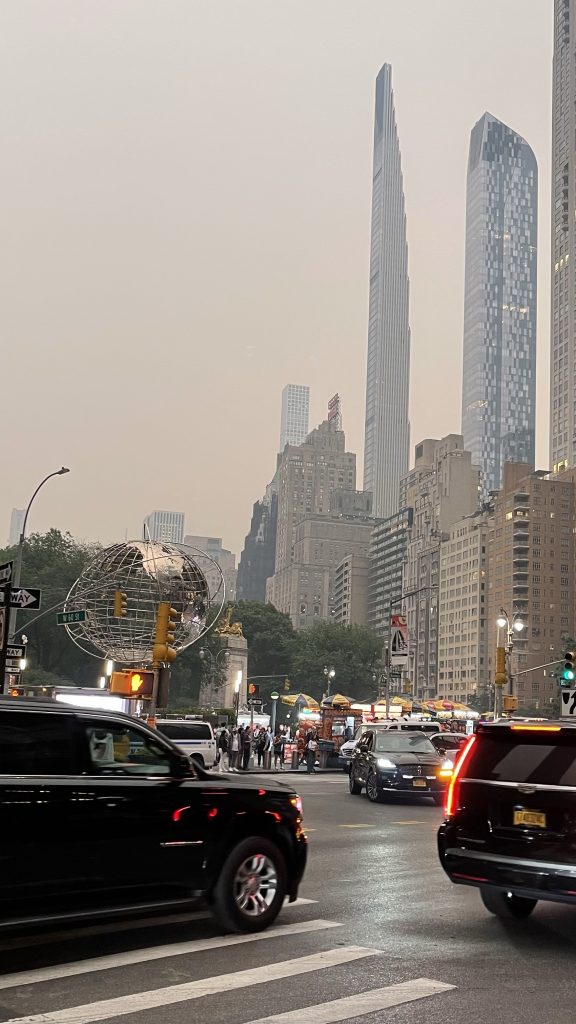
I ordered a soft vanilla swirl cone with chocolate sprinkles from a dessert truck guy. Me: “How much is that?” Dessert guy: “Ten.” Me: “Ten fucking dollars for a cone and it’s not even real ice cream? Fuck, man!” I turned and walked away.

Bad Info, Man

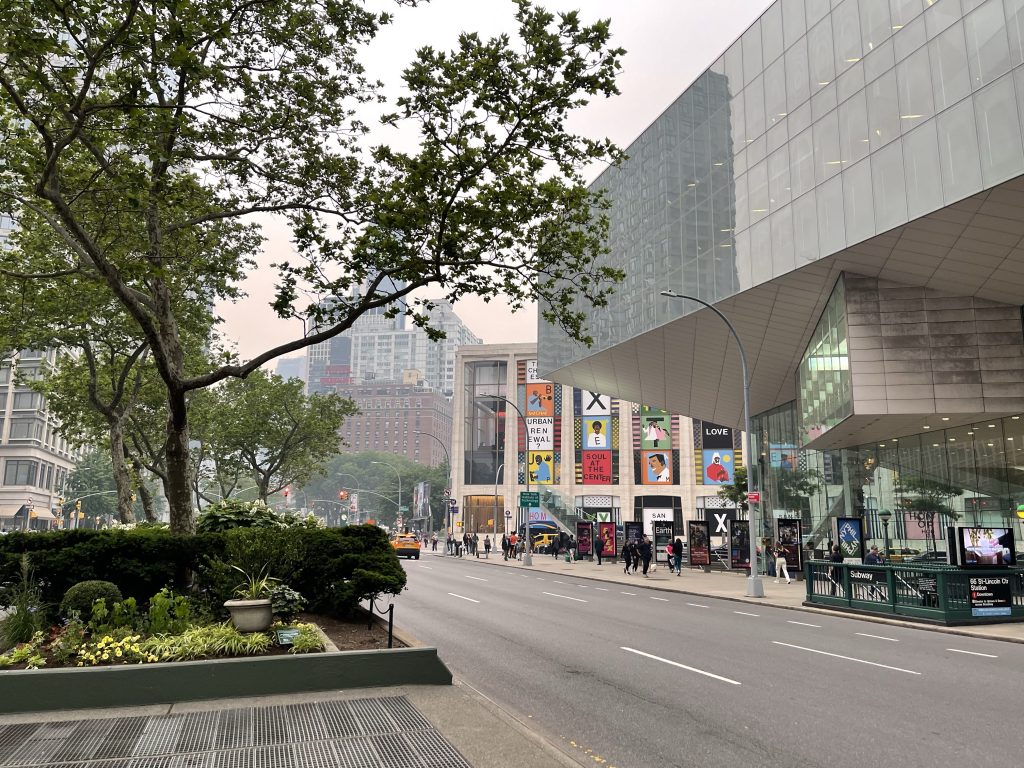
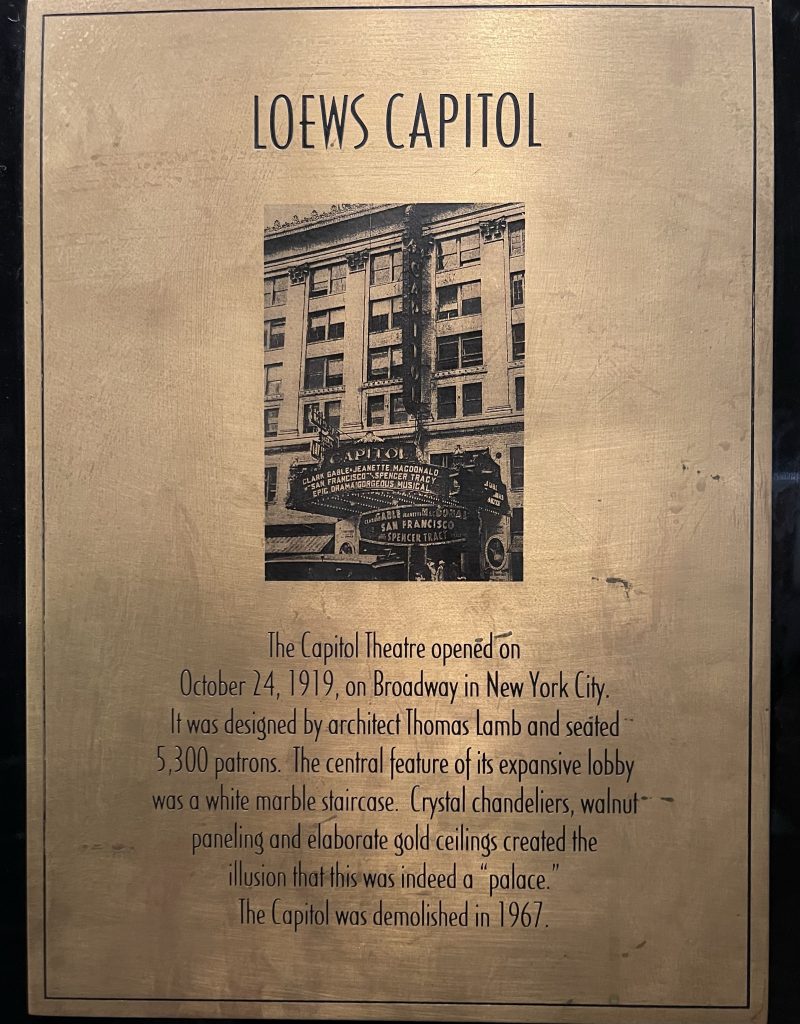
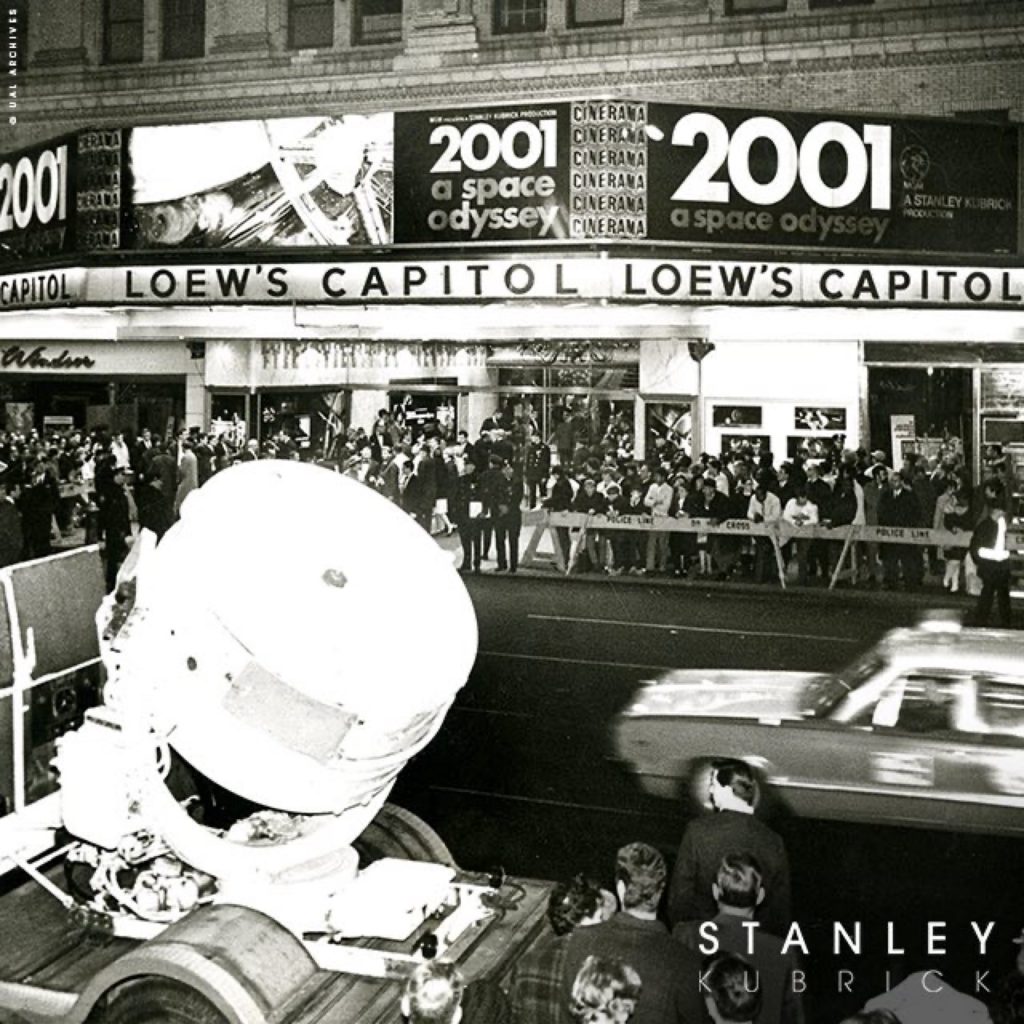
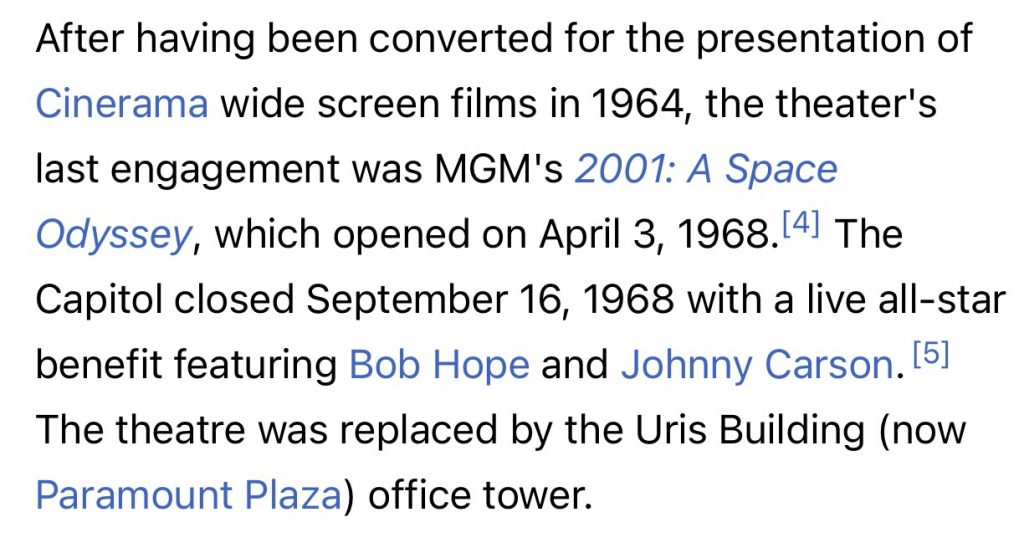
A bronze wall plaque inside Loews’ Lincoln Square (where I saw Celine Song’s Past Lives in the late afternoon) commemorates the late LoewsCapitol theatre (B’way at 50th or 51st). Built in 1919, the 5000-seater gave up the ghost in September 1968. For some reason the plaque says it was torn down in ‘67. 2001: A Space Odyssey opened at the Capitol on 4.3.68.

Wikipedia also has it wrong about the Capitol’s Cinerama conversion. The first Cinerama film to show there was the now completely forgotten The Wonderful World of the Brothers Grimm, which opened in August ‘62.

Exactly What Isn’t Happening For The Most Part

Harrison Ford is profiled in the current Esquire. Written by Ryan D’Agostino, the longish article is titled “Harrison Ford Has Stories to Tell.” About halfway through Ford articulates a feeling about the emotional, spiritual and even psychological nourishment that the best films provide.

It is this very nourishment factor, of course, that 95% of big-screen attractions don’t provide. Movie theatres used to be regarded by certain devotees (i.e., “film Catholics”) as churches, but over the last 15 or 20 years they’ve become gladiator arenas. They cater to animals.

Someone Else Finally Says Something

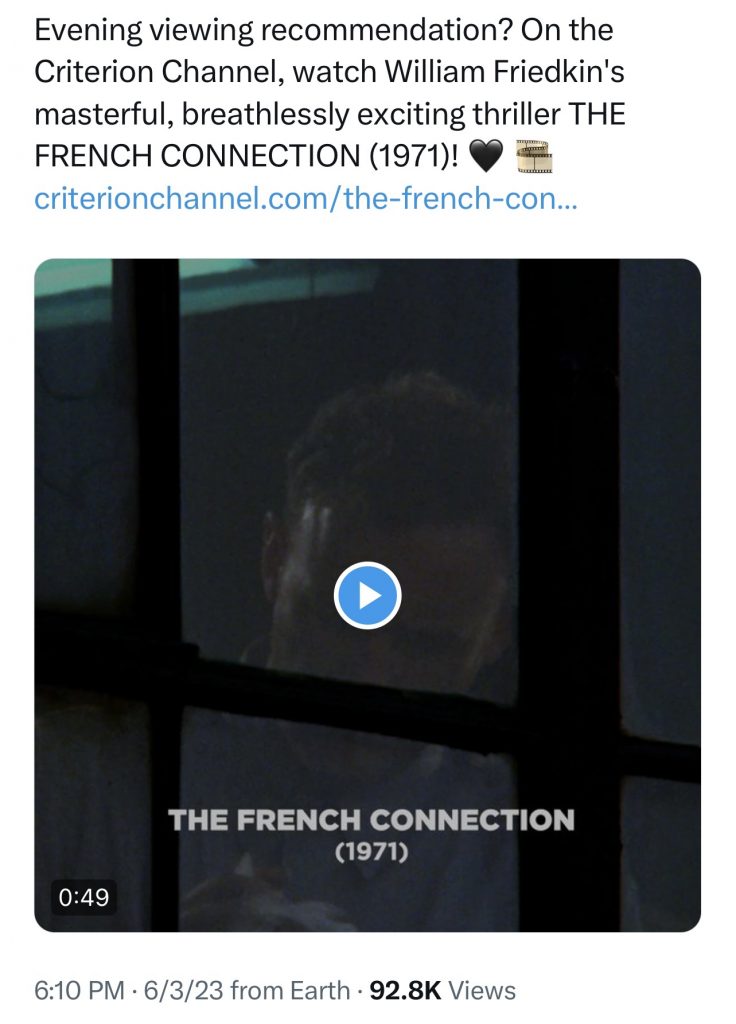
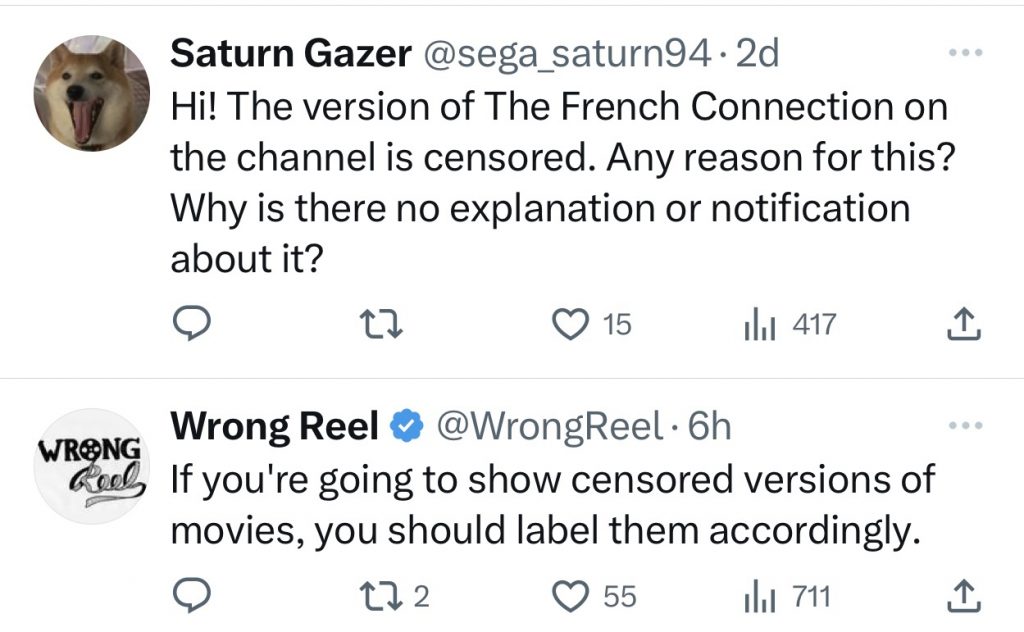
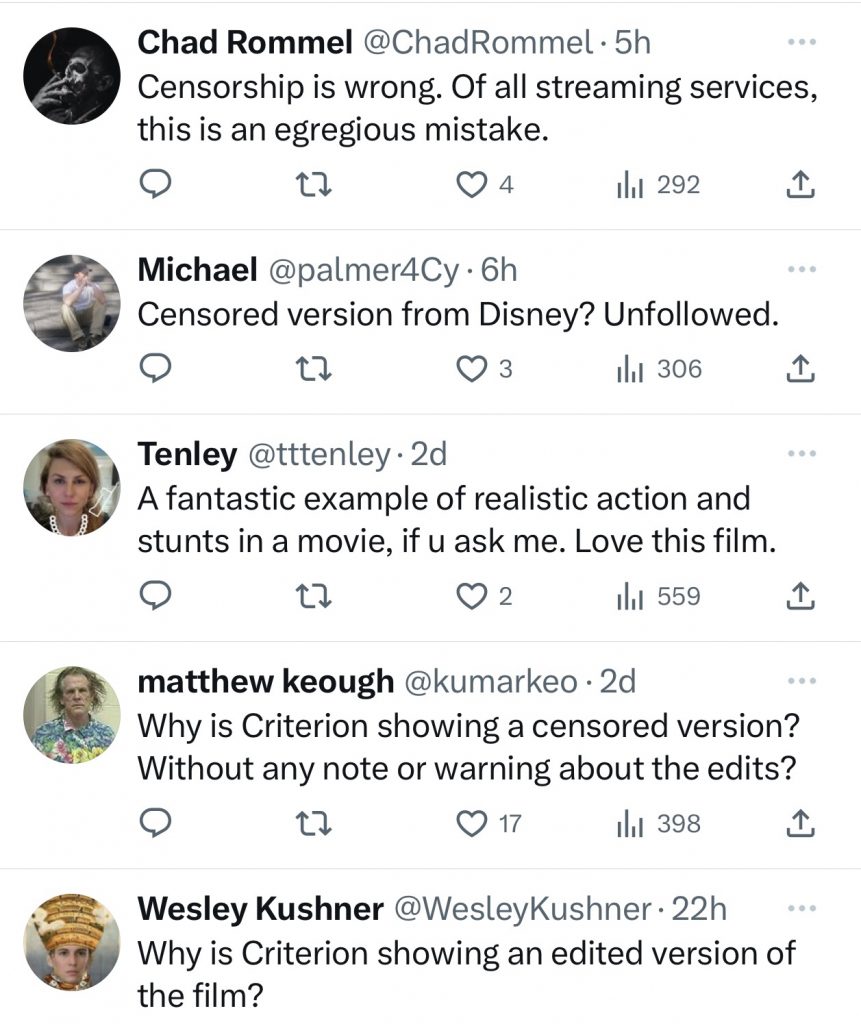
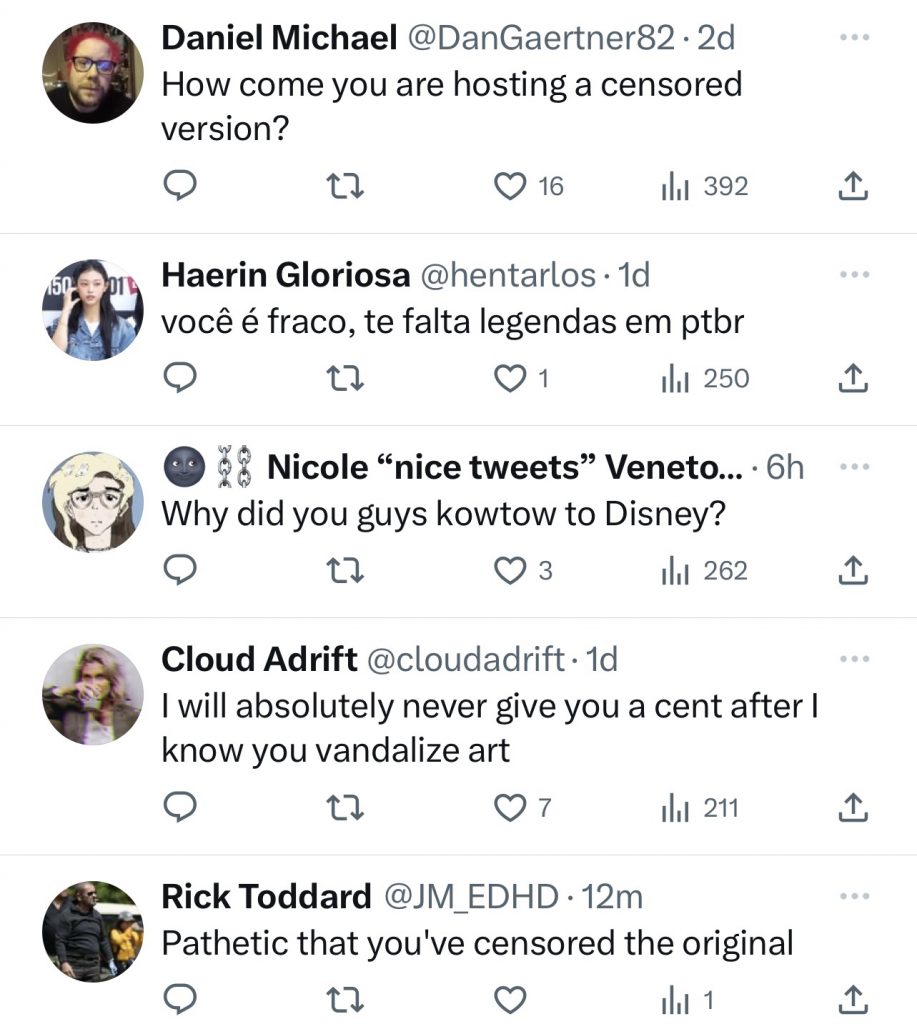
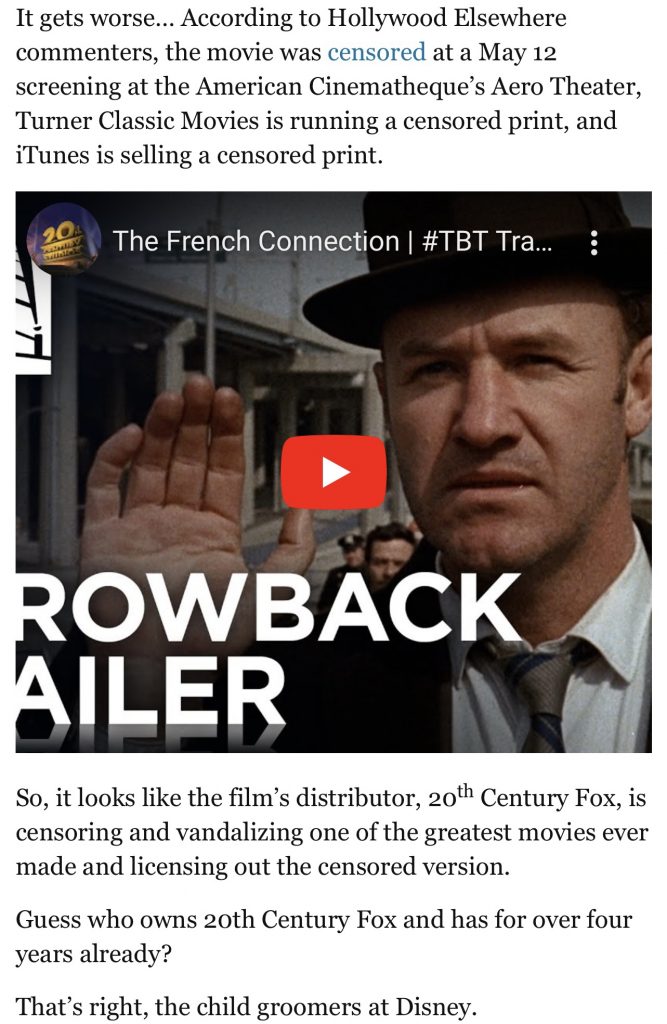
The censored version of the 1971 Oscar-winner is currently streaming all over (Criterion Channel, TCM, iTunes) and was shown at Santa Monica’s Aero theatre on 5.12.23.

Three days ago (Saturday, 6.3) I posted about the censoring of a six-second sequence in William Freidkin’s The French Connection, apparently by rights holder Disney over concerns about Gene Hackman’s ruthless cop character, Popeye Doyle, using the N-word. The next day I refreshed and summarized same (6.4).

This is obviously a huge deal, and yet no columnist or critic has said a DAMN THING since last Saturday. Are they afraid of complaining about the deleting of an ugly word in a classic film? Most likely, yeah. Are they holding themselves in check because they feel obliged to be “good Germansin the woke sense of that term? You betcha.

There’s also the possibility that they don’t want to give me any credit for raising a stink, and that personal animus means more to them than calling out woke censorship as it affects what is arguably the finest urban-cop thriller ever made.

Until this morning (6.6), that is, when Breitbart’s John Nolte posted a piece about same. Draw your own conclusions. Mine, as noted, is that others (including certain filmmakers) are too chicken to say anything. That or their pettiness knows no bounds.

Hot Blood

Paul Stanley and Harry Kleiner‘s Cry Tough (United Artists) opened in August 1959, when steamy, semi-nude sex scenes were all but absent from mainstream American films.

Cry Tough was mainly a crime film about Puerto Rican gang activity in Spanish Harlem, but between 39:00 and 43:53 there’s a fairly provocative bedroom scene between John Saxon, 23, and the Argentinian actress Linda Cristal, 28.

Saxon and Cristal died almost exactly a month apart in 2020 — 7.25.20 and 6.27.20 respectively.

Kleiner’s screenplay is based on Irving Shulman’s 1949 novel of the same name, which was about a Jewish Brooklyn gang.

A Proper Bitchslapping

This morning “Nonbinary Woke Jihadi“, whose comments about the French Connection censorship thing have indicated an attitude of spineless woke accommodation, was slapped around good and proper by “HumanaHumana“, and it was music to my ears:

HH to NWJ: “Corporations and individuals are well within their rights to cut films apart to their delight, you say Corporations are well within their rights to do many terrible things — so? Again, look at all the ink you’re spilling over insisting on the editorial rights of Disney whilst spilling essentially none about what’s happened to The French Connection (let alone why it’s happened).

“You would’ve made a fine useful idiot for the studios when they took Greed, The Magnificent Ambersons, Brazil, Dune, Margaret et. al. away from the filmmakers.

“I never again want to hear you bitch about this site needing to get back to talk of cinema, because you’ve revealed here how little you actually care about the artists who create that cinema and how quick you’re willing to make the sanctity of a filmmaker’s vision secondary to a semantic nitpicking that would help maintain your ideological entrenchment and not have to confront why this has happened/keeps happening.

“Why DO you think this happened, by the way? Why DO you think the studio chose to exercise its ‘rights’ in this case?

“Don’t ever again tell us Jeff has abandoned cinema when this is a far more egregious and repugnant abandonment by you.”