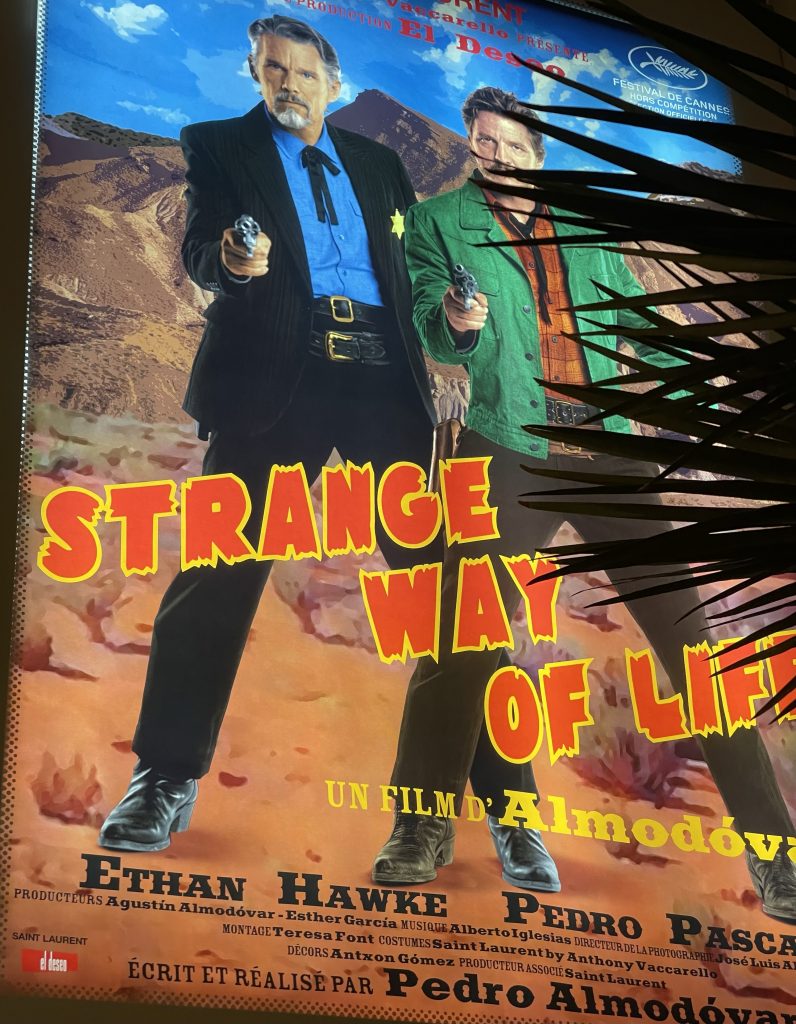
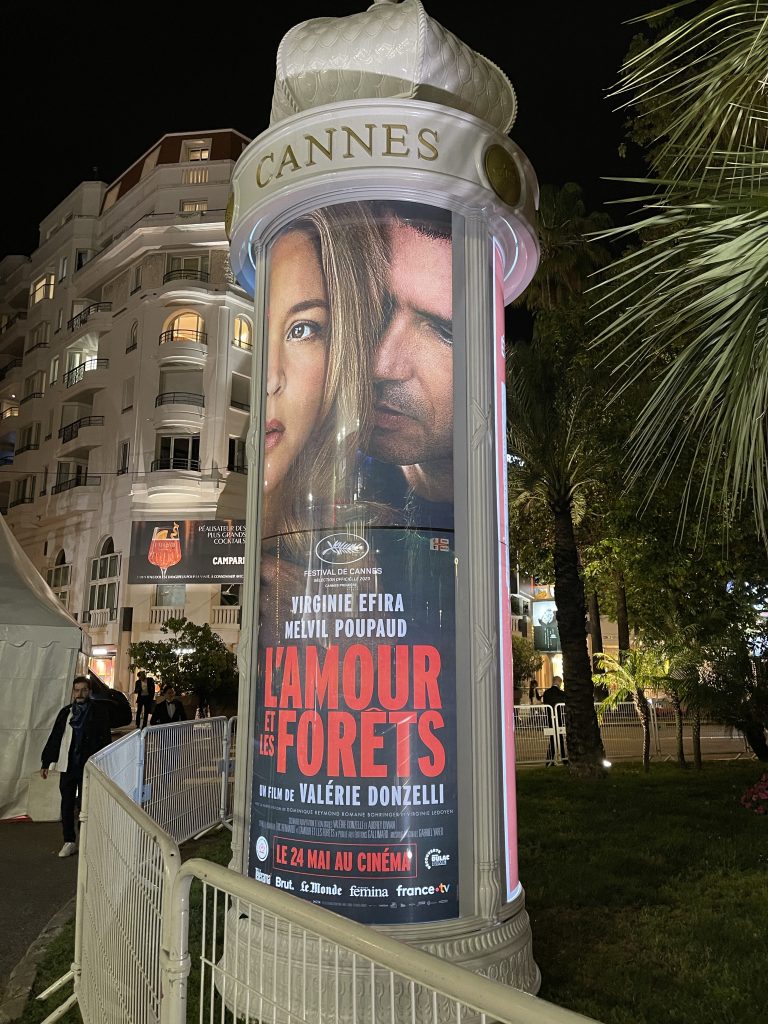
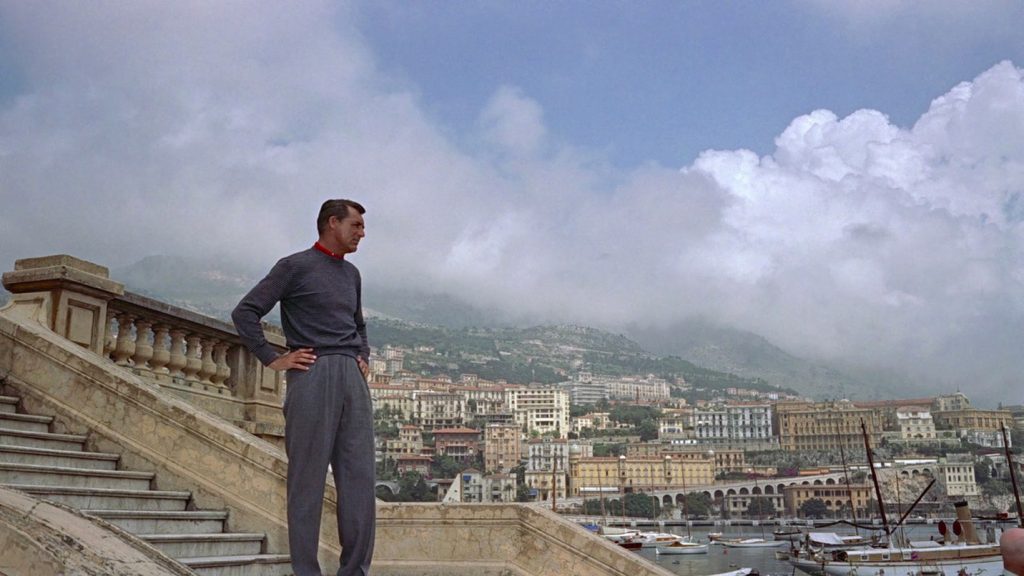
The late Sydney Pollack was so earnest and articulate, never brusque or indifferent. This is familiar territory, but worth re-watching.
From “Stanley Was Slippin’,” posted a week or so after the death of Stanley Kubrick on 3.7.99, or was it after the July 1999 release of Eyes Wide Shut? I honestly can’t remember.
“Stanley Kubrick’s films were always impressively detailed and beautifully realized. They’ve always imposed a certain trance-like spell — an altogetherness and aesthetic unity common to the work of any major artist.
“What Kubrick chose to create is not being questioned here. On their own terms, his films are masterful. But choosing to isolate yourself from the unruly push-pull of life can have a calcifying effect.
“Kubrick was less Olympian and more loosey-goosey when he made his early films in the `50s (Fear and Desire, The Killing, Paths of Glory) and early `60s (Lolita, Dr. Strangelove). I’m not saying his ultra-arty period that began with 2001: A Space Odyssey and continued until his death with A Clockwork Orange, Barry Lyndon, The Shining, Full Metal Jacket and Eyes Wide Shut, resulted in lesser films. The opposite is probably true.
“I’m saying that however beautiful and mesmerizing they were on their own terms, these last six films of Kubrick’s were more and more unto themselves, lacking that reflective, straight-from-the-hurlyburly quality that makes any work of expression seem more vital and alive.
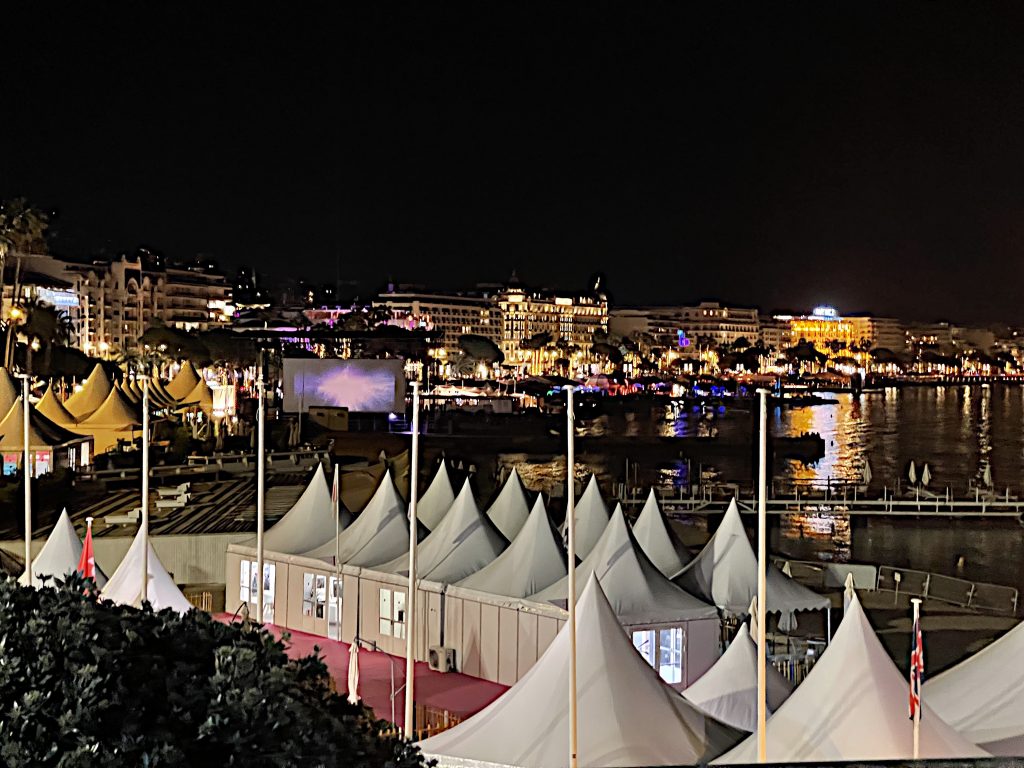
The Cannes Film Festival began to feel like a Festival of Endurance two or three days ago, and has since devolved into a Festival of the Walking Numb. Nine straight days of delightful absorption in the cinematic cornucopia of now, and honestly? As I sit here in my untidy bedroom I’m honestly wondering — debating — whether I’ll ever return. Too costly, too exhausting and indeed draining after the seven-day mark, too many superficial people in tuxedos and evening gowns. My maiden visit was 31 years ago, and I’ve been an annual repeater for roughly 15 or 16 years now. I’ll never stop visiting Europe, but film festival-wise and henceforth I’ll probably be more than happy to confine myself to Telluride, Santa Barbara, NYFF and all the great second-tier gatherings (Savannah, Key West, Mill Valley, Montclair).
Wednesday, 5.24, is a relatively flat day. Seemingly. Humble opinion and all that. The only films that have poked my interest are (a) Tran Anh Hung‘s The Pot-au-Feu (5 pm, Debussy), a 19th Century gourmet romance costarring Juliette Binoche and Benoît Magimel, and (b) Kanu Behl‘s Agra (8:45 pm, Director’s Fortnight, Theatre Croisette), which appears to be a sexual exploration thing.
I’ll certainly pay no attention to Leslie Iwerks‘ 100 Years of Warner Bros. (7pm, Agnes Varda) — scratch it.
Tomorrow (Thursday, 5.25) is a slight puzzler. I’ll thinking hard about catching Wim Wenders‘ Perfect Days (4 pm, Grand Theatre Lumiere), an anthology film about a Japanese toilet cleaner (Kōji Yakusho). One, I’ve never been a Tokyo lover. Two, I’m presuming that Wenders will most likely confront the viewer with a certain number of toilet bowl shots, which naturally concerns me.
On top of which catching the Wenders will force me to miss “Rendez-vous with Quentin Tarantino” (4:15 pm, Theatre Croisette). I know this will be a fun event, and will include a Tarantino-selected secret screening. Tarantino or toilet cleaner? Answer, please.
Next comes Catherine Breillat‘s Last Summer (6 pm Salle Debussy). A remake of 2019’s Queen of Hearts, Breillat’s erotic drama “explores the taboos of a stepmother–stepson relationship.”
I wrote earlier today that Wes Anderson‘s Asteroid City (Focus Features, 6.16) would almost certainly be “another signature tableau exercise in WesWorld irony — zero emotion, wit, whimsy, staccato dialogue, a darkly humorous attitude, etc.”
Add in the other familiar signatures — formal framings, immaculate and super-specific production design, etc. — and that’s pretty much what Asteroid City is…surprise!
Having been a conflicted Anderson fan for over 25 years and an Anderson friendo since ’94, it breaks my heart to say this once again, but Asteroid City is a whole lotta fun to splash around in, eye-bath-wise, but there’s almost nothing going on except the Anderson troupe reciting their lines just so.
Immaculate style (in this instance ’50s kitsch) mixed with bone-dry humor and not much else.
Yes, Asteroid City features a meaningless, blink-and-you’ll-miss-it Scarlett Johansson nude scene (nothing remotely close to that buck naked Lea Seydoux posing-for-Benicio del Toro scene in The French Dispatch).
And a delightful musical sequence featuring some wonderful Oklahoma!-like polka dancing, performed by Maya Hawke and Rupert Friend.
And a cartoonish, silly-looking alien with 1950s Warner Bros. animation department bug eyes who, in 1955, twice pays a visit to Asteroid City, the small-town site of a Junior Stargazers convention. Except the alien does nothing (no threats or love or anything in between) and has nothing to say or to teach like MichaelRennie did four years earlier…zip.
The song-and-dance sequence, which ignites with the joyful spirit of choreographer Agnes DeMille, indicates that Wes feels real affection for musicals. Perhaps if he had filmed Asteroid City as a sung-through opera?
But of course, he didn’t and probably couldn’t. Because (and again, it really hurts to say this) he’s been wrapped so tightly in his WesWorld aesthetic — dry sardonic humor, deadpan line readings, somber philosophical musings — that he can’t seem to bust out of it or has lost interest in doing so or whatever.
Remember when Wes’s characters went through actual human difficulties and occasionally expressed emotion? The kind you could relate to, I mean? Certainly in Bottle Rocket (Luke Wilson‘s glorious love for Inez, the motel maid) and Rushmore (romantic obsession, jealous rage) and more recently in Grand Hotel Budapest (bittersweet nostalgia for a certain elegant, old-world way of life that’s been washed away by time).
What is Asteroid City attempting to deal with, metaphorically or adult-behavior-wise or what-have-you?
The best I can figure is that it’s about complacency — several highly attuned, obviously intelligent characters who are, of course, nominally aware of the alien’s visit and are taken aback by this world-shaking event but can’t say or deduce or conclude anything of substance. Nothing means nothing, but they sure are surrounded by a lot of drop-dead southwestern nothingness (fake mesas in the distance, a huge tourist-attraction crater), and the film sure is an eyeful to look at. It’ll probably give you an occasional chuckle or, more likely, an LQTM moment.
Inotherwords: “Nothing will give us pause in our determination to trash CoupdeChance when it finally screens in the early fall, possibly in Venice or perhaps at the San Sebastián Film Festival.”
Kady Rush Ashcraft‘s Jezebel riff is nothing –bitter, sour grapes flinging droplets of urine.
Wes Anderson‘s Asteroid City (Focus Features, 6.16), a quirky ensemble piece set during a Junior Stargazer convention in 1955, will screen today at the Salle Debussy at 5:30 pm.
We all know what it will actually be, which is another signature tableau exercise in WesWorld irony — zero emotion, staccato dialogue, informed by a darkly humorous attitude.
Asteroid costars Jason Schwartzman, Scarlett Johansson, Tom Hanks, Jeffrey Wright, Tilda Swinton, Bryan Cranston, Edward Norton, Adrien Brody, Liev Schreiber, Hope Davis, Steve Park, Rupert Friend, Maya Hawke, Steve Carell, Matt Dillon, Hong Chau, Willem Dafoe, Margot Robbie, Tony Revolori, Jake Ryan and Jeff Goldblum.
Pic was shot a little less than two years ago in Chinchon, Spain (between August and October 2021).
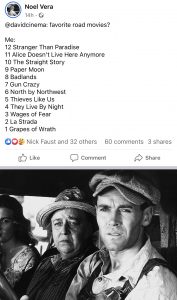
Late this morning I spent more than an hour tapping out a piece about HE’s ten favorite road films. It was called “Road Movies As Existential States of Mind.”
I’d been inspired by Ilya Povolotsky‘s Grace, a somewhat gloomy mood piece about a father and teenaged daughter drifting through Russia’s outlying regions and screening outdoor movies to small-town congregations.
When we sat down the other night Povolotsky emphasized that Grace is much more in the tradition of Wim Wenders‘ road trilogy than, say, Federico Fellini‘s La Strada (’54), which Grace bears a certain resemblance to but is far less emotional than.
I then wondered if it was fair to categorize road films into two groups — movies in which travellers seem to have succumbed to the idea of roaming around as a permanent state of being with no particular goal or destination in mind, and other road flicks that are defined by a single quest and a single journey that has a beginning, middle and end.
I then spent a long time deciding which are my favorite road films of the last 60 or 70 years, and then deciding on their proper order and whatnot and including links for all ten.
And then I saved the piece and my online connectivity somehow ruptured or collapsed. The article had failed to be acknowledged on the other end and was sent down a black tunnel-like hole, never to be recaptured. 90 minutes of hard work destroyed. I shrieked and wept like a nine-year-old boy whose dog had just died. I pounded on the armrest of a couch I was sitting on. I was so furious and distraught that it took me a good hour to recover and start over. But I’m on a clock and I can’t create another list with links…not now.
I know that The Last Detail was #2 on my list, and La Strada was #3 or #4. Easy Rider and Planes, Trains and Automobiles were somewhere in the top ten.
Note: Obviously Alice Doesn’t Live Here Anymore is NOT a road movie.
Which well-known, big-name actors today have more or less admitted what Peter O’Toole‘s Alan Swann character shouted out in My Favorite Year — “I’m not an actor, I’m a movie star”?
Actors, in other words, who’ve acknowledged that they’re very good in a certain type of role but that’s all? Actors who’ve said in so many words that they’re not Daniel Day Lewis or Laurence Olivier and are more or less cool with this?
Perhaps not as baldly or bluntly as Steve McQueen copped to decades ago, but actors who’ve said they’re good within a certain perimeter, playing a particular kind of film and conveying a certain mode or mood or attitude, and have decided this is good enough and that it’s better not to step outside their zone?
Clark Gable was one of these — excellent playing Gable-type roles but careful to stay within his perimeter. Alan Ladd, Jean Arthur, Humphrey Bogart, Bette Davis, Robert Redford, Owen Wilson…pretty much all movie stars have figured out what their big-screen persona is and have boiled it all down and figured what works best for them.
In a recent CNN interview, The Hollywood Reporter‘s Scott Roxborough obediently laments the presence of Johnny Depp during the opening-night festivities for Jeanne du Barry. We all understand that Depp’s louche, arrogant behavior (inflamed by alcoholism) was a factor in his turbulent marital relationship with Amber Heard, but wokesters should at least acknowledge the judgment of the jury in the Virginia defamation case, and allow for the possibility that Depp and Heard’s relationship was toxic from both sides and that she threw as many grenades as he did.
Roxborough says that the Cannes Film Festival “has a long way to go” in terms of gender parity, or a belief that an equal humber of male and female directors need to be represented on all the slates. Which means that celebrating quality isn’t as important as enforcing progressive political goals.
While choosing 19 films for the main competition, it’s conceivable that 12 goodies might be directed by women and 7 by men. Parity says that 3 female-directed goodies have to fall by the wayside (i.e., go to Directors Fortnight or Un Certain Regard) to make room for 3 slightly less satisfying films made by men.
Roxborough also pronounces Cannes like kick the can or can of sardines. It shouldn’t be pronounced with an “auughh” sound but with a middle-ground “Cahnnes.”
“It’s not a whodunit — it’s a who-didn’t-do-it?” — Martin Scorsese‘s press conference description of Killers of the Flower Moon.
Scorsese and Robert De Niro hadn’t attended Cannes together since the ’76 premiere of Taxi Driver — 47 years ago.
Lily Gladstone: “It wasn’t so much me finding the role as it finding me.” Her voice has an Indiana housewife sound…guttural, a bit twangy…she leans into her “rrrs” and pronounces golden like “gouhllduhn.”
As far as I’m able to figure, Jessica Hausner’s ClubZero is a satire of the academic woke insanity virus, which has been spreading among teachers and college professors throughout the progressive community for the last 20-plus years…a virus that has led to mental derangement and domestic terror and has triggered the culture wars .
Or at least, that’s how I read it.
Club Zero is about Ms. Novak (Mia Wasikowska). a chillingly self-possessed teacher at an elite private school, passing along a wacko food concept called “conscious eating,” which basically states that all foods from any source are kinda bad for you and should therefore be pretty much avoided. Eat less and thereby transcend.
Novak’s teachings require the slapping of foreheads, sure, but aren’t hugely different from insisting that (a) all descendants of European tribes (and white males in particular) are corroded and evil or (b) there are no clearly defined women or men any more (gender is a spectrum), or that (c) guys should get pregnant and deliver more babies and (d) the theology of trans people should be canonical and exalted above all other considerations and that (e) the jokes of Dave Chappelle are repugnant, etc.
Florida governor Ron DeSantis would never watch ClubZero (and certainly wouldn’t have the patience for it if he did) but if he somehow got through it he’d undoubtedly say “I endorse this film…two thumbs up!”
Style-wise Club Zero is quite dry and excessively poised and very soft-spoken in an Orwellian sense (which is the point, of course) and at the same time passionately out-to-lunch as far as recognizable human behavior is concerned. I didn’t really “like” it but any film that condemns wokery gets a pass from this corner.
Cannes — Monday, 5.22, 8:55am: The first completely warm and sunny day since HE arrived seven days ago…seven half-suffocating days of threatening sprinkles, sprinkles and occasional rain, storm clouds, somewhat chilly air and a generally miserable atmosphere of dampness.
Tuesday, 5.23 will be my ninth day in Cannes. I’m now finding my second wind, but yesterday I was feeling sick of the press lines, the tourist throngs, the humping around and constant lack of sleep. All things being fair and equal I’m thinking more and more about blowing this pop stand.
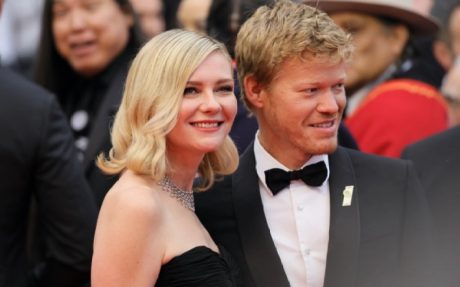
JessePlemons (30 to 40 pounds lighter) looking really great these days. Full HE respect.
Todd Haynes‘ May December, which I saw late last night, struck me as awkward and even silly at times. Haynes tries for a tone that mixes satiric whimsy and overheated emotional spillage while channeling Bergman’s Persona, but scene after scene and line after line hit me the wrong way.
It’s about a famous actress, Elizabeth Berry (Natalie Portman), paying a visit to the pricey Savannah home of Gracie Atherton (Julianne Moore), a somewhat neurotic and brittle 60something who runs a dessert-cooking business. Elizabeth’s plan is to study Gracie as preparation for a soon-to-shoot film about her once-turbulent life, which involved a scandalous sexual affair with a minor and a subsequent prison term. Elizabeth naturally wants her forthcoming portrayal to deliver something truthful, etc.
For her part Gracie is cool with the arrangement but at the same time a wee bit conflicted and anxious. She’s calculated that she’ll come off better in the film if she invites the pissing camel into the tent**.
Seemingly modelled on the late Mary Kay Letourneau, a former school teacher who was prosecuted and jailed for seduced a 13 year-old boy, Gracie is married to Joe Yoo (Charles Melton), a 36 year-old half-Korean dude who was also 13 when Gracie technically “raped” him while they were working together at a pet store, and with whom they now have two or three kids. (This is one of those films in which the exact number of kids in a given family is of no interest to anyone…zip.)
If I had the time I would list the eight or nine things that especially bothered me about this film. Suffice that my basic reaction was one of exasperation. I literally threw up my hands and loudly exhaled three or four times. I groaned at least twice. I’m pretty sure I muttered “Jesus!” a couple of times. I also recall slapping my thigh.
For what it’s worth Letourneau and Fualaau insisted from the get-go that their relationship was consensual; ditto Gracie and Jo in May December‘s backstory. After serving her prison term Letourneau married Fualaau and soon after had kids with him; same deal with Moore and Melton’s pretend couple.
** Exact Lyndon Johnson quote: “It’s better to have your enemies inside the tent pissing out, than outside the tent pissing in.”