Two Different Films
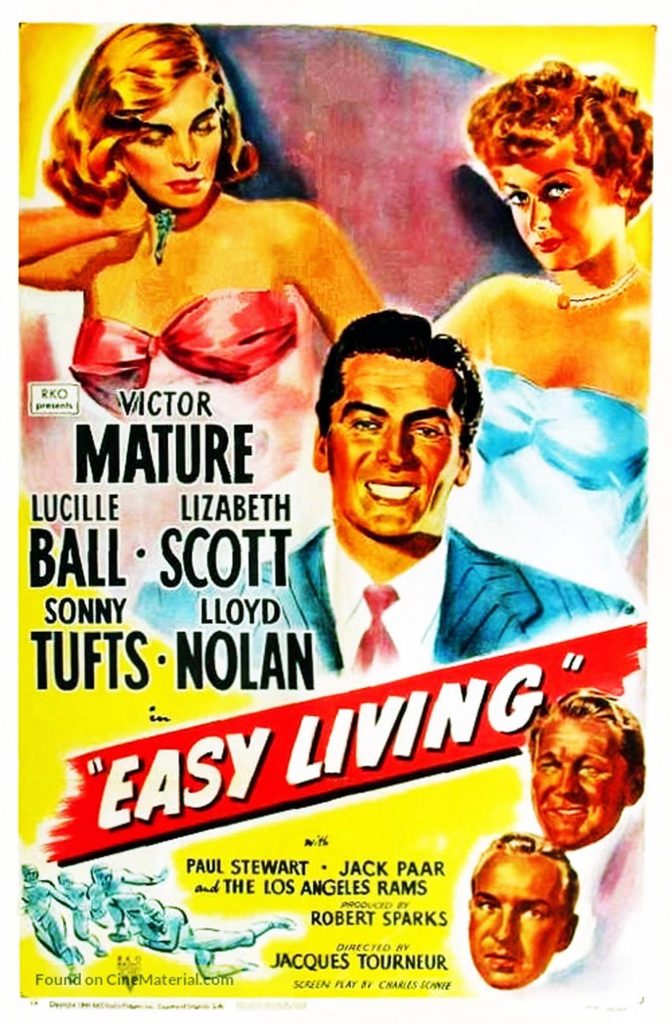
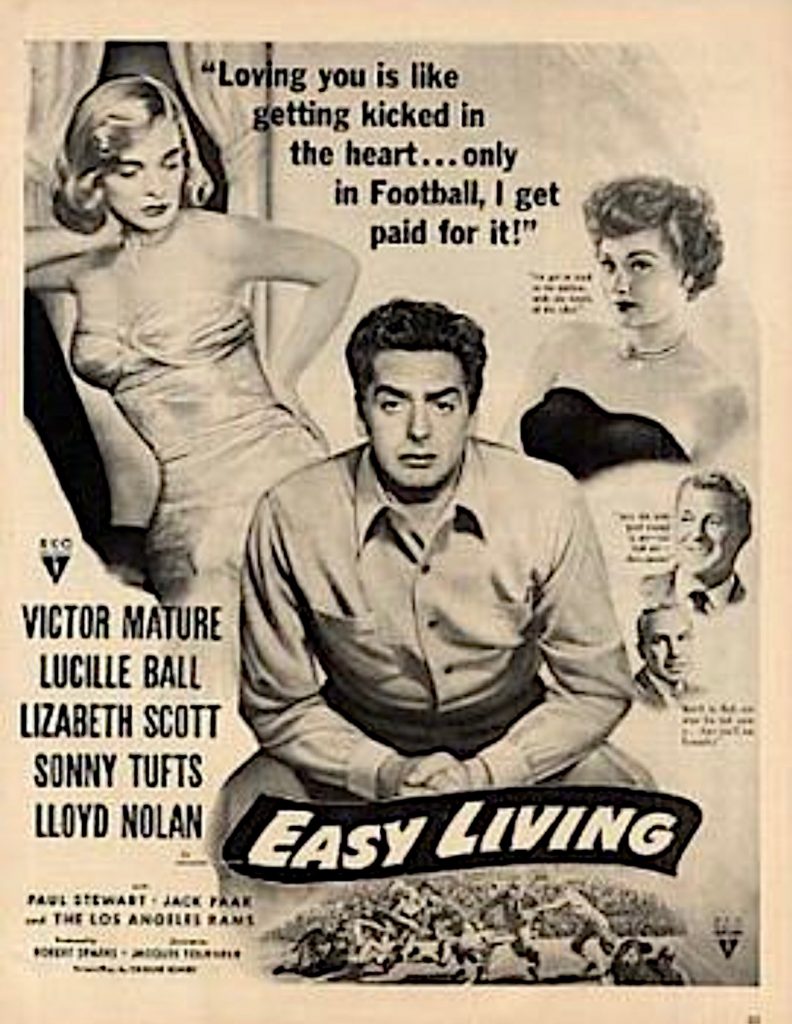
And they both stink. Did Jacques Tourneur’s 1949 release partially inspire Chloe Zhao’s The Rider and Darren Aronofsky’s The Wrestler? It took me years to catch up with Easy Living, which is basically about a football player with a bad heart (Victor Mature) who’s married to a conniving bitch (Lizabeth Scott).

“Barbie” Tracking “Skewing Almost Entirely Female”
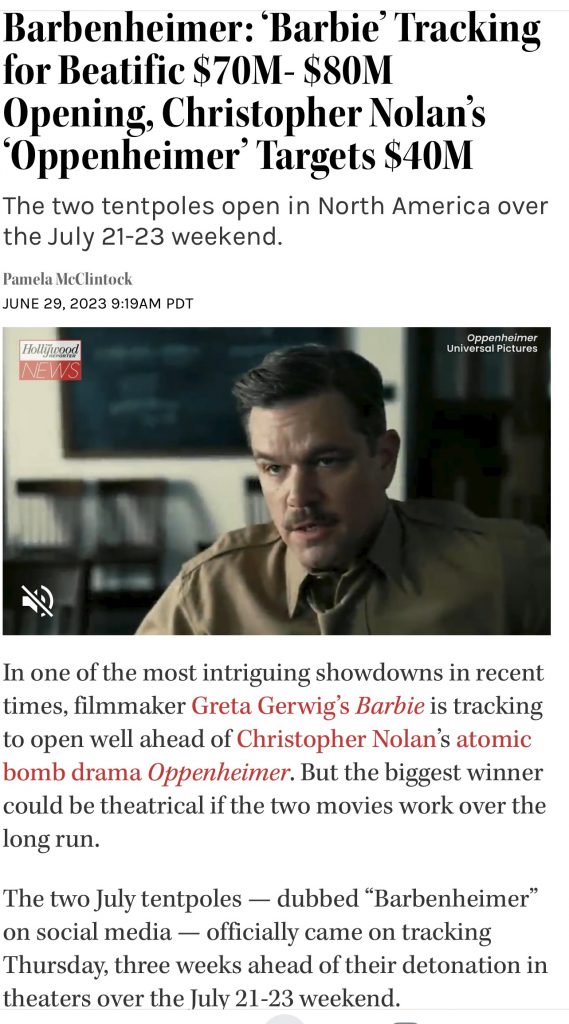
“And particularly to females 35 and under” — from Pamela McLintock’s 6.29 THR box–office report about the 7.21-to-7.23 weekend, which foresees Greta Gerwig’s social-metaphor comedy trouncing Chris Nolan’s historical horror film about the A-bomb by at least $25 to $30 million.
Congrats to Team Barbie for achieving a successful sell, even as they privately acknowledge what I’ve been saying all along, which is that Barbie’s mostly Millennial and Zoomer female fans will be lining up “for the wrong reasons,” or certainly going in.
Enduring Pre-Screening Chatter
Media types (critics, editors, bloggers, podcasters) love to perform for each other whenever they congregate, which mostly tends to be at all-media screenings. A lot of them live lonely, concentrated lives in front of screens (myself included), and so the emotional spigots tend to flow when they all get together, and boy oh boy, do they turn on the personality and the charm and do what they can to wow each other!
If you’re sitting solo but not too far from the crowd, you’ve no choice but to listen to all the jokes and repartee and sage witticisms and smart-ass cracks, etc. Very few of these guys are into quiet murmurings or sharing thoughts of an earnest nature. They’re all “on-stage” in a sense, and listening to them is…I don’t want to sound like a curmudgeon but listening to them can feel like a faint form of hell. The only cure is to have a conversation of your own, which is probably what I should have done, looking back.
Gotta Feel For Poor Dylan
Chickenshit Budweiser execs pretended like Dylan Mulvaney didn’t exist when the shit hit the fan. They should have reached out, maybe offered a little cover or protection or a warm word or two…something. I feel badly about what Dylan went through, and the blonde hair, by the way, works better than the dark.
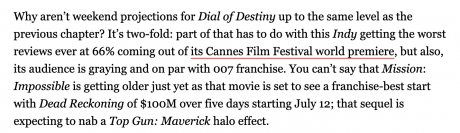
Deadline’s D’Alessandro: “Indy’s Audience is Graying”
[Filed this morning at 8:05 am] Deadline‘s Anthony D’Alessandro on modest box-office fate of Indiana Jones and the Dial of Destiny:
Arkin’s Vibrant Life
I never saw Alan Arkin in Enter Laughing or Luv on the Broadway stage, but for me he was the king of fickle neuroticism and glum irreverence for decades and decades, and for decades and decades I loved him like few others. And now the journey has ended. He was 89.
If I had to pick my favorite Arkin performances in descending order, I would restrict my list to four. I would begin with his grumpy but compassionate, heroin-snorting grandpa in Jonathan Dayton and Valerie Faris‘s Little Miss Sunshine (’06). In second place is Captain John Yossarian, the numbed-out pacifist Air Force bombardier in Catch 22 (’70). Third is his wonderfully anxious ands panicky dentist in Arthur Hiller‘s The In-Laws (’79), Fourth but not least is his moustachioed Russian submarine captain in Norman Jewison‘s The Russians Are Coming (’66).
Everyone remembers a concluding line in a certain Catch 22 conversation between Lt. Milo Minderbinder (Jon Voight) and Cpt. Yossarian. It wasn’t written by original novel author Joseph Heller but Buck Henry. Heller reportedly approved.
Minderbinder: “Nately died a wealthy man, Yossarian. He had over sixty shares in the syndicate.”
Yossarian: “What difference does that make? He’s dead.”
Minderbinder: “Then his family will get it.”
Yossarian: “He didn’t have time to have a family.”
Minderbinder: “Then his parents will get it.”
Yossarian: “They don’t need it, they’re rich.”
Minderbinder: (beat) “Then they’ll understand.”
Black vs. Asian Animus
CNN’s Abby Phillip, temporary host of The Lead, vs. author Kenny Xu (“An Inconvenient Minority: The Harvard Admissions Case and the Attack on Asian American Excellence“) and a board member of Students for Fair Admissions, the plaintiff in an historic argument over race-based admissions which the Supreme Court found in favor of yesterday.
Phillip: “If you take race out of it, let’s call it socioeconomic status, whether or not they grew up wealthy or poor. Is that not something colleges might have an interest in considering?”
Xu: “The reason why you shouldn’t consider that is because you should consider the success of an applicant. Because of affirmative action, Black Americans graduate from law school at the bottom 25 percent of their classes, largely speaking. And we don’t want that. We want Black students to succeed. We want every student to succeed. Low-income students to succeed.
“You have to put them in scenarios in places where they’re likely to succeed. And lowering your standard to admit somebody of a socioeconomic status or race would not help them do that. In fact it would harm their graduation rate and excellence.”
Phillip: “Well, as the case also points out, the standard isn’t necessarily lowered because the students are all admitted. It’s the question whether race can be an added consideration, a tipping point…”
Xu: “The standard is lowered.”
When Xu said “the standard is lowered.” Phillip obviously decided to shut down the discussion:
Phillip:: “Kenny…”
Xu: “The standard is lowered. As the Students for Fair Admissions data shows, an Asian has to score 273 points higher on the SAT to have the same chance of admission as a Black person…”
Phillip: “Kenny…”
Xu: “So the standard is lowered for Black applicants.”
Phillip: “Kenny Xu, thank you for your perspective. We really appreciate it.
Eyebrows Raised Over Mamet’s Dealey Plaza Drama
“The alteration of the [Zapruder] film in two instances proves its worthlessness as a document of anything other than deceit.”
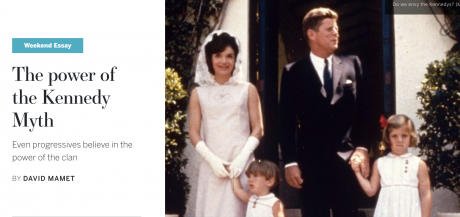
So writes respected director-writer David Mamet in a 6.24.23 Unherd article titled “The Power of the Kennedy Myth.” The piece is partly about theories and suspicions about the JFK Assassination, which Mamet is co-writing a screenplay about (his co-writer is Nicholas Celozzi, great-nephew of late Chicago mob boss Sam “Momo” Giancana) and will begin to direct in September.
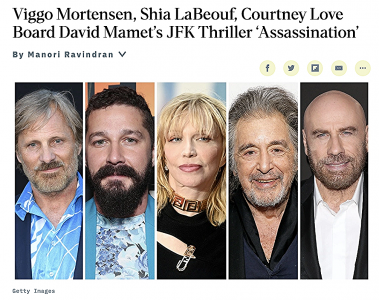
The costars include Viggo Mortensen, Shia LaBeouf, Al Pacino, Courtney Love and John Travolta.
Mamet and Celozzi will basically be passing along a “JFK was murdered by Momo and the mob” saga. This will put Mamet at loggerheads with Dealey Plaza conspiracy maestro Oliver Stone, who’s claimed for years that it was a CIA black ops job.
Mamet writes that he’s fond of “The Great Zapruder Film Hoax: Deceit and Deception in the Death of JFK,” a 2003 book that was edited by James H. Fetzer. I haven’t read it, but Mamet’s Unherd article says it asserts a claim that may arouse suspicions among JFK assassination buffs. It is, in fact, absolutely dead wrong.
“What’s wrong with the [Zapruder] film?,” Mamet asks, apparently leaning on the Fetzer book but possibly indicating his own suspicions. “To begin, several frames are missing,” Mamet states, “”No one has ever suggested a logical reason for their excision other than suppression of evidence.”
Then comes the Fetzer whopper. which Mamet is apparently on board with: “The blood-spatter explosion of the President’s head is, goes the claim, clearly painted on. It exists only for one frame, 0.04 of a second. In frame 312 it is absent, in the following frame it’s there, and in the next frame it’s gone — not dispersed or dispersing, but gone.”
This claim is absolutely incorrect, and the proof can be found by anyone examining this Zapruder file access page, which contains images of all 486 frames of the 8mm Zapruder assassination film.
All you have to do is examine frames #312, #313, #314 and #315.
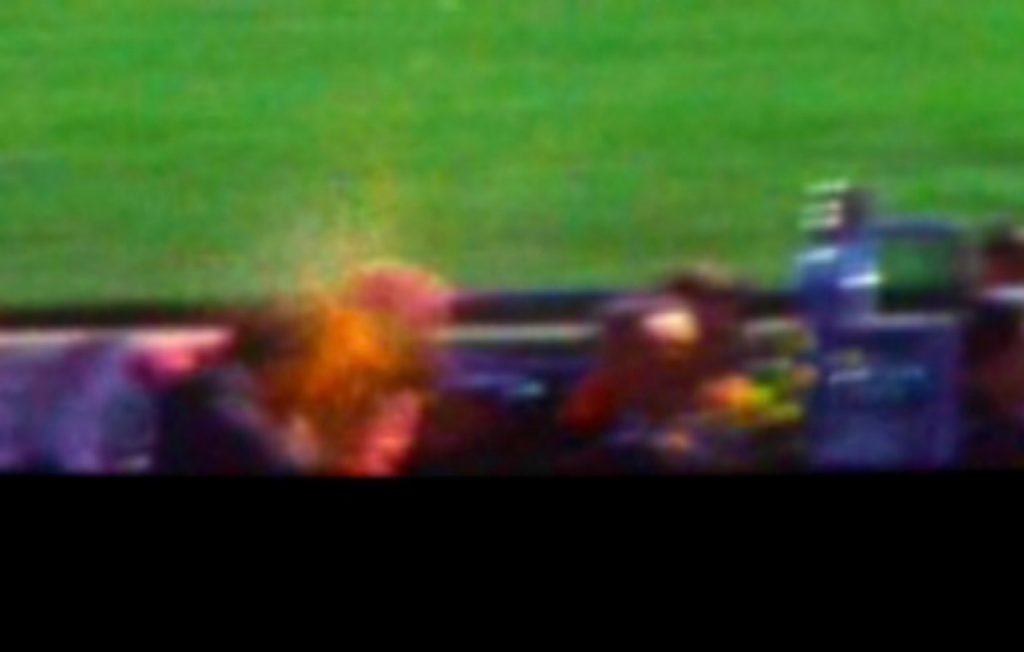
#313 shows the initial blood-and-brain-matter explosion, and it’s quite a good job of “painting” given that it not only shows the eruption of tissue in different directions but also a hazy watery mist hovering above JFK and Jackie Kennedy’s heads.
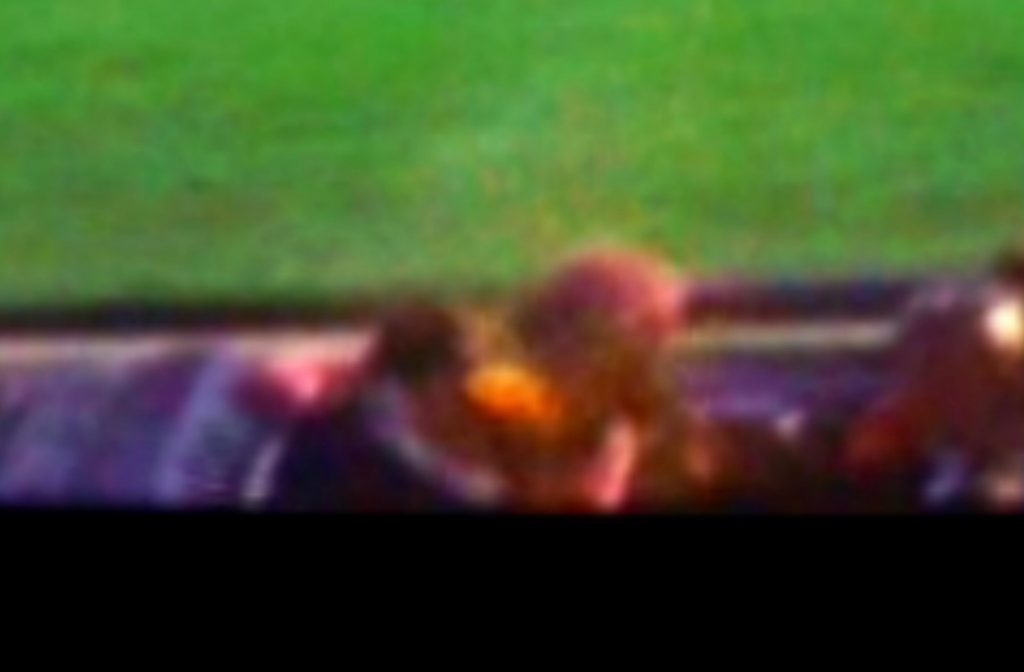
But #314 clearly shows the continuation of the initial grenade-like impact with red-orange tissue continuing to shoot out to the right, along with the persistence of the blood-water-brain matter spray effect above.
$315 shows less spray but the left-to-right tissue surge continues.
Say it again: Mamet’s statement about the blood-spatter explosion “existing only for one frame, 0.04 of a second” is flat-out wrong. “In frame 312 it is absent, [but] in the following frame it’s there, and in the next frame it’s gone,” he incorrectly writes. “Not dispersed or dispersing, but gone.”
C’mon, David…look at frame #314! You and your pal Fetzer need to rethink and recalibrate.
Again, an easy link to all 486 frames.