Bill Maher to Aaron Rodgers, starting at 1:12 mark: “The Republicans are actually more dangerous, and they’re certainly more…I can’t say the word anymore but it begins with ‘r’…we’re not allowed to say it anymore, which is why I hate woke because we need that word desperately because the country is…but the woke side is so much more obnoxious…the level of hate that they engender in me, with the kind of shit that they do…is like…”
Rodgers to Maher: “Why would they not move to the middle? They would get everyone on their side!”
Maher to Rodgers: “I say that every week. If they just would shed this skin…this woke skin of pregnant men and [equity over meritocracy] and ‘let’s make crime legal’…math is racist…whatever nonsense they’re into…all that shit, and it would be so easy to just leave it behind, and they would win every election.”
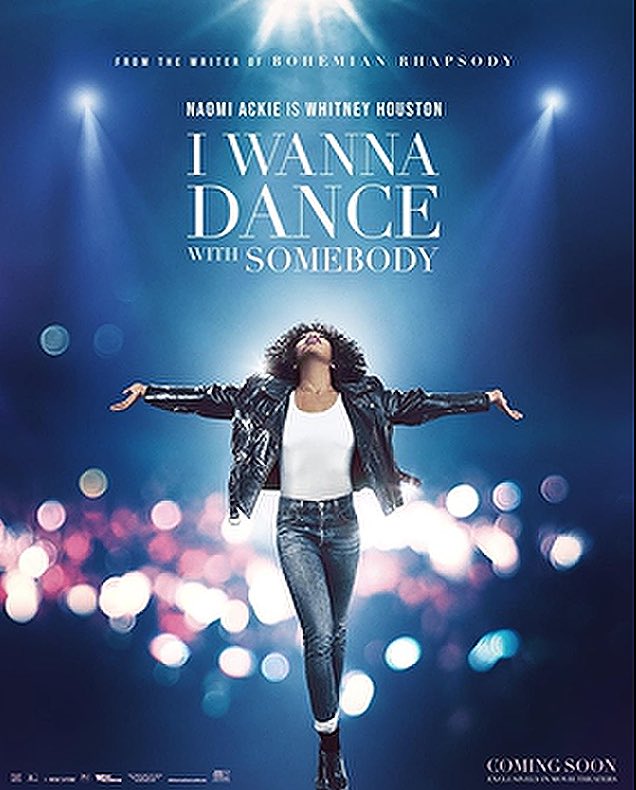
Initially posted on 4.27.22: Kasi Lemmons‘ I Wanna Dance With Somebody (Sony, 12.21.22), a cradle-to-grave biopic of the late Whitney Houston, was screened last night in Las Vegas, and the word (I spoke to two viewers) is definitely on the approving side.
It’s longish (150 minutes, give or take) and technically incomplete, as is normal for any film that’s more than eight months from opening. And it covers almost all of the biographical basics for Whitney fans — definitely a fan-service presentation.
For what it’s worth one guy’s reaction is through the roof about Naomi Ackie‘s Whitney performance. I know nothing about Ackie except that (a) she’s British and (b) played the smallish role of “Jannah” in 2019’s Star Wars: The Rise of Skywalker.
What kind of movie is I Wanna Dance With Somebody? Honest response: “It’s a TIFF People’s Award winner…it’s not a Venice or Telluride type of film…it’s been made for your hoi polloi faithful. And yet it’s intelligent and well-written as far as biopics go…screenplay by Anthony McCarten, shot by Zero Dark Thirty‘s Barry Aykroyd. Nothing wrong with that. It takes all sorts of films to make a world.
It’s basically a six-character drama — Ackie as Houston, Ashton Sanders as Bobby Brown, Stanley Tucci as Clive Davis, Nafessa Williams as Robyn Crawford (Whitney’s girlfriend), Clarke Peters as Whitney’s father and Tamara Tunie as her mom.
Houston’s Bodyguard costar Kevin Costner isn’t a character in the film.
…and is more or less ready to be shown commercially, what would your reaction be if you were a distributor in a position to purchase distribution rights?
I can tell you what my reaction would be. My reaction would be “this is such a good film that we need to not release it for another 15 or 16 months, just to be on the safe side….we need to put it on ice and let things just cool off and simmer down. Let’s not go into this situation half-cocked.”
I’m kidding. That wouldn’t have been my reaction. That was Focus Features’ reaction when they bought Alexander Payne‘s The Holdovers.
A guy (or guys) who saw The Holdovers last Sunday (i.e., five days ago) in Toronto shared reactions with TheWrap‘s Brian Welk
Reaction #1: “Outside a screening of Alexander Payne’s The Holdovers at the Scotiabank Theatre in Toronto on Sunday, one attendee left feeling that he had seen the best movie playing at the festival, even though it wasn’t an official selection of TIFF, and almost no one knew the screening was happening.”
Reaction #2: “[An] individual close to the project described it as touching, funny and very emotional, blending comedy and drama in the way that Sideways or Payne’s other films have managed with ease. Not only does The Holdovers reunite Payne with his Sideways star Paul Giamatti, the film fits snugly into Payne’s larger repertoire, moving away from the high-concept social satire Downsizing and instead evoking Payne’s humanism and the frustrations about ‘life being bewildering.'”
There are very few things in life that are more depressing (to me personally, I mean) than being in the company of a relentlessly joyous and alpha-minded person who is completely and totally in love with life or movies or what-have-you…who is so happy and buoyant that he/she can’t stop glowing and smiling and tingling. No offense but I would much rather spend time with sardonic, gravel-voiced, half-cranky types like Paul Morrissey or Paul Schrader.
Posted on 11.14.12: “It was sometime in the early ’80s when I began using ‘happiness pills’ as a term of disdain and derision. It came from a phoner I did with screenwriter Ed Naha, who later went on to co-write Honey, I Shrunk The Kids (’89). Ed was nice and obviously bright, but a little too euphoric and positive-minded. Alpha, alpha, gimme-a-break alpha. Like he was scared of even glancing at the sardonic or cynical or battle-weary side.
“It got to the point in our conversation that I started to mutter to myself, ‘Is there anything in the world that you’re not fucking delighted by or blissed out about, you relentlessly Pollyannic fuck?’
“I complained about him later with a friend, saying that he must have been swallowing great handfuls of happiness pills. Ever since then I’ve used this term whenever I meet someone who overdoes the cheerful. Because it feels like a kind of cover-up. It feels strenuous. Like Sally Hawkins‘ Poppy character in Mike Leigh‘s Happy Go Lucky (’08).
“And yet oddly, I haven’t been feeling this way since I stopped drinking. But I still can’t abide the kind of happiness that seems to come from a place of fear and/or avoidance.”
A difference of opinion has arisen about The Woman King‘s immediate prospects.
On one hand you’ve got Showbiz411‘s Roger Friedman all but calling Gina Prince-Bythewood‘s historical action dramadead in the water, and on the other Forbes‘ Scott Mendelson is going “wooh-wooh!!…The Woman King had a nice promising Thursday night and will probably do decently if not better by Sunday night….break out the champagne!”
Friedman: “The much touted Gina Prince-Blythewood film took in just $1.7 million last night at 3,271 theaters. That’s just $520 per screen…ouch! You could tell from the seat maps at major AMC theaters across the country that there was no enthusiasm for the much praised Viola Davis action film. Sony simply failed to make it exciting in any way.
“Now comes the actual weekend, so word of mouth should be good enough to lift the numbers. But if Sony had any Oscar expectations other than Viola for Best Actress they’d better turn on the charm fast.”
Mendelson: “In what could hopefully be an end to the post-Bullet Train slump at the domestic box office, Sony’s The Woman King earned a promising $1.7 million in Thursday previews. The showings began as early as 3:00 pm and suggest that the $50 million action drama would make anywhere from $13.5 million to $22.5 million over its domestic debut. Splitting the difference would be around $17 million, a debut on par with Sony’s female-targeted Where the Crawdads Sing from back in July.”
My basic reaction was “whatevs…Bailey is a beautiful, cocoa-skinned Rachel Zegler type, and a professional singer to boot and can presumably act pretty well so why not?…nobody’s going to hire a white girl in this punish-bad-whitey climate so why fight it?…and if Malcolm X had reddish hair why can’t Bailey’s mermaid have the same?”
Matt Walsh argues that racism is racism is racism (which it is) but he refuses to acknowledge today’s woke institutional position, which is that racism that favors BIPOCs is cool because (a) whites have it coming and (b) new social terms and dynamics need to be established.
In terms of casting movies and plays, woke racism (replacing historically or previously white characters with BIPOC actors) is, in the eyes of the terrified corporate establishment, a corrective measure that will not get them into trouble. In other words, a little reverse racism is okay and even cleansing because it counterbalances decades and centuries of racism by whites.
But in the same light casting James Franco as Fidel Castro is, according to wokesters, the same old racism that resulted in Jack Palance being cast as Fidel a half-century ago, in Richard Fleischer‘s Che (’69).
That’s the set-up and that’s the deal and Walsh knows this, of course, so why doesn’t he just say it? Because to do so would make him sound like an angry racist reactionary, so he lays out the situation with logic and lets the chips fall.
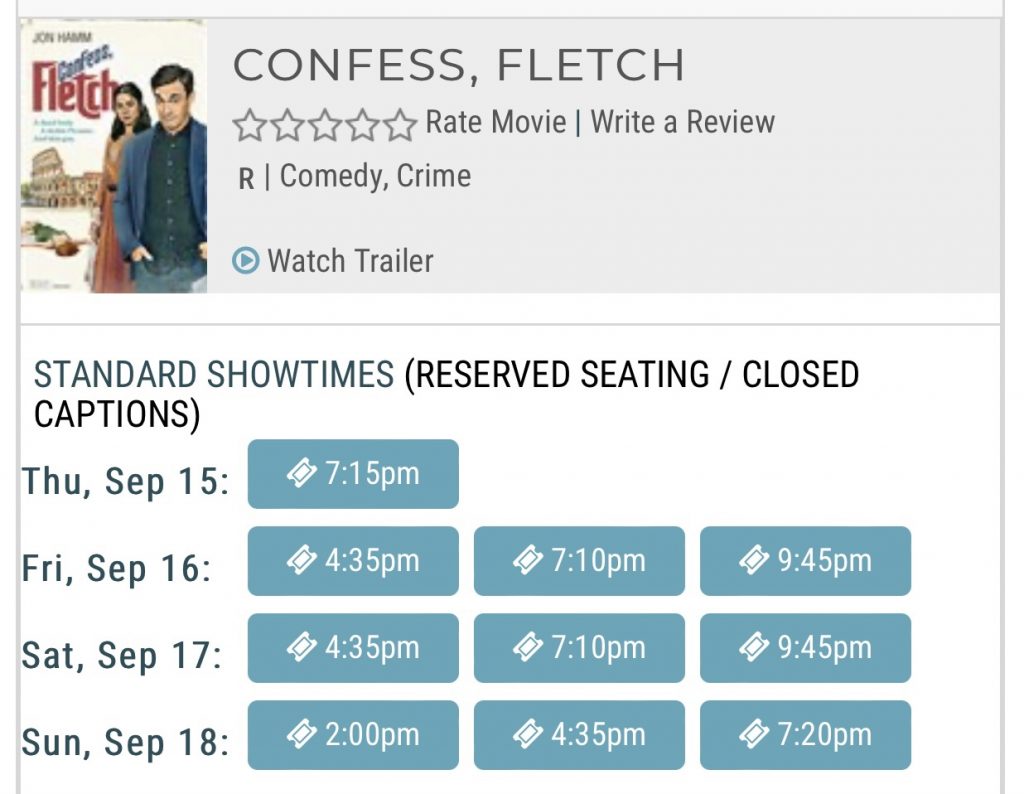
I paid to see Greg Mottola & Jon Hamm’s Fletchfilm this evening. The title is Confess, Fletch but it really, REALLY should be called FletchWhatevs, and that’s not a putdown in the slightest. I counted five people in the theatre (AMC Danbury) but I liked it. It’s certainly a much better, more adult-minded Fletch package than whatever was provided by those Chevy Chase films in the ‘80s.
FletchWhatevs is an agreeably quirky, mildly entertaining time killer…a low-key, loose-shoe Boston runaround stolen-art caper thang. It’s all jizz-fizz and that’s fine. I had a better-than-okay time but why couldn’t the AMC guys have heated the popcorn?
Hamm is totally cool and knows exactly how to project the right kind of laid-back Fletch attitude. (His personality mantra is — you’ll never guess this — “whatevs.” Which is fairly close to the personality mantra that Elliott Gould swore by in TheLongGoodbye, or “ladies, it’s okay with me.”) The supporting cast (MarciaGayHarden, John Slattery and Kyle MacLachlan are standouts but partly because their names are easier to remember as I write this) take their cues from Hamm.
There are only three problems. Okay, make that four. One, Hamm lifts his barefeet right in front of the camera in one early scene — a big no-no in the HE manual. Two, he’s gained a little weight since the MadMen heyday. (He could’ve easily tread-milled himself back into Don Draper if he wanted to.) And three, Hamm should have put mousse or Brylcream in his hair.
The fourth thing is that Fletch Whatevs should have spent more time in Rome. I really love it there.
I’m not really “complaining” because there’s no point in dismissing such a cool, witty, unassuming jack-off movie with several spunky, spirited and relatable supporting characters. The movie is good company in an inconsequential hang-out way. No bad things happen, and there are no energy drops or pacing issues except for a single strange, overly broad scene with Annie Mumolo…don’t ask.
Incidentally: Somebody said there was only enough money to shoot for a single day in Rome. I’m not sure I believe that. There’s a breezy montage sequence of a helmeted Fletch scootering all over town. (The helmet looks dorky.) There’s a two-minute dialogue scene overlooking some ancient Roman ruins. There’s a chatty cafe sitdown scene (Hamm orders a Negroni) in Piazza Navona. They didn’t shoot all that in just one day. Two or three days, I’m guessing.
Eight months after debuting at Sundance ‘22, Julian Higgins’ God’sCountry (IFC Films, 9.16) is finally peeking out. Call it a violentsocio–politicalallegory + a slow-build American gothic melodrama — patiently paced, melancholy, sparely crafted, and even thoughtful.
It’s basically about an ex-New Orleans cop (Thandiwe Newton), woke and angry, butting heads with Montana bumblefucks overarelativelyminorterritorialmatter. And beforeyouknowitthingsescalateintoabloodfeud. StrawDogs minus the sexual factor and the Peckinpah slow-mo. A touch of TheLimey, a hint of HighPlainsDrifter.
The only film I felt completely elevated by at the ’22 Telluride Film Festival was Sam Mendes‘ Empire of Light (Searchlight, 12.9). I was actually amazed that I fell for it as I was more than somewhat skeptical going in.
Empire is set roughly 42 years ago in rural England (it was shot in Margate) and is primarily about an unstable, somewhat schizzy movie theatre manager named Hilary Small (Olivia Colman, brilliant as always) and a brief, furtive affair she has with Stephen (Michael Ward), a theatre employee of color who’s exceptionally good looking and at least 20 years younger than Hilary.
Colin Firth is a crusty theatre owner who exploits Colman sexually, casually, off and on. But this eventually goes south, partly due to Stephen and partly due to Hilary going off her meds.
As I wrote on 8.24, I found it initially difficult to believe that Hilary-Stephen would happen in such a racially volatile period (I visited London in ’76 and ’80 and could absolutely smell the enraged skinhead vibes).
“However unbalanced and erratic, Colman’s character would have had to nurse a streak of serious self-destruction to engage in a May-December affair like this,” I wrote. And why, I added, “would a smart, good-looking dude like Stephen be interested in an unstable white lady on the far side of 45? What about all those foxy 20something girls running around town? I don’t get it.”
And yet the relationship gradually seems palatable and even endearing, and you start to realize as the film unfolds that Empire is about more than just Stephen-and-Hilary, an affair that doesn’t last all that long anyway. For it’s also a misty, memory-lane valentine to moviegoing and a golden, long-eclipsed era and, if you will, a certain kind of spirituality and way of life, even, for cinema devotees.
It dawned on me after seeing Empire that Mendes, born in ’65, had partly based it on his own hopes and dreams and movie-related experiences as a 15 year-old in 1980 and ’81, but that (and I’m guessing here) he decided the story would seem more au courant (i.e., woke) if Hilary’s lover wasn’t a pale-faced teenager but a 20something black dude, and from there he was off to the races.
Wokester critics have been shitting all over Empire of Light because of the Hilary-Stephen dynamic, which they certainly don’t approve of. They’re not buying the idea of even a brief sexual attraction between the two, and they resent the notion of an older, unstable, jagged-edge Hilary peering into Stephen’s soul and vice versa. White wokesters, after all, have been put on this earth to defend the dignity of POCs and to indict any white-male-created scenario that doesn’t say or do the right thing in their regard.
But Hilary and Stephen are both outsiders in a sense (Hilary of the temperamental variety and Stephen of a bruised and guarded shade due to white nationalist fervor) and that’s the basis for their mutual understanding. I bought it. It worked for me.
I realized within 15 minutes of the beginning that Empire of Light was an exquisitely composed yesteryear film, so perfectly acted and calibrated and moving. (I was especially blown away by Tanya Moodie‘s brief performance as Stephen’s mom.) The sorehead critics still have the upper hand, but once it starts showing around everything will change — trust me.
Empire is easily one of the best films of the year, and a just-posted review by Vanity Fair‘s Richard Lawson supports this view.
Empire of Light is “a humble little tale of human connection,” he writes. “[It’s] the director’s most delicate, a wistful short story about two people seized by circumstance who help one another find their way through life. It’s an achingly lovely film — the best Mendes has yet made.
“Whatever Mendes’s [personal] connection to the material, he’s made something humane and nourishing, a picture of rare thoughtfulness and decency.
“Viewed from some angles, the film looks rather strange: as Hilary loses her grip on her well being, Empire of Light takes on surprising new dimensions. It’s a shock to see the movie break its dreamy spell, as Colman suddenly turns the volume of her performance way up. Mendes’ calm and steady film stays upright throughout these jarring thrashes — and as Stephen is violently thrashed at — building toward a conclusion of staggering poignance.
“What remains [at the end] is a deep and refreshingly heart-on-its-sleeve compassion, a humbled and awed appreciation for the majesty of learning from another person.”
For several decades Fritz Lang‘s Metropolis (’27) has been tinted, colorized, re-scored and razmatazzed. This latest upgrade, posted earlier this month, is colorized (which we’ve seen before) but the4K, 60fpsqualitymakesadifference.
I would honestly love to re-watch all the ’20s classics this way. To my eyes it makes them more real, more intriguing, more biologically relatable.
The original black-and-white version is protected — what does it matter if people like me want to watch an uprezzed coior version? You have to admit that the colorizing (much more accurate than the standards of ten years ago) is very seductive
I’m also getting a strong echo of Damien Chazelle‘s Babylon, most of which happens around the time when Metropolis was shot and released (i.e., mid ’20s). Brigitte Helm, quite the sex symbol of her time, was only 19 or thereabouts when Lang began filming.
What a weird, constricted, almost repulsively narrow-minded world it seems to have been back then. Or at least, as far as what’s implied by Wallace’s questions and the answers he gets.
Wallace smokes constantly during the interviews and hustles Phillip Morris cigarettes like there’s a stern-faced Phillip Morris account executive standing just out of camera range. He also sold Parliament cigarettes like there was no tomorrow.
The only half-agreeable clip I took the time to watch is of Wallace asking Kirk Douglas, who was then filming The Vikings, about hiring former Nazis and Communists.
Douglas, obviously feeling a bit threatened but standing up nonetheless, basically replies that he doesn’t believe in persecuting people for past alliances, mistakes and/or errors of judgment. Good answer.
Douglas and director Otto Preminger brought the curtain down on the black list three years later by openly working with screenwriter Dalton Trumbo.
Wallace later asks whether European or American women makes the best wives. These two politely joshing males could be talking about cars or haberdasheries or washing machines.
We’re all products and members of our immediate environment, but the people in these videos seem to be living in a kind of gulag — the Leavenworth State Prison and Siberan salt mines of 1957-style propriety and conformity. The implications of a guarded, buttoned-down, autocratic world in these videos are positively stifling. And to think that I wasted over 45 minutes watching the damn things.
When I think of the best entertainment-world elements that mattered in 1957, I think of the vitality and reach of (a) Elvis Presley, (b) Paths of Glory, (c) the original Broadway production of West Side Story, (d) the debut of AmericanBandstand, (e) Chuck Berry, (f) Eugene O’Neill‘s A Long Day’s Journey Into Night, (g) Fats Domino, (h) Jack Kerouac, (i) Jerry Lee Lewis, (j) Night of the Demon with Dana Andrews, (k) Mickey Mantle, (l) Moose Skowron, (m) the Dodgers leaving Brooklyn, (n) Bob Dylan at age 16, (o) Sayonara, (o) The Tin Star, (p) the original 3:10 to Yuma, (a) the death of Humphrey Bogart, (r) A Face in the Crowd, (s) The Bridge on the River Kwai, (t) A Hatful of Rain, (u) Ben Gazzara in The Strange One, (v) Little Richard and (w) Twelve Angry Men.
There are faint echoes of these events, artists, athletes and creations in the Wallace videos, I suppose, but the world that’s mainly conveyed is one of arch attitudes and forced viewpoints, and above all a cautious, corporate mentality filled with people who weren’t really on to what was starting to happen back then, and certainly not about where things would be in a few short years.
Thanks to HE reader Mike Gaertner for passing these time-wasters along. “Another notable moment,” he writes, “is when Wallace attempts to make Tony Perkins the poster boy of the beat generation (???). Perkins seems very uncomfortable when Wallace asks to him discuss On the Road and jazz music (Tony apparently having been a fan of both). You can almost sense Perkins hoping a studio publicist would swoop in from the side to save him from having to reveal his bizarre side-life to middle America.”
In all my decades of movie-obsessing, only one film has given me pause in the matter of male anatomy. Pause and a slight feeling of discomfort.
I must have been 14 or 15 when I first watched this scene from Mr. Roberts in our family TV room, and I distinctly remember saying to myself, “Jesus, you can see Jack Lemmon‘s twin gonads right through his Navy khaki pants.”
It wasn’t so much distasteful as distracting — I stopped listening to the letter that Lemmon was reading. I didn’t hear a word of it.
If I’d been directing (not sure if it was John Ford, Mervyn LeRoy or Joshua Logan shouting “action” and “cut” when this scene was shot), I would have pulled Lemmon aside and told him to duck into wardrobe and put on one of those metal jockstraps that baseball catchers wear. That or stuff his underwear with a big wad of toilet paper, Mick Jagger-style.
I couldn’t be the first person to notice this, I told myself. Mister Roberts played everywhere in 1955, and was considered family-friendly for the most part. But not this part.
HE’s all-time favorite Lemmon performances: Operation Mad Ball, Some Like It Hot, The Apartment, Days of Wine and Roses, The Fortune Cookie, Save the Tiger, The China Syndrome, Missing, Long Day’s Journey Into Night, JFK, Glengarry Glen Ross, Short Cuts, Off the Menu: The Last Days of Chasen’s (13).