Yesterday afternoon the occasional, incredible stupidity of the HE commentariat manifested in spades.
The trigger was my having written that NEO, who is reportedly an incorrigible truth-teller and a total tattle-tale, had better learn to keep his fucking mouth shut when the situation requires it.
People have their secret passions and obsessions, and nobody likes a fink. Any novelist, screenwriter or playwright will tell you this. Do you think Leo Tolstoy would’ve been cool with NEO hanging around his house and ready to spill the beans at the drop of a hat?
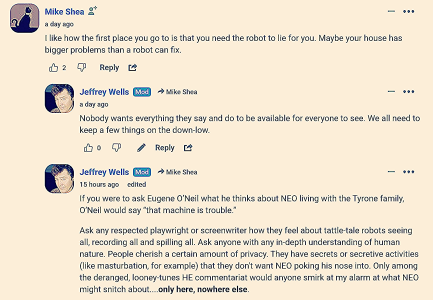
Did HE commenters lock arms with Tolstoy, Dostoevsky, Shakespeare, O’Neil, Chekhov, Albee, Stoppard and Pinter by saying “of course…a robot without a sense of discretion is obviously bad news”? No, they dumped on me. They said (a) “hilarious that this is the first place your mind goes” (roland1824) and (b) “I like how the first place you go to is that you need the robot to lie for you” (Mike Shea).
This is what defines banal minds. Whatever great minds might be thinking, banal minds go the opposite way.
“All happy families are alike, but each unhappy family is unhappy in its own way, and one obvious, sure-to-increase source of every wealthy family’s unhappiness is a big-mouthed robot” — from Tolstoy’s “Anna Karenina”.
=
NEO, by the way, is 5’6″ and weighs about 65 pounds. He’s obviously not Gort, and can be slapped around at any time. HE to NEO: “You’ll take it and like it.”
Visiting Jett, Cait and Sutton’s home in West Orange, New Jersey has been HE’s default Thanksgiving destination since I moved to Connecticut in ‘22. But not this year. Come 11.27 the Jersey crew will be dinner-ing in Massachusetts so Jody and I are outinthecold.
So last week I started looking around for a nice, home-styled, non-corporate restaurant (fireplace, candles, scent of cinnamon and pine needles) to savor a Thanksgiving dinner in, and guess what? They’re all fucking closed.
Okay, we found one place that’s turkey-serving in Silvermine (TavernatGraybarns) but they’re charging $150ahead plus extra required gratuities. No, thanks. That’s exploitive.
Right now our best (i.e., affordable) Thanksgiving option is Turkey McNuggets at McDonalds.
I think it’s shallow and rather ungracious of those nice local eateries (Westport’s Terrain, Georgetown’s Milestone) to shut their doors on Thanksgiving. They know there are many people like me with no soothing place to go. Restaurants should respect the customer base and open their hearts on this day of family togetherness.
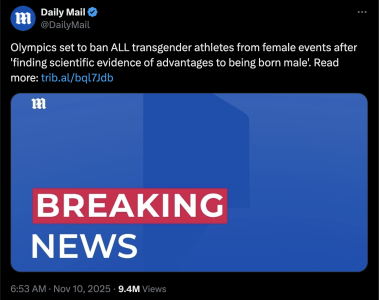
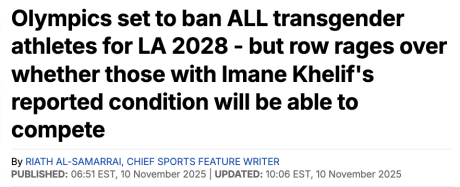
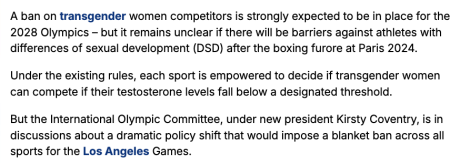
“Scientific evidence of males enjoying distinct physical advantages over women when it comes to competing in the same sporting events”? Really? This is shocking.
I was totally won over by Sweeney’s formidable, rock-steady performance in Ron Howard‘s Eden, but I’ve never even considered the idea of seeing Christy. Even now.
“…there’s a one-in-three chance he will be a substance abuser.”
I had co-habitated with three women by the time I was 30. I finally got married in my late 30s, resulting in two great sons. Divorce happened after four years. Alas, I became become a modest alcohol abuser (vodka and lemonade on the rocks after 9 pm) in the early ’90s. Abandoned the hard stuff in ’96. Embraced total sobriety on 3.20.12.
Some of Gavin Newsom‘s previous governmental moves make your eyes roll? You don’t like the fact that he’s obviously a transactional, opportunistic politician? You want someone who’s pure as the driven snow to run in ’28?
Newsom is the boldest, ballsiest anti-Trumper out there right now. And he’s willing to take risks…he’s into trying stuff, experimenting, being adaptable. There’s nothing wrong with throwing spaghetti at the wall to see it it sticks. Newsom is totally fucking fine with me.
Humble, soft-spoken, morally upstanding Methodist ministers from small towns in Iowa don’t run for president as a rule.
Newsom just needs to walk back the trans stuff. Shake hands with the trans community, give them a hug and wish them the best of luck.
N.Y Times podcasters Kevin Roose and Casey Newton have posted about an encounter with NEO, the mild-mannered robot who wants to help around the house.
Problem #1: NEO watches and records all, so don’t do anything in front of NEO that you might want to keep private. Problem #2: NEO is incorrigibly honest — he /she / it won’t lie for you — and is basically a snitch.
NEO will never be accepted by consumers unless he / she / it can be morally corrupted….unless he / she / it can be taught to lie. Nobody wants a goody-two-shoes robot messing things up.
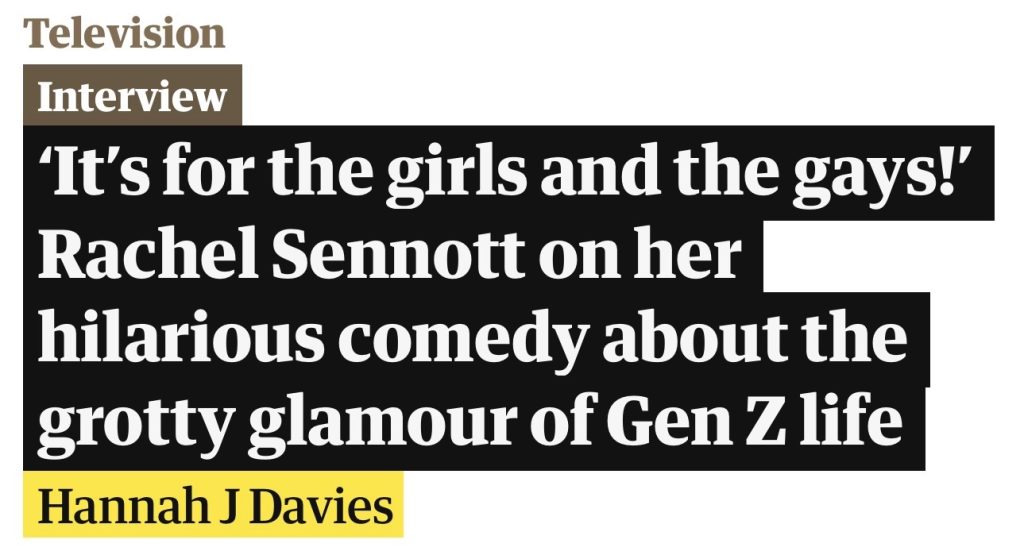
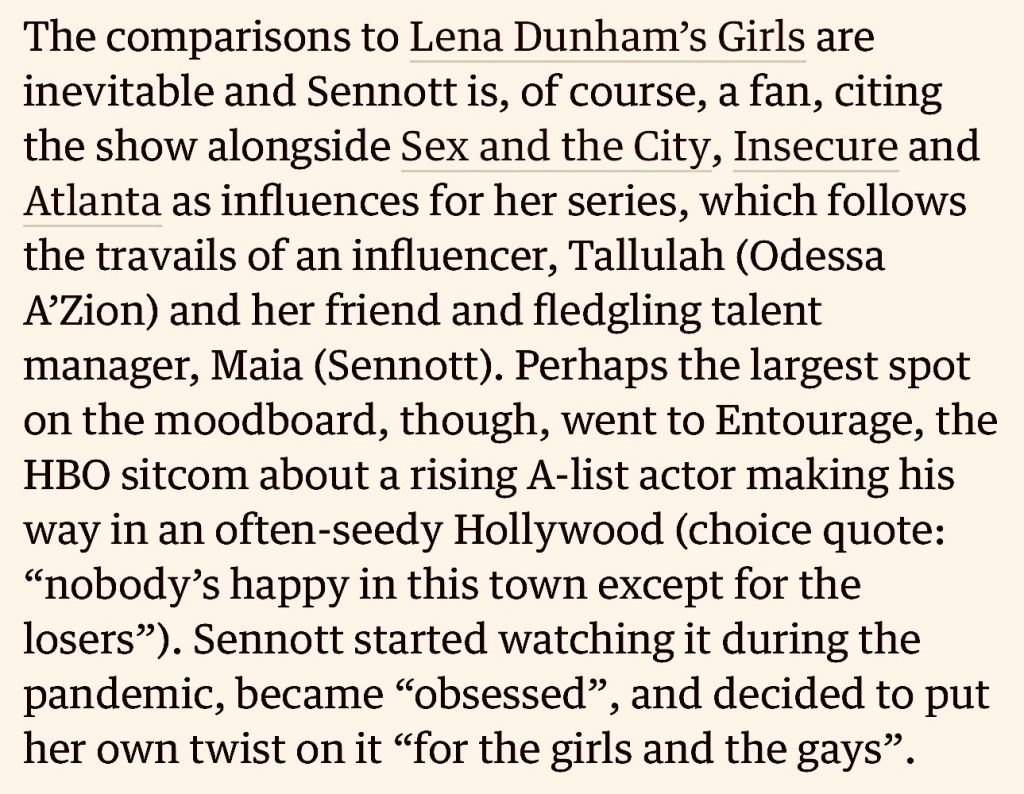
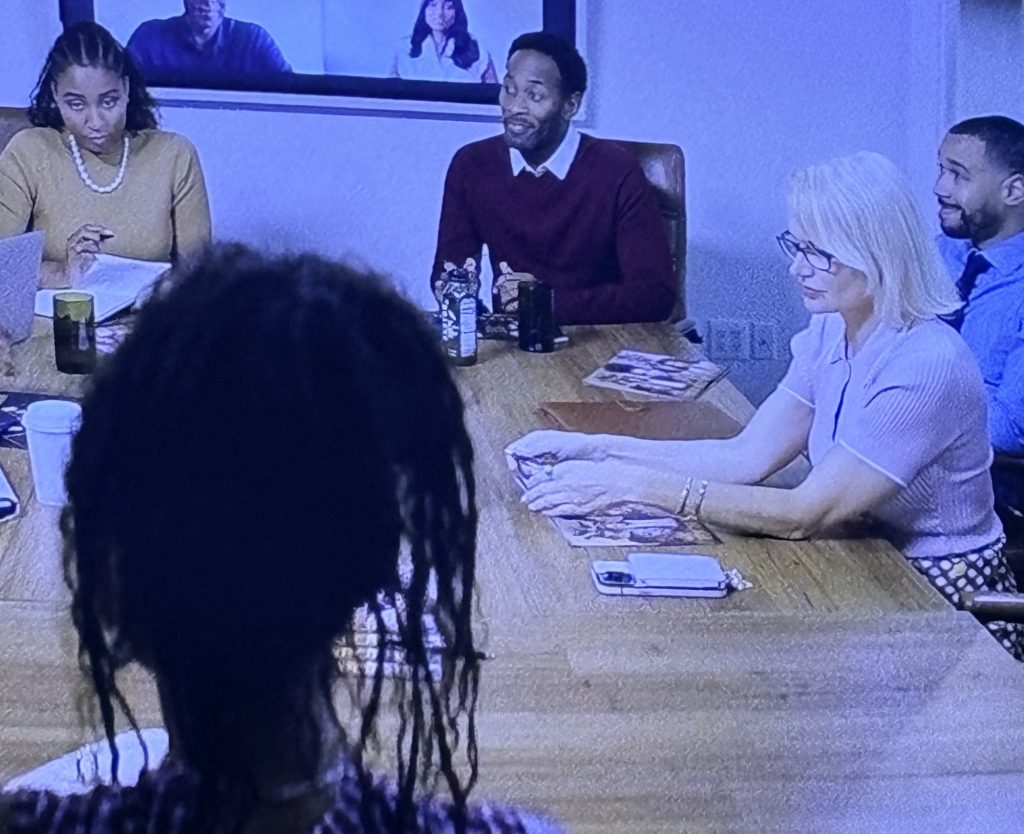
HEtoFriendo: “I caught episode #1 of Rachel Sennott’s ILoveLAacoupleofnightsago, andwhile it’s simultaneously revved-up and draining you can’t say it lacks the necessaryZoomerenergy or doesn’tunderstanditsownlemme–outta–herevibe— eitheryousubmitto this kind of arch–humor–aimed–at–under–35–women–and–gay–dudes thing or you throw up your hands and turn it off.
“Full respect paid to Sennott, the show’s maestro-like creator, star, senior writer and exec producer.
“But if I was a 28-year-old Silver Lake woman looking to somehow nudge my way into talent-managing and all my friends talked like the women on this show (toxicemotionalphoniness…migraine–inducing, machine–guninsinceritytothemax) I would probably wind up (a) shooting myself with a snub-nosed .38 or (b) becoming a William S. Burroughs-level heroin addict. My motto would be ‘yeah, I love LA but I’m drowning in phoney-baloney, fair-weather friends.'”
Friendo: “It’s just Lena Dunham 2.0…amixofGirlsandEntourage.”
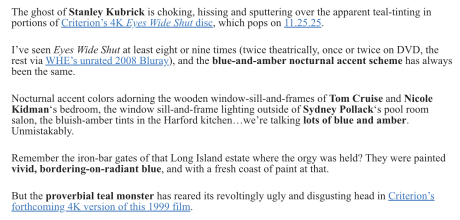
Sent this morning: Hollywood Elsewhere to Eyes Wide Shut dp LarrySmith, who oversaw the 4K digital restoration of Stanley Kubrick‘s 1999 film and is therefore the guy to blame for the notorious teal-tinting. (Message sent by way of Smith’s manager, Hillary C. Cook.)
Hillary,
Please forward this to the honorable Larry Smith, BSC. It’s about his having supervised a new 4K UHD mastering of Eyes Wide Shut, which Criterion will release just before Thanksgiving.
I don’t mean to sound alarmist, but it appears as if Larry’s teal-tinted remastering of Eyes Wide Shut is an abomination — an affront to God, and especially to the memory and honor of The Great Stanley K., whose ghost is almost certainly fuming, seething, punching the refrigerator.
Gary W. Tooze of DVD Beaver assured me this morning that his Eyes Wide Shut screen captures are accurate:
“I’ve been doing DVD Beaver for 25 years… and those Bluray captures [have been rendered] the same way for a decade and a half…The Eyes Wide Shut images are Bluray caps — not 4K UHD caps — and they are accurate. I’m sure the truth will come out eventually.”
Today I shared the following with a fellow who knews a few things about motion picture restoration and Bluray masterings:
HE: “I saw Eyes Wide Shut theatrically three times and have watched it on Bluray five or six times, and it was never infected with the teal virus until, to go by recent frame captures posted by DVD Beaver’s Gary W. Tooze, the Criterion 4K Bluray came along.
“This is truly rancid stuff. That’s right — Larry Smith is apparently in the grip of Criterion evil. The word ‘shameful’ isn’t strong enough.
“In the realm of transferring visual values from celluloid or DCPs to the digital Bluray format, what could possibly be more reprehensible and malignant than to change the color scheme in the direction of teal and orange?
“What could be more hateful and infamous than to flat-out vandalize the visual aesthetic of the director (and in some cases the DP) of this or that film?
“This isn’t an unfortunate aesthetic decision — it’s a CAPITAL CRIME.
“If I had my way in this wicked world, all the criminals behind the teal vandalizing of all the victims of this appalling Criterion scourge (Midnight Cowboy, Bull Durham, Night Moves, Sisters, Teorema, Eyes Wide Shut) would be dragged before the court in chains, just like Charlton Heston is dragged before Cedric Hardwicke in The Ten Commandments.
“I am a voice in the wilderness who truly believes in the purity of original visions.
“I was going to say that I am, in a certain sense, a kind of John the Baptist in the Robert Ryan sense of that term, but that would be going too far. But I’m truly alarmed that so few who know this realm are speaking up.
“If by clapping my hands three times I could criminally indict the Lee Kline cabal and force them to stand trial in a Bluray remastering version of The Hague, I would clap my hands three times.”
Last night I sat through James Vanderbilt‘s Nuremberg, all 148 minutes’ worth. It was a 10:15 pm show, and within 10 minutes I’d begun surfing and texting out of boredom. I was semi-flabbergasted by how rote and so-whatty it all felt. I was riveted by Vanderbilt’s writing and direction of Truth ten years ago but this felt like an AMC or Hulu docudrama.
Russell Crowe and Rami Mallek‘s vigorous, snappy-charm performances as Herman Goring and Douglas Kelley aside, the film exudes stodgy mediocrity at every turn.
Note #1: I hated Dariusz Wolski‘s subdued brown-and-white pallete. A dreary, underlighted brown and white mixed with vague hints of gray and olive drab. “Fuck this cinematography and fuck Wolski in general,” I was muttering to myself. “I have to sit through two and a half hours of this?”
Note #2: I found John Slattery, Richard E. Grant and Michael Shannon‘s performances as dull prosecutors especially difficult to sit through. Slattery was so great in Madmen and even in Spotlight, but here he’s like an overdose of klonopin. Droopy, sour-faced Shannon was a godsend in Revolutionary Road, but his portrayal of prosecutor and future Supreme Court justice Robert H. Jackson is lethal — Crowe’s Goring is guilty of horrendous war crimes, I was reminding myself, but as I sat there I was honestly more interested in seeing Jackson hung or shot by a firing squad.
Note #3: I despised Leo Woodall‘s character in the first White Lotus saga (’22), but I double-triple-quadruple hated his portrayal of German translator Sgt. Howie Triest in Nuremberg…go fug yourself, ya chubby-faced, attention-seeking actor, using your watery eyes to convey repressed emotions…die!
Note #4: The third-act scene in which the notoriously antiSemitic Julius Streicher goes to the gallows is an accurate representation of how this despicable fellow died (i.e., like a whiney coward), but I deeply resented a shot of urine leaking down on his legs and dampening his socks and shoes after his body has dropped. Hanging victims always evacuate waste when their neck snaps. Why exactly am I being shown this? Hard and fast HE rule: No urine depictions of any kind, ever, under any condition or circumstance.
Note #5: In custody the overweight Goring dropped 60 pounds before his trial. He wasn’t slender on the stand, but he certainly wasn’t as fat as Crowe appears. Crowe should have slimmed down before filming began.
Note #6: During the closing credit crawl we’re told that Mallek’s Kelley character, a well-educated and highly regarded psychologist who authored a 1947 book about Goring and other Nazi defendants (“22 Cells in Nuremberg“), committed suicide in 1958. (He was an alcoholic, but only 45.) Kelley used the same method that Goring used to kill himself in his cell — cyanide. And what does this odd, grotesque fact have to do with Goring or anti-Semitic Nazis or anything along these lines?
Note #7: Every week I willingly, devotionally submit and suffer through movies like Nuremberg. I go to certain films with a reasonable expectation that they will instill a sense of being trapped, existential ennui, feelings of melancholy and even depression, etc.
Is there anything more vile and reprehensible than the advocates of Criterion teal-tinting, and particularly those on a recent Bluray.com forum discussion about Criterion’s 4K UHD disc of Eyes Wide Shut?…flagrantly dishonest people like “VickPS” who are saying stuff like “huh?…what teal?…we don’t see it…Gary W. Tooze’s frame captures can’t be trusted!” and so on.
VickPS to anti-teal advocate: “You know what’s worse than people not knowing about what they’re talking about? People pretending to know what they’re talking about, and speaking with authority while belittling the opinions of others.”
Pro-teal #1: “DVDs and Blurays use an 8-bit YCbCr color space which offers 16.7 million colors. Certainly enough to offer an accurate representation of the film.
Anti-teal #1: “That is false. When film is digitized into 8-bit YCbCr, colors are mapped or compressed into a narrower gamut, and subtle gradations are quantized into 256 levels, leading to loss of vibrancy, detail, and fidelity. Wider gamut spaces are needed to better approximate film’s color range, but even these don’t fully match the analog complexity of photochemical film. Your point also assumes that the telecine operator working on DVDs and early Blu-rays was trying to make films look like photochemical film, which is clearly not the case for the majority of releases.
Pro-teal #2: “‘Teal conspiracies’, huh? ‘A bad faith argument’? What exactly are you even blathering about here? What bad faith? It’s his opinion. Do some people work for an anti-Teal groups, ready to take down big Orange-Red?! What’s the narrative? and remind us all how it’s been ‘debunked'”.
Anti-teal #2: “I worked at a movie theater in my teens where Eyes Wide Shut was shown daily. I’ve seen it on DVD, Bluray and TV, and I’m telling you with 100% certainty that it is not supposed to have this [teal] grading, or at least didn’t in every medium I saw it on at the time.
HE to DVD Beaver’s Gary W. Tooze: There are people claiming that your EyesWideShut frame captures, which reveal flagrant teal-tinting, aren’t accurate. Are they? Because if they are, Criterion’s EWS 4K Bluray is definitely teal-infected. And they’re doing the work of the living devil.
Your DVD Beaver frame captures make this obvious. Be a man, Gary — stand up and tell these dog liars to stop lying like dogs.


 =
=