James Baldwin’s “The Slaughter Next Time”

The November mid-term elections will be “interesting,” an industry friend wrote this morning.

“Interesting?” I replied. “As you well know the Democrats have all but slit their own throats with (a) the embrace of trans ideology & teaching soft-clay kids (kindergarten to third grade) about gender fluidity plus (b) supporting equity over merit in schools and instructing kids about the inevitable tendency of whites to oppress BIPOCs plus (c) condemning the legacy of Abraham Lincoln by having his name removed from schools plus (d) the fundamental unfairness of Lia Thomas…all of this insane woke shit will likely ensure their defeat in November.

Consider Glenn Youngkin‘s Virginia victory + those San Francisco school board removals and then multiply by hundreds.

“On the other hand there’s the rage over the killing of Roe v. Wade plus the Jan. 6th committee having increased awareness of Trump’s mafia brutishness. That should motivate a lot of fence-sitters and lazy-bone types to get off the couch and actually vote.”

“You are so right about the Dems,” he answered, “although I almost never hear Democratic leaders discussing those issues. I just hear the GOP losing their shit every time a trans athlete wins a race.

“Dems will lose the House almost for sure, but I’m confident we’ll maintain control of the Senate. Because of Trump’s obsession with celebrity and the advancement of laughably unqualified candidates like Herschel CTE Walker and Dr Oz. and JD Vance.”


Keke Palmer Is Chuckling

Keke Palmer came along 13 years after Bill Murray‘s SNL “Weekend Update” interview with Jerry Mathers and Tony Dow.

Snopes says that the “Beaver was killed in Vietnam” rumor became a thing sometime during 1968. It must have lingered to some extent or Murray and the SNL writers wouldn’t have focused on it.

Read more

Judd Hirsch Returns

In Steven Spielberg’s The Fabelmans, 87 year-old Judd Hirsch plays an elderly uncle on Michelle Williams’ side of the family. (Or something like that.). We’re already presuming Williams will be a Best Actress nominee, but two viewers believe that Hirsch is likely to become a Best Supporting Actor contender also.

Tipster: “I think Judd Hirsch will probably get a supporting actor nod. He’s only in three scenes (definitely less than 15 minutes total) but he steals the whole film.”

Unless I’m forgetting something, Hirsch’s last Oscar nomination was for his performance as Dr. Berger, Timothy Hutton’s therapist, in Robert Redford’s Ordinary People (‘80).

A Few Things

Answer: I would safeguard the lottery ticket by locking it inside a safe and secure place with thick steel walls, but first I would take photos of myself holding the lottery ticket along with a print edition of that day’s N.Y. Times. I would then make color copies of the lottery ticket. And of course hire a smart attorney to learn how to best proceed.

And then I would (a) give Jett and Cait the money they need to pay off their student loans and home mortgage, and then encourage them to buy a sizable colonial with a guest house in Westchester or Fairfield County that I would crash in from time to time; (b) give my son Dylan funding for a company or creative project of his own choice; (c) launch a motion picture production company, base it in lower Manhattan, decorate the offices just so, and hire smart people in their 30s, 40s, 50s and 60s; (d) invest in some kind of promising green technology; (e) launch a pet care company that offers affordable spaying for people with limited income; (f) become a major financial supporter of the Telluride and Santa Barbara film festivals; (g) find some younger people (late 20s, early 30s) who are smart and creative but teetering and need a little stability in their lives (which I needed in the ’80s) and try to help their situations; (h) consider other investment opportunities that might make the world a better place; (i) secretly hire a team of Mission: Impossible guys to murder Vladimir Putin and his henchmen; (j) buy a loft in Lower Manhattan along with a BMW rumblehog scooter that I’d park in a nearby garage; (k) buy a nice three-bedroom apartment on rue Saintonge in Paris plus a BMW rumblehog scooter that I’d park in a nearby garage; (l) find an Asian supplier of gooey, high-grade opium; (m) buy a loft in Hanoi along with a BMW rumblehog scooter that I’d park in a nearby garage; and (l) buy a farmhouse in Tuscany along with a BMW rumblehog scooter that I wouldn’t have to park in a nearby garage because it’s Tuscany.

Cuomo Emerging From Purgatory

Chris Cuomo to Bill Maher: “The majority of people in this country want an alternative…they’re what I call free agents…I don’t like ‘middle’ or ‘independent’…everyone has been forced into picking a team. Culturally, we have to end the two-party system.”

Ehrenreich Took The Hit

After the disastrous disappointing underwhelming reception to his titular performance in Solo: A Stars Wars Story (’18), Alden Ehrenreich seemed to go into hiding. Okay, not entirely. Two years later he costarred in Brave New World, a Peacock streaming series based on the Aldous Huxley novel, but it was cancelled after a single season. The general impression (at least in this corner) was that the poor guy’s career had been seriously dented, and that his leading-man aspirations had been dashed.

But now, four years after Solo, Ehrenreich seems to be inching his way back. As a second banana, okay, but at least it’s work. He’ll be seen next year in a pair of supporting performances — Elizabeth BanksCocaine Bear (“An American black bear goes on a murderous rampage after ingesting a staggering amount of cocaine”) and in a supporting role (I’m not seeing a character name) in Chris Nolan‘s Oppenheimer.

Just imagine if Kathy Kennedy had chosen the obviously well-qualified Ansel Elgort as Han Solo instead. Solo would have been a better ride, and Ehrenreich, poor fella, would have been spared the embarassment, nobody would gave called his chops into question, and he could have sailed along as a middle-range lead. But no — Kennedy cast him as Harrison Ford‘s shorter, dweebier, not-as-charismatic nephew and in so doing damn near destroyed his career.

Read more

Socially Repressive “Philadelphia Story”

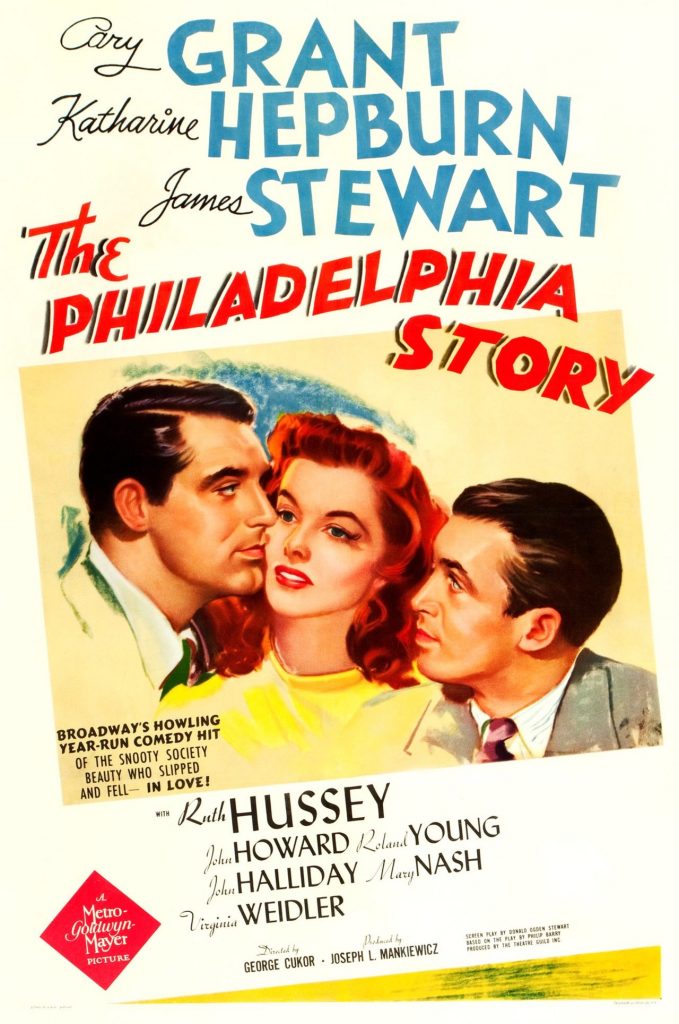
Last night HE commenter “K. Bowen” noted a key flaw in Phillip Barry’s well-liked The Philadelphia Story (a 1939 Broadway play, and then a 1940 film from director George Cukor), or more precisely in how the play’s romantic relationships are sorted out in the third act:

HE response: That’s completely accurate. Cary Grant and James Stewart’s characters DO pair off at the end with their social-class equals, and yes, Stewart is CLEARLY more attracted to Hepburn than Ruth Hussey, who genuinely loves him but for whom he feels no fire in the loins.

In the end Stewart offers to marry Hepburn, but is turned down because Hepburn is more profoundly drawn to ex-husband and social equal Grant. So Stewart somewhat meekly and dejectedly accepts a union with Hussey, his own social equal.

Original play author Phillip Barry & screenwriter Donald Ogden Stewart are basically saying “stick with your own kind” and “accept the social order of things” — wealthy blue-bloods belong with other wealthy blue-bloods, and middle-class strivers like Stewart’s Macaulay Connor and John Howard’s George Kittredge, a pretentious and moustachioed stuffed shirt if there ever was one, are better off with women of their own station.

So on one hand TPS is socially frank and realistic but on the other hand somehwat chilly and stifling. Compare this with the much nervier and more free-of-spirit, social-order-be-damned theme of Barry’s Holiday , which also costarred Hepburn and Grant.

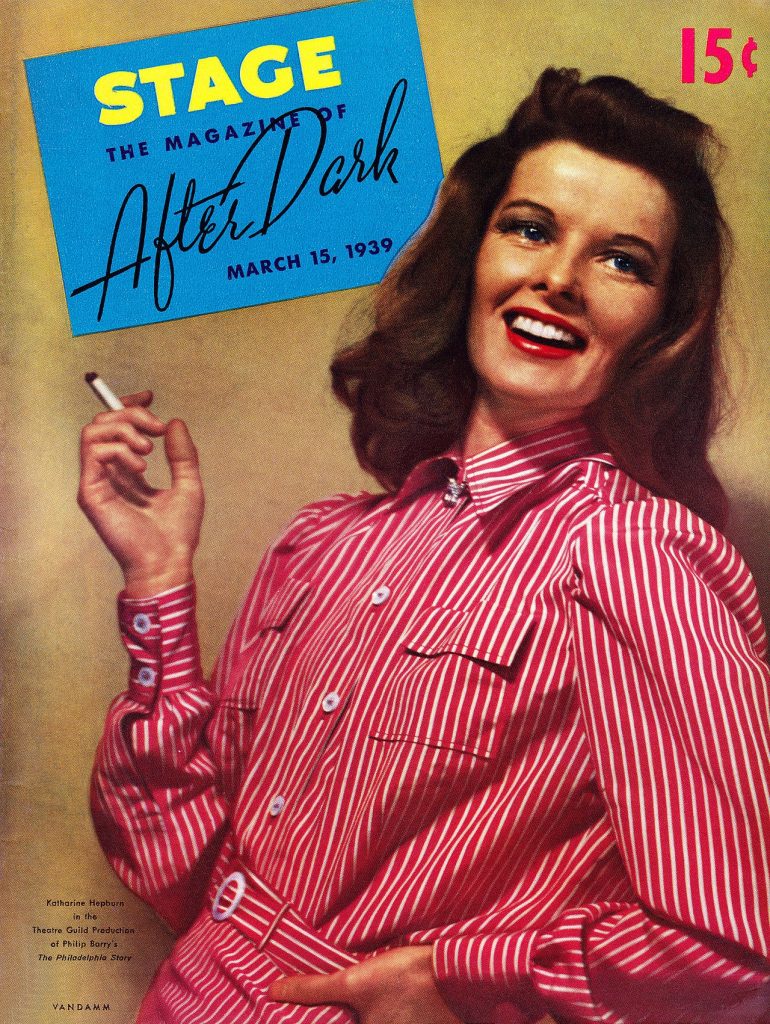
Note: Grant’s C.K. Dexter Haven uses a pet nickname for Hepburn’s Tracy Lord — “Red.” Hepburn’s hair color is front and center in the full-color poster, of course, but vague by way of Joseph Ruttenberg’s black-and-white cinematography. Hepburn’s freckly complexion (a typical red-hair component) was often obscured by makeup in her monochrome, big-studio heyday. Her natural red-auburn coloring was unmissable in John Huston’s richly hued The African Queen (‘51) and David Lean’s Summertime (‘55).

Two Years Before Joe Biden’s Birth

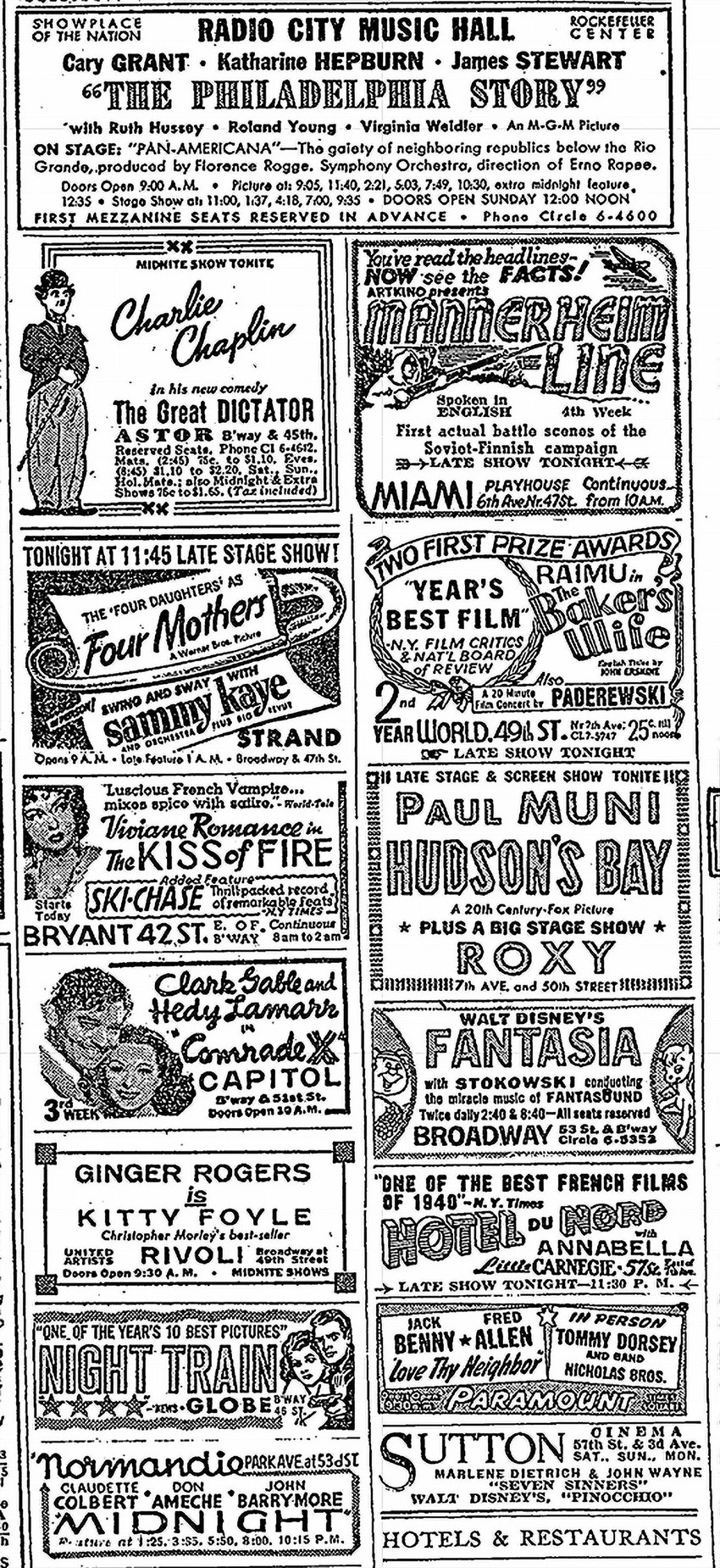
If 1939 was one of the greatest years of American cinema in the 20th Century (and it was), 1940 was a relatively tepid one. It’s as if 1939 had vacuumed up most of the raw psychic material of the late ’30s, leaving very little for 1940 to play with. These ads are from a N.Y. Times page in mid December 1940. Many are worthy, but none really light my fire. My favorite ’40 flick, Alfred Hitchcock‘s Rebecca, had opened the previous April and was naturally spent by year’s end.

Lon Bannon Was A Little Reckless

Lon Bannon (Brandon de Wilde) decides to leave home with a small bag and no wheels and apparently not much pocket money. And yet he’s just inherited half of his late grandfather’s ranch, and he knows that crusty uncle Hud (Paul Newman) plans to drill for oil. So Lon could certainly borrow money against his holdings to buy a second-hand car and a couple of suitcases, and maybe put a couple of thousand bucks in his wallet. And he’s just going to hit the road and…what, “walk the earth” like Samuel L. Jackson in Pulp Fiction? He didn’t make any calls to see where he might find work?

You can’t believe that Lon, a smart, sensible fellow, would play it this way.

Fine Young Cannibals

Luca Guadagnino‘s Bones and All (UA Releasing, 11.23), a coming-of-age 1980s romance horror flick with Taylor Russell and Timothée Chalamet, will have its big premiere at the Venice Film Festival.

Guadagnino has called it “a very romantic story, about the impossibility of love and yet, the need for it…even in extreme circumstances.” He’s also spoken of his empathy for the kind of wind-tossed street characters played by Chalamet and Russell.

I too feel a rapport with adrift and disenfranchised characters — I always have. But they have to be physically attractive. Yes, I recognize that cannibalism is a metaphor for a certain outre lifestyle or passion that mainstream society frowns upon, but I’m left with some nagging questions.

One, to be a cannibal one must first be a murderer. That, to me, is a bit of a sticking point. Chalamet and Russell presumably have a certain method and procedure. So the question isn’t just about eating human flesh a la Night of the Living Dead. The question is which humans have to be murdered so Timothee and Taylor can indulge their passion? How are they selected? Is it random? Who does the actual killing? Are the victims morally deserving of being killed and eaten?

Two, I’m presuming that Timothee and Taylor restrict their meat consumption to the parts of the human body that supposedly taste good — the ribs, chest area, arms and legs. If I were going to become a cannibal I would want the flesh prepared chef-style…grilled, fried, covered in sauces and spices, cut into plate-sized servings.

Three, the more you think about it cannibalism doesn’t really sound like a fringe passion. It sounds odious and perverse. Unless, as noted, the victims deserve their fate. In which case cannibalism would be more political than culinary.

Four, I’m bothered by reports that African predators aren’t that fond of human flesh, presumably because of all the crap we eat and all the rancid chemicals, etc.

Five, isn’t it safer and less risky and more palatable (not to mention more humane) for Timothee and Taylor to become vegetarians?

Just thinking this through.

Beyond Bummed

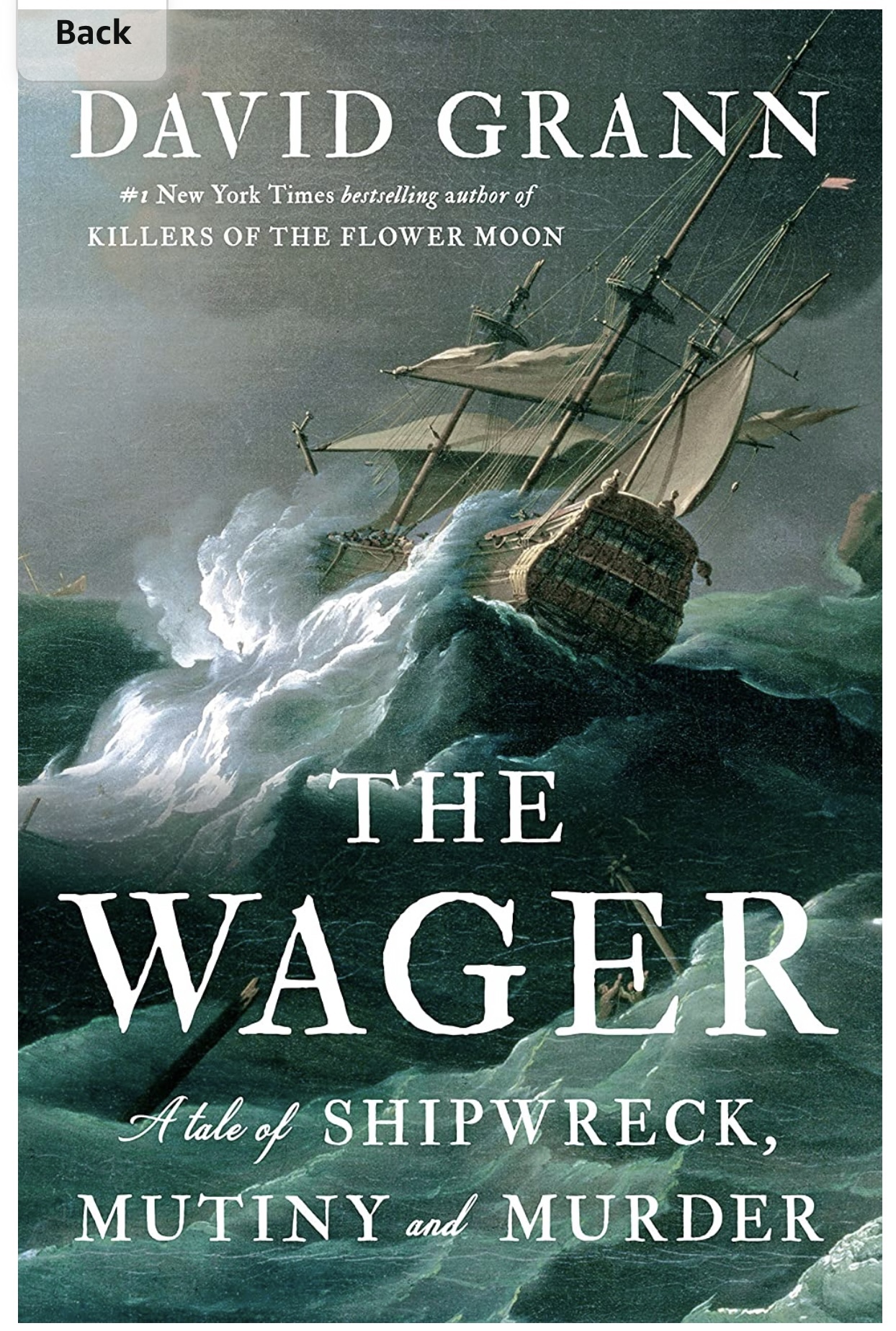
Reading about Martin Scorsese and Leonardo DiCaprio‘s latest reported project, The Wager, has totally bummed me out.

Based on David Grann’s novel and set in the 1740s, the synopsis of The Wager sounds like a cousin of Mutiny on the Bounty off the coast of South America, and ending with a trial under the authority of the British Admiralty.

Which is also how Charles Nordhoff and James Norman Hall’s 1932 novel ended, with a court martial of main protagonist Roger Byam over his possible complicity in mutiny against Capt. William Bligh.

One, who wants to see another Mutiny on the Bounty-type film? Peter Weir‘s Master and Commander, Ron Howard‘s In The Heart of The Sea…aren’t we all kind of sick of that bounding-main shit? Suggestion: Instead of The Wager, Marty should remake Peter Ustinov‘s Billy Budd (’62). Seriously — a great moral-quandary film. (Melvyn Douglas: “I look around and I sense…finality.”)

Two, I don’t like it when Scorsese makes films about the storied past (The Age of Innocence, Silence, Kundun, Gangs of New York, The Aviator, Hugo). Shouldn’t he stick to movies about 20th Century criminals in the Northeastern region (New York, Philly, Boston), or at least about that general culture? How about a family drama set in Little Italy in the early 1960s — i.e., Mean Streets 2? Or one set in the present with Little Italy turned into a Disneyworld attraction?

Three, The Wager will cost at least $250 million to shoot, and will take forever to cut together. You know Marty — editing-wise he’s turning into Terrence Malick. And shooting a film on the high seas has always been a godawful headache each and every time. Who needs the grief?

Four, I hate to say this but Marty will turn 80 on 11.17.22. Does a guy his age really want to make something this demanding?

And five, what about Marty’s Grateful Dead movie with Jonah Hill?