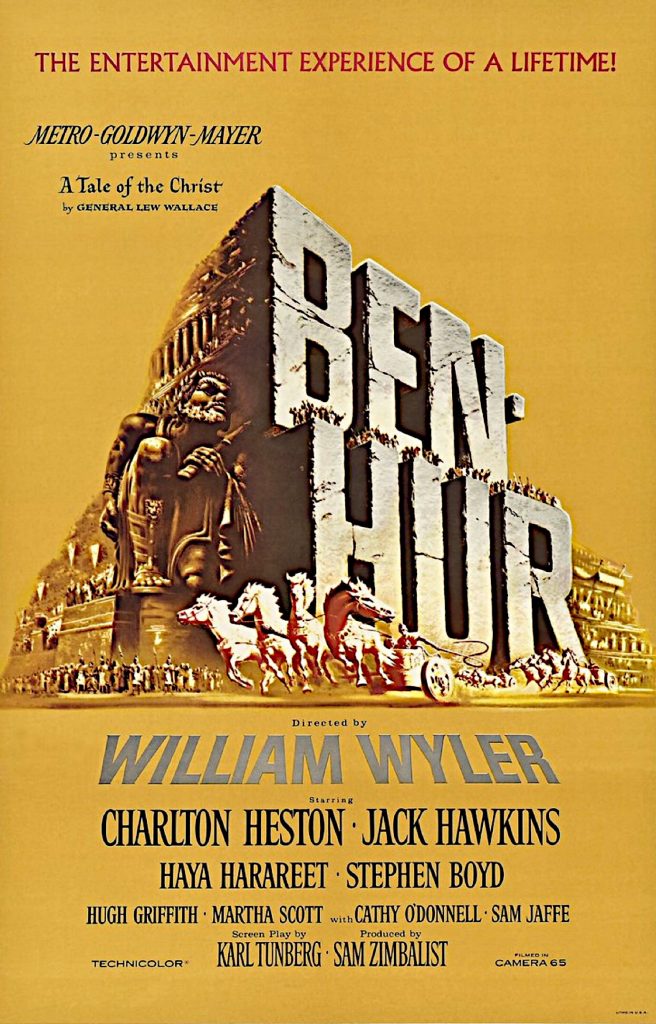
I know the ruins of Rome’s ancient Circus Maximus quite well. This is where all the chariot races happened, of course, and where, according to the script of Ben-Hur, Charlton Heston rode to victory several times while he was still bunking at Jack Hawkins’ palazzo, prior to returning to Judea.
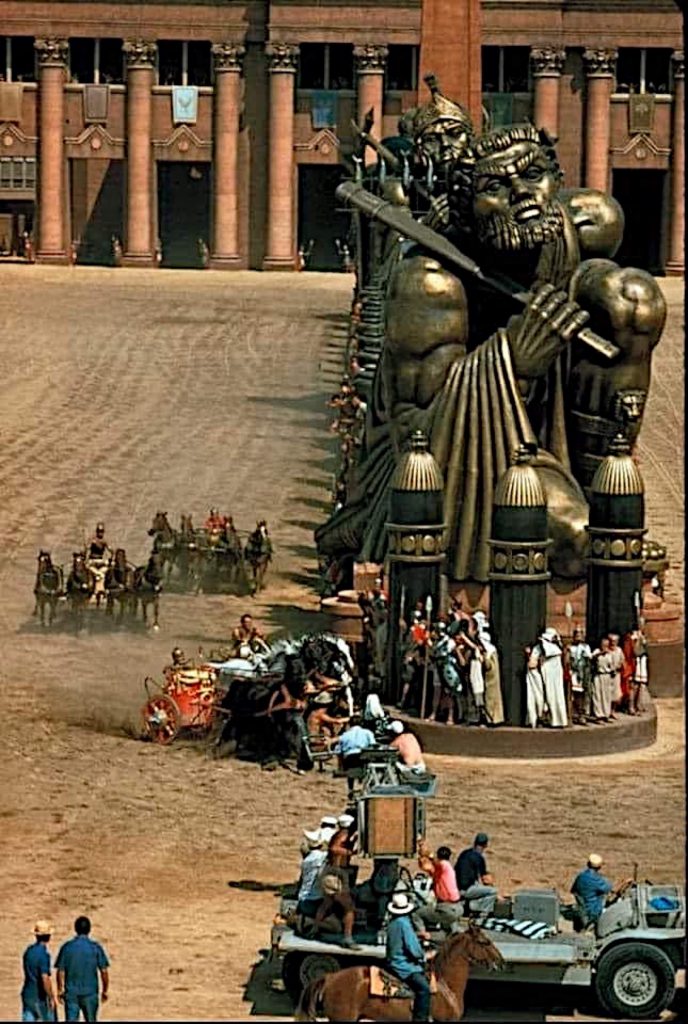
The great Circus Maximus differed from Jerusalem’s chariot-race stadium (where Heston competed and won with Stephen Boyd being dragged and stomped to death) in one highly significant way. The large oval Jerusalem racetrack had a huge centerpiece structure, ornamented by huge bronze sculptures of four kneeling warriors.
The Roman stadium, by all accounts, had no centerpiece or middle island, or at least none that obstructed views of the races.
And that’s the logic problem with the Jerusalem stadium, to wit: most of the spectators, or those sitting on either side of the massive center structure, can’t see the other side of the racetrack. And that includes Frank Thring’s Pontius Pilate and other elite Roman royals who attended the Judah Ben-Hur-vs.-Messala race on that fateful day. They were only able to see one half of the damn track, which of course makes no sense from any perspective, including that of the stadium architect.
What was the Ben–Hur production designer thinking? I’ll tell you what he was thinking. He was thinking two things: (1) The huuge center island with the four huge kneeling guys looks cool, and (2) to hell with architectural logic.