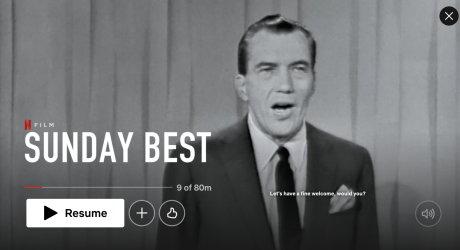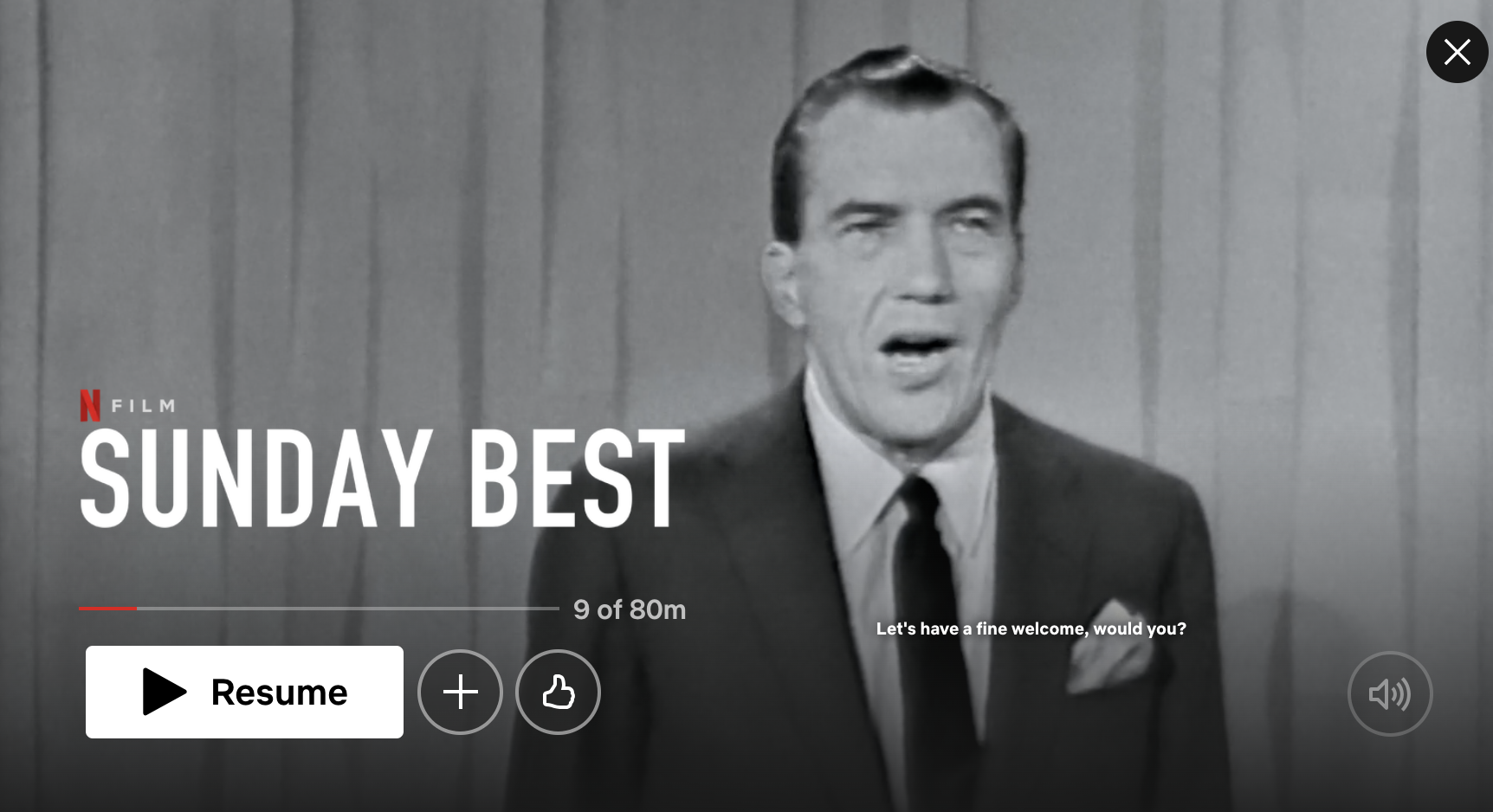
Sacha Jenkins‘ Sunday Best (Netflix, now streaming) is a heartfelt, somewhat simplistic tribute to the late variety show host Ed Sullivan and particularly a celebration of Sullivan’s defiance of racist norms in this country back in the ’50s and early ’60s by booking top black performers on The Ed Sullivan Show (1948 to 1971)
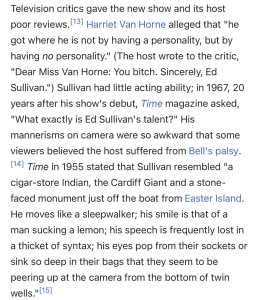
If you’d asked me for a capsule description of Sullivan before viewing this 87-minute doc, I would have said something like “famously stiff-necked TV host with a sharp eye for emerging stand-out performing talent…particularly Elvis Presley in 1956 and The Beatles in ’64 and ’65…whatever and whomever was beginning to attract big attention, Sullivan booked them on his one-hour Sunday night show (CBS, 8 pm), always leaving them bigger names than before they’d appeared.”
But to hear it from Jenkins (who passed last May at age 53), Sullivan’s proudest historical achievement was his support of black entertainers. In this respect Sullivan was damn near revolutionary or at the very least bold as brass, Jenkins is saying.
Within this country’s generally racist whitebread culture during the eras of Harry Truman, Dwight D. Eisenhower, JFK and even Lyndon Johnson, Sullivan was way ahead of the social curve — impassioned, color-blind, conservative but adamant.
Sullivan biographer Gerald Nachman: “Most TV variety shows welcomed ‘acceptable’ black performers like Louis Armstrong, Pearl Bailey and Sammy Davis Jr….but in the early 1950s, long before it was fashionable, Sullivan was presenting more obscure black entertainers…Bo Diddley, Jackie Wilson, Fats Domino, the Platters, Brook Benton, the Supremes, Nina Simone.”
TV critic John Leonard: “There wasn’t an important black artist who didn’t appear on Ed’s show. [The Irish, Harlem-born Sullivan] defied pressure to exclude black entertainers or to avoid interacting with them on screen. Sullivan had to fend off his hard-won sponsor, Ford’s Lincoln dealers, after kissing Pearl Bailey on the cheek and daring to shake Nat King Cole‘s hand.”
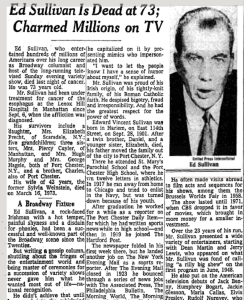
If you search around there are several anecdotes that suggest Jenkins’ portrait of the straightlaced, somewhat prudish Sullivan is less than fully candid, if not sugar-coated. (Read his N.Y. Times obit, which is much tonally dryer and more circumspect than Jenkins’ cheerleader approach.)
Of course it’s partisan! Jenkins’ film is sharing a cultural-political viewpoint that many boomers (kids during the show’s heyday) probably haven’t considered, which is that in terms of encouraging liberal thought and condemning racism, Sullivan, by ushering scores of black performers into America’s living rooms, was as much as a positive social influencer, in a certain sense. as Martin Luther King.
Over the last 60 or 70 years Sullivan’s default associations have been Presley and the Beatles, slam dunk. Ask anyone. Jenkins doc, which debuted at the Tribeca Film Festival in ’23, pushes the “ballsy racial reformer” portrait much more than any colorful side sagas or anecdotes about white performers.
How good is Sunday Best on a craft or audience-absorption level? Passable, not great.