Full Day, No Breaks

In rapid succession, HE has (a) the 8:30 screening of Sofia Coppola‘s The Beguiled, (b) an 11 am screening of Sean Baker‘s The Florida Project (and a 10:30 pm backup screening if something goes wrong), (c) a 2:30 pm showing of 24 Frames, the final film by the late Abbas Kiarostami, and (d) a 4:30 pm Master Class with Alfonso Cuaron, during which time he’ll presumably discuss Roma, his Spanish language drama set in ’70s Mexico City.

Update:  The 11 am Florida Project screening is a no-go due to the venue, Theatre de la Licorne, being in Cannes La Bocca, which would require a bus ride.

Cultivated Smoothie

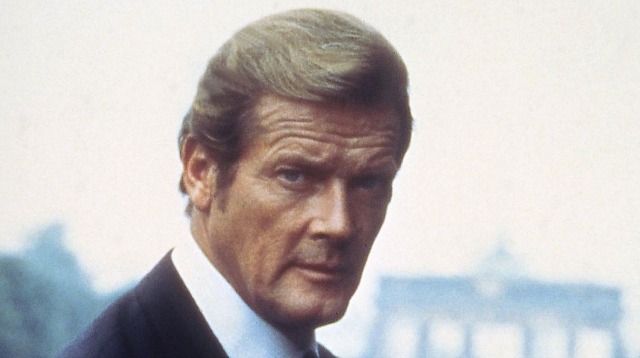
It must be gently said that the graceful and elegant and always gentlemanly Roger Moore, who died earlier today at age 89, never acted in a single grade-A film of serious quality. Not once. His commitment was to deftness and smoothitude, probably because he sensed early on that he wasn’t (and never would be) a Richard Burton, Tom Courtenay or Laurence Oliver-level actor. He knew who he was and what he wasn’t. That was part of his charm.

Moore’s career peaked with The Spy Who Loved Me (’77), which was arguably the most likable of his seven half-comedic Bond films (the others being Live and Let Die, The Man with the Golden Gun, Moonraker, For Your Eyes Only, Octopussy and A View to a Kill). It could be further argued that the Egyptian pyramids scene was the most gripping sequence in that ’77 film, and that Moore’s best on-screen partnership wasn’t with Tony Curtis in The Persuaders but with Richard Kiel‘s Jaws….we all remember that attitude, that humor.

Moore was almost too pretty when he was starting out in the ’50s. Dandified, insubstantial. He grew into peak handsomeness in the ’70s, when he was in his ’40s and early ’50s.

Moore once said that he “only had three expressions as Bond: right eyebrow raised, left eyebrow raised and eyebrows crossed when grabbed by Jaws.”

During a December 1980 visit to London I interviewed Moore during the filming of For Your Eyes Only, out at Pinewood Studios. He was never less than polite, gracious and considerate with me. He knew I was small fry, of course, but he treated me as if I was Roger Ebert or Richard Schickel. He made time for me between takes, and never did the old “I’ll see you later, I need time to prepare in my dressing room” routine that so many actors pull during set visits. It was if I was Moore’s personal guest, and he felt obliged to give me whatever I might want in terms of quotes and at least try to make me feel comforted on some level.

Read more

With Cannes Two-Thirds Gone, Only Loveless and The Square Are Serious Stand-Outs

Only two Cannes ’17 films have really stood and delivered in exceptional, world-class terms: Andrej Zvyagintsev‘s Loveless and Ruben Ostlund‘s The Square, and even the latter didn;t end as well as it could. Two others — Jonas Carpignano‘s A Ciamabra (Director’s Fortnight) and Kaouther Ben Hania‘s Beauty and the Dogs (Un Certain Regard) — merit honorable mention. But by the criteria of truly startling art cinema, delivered with commendable discipline and impressive follow-through, only Loveless has made the grade.

Robin Campillo‘s BPM (Beats Per Minute) was initially overpraised, and this didn’t help once calmer, less invested voices began to weigh in. Michael Haneke‘s Happy End has been dismissed as a Haneke rehash. Yorgos LanthimosThe Killing Of A Sacred Deer has its fans, but many (the majority?) found it cold and repellent. I didn’t see Hong Sangsoo‘s The Day After but no one has been doing cartwheels. Noah Baumbach‘s The Meyerowitz Stories is decent enough as far as it goes, but the general response has been on the muted side. Redoubtable fared well with some, but it’s just as didactic as Godard became when he threw caution to the wind and went off the cliff in ’68. Bong Joon Ho’s Okja is a well-directed megaplex movie for kids, and cliche-ridden like a sonuvabtich. For me, Todd HaynesWonderstruck was so staggeringly simple-minded and generally disappointing that I still haven’t recovered. I missed Kornél Mundruczo‘s Jupiter’s Moon but again, no one to my knowledge has been doing handstands.

Leon’s Life

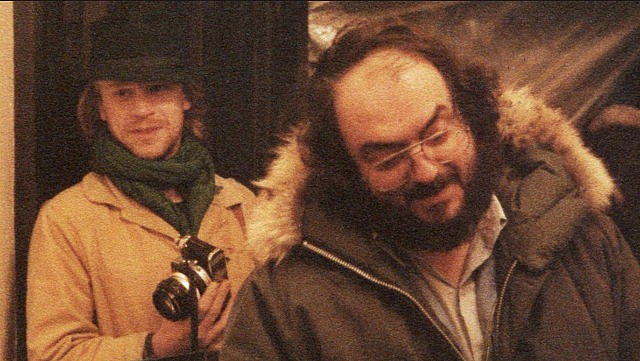
Tony Zierra‘s Filmworker, an 89-minute doc about the legendary Stanley Kubrick assistant and confidante Leon Vitali, is the juiciest and dishiest capturing of Stanley Kubrick‘s backstage life and career ever assembled. It’s about Vitali’s life, but by way of Kubrick’s.  (Or is it the other way around?)  21 or 22 years of deep focus, late hours, nose to the grindstone, passion, obsession, total commitment and almost no days off, ever.

Vitali began working for The Great Stanley K. in various capacities a year before The Shining began shooting, and then stayed with him to the end (i.e., 3.7.99). Researcher, gopher, go-between, driver, casting assistant, print cataloguer and (after Kubrick’s death) restoration consultant. The film is a completely satisfying record and assessment of that servitude, that era, that history, that ongoing task.
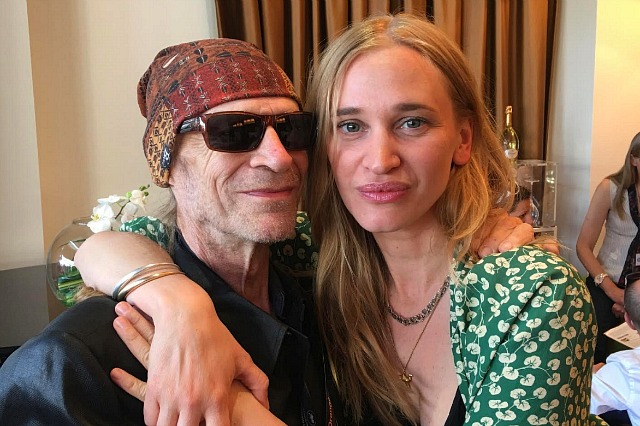

Leon Vitali — star of Filmworker, Stanley Kubrick confidante and right-hand-man for 21 or 22 years, former actor and controversial aspect-ratio debater — and Vera Vitali, the Stockholm-residing actress, at Cannes Grand hotel last weekend.

The photos and behind-the-scenes film clips alone are worth the price, I can tell you. Great stuff. On top of which I was reminded that Vitali played not one but two roles in Kubrick films — Lord Bullington in Barry Lyndon (’75) and “Red Cloak” in Eyes Wide Shut (’99).

Vitali said to himself early on that he’d like to work for Kubrick. What he didn’t expect was that once that work began Kubrick would want Vitali at all hours, all the time…focus and submission without end. If the early sentiment was “I’d give my right arm to work for Stanley Kubrick.” Kubrick’s reply would be “why are you lowballing me? I want both arms, both legs, your trunk, your lungs, your spleen, your ass and of course your head, which includes your brain.”

Yes, Virginia — Stanley Kubrick was no day at the beach. Then again what highly driven, genius-level artist is?

But he was also a sweetheart at times, to hear it from Vitali. It was just that Kubrick believed in trust and had no time for flakes, fractions or half-measures of any kind. His motto was that if you’re “in”, you should be in all the way. And Vitali was, obviously, and yet during those 21 years he worked on only three Kubrick films — The Shining, Full Metal Jacket and Eyes Wide Shut. But that was Kubrick, a brilliant control freak who wound up eating himself in a certain sense.

Read more

Naomi Kawase Holiday…Merci!

A few hours ago Hollywood Elsewhere politely and respectfully declined to attend this morning’s 8:30 am screening Naomi Kawase‘s Hikari (aka Radiance). I feel so good about having a free morning I’m thinking of extending my vacation into the mid-afternoon. I won’t see Jane Campion‘s Top of the Lake: China Girl because it lasts six hours. I’m not proud of having missed Abbas Kiarostami‘s 24 Frames, but at least there’s a catch-up showing tomorrow at the Salle du Soixantime. The only film I’m locked into is Cary Grant: De l’autre cote du miroir (i.e., “on the other side of the mirror”).


Read more

He Barks To Conquer

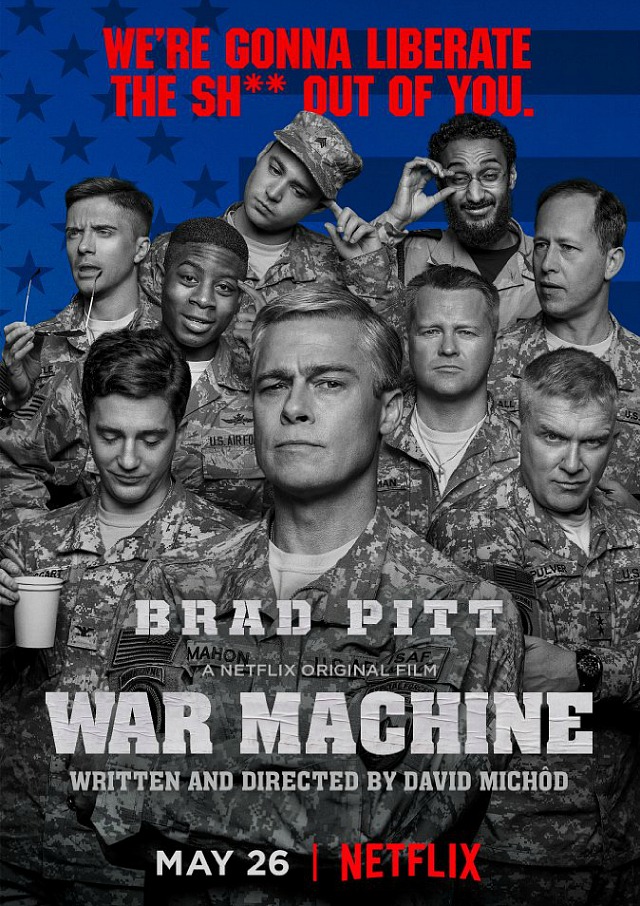
I caught David Michod and Brad Pitt‘s War Machine (Netflix, 5.26) a couple of weeks ago in Manhattan. I was expecting a problem given the effort I had to invest to attend an advance screening, but I was surprised to discover it’s not all that speed-bumpy. I found little to dislike and a lot to generally admire, and I was really taken by three or four scenes. It’s not a half-bad film.

As I noted on 5.10, Keith Stanfield gives a serious pop-through supporting performance. He’s the guy you’re talking about when it’s over.

For some Brad Pitt‘s oddly one-note, gruff-voiced performance — General Buck Turgidson transposed to Afghanistan — will feel like a stumbling block, but I accommodated myself. I understand those who say that Scott’s performance worked because Dr. Strangelove was a straight-faced absurdist farce while Pitt’s performance as General Glen McMahon (based on Gen. Stanley McChrystal, the former Afghanistan war commander) argues with the generally non-farcical, matter-of-fact tone of War Machine. Pitt was obviously trying to convey something about rigid thinking, about living in the prison of can-do military machismo.

The problem, as Washington Post critic Ann Hornaday has mentioned, is that the over-the-top mannerisms invite derision, and so whatever genuine respect or affection that McChrystal got from U.S. troops and colleagues is ignored or brushed aside.

War Machine is didactic, but it unfolds in a rational way. It’s smartly assembled. It’s not forced or turgid or hard to get. It’s a surface-y thing, yes, but it does have an element of sadness and regret in the third act. It’s a condemnation of myopic mentalities, and of American arrogance and bureaucratic cluelessness. It has a problem or two, okay, but is certainly no wipeout. Not in my eyes, at least.

Read more

Ongoing Apocalypse

A suicide bomber (i.e., a guy wearing an explosive device around his midsection) murdered at least 22 youths last night at the end of an Ariana Grande concert in Manchester. This is our world, our climate, the times we’re living in. Instant death at any moment, around any corner. The usual assumptions about the perpetrator[s] will probably turn out to be true. Yes, a familiar feeling, but for the friends and parents of those 22 (probably mostly teenage girls) the episode has brought fresh horror and incalculable grief.

Read more