Stared Straight

Up In The Air director-writer Jason Reitman “is the first to acknowledge the frequent changes of tone in the film,” writes Chris Willman in a recent Huffington Post-ing. “He says he thinks of the first act as being like Thank You for Smoking‘s corporate satire, the second act as like Juno‘s more intimate comedy, and the third act as something much more personal for him.

“At various points the movie feels very Cameron Crowe-esque, with its exec-finding-his-soul overtones harking back to Jerry Maguire or Elizabethtown. At other times it feels like it’s leading in the direction of being a romantic comedy, but what it offers in the end is something far less conventional than that. It’s not actually a ‘feel-good’ movie, finally, though Telluride attendees left feeling awfully good about it.

“‘I’m trying to take the audience in a certain direction so that when the ending happens, you really feel the impact of it,’ Reitman said — and to be any less cryptic than that would be offering spoilers.

“The main character definitely involves Clooney playing to suave, commitment-phobe type, up to a point. ‘I feel that this is a movie very much in his voice,’ Reitman said. ‘And I thought — I presumed, and I found myself to be correct — that this movie, this storyline and its characters, really speak to him, and that you can feel that in the authenticity and vulnerability of his performance.’

“If people see parallels between Clooney’s intelligent playboy image and the movie’s alternately glib and soulful terminator, so does Reitman. ‘It’s interesting, the connections between him and this character…I think [Clooney] saw this as a chance to stare that straight in the eye.’

“The director says the film is ‘truly about connecting with other human beings…for the first time ever, [the Clooney character] realizes he’s alone in the universe, and I wanted to leave you with that feeling.’ But he sees that as upbeat, mind you: ‘When you realize how alone this character is, you want to reach out and love other people.’

The initial Up In The Air focus “will surely be on the incredible timing of the unemployment angle,” says Willman. “Most of the ‘actors’ Clooney lays off in the film — who respond by swearing, threatening suicide, weeping, or with real resignation — are people who really were recently fired. The filmmakers placed an ad, saying they were making a documentary about job loss. They narrowed the field down to 100, filmed 60 people, and 25 of those made it into the movie as firees.

“The closing end-credits song is also written and sung by a regular guy in his mid-50s who handed Reitman a cassette of a sad tune he’d written about his own job loss and the subsequent search for purpose.

“Jason Reitman — Hollywood’s one-man stimulus plan.”

Nutter Flies In

Nicolas Cage was here to support Werner Herzog‘s Bad Lieutenant: Port of Call New Orleans,” writes a Telluride friend. “It’s his loosest and wackiest performance in a while, but also one he’s very much in control of. The material suits him. It’s a fun ride. Trippy, silly, dark and a rush. I haven’t laughed so hard in a long while.”

Instant Soul Reads

I pretty much concluded on 8.31 that Sam Taylor-Wood‘s Nowhere Boy is going to miss the mark due to hair-color, nose-prosthetic and casting issues. But if I had any doubts the indications and undercurrents running beneath this obviously skanky 5.29 Daily Mail story about Wood’s personal intrigues have removed most of them.


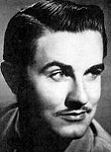
(l. to r.) Nowhere Boy director Sam Taylor-Wood; Ed Wood, Jr.; the young Stanley Kubrick; Sally Potter.

I’m not talking about the allegations in this vulgar tabloid story. I’m talking about what is plainly missing beneath or within Wood’s features.

One glance at those sad photos and it’s obvious she lacks that hard-to-define je ne sais quoi that heavy-cat film directors always seem to exude. I’ve eyeballed and spoken to hundreds of film directors over the years and I swear to God you can always tell if they’ve got any kind of focus or precision or steam-engine power in their films simply by looking at their faces and particularly from the presence or absence of a certain thousand-yard-stare that all visionaries (even the not-so-good ones) have.

Wood’s eyes tell you right away that she doesn’t have much going on inside. Certainly not to the extent that Jane Campion, Sally Potter, the Lina Wertmuller of the ’70s or Sofia Coppla have interior force, I mean.

If you took one look at the late Stanley Kubrick at any point in his life (including his early childhood) you knew right away he had a certain brooding heavy-osity and that he’d always be up to something grounded and solid. (Those harshly examining dark eyes told you he was a killer.) If you looked at the schmudgy and smirky features of Ed Wood you could also tell what he was about — i.e., not that much. Say what you will about Leni Reifenstahl but one look at her features and it was obvious she had mad currents running within. You can tell by looking at Wood that she’s into gliding along as best she can.

The only thing that bothers me about this whole interior-perception thing is, as I’ve noted before, that Matt Greenhalgh‘s Nowhere Boy‘s script reads quite well. But I’ve been around long enough to know that if a director is bad or mediocre enough he/she can ruin the best scripts without half trying.

On top of which Taylor-Wood, 42, and Johnson, 19, have been reportedly been romantic for several months. I’ve long been persuaded that films in which a director and a star are doing each other during shooting tend to be problematic or at least conflicted on this or that level. (Unless, of course, the director is a major world-class artist — i.e., Michelangelo Antonioni — and the star is Monica Vitti, and it’s the early to mid ’60s.) Creative focus during the directing of a motion picture and D.H. Lawrentian passion are two very different games. Sex almost always clouds vision.

Nowhere Boy is about the adolescent Liverpool days of John Lennon, who’s being played by the raven-haired, thick-nosed Aaron Johnson. A party was reportedly thrown by the Nowhere Boy producers in Cannes last May, and, according to a Daily Mail story, Julian Lennon, the late singer’s son, attended.

Lennon was asked by a reporter about his impressions of the Sam Taylor-Wood Wood/Aaron Johnson take on his dad’s early life. “I know what I know, I like what I know, and I don’t like some of what I know and I don’t particularly want to see someone else’s variation on that,” he said.

Better Late Than Never

“Impeccably groomed and with a ready answer to almost any remark anyone can throw at him, George Clooney owns his role of Ryan Bingham in the way first-rate film stars can, so infusing the character with his own persona that everything he does seems natural and right. The timing in his scenes with Vera Farmiga is like splendid tennis, with each player surprising the other with shots but keeping the rally going to breathtaking duration.” — from Todd McCarthy‘s Variety review of Up In The Air, posted just after 6 pm eastern.

Here also is a stone-skimming reaction by THR “Risky Business” columnist Jay A. Fernandez.

Son of Stalinist Purge

After re-reading yesterday’s thread about Kris Tapley‘s capsule reaction to Up In The Air, Actionman noted that “it’s a pity what HE has recently become…so many angry, bitter people with apparently zero sense of pure LOVE for film. Everyone ragging on everyone else, making cracks at how an actor or actress dresses or looks, how shitty a film is, etc. It’s all so tired, boring, easy and cliched.”

All the snark has been bothering me more than Actionman or anyone else may realize, and I think it’s time to finally grim up and get tough (i.e., something President Obama seems unable to do) and really do something about it. By this I mean it’s regrettably become necessary to unsheath that terrible swift sword and get rid of certain people. And they know who they are. I got rid of a bunch of conservative righties in August ’08 and now it’s time to get rid of the snarkheads.

As I said earlier this morning, I’d rather have no one posting on this site than read smug cheapshots that add nothing and only take the conversation down into the swamp. Put a modicum of intelligent thought into a post or don’t post at all. And if you insist on being flip and cutting and callow in a post, at least try and address the substance of what’s being said, for God’s sake.

Except it’s gone beyond that point, I believe. No more urging certain posters to clean up their act. They’ve had their chance and they don’t listen. If this means fewer people will comment on stories henceforth, fine!

Let me just repeat my words from my August ’08 posting (with a couple of re-wordings to address the present situation) and trust that a majority of readers will understand.

Interesting, thoughtful, well-phrased opinions of any kind are eternally welcome here. But the uglies, mark my words, are getting the boot. They can call this the Night of the Long Knives if they want, but the house is being tented and the bugs will be killed.

I believe in beauty, redemption, catharsis and the daily cleansing of the soul. I live for the highs of the mind — for the next nervy retort, impertinent crack, witty turn of phrase, turnaround idea or wicked joke. And I know — we all know — that blunt-gruff reactions and persistent lowball snark works against the flow of such things.

To the extent that I am responsible for creating this climate, I profusely apologize and abase myself before God and the readership in hopes of forgiveness. I am trying to turn the tide, change the atmosphere, and spray some air freshener around the room.

Tolstoy Tripping

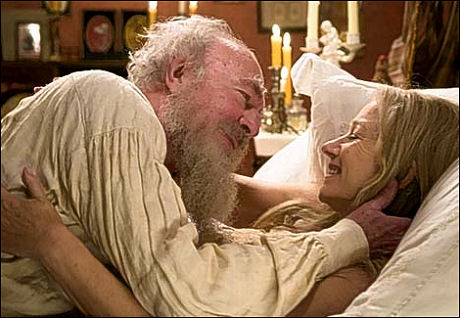
Michael Hoffman‘s The Last Station, a reportedly right-down-the-middle period biopic about the waning days of Russian novelist Leo Tolstoy (Christopher Plummer), had a screening yesterday at the Tellruide Film Festival. It’s basically about Tolstoy and his wife Sofya (Helen Mirren) an assistant (James McAvoy) and an admirer/advisor (Paul Giamatti) huddling and debating about his financial health and potential and whatnot.

One of HE’s Telluride pallies (i.e., “buckzollo”) wrote after the screening that the crowd stood and cheered and ate it right up. “It puts Plummer and Mirren right into the Best Actor/Actress contention lists,” he declared, “along with Hoffman for Best Director. No question.” Fine — noted.

Indiewire‘s Anne Thompson describes it thusly: “Plummer plays the aged Tolstoy, the famed Russian author of War and Peace, being constantly at war with his mercurial wife Sophya (Mirren). Giamatti, a scheming Tolstoy disciple, wants to share the author’s copyrights with the masses, while Sophya fights for her husband’s love and her children’s inheritance. Caught in the middle is Tolstoy’s loyal, vegetarian, celibate secretary (McAvoy).

“Plummer and Mirren are equally matched blazing adversaries and McAvoy is wonderfully reactive as the virginal acolyte who not only loses his innocence, but starts to learn about love and marriage.

“This German-financed $17-million movie is gorgeous — shot in the former East Germany — and utterly accessible and entertaining. The audience ate it up. This is one of those movies that’s not so much a critic’s picture as an adult crowd-pleaser. It seems well-matched to The Weinstein Co., Miramax or Goldwyn.” Goldwyn? Not Fox Searchlight?

“The question of future awards potential is strictly a matter of which distrib picks it up and when they release it. While IFC is talking with seller Robbie Little, the movie will next be shown at AFI Fest.”

Loneliness and Uncertainty

Jason Reitman delivers a winner with Up In The Air,” writes Indiewire‘s Anne Thompson from Tellruide. “Loosely based on Walter Kirn‘s novel, Reitman’s updated film, which he began working on six years ago, has become, with the economic downturn, far more timely. It’s a witty, charming and moving exploration of a world we all recognize.

“Folks lined up for two hours on a rainy Telluride Saturday to get into Up in the Air, and hundreds were turned away. In a session that apparently came before the screening Reitman (an obsessive airline mile collector himself) played the crowd like a pro, hoping that the movie would live up to their expectations. He doesn’t need to worry. Award season beckons. This one is in the hunt.”

A Matured Solondz

“After Palindromes, I had given up on Todd Solondz,” a friend wrote last night from the Telluride Film Festival. “So I went into Life During Wartime thinking that when an artist runs out of ideas he revisits one of his previous successes. I was wrong. Wartime is rich. Yes, he does revisit some of the same characters from Happpiness (’98), but Solondz has matured and become more introspective in the eleven years since.

“This will not be a commercial film by any means. There were many walk-outs this evenings, especially when a boy barely twelve asks his mother (played by Allison Janney) what does a man do to rape a young lad. But it’s a challenging work from an artist. Great ensemble work.”

When I read this last graph I said to myself, “Yeah, that’s certainly one way to put it — ‘challenging.'” A young buy asking his mom what rape amounts to when the predator is a man and the victim is a boy. If there’s one thing you know you’re going to get with a Solondz film, it’s something in the ick realm. But ask an elite film cognoscenti type about Solondz and they’ll never blurt this out in so many words. They’ll jump off a building or stab themselves with a letter-opener before doing this. For them it’s always the fine writing and dramatic richness and admiring acknowledgments of Solondz’s perfectionist tendencies, etc. Which is partly why Joe Popcorn ignores their reviews.

Jacques Audiard‘s A Prophet “is very compelling, and boasts intricate storytelling,” my friend also said. “You watch this young French/Arab guy’s education in jail on how to be a criminal.

“I just walked by the theatre where Up In The Air was showing and people said it’s the best film of the festival and [Jason] Reitman‘s best film to date. I’m going to try and catch it tomorrow.

“Oh, and Herzog’s My Son, My Son, What Have Ye Done? is showing tonight at 11 pm.”