Reprimand

I suffer a chalk-on-a-blackboard spasm every time I hear NPR reporter Michele Norris pronounce her first name as “MEE-shell.” The correct pronunciation is Mee-SHELL (with that delicate French inflection on the second syllable) or Mis-SHELL. I literally wince when I’m driving in the car and Norris comes on and says her name. She doesn’t just emphasize the “MEE” — she revels in it. I’ve been to France many times and I worship the language, and Norris’s mispronunciation, I feel, smacks of cultural arrogance.

I complained about this nearly three years ago, but I didn’t offer what seems like a logical analysis. MEE-shell plus the re-spelling of Antoine as “Antwone” (as in Denzel Washington‘s Antwone Fisher) suggests that this is an African-American cultural thing. They’re don’t want to roll with the French (in these two instances, at least) and have a need to colloquialize and make it their own.

Can you imagine the furor if some Anglo TV or radio journalist did the same? What if a TV anchor named Enrique Phillips (having had a Latino mother, let’s say) decided to pronounce his first name “Enricky”? Or if a TV journalist narrating a documentary about Emiliano Zapata pronounced the Mexican revolutionary’s first name as “Eh-MILLY-yano” instead of the correct “Aymeeyahno”? People would pounce and say “show some respect to the Spanish language,” etc. But Michele Norris gets to mangle her first name because she’s African-American and is therefore allowed to “street” her name down any way she chooses.

Go ahead and pounce on me for this, but I have the high ground here. However your name is pronounced in the culture that spawned it, say it that way. If your name is Marcello Mastroianni, you absolutely must pronounce it as “MarCHELLo MahstroyANNI”….period.

Update: Here’s an excerpt from a Skanner interview with Michelle Norris:

Kam Williams: “Attorney Bernadette Beekman says, ‘I always wondered about the pronunciation of her name. [‘Mee-shell’] Why the emphasis on the first syllable?”

Michele Norris: “I don’t exactly quite know why my father stepped on the first syllable like that, but I proudly honor him now by insisting that people pronounce it the way that he did.”

So her father, Belvin Norris, Jr., is the culprit. Michele was born in 1961. She was four when Paul McCartney‘s “Michele” came out in late ’65, so I’m guessing that’s where her father got the idea, thinking that if it was good enough for the Beatles, etc. Maybe. That or he just decided to create his own sound. If Belvin had been to Paris (which I doubt) he would’ve pronounced it differently, I imagine. Or perhaps not. I know that if my father had decided to address me as “Jeef” or “Jefferoon” when I was a kid, you can bet I would have blown that off and come up with my own pronunciation.
Not Understanding

What am I expected to say or do about the phenomenal Deathly Hallows 2 revenues? I’m obliged to re-post them, but I’m unable to generate (or simulate) that “oooh! oooh!” excitement that I’m getting from certain reports. Were they written by people on pogo sticks undergoing some kind of rapture? Take it easy.

Harry Potter and the Deathly Hallows 2 opens today domestically, but the int’l openings began two days ago. And the int’l tally is now $82.5 million from 43 countries ($37.6 million Thursday and $43.6 million Wednesday). Last night’s U.S. midnight showings generated $43.5 million at 3,800 locations, which is $13.5 million higher than previous midnight record holder of $30 million earned by Twilight: Eclipse.

Deathly Hallows 2 is a very well-done film and a satisfying finale, but the box-office mania of the last couple of days doesn’t synch with the actual levels of delivery and achievement. Death Hallows 2 is like a single exceptional leopard, and the box-office response is a herd of 1,000 elephants. I have absolute knowledge of what this film is and a fair-minded understanding of what the Harry Potter franchise finally amounts to, and there’s no justification for people of taste and character and worldly perspective to respond this way. Certainly not in the eyes of the Movie Godz.

We’re obviously witnessing a mass emotional response to the end of a franchise by two kinds of people for the most part — i.e, those who were infected by the Potter virus as children and who probably aren’t as deep or bright or educated as they could or should be, and X-factor types who don’t lack in these departments but were also infected as children and are simply unable for reasons unknown to keep themselves from pounding on theatre doors.

I should add that my sons Jett and Dylan were Potter fans when they were kids, tweeners and early teens, but they’re past it now and want nothing to do with the DH2 insanity. Good fellows.

If everyone was like me, there would be a lot of people watching Deathly Hallows 2 this weekend because it’s a good film, etc., but you wouldn’t see the madness.

"Only You Can Save Us"?

A ripped, bare-chested, long-haired guy (Taylor Kitsch) in Conan-the-Barbarian garb on the planet Mars? This is supposed to be semi-imaginative, some are saying. I’m sorry but it seems to me like the same old “rugged individual on a heroic quest to save a civilization with a hot girl in love with him” crap. Desert landscapes, armies on horseback, blah blah. Obviously aimed at comic-book geeks, ComicCon-ers, saps.

That's It?

Okay, I chuckled. It’s clever. And I respect the effort to put apes on the 405’s Mulholland Drive bridge. But I want more.

The Thing…Again

I’ve heard the monster sound effects in this Thing trailer dozens of times before. That shrieking, smashing, guttural, mixing-board wail that only comes out of movie monsters when they’re attacking the costars of a monster film. Some monster-movie director needs to come up with something different…anything. We can’t keep listening to these same noises.

16th or 17th Time…I Forget

The 35th anniversary of the release of Martin Scorsese‘s Taxi Driver happened on February 8, 2011 since it opened on 2.8.76. The 2011 Berlin Film Festival screened a 4K restored version days after the anniversary. The excellent Bluray came out on April 5, 2011. And a beautiful pristine print showed two and a half months ago at the TCM Classic Movie Festival.

So why am I attending a 35th anniversary screening of Taxi Driver at Sony’s Colorworks facility this evening? Because I believe that it might look just a little bit better when screened at this studio-funded, top-of-the-line facility — just a tiny bit. And so I can say to myself for the rest of my life, “I’ve seen Taxi Driver on a theatre-sized screen at a very high-quality post-production house, or probably the best place to see it anywhere, ever.” So that’s why. Plus I want to get out and I have nothing else to do tonight.

She Fiddles

No, no…she’s saying “shutz-pah,” not “Choot-spa,” which is how a YouTube poster has it. Michele Bachmann‘s inability to pronounce Yiddish terms and expressions (has she had a go at “mishegoss“?) says a lot about her insular mentality and aversion to stuff outside her own little bubble. Minnesota has a lot of Jews, remember. Has Bachmann heard of, much less seen, A Serious Man?

Once Upon A Time

The Martin Scorsese 3D film formerly known as Hugo Cabret (Paramount, 11.23) and recently retitled Hugo (apparently because Paramount marketing data indicates that American moviegoers don’t like a funny-sounding French name that they aren’t sure how to pronounce), has a just-up trailer. Except Hugo sounds complex, no? Shouldn’t they just retitle it Hugh or, better yet, H?

My impressions of the trailer: (a) The Paris cityscape looks animated, like something out of Tintin; (b) Scorsese directed this? It looks and feels like a high-end family film made by Robert Zemeckis or Steven Speilberg; (c) The atmosphere feels very “storybook” and the emotionality a bit obvious and on-the-nose, even primitive; (d) the kid playing Hugo (Asa Butterfield) has great eyes; (e) Is the train station supposed to be Gare du Nord? Or is that a picayune question?; and (f) those titles look like something out of the mid ’50s 3D House of Wax with Vincent Price.

Then It Was Gone

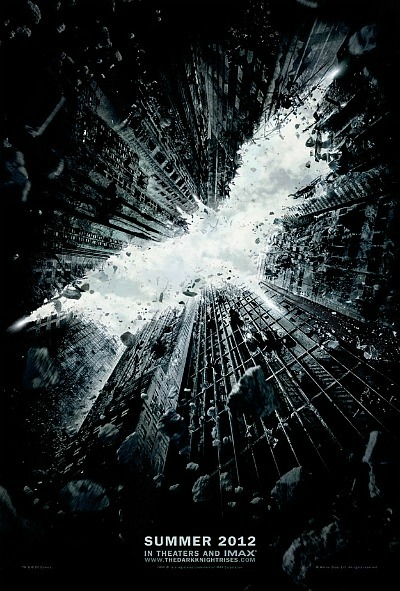
Yesterday morning and for a very brief period, a Dark Knight Returns teaser (which presumably will show at ComicCon 2011) appeared online. One of the appearances happened on buzzfeed. Jett saw it before it was taken down. “It showed a lot of old footage,” he says, “along with the main detective talking about Batman while lying in a hospital bed struggling to breathe. Naturally nothing revealing.”

Seal Guys

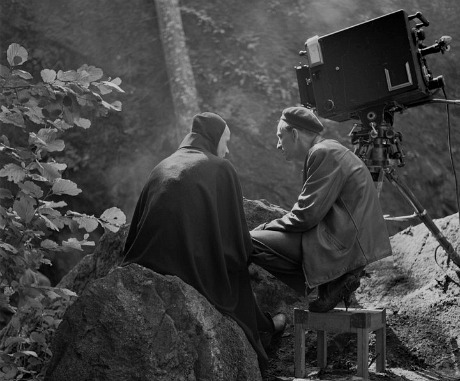
This shot of Seventh Seal director-writer Ingmar Bergman (r.) conferring with costar Bengt Ekeroth, who played Death in this legendary 1957 film, is immediately going onto my iPhone photo file. Bengt is one of those actors (like 2001: A Space Odyssey‘s Dan Richter) known for giving one ultra-legendary performance — i.e., personifying death as a solemn, white-faced hooded figure who plays chess with Max Von Sydow.


Seventh Seal costar Bengt Ekeroth, director Ingmar Bergman during filming, which presumably happened in the summer or early fall of 1956, as the film opened in Sweden in February 1957.

Born in 1920, Bengt was 36 when Seal was shot. He died in ’71, obviously prematurely, at age 51.

Curious Place

Review sample #1: “Quirky, hilarious and moving, Paolo Sorrentino‘s first English-lingo production is a road trip of stunning scope yet deep intimacy, featuring an aged rock star-turned-Nazi hunter played by Sean Penn at his transformative best…pic may baffle but is certain to generate massive highbrow press and long-term cult status.” — Variety‘s Jay Weissberg.

Review sample #2: “Ultimately, the film’s major flaw comes in the film’s leading performance. Penn is simply the wrong actor for the wrong role, with each line reading coming off as a forced and stilted SNL-like parody of an alt/emo-rocker…it’s a role that asks for quite a bit of emotional depth to be plumed, and ultimately, it simply feels as though it’s a Sean Penn-acted parody of a character.” — Jonah and the Whale‘s Joshua Brunsting.

Harrison of Liverpool

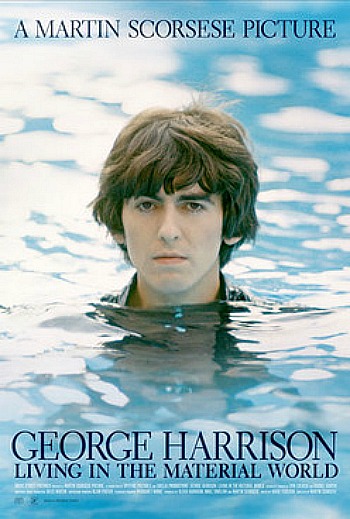
Yesterday’s announcement about HBO acquiring North American TV rights to Martin Scorsese‘s George Harrison: Living in the Material World for an early October airing was thin on particulars. So here’s something no one’s reported thus far, and which I got this morning from a source in the office of HBO’s Sheila Nevins: the Harrison doc has an “approximate” running time of 210 minutes.

In other words, it’s almost exactly the same length as Scorsese’s Bob Dylan: No Direction Home, which runs 208 minutes. This explains HBO’s plans to air Scorsese’s film in two parts on HBO on Wednesday, 10.5, and Thursday, 10.6.

The Harrison doc will almost certainly follow in the Dylan doc’s footsteps by showing at the 2011 Toronto Film Festival. No Direction Home premiered at the 2005 Toronto Film Festival.

The editor on the Harrison doc is David Tedeschi, who also cut No Direction Home as well as Scorsese’s Public Speaking, the Fran Lebowitz doc, and Shine a Light, the 2008 Rolling Stones’ concert doc.

Todd McCarthy noted in his review of No Direction Home that it was similar in structure to the 216-minute Lawrence of Arabia in that Part One was all about the rise (inspiration, struggle, adventure, glorious success, sitting on top of the world) and Part Two was about the fall (complications, defeats, psychological doubt and turmoil, despair).

This suggests, given the three-and-a-half-hour length and the Scorsese-Tedeschi collaboration, that Part One of the Harrison doc (which is expansive enough overall to be called Harrison of Liverpool) will also end on a youthful, triumphant, top-of-the-mountain note. An honest assessment of the last 34 years of Harrison’s life (’67 to ’01) would hardly characterize them as dour or downfall-ish. But they were certainly different and in some ways darker (i.e., more complex, textured, mixed-baggy, adult, meditative) than the rush-and-climb years (’43 to ’67).

I’m guessing that Part One will most likely cover Harrison’s first 25 years, or from his birth on 2.24.43 and through his youth and teenaged years and into the first seven years of the Beatles (’60 to ’67), and probably ending with the Revolver and Sgt. Pepper period, which marked the initial stirrings of Harrison’s interest in Indian music and his identity starting to take shape as the serious, glum-faced guy whose guitar playing had a sad, weeping quality, and who wrote many songs from ’67 through the early ’70s that essentially lectured and admonished listeners for being shallow and distracted and missing the spiritual boat.

I’m also presuming that Part Two will most likely begin with Harrison’s solo career launching with the Beatles breakup, the making of All Things Must Pass, the 1971 Concert for Bangla Desh, etc. And then settling into the mid to late ’70s and ’80s, “Crackerbox Palace,” Handmade Films, the Travelling Willburys, the stabbing incident and so on.

Beatle lore-wise, Harrison was regarded early on as the solemn one, the deep spiritual cat (i.e., the last one to leave Maharishi Mahesh Yogi‘s ashram in Indian in late ’67) and to some extent the political commentator and satirist (the lyrics of “Piggies” and “Savoy Truffle“, “the Pope owns 51% of General Motors,” etc.).

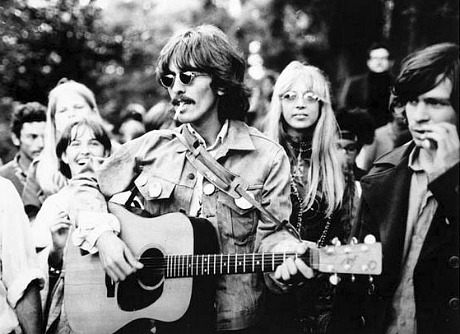
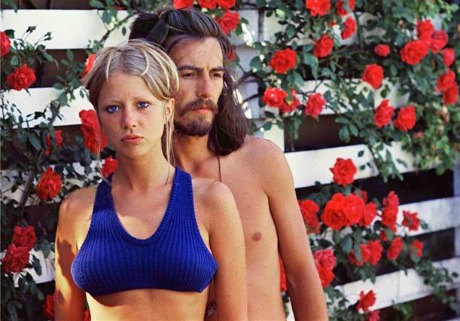
Read this account of George and Patti Boyd Harrison’s brief August 1967 visit to San Francisco’s Haight-Ashubry district, which by that time was the pits.

I also remember a story in an anonymous groupie tell-all book about a girl giving Harrison a blowjob while he played the ukelele, and after it was over his getting up and saying “thanks, luv!” and leaving the room without asking her name. Funny.

Harrison died of lung cancer at age 58 on November 29, 2001, in Los Angeles. His Wiki bio says “he was cremated at Hollywood Forever Cemetery and his ashes were scattered in the Ganges River by his close family in a private ceremony according to Hindu tradition. He left almost 100 million pounds in his will.”

Scorsese, who’s been working on the Harrison doc since ’08, has said that “the subject matter [of Harrison’s life] has never left me…The more you’re in the material world, the more there is a tendency for a search for serenity and a need to not be distracted by physical elements that are around you. George’s music is very important to me, so I was interested in the journey that he took as an artist. The film is an exploration. We don’t know. We’re just feeling our way through.”