Let The Uglies Win

The essence of Roberto Unger’s three-week-old YouTube video, which explained why he believes President Obama does not deserve to be re-elected, is bluntly phrased but more or less correct. Obama has failed to advance the progressive cause in the United States, true, because he is a center-right conservative with an aversion to political combat and bringing pain into the lives of his opponents, which is what any good politician must do.

But Unger is an egghead purist. He is essentially saying “this man is not what he seemed — he is certainly not doing what many of us would have him do — so let’s pull the temple down upon our heads and let Romney win.” And that is insane.

Versailles Lesbo Action

Benoit Jacquot‘s Farewell My Queen, set in 1789 on the verge of Bastille Day, “has its own charm, a matter-of-fact treatment of lesbianism and magnifique costumes and settings [that] opts for the grand European style of Girl With a Pearl Earring rather than a modernist rereading a la Sofia Coppola‘s post-punk vision Marie Antoinette.” Indiewire‘s Anne Thompson called it “an intimate and sexy period spectacle that takes us backstage at Versailles and into territory Sofia Coppola was not willing to go.”

From Variety‘s Justin Chang: “Benoit Jacquot’s venom-tipped account of palatial intrigue and royal oblivion scrupulously maintains a servant’s-eye view but winds up holding the viewer at an unrewarding distance.”

Vague Aura of Death

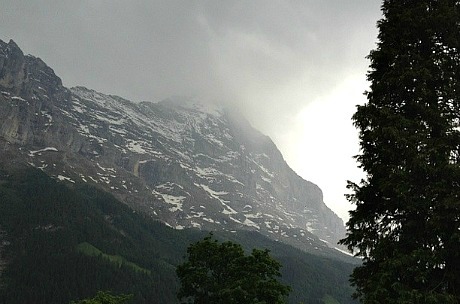
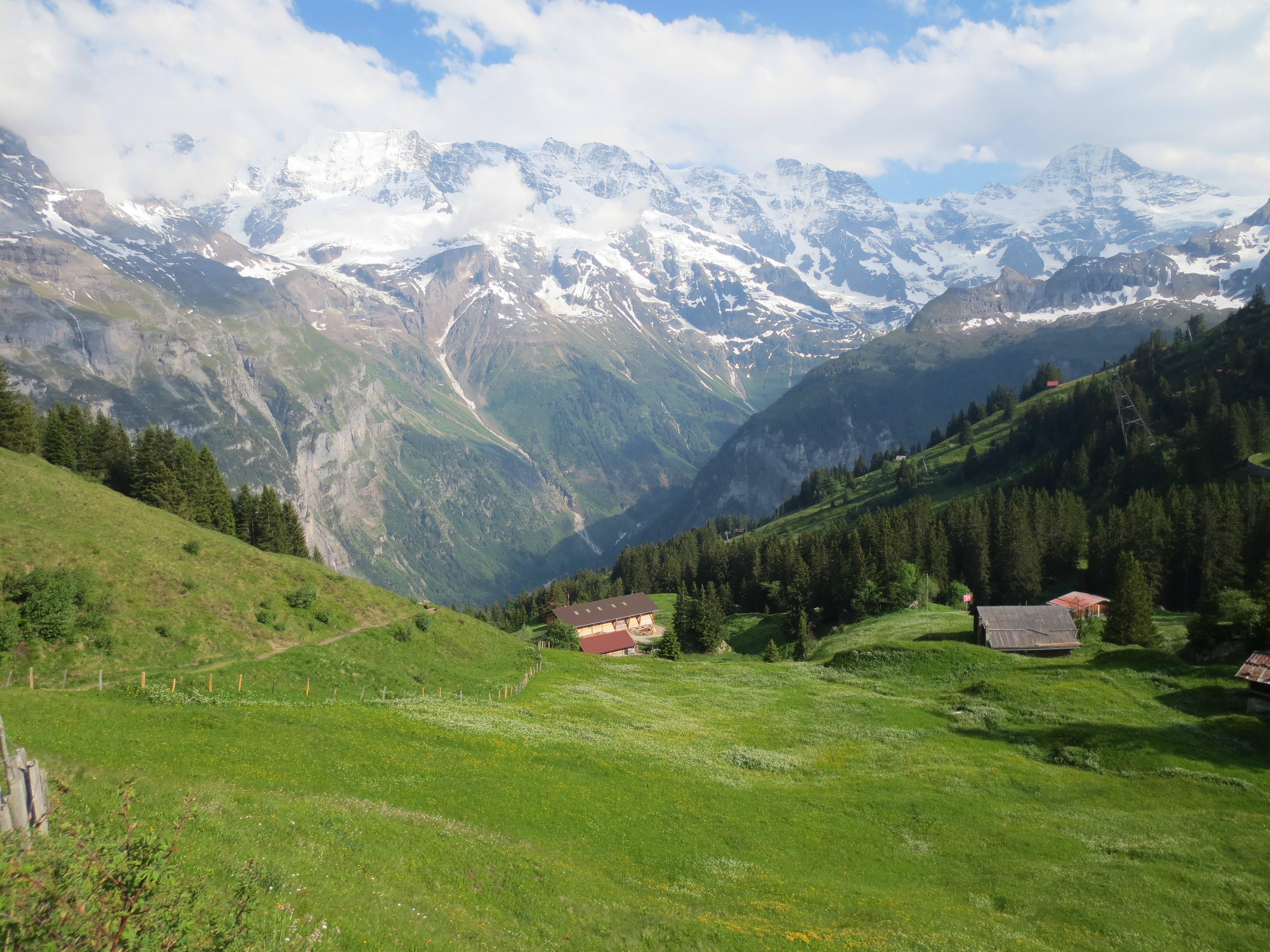
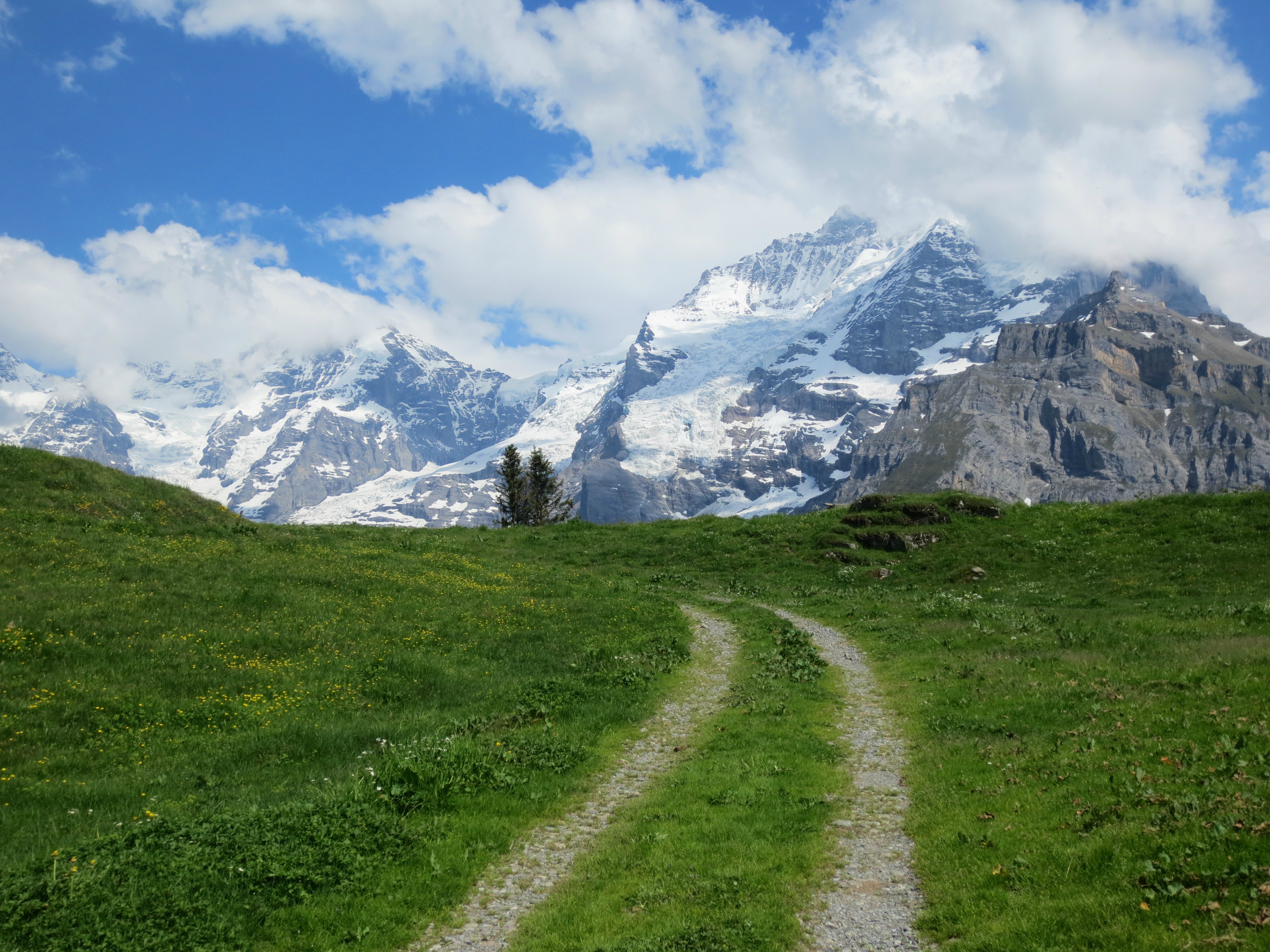
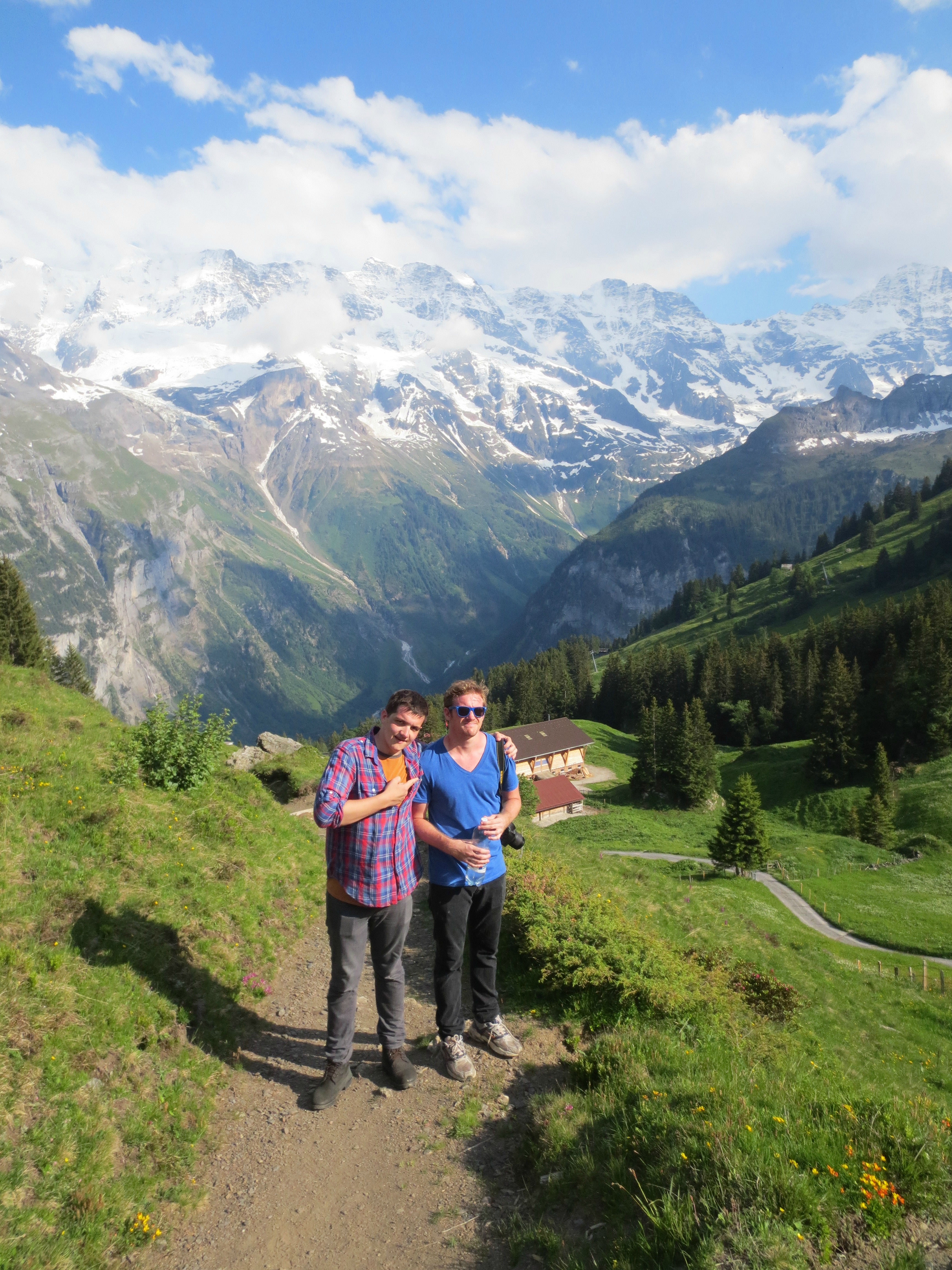
Two or three hours ago I was sitting at an outdoor cafe in Grindelwald (a 20-minute drive from Lauterbrunnen) and staring up at the somewhat spooky, occasionally cloud-covered Eiger — not the biggest or tallest mountain in the world but one that has killed at least 64 climbers who’ve tried to ascend its north face since 1935. Phillip Stolzl‘s North Face implanted the mystique. If the Eiger had a reddish tint it would look a bit like Cecil B. DeMille‘s Mt. Sinai in The Ten Commandments (’56).

Read more

Tyrrell

For me, Susan Tyrrell‘s most inspired performance was in Anthony Page‘s I Never Promised You A Rose Garden (’77) in which she played a fruit-loopy resident of a sanitarium that is shared by Kathleen Quinlan. Most obit writers are citing her Oscar-nominated performance in John Huston‘s Fat City (’72), by any measure a vivid and honorable thing. She had a tough life after losing her legs twelve years ago. Condolences to family, friends, fans.

Feinberg-Dunham

“What is the secret of Lena Dunham‘s success?,” asks The Hollywood Reporter‘s Scott Feinberg in a 6.18 article. “She won’t say it, but I will: She is startlingly brilliant — in equal measures smart and funny — and eagerly self-deprecating. Think of a female Woody Allen or Larry David.

“This is something that I had suspected from watching her work, but that was confirmed to me, beyond any shadow of a doubt, by the hour that we spent together in Brooklyn a little over a week ago, during which we discussed a wide range of matters pertaining to her life and work.”

Loss For Words

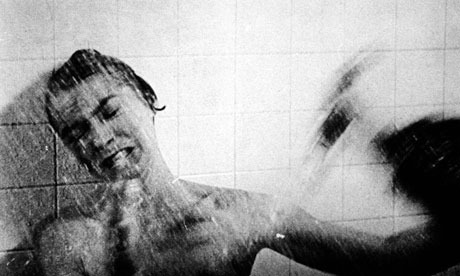
I don’t know what to do with this erotic Sigur Ros video featuring Shia Labeouf‘s willy. I can roll with the nonsensical slow-mo dreaminess, but it’s making me feel like Bosley Crowther watching Psycho. I respect the homage to the Martin Sheen-freaking-out-in-his-Saigon-hotel-room scene in Apocalypse Now, starting around the 6:00 mark. I don’t know what else.

Sarris vs. Crowther

Either you get it or you don’t. But if you get it, you might incur the wrath of the complacent cows in the field. Consider first this June 17, 1960 review of Alfred Hitchcock‘s Pyscho by N.Y. Times critic Bosley Crowther — perhaps the most fuddy-duddy-ish review of Hitchcock’s classic ever written:

“You had better have a pretty strong stomach and be prepared or a couple of grisly shocks when you go to see Alfred Hitchcock’s Psycho, which a great many people are sure to do. For Mr. Hitchcock, an old hand at frightening people, comes at you with a club in this frankly intended blood-curdler, which opened at the DeMille and Baronet yesterday.

“There is not an abundance of subtlety or the lately familiar Hitchcock bent toward significant and colorful scenery in this obviously low-budget job. With a minimum of complication, it gets off to a black-and-white start with the arrival of a fugitive girl with a stolen bankroll at an eerie motel.

“Well, perhaps it doesn’t get her there too swiftly. That’s another little thing about this film. It does seem slowly paced for Mr. Hitchcock and given over to a lot of small detail. But when it does get her to the motel and apparently settled for the night, it turns out this isolated haven is, indeed, a haunted house.

“The young man who diffidently tends it — he is Anthony Perkins and the girl is Janet Leigh — is a queer duck, given to smirks and giggles and swift dashes up to a stark Victorian mansion on a hill. There, it appears, he has a mother — a cantankerous old woman — concealed. And that mother, as it soon develops, is deft at creeping up with a knife and sticking holes into people, drawing considerable blood.

“That’s the way it is with Mr. Hitchcock’s picture — slow buildups to sudden shocks that are old-fashioned melodramatics, however effective and sure, until a couple of people have been gruesomely punctured and the mystery of the haunted house has been revealed. Then it may be a matter of question whether Mr. Hitchcock points of psychology, the sort of highly favored by Krafft-Ebing, are as reliable as his melodramatic stunts.

“Frankly, we feel his explanations are a bit of leg-pulling by a man who has been known to resort to such tactics in his former films.

“The consequence is his denouement falls quite flat for us. But the acting is fair. Mr. Perkins and Miss Leigh perform with verve, and Vera Miles, John Gavin and Martin Balsam do well enough in other roles.

“The one thing we would note with disappointment is that, among the stuffed birds that adorn the motel office of Mr. Perkins, there are no significant bats.”

And now this Village Voice review by Andrew Sarris, published a week or so later:

“For many years American and British critics have been mourning the ‘old’ Alfred Hitchcock who used to make neat, unpretentious British thrillers before he was corrupted by Hollywood’s garish technical facility. Oh, for the days of The Thirty-Nine Steps, The Man Who Knew Too Much and The Lady Vanishes! Meanwhile in Paris the wild
young men on Cahiers du Cinema, particularly Claude Chabrol, were proclaiming the gospel that Hitchcock’s later American movies stamped him as one of the screen’s major artists.

“A close inspection of Psycho indicates not only that the French have been right all along, but that Hitchcock is the most-daring avant-garde film-maker in America today.

“Besides making previous horror films look like variations of Pollyanna, Psycho is overlaid with a richly symbolic commentary on the modern world as a public swamp in which human feelings and passions are flushed down the drain. What once seemed like impurities in his patented cut-and-chase technique now give Psycho and the rest of Hollywood Hitchcock a personal flavor and intellectual penetration which his British classics lack.

“For one thing, Hitchcock no longer cheats his endings. Where the mystery of Diabolique, for example, is explained in the most popular after-all-this-is-just-a-movie-and-we’ve-been-taken manner, the solution of Psycho is more ghoulish than the antecedent horror which includes the grisliest murder scenes ever filmed.

“Although Hitchcock continually teases his conglomerate audience, he never fails to deliver on his most ominous portents. Such divergent American institutions as motherhood and motels, will never seem quite the same again, and only Hitchcock could give a soft-spoken State Trooper the visually sinister overtones of a dehumanized machine patrolling a conformist society.

“Despite its huge grosses, Psycho makes fewer concessions to popular tastes than an allegedly daring film like Private Property. Psycho takes its audience wherever its director wants to go, while Private Property stays a little ahead of the audience until catching-up finale worthy of Albert Zugsmith.

“In its treatment of outrageous perversion as a parody of an orderly social existence, Psycho has a certain affinity to a modern theatre piece like The Connection in which the audience is forced to respond to its own hypocrisy in making the conventional moral distinctions

Psycho should be seen at least three times by any discerning film-goer, the first time for the sheer terror of the experience, and on this occasion I fully agree with Hitchcock that only a congenital spoilsport would reveal the plot; the second time for the macabre comedy inherent in the conception of the film; and the third for all the hidden meanings and symbols lurking beneath the surface of the first American movie since Touch of Evil to stand in the same creative rank as the great European films.”

The Right Moment

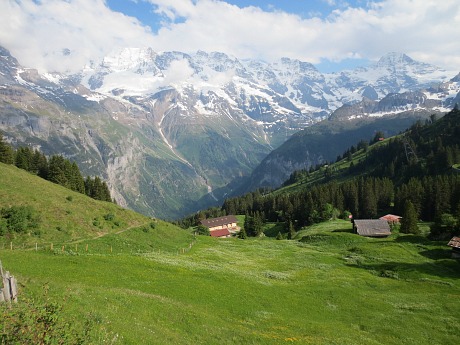
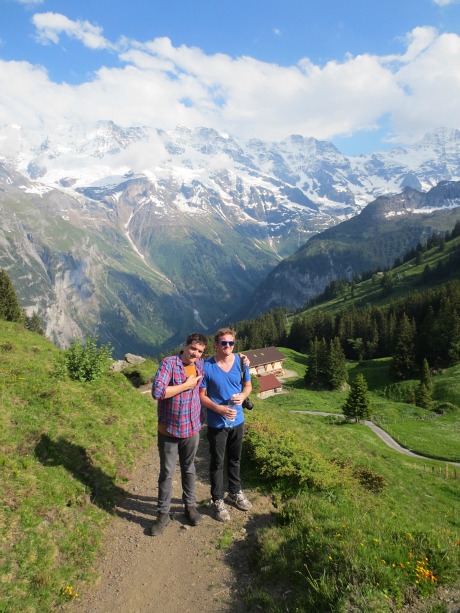
Early yesterday afternoon I was expecting to meet Jett and Dylan at the little Alpine-styled Lauterbrunnen cabin we’re renting, but they weren’t there when I arrived. So I texted them and they said they were in town and would be along. The problem was that they had the only key to the place, and I was coping with a slight call of nature. But I figured I’d wait it out.

The minutes dragged on and they didn’t show. The little devil on my left shoulder began to think about taking care of business behind the cabin. “No!,” said the angel on my right shoulder, “don’t be an animal!” But Jett and Dylan were taking their time. I looked around and noticed that there’s a small driveway behind the cabin — a possible problem — but also that nobody had driven by in quite a while. I also considered the fact that the rear of the cabin is sheltered from view by a hilly mound. Quiet, quiet, no cars, no cars….fuck it, the devil won out and I stepped behind the cabin.

Four or five seconds later a car drove up the driveway with a family in it, and with a three-year-old staring and pointing at me from the back-seat window. I couldn’t hear what he was saying but I could guess. And five seconds after that another car drove by with a pretty girl at the wheel. She also checked me out.

If I hadn’t stepped behind the cabin, those two cars would have never driven by.

Cock and Bull

Late Sunday morning (or late last night in Switzerland) Deadline‘s Nellie Andreeva posted one of the most transparently ludicrous positive-spin stories I’ve ever read on Deadline or anywhere else. It could be 100% factual and it’s still bullshit because it was told to Andreeva in order to make Lindsay Lohan’s latest erratic episode (i.e., she couldn’t be woken up, leading an assistant to call 911) seem understandable or palatable. Running such a story without inserting at least a slight tone of skepticism immediately called Andreeva’s judgment into question.

It was basically a tale about two people from the hair department on Liz & Dick leaving the production due to “exhaustion” and “severe dehydration.” The story was almost certainly fed to the gullible Andreeva was to suggest that it’s not just poor Lindsay Lohan who’s been victimized by the slave-driving demands of Liz & Dick director Lloyd Kramer — it’s everyone! The entire crew is being affected! They’re dropping like flies! Partly because the production refuses to provide water bottles to the crew, resulting in dehydration!

We were hiking yesterday afternoon and early evening for about five or six hours, and I could think of little else last night except crashing. Andreeva’s story almost roused me out of my slumber when I read it around 10 pm or thereabouts. It’s 7:54 am now, or around 11 pm L.A. time.

Splendor

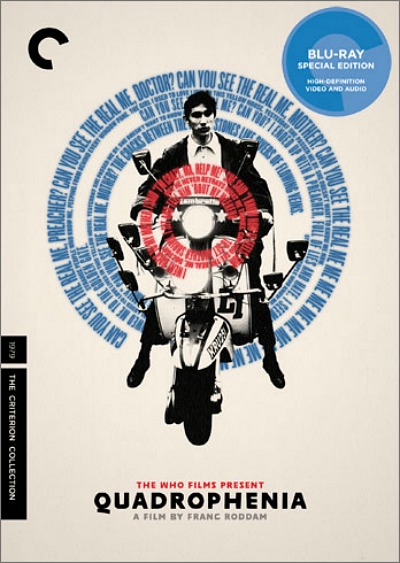
Hands down one of the best recreations/capturings of mad generational fervor and ’60s mayhem, Franc Roddam‘s Quadrophenia (’79) will get the Criterion Bluray treatment on 8.28. I first saw Quadropehnia at Manhattan’s 8th Street Playhouse, and then I showed it to the kids about ten years ago. The older I’ve gotten the more I’ve come to realize that this film — loosely based on the Who rock opera and basically the story of Jimmy Cooper (Phil Daniels) and his identity, friendship and girlfriend issues — belongs in the near-great category.

Excerpt from 8.26 posting: “What a shock to realize that Roddam forgot to change the letters on a movie marquee while shooting a crowd scene, and so we read, however briefly, that Warren Beatty‘s Heaven Can Wait and Randal Kleiser‘s Grease — both released in the summer of ’78, when Quadrophenia was shooting — are the current attractions. What an embarassment for production designer Simon Holland (who’s now dead). I mean, it’s so easy to change the letters on a marquee. It’s not like it costs anything.”

Accidentally Like a Sasquatch

That video of TMZ’s accidental capturing of Terrence Malick while trying to chat with Benicio del Toro appeared three or four days ago. The reclusive, camera-shy Malick hasn’t been phtoographed since that footage of he and Christian Bale shooting during an outdoor Austin concert. My point (and I do have one) is that any roving predator paparazzi who doesn’t even realize that he’s shooting a very rare bird is a fool. It indicates what kind of people TMZ has on the payroll.