Law of Corpulent Representation

In any 21st Century ensemble comedy involving four or five characters, there’s always somebody with a weight problem or worse. I haven’t invested hours of research, but can you imagine the shock waves rippling through Hollywood and the moviegoing culture if a Melissa McCarthy-type character wasn’t cast in an ensemble comedy? Fat chance given that 40% of American woman are now obese, and so filmmakers are naturally looking to appeal to all persuasions and sizes. Plus they’re afraid of being accused of diminishing or under-appreciating the calorically challenged by appearing to exclude them. That would set off a firestorm.

Obviously American comedies have used overweight talent for decades, but it’s only this century (and more particularly during this decade) when it became de rigeur. I don’t recall the one-out-of-four-or-five rule being in effect back in the ’90s, much less the ’80s. This is a 21st Century thing. A year ago Time‘s Alexandra Sifferlin, passing along data from a JAMA Network survey, wrote that “when looking at trends over time, [JAMA] researchers found that from the year 2005 to 2014 there were significant and steady increases in the number of American women who were very obese.”
At Least There’s This In October

Magnolia will open Ruben Ostlund‘s The Square, Palme d’Or winner of the 2017 Cannes Film Festival, on 10.27.17.

On 5.19 I called it “an exquisitely dry Swedish satire, mostly set among the wealthy, museum-supporting class in Stockholm. It’s basically a serving of deft, just-right comic absurdity, the high points being two scenes in which refined p.c. swells are confronted with unruly social behaviors. It works because of unforced, low-key performances and restrained, well-honed dialogue.

“Ostlund’s precise and meticulous handling is exactly the kind of tonal delivery that I want from comedies. There isn’t a low moment (i.e., aimed at the animals) in all of The Square, whereas many if not most American comedies are almost all low moments.”

Incidentally: Why do people post clips that you can’t hear very well unless you’re wearing earphones, and even then it’s not quite enough?

Read more

Milking Same Old Cow, Over and Over

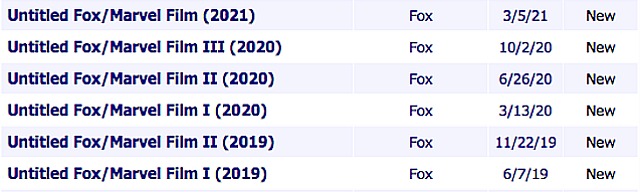
“The franchise pile-up that summer has become is a real problem. There are only so many weekends, and only so many times in one season that the world can get totally psyched about the new installment of some series that ran out of creative steam a few episodes ago. There are only so many new character posters and Snapchat filters an ADD-addled public can absorb from April through August. Hollywood could use some new ideas, [but] that’s only been true since the mid-1930’s or so. And putting lots of eggs in a basket is a big risk, as Universal may well find out somewhere down the Dark Universe road. When you make massive 20 year bets on untested ground, lots of ways that can go.” — from today’s edition of Richard Rushfield‘s The Ankler.

From Box-Office Mojo’s just-posted release date announcements:

Wind Saga Goes West

It was announced last March that Netflix has acquired global rights to Orson Welles’ unfinished The Other Side of the Wind, and that it will finance the completion of this allegedly out-there film, which was shot in pieces (and on different film formats) between 1970 and ’76.

30-plus years ago director and longtime Welles collaborator Peter Bogdanovich promised Welles he would finish TOSOTW if the latter wasn’t able to. Welles died in ’85 at age 70. I ran into Bogdanovich yesterday at a party and asked how things are going.

The editing is finally beginning this month, he said. All the elements are in Los Angeles, and “1000 reels” are now being scanned and digitized. Peter and a couple of other guys will naturally have to look at everything and then begin this bear of a task. They have that 40-minute assemblage that Orson cut together plus, Bogdanovich said, plus some notes he left behind. “Any chance you’ll make the 2018 Cannes Film festival?,” I asked. Peter shrugged, said something inconclusive.

I talked this morning to a guy who’s heard a couple of things: “It’s a big job. Nineteen hours of footage. They’re aiming for Cannes.”

Cracks and Pops, Glow of Candles

All the fireworks I saw last night happened at a really nice party we attended. Oh, and Tatyana was very impressed with the Chardonnay. That’s all I’m going to say except that the host has a beautiful large pool and everyone sat near it over the last couple of hours. The last 12 or 15 guests congregated around a patio table under a large cloth umbrella, sipping and chatting in the cool night air. It was probably the most relaxing get-together I’ve attended in many months. Thanks for having us.


We’re Living In Digital or HFR Realm Today — 70mm Is Over

A 7.5 Brent Lang Variety piece reports that Chris Nolan‘s Dunkirk (Warner Bros., 7.21) will open in 70mm celluloid in 125 locations. “The widest 70mm release in 25 years,” Lang’s headline proclaims.

Okay but calm down because (a) Joe and Jane Popcorn don’t give that much of a toss, (b) the 70mm Dunkirk roll-out is only 25 theatres larger than the one for Quentin Tarantino‘s The Hateful Eight, and (c) no one except hardcore cinefiles give a damn about this either. I respect Nolan and Tarantino’s devotional belief in the visual power of 70mm, but time has given this once-supreme shooting and projection format the go-by.

IMAX is still terrific (the size alone rules) but Nolan’s thing for 70mm is, I feel, essentially sentimental. Championing 70mm projection as the ultimate cinematic rush experience just doesn’t pass the 2017 smell test. Not in my world, it doesn’t. Ask any honest, forward-thinking cinematographer about the latest 8K cameras or the Arri Alexa 65, which is what War For The Planet of the Apes and portions of The Revenant were shot with. Hell, ask me or anyone who’s seen Matt Reeves’ simian masterpiece — the images are immaculate, stunning, to die for.

See War For The Planet of the Apes in a theatre with state-of-the-art digital projection, and you won’t hear a single soul saying “oh, Lordy, why couldn’t they have shot it in good old IMAX and 70mm instead?” That viewpoint is over.

I’m not suggesting that Dunkirk won’t be luscious to simply gaze at (from a purely visual standpoint it could probably be sold to the American Cinematographer techno-geeks as FUNkirk) but we’ve reached a point in which the difference between IMAX and 70mm celluloid and the latest high-end digital capturings are apples and oranges.

The difference this time, I’m presuming, is that Hoyte van Hoytema‘s large-format cinematography (a combination of 70mm and IMAX) will capture images that are much richer, sharper and more robustly lighted than Robert Richardson‘s 70mm cinematography for The Hateful Eight.  30% of Tarantino’s western used white wintry conditions with the other 70% shot inside a darkly lighted cabin.

Read more

Lingering Ghost of Harry Cohn

I was taking in the splendor of old Hollywood yesterday, and more specifically the Mediterranean-style Crescent Drive mansion where Columbia Pictures chief Harry Cohn lived from 1946 until his death in ’58. I swear to God I felt Harry hovering nearby, or at least a spectral remnant. “Who the hell are you?” Cohn’s ghost said. “I’m Jeffrey Wells, samurai poet columnist,” I replied, “and one of the few guys in this town who remembers you and even mentions you from time to time so show a little respect.” The ectoplasmic Cohn grumbled as he floated away, heading for the pool area.

All my life I’ve read that Cohn was a crass, tyrannical bully-boss, grudgingly “respected” but feared and most certainly despised. Screenwriter Ben Hecht famously referred to him as “White Fang.” Like other studio chiefs of his day Cohn had a quid pro quo relationship with mob guys, was something of a racist thug (“The Kid in the Middle“, a BBC doc, reports that Cohn had goons threaten Sammy Davis, Jr. over his relationship with Kim Novak), reportedly hastened the death of poor Curly Howard (the woo-woo guy with The Three Stooges) and of course was always trying to fuck the hottest actresses.


Harry Cohn lived here (1000 No. Crescent Drive in Beverly Hills) between 1946 and ’58.

Nobody out-Cohned Cohn. Read Bob Thomas‘s “King Cohn” when you get a chance. Cohn was the model for The Godfather studio chief Jack Woltz (the horse’s head incident never happened but Frank Sinatra almost certainly pleaded for the Pvt. Maggio role during a visit to Cohn’s home). Legend has it he was also the inspiration for Broderick Crawford‘s thick-fingered sugar daddy in Born Yesterday.

But Orson Welles respected Cohn’s dogged gambler instinct [see above], and unlike today’s soul-less corporate lackey studio heads, at least Cohn had movies in his blood. Okay, he could be a prick and yes, he was dead wrong for strongly preferring Aldo Ray to play Pvt. Robert E. Lee Prewitt in From Here To Eternity instead of Montgomery Clift, but you can’t be entirely dismissive of a roster that included It Happened One Night, Lost Horizon, Holiday, Only Angels Have Wings, The Lady From Shanghai, All The King’s Men, Born Yesterday, From Here to Eternity, On The Waterfront, The Caine Mutiny, Picnic, The Bridge on the River Kwai and Hell Cats of the Navy.

Read more