Noyce Saga in Three Chapters

HE’s own Nick Clement (aka “Action Man”) has posted a three-part, non-exhaustive q & a interview with director Phillip Noyce. It covers the span of Noyce’s 40-year career — Backroads, Newsfront, Dead Calm, Patriot Games, Clear and Present Danger, Sliver, The Saint, The Bone Collector, Rabbit-Proof Fence, The Quiet American, Catch a Fire, Salt, The Giver and the brilliant, still unreleased Above Suspicion.

Click on part 1, part 2 and part 3.
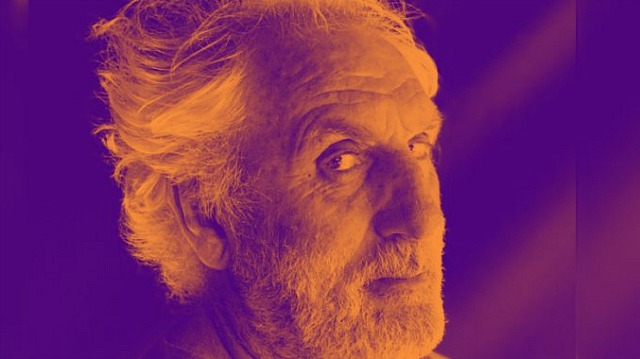
Noyce on his mindset as he began making Rabbit Proof Fence: “The biggest challenge was that I had to take all of the ‘Hollywood’ out of my system. I was making a film that literally would stand no chance of being financed on any sort of studio level, and in a way, that made all of us who were involved more and more determined to get it made. It was a story we needed to tell, not something we were doing for the paycheck.

“We ended up raising $6 million to get the film made, and one of the proudest things about the entire experience is that it’s the most profitable film I’ve ever been involved with in terms of how much it cost to make and how much it took in from sales. Not forgetting the hearts and minds that were changed all around the world.”
Toss It

There are pack rats (i.e., people who never throw anything out and who gradually choke to death on the clutter) and those who throw a lot of stuff out but hang on to a few remnants. I’m one of the latter. The past will consume you if you let it.

Mark Pellington‘s Nostalgia (Bleecker Street, 2.16) was acquired during last year’s Sundance Film Festival, but it’s debuting at this year’s Palm Springs Festival. Pic “follows several people as they mutually come to a pivotal moment in their lives where they must rid of old family belongings,” etc.

The trailer indicates that Nostalgia has no story. It appears to be an acting-class format that allows several characters (played by Ellen Burstyn, Jon Hamm, Catherine Keener, John Ortiz, Bruce Dern, Amber Tamblyn, James LeGros) to share about the sentimental value of bric a brac they don’t want to part with.

Confession: I’ve never seen Andrei Tarkovsky‘s Nostalghia (’83).

Unmissable

Since last May I’ve posted two European-created trailers for Andrey Zvyagintsev‘s short-listed Loveless (Sony Pictures Classics, 2.16), but this is the cleanest and most concise. A long procession of missing children dramas have been domestically released (Gone Baby Gone, Changeling, Bunny Lake is Missing, Without A Trace, Ransom), but American producers have never had the balls to make one with Zvyagintsev’s approach — a drama that focuses on efforts to find a disappeared boy, yes, but is mostly about why the boy might have escaped in the first place. A movie that weeps over his absence, but at the same time considers the all of it, and even half-sympathizes.

Not Interested

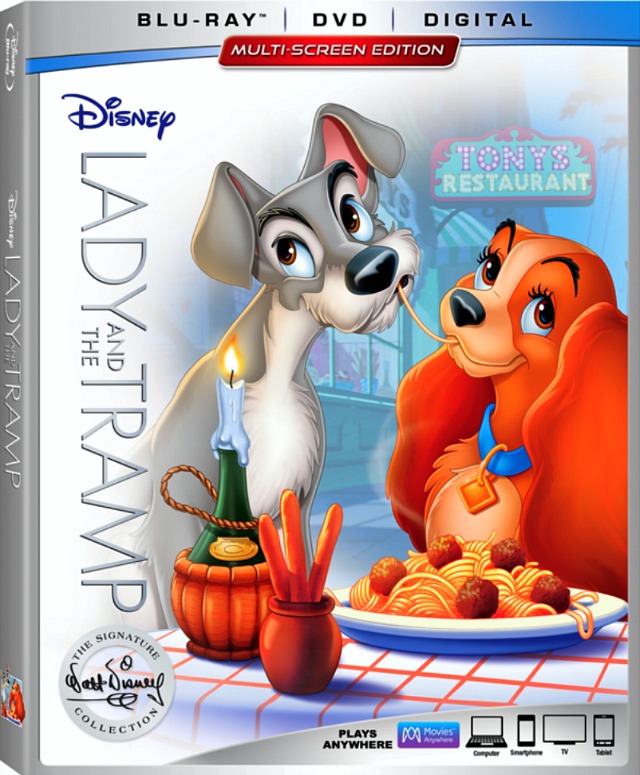
I’ve always been intrigued by Walt Disney‘s Lady and the Tramp (’55) because it’s the only animated feature to be shot and projected at 2.55:1 — i.e., the early to mid ’50s Fox Scope aspect ratio that was phased out in favor of 2.39:1 in ’56 or thereabouts. To the best of my knowledge all other widescreen animated features have been presented in either 2.39 or, in the case of Disney’s Sleeping Beauty, Super Technirama (2.25:1).

There’s a new extra-laden Disney Bluray coming out on 2.27, but you can order a region-free British Bluray right now for less than $20.

The newbie has a ton of extras [see below], but not the one I’d like to see — a 1.37:1 version that was created for theatres that still hadn’t installed CinemaScope screens by mid ’55.

Eight years ago Fox Home Video released a Bluray of The Robe (’53), the first Hollywood feature shot in CinemaScope. The Bluray contained an alternate 1.37:1 version that was shot concurrently out of concern that the CinemaScope version might be a huge flop. As it turned out the 1.37 version never saw the light of day.

From Lady and the Tramp Wiki page:

“Originally, Lady and the Tramp was planned to be filmed in a regular full-frame aspect ratio [i.e., 1.37:1]. However, due to the growing interest of widescreen film among moviegoers, Disney decided to animate the film in CinemaScope making Lady and the Tramp the first animated feature filmed in the process.

“[But] problems arose as the premiere date got closer and [an awareness dawned] that not all theaters had the capability to show CinemaScope at the time. Upon learning this, Walt issued two versions of the film: one in widescreen, and another in the Academy ratio. This involved gathering the layout artists to restructure key scenes when characters were on the edges of the screen.”

Read more

Wonderful Reading

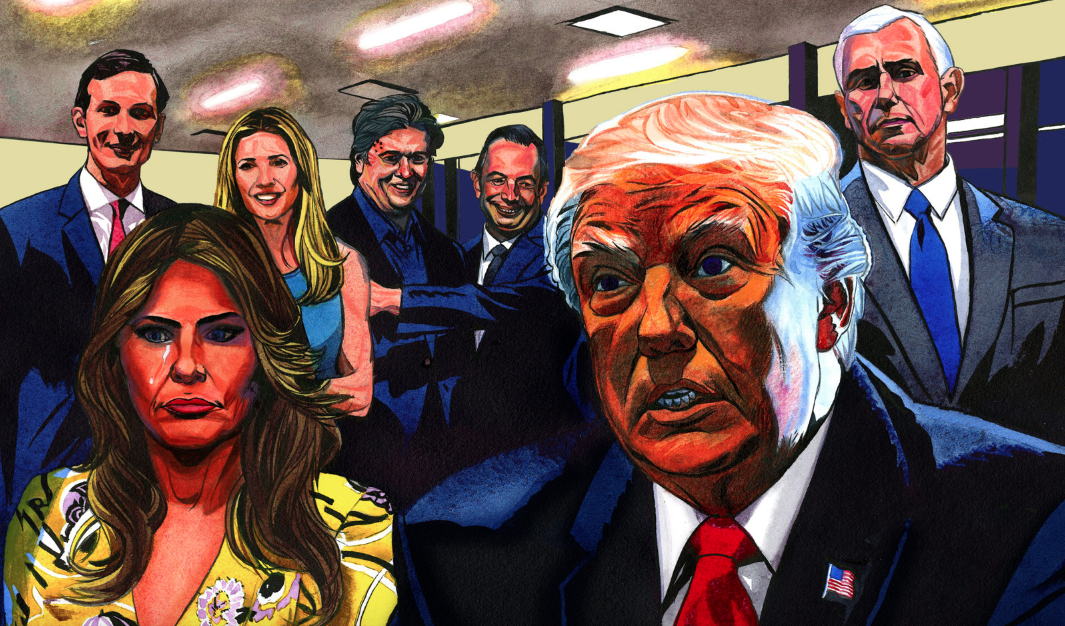
Fire and Fury author Michael Wolff has penned a delicious, dessert-like Hollywood Reporter piece that summarizes his process in absorbing the whole Trump White House magillah.

Axios’ Mike Allen is reporting that Wolff, due to appear on news shows this weekend as well as Morning Joe Monday morning, “has tapes to back up quotes in his incendiary book — dozens of hours of them,” including chats with Steve Bannon and former White House deputy chief of staff Katie Walsh.

A taste: “After the abrupt Scaramucci meltdown, there was hardly any effort inside the West Wing to disguise the sense of ludicrousness and anger felt by every member of the senior staff toward Trump’s family and Trump himself. It became almost a kind of competition to demystify Trump. For Rex Tillerson, he was a moron. For Gary Cohn, he was dumb as shit. For H.R. McMaster, he was a hopeless idiot. For Steve Bannon, he had lost his mind.

“Most succinctly, no one expected him to survive Mueller. Whatever the substance of the Russia ‘collusion’, Trump, in the estimation of his senior staff, did not have the discipline to navigate a tough investigation, nor the credibility to attract the caliber of lawyers he would need to help him. (At least nine major law firms had turned down an invitation to represent the president.)

“There was more: Everybody was painfully aware of the increasing pace of his repetitions. It used to be inside of 30 minutes he’d repeat, word-for-word and expression-for-expression, the same three stories — now it was within 10 minutes. Indeed, many of his tweets were the product of his repetitions — he just couldn’t stop saying something.

Read more

Fair Assessment

Is Variety‘s Dave McNary a Get Out “woker”? Look below and consider how he structured his lede for this morning’s story about the WGA nominations. Do you detect a very slight note of favoritism in his decision to state that Jordan Peele‘s script has nabbed a Best Original Screenplay nom “along with” four others? Just a teeny-weeny bit of a “yay, team” attitude?

Imagine, for example, if McNary had written “Emily Gordon and Kumail Nanjiani’s The Big Sick has landed a Writers Guild of America nomination for top original screenplay, along with Greta Gerwig’s Lady Bird, Guillermo del Toro and Vanessa Taylor’s The Shape of Water, Jordan Peele’s Get Out and Steven Rogers for I, Tonya.”

Or, better yet, imagine a lede that reads “Steven RogersI, Tonya has landed a Writers Guild of America nomination for top original screenplay, along with Greta Gerwig’s Lady Bird, Guillermo del Toro and Vanessa Taylor’s The Shape of Water, Jordan Peele’s Get Out and Emily Gordon and Kumail Nanjiani’s The Big Sick.”

On second thought don’t imagine alternate ledes because they never would’ve happened.

If you’re going to indicate special approval for a nominee by listing it first and foremost among a group of five, you have to first consider the political climate, and it seems to me that not only McNary but Variety editors are “woke.”

Read more

A Nominee Is Missing. Make That Two.

There’s at least a modest body of opinion out there that Martin McDonagh‘s screenplay for Three Billboards Outside Ebbing, Missouri deserves the Best Original Screenplay Oscar. Alas, it wasn’t announced this morning as a Writers Guild of America nominee in that category because Three Billboards wasn’t produced under WGA jurisdiction, and is therefore ineligible. I understand the organizational motive, of course, but it’s still bullshit.

The Best Original Screenplay nominees are Greta Gerwig’s Lady Bird, Guillermo del Toro and Vanessa Taylor’s The Shape of Water, Jordan Peele’s Get Out, Steven Rogers for I, Tonya and Emily Gordon and Kumail Nanjiani’s The Big Sick.

The Best Adapted Screenplay noms went to James Ivory’s Call Me by Your Name, Scott Neustadter and Michael Weber’s The Disaster Artist, Dee Rees and Virgil WilliamsMudbound, Aaron Sorkin’s Molly’s Game, and the Logan screenplay by Scott Frank, James Mangold and Michael Green.

Liz Hannah and Josh Singer‘s original screenplay for The Post wasn’t nominated either. Add this omission to SAG members declining to nominate the Post cast for an ensemble award, and you’re left with “man, The Post can’t catch a break.”

The 70th annual WGA award ceremony will happen simultaneously in New York and Los Angeles on 2.11.