Ball vs. Arthur: The Unfairness of Things

Life is unfair in many ways, but especially in the matter of genetic inheritance. You get what your parents give you and that’s that. If you’re lucky it’s smooth sailing, and if you’re unlucky it’s no picnic. Some, obviously, are dealt “better” or — what’s the best term? — more gracious genetic hands than others. Luck of the draw and all that.

In a comment thread under yesterday’s “Hodgepodge”, HE commenter Brenkilco said that “the Lucille Ball we all recall from I Love Lucy was already in her mid 40s.” Well, later in the 50s she was, but she’d just hit the big four-oh when the original half-hour Desilu show premiered on 10.15.51. Anyway, as Ball’s youthful beauty was the original topic, I was inspired to riff on Ball’s appearance and aging process as she got into her 40s, 50s and beyond.
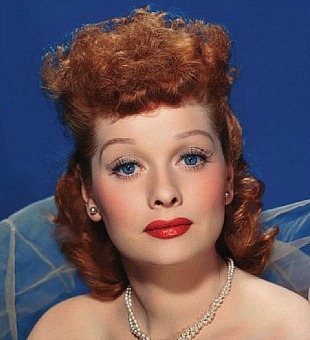
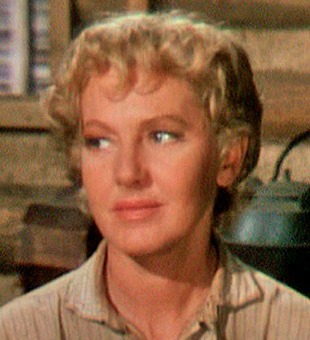
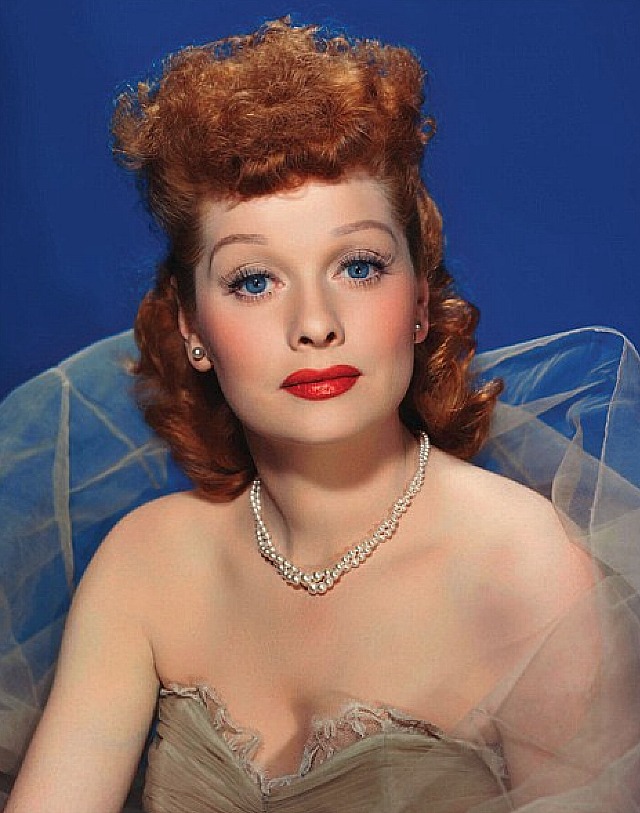
(l.) Lucille Ball in the early ’40s; (r.) Jean Arthur in 1951.

Lucille Ball was born in 1911. Her bloom-of-youth years were in the 1930s and early ’40s, when she was in her 20s and early 30s. I Love Lucy began in ’51, when she’d just turned 40. She looked older, yes, but partly because she was quite the smoker and drinker, or so I’ve always understood. As Ball aged she was known for having developed one of those gravelly, sharp-edged, deep-pit voices that can only be achieved from decades of of smoking unfiltered cigarettes.

Ball was 45 when the final episode of the initial I Love Lucy series aired on 5.6.57. The Luci-Desi Comedy Hour aired for roughly two and half years, between 11.6.57 and 4.1.60. Ball was 49 in the spring of ’60.

Some people hold on to their looks and keep themselves in shape into middle age, and others don’t. Most of the time it’s simply a matter of genes, sometimes it’s genes + lifestyle, and sometimes it’s genes + lifestyle + deciding against paying for touch-ups.

By the time Ball played a would-be suburban infidel in Melvin Frank and Norman Panama‘s The Facts of Life (’60) she was pushing 50 and looked it, even by the standards of the day. By 2018 standards Ball could be in her late ’50s or even her early 60s in that film. On top of which a good portion of Ball’s glamorous image was attributable to makeup, especially eye-makeup. With her fair skin, carroty complexion and less-than-aeorobicized form, she’d developed a somewhat weathered appearance.

Ball was 29 when she married the 23 year-old Desi Arnaz in November 1940.

By the same token Jean Arthur was 51 when she made Shane (it finished filming about 16 or 17 months before it opened in April ’53), and she looked a good 10 or even 15 years younger. Arthur was roughly 41 or thereabouts when she shot The Talk of the Town (’42 — directed by Shane helmer George Stevens), but she easily could’ve been 29 or 30 or 31.

Life is unfair, but it doesn’t help if you smoke like a chimney and throw down highballs on a fairly routine basis. I’m referring again to Ball…hell, to almost every mature person of that era. (Almost everyone smoked in the ’50s and ’60s.) No, I don’t know if Arthur was a smoker and drinker also…maybe she was. But if so, she had the genes to withstand the effects of tobacco and alcohol. Ball didn’t.
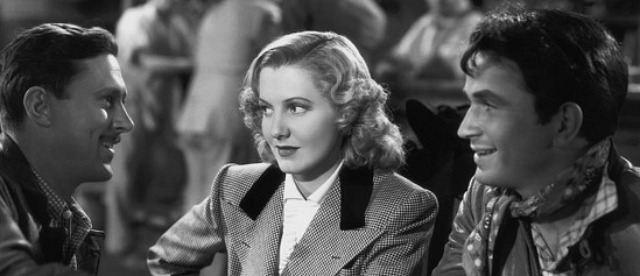

Jean Arthur in Howard Hawks’ Only Angels Have Wings, shot when Arthur was 38 or 39.
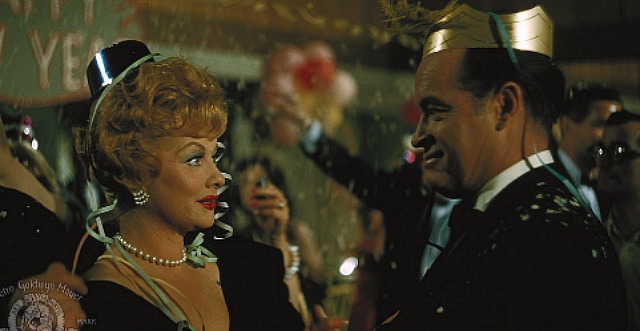
Lucille Ball, Bob Hope in The Facts of Life.

Hodgepodge

I’ve been waiting for years to see a subtitled version of this moment from Sexy Beast (’00). I’ve watched it 20 times if I’ve watched it once, and could never figure out what Ben Kingsley‘s Don Logan is saying after he says “you could make a fucking suitcase out of you.” To my ears he’s saying “ahhould-all,” which means nothing. The answer, according to the subtitles, is “holdall.” Which doesn’t mean anything either. Maybe if I was British.


Hue’s Perfume River. A friend is visiting Vietnam roughly a week from today. Also Hong Kong and Cambodia. Envious.

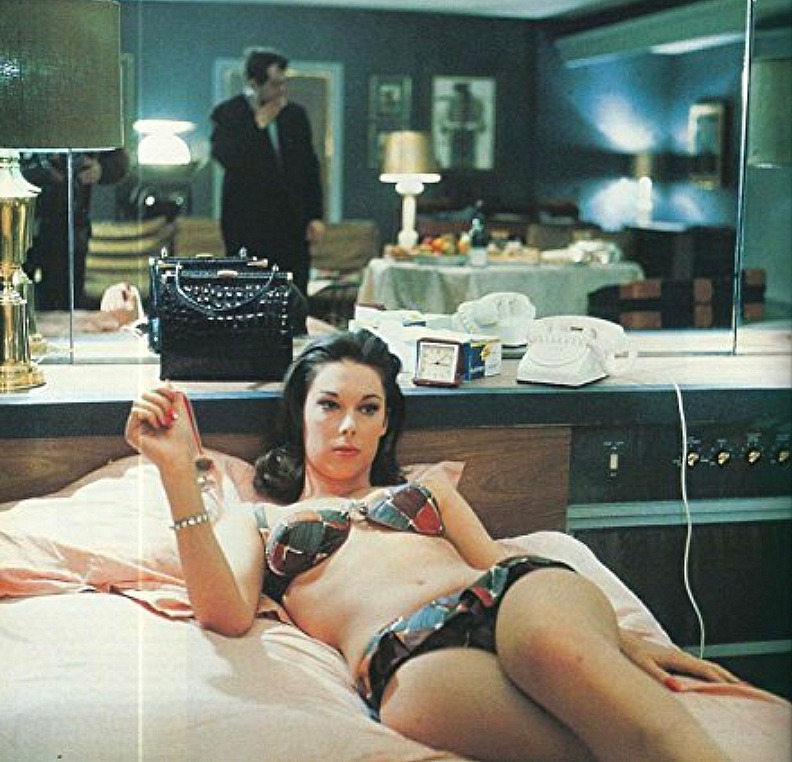
Lucille Ball sometime in the early to mid ’40s.

Read more

20 Superhero Egos In One Movie

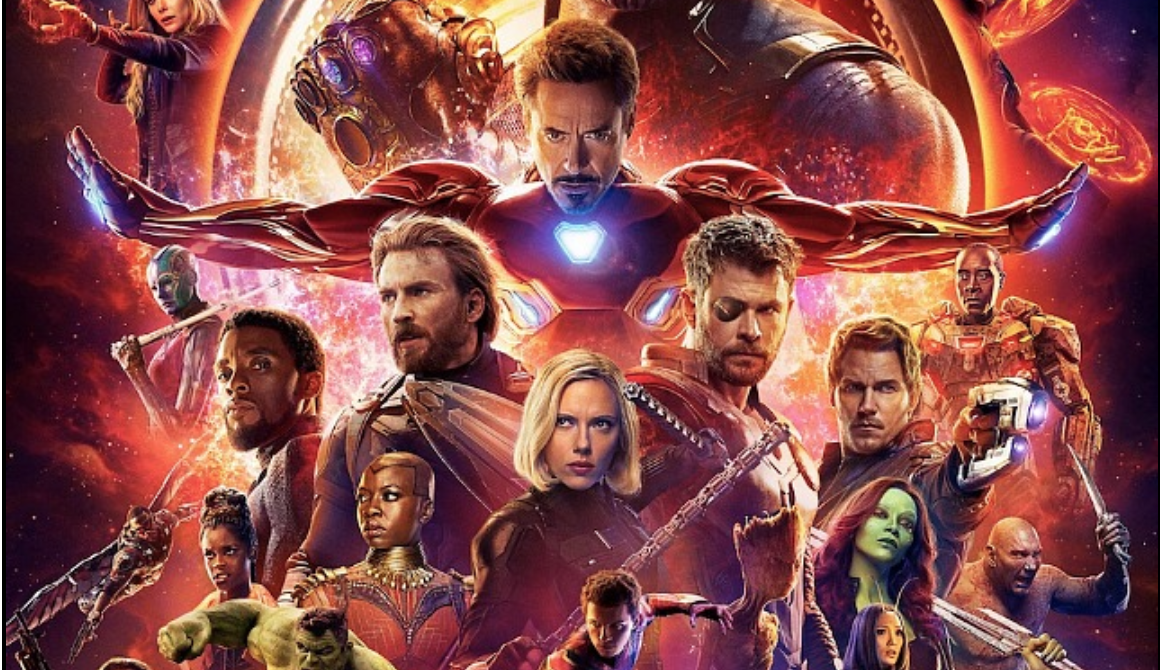
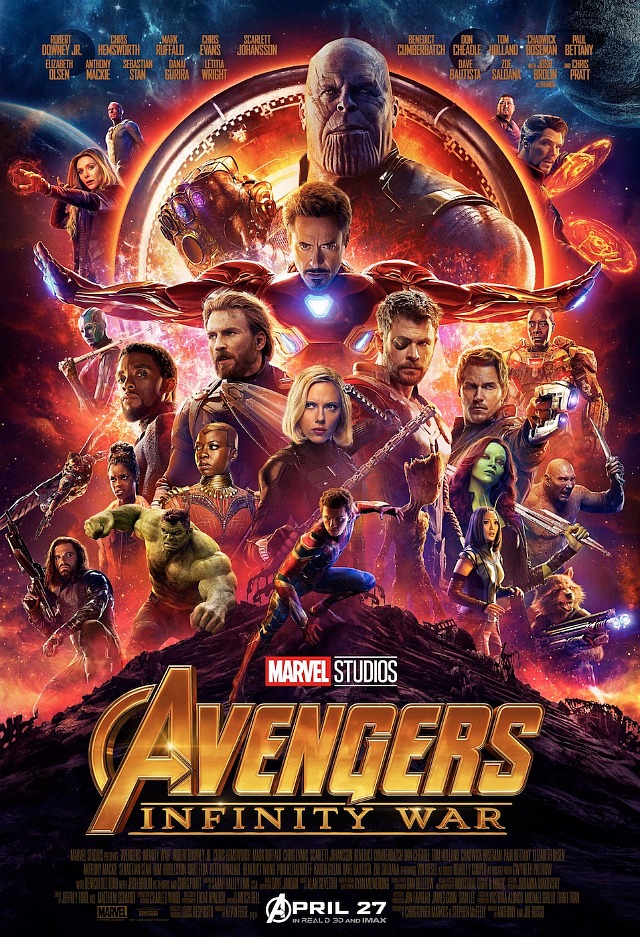
How many superheroes elbowing each other in Avengers: Infinity War…22 or 23? Robert Downey Jr. as Tony Stark, Chris Hemsworth as Thor, Mark Ruffalo as Hulk, Chris Evans as Steve Rogers, Scarlett Johansson as Black Widow, Benedict Cumberbatch as Stephen Strange, Don Cheadle as War Machine, Tom Holland as Peter Parker, Chadwick Boseman as Black Panther and Paul Bettany as Vision…that’s ten.

Plus Elizabeth Olsen as Scarlet Witch, Anthony Mackie as Falcon, Sebastian Stan as White Wolf, Tom Hiddleston as Loki, Idris Elba as Heimdall, Benedict Wong as Wong, Pom Klementieff as Mantis, Karen Gillan as Nebula, Dave Bautista as Drax, Zoe Saldana as Gamora, Vin Diesel as Groot, Bradley Cooper as Rocket, Chris Pratt as Peter Quill / Star-Lord…that’s thirteen or 23 total.

Plus Gwyneth Paltrow as Pepper Potts, Josh Brolin as bad-guy Thanos and Peter Dinklage as you-tell-me.

All of these hot-shots trying to out-quip each other. I’m exhausted just thinking about it. What’s the running time, 165 minutes? Longer?

Pecking Order

For several decades highbrow, smarty-pants film critics have championed pulpy, seat-of-the-pants genre movies over highbrow films made with class and restraint. Raw-vitality filmmakers — Ben and Josh Safdie, Park Chan-wook, Takashi Miike, John Woo in the ’90s, Oxide and Danny Pang, Sonny Chiba movies, Bollywood auteurs, Sam Fuller, Budd Boetticher — have always been more celebrated than highbrow types. By the elites, I mean.

Written 13 years ago by David Camp and Lawrence Levi: “The film snob prides himself on his populist, un-arty taste, favoring, for example, the soapy, over-emotive schlock of India’s Bollywood film industry over the artful, nuanced films of the Calcutta-born Satyajit Ray, and the Spaghetti Westerns of the Sergios Leone and Sergio Corbucci over anything Fellini ever made.”

Perhaps the first time I noticed this mindset was when I read a mid ’70s piece by film critic (and my ex-re:visions partner) Stuart Byron. I forget the publication, but it compared the merits of Costa-Gavras‘s State of Siege, which opened stateside in April 1973, to Mark Lester‘s Truck-Stop Women, which opened in May of ’74. Byron preferred Lester’s film, natch. “No rig was too big for them to handle!”

The Horny Ape

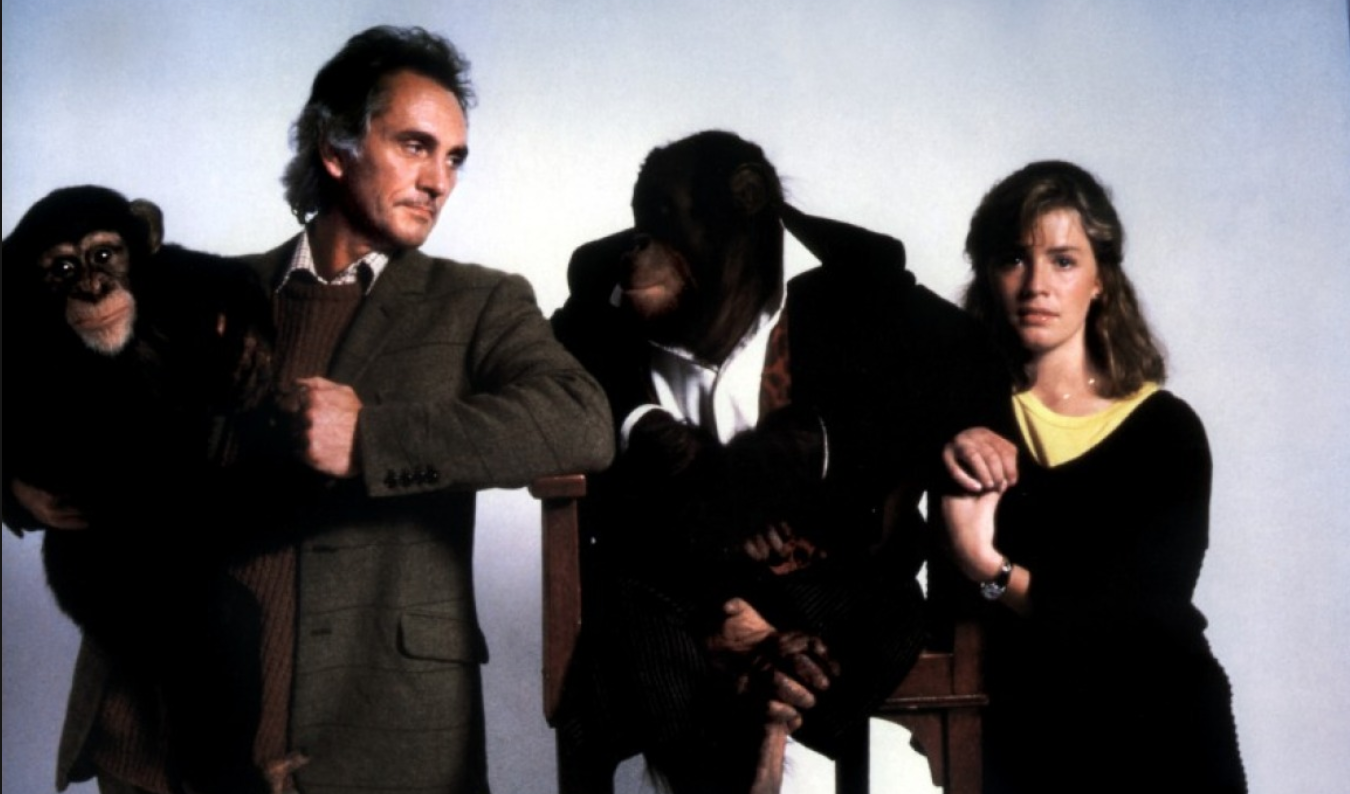
Posted four years ago: Nobody remembers Richard Franklin‘s Link (’86), but it was a witty, better-than-decent genre thriller with a nice sense of tongue-in-cheek humor, and shot with a great deal of discipline. Clever, dry, smarthouse. And nobody saw it.

Shot in Scotland in ’85, Link was basically about a watchful, intelligent and increasingly dangerous chimpanzee who develops a sexual obsession for a junior zoologist played by young Elizabeth Shue (who was 22 or 23 during filming).

A Thorn EMI production that was acquired by Cannon, Link costarred Terrence Stamp, was fairly well written by Everett De Roche, and was very carefully composed. Franklin (who died young in ’07) shot it with a kind of Alfred Hitchcockian style and language. I wrote the Cannon press notes and in so doing interviewed Franklin. The then-39-year-old director worked very hard, he told me, to put Link together just so. Franklin made no secret of the fact that he was a lifelong Hitchcock devotee.

Unless you own a Region 2 Bluray/DVD player, you can’t see Link under any circumstances. You can buy a decade-old Region 2 DVD, but no NTSC version. And you can’t stream it on Amazon, Netflix or Vudu.

Boilerplate: “Jane, an American zoology student, takes a summer job at the lonely cliff-top home of a professor who is exploring the link between man and ape. Soon after her arrival he vanishes, leaving her to care for his three chimps: Voodoo, a savage female; the affectionate, child-like Imp; and Link, a circus ape trained as the perfect servant and companion.

“A disturbing role reversal takes place in the relationship between master and servant and Jane becomes a prisoner in a simian house of horror. In her attempts to escape she’s up against an adversary with several times her physical strength, and the instincts of a bloodthirsty killer.”

I helped out with Link screenings at Cannon headquarters on San Vicente Blvd., and I remember playing The Kinks “Ape Man” (a portion of which is heard in the film) as a kind of overture for invited guests.

Terrence Stamp, who starred in Link, told me during a Limey interview in ’99 that Franklin was very tough on film crews.

Read more

“Cold Civil War”

The Trumpian right has long regarded blue America — urban, mostly liberal, multiracial, LGBTQ, not especially religious — as a primal threat to their cherished memory of an overwhelmingly white, straight and church-attending America of yore. They consider this threat to be so fundamentally dangerous that they’re pretty much ready to let Donald Trump ignore the rule of law and, if need be, even the Democratic system to squash or stop it. They’re willing to let Trump do whatever the hell he wants, because he’s on their side and that’s all they care about.

“Having a fact-based debate in this culture is becoming almost impossible,” journalist-author Carl Bernstein said last November. “It is not just political but cultural…at all levels in our society…it’s clear to me that something is not working in America today, that the system is straining almost to the breaking point in our journalism, in our politics…partisan assertion, self interest and careerism and ideological warfare at the expense of the national interest.”

On the part of the looney-tune, Trump-supporting right, he means.

Posted on 7.4.14: “The Declaration of Independence, adopted on July 4, 1776, proclaimed that the 13 American colonies were detaching themselves from English rule and were therefore free and independent states — quite a brave thing, raised quite a rumpus.

“The United States of America would not become relatively united and cohesive until after the end of the Civil War, of course, but for 130 years the U.S. of A. at least approximated the idea of a nation more or less bonded by shared beliefs, convictions and social goals. That’s obviously no longer true. Today and beyond the U.S. of A. is impossibly divided and never the twain shall meet. The right has gone totally around the bend. The urban Blues are the Czech Republic and the rural Reds are Slovakia, and I really think it’s time for the Czechs to sign a new Declaration of Independence and cut those bozos loose.

Read more

Most Likely Odious, Soul-Staining

This morning a film-fanatic friend said his biggest hope for the ’18 Cannes Film Festival is Lars von Trier’s serial killer flick, The House That Jack Built. My immediate response was “really?” Von Trier’s weakness, I explained, “is that he feels he has to be the visionary blunt tool — a stylistically unrefined bad boy. And so he has to deliver provocative films of a certain extreme quality. And so a bad-boy movie about a serial killer…well, c’mon. You can sense what’s in store.”

The truth is that I haven’t really felt the Von Trier love since Dogville (’03) and more particularly the brilliant and shattering Dancer in the Dark (’00), which I still regard as one of the most exciting and innovative musicals of all time.

Everyone was with Von Trier in the ’90s (Breaking The Waves, The Idiots). I started to disengage with Manderlay (’05), never saw The Boss Of It All (’06), really hated Antichrist (’09), was moderately okay with Melancholia (’11), and felt mostly distanced by the “intelligent, jaggedly assembled, dispassionate wank” that was Nymphomaniac, Volume One. I called Nymphomaniac, Volume Two “a cinematic equivalent of a ‘cold spot’ in a haunted house.”

Set in the ’70s and ’80s, Von Trier’s latest follows Jack (Matt Dillon) over the course of 12 years and five increasingly risky murders. From an official synopsis: “Jack views each murder as an artwork in itself, even though his dysfunction gives him problems in the outside world.”

In February 2017 Von Trier described the film as “celebrating the idea that life is evil and soulless, which is sadly proven by the recent rise of the homo Trumpus — the rat king.”

It’s been reported that at least four of the victims are women, and will be played by Uma Thurman, Siobhan Fallon Hogan, Sofie Grabol and Riley Keough. This aspect alone is sure to reignite charges that Von Trier is some kind of compulsive misogynist, especially in this #MeToo tinderbox era. The brutal punishings suffered by his female characters over the years — Bjork‘s in Dancer in the Dark, Emily Watson‘s in Breaking The Waves, Nicole Kidman‘s in Dogville, Charlotte Gainsbourg‘s in Antichrist and Nymphomaniac — provide fuel for this hypothesis.

Read more

What Say Ye About Simon?

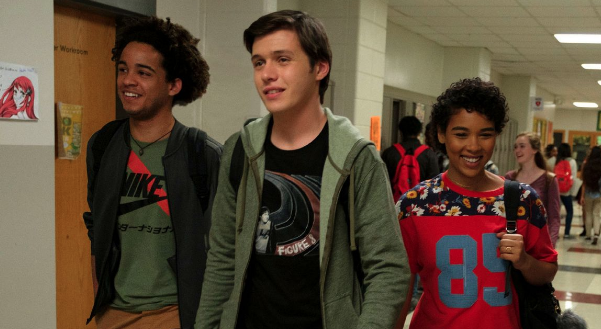
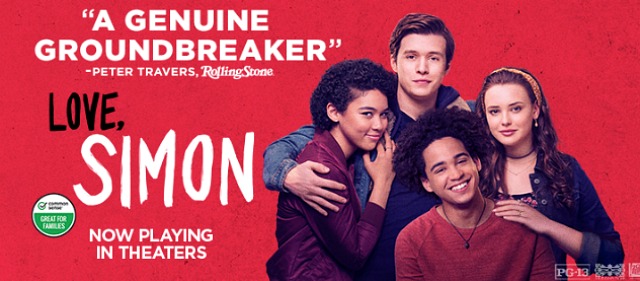
Nobody had much to say about my 3.15 review of Greg Berlanti‘s Love, Simon, but it opened yesterday so what’s the reaction? By any measure an antiseptic, intensely suburban gay teen romance, I described it as (a) “definitely half-decent,” (b) “smartly written” but a little “too tidy, too dream-fantasy, too TV-realm and not laid-back enough.” But at the same time not bad. I mentioned that it’s the first big-screen adaptation of a YA novel (Becky Albertalli‘s “Simon vs. the Homo Sapiens Agenda”) that I’ve half-liked, but it still feels a little too YA-ish.

Slight Rainy Day Scuttlebutt

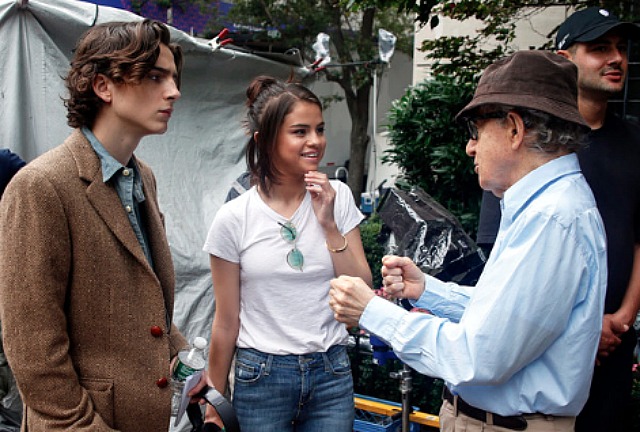
Two days ago I mentioned the “enticing” possibility of Woody Allen‘s A Rainy Day in New York playing at the 2018 Cannes Film Festival. I remarked that a booking of Allen’s most recent effort “would be a way for festival topper Thierry Fremaux to not only honor a relationship with a still-important filmmaker but declare that Cannes is about cinematic art first and nervous-nelly politics second.”

This morning a friend passed along second-hand dope from a “Cannes insider”, the gist being that (a) A Rainy Day in New York “is being heavily considered,” and (b) the pulse-quickening notion of screening the Woody (which costars Timothee Chalamet, Selena Gomez, Elle Fanning, Jude Law and Diego Luna) is currently “outweighing the ramifications of any bad press” that may result — i.e., the Robespierres chanting that a film by a director who may have molested a seven-year-old adopted daughter 25 years ago shouldn’t be so honored.


(l. to r.) Timothee Chalamet, Selena Gomez, Woody Allen during filming of A Rainy Day in New York.

Fremaux is a longtime Woody loyalist. Since joining Cannes in ’01 he’s been instrumental in booking seven Allen films — Hollywood Ending, Match Point, Vicky Cristina Barcelona, You Will Meet A Tall Dark Stranger, Midnight in Paris, Irrational Man and Cafe Society. Given this history it’s hardly surprising to hear that Fremaux “wanted to book A Rainy Day in New York before it was even shot last fall.”

Another factor favoring a Rainy Day appearance is that Fremaux also wants to play Felix Van Groeningen‘s Beautiful Boy (Amazon, 10.12), a drug-addiction drama costarring Timothee Chalamet and Steve Carell. This plus Rainy Day would theoretically double the Chalamet press coverage…or would it?

With Chalamet having thrown Woody under the bus by announcing that he’s standing with the Robespierres as well as donating his Rainy Day salary to a #TimesUp defense fund, will he attend the Rainy Day Cannes premiere or duck out of town?

Read more

More Strangelove Color

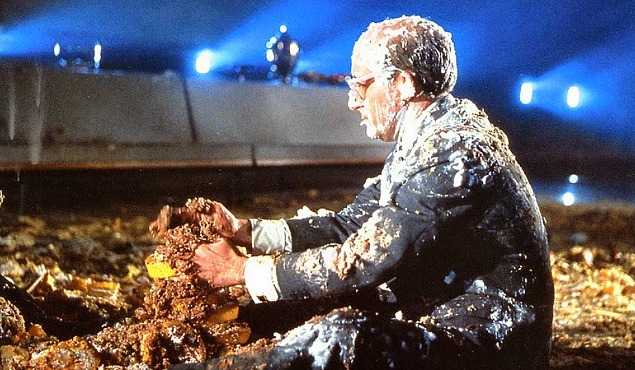
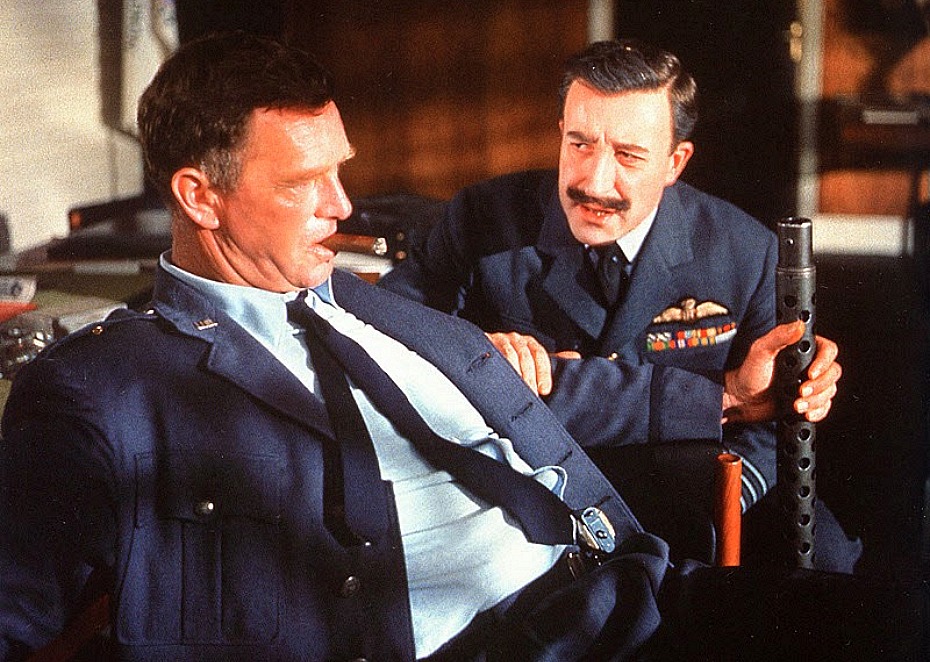
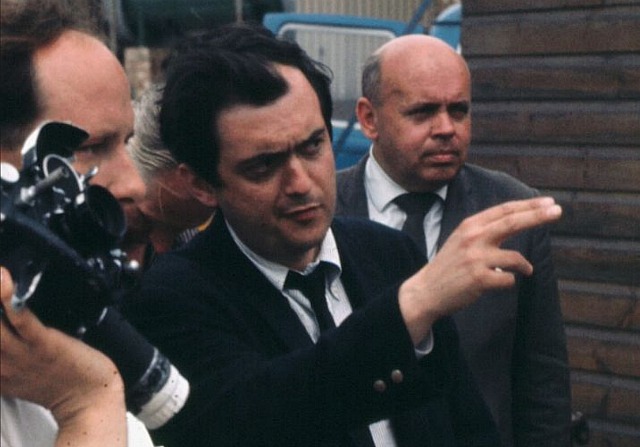
Two years ago I posted “Strangelove Color Trip,” which consisted of seven color snaps (in the old HE format width of 460 pixels), all taken during filming of Stanley Kubrick‘s Dr. Strangelove in early 1963. This morning I came upon several more; I’ve also re-rendered four or five shots from March ’16 in HE’s current (640 pixel) column width. I let one black-and-white shot slip in (i.e., Kubrick hand-drawing Lolita glasses on a nuclear warhead), but only because I’d never seen it before today.

Read more

Unmasking of “Redcloak”

A day or two after posting about Tony Zierra‘s Filmworker, the Lon Vitali-Stanley Kubrick documentary that will open in early May, I re-watched it on my Macbook Pro. And what a deep, penetrating, all-knowing, all-encompassing thing it is. A visit to a rarified realm of vision and obsession, of giving your all and getting nowhere near enough sleep, but finally being part of a very special history.

I feel a special kinship with Filmworker and particularly Vitali himself because I am as much of an obsessive at column-writing as Vitali was with the Great Stanley K. all those years (i.e., pre-Shining to post-production on Eyes Wide Shut).

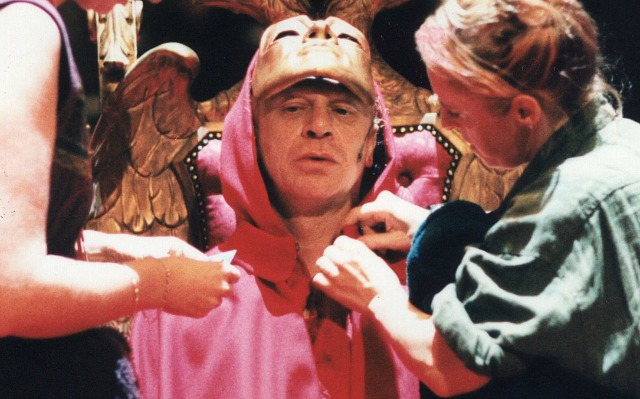
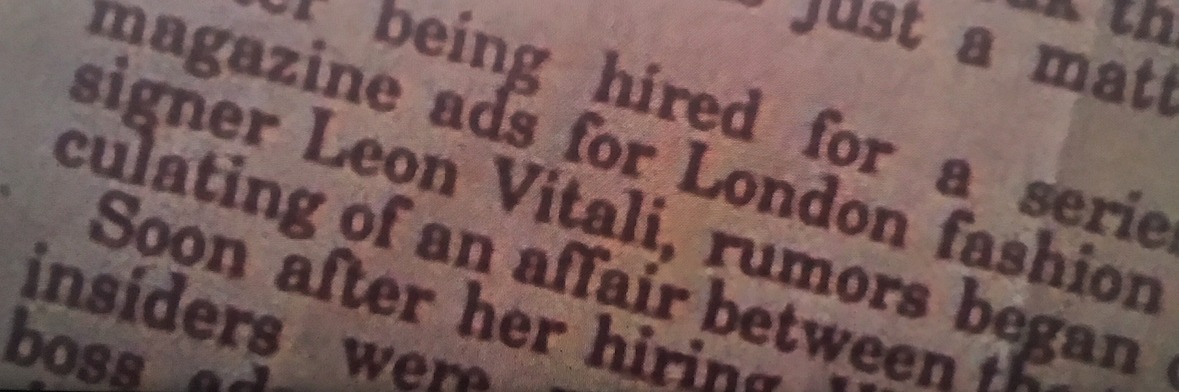
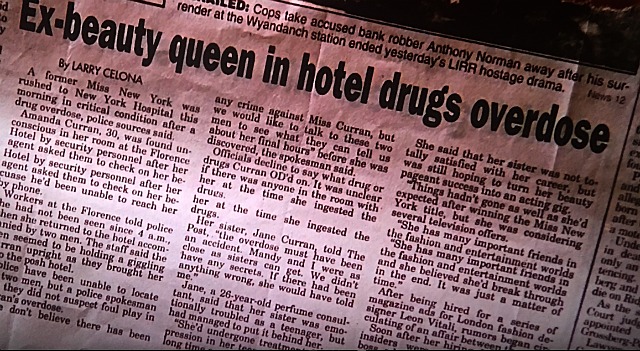
Anyway, the laptop viewing allowed me to capture images of Leon between takes while he was playing the “redcloak” interrogator in Eyes Wide Shut. Ditto a couple of stills of a fictional EWS newspaper story that mentioned “London fashion designer Leon Vitali” having allegedly had an affair with the “beauty queen dead from drug overdose,” etc.


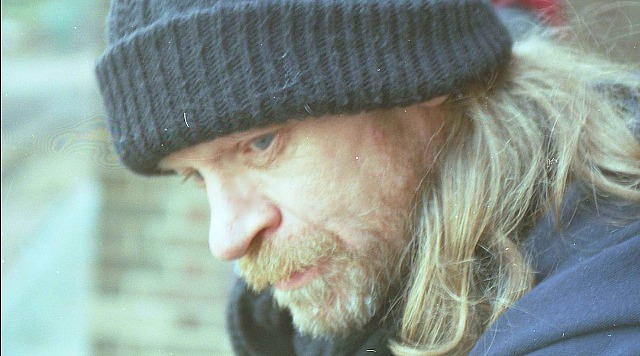
Leon Vitali, relatively recently.

Longtime Stanley Kubrick aide Leon Vitali between takes during filming of Eyes Wide Shut.

Read more