Strange Days

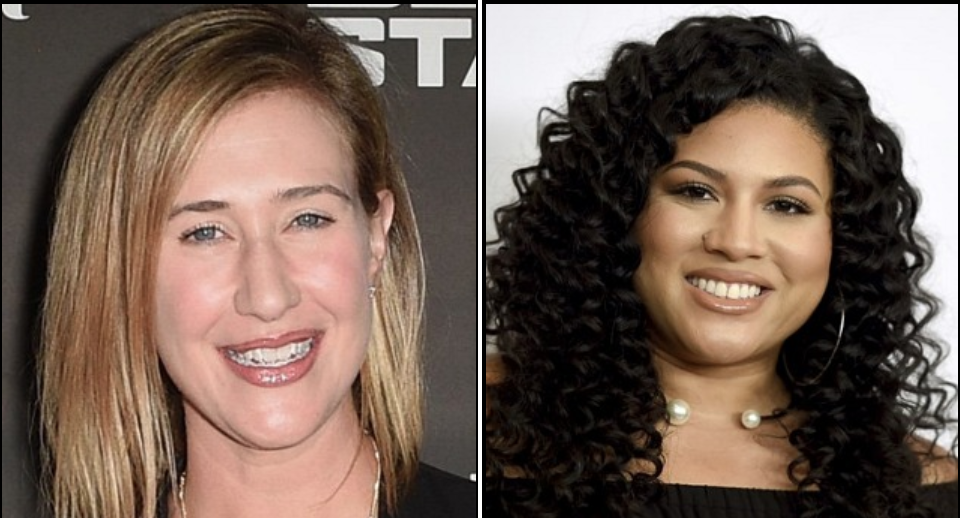
A few hours ago Paramount Pictures announced that Paramount Television president Amy Powell had been fired after making “racially charged” statements that were “inconsistent” with the studio’s values.

According to The Hollywood Reporter‘s Kim Masters and Lesley Goldberg, “the inciting incident occurred during a studio notes call for Paramount Network’s First Wives Club reboot, which is being penned by Girls Trip co-writer Tracy Oliver and will feature a predominantly black cast.” Powell allegedly expressed “generalizations about black women that struck some on the call as offensive.”

“A complaint was filed to human resources” which investigated the claims with the legal department and those involved on the notes call. Sources say Paramount considered discipline but decided to to fire Powell after she denied the allegations.” In other words, if Powell had confessed to racial insensitivity and/or p.c. wrongdoing and then begged for forgiveness she might have been spared the guillotine.
(l.) Former Paramount Television prexy Amy Powell; (r.) First Wives Club writer Tracy Oliver.

 Nobody has ever attained a high position of power and influence within a big studio without being extra careful about what to say, how to say it and whom to say it to at all times. Especially in this highly sensitive era when a single clumsily chosen word or phrase or the slightest indication of a politically incorrect sentiment on Twitter can land you in a heap of trouble.

What could Powell have said that ignited such a tempest? Sooner or later someone has to leak what it was that Powell actually said along with some context about what she apparently meant and how she might have put it more cautiously or sensitively.

Powell quote to L.A. Times: “There is no truth to the allegation that I made insensitive comments in a professional setting, or in any setting,” she said in a statement. “The facts will come out and I will be vindicated.”

Read more

“Not Easy Getting A Job For A Woman Your Age”

A year from now Jennifer Lopez will hit the big five-oh, and she seems to be playing close to her age in Peter Segal‘s Second Act (STX, 11.21). Feels like a middle-aged Working Girl meets the Tootsie premise (i.e., landing a job under false pretenses, having to maintain a big lie in order to hold on to it).

It took me two glances to realize that the weathered white-haired guy interviewing J. Lo for a job at the 50-second mark is Detective Danny Ciello — i.e., 68 year-old Treat Williams. The trailer doesn’t even give Williams a fast close-up — the fact that Williams used to be a hot-shot, name-brand actor in the late ’70s and ’80s is completely ignored. Hey, man…I used to be in the big game.

Fool A Klansman Once…

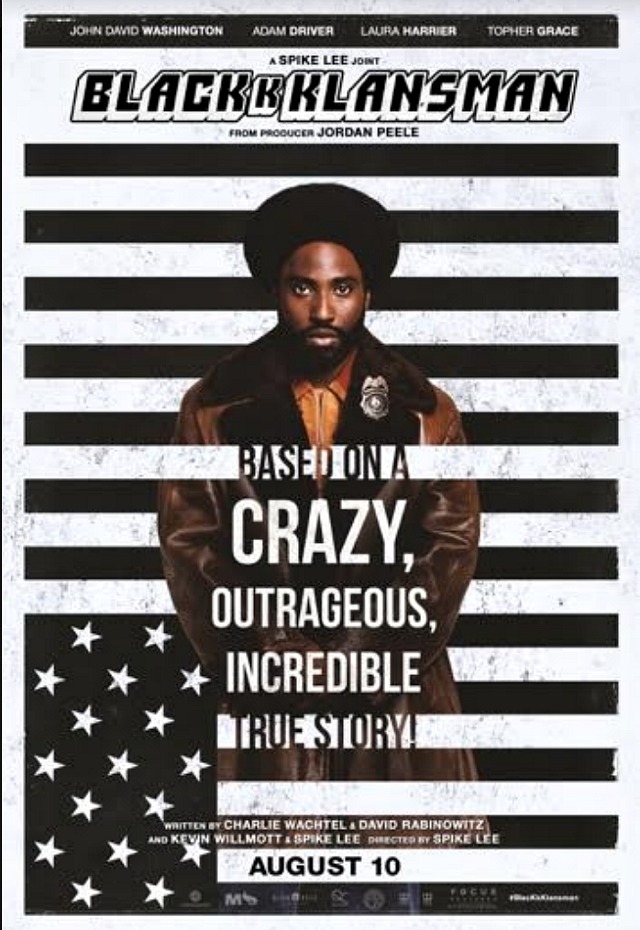
So the black-and-white backdrop is supposed to raise associations with prison or chain-gang garb…right?

The true-life, written-about story behind Spike Lee‘s Black Klansman is a little bizarre, but I wouldn’t call it “crazy,” “outrageous” or ‘incredible” as much as odd and head-scratchy.

BlacKkKlansman is basically a police undercover caper film, based on Ron Stallworth’s 2014 novel (“Black Klansman: Race, Hate, and the Undercover Investigation of a Lifetime”).

At times it tonally feels like Starsky and Hutch or even to some extent like John Badham‘s Stakeout, especially as it involves the main cop protagonist falling in love with a girl (in this case an Afro’ed black activist played by Laura Harrier) who shouldn’t know what he’s up to, but whom he eventually confesses to. In this sense John David Washington‘s Stallworth is Richard Dreyfuss in the Badham film, and Adam Driver (as partner Flip Zimmerman) is Emilio Estevez.

At times the film also reminds you of some Clarence Williams III scenes from The Mod Squad.

Set in 1972, pic isn’t literally about Stallworth joining the Ku Klux Klan but a stealthy undercover investigation of the Klan, initiated when he was the first black detective in the history of the Colorado Springs Police Department.

After initial correspondence with the Klan, Stallworth received a call in which he was asked if he wants to “join our cause.” Stallworth answered affirmatively, and in so doing launched an audacious, fraught-with-peril inquiry.

SPOILER-ISH BUT NOT REALLY: Right away you’re telling yourself, “Yes, I know this actually happened and that Lee is using the facts in Stallworth’s book, but it made no sense for Fallworth to be heavily involved in this operation.” And it just feels crazy as you’re watching one crazy incident after another.

Read more

Netflix, Taback Join Forces

HE’s own Lisa Taback, generally regarded as one of the sharpest, shrewdest and best-connected award-season publicists and campaign strategists around, will become Netflix’s in-house campaigner as of 8.1. In other words she’s going to more or less orchestrate the awards-campaign for Netflix and Alfonso Cuaron‘s Roma, which will almost certainly be Best Picture-nominated. The following year Taback will presumably do the same for Martin Scorsese‘s The Irishman.

Netflix is obviously proud and cranked about Roma and The Irishman. The Taback deal means they’ll be going great guns on both in terms of award-season campaigning. A Best Picture Oscar will bestow an aura of class — an image upgrade like nothing else. Netlix is all in, money on the table, this is it.

The Hollywood Reporter‘s Scott Feinberg reported the Taback news earlier today.

Does this mean that Taback and her staff will be 100% exclusive to Netflix, or is there a little wiggle room? Taback has been working for First Man director-writer Damien Chazelle, for instance. The last paragraph in Feinberg’s story addresses this angle: “Under the terms of her Netflix deal, Taback, who declined to comment, will continue to consult with a limited number of her existing clients through the end of the current Emmy season and possibly through the end of the coming Oscar season, as well.”

I Don’t Believe It

While sitting for an interview with The Independent‘s James Mottram, Belgian actor Matthias Schoenaerts apparently said that Terrence Malick‘s Radegund, a German-language antiwar drama in which he costars, “is likely to premiere at Venice and/or Toronto during the autumn.” Or so Mottram has written.

I’ve heard differently. I was told a few weeks ago that Radegund probably won’t pop at the early fall festivals and will continue to hide out until the February 2019 Berlinale, if that. Malick has always taken his sweet-ass time in post. Roughly two years per film and sometimes longer — Tree of Life, To The Wonder, Knight of Cups, Song to Song. I actually wouldn’t be surprised if Radegund turns up closer to next year’s Cannes Film Festival or even, don’t laugh, during Venice/Telluride/Toronto of ’19.

But if Schoenaerts is correct and Radegund winds up playing Venice, Telluride or Toronto this year (i.e., eight to ten weeks hence), terrific. Having a film ready to show less than two years after finishing principal photography is a very un-Malick-like thing, but who knows?

There’s no reliable timetable when it comes to Mr. Wackadoodle. He likes to shuffle and re-shuffle and think things through, and then re-shuffle and re-shuffle and then toss the lettuce leaves into the air as he twirls three times while chanting, adding lemon and olive oil and re-shuffling all over again, and then going outside and re-thinking it all during long walks around dusk.

Besides Schoenaerts Radegund costars August Diehl in the lead role as an Austrian who ran afoul of German authorities during WWII when he refused military service over ethical/religious beliefs. Costars include Valerie Pachner, Michael Nyqvist (who died in June ’17, roughly ten months after giving his performance), Jurgen Prochnow and Bruno Ganz.

Read more

As I Understand It…

Alfonso Cuaron‘s Roma, a likely Best Picture contender despite Spanish-language dialogue, has been announced as a centerpiece showing (10.5) at the forthcoming New York Film Festival. But it’s not a world premiere nor an exclusive North American booking. The NYFF release says it’s just a “New York” premiere, so Roma will most likely be seen first at the Venice Film Festival. Then it could (probably will) play Telluride and Toronto before hitting Kent Jones‘ Upper West Side of Manhattan festival. All is good and tingly.

“I was absolutely stunned by Roma from beginning to end,” Jones said in a statement. “By the craftsmanship and the artistry of everyone involved, by the physical power and gravitational force of the images, by the realization that I was seeing something magical: a story of ongoing life grounded within the immensity and mystery of just being here on this planet. Alfonso Cuarón’s film is a wonder.”

Read more

“Equalizer 2” Is Surprisingly Decent

I slumbered into a press screening of Antoine Fuqua and Denzel Washington‘s The Equalizer 2, ready to sulk and fearing the worst. I had found the original Equalizer a rotely bludgeoning, less-than-plausible thing that was below the level of Tony Scott‘s Man on Fire, the greatest Denzel-kills-bad-guys flick of all time. With the same screenwriter (i.e., Richard Wenk) on board for EQ2, I figured, what hope could there be of any improvement?

Well, guess what? The Equalizer 2 isn’t Man on Fire-level either, but it’s much, much better than Fuqua’s 2014 original. Yes, it’s a formulaic whoop-ass fantasy and, yes, with a few plot holes and plausibility issues, but this time I went with it. I actually felt satisfied and marginally impressed. Because EQ2 takes its time and focuses on character, basic values and careful step-by-step plotting before delivering the climactic violent payback stuff. As a result I felt more invested in Denzel’s Robert McCall, a former CIA black-ops assassin who’s now living in Boston and working as a Lyft driver. This time I said to myself, “I like this guy a little more, and I like that Fuqua has actually made a better-than-half-decent programmer for a change.”

As I walked out I was telling myself that The Equalizer 2 might be Fuqua’s best movie since Training Day (’01), but then I thought of Brooklyn’s Finest (’09), a dirty-cop drama that was relatively satisfying. There’s no question that EQ2 is heads and shoulders above Fuqua’s last four films — The Magnificent Seven (undisciplined western shoot-em-up), Southpaw (ham-fisted), the first Equalizer and Olympus Has Fallen (terrorist-attack garbage).

Pay no attention to those crappy Rotten Tomatoes and Metacritic scores. The critics who are dismissing EQ2 are being way too harsh and fickle. If you’re at peace with the premise (i.e., Denzel bringing pain to bad guys) you won’t feel burned. This is a mostly satisfying actioner that actually cares about the quiet spaces between the shoot-outs and beat-downs, and it has a world-class finale — a stalking and ducking face-off between Denzel and four bad guys in the midst of a torrential hurricane.

I loved the fact that except for the opening action sequence (a de riguer thing these days), the first 20 or 25 minutes of EQ2 are about Denzel Lyft-ing people around Boston and getting to know or assist them in quiet little offbeat ways. I admired the fact that Fuqua invests in a subplot dynamic between Denzel and 22 year-old Ashton Sanders (Moonlight), one that involves values, personal integrity and good parenting.

Read more

Nobody Notices Aspect Ratios

Mission: Impossible — Fallout director Chris McQuarrie tweeted yesterday that during the big IMAX sequences (“the HALO and the heli”) the film’s aspect ratio changes from 2.39 (standard widescreen) to 1.90 (nearly standard Academy ratio of 1.85). That’s not what we like to see when a film shifts into IMAX mode. For that we require super-tall boxy aspect ratios, or at the very least a 1.43 a.r., which is what Chris Nolan‘s Dunkirk shifted into from time to time. The IMAX “wow” factor needs that.

Most viewers (critics included) don’t even notice aspect ratios. Me to critic friend : “Is the film you saw in 1.85 or widescreen scope?” Critic friend: “Uhm, I’m not sure.”

Dorian Gray Dreams

I have a quote in Tim Appelo’s 7.16 AARP magazine piece about digital de-aging of older movie stars. The de-aged actors are Michelle Pfeiffer in Ant-Man and the Wasp, Samuel L. Jackson in next year’s Captain Marvel, Will Smith in Gemini Man, and Robert De Niro in Martin Scorsese’s The Irishman.

Appelo mentions a 3.13.18 HE report that “de-aging tech will help push The Irishman’s budget to $250 million. He has me saying that’s quite a tab “for a straight-goombah period crime drama that will most likely appeal to 35-and-overs.”

Here’s what I sent to Appelo when he asked me for some thoughts a week ago:

“26 years ago I exhaustively researched and wrote an Empire article called ‘Reanimator,’ about how emerging digital technologies will one day be able to bring back actors from the grave and put them in new movies in a highly believable fashion. That’s a far more interesting angle, I feel, than merely de-aging actors. I would love, love, love to watch a new film costarring Cary Grant and Jennifer Lawrence. Okay, maybe that would be too costly, but at least one in which Grant plays a significant supporting role.

“De-aging? Meh, fine, whatever.

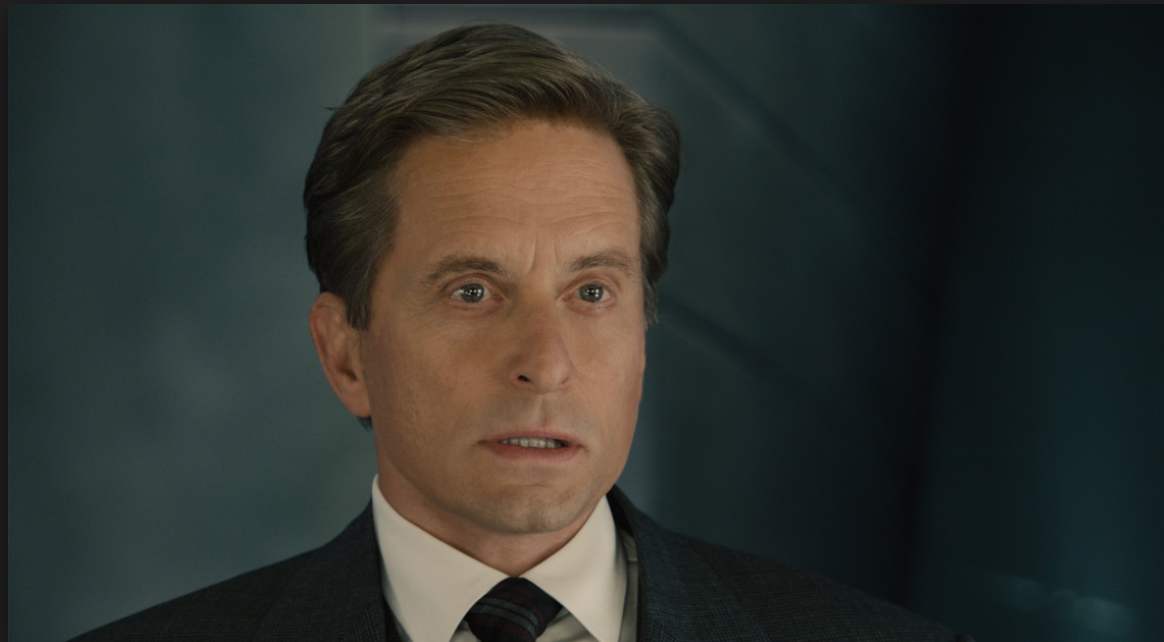
“I was genuinely impressed by the de-aging of Michael Douglas in a single scene from 2015’s Ant-Man. But at the same time I’m rather pessimistic about this technology given the enormous cost and the many, many months of work that are being devoted to the de-aging of Robert De Niro, Al Pacino and (presumably) Joe Pesci in Martin Scorsese‘s The Irishman. (The film is apparently loaded with glow-of-youth flashbacks.)

“The de-aging process is the reason The Irishman, which finished shooting last March, won’t be released until the fall of 2019, and the reason it’s costing Netflix an arm and a leg. Any technology this expensive and this cumbersome isn’t worth getting wound up about.

“Last February it was reported that the Irishman budget was at ‘$140 million and climbing.’ Last March Page Six‘s Richard Johnson reported that the cost had ballooned to $175 million. Add standard marketing costs (usually $85 to $100 million for a major feature) and you’re looking at a conservative tab of $250 million. All this for a non-fantasy, straight-goombah period crime drama that will most likely appeal to 35-and-overs.

Read more