“Rocketman”: A Glammy, Superficial Jukebox Fantasia

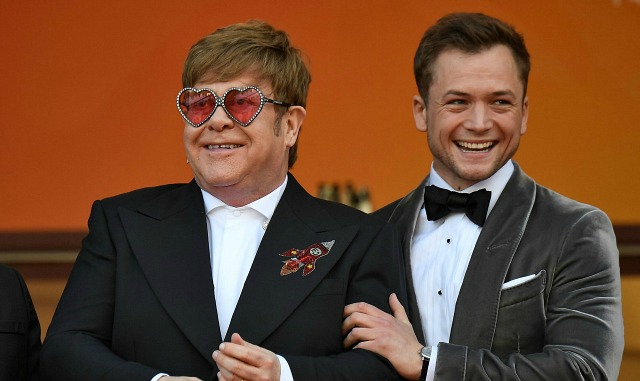
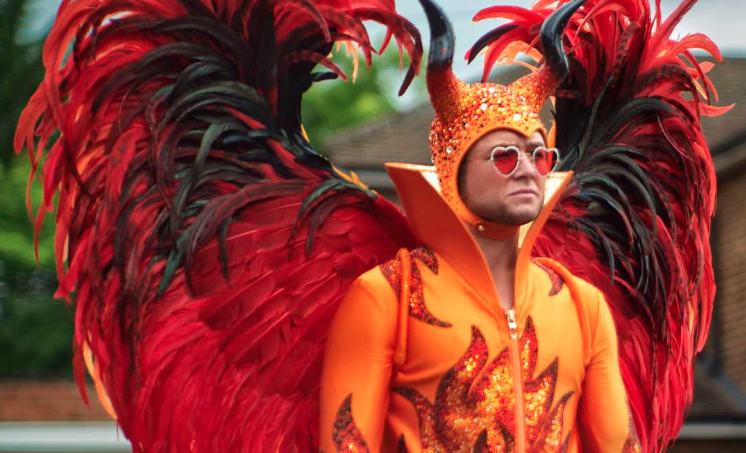
Several top-tier critics attended Thursday night’s gala premiere of Dexter Fletcher‘s Rocketman, the Elton John musical biopic, and their reviews began to pop just before 2 am Cannes time. I’ve read four or five so far, and the general verdict seems to be that it’s less interested in rock biopic realism (i.e., who John actually was and how he found his voice) and more interested in selling the flamboyant glam aspects of John’s early career.

In short, Rocketman sounds (and please stop me if you think I’m overdoing it here) like an Elton John flick for simpletons — for superficial minds, the easily impressed and your none-too-hip iTunes purchasers of one of John’s greatest hits albums.

I’m alluding to people who associate Elton more with his having sung the Lady Diana version of “Candle in the Wind” or perhaps for his Ceasar’s Palace gigs in Las Vegas than, say, his first serious industry gig at West Hollywood’s Troubadour in August ’70, or for his legendary, self-named 1970 debut album or the equally great “Honky Chateau” (’72).

Before I post a couple of review excerpts, I want HE regular Bobby Peru to consider the following line from Peter Debruge’s Variety review, to wit: “It’s Taron Egerton’s voice doing most of the singing here. He’s solid, but he’s no match for Elton’s pipes.”

HE to Debruge: No shit?

Another Debruge line: “Rocketman isn’t really about Elton as a musician.”

TheWrap‘s Steve Pond: “Bohemian Rhapsody acted like a standard biopic with concert and recording scenes thrown in, [but] Rocketman takes a wilder, bolder approach: It’s a full-fledged musical, using dozens of Elton John songs to tell his life story in a way that freely mixes reality and fantasy.

“This is a jukebox musical for the big screen, Mamma Mia! forced into a vaguely biographical form or one of the Broadway shows that use an artist’s music to tell their story, among them Jersey Boys and Beautiful: The Carole King Musical.”

“But it’s about Elton John, so that means it’s bigger, wilder, more extravagant and more excessive than those works. Sometimes that means it’s more fun, too, but it can also be a melodramatic slog when it’s not embracing the craziness of its musical numbers. And some of those numbers, to be honest, are far more diverting than others.

“As someone who hated Bohemian Rhapsody‘s factual errors, I can respect a biopic that announces from the start that it’s not to be taken seriously as an account of what actually happened. So while I struggled with a narrative that uses songs years before they were written, I know the rules of this particular game == and if what we see onscreen has a little crazy poetry in it, and it captures a bit of how things might have felt to Elton way back when, that’s all that matters.”
Read more

Grace Period

The big gala screening for Rocketman began a half-hour ago, but the first press screening doesn’t happen until 11 am tomorrow, followed by a 1:30 pm press conference. The tweets will start flying around the same time (roughly 4:15 am Pacific, 7:15 am Eastern).

Read more

Submerge and Rescue

Six or seven years ago Thomas Vinterberg‘s handsomely produced The Command (aka Kursk) would have warranted a stand-alone theatrical opening followed by a Bluray/DVD release three or four months later. Now it’s launching on DirecTV on 5.23 before simultaneously hitting theaters and VOD on 6.21. Screenplay by Robert Rodat; costarring Matthias Schoenaerts, Léa Seydoux as his wife, Artemiy Spiridonov as his son, and Colin Firth as Royal Naval Officer David Russell. 127 minutes.

Blue Skies, Tight Clock

I arose at 7 am (after crashing three and a half hours earlier) to catch this morning’s Beanpole screening at 8:30 am. I went home to write but nothing would come — too whipped. So I hit the local Carrefour for a couple of things. I finally got down to the Beanpole review around 2 pm, but finishing meant blowing off the 4 pm screening of Mati Diop‘s Atlantique (aka Atlantics), which was probably a bad idea considering the rave reviews. (The French-Senegalese Diop is the first black woman to have a film in competition here.) Now it’s pushing seven, and I’m determined to catch a 90-minute nap before seeing Ken Loach‘s Sorry We Missed You at 10 pm.

Read more

Souls Torn Asunder

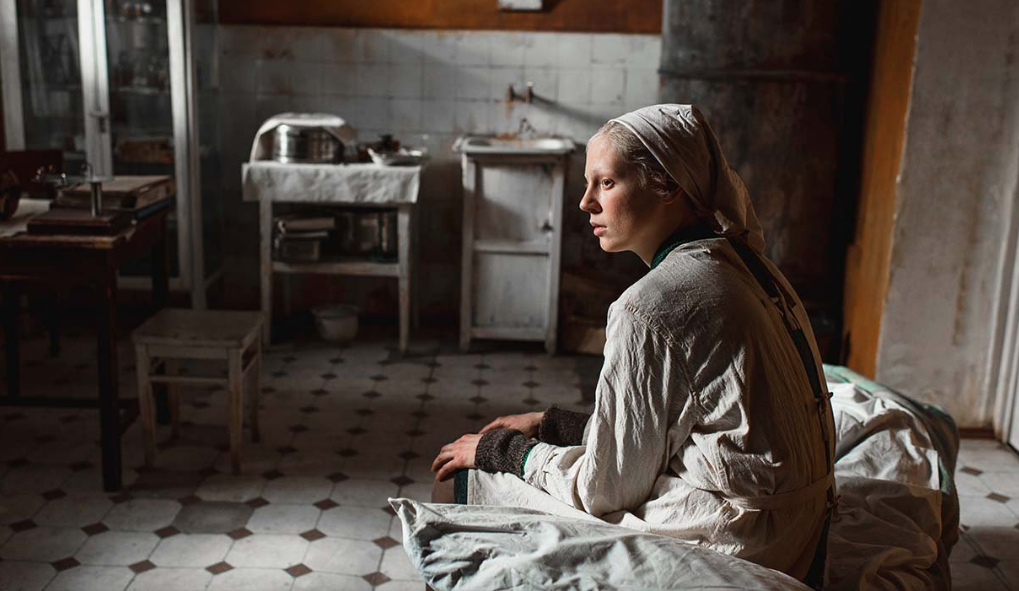
A week before leaving for Cannes I streamed Kantemir Balagov‘s Closeness (’17), a dark kidnapping drama set in a sodden Russian backwater. The idea was to prepare for Balagov’s Beanpole, a psychological survival tale set in Leningrad just after the ravages of World War II. I saw it early this morning. It’s just as grim if not grimmer than Closeness, but it’s also more ambitious in an atmospheric, large-canvas sense. And a whole lot sadder.

Balagov is only 27, but he’s already delivering the studied chops and immaculate directorial control that are par for the course among accomplished directors twice his age. Beanpole is basically about two shell-shocked women, scarred by the horrific siege of Leningrad and trying to re-assemble their shattered lives and emotions and somehow move on.

I respected the hell out of Beanpole but I honestly couldn’t derive much levitation or transcendence. To me it felt slow and trying and dirge-like. As much as I adore the idea of a 27 year-old creating a film as jarringly realistic and well assembled as this, it still left me feeling drained and dispirited. Plus it runs 134 minutes, which struck me as needlessly prolonged.

Balagov is quite the portraitist (and, to go by a just-posted Variety interview, quite the cultured film scholar), but he’s too much of a gloom-head, at least from my perspective. For this haunting portrait of post-war devastation is counter-balanced by glacial pacing and a strange reluctance or aversion to dealing with the death of a young boy…my God.

I felt sorrow and pity for each and every character, of course, but it feels too sludgy and oppressive, even for a story like this one.

Viktoria Miroshnichenko‘s titular character, Iya, is an all-but-catatonic, seven-foot-tall giraffe from whom verbal expression does not easily emanate. Why must she take 30 to 45 seconds to collect her thoughts before answering the simplest questions? Because that’s Balagov’s intention — to convey her destroyed inner state with traumatized expressions, gut feelings and minimal dialogue. I quickly ran out of patience with Iya’s blank stares, which is a way of saying that Miroshnichenko is not, in my judgment, a riveting actress.

Vasilisa Perelygina‘s Masha, Iya’s best friend, is far more interesting — more expressive and generally more alluring. If Perelygina had played the lead (which is to say if Iya had been eliminated), I would feel very differently about Beanpole. In my estimation she’s a natural movie star. But not Viktoria. Iya is impenetrable and burdensome and, as far as the afore-mentioned death of the child is concerned, inexplicable and even hateful.

The ghastly murder of Masha’s young son is “addressed” but not really dealt with, and I was simply unable to get past this. Balagov’s idea, I gather, is that if a character is profoundly devastated by war trauma, it’s within her realm to accidentally smother an innocent. In basic emotional movie-watching terms that’s simply not acceptable.

Does Masha react with shock and rage? No, she barely raises an eyebrow. Her attitude seems to be “that was horrendous what you did, of course, but the German army’s siege of Leningrad was equally awful if not more so, so I understand.” All she does, really, is insist that Iya lives up to a quid pro quo arrangement — you killed my child so get pregnant so I can raise another one.

Would any mother in the history of civilization react this way?

The principal characters (excepting a 50-year-old doctor and the rich, chilly parents of Masha’s amorous suitor, a dorky kid who has a nose like Vladmir Putin) are all numb and haunted-looking, which of course is fitting and necessary. This is not a film about steady keels and bright futures. If nothing else Beanpole is quite the sweeping statement on post-war devastation.

A late-arriving lesbian attraction element kicks in and allows for a semi-hopeful ending, but it arrives too late. If the romantic attraction aspect had been a factor early on (at least starting in the second act), I would have bought into it.

The best scene is a dinner-table conversation between Masha and the mother of Putin-nose, and as mentioned the general aura of post-war devastation throughout is certainly throttling from a general mise-en-scene perspective (camera lighting, art direction, rusty atmosphere), one that I can’t help but admire and respect from a certain distance.

If the story had been all about Masha, Beanpole would have been a much more absorbing film. I was mesmerized by Perelygina’s performance. She’s really got it.

But Beanpole is finally a movie for film festival and arthouse dweebs and not for guys like myself.

A Post-Trump Republican “Epiphany”?

This is what many of us can’t stand about Joe Biden. He seemingly believes that a significant amount of Republicans will suddenly revert to “classic” conservatism (i.e., opposed to liberal policies but with a semi-practical, semi-constructive attitude) if and when Trump leaves the White House.

It’s accepted doctrine that 25 years ago (starting with Gingrich in ’94, doubling down with Obama in ’09) Republicans became the crazy party. Their electoral survival will always depend upon whipping up the bumblefucks and old-school Fox watchers, and that’s certainly not going to change if Biden succeeds Trump. Embracing a notion that they’ll suddenly modify their basic nature is woefully naive.

Money quote from a 2012 Washington Post op-ed piece by Norman J. Ornstein and Thomas E. Mann: “The Republican party has become an insurgent outlier in American politics. It is ideologically extreme, scornful of compromise, unmoved by conventional understanding of facts, evidence and science, and dismissive of the legitimacy of its political opposition.”

Read more

Almost Cold

It’s 2:10 am and chilly as hell outside. All the years I’ve been coming to Cannes the weather has always been mild and balmy, usually in the mid to high 60s and sometimes 70-plus. Not once do I recall wearing a jacket and a scarf to an evening screening, but I sure as hell did this a few hours ago on my way to see Kleber Mendonca Filho and Juliano DernellesBacurau (which I hated by the way).

On top of which Friday and Saturday are expected to to be half-rainy, according to Weatherbug.

Right now it’s 46 degrees here. I thought climate change was supposed to be making things warmer as a rule. I don’t know which is worse, the nippy weather or the sight of 20somethings walking around in shorts and T-shirts and mini-dresses.

Biskind on Coppola Slam

In that recently-posted Deadline interview between Mike Fleming and Francis Coppola, the 80-year-old director briefly tears into author and former Premiere editor Peter Biskind, claiming unfairness on Biskind’s part in a 1990 piece about The Godfather, Part III, especially regarding Sofia Coppola‘s performance as Michael Corleone’s daughter.

I asked Biskind this morning if there’s anything he wants to dispute or clarify. His statement follows an excerpt from the Deadline interview:

Fleming: “You took some heat casting your daughter Sofia, who has become a fine filmmaker in her own right. Was it right to put so much pressure on her, when she was untested?”

Coppola: “Well, I felt betrayed by a journalist by the name of Peter Biskind. And Tina Brown. I was asked if a journalist could come to the set and report on the movie, but Peter came in with a story all ready to write because he knew that there was a controversy about the fact that I had cast Sofia. He’s the one [who] came out with the article first that sort of greatly criticized her performance and started that whole trend, that I had cast my daughter when Paramount didn’t want me to.

“I felt that the plot of Godfather III was that they were coming for Michael but they got her. And [in the press] they were coming for me but they chose Sofia. I don’t have malice against anyone at this point in my life, but, to this day, it upsets me that Peter Biskind was the one who was given access to the set and he used it to damn my daughter. I believe that in a new [forthcoming] version of the film (to be titled The Death of Michael Corleone), Sofia’s performance will vindicate her.”

Biskind replies: “Francis would be better served resting on his considerable laurels than nursing old grudges. So far as Sofia is concerned, it’s nice to see the Lion King spring to the defense of his cubs, but generally I like her films, and don’t recall maligning her. Besides [Francis and I] were supposed to have kissed and made up 20 years ago when he publicly forgave me for my sins. This reminds me of Godfather II, when Michael forgives Fredo and then has him killed.”

Endorsement

Evidence of Donald Trump‘s racism has been so abundant over the last three and a half to four years (not to mention the Central Park Five statements that he made 30 years ago) that there doesn’t seem to be anything to say except “what else is new?” But every so often a quote will come along that renews the revulsion. Not among the Trump faithful, of course. Semi-normal people, I mean.

In a day-old Atlantic article titled “An Oral History of Trump’s Bigotry,” white nationalist figurehead Richard Spencer says that August 2017 “Unite the Right” rally in Charlottesville “would not have occurred without Trump” becoming president.

Spencer, the rally’s organizer and the guy who coined the term “alt-right,” said it “really was because of [Trump’s] campaign and this new potential for a nationalist candidate who was resonating with the public in a very intense way. [The] alt-right found something in Trump. He changed the paradigm and made this kind of public presence of the alt-right possible.”

The Charlottesville rally led to the murder of Heather Heyer, caused by a white racist who plowed through a crowd of liberal counter-protestors with his car. The same day Trump deplored the “egregious display of hatred, bigotry, and violence on many sides.” A few days later he re-stated there were “very fine people on both sides.”

Push Comes To Shove

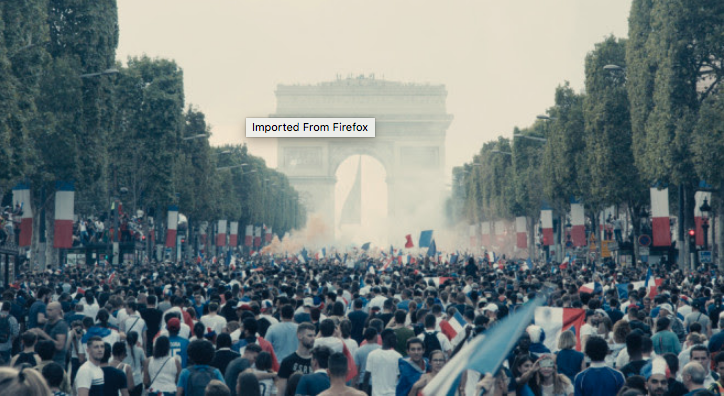
The first truly exciting film of the 2019 Cannes Film Festival screened this afternoon — Ladj Ly‘s Les Miserables. Set in the Parisian suburb of Montfermeil, a poor but tightly knit Muslim community, it offers a jolting contemporary echo of the cruelty, harassment and oppression that ignited Victor Hugo’s classic 1862 novel, this time rooted in police brutality and racial animus.

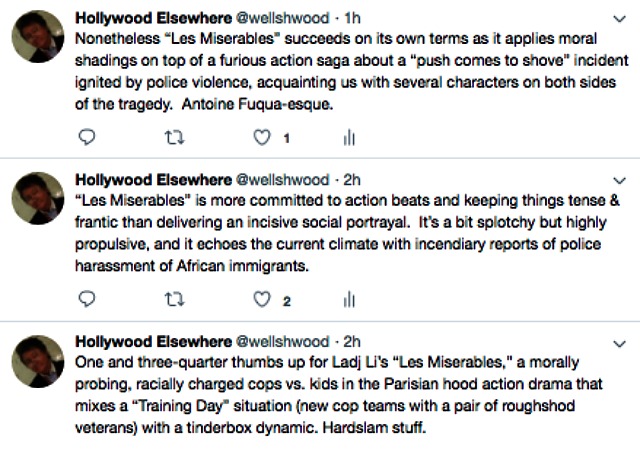
Start to finish Les Miserables is rough, riveting, incendiary — written by Giordano Gederlini and Alexis Manenti and brilliantly shot by Julien Poupard. It generally feels like a rough-and-tumble Antoine Fuqua film, using the basic dynamic of Training Day (but with three cops instead of two) plus a Little Do The Right Thing plus a dash of the anxious urban energy of William Freidkin‘s The French Connection.

But it’s about more than just urban action beats. It’s a racially charged tragedy, injected with sharp social detail and several strong (if somewhat sketchy) characters on both sides of the tale. It’s a bit splotchy and slapdash at times, but is quite the ride.

Part policier and part social-canvas suspenser, Les Miserables is basically about conflicted cops (including one bad apple) under pressure vs. a crew of scrappy, rambunctious, vaguely criminal kids in the ‘hood. It takes the side of Montfermeil natives (Ly was raised there) but also portrays the cops in reasonably fair and humanistic terms.

Closing motto: “There are no such things as bad plants or bad men. There are only bad cultivators.”

The story is about a mischievous Muslim kid named Issa (Issa Perica) who gets himself into hot water by stealing a lion cub from a small local circus. The circus guys angrily threaten some Montfermeil community leaders (not the suit-wearing kind), and soon after the film’s three plainclothes protagonists — the racist and brutish Chris (Alexis Manenti), a casually brusque but decent-hearted Montfermeil native named Gwada (Djibril Zonga) and Stephane (Damien Bonnard), a new transfer with a curtly liberal, mildly compassionate approach to police work — are on the hunt.

They eventually chase down and capture Issa, but then comes the triggering incident: an agitated Gwada fires a flashbang (a non-lethal stun grenade) into the kid’s face. Luckily Issa recovers, but Chris and Gwada go into panic mode when they quickly realize that the incident has been captured by a drone-mounted video camera. Despite Stephane’s objections, the priority becomes finding and destroying the visual evidence.

Things get increasingly hairy and desperate, ultimately leading to a climax…okay, I’ve said enough.

I won’t reveal the finish but it reminded me of the last two or three minutes of Asghar Farhadi‘s A Separation. I for one found it satisfying.

Earlybirds Get The Worm

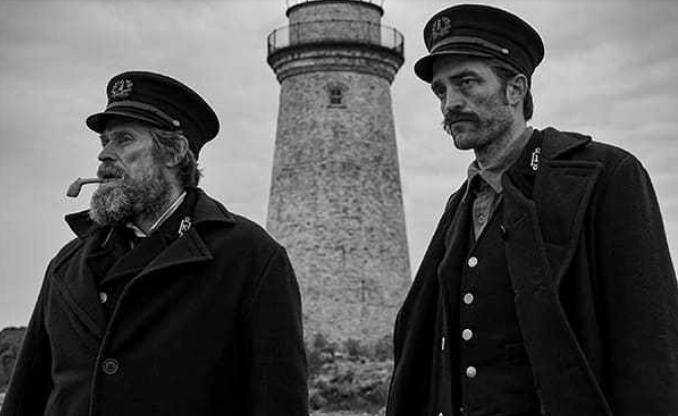
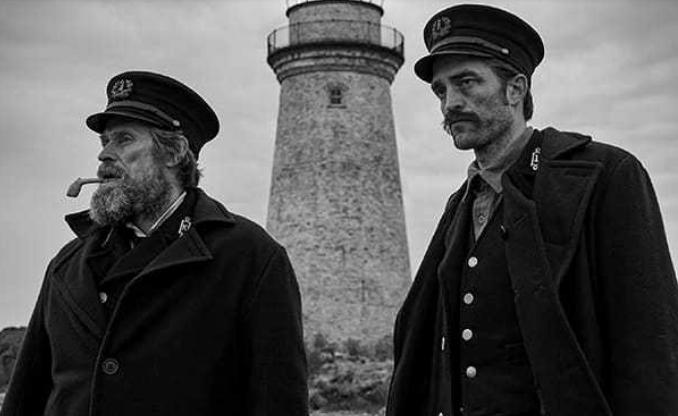
The news about Focus Features having bought international rights to Robert EggersThe Lighthouse, which will screen in the Directors’ Fortnight section on Sunday, obviously ups interest levels. Which means that getting into either of the two Lighthouse screenings (8:45 am and 8:30 pm) will require extra determination and stamina.

Elite press badges cut no ice at Directors Fortnight screenings. Everyone is on an equal footing, so you just have to line up outside the J.W. Marriott and hope you’ve arrived early enough. Gaspar Noe‘s Climax was the hottest Directors Fortnight attraction last year, and it took me two tries before I got in.

The Lighthouse solution, I’ve decided, will require a 6 am Sunday wake-up and arriving at the Marriott by 7 or 7:15 am. I recently urged an industry friend, who’s intrigued by The Lighthouse having been shot on 35mm black-and-white celluloid, to join me at that hour. I explained that the 8:45 am offers the only realistic shot because access to the 8:30 pm screening will be a huge time-eater. Awaking at dawn is simply a matter of will.

Skeptical

In a run-up piece on Rocketman by Variety‘s Mark Malkin, producer Matthew Vaughn recalls how Tom Hardy was attached to play Elton John in an earlier incarnation.

Vaughn scoffed at Hardy’s idea to lip-synch John’s singing. Vaughn: “I feel like an idiot saying it now, but I said, ‘Nobody is going to watch a movie where the lead character is lip synching.’ Cut to Bohemian Rhapsody and me being proven wrong.”

Taron Egerton, who plays John in Rocketman (which is screening here on Friday morning) is a first-rate singer, but his John imitation (to go by the trailer) doesn’t quite get it — close but a degree or two removed from take-it-to-the-bank authenticity.

“I knew how well Taron could sing and musicals are like action movies,” Vaughn tells Malkin. “If you look at Tom Cruise, you know he’s doing it. I’m hoping people are going to lose their minds for Taron when they hear him sing.”

Read more