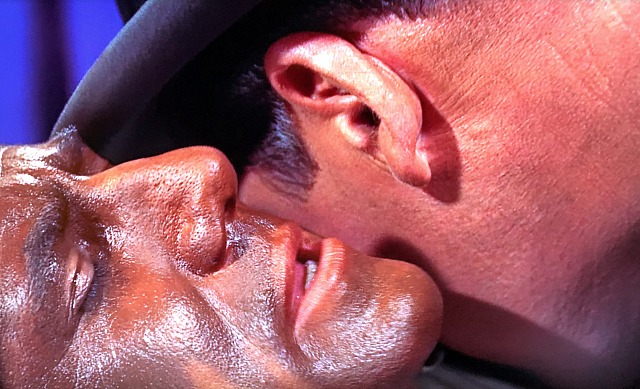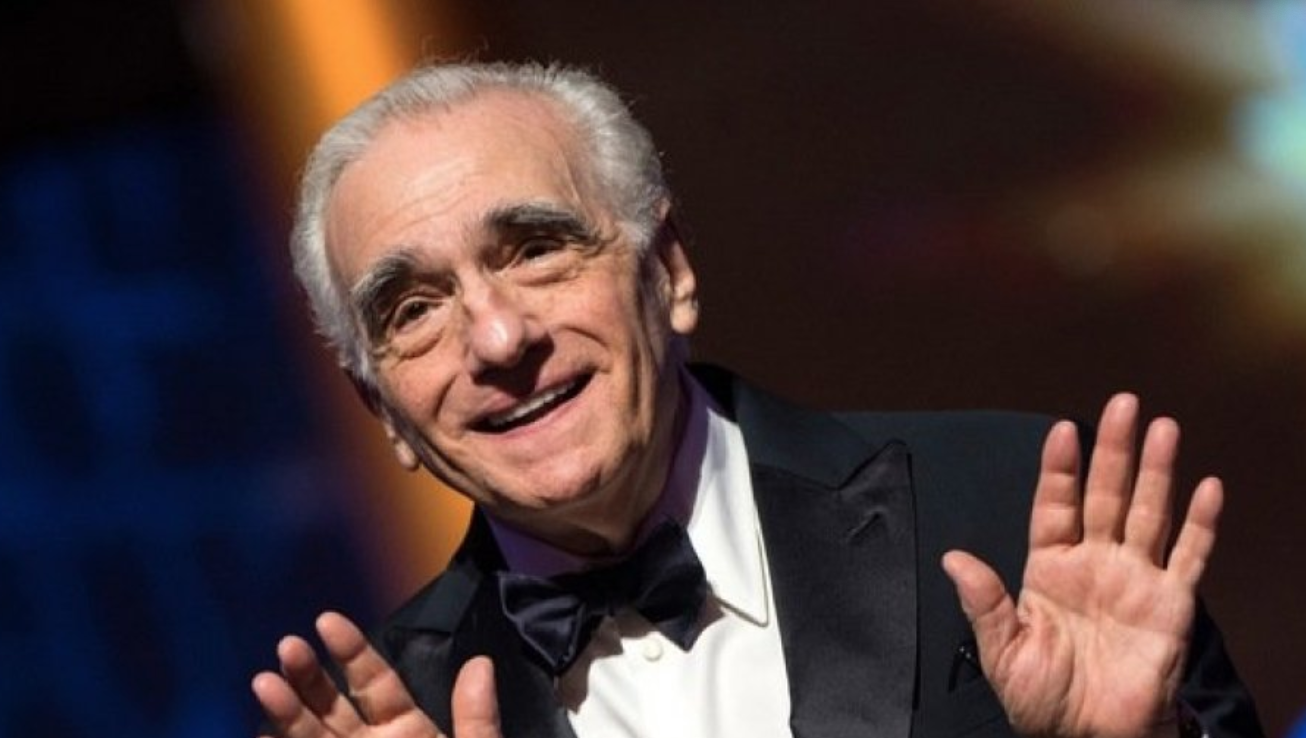
The Four Fakers

To my mind the only serious problem with Martin Scorsese‘s Rolling Thunder Revue doc is that he includes four phony talking heads among several real ones, and thereby violates the trustworthiness that we all associate with the documentary form, and for a reason that strikes me as fanciful and bogus.

The doc acquaints us with 22 or more talking-head veterans of the tour (Dylan included) but among this fraternity Scorsese inserts what Toronto Star critic Peter Howell is calling the “four fakers” — made-up characters portrayed by real, recognizable people:

Sharon Stone, who was 17 when the Rolling Thunder Tour was underway, seems to be speaking as herself but she’s actually “playing” The Beauty Queen. At first Michael Murphy seems to be speaking from his own perspective, but then you realize he’s playing The Politician. Actor-performer Martin von Haselberg (the husband of Bette Midler) plays The Filmmaker. And Paramount chairman and CEO Jim Gianopulos portrays The Promoter.

Some of what they say to the camera might be factually correct in this or that anecdotal way, but it’s all basically bullshit — made-up, written-out or improvised recollections that are performed for a chuckle, for the hell of it.

Scorsese explains his decision to include the four fakers in the press notes: “I wanted the picture to be a magic trick. Magic is the nature of film. There’s an element to the tour that has a sense of fun to it…doing something to the audience. You don’t make it predictable. There’s a great deal of sleight of hand.”

In response to which I said to myself “WHAT?” Who says RTR was driven by a sleight-of-hand, put-on mentality? I never heard that before. I thought it was about keeping it real, small-scale, people-level, driving around in a small tour bus, passing out pamphlets, etc.

Exasperated, I wrote an email to Howell, who actually attended an RTR concert in Canada at age 19 and reviewed the concert for a Toronto daily.

Wells to Howell: “Did you feel that the RTR show you witnessed was ‘a magic trick…[with] an element to the tour that has a sense of fun to it…doing something to the audience, unpredictable, sleight of hand,” etc.? What the fuck is Scorsese talking about, ‘sleight of hand’? What the fuck does that actually mean? Sounds like gibberish to me.”

Howell to Wells: “It’s total gibberish. What annoys me about this, actually depresses me, is that the Rolling Thunder Revue wasn’t some kind of scam or magical stunt by Dylan. I was there. I saw the show. I read all the reviews and interviews. It was seen at the time as a sincere attempt by Dylan to get back to his musical roots, as an antidote to the giant stadium tour of the year before. He seemed to believe this. Dylan says in the film the RTR wasn’t a moneymaker, just a great musical event with the sideshow altruism of trying to free Rubin ‘Hurricane’ Carter from an unjust jailing.

“That’s how I took it in at the time. Sad to think that Dylan and Scorsese are now making it out to be a colossal con job to show how cool they are and to keep the fans guessing. Remember when we thought of Dylan as the real deal, a guy who would speak truth to power? Now he seems determined to convince everybody that he never really meant or cared about most of what he did and sang about.
Read more

Rolling Along With Scorsese/Dylan

Martin Scorsese‘s Rolling Thunder Revue: A Bob Dylan Story (Netflix, 6.12) is an episodic concert film with a roving attitude and a hodgepodge capturing of Bob Dylan‘s Rolling Thunder Revue through New England in the fall of ’75. Mish-mashy, whimsical, good-natured, sometimes deeply stirring and in four or five spots flat-out wonderful.

But there’s one aspect, I regret to add, that’s vaguely bothersome in a half-assed sideshow kind of way.

Boomers will naturally enjoy it more than GenXers, Millennials and GenZ, but what do you expect from a doc about the late Gerald Ford era (with a little Jimmy Carter thrown in)?

Scorsese delivers ample concert footage, road footage, backstage footage and rural atmosphere footage, plus several present-tense talking heads (including Dylan himself) providing explanation and commentary. And then he throws in some red-leaf lettuce, salad dressing, chopped radishes, carrots, celery and kale and tosses it all around.

The doc is all over the map in a splotchy, rambunctious sort of way, but it’s mostly a fun, relaxing ride — a 140-minute road journey with some very cool and confident people. There’s one aspect that isn’t fun, as mentioned, and that has to do with what Toronto Star film critic (and former music critic) Peter Howell calls “the four fakers.” But I’ll address that in the next post.

The idea behind the RTR was for Dylan and a troupe of musician performers (Joan Baez, Roger McGuinn, Mick Ronson, Joni Mitchell, Ronee Blakely, Ramblin’ Jack Elliott, Scarlet Rivera, Rob Stoner, Howie Wyeth) to become (i.e., pretend to be) roving troubadours in the tradition of Italy’s comedia delle’arte (Dylan performed in white face a la Gene Simmons), and thereby achieve a certain casual, give-and-take intimacy with the crowds by playing smaller venues.

That’s all it was — an opportunity to keep things modest and funky by avoiding the usual huge stadiums. It wasn’t about tricks, games, jugglers, clowns or sleight-of-hand. It was just a straight proposition about playing music on the down-low and keeping it real.

The doc actually unfolded in two phases — the first in New England/Canada in the fall of 1975, and the second in the American south and southwest in the spring of ’76. The January ’76 release of Dylan’s Desire fell between the two with many of the songs performed in the first leg taken from that yet-to-be released album.

I think Scorsese’s doc might have better been titled Rambling Thunder Revue. It’s kind of a mess, but not a bothersome one. It’s patchy and spotty but mostly cheerful, friendly and spirit-lifting. As salad-tossed concert docs go it’s wholly agreeable.

There are three musical highlights — Dylan’s performing of “Isis” (a hard-charging song off Desire) and a rock version of “A Hard Rain’s Gonna Fall”, and a portion of Joni Mitchell performing an early acoustic version of “Coyote” with Dylan playing along. I also loved an excerpt of a conversation between Dylan and Baez about how their romance fell apart and…oh, hell, 20 or 30 other little things. The doc never bores — I can tell you that.

If Scorsese’s film is any one thing, it’s a kind of cinematic love letter to a bygone culture of 43 and 1/2 years ago — a tribute to a long-ago era (long hair, Kiss, flared jeans, Rubin “Hurricane” Carter, coal eye makeup, the last classic-rock gasp before the punk explosion, face-paint, Frye boots, pre-computers, pre-iPhone, pre-twitter, pre-everything)…to that whole raggedy-ass mid ‘70s vibe and attitude and way of being and living…hell, call it a valentine to bygone youth.

Overall a cool, enjoyable, fascinating visitation…diverting and pleasing as far as it goes and occasionally wowser. (At least by my musical yardstick.) But it’s all over the fucking map.

Late To “Late Night” Table

I “liked” Nisha Gantra and Mindy Kaling‘s Late Night (Amazon, 6.7) as far as it went. It’s a chuckly, congenial consciousness-raiser for the most part — a feminist relationship story about a bitchy, flinty talk-show host of a certain age (Emma Thompson‘s Katherine Newbury) who’s panicking about being cancelled, and a newly hired comedy writer (Kaling’s Molly Patel) who seems more interested in workplace sensitivity and considerate behavior than in being “funny”, at least as I define the term.

Why is it a struggle to believe that Molly (who has never before written professional-grade comedy and has mostly been hired because she’s a woman as well as a POC) is a comedy writer worth her salt? Because most jokes that “land” and actually make people laugh are always a little cutting and sometimes flirt with cruelty. A certain pointed irreverence is essential.

The bottom line with Molly is that she seems to value being respected and treated courteously by Katherine and her comedy-writer colleagues above everything else, and that she’d rather swallow her tongue than wound the feelings of her fellow writers (all white guys) or anyone else for that matter. She’s more woke than joke.

But once you get past the hurdle of Kaling being more of a p.c. Miss Manners type than a comedy writer of any recognizable stamp, the film more or less works. It didn’t piss me off or rub me the wrong way, and I felt reasonably sated by the end. I went along with it, and that ain’t hay.

I’m sorry but I love the following A.O. Scott riff: “Rather than scourging the complacency and hypocrisy of television, it subjects the medium to a vigorous exfoliating scrub in the name of feminism and inclusiveness. Kaling’s view of the landscape and its inhabitants — the imperious star, the neurotic writers, the beleaguered producer (Denis O’Hare) — is critical without cynicism or even much anger.”

I personally prefer comedies with random bursts of anger, frustration and bile. and occasional short tempers all around. But that’s me.

A Matter of Evaporating Trust

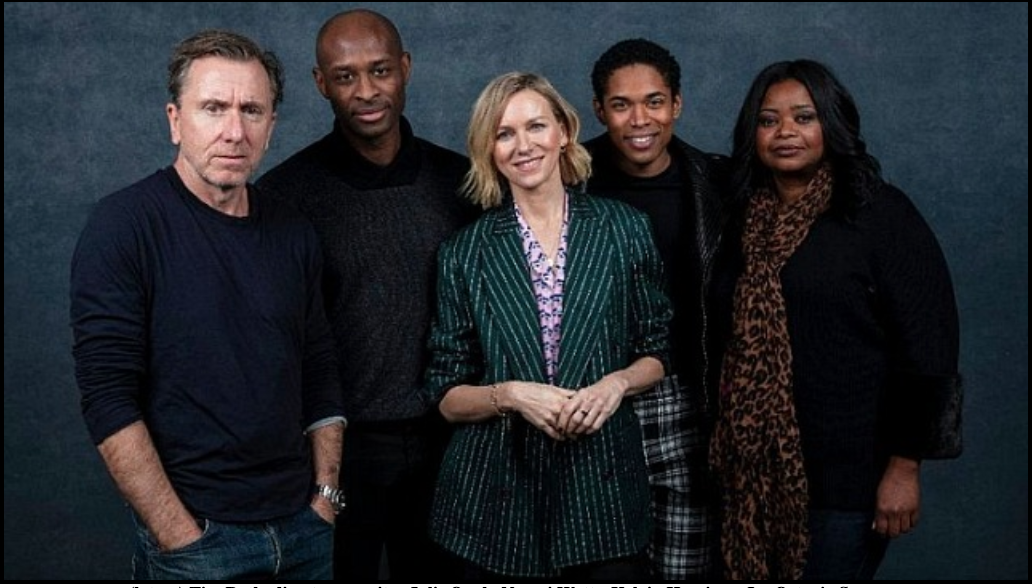
Posted in Park City on 1.29.19: “I was half-mesmerized by Julis Onah‘s Luce (Neon, 8.2), a tautly written, convincingly performed domestic drama about racial agendas, attitudes, assumptions and expectations. Set in an affluent Virginia suburb, the film explores a racially mixed group of characters and asks what their core-level attitudes or assumptions about “Luce” (Kelvin Harrison, Jr.), an adopted, African-born high school student, might be. But what it’s really doing is asking the audience these same questions.

“Based on J.C. Lee’s 2013 play of the same name and co-adapted by Lee and Onah, it’s basically about uncertain or ambiguous attitudes about Luce, who may or may not be as bright, likable and reassuringly well-behaved as he projects himself to be. Or maybe the real problem is in the eyes of certain beholders.

“The trouble starts when Harriet Wilson (Octavia Spencer), a vaguely huffy, side-eyed teacher, assigns Luce to write about a historical figure but with a special encouragement to ‘think outside the box.’ When Luce writes about a ’70s activist who flirted with terrorism, Harriett bristles and even freaks a bit. For whatever reason the notion of Luce being some kind of closet radical alarms her, and so (this struck me as weird) she decides to search his locker for possible evidence of subversion. She finds a paper bag filled with illegal fireworks.

“Harriet meets Luce’s adoptive mom Amy (Naomi Watts), shows her the essay and bag of fireworks. Amy tenses about violating Luce’s privacy, but at the same time is grappling with concerns about her son, who was reared in a war-torn African nation during his first ten years, and the kind of person he may be growing into. Or perhaps is hiding behind a veneer of charm and good cheer.”

Read more

Knifing in Marrakech

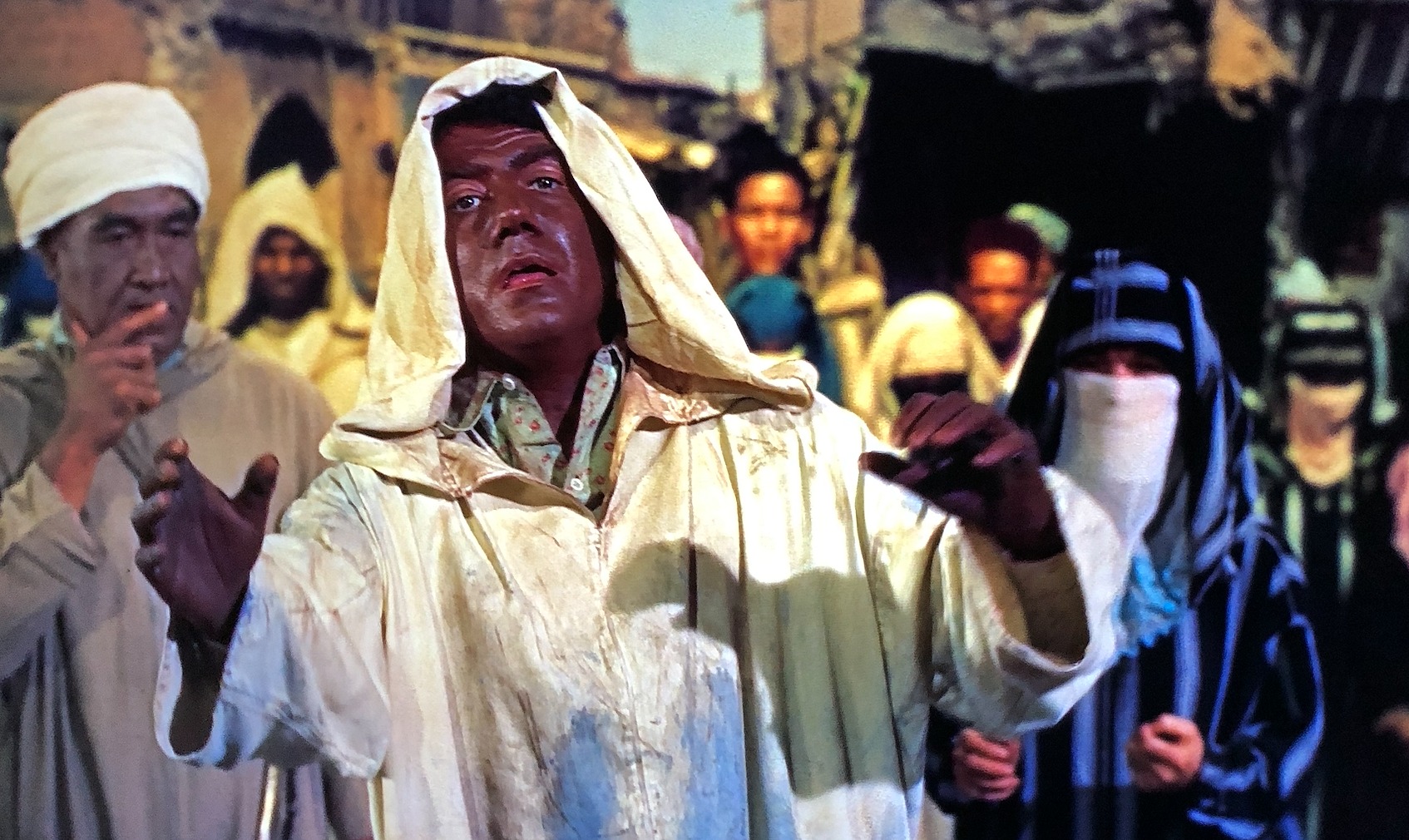
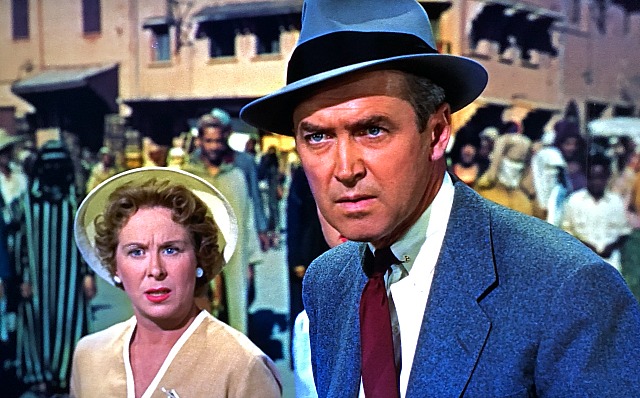
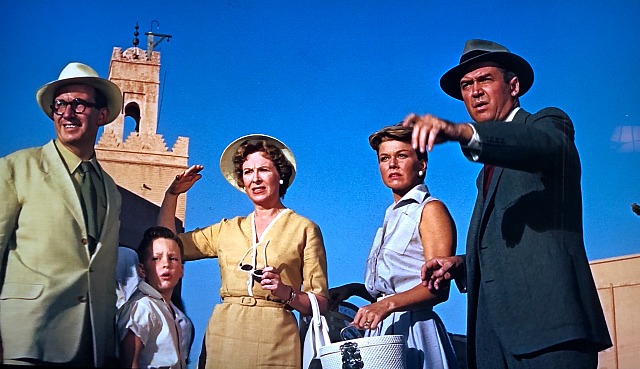
All Hitchcock films are incomplete without dialogue, of course, but you can almost always follow their stories if you watch them without sound. I was doing just that this morning, watching the 1956 version of The Man Who Knew Too Much in mute mode. Hitch was naturally obliged to use dialogue to move his stories along, but he was always careful to make sure that the action and the various motivations in his films were discernible in visual terms.

“In many of the films now being made, there is very little cinema: they are mostly what I call ‘photographs of people talking.’ When we tell a story in cinema we should resort to dialogue only when it’s impossible to do otherwise. I always try to tell a story in the cinematic way, through a succession of shots and bits of film in between.” ― Alfred Hitchcock in “Hitchock/Truffaut.”

I also reminded this morning that Blurays of older films sometimes show detail that audiences weren’t intended to see. Especially when you’re watching them on a Sony 4K HDR 65-incher. In some close-up shots of Jimmy Stewart I could easily see the thin strip of polymer (usually made of silicone or polyurethane) that his toupee was mounted upon, and which was pasted to his upper forehead. I love being able to see this stuff. I love that films generally look much sharper and more highly detailed that even their cinematographers were able to see.

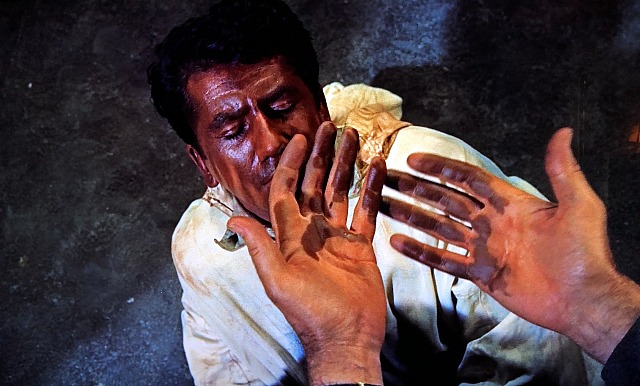
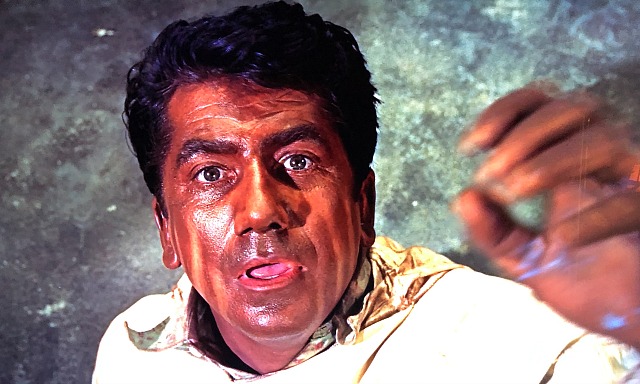
Sidenote: If The Man Who Knew Too Much were to be remade today, Daniel Gélin‘s intelligence agent Louis Bernard wouldn’t be allowed to wear brown face paint as the p.c. gendarmes would attack this plot device as racist.


The Tall Guy

Excerpt from 6.4 discussion between The Last Word‘s Lawrence O’Donnell and Michael Wolff, author of “Siege: Trump Under Fire“:

Wolff: “Trump’s family is dedicated to a man who really could care less abut them. He’s terrible to both his sons. His other daughter, Tiffany, barely exists. His young son, Baron, who theoretically lives with him, has become a major issue in his marriage. He doesn’t get along with [Baron]. He doesn’t communicate with [him]. Baron is effectively not at all part of his life.”

O’Donnell: “You also report some incredibly peculiar details. Donald Trump is reportedly jealous of [Baron‘s] height. Because at 12 years old, he’s apparently grown to a point close to Donald Trump’s height.”

Wolff reply: “[Trump] is jealous of everyone‘s height. He never lets himself be in a photograph with someone taller than he is. Height is one of his techniques. He’s used his height [to gain advantage]. Remember that Donald Trump is a very large man.”

Trump is obese but not exactly super-tall. He’s 6’2″ according to his driver’s license, and not, to go by most sources, 6’3″ as claimed.

I realize that Beto O’Rourke‘s mojo has pretty much evaporated (he’s currently polling at 2% in Iowa). But if — I say “if” — he were to somehow bounce back and become the Democratic nominee for President, he would enjoy a significant psychological advantage over Trump in debates. Beto is 6’4″.

The one thing that gives me pause about Mayor Pete is that he’s only around 5’9″ — no one’s idea of “short” (certainly not by Michael Dukakis standards) but nonetheless five inches shorter than Trump.