Rolling Along With Scorsese/Dylan

Martin Scorsese‘s Rolling Thunder Revue: A Bob Dylan Story (Netflix, 6.12) is an episodic concert film with a roving attitude and a hodgepodge capturing of Bob Dylan‘s Rolling Thunder Revue through New England in the fall of ’75. Mish-mashy, whimsical, good-natured, sometimes deeply stirring and in four or five spots flat-out wonderful.

But there’s one aspect, I regret to add, that’s vaguely bothersome in a half-assed sideshow kind of way.

Boomers will naturally enjoy it more than GenXers, Millennials and GenZ, but what do you expect from a doc about the late Gerald Ford era (with a little Jimmy Carter thrown in)?

Scorsese delivers ample concert footage, road footage, backstage footage and rural atmosphere footage, plus several present-tense talking heads (including Dylan himself) providing explanation and commentary. And then he throws in some red-leaf lettuce, salad dressing, chopped radishes, carrots, celery and kale and tosses it all around.

The doc is all over the map in a splotchy, rambunctious sort of way, but it’s mostly a fun, relaxing ride — a 140-minute road journey with some very cool and confident people. There’s one aspect that isn’t fun, as mentioned, and that has to do with what Toronto Star film critic (and former music critic) Peter Howell calls “the four fakers.” But I’ll address that in the next post.

The idea behind the RTR was for Dylan and a troupe of musician performers (Joan Baez, Roger McGuinn, Mick Ronson, Joni Mitchell, Ronee Blakely, Ramblin’ Jack Elliott, Scarlet Rivera, Rob Stoner, Howie Wyeth) to become (i.e., pretend to be) roving troubadours in the tradition of Italy’s comedia delle’arte (Dylan performed in white face a la Gene Simmons), and thereby achieve a certain casual, give-and-take intimacy with the crowds by playing smaller venues.

That’s all it was — an opportunity to keep things modest and funky by avoiding the usual huge stadiums. It wasn’t about tricks, games, jugglers, clowns or sleight-of-hand. It was just a straight proposition about playing music on the down-low and keeping it real.

The doc actually unfolded in two phases — the first in New England/Canada in the fall of 1975, and the second in the American south and southwest in the spring of ’76. The January ’76 release of Dylan’s Desire fell between the two with many of the songs performed in the first leg taken from that yet-to-be released album.

I think Scorsese’s doc might have better been titled Rambling Thunder Revue. It’s kind of a mess, but not a bothersome one. It’s patchy and spotty but mostly cheerful, friendly and spirit-lifting. As salad-tossed concert docs go it’s wholly agreeable.

There are three musical highlights — Dylan’s performing of “Isis” (a hard-charging song off Desire) and a rock version of “A Hard Rain’s Gonna Fall”, and a portion of Joni Mitchell performing an early acoustic version of “Coyote” with Dylan playing along. I also loved an excerpt of a conversation between Dylan and Baez about how their romance fell apart and…oh, hell, 20 or 30 other little things. The doc never bores — I can tell you that.

If Scorsese’s film is any one thing, it’s a kind of cinematic love letter to a bygone culture of 43 and 1/2 years ago — a tribute to a long-ago era (long hair, Kiss, flared jeans, Rubin “Hurricane” Carter, coal eye makeup, the last classic-rock gasp before the punk explosion, face-paint, Frye boots, pre-computers, pre-iPhone, pre-twitter, pre-everything)…to that whole raggedy-ass mid ‘70s vibe and attitude and way of being and living…hell, call it a valentine to bygone youth.

Overall a cool, enjoyable, fascinating visitation…diverting and pleasing as far as it goes and occasionally wowser. (At least by my musical yardstick.) But it’s all over the fucking map.
Late To “Late Night” Table

I “liked” Nisha Gantra and Mindy Kaling‘s Late Night (Amazon, 6.7) as far as it went. It’s a chuckly, congenial consciousness-raiser for the most part — a feminist relationship story about a bitchy, flinty talk-show host of a certain age (Emma Thompson‘s Katherine Newbury) who’s panicking about being cancelled, and a newly hired comedy writer (Kaling’s Molly Patel) who seems more interested in workplace sensitivity and considerate behavior than in being “funny”, at least as I define the term.

Why is it a struggle to believe that Molly (who has never before written professional-grade comedy and has mostly been hired because she’s a woman as well as a POC) is a comedy writer worth her salt? Because most jokes that “land” and actually make people laugh are always a little cutting and sometimes flirt with cruelty. A certain pointed irreverence is essential.

The bottom line with Molly is that she seems to value being respected and treated courteously by Katherine and her comedy-writer colleagues above everything else, and that she’d rather swallow her tongue than wound the feelings of her fellow writers (all white guys) or anyone else for that matter. She’s more woke than joke.

But once you get past the hurdle of Kaling being more of a p.c. Miss Manners type than a comedy writer of any recognizable stamp, the film more or less works. It didn’t piss me off or rub me the wrong way, and I felt reasonably sated by the end. I went along with it, and that ain’t hay.

I’m sorry but I love the following A.O. Scott riff: “Rather than scourging the complacency and hypocrisy of television, it subjects the medium to a vigorous exfoliating scrub in the name of feminism and inclusiveness. Kaling’s view of the landscape and its inhabitants — the imperious star, the neurotic writers, the beleaguered producer (Denis O’Hare) — is critical without cynicism or even much anger.”

I personally prefer comedies with random bursts of anger, frustration and bile. and occasional short tempers all around. But that’s me.

A Matter of Evaporating Trust

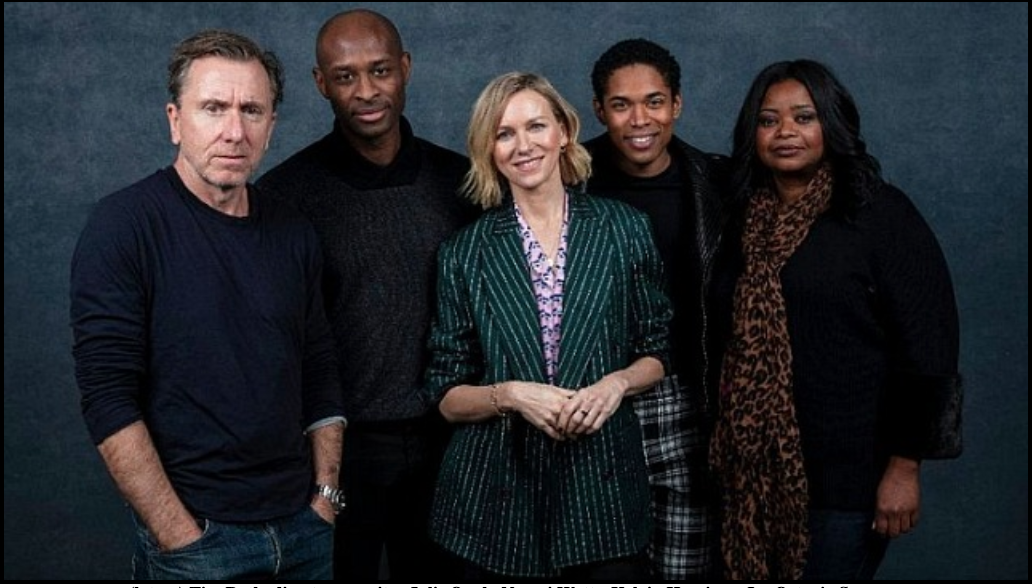
Posted in Park City on 1.29.19: “I was half-mesmerized by Julis Onah‘s Luce (Neon, 8.2), a tautly written, convincingly performed domestic drama about racial agendas, attitudes, assumptions and expectations. Set in an affluent Virginia suburb, the film explores a racially mixed group of characters and asks what their core-level attitudes or assumptions about “Luce” (Kelvin Harrison, Jr.), an adopted, African-born high school student, might be. But what it’s really doing is asking the audience these same questions.

“Based on J.C. Lee’s 2013 play of the same name and co-adapted by Lee and Onah, it’s basically about uncertain or ambiguous attitudes about Luce, who may or may not be as bright, likable and reassuringly well-behaved as he projects himself to be. Or maybe the real problem is in the eyes of certain beholders.

“The trouble starts when Harriet Wilson (Octavia Spencer), a vaguely huffy, side-eyed teacher, assigns Luce to write about a historical figure but with a special encouragement to ‘think outside the box.’ When Luce writes about a ’70s activist who flirted with terrorism, Harriett bristles and even freaks a bit. For whatever reason the notion of Luce being some kind of closet radical alarms her, and so (this struck me as weird) she decides to search his locker for possible evidence of subversion. She finds a paper bag filled with illegal fireworks.

“Harriet meets Luce’s adoptive mom Amy (Naomi Watts), shows her the essay and bag of fireworks. Amy tenses about violating Luce’s privacy, but at the same time is grappling with concerns about her son, who was reared in a war-torn African nation during his first ten years, and the kind of person he may be growing into. Or perhaps is hiding behind a veneer of charm and good cheer.”

Read more

Knifing in Marrakech

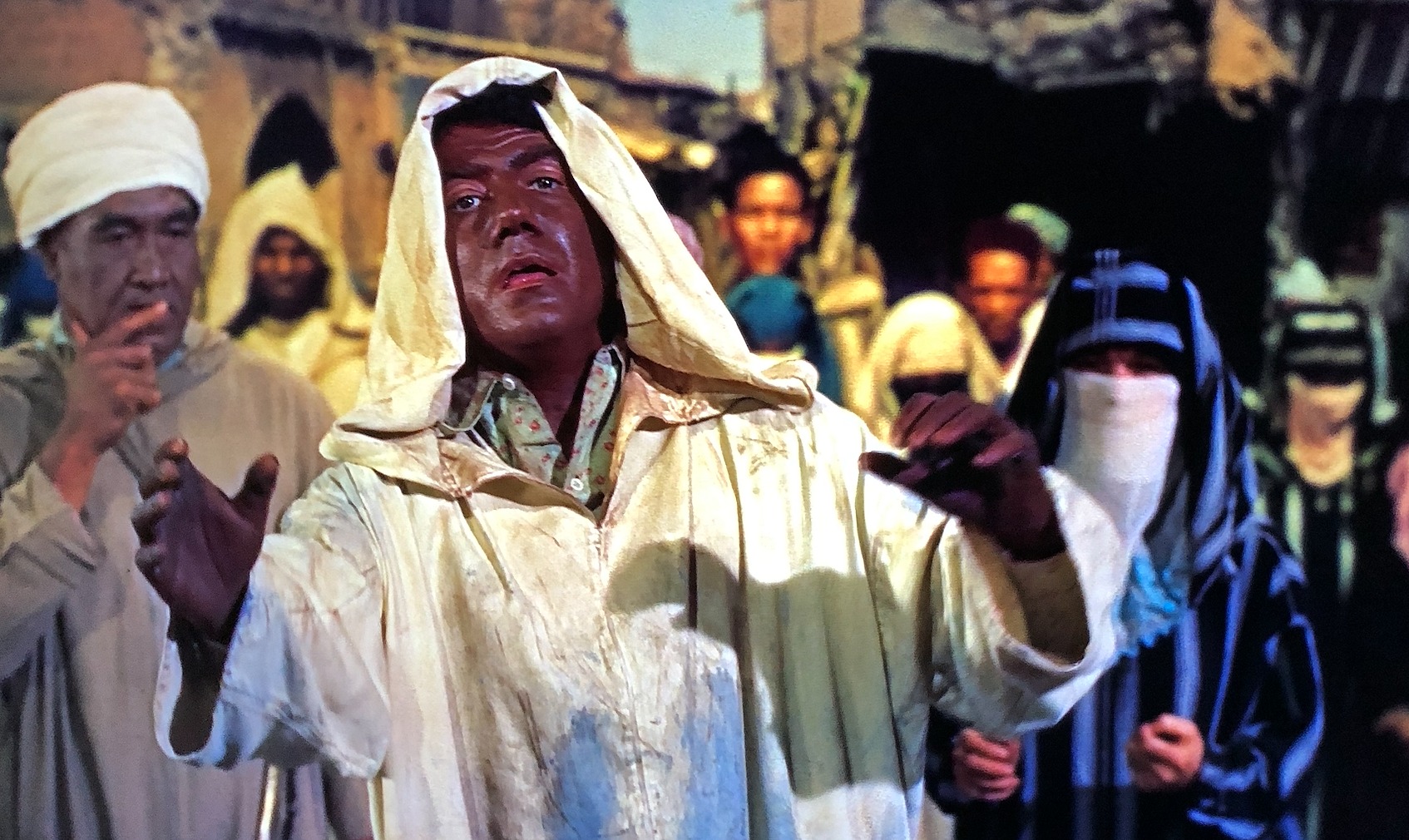
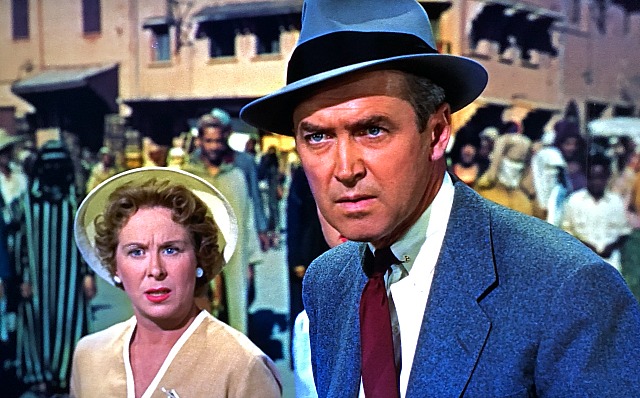
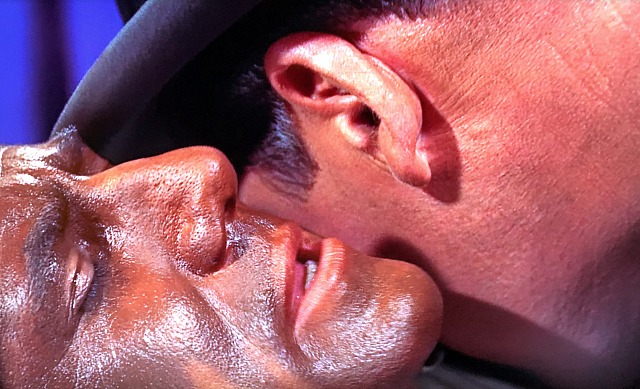
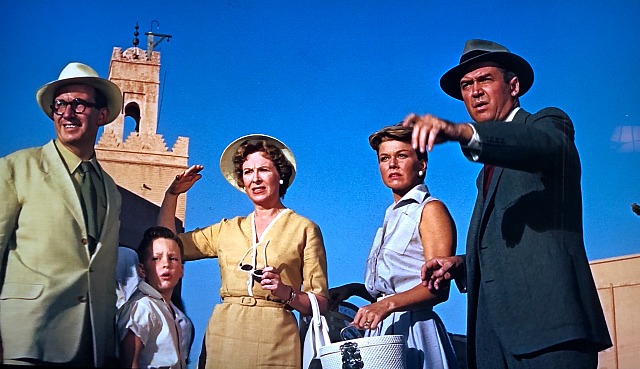
All Hitchcock films are incomplete without dialogue, of course, but you can almost always follow their stories if you watch them without sound. I was doing just that this morning, watching the 1956 version of The Man Who Knew Too Much in mute mode. Hitch was naturally obliged to use dialogue to move his stories along, but he was always careful to make sure that the action and the various motivations in his films were discernible in visual terms.

“In many of the films now being made, there is very little cinema: they are mostly what I call ‘photographs of people talking.’ When we tell a story in cinema we should resort to dialogue only when it’s impossible to do otherwise. I always try to tell a story in the cinematic way, through a succession of shots and bits of film in between.” ― Alfred Hitchcock in “Hitchock/Truffaut.”

I also reminded this morning that Blurays of older films sometimes show detail that audiences weren’t intended to see. Especially when you’re watching them on a Sony 4K HDR 65-incher. In some close-up shots of Jimmy Stewart I could easily see the thin strip of polymer (usually made of silicone or polyurethane) that his toupee was mounted upon, and which was pasted to his upper forehead. I love being able to see this stuff. I love that films generally look much sharper and more highly detailed that even their cinematographers were able to see.

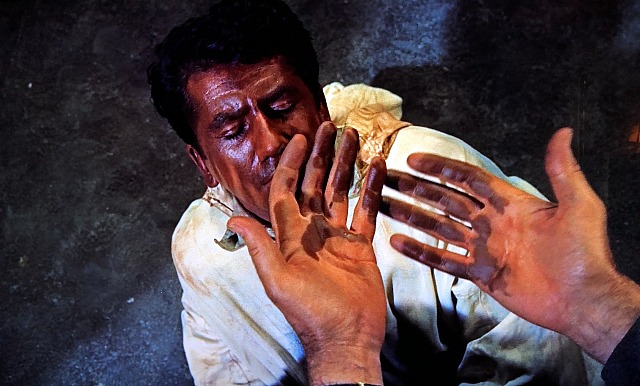
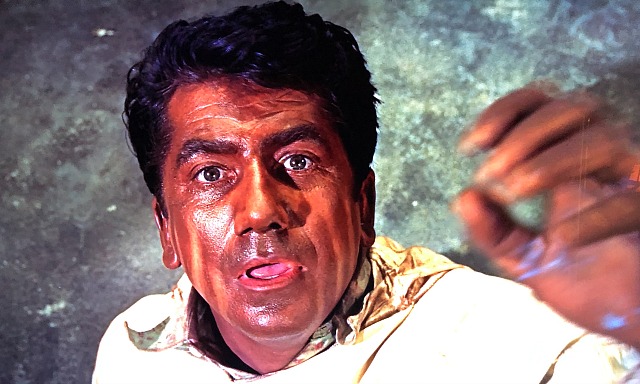
Sidenote: If The Man Who Knew Too Much were to be remade today, Daniel Gélin‘s intelligence agent Louis Bernard wouldn’t be allowed to wear brown face paint as the p.c. gendarmes would attack this plot device as racist.


The Tall Guy

Excerpt from 6.4 discussion between The Last Word‘s Lawrence O’Donnell and Michael Wolff, author of “Siege: Trump Under Fire“:

Wolff: “Trump’s family is dedicated to a man who really could care less abut them. He’s terrible to both his sons. His other daughter, Tiffany, barely exists. His young son, Baron, who theoretically lives with him, has become a major issue in his marriage. He doesn’t get along with [Baron]. He doesn’t communicate with [him]. Baron is effectively not at all part of his life.”

O’Donnell: “You also report some incredibly peculiar details. Donald Trump is reportedly jealous of [Baron‘s] height. Because at 12 years old, he’s apparently grown to a point close to Donald Trump’s height.”

Wolff reply: “[Trump] is jealous of everyone‘s height. He never lets himself be in a photograph with someone taller than he is. Height is one of his techniques. He’s used his height [to gain advantage]. Remember that Donald Trump is a very large man.”

Trump is obese but not exactly super-tall. He’s 6’2″ according to his driver’s license, and not, to go by most sources, 6’3″ as claimed.

I realize that Beto O’Rourke‘s mojo has pretty much evaporated (he’s currently polling at 2% in Iowa). But if — I say “if” — he were to somehow bounce back and become the Democratic nominee for President, he would enjoy a significant psychological advantage over Trump in debates. Beto is 6’4″.

The one thing that gives me pause about Mayor Pete is that he’s only around 5’9″ — no one’s idea of “short” (certainly not by Michael Dukakis standards) but nonetheless five inches shorter than Trump.

Joe Popcorn Ignored Moral Message

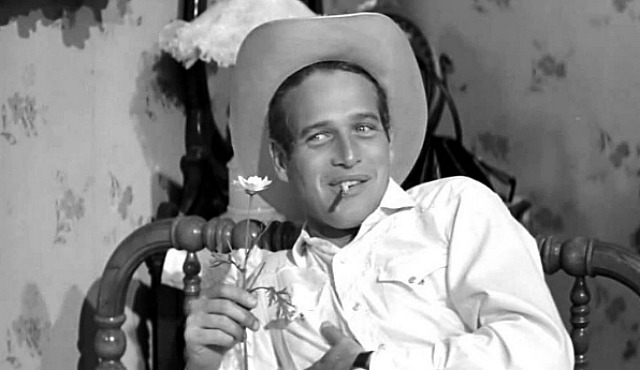
We all know what happened with Martin Ritt‘s Hud. Ritt, screenwriters Irving Ravetch and Harriet Frank and Paul Newman wanted audiences to react to the selfish and insensitive Hud Bannon with a mixture of fascination and repulsion — as a symbol of middle-class cynicism and opportunism that was shaping the culture of 1963 America.

Instead audiences (teens especially) found Hud a roguishly charming renegade, and even a half-admirable rascal on a certain level. Newman: “The last thing people would do, we thought, was accept Hud as a heroic character…his amorality just went over their heads…all they saw was this western, heroic individual”.

The bottom line, I think, is that younger audiences weren’t so much delighted with Hud’s caddish behavior as uncomfortable with Melvyn Douglas‘s Homer, a gruff and taciturn voice of old-school morality who constantly frowns at Hud and regards him as rank and poisoned.

Younger audiences interpreted Homer’s admonishments as an echo of their parents and grandparents’ beliefs, which they found stifling to some extent. Hud repped a certain impudent freedom.

Years later Ritt said that kids who saw Hud as some kind of irreverent anti-establishment type were expressing the emerging values of the coming counterculture of the late 1960s.

50 years later the same kind of thing happened with Martin Scorsese‘s The Wolf of Wall Street. Scorsese, screenwriter Terence Winter and Leonardo DiCaprio presented what they believed was a half-comic, half-repugnant satire of Wall Street lunatics and the rancid values of guys like Jordan Belfort — a darkly comic indictment of greed and avarice among the 1%.

Instead a good portion of the audience got a huge kick out of Belfort’s excessive behaviors and ravenous appetites, and those of Jonah Hill‘s Donnie Azoff and the general madman culture of Stratton Oakmont. I remember LexG tweeting back then that he’d enjoyed WoWS for “the wrong reasons.” I had a distinct sense that a lot of people were in the same boat.

What other significant films were supposed to deliver a sobering moral lesson or inspire ethical revulsion, but in the minds of moviegoers wound up providing a kind of debased brand of entertainment?

Second Viewing of “Rocketman”

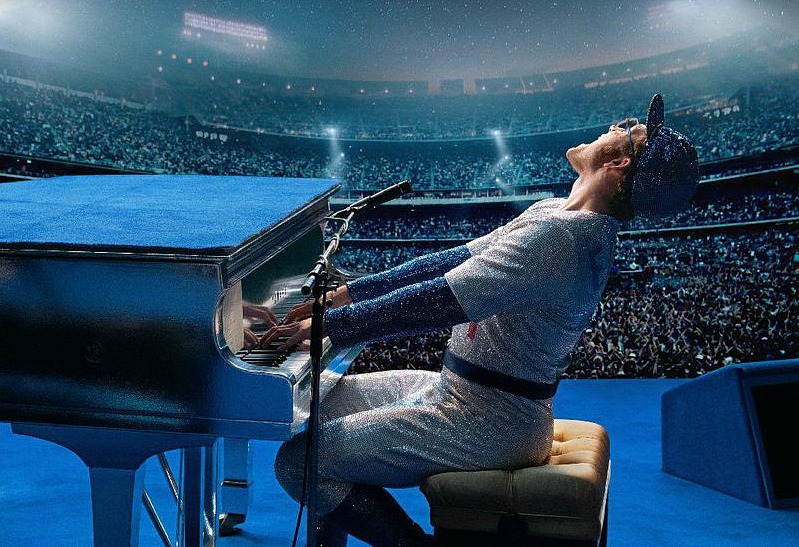
Among my initial reactions to Rocketman, filed during the Cannes Film Festival: (a) I respected the traditional musical scheme and the Ken Russell-meets-All That Jazz theatricality, (b) it’s a “better”, more ambitious film than Bohemian Rhapsody, and yet (c) the only portions I actually “liked” were the first 40 or 45 minutes’ worth (i.e., the young-Elton English stuff), and (d) that once Elton hits the big-time in Los Angeles and starts self-destructing with booze and cocaine (a section that lasts 60 to 70 minutes) the film becomes…well, a bit tiring.

Watching an angry, miserable, emotionally distraught rock star self-destruct (which I’ve seen a hundred times in a hundred rockstar bios and docs) is essentially numbing.

I paid to see Rocketman again last night with Tatyana, and experienced roughly the same reactions. Except, that is, for (d) — those 60 minutes of flamboyant self-destruction don’t play very well the second time. Like, at all.

I’m not walking back my view that Rocketman is a “better” film than Bohemian Rhapsody — it’s certainly more ambitious — but it’s boring to watch a guy snort coke, guzzle vodka, wipe away tears and snarl at people in scene after scene. Get to rehab already!

My advice to those who liked Rocketman after a single viewing is to leave it there.

Tatyana was moderately okay with it and appreciated the early song-and-dance sequences (“I Want Love”, “Saturday Night’s All Right for Fightin’) but she, too, felt that some scenes dragged on for too long during the second hour. She said she liked Bohemian Rhapsody better. She respected Taron Egerton’s performance and thinks he’s a good actor “but I noticed the time when I was watching Rocketman, but I never noticed the time with Rami Malek.”

I’ve mentioned this before but Egerton bothers me. His singing voice isn’t close to Elton’s, and he doesn’t begin to physically resemble him. Plus he’s taller, broader and more muscular than the Real McCoy. I’m sorry but Egerton just isn’t right. Plus he’s constantly “acting”. I’ve seen Elton twice in concert, talked with him at a party, been listening to his songs since the Nixon administration, etc. And I just can’t give in to Egerton the way I submitted to Malek-as-Freddie Mercury.

Respectful Meyers Reply

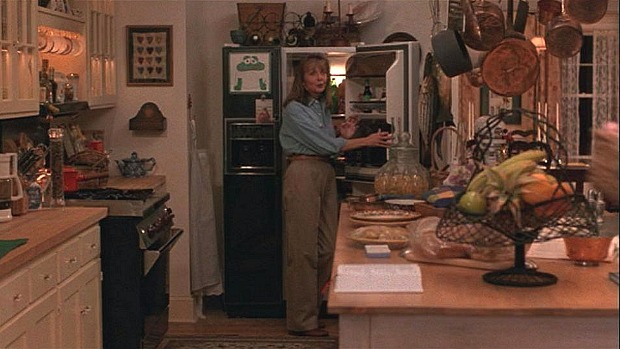
In a chat yesterday with Late Night screenwriter and costar Mindy Kaling, director Nancy Meyers (It’s Complicated, Something’s Gotta Give, Father of the Bride) struck back at critics who have taken her to task for making superficial “copper pots and white sweater” movies — i.e., wish-fulfillment romcoms about well-off women who live in swanky homes with luxurious, to-die-for kitchens.

“I don’t love [it] when a journalist or critic will pick up on that aspect, because they’re missing why it works,” Meyers complained. “It’s never done to male directors who make gorgeous movies, or where the leads live in a gorgeous house.”

As one who’s repeatedly brought up the copper-pot thing, I’ve never felt there was anything necessarily problematic about Meyers’ characters hanging out in spacious kitchens with gleaming copper frying pans, etc. The problem is that her romcoms rarely seem to rise above this fetishy focus or characteristic — they rarely dig in and climb up to the next level a la James L. Brooks in the’80s and’90s. With one exception (i.e., The Intern), her movies are primarily delivery devices for upmarket wealth porn.

Just about every Nancy Meyers movie involving a female lead of a certain age begins with Meyers saying to herself, “Wouldn’t it be wonderfully satisfying and exciting if…?”

Example: The romantic fantasy in It’s Complicated is that after a foxy older divorced woman (Meryl Streep) begins seeing an attractive new guy (Steve Martin) her re-married, somewhat girthy ex-husband (Alec Baldwin) gets the hots for her and starts cheating on his younger wife (Lake Bell) as they begin an extra-marital affair.

I didn’t buy this any more than I bought the basic plot of Meyers’ Something’s Got To Give (Jack Nicholson‘s randy music executive falling for Diane Keaton‘s affluent screenwriter as she’s courted by Keanu Reeves‘ young physician). In real life a guy like Baldwin would cheat on his new 30something wife with another young ‘un.

The point is that Meyers’ films are always about comfort — i.e., about upper-middle-class affluence, bright chatter, attractive lighting and an attractive older female lead getting to express how strong and soulful she is in the third act.

From my thumbs-up review of The Intern (9.25.15): “Meyers is just as much of a consistent and well-defined auteur as Michael Mann or John Ford or Samuel Fuller — she just makes movies that always happen within a realm of comfort, affluent insulation, alpha vibes and 40-plus romantic pangs. And so nothing rude or disturbing or creepy or traumatic happens, and you just have to accept that this is par for the course.

“A visit to Nancy Meyers Land means shutting out…what, 80% or 90% of the misery and aesthetic offenses and uncertainties and annoyances and dull horrors of real life?”

Someone Besides Maher Is “Squishy” About Abortion

Imagine if the night before last Jack Nicholson was a Real Time With Bill Maher guest along with Rep. Katie Porter, and when the subject of abortion came up Nicholson explained why he’s “squishy” on the subject.

“I’m very contra my constituency in terms of abortion because I’m positively against it,” Nicholson might have said, repeating a quote that he gave to Rolling Stone in ’84. “I don’t have the right to any other view. My only emotion is gratitude, literally, for my life. I’m pro-choice but against abortion because I’m an illegitimate child myself and it would be hypocritical to take any other position.”

Nicholson’s mom came close to aborting him in the late summer of 1936, but decided against it. Nicholson popped out in April 1937. He’s repeatedly expressed gratitude about not being terminated.

Imagine if Porter said in response, “Well, Jack, your mother made a choice, and we’re all living with the consequences of that.” Do you think she would’ve gotten a big laugh from the audience and a “you go, girl!” from certain journos in response?

This is what Porter said to Bill Maher on Friday’s Real Time when he said he was “squishy” about abortion for the same reason — i.e., his mom had seriously considered aborting him. I’m sorry but that was a mildly shitty thing for Porter to have said.

Book Business

20 years ago digital cinematography was an exciting if untested new realm. The first two pioneering efforts in this era were Bernard Rose‘s ivansxtc, shot with a Sony HDW-700 in the summer of ’99, and Barbet Schroeders Our Lady of the Assassins, using either the same digital camera or a close relation.

I did a couple of interviews with Rose in the spring and summer of ’02. He was fairly exuberant about the freedom that digital cinema would provide to indie filmmakers, going on about how the film industry would eventually become like the book-publishing business with filmmakers shooting more or less on their own dime and the big distributors having relatively little to say about the creative process, and just distributing the way book publishers do.

Cut to a recent Variety interview between Robin Wright and Chris Pine, and Wright quoting House of Cards producer-director David Fincher as follows: “You realize that we’re going to revolutionize the way people view content. They can watch as much as they want, whenever, like you would read a book. And not only that revolution that’s going to happen, but it’s going to be so comfortable for people to participate [in].”

Rose’s prediction hasn’t exactly manifested the way he saw it two decades ago, but it would probably help if the online commentariat could recognize that these days the indie filmmaking and distribution business does resemble the book business more than, say, the old-style movie distribution business of 25 or 30 years ago. Just a thought.

Then again, as I asked last March, where the hell has Fincher gone to? Why does he seem to be a ghost these days? Or, as I put it, an “eccentric, small-realm, cave-dwelling wizard.”

DePalma Has Been Over For Almost 20 Years

If a director is no longer making good films or having trouble getting funding for his/her next project, there’s almost always a good reason for that.

Usually it’s because he/she has simply aged out and has therefore (a) lost the ability to hear and respond to the cultural current, (b) has nothing new to say or (c) has simply run out of gas. Then again you have to remember the case of the 82-year-old Sidney Lumet rebounding with Find Me Guilty (’06) and Before the Devil Knows You’re Dead (’07). Lumet’s comeback was a thing of absolute wonder.

If I could magically re-ignite the creative fires of any big-name ’80s director so that he/she could make one more really good or great film, I would choose John Carpenter, Rob Reiner, David Lynch, Terry Gilliam or Bertrand Blier. But it’s a silly idea. Artists tend to lose their strength and vision when the fire goes out — period. Some are long-game players but most are not.

From “Visual Maestro, Yes, But A Sworn Enemy of Logic,” posted on 4.20.16:

Posted on 9.10.15: “My view is that Brian DePalma was a truly exciting, must-watch director from the late ’60s to mid ’70s (Greetings to The Phantom of the Paradise to Carrie), and an exasperating, occasionally intriguing director from the late ’70s to mid ’90s (Dressed To Kill, Scarface, The Untouchables, Carlito’s Way, Mission: Impossible, Snake Eyes).

“But he’s been over for years. I used to love the guy but then he made Mission to Mars (’00), Femme Fatale (’02), The Black Dahlia (’06), Redacted (’07) and Passion (’12)…forget it. Baumbach and Paltrow surely understand this. They surely made this doc in hopes of restoring DePalma’s rep as well as educating Millenials and reminding the old-time fans what a legendary helmer he was in his day.

Read more