Satirical Monthly That Held On For Decades

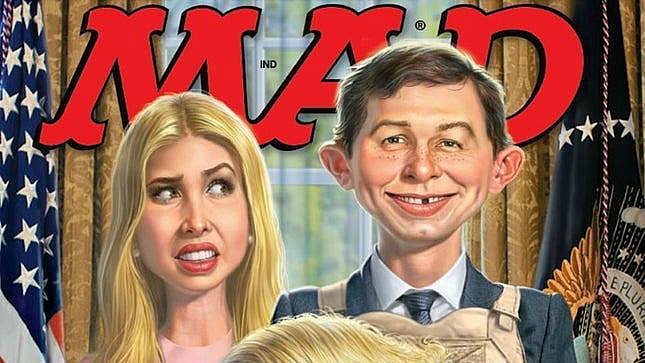
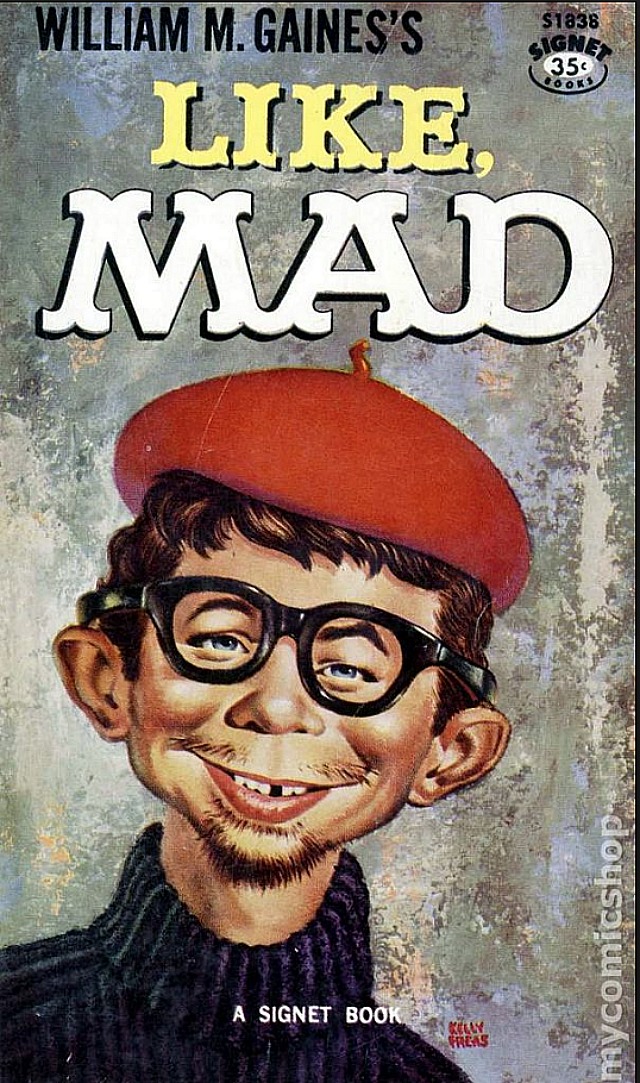
I didn’t mention the death of Mad magazine because in my mind it stopped being a truly influential cultural satire publication 40something years ago. Seriously — Mad stopped being a necessary thing sometime in the early to mid ’70s. (The vital era was really the mid ’50s to mid ’60s.) I respect the fact that they kept publishing well past peak cultural potency — who doesn’t admire drive and tenacity? — but every publication has its day, and Mad‘s was during the Eisenhower and Kennedy administrations.

Somehow or some way Mad, Steve Allen, Lawrence Ferlinghetti, Tuli Kupferberg and Lenny Bruce were part of the same ’50s comic-hipster mindset; they all seemed to be sipping from the same attitude well. Mad and Bruce both ascended around 1955, when Mad dropped the comic book format and became a magazine. Bruce died in ’66; the Mad vitality began to ebb or dilute around that same time. More and more people getting stoned changed the game — in the ’50s and early ’60s Mad delivered its own kind of pot high in a way. Yes, it hung on for decades after that (and hats off to those who kept the brand burning), but now it’s really over and done with.

Read more

Hassling Falk in Hardware Store

Filed on 6.24.11, or the day after Peter Falk died: “I was milling around a Hollywood hardware store sometime in the early ’80s, looking for a screwdriver or something, when I heard raised voices. Two or three Joe Sixpack meatheads were having fun at the expense of poor Peter Falk, who was poking around like me, just wandering down the aisles.

‘Aaaaay…Detective Columbo!,’ one of them was saying with the rest joining in. They just had to treat Falk like some kind of visiting celebrity alien. They couldn’t be decent about it. They had to be assholes.

“And I remember how Falk walked by me as these jerks were taunting him and making their little nickle-and-dime, lame-ass cracks, and how he was trying to ignore them but at the same time was fiercely cussing and not all that quietly, going ‘Jeezus!….Jeezus!’

“I remember thinking to myself and trying to telepathically say to Falk, ‘Yes, yes…keep going! Turn around and let’ em have it! You can do it, Peter!’

“Did Falk ever have a movie role in which he hit it out of the park? Did he ever even hit a long triple? Yes — in Raymond De Felitta and Paul Reiser‘s The Thing About My Folks (’05). Which nobody saw, of course.

“He was also memorable in a relaxed and settled and kindly way in Wim WendersWings of Desire (but less so in Far Away, So Close). And he was especially fine (and perhaps delivering his career best) in John CassevettesHusbands and A Woman Under The Influence.

“Falk’s peak run was from ’69 to ’74, when he was 42 to 47 years old. He began the streak in ’69 when he costarred as Sgt. Ross in Sydney Pollack‘s Castle Keep, and then played Archie Black in Husbands (’70) and did A Woman Under The Influence (’74) , and all of this while starring as Lt. Columbo from ’68 to ’03.

Read more

Reactions to “Midsommar”?

On 6.25 I said the following about Ari Aster‘s Midsommar (A24, now playing): “No matter how you feel about elevated horror, chilling Swedish pagan rituals, shitty boyfriends or Florence Pugh, this is a 100% essential summer freakout flick.”

In other words, it’s a film you have to see no matter what your particular interest levels may be. Because it’s currently understood by everyone to be culturally unmissable right now.

So a fair number of people went to see it yesterday, and…?

Excerpt #2: “Yes, Midsommar is a breakup film — David Edelstein called it ‘a woman’s fantasy of revenge against a man who didn’t meet her emotional needs’ as well as ‘a male director’s masochistic fantasy of emasculation at the hands of a matriarchal cult.’ That’s about as concise and on-target as a capsule description could be.”

From Owen Gleiberman’s 7.4 Variety column, posted at 2 pm:

“What we mean when we say ‘the ’60s’ may be ancient history, but the hidden legacy of the ’60s is that we’re increasingly a nation of sects, tribes, people obsessively seeking out those of like-minded desire. There’s a case to be made that we’re now evolving, in our thinking, into a nation of cults, which is why, when it comes to politics, rationality seems, more and more, to have vacated the building — not only on the right (though primarily there), but on the left as well. Debate, more and more, seems over. It has been replaced by the fundamentalism of belief.

“The horror of Midsommar is that innocent people die, in gruesome ways. But the real horror of Midsommar is that Florence Pugh’s Dani, drawn to the center of her own shattered identity, replaces it by becoming the self-actualized queen of her surroundings. Dani, in this movie, is really all of us. She loses herself, only to find her new self. She sheds her skepticism and joins the group. She fixes her broken relationship with her lover by reducing him to a piece of timber. She heals her trauma by giving her benediction to flowers of evil. And she does it, in the end, with a smile.”

Greed Is Grim

13 years ago Forbes magazine asked three critics (Richard Roeper, Neil Rosen, Jeffrey Lyons) “which are the ten best films ever made about money?”

What a question! Aren’t 70% to 80% of all the films ever made in one way or another about people trying to make, steal, hold onto or somehow get hold of more money?

The ten that Rosen, Roeper and Lyons chose suggest their real criteria was choosing the best movies about the corrosive effects of greed: Wall Street, Trading Places (what?), The Sting, Boiler Room, Ocean’s Eleven (’60 version), It’s a Mad Mad Mad Mad World, Casino, Glengarry Glen Ross, The Treasure Of The Sierra Madre (good choice) and American Psycho (another good one).

HE’s top 13 as of right now: The Wolf of Wall Street, A Simple Plan, Glengarry Glen Ross, The Treasure of Sierra Madre, L’eclisse, Wall Street, There Will Be Blood, Inside Job, The Big Short, Margin Call, Capitalism: A Love Story, The Queen of Versailles and Eric Von Stroheim‘s Greed.

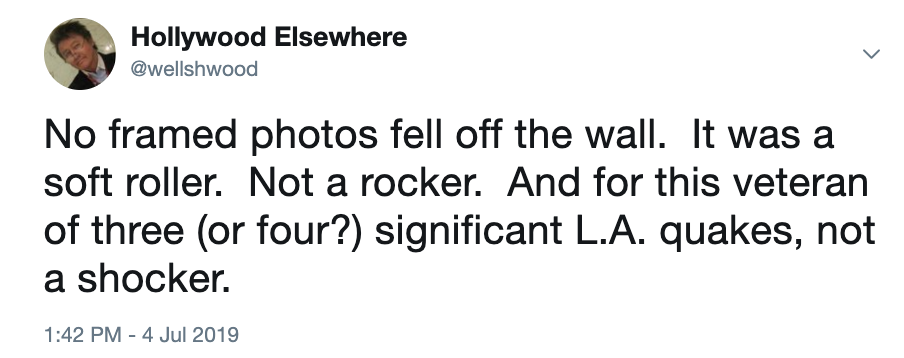
A Roller, Not A Rocker

The significant thing about this morning’s Ridgecrest quake was how long it kept going. At first it was a faint nudge, and then a vague two-step shimmy. And then I went into my usual “okay, this is happening, show me what you got” mode. (Quakes don’t upset me because I’m constantly quaking inside — I regard them as interruptions in the ongoing uncertainty and anxiety of day-to-day life.) Then came the soft, semi-serious rolls…”hominah-hominah-hominah.” Then it was over.

If you’d asked me to gauge I would have said 5.8 or 6, tops. They’re saying it was a 6.4. HE rule: If no framed photos fell off the wall, it was no biggie.

Tatyana has vivid memories of the 1986 Vrancea earthquake, which was centered in Romania. She was 12 years old and living in Moldova. (Known at the time as Moldova Soviet Socialist Republic.) That quake killed more than 150 people, injured over 500, and damaged over 50,000 homes.

Embraced By Regressives

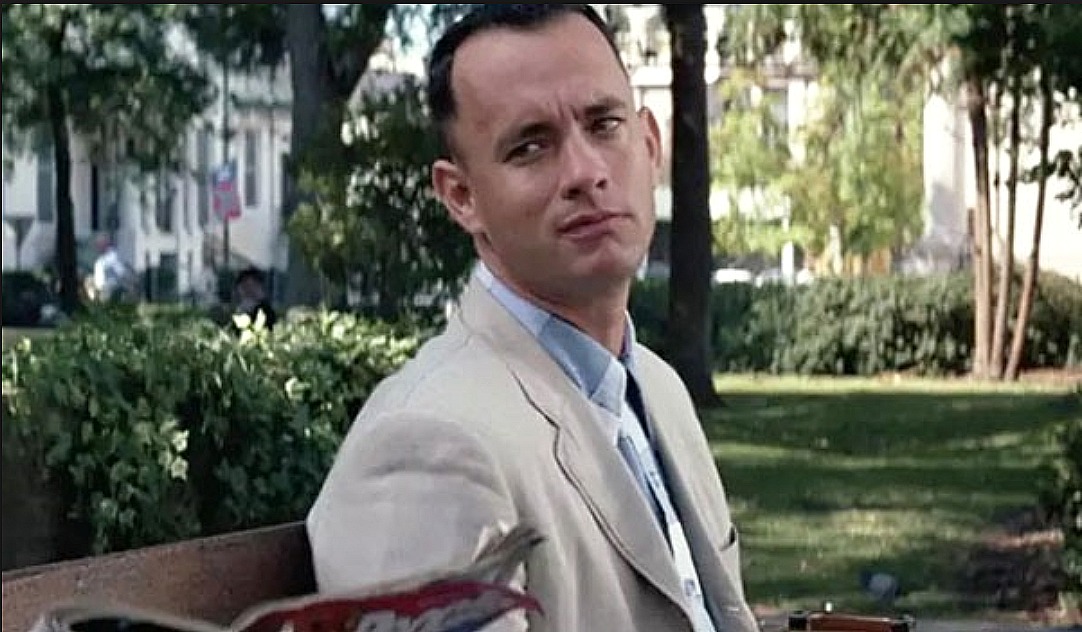
Eric Kohn doesn’t have to try and convince me that Forrest Gump blows — I’ve been pissing on the legacy of this Robert Zemeckis-Tom Hanks film from the get-go.

Best passage: “There’s a reason Forrest Gump became a beacon to an antiquated Republican Party when it came out in the run-up to the 1994 midterm elections: it preaches conservatism in its bones, whether its creators intended it that way or not.

“Through the lens of Hanks’ lovable naif, who somehow stumbles through every monumental moment in American history and emerges unscathed, Forrest Gump reads as a repudiation to any nuanced assessment of the country. It celebrates family values and obedience to the system over anyone who clashes with it. Every whiff of rebellion is suspect.

“This no-nothing white man becomes a war hero and a wealthy man simply by chugging along, participating in a country that dictates his every move. He never comprehends racism or the complexities of Vietnam; the movie portrays political activism and hippy culture as a giant cartoon beyond Forrest’s understanding, while presenting his apolitical stance as the height of all virtue.

“Viewed in retrospect, Forrest Gump whitewashes and dumbs down American history at every turn.”

From “How Do Those Chocolates Taste Now?“, posted on 7.10.14:

Yesterday afternoon N.Y. Post film critic Lou Lumenick posted a tribute piece about Robert Zemeckis‘s Forrest Gump, which opened 20 years and four days ago (i.e., 7.6.94). Millions of moviegoers fell in love with this delusional film about a kindly, aw-shucks simpleton who leads a charmed life. We all know it wound up with six Oscars and made a mountain of money, etc.

But in my mind Gump‘s most noteworthy achievement is that it showed how myopic Americans (particularly American males) were about themselves. They really love (or loved) the idea of half-sweethearting and half-dipshitting their way through life. Gump is also one of the most lying, full-of-shit films ever made when it came to portraying the tempests of the 1960s.

Here’s how I put it way back in October 2008, although I was drawing at the time from an L.A. Times Syndicate piece about the Gump backlash that I wrote just after it opened:

“I have a still-lingering resentment of Forrest Gump which I and many others disliked from the get-go for the way it kept saying ‘keep your head down’, for its celebration of clueless serendipity and simpleton-ism, and particularly for the propagandistic way it portrayed ’60s-era counter-culture types and in fact that whole convulsive period.

Read more

Imagine Participating in Trump’s July 4th Blowout

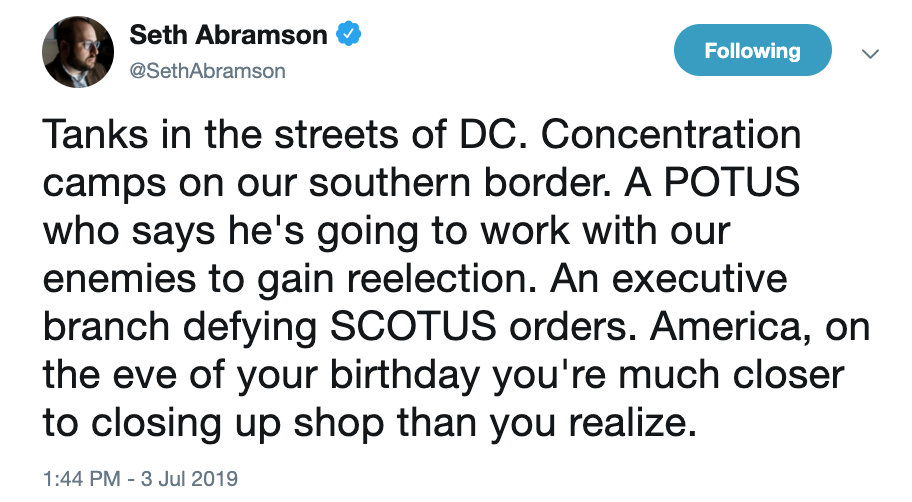
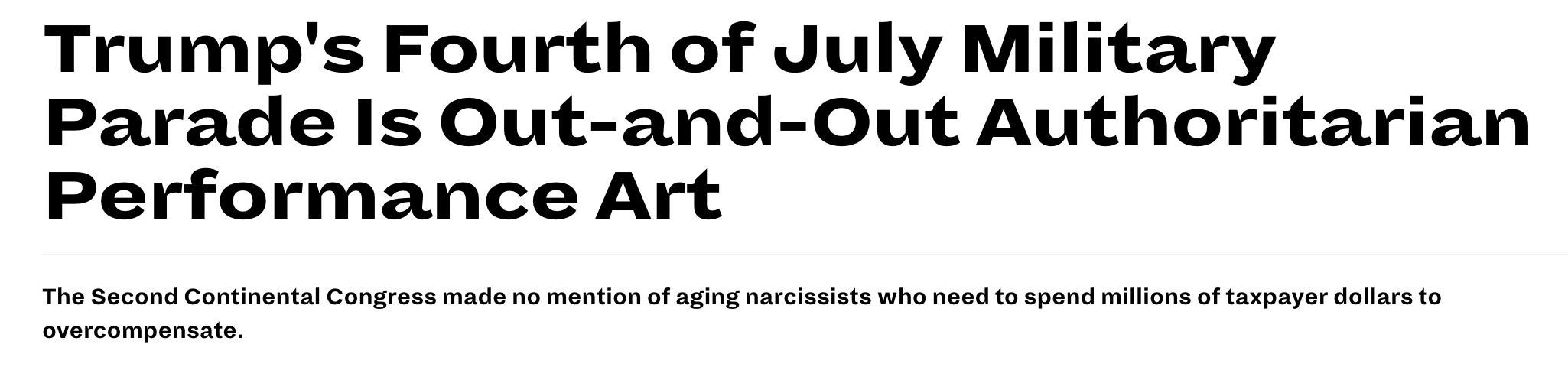
What is there to celebrate? We’re in the middle of a national authoritarian, verging-on-fascism nightmare — the lowest ebb that U.S. Democracy has known since 1776. Trump has turned an occasion for traditional patriotism into celebration of rightism and, of course, his own Mussolini-ness. Carole King has stated that she’s not participating in a Trump celebration, but if I were her I wouldn’t go anywhere near the nation’s capital today. I mean, good God.

What aspects of this once-great nation really deserve celebration? Presently speaking, I mean. The good would-be leaders (Buttigieg, Warren, Harris, O’Rourke), the native music (rock, jazz), the great movies and plays, the humor, kindness and neighborliness from everyday folks, the natural scenic beauty, etc. Not the military might (although that’s obviously essential for a world power), not the tanks and jets, not the drums and rifles. Everyone enjoys the comfort and privilege that comes with American citizenship, but who’s actually proud of being the Romans of our time — a rogue state that strikes when and where we please? I feel warm surges of patriotism whenever I watch The American Experience on PBS, but not so much when I look around today, and especially when I think of the the redhats standing behind Trump.

I love the culture of the great American cities, of course (including the one I live in), and I love the great natural wonders of this country. And pretty much every small rural town I’ve ever visited. But I’ve always felt happier in Paris, Rome, Prague, Bern, Munich, Lauterbrunnen, Berlin, Hanoi, Belize, the Pyrenees, the Italian Alps, southeastern Spain…anywhere across the pond. Especially these days. As far as I’m concerned this is a National Day of Mourning. Our Democratic traditions are being dismantled, and 40% or more of the populace thinks that’s just fine.