La sobria vita a Roma

In Abel Ferrara‘s Tommaso (Kino Lorber), Willem Dafoe plays the titular character, an American indie director living in Rome — obviously based on Ferrara himself. The film was shot in Ferrara’s own apartment there, and it costars his wife, Cristina Chiriac, and the couple’s three-year-old daughter, Anna Ferrara.

From Owen Gleiberman’s 5.22.19 review: “Given the semi-scandalous details of life on the edge that have made Ferrara, over the years, into something of a self-dramatizing legend, I was primed to see a movie that looked like it might turn out to be a cross between Bad Lieutenant and 8 1/2. [Except] Tommaso is about an aging bad boy who has cleaned up his act. Dafoe’s Tommaso was an addict (booze, heroin, crack), and the more accurate thing to say, of course, is that he still is one. But it appears he has found a hard-won life of entitled serenity. Right to the end, he stays clean and sober.

“Early on we see Tommaso going through his rituals: a lesson in how to speak Italian, a stop at the local market to see which vegetables are in season, grabbing a coffee, coming home to stir the orecchiette, settling in for quality time with his family and for a late-night snuggle-turned-shag on the couch with Nikki. It all looks like homespun paradise. And, of course, Tommaso attends 12-step meetings, where he details the sordid but now painful adventures of his past.

“Scene for scene, though, Tommaso feels alive. A movie that’s a loosely structured ramble can work, and about half of Tommaso feels more vital than anything Ferrara has made in a while. But the film should have been shapelier and 20 minutes shorter, with a more focused dramatic psychology. [Ferrara] has talent and urgency, but at 67 he’s still a poster boy for the bohemian shaggy-dog school of filmmaking without discipline.”
Anne Bancroft’s Embarassment

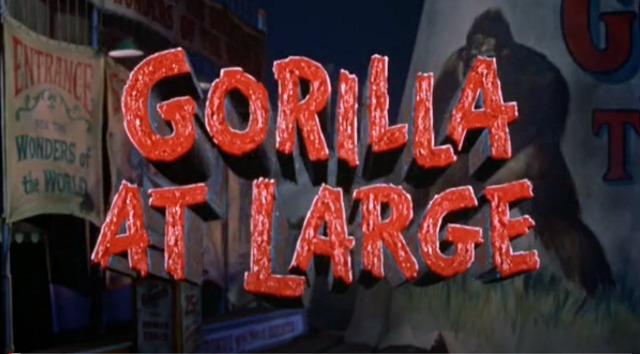
Until a couple of hours ago I’d never seen the camp classic Gorilla At Large (’54). Originally shot and projected in 1.37:1 3D Technicolor. An HD streaming version is available on Amazon. The $400K production was filmed for roughly a week at Pike Amusement Park in Long Beach, from midnight to dawn.

And what an impressive cast for a piece of shit — Anne Bancroft, Raymond Burr, Cameron Mitchell, Lee J. Cobb (who also shot On The Waterfont the same year), Lee Marvin. And a score by Lionel Newman. But what a lame ending — they distract the gorilla with fireworks and then the cops shoot him three or four times, and then he “falls” to the ground.

George Barrows (1914 – 1994) played the titular character. He wore gorilla suits in many films, but “Goliath the gorilla” was his most famous outing. Barrows played his first gorilla in Tarzan and His Mate (’34); his last was playing Monstro the Gorilla in AIP’s The Ghost in the Invisible Bikini (’66). Barrows’ gorilla suit, which he built himself, is currently in the collection of the Natural History Museum of Los Angeles County.

Best Tara Reade Reality Check

Outside of your kneejerk #BelieveAllWomen types, is there anyone who still buys Tara Reade‘s bullshit? If you happen to know any of these post-WWII Japanese soldiers living in jungle caves, please send them Cathy Young‘s 5.14.20 Quillette piece, called “Tara Reade’s Dubious Claims and Shifting Stories Show the Limits of #BelieveWomen.”

Friday Again

I’ve been getting more and more irritated by having to constantly wipe my glasses when I walk around with my flag mask. If I wear it correctly, I mean, with the steam engine-like nostril breath collecting and escaping and fogging the hell out of the lenses. As Ashley Judd said to Robert De Niro in Heat, “I’m sick of it, sick of it!”

It’s gotten so when I’m walking outside and a safe distance from other humans I just tug the mask below my nose…fuck it.

Don’t kid yourself — right now we’re living through the Second Great Depression. In late March I called it “a dystopian realm, almost a kind of On The Beach atmosphere…a low-security, self-policed concentration camp with wifi.” Except now things are a tad more liberal and semi-open. Toilet paper isn’t an exotic rarity any more. But we’re still “in it.”

Instead of bread lines we have masked citizens waiting in line outside supermarkets. Instead of Midwestern downmarket gangsters (Bonnie and Clyde, John Dillinger) holding up banks as a reaction to economic devastation, we have bumblefuck “open up!” protestors storming state houses and causing infections to spike. In many ways the same dynamic. The winter of our discontent.

Perhaps the biggest difference is that in the early ’30s FDR was in the White House, and today we have a sociopathic gangster-demagogue running things.

90-Minute Drive With Traffic

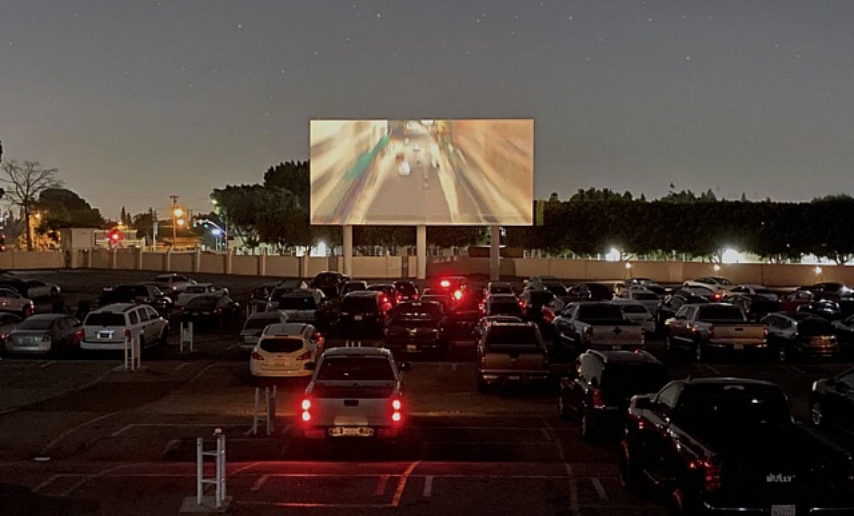
I’d love to hit the local drive-in for a showing of Unhinged, Russell Crowe‘s road-rage drama, when it opens on 7.1. But the only half-operating drive-ins in Los Angeles are in the godforsaken burghs of Paramount and Industry. That’s called “a bridge too far.” There isn’t a single drive-in in the entire San Fernando Valley. How about showing Unhinged at the Hollywood Forever cemetery?

“Dancer” Blindness

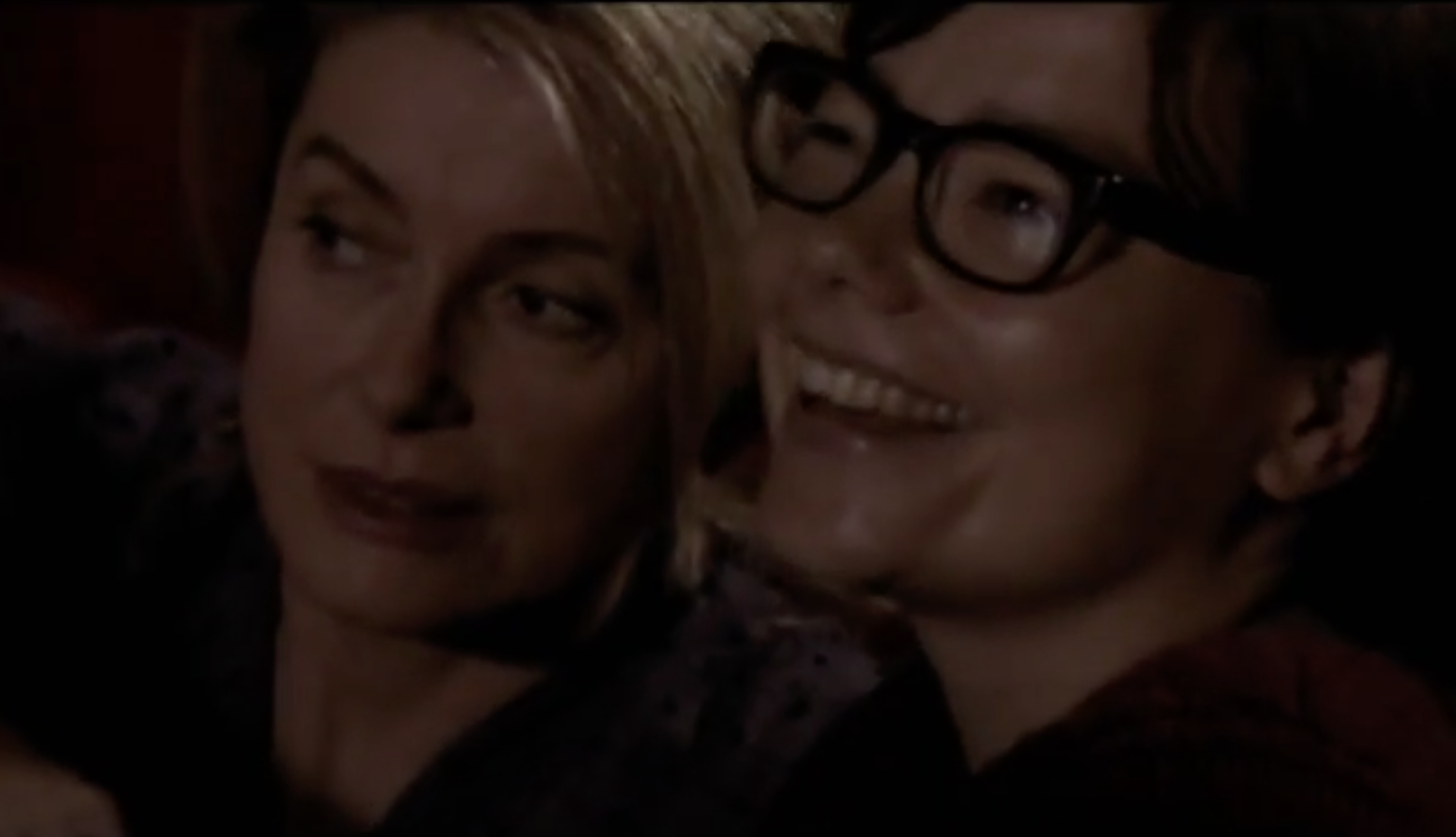
In yesterday’s “Cannes Memory Fragment #1,” which recalled the 5.17.00 debut of Lars von Trier‘s Dancer in the Dark, Steven Gaydos dismissed the pretensions while proudly linking to Derek Elley’s 5.22.00 pan.

Elley excerpt #1: “The legend of Lars Von Trier — part deserved, part self-constructed — comes crashing to the ground with Dancer in the Dark, a 2 1/2-hour demo of auteurist self-importance that’s artistically bankrupt on almost every level.” Elley excerpt #2: “An attempt to feed off the heritage of the traditional Hollywood musical while reinterpreting it for a young, modern audience through the prism of Von Trier’s romantic fatalism.”

HE reply: Besides being emotionally ravishing and technically innovative, Dancer in the Dark is one of the very few form-altering musicals of the last 90 years.

For decades the basic premise of stage & screen musicals was a given — at various moments the characters are so seized with urgent, slap-happy emotion that they break into song. Songs were spirit-lifters, time-out celebrations.

Then came Oklahoma! on the B’way stage in ‘43 — song lyrics and dance or ballet moves were now integrated parts of the narrative, expressions of what characters were going through internally.

Then along came the 1964 musical playbook of A Hard Day’s Night — songs happen among members of a certain British rock band when whimsy or fantasy strike, or when it’s simply time to perform.

And then Cabaret (‘72) — songs not so much about this or that character’s emotional state but which offer ironic or bitter commentary about what an entire culture is going through, and only expressed on-stage in the Kit Kat Club (except for “Tomorrow Belongs To Me”).

And then Dennis Potter‘s 1978 TV drama Pennies From Heaven (followed by Herbert Ross‘s 1981 feature remake), in which Depression-era characters lip-synched popular ’30s tunes as a means of fantasy-escaping from poverty and cruel fates.

Then came Dancer In The Dark (‘00) — a woman is so unable to handle the pain, cruelty and rough & tumble of life that she retreats into song and dance fantasies — without them she can’t continue, can’t cope. And of course this sad but inwardly joyous failing, this neurotic avoidance syndrome leads to tragedy.

How Derek Elley managed to not only miss but dismiss and deplore this simple transcendent concept (not to mention Von Trier’s revolutionary technique of capturing these musical sequences with several strategically mounted vidcams) was, for me, mind-blowing.

It was this review that reminded me all the more that effete, scholarly film dweebs are often (or at the very least sometimes) indifferent or hostile to strongly conveyed, take-it-or-leave-it emotion.

Read more