Dawn Wells’ Sad Departure

Poor Dawn Wells, aka “Maryann Summers” in Gilligan’s Island, has died from Covid at age 82. I’m very sorry — condolences for friends, family, fans and colleagues.

Wells was very fortunate, of course, in being cast in Sherwood Schwarz‘s oppressively stupid, inexplicably popular sitcom, which except for two or three episodes I’ve avoided all my life. Okay, I may have watched five or six.

Everyone loved Maryann — the perfect tropical island fox. (Will I get re-cancelled for using that insidious term? Would it help if it was meant ironically or historically, as a verbal comment on a remnant of a bygone age when “fox” was an acceptable term of flattery?)
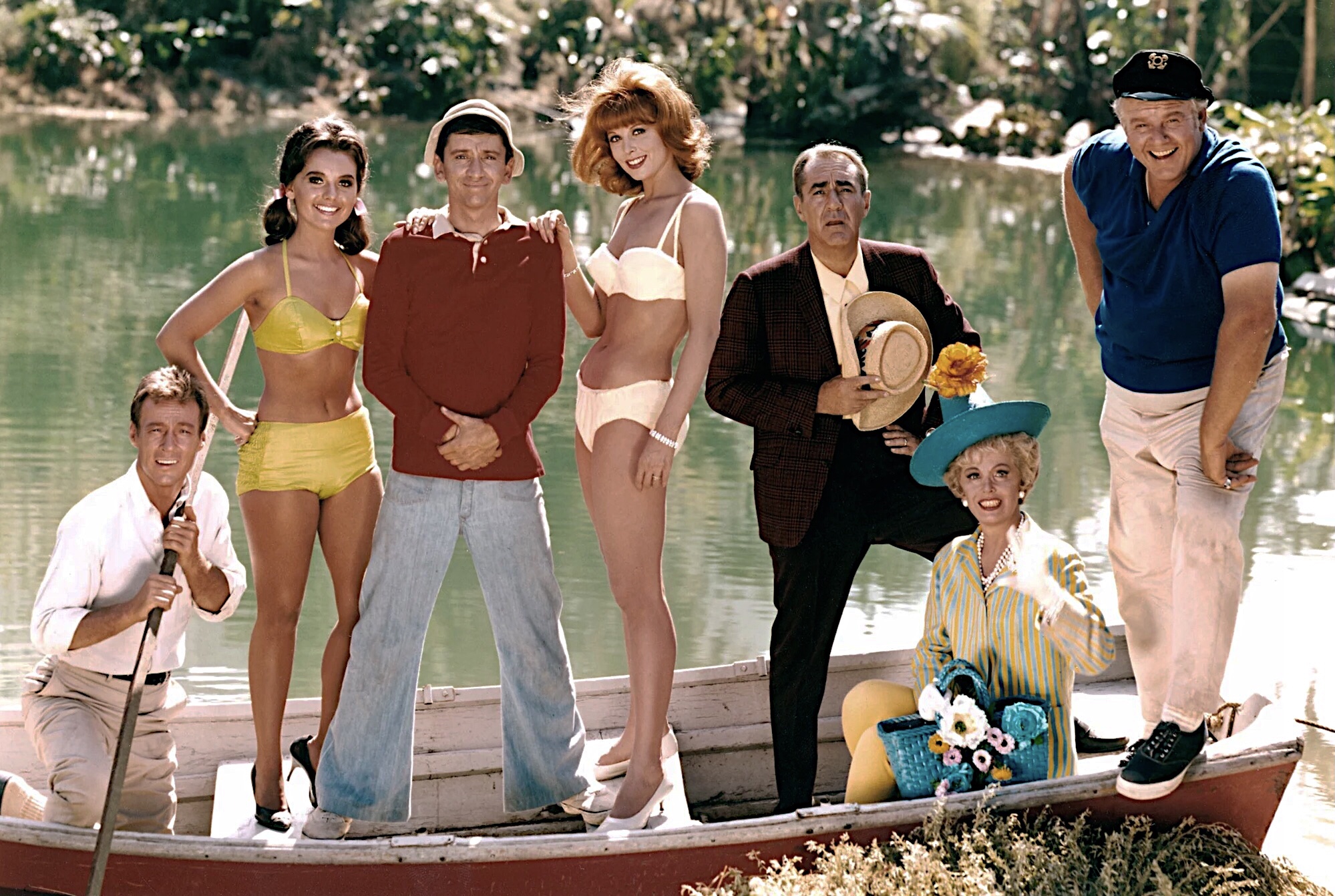
Born and raised in Nevada, Wells was 25 or 26 when that Sherwood Schwartz series began in ’64 (the first season was shot in black-and-white), and 29 when the show breathed its last. 98 episodes in all.

The difference in the quality between the insipid Gilligan’s Island and Bob Denver‘s previous series, The Many Loves of Dobie Gillis, was night and day. Credit is due, I suppose, to Schwartz for inventing and selling the idiotic concept, but the writing on the Gillis series (’59 to ’63) was 20 times better than the plotting and patter on Gilligan. Cavalier wit, cooler personality.

Why didn’t Maryann and Russell Johnson‘s professor become a couple? They could’ve had kids. How did the Gilligan characters happen to bring along such huge wardrobes (or even a suitcase) when they were only enjoying a three-hour cruise off the coast of Oahu? Why didn’t the professor build a surfboard for Maryann?

Speaking of beaches, why weren’t there more scenes in which Maryann and Tina Louise‘s “Ginger Grant” would lounge around in brightly-colored floral print bikinis and soak up rays? (Now I’m really gonna be re-cancelled.) Why didn’t Gilligan learn to surf? Or the skipper for that matter? Did everyone have their own outhouse or did they share? How did they arrange for running water again? The show wasn’t even interested in any kind of hand-made Swiss Family Robinson ingenuity.

What was the basic metaphor of Gilligan’s Island? TV sitcoms become hits because they touch a chord of some kind. Gilligan‘s chord had something to do with capturing the insular mindset and complacency among the American middle-class in the mid ’60s. Nothing about living on a remote island (and one without toilets or hot running water, remember) altered how they thought and lived. The castaways might have just as well been residing in a condo community alongside a golfing fairway in Scottsdale.

Wells certainly had her moment in the sun. I was sorry to read that things were difficult for her a couple of years ago — her Wiki page says that a GoFundMe page was set up to help Wells cope with financial challenges.

Johnson, by the way, died in 2014 at age 89.
Read more

Georgia Is Everything

It’ll be a blessing if Jon Osoff and Rev. Raphael Warnock defeat Republican Senators David Perdue and Kelly Loeffler, their respective opponents in the 1.5.21 Georgia runoff election (only six days off!).

If this were to happen Biden would able to push through certain liberal or progressive measures (including re-launching the fight against climate change) and generally dilute the Trump toxicity. Greater levels of fairness, decency and compassion would permeate the Senate, and perhaps even among the citizenry to some degree.

As we speak Loeffler seems likely to lose (emphasis on the “s” word), but it’s too close to call on Perdue-vs.-Osoff. Perdue could win, and that would mean more standoffs and gridlock with Mitch McConnell maintaining his position as the Senate’s majority leader. A horrible outcome.

Why in God’s name would anyone vote for an elitist country-club skinflint like Perdue?

Both Perdue and Loeffler have voiced support for $2K payments, but I think they’re just saying that. I think it’s mainly theatre. They get to sound semi-human and semi-compassionate while knowing that McConnell will keep this issue from coming to a floor vote, despite everyone on the planet (including Trump himself) saying that $600 is ridiculous, etc.

Read more

Streaming Movies Are Like Ether

Once upon a time (i.e., pre-Covid) award-season movies would generate a certain vibration. They (and you) would hit the industry or press-screening circuit and then they’d open commercially and hang around for three or four weeks, and you could sense a certain occupational presence.

This was in the good old days of 2019 and before, of course…way back when you could watch films with a crowd and actually sit next to strangers and shit. I’m saying this because streaming and occasional DVD-watching are piss-poor substitutes. Even watching films at invitational drive-in showings…even that doesn’t get it.

In the current environment it’s very easy to watch something really good and then forget about it…it’s respected but doesn’t linger and just flies out of your mind. Streaming will never replace sitting in front of a 50-foot-wide screen. Because your TV screen lacks that power, that dominance, that persuasive presence that movies need. If the current is missing, fuhgedaboudit. Because it makes all the difference in the world.

John Frankenheimer’s “The Little Train”

I was never an electric toy train fanatic as a kid, but I remember being gifted with a five-piece set with tracks, a transformer and whatnot. I can’t recall if the maker was Lionel or Marx, but I do remember how heavy the engine car was (it really did weigh a fair amount) and that it generated a nice howling sound as it moved around the room and also emitted a simulation of steam. The electric current in the tracks was such that you could hear a faint throbbing or humming. If a strand or two of Christmas tree tinsel happened to fall on the tracks and the engine ran over it you’d hear a slight snapping sound and notice an odor of burnt whatever. I think I was seven or eight when the set arrived one Christmas. I think the purchaser (father, grandfather) was into trains for his own enjoyment, and that I hitched a ride.

Read more

Deranged Visual Aesthetic

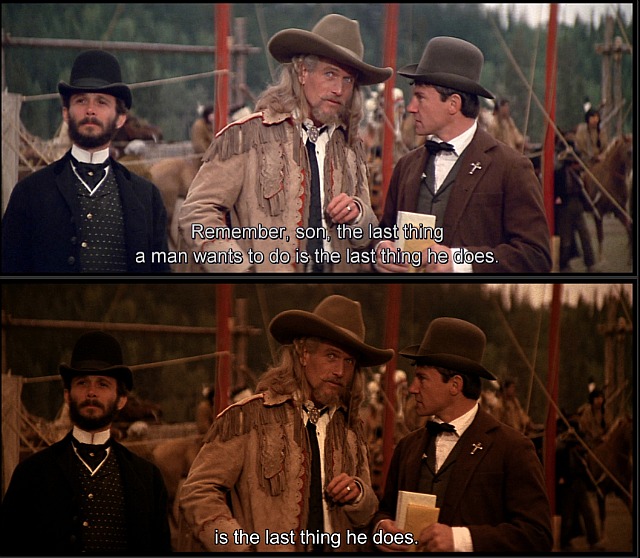
I saw Robert Altman‘s Buffalo Bill and The Indians when it opened in June ’76. It’s a flat, pedantic film about the legacy of evil whiteys (personified by Paul Newman‘s Buffalo Bill) vs. that of noble Native Americans (Frank Kaquitts‘ Sitting Bull). It instructs the audience about who the good and bad guys were (and probably still are), and sorta kinda bores your pants off in the process.

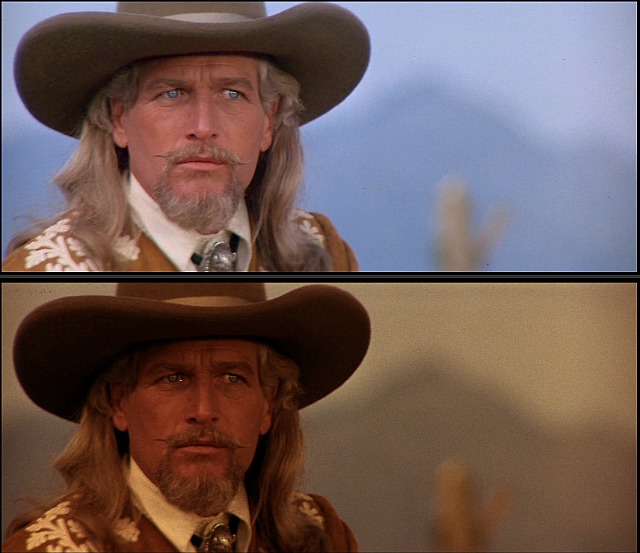
But wait — it compounds. Imagine being in charge of the mastering of the recently released Indicator Bluray (12.14) of Buffalo Bill and The Indians, and deciding to capture what is being called “the original ‘antique’ color timing” — color that, judging by DVD Beaver captures, is overwhelmingly brownish and quite dark. Except it didn’t look this way in theatres. Believe me, I would have noticed.

Geraldine Chaplin, Burt Lancaster, Kevin McCarthy, Joel Grey, Harvey Keitel, John Considine, Will Sampson, Shelley Duvall, Bert Remsen, Denver Pyle, etc.

A more pleasantly colored Bluray version was released by Kino in 2014.

Again, Bluray captures belong to DVD Beaver.

Snail’s Pace, Blame The Trumpies, etc.

From Fast Company‘s Michael Grothaus: “Operation Warp Speed is sputtering. Under the Trump administration’s vaccination roll-out, the goal was to have 20 million Americans receive their first dose of the COVID-19 vaccine by the end of December — a critical step in not only inoculating the most vulnerable, but also eventually achieving herd immunity in the country

“It is estimated that between 80% and 90% of Americans would need to be vaccinated to reach herd immunity.

“But instead of 20 million doses being administered this month, the U.S. has only administered 2.1 million doses so far — barely a tenth of the original goal, reports Axios. That means that if the U.S. is to meet its 20 million goal, it would need to vaccinate more than five million people a day between now and the end of Thursday — an unlikely occurence.”

Drunken Gypo Paired with RCMH Rockettes

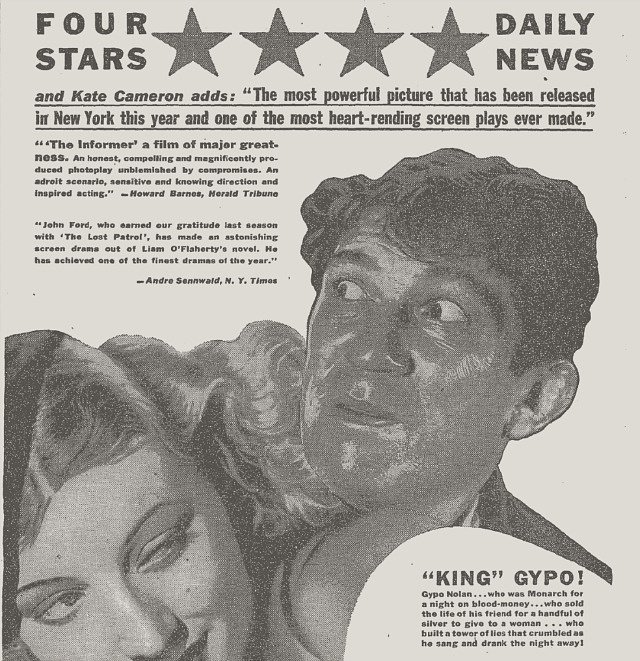
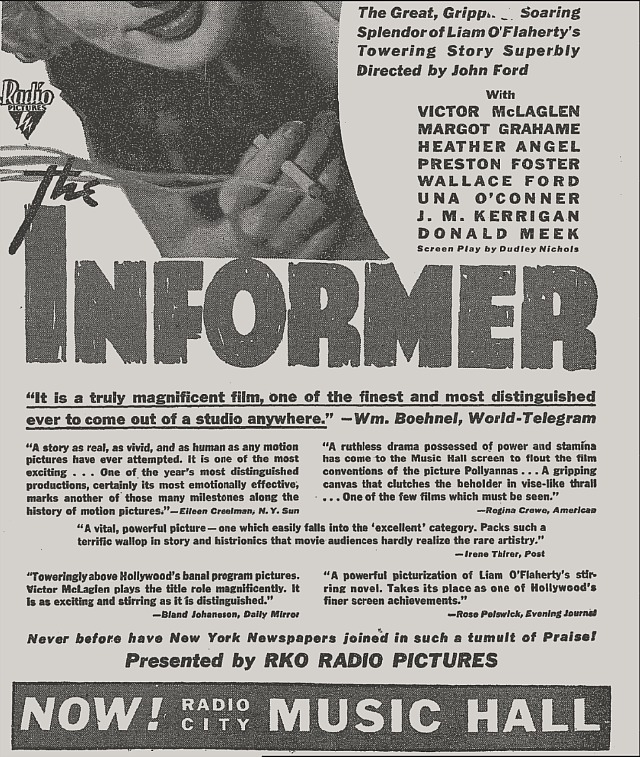
Until this morning I’d never realized that John Ford‘s The Informer played at the Radio City Music Hall. An odd venue for such a film. The Informer is a arthouse film for adults, but I guess back then there was no such term. (To the best of my recollection “smarthouse” wasn’t a term until five or ten years ago.) The RKO Radio Pictures ad department tried to make The Informer seem like a relationship thing between a brawny, alarmed fellow who’s been under a sunlamp and a foxy blonde (Heather Angel or Margot Grahame?) with a lit cigarette.

Read more

Urge to Squelch

This wire-service story appeared in the N.Y. Times on 5.11.35. Chilling. I naturally began thinking about authoritarian repression tactics in other times and cultures. I’m not offering any exact analogies or pointing specific fingers, but from what corner of our present-day culture are we hearing “not allowed, you can’t say that, shut it down, fire this person, lights out”? Be honest — who’s saying that kind of stuff these days? Am I allowed to ask this question?

When Noir Was In Vogue

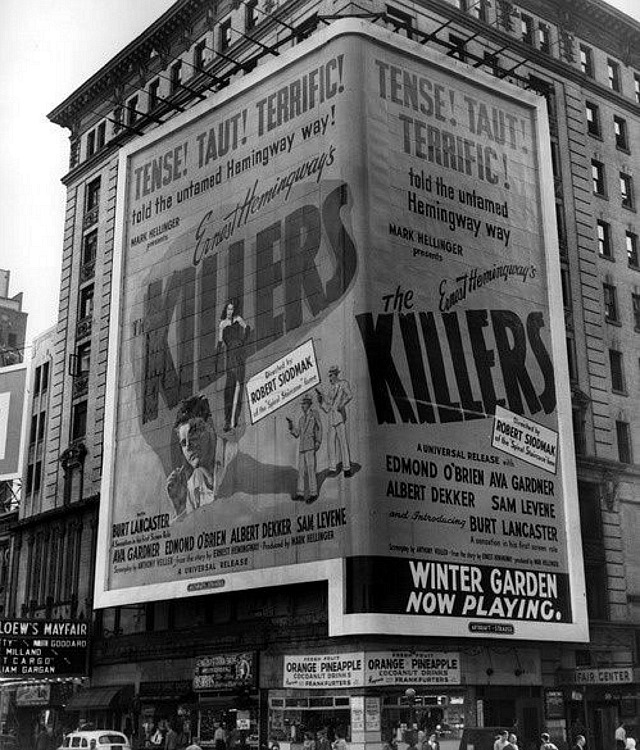
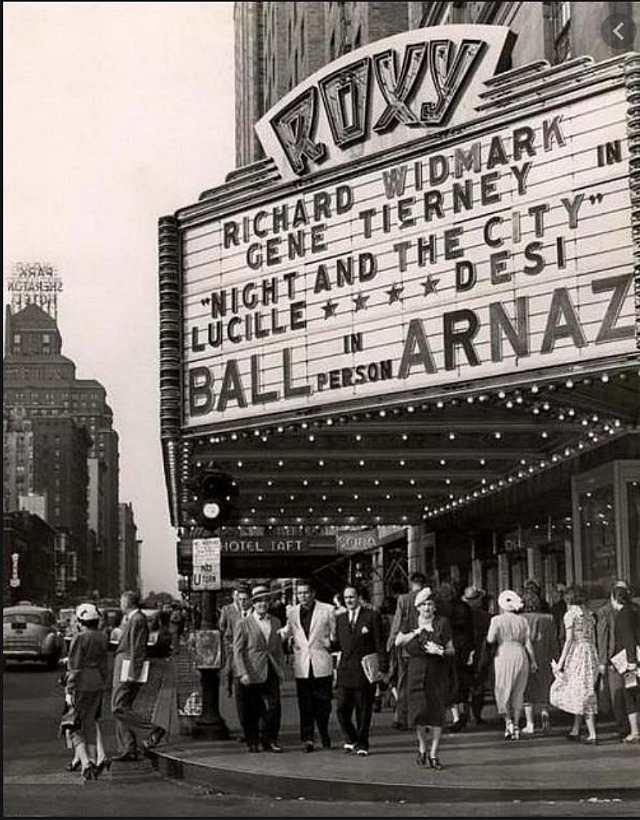
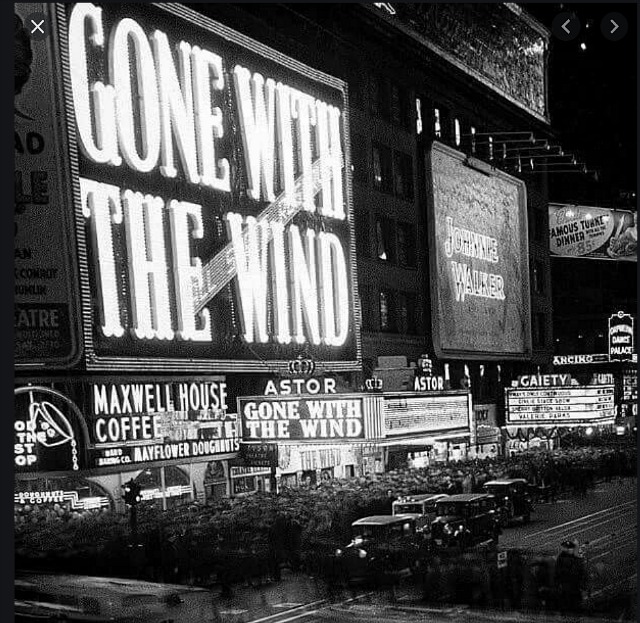
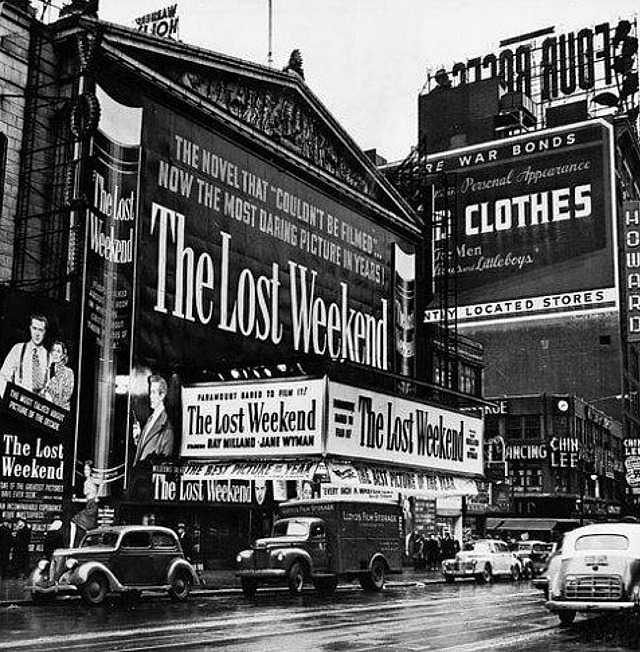
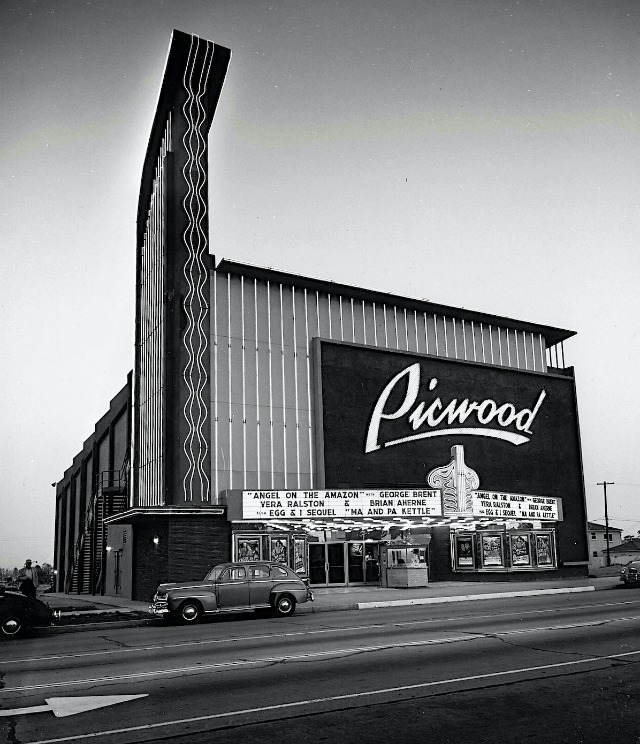
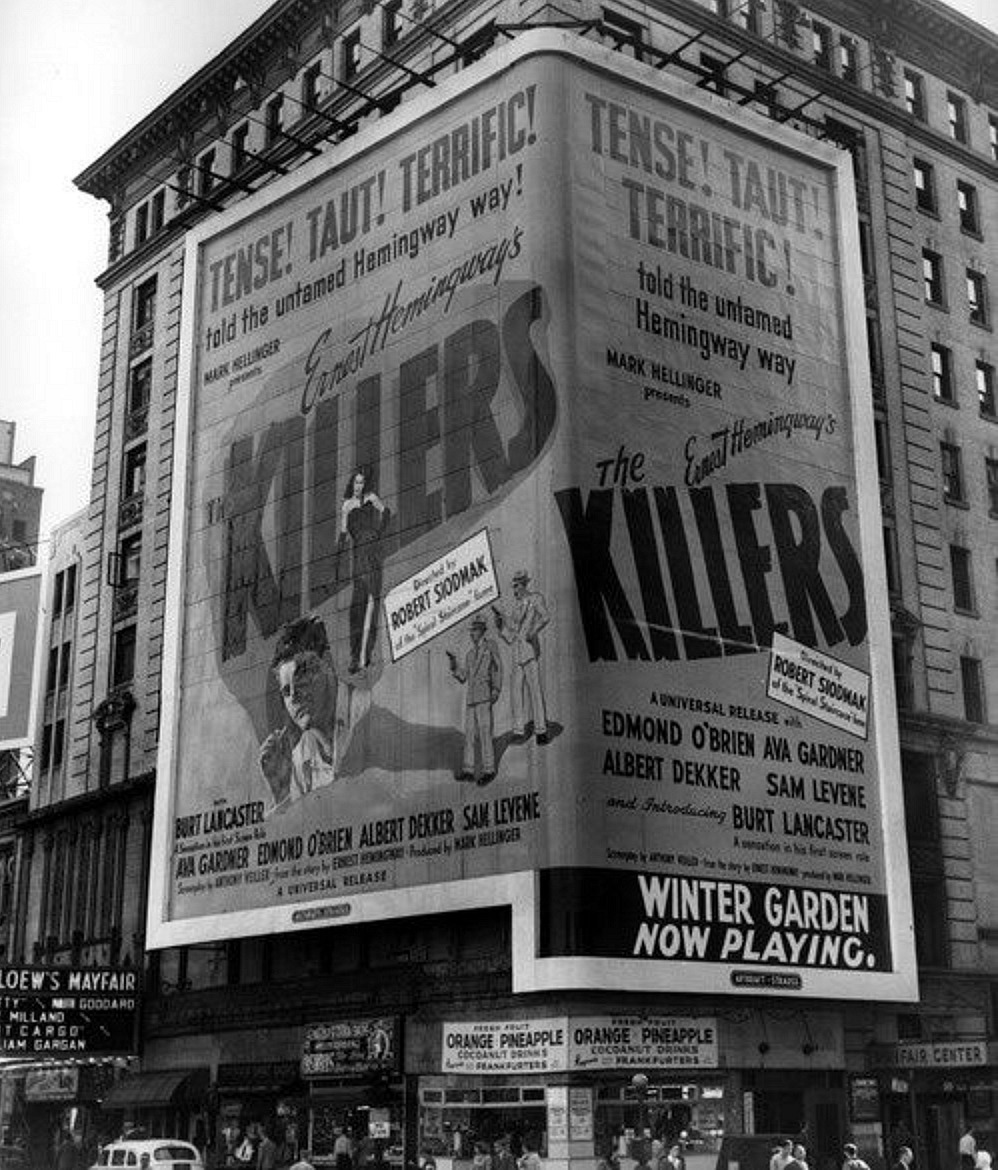
As a longtime chronicler of those wraparound DeMille/Mayfair billboards, this is fairly unique. For Robert Siodmak and Mark Hellinger‘s The Killers didn’t play the Mayfair but the legendary Winter Garden theatre. United Artists briefly turned the decades-old venue into a movie palace between ’45 and ’46.


Jules Dassin’s Night and the City opened on 6.9.50.

James Whale’s The Bride of Frankenstein opened on 5.11.35.

Bring On The Bubbly

A few days ago I ordered a poor man’s Red River belt buckle. It arrived this afternoon. It’s made of a solid, heavy metal. Decent craftsmanship as far as a knockoff goes. I just need to figure some way of griming it up, making it look more beat-up and weathered. Plus it has my initials (and John Wayne’s) on the lower left corner. 7:40 pm: It’s too cheap looking, too gold-dipped…I should’ve ordered the pewter.

Now that You’ve Seen “News of the World”

Paul Greengrass‘s News of the World is a 19th Century horseback relationship drama between a widowed Civil War veteran (Tom Hanks and a young German girl (Helena Zengel) who was taken from her parents and raised by Kiowas. Hanks’ Captain Jefferson Kyle Kidd, who earns survival money by reading newspaper stories to small communities, struggles to deliver the girl (whose German name is Johanna) to a bumpkin aunt and uncle in southern Texas, seemingly in the vicinity of San Antonio. Difficulties abound, ornery varmints threaten, two or three rainstorms descend, physical disasters (including a blinding dust storm) keep a comin’.

Please answer (a) yes, (b) no or (c) disagree with an explanation:

1. Paul Greengrass‘s News of the World is basically a good film — sturdy, reliable, authentic, true-hearted.

2. The adjectives or phrases that come to mind are “assured,” “atmospherically authentic”, “properly attuned to the 19th Century pace of life”, “True Grit-ish” and “somewhat predictable but not in a hugely problematic way.”

3. It’s a steady-groove, life-can-be-brutal, long-hard-journey thing. The performances, the screenplay (by Greengrass and Luke Davies), the cinematography and the trustworthy realism hold you.

4. Hanks’ Kidd character reminded you of Edmond O Brien’s Freeide Sykes in The Wild Bunch — yes, no, kind of, not really.

5. Hanks plays his usual patient, soft-spoken man of decency. Kidd is probably his best role and performance since…Cast Away?

6. News of the World is an entirely decent and respectable film. You can see where it’s heading from 100 miles away, but it’s the journey that counts.

Please Define “Funny”

Last night HE’s own Bob Strauss described Promising Young Woman as “soooo good! The kind of thing that wriggles out in all kinds of unexpected directions, upending both genre expectations and the woke doctrine so many on this site are afraid of, yet never betraying its fundamental righteousness in the process. Complex, crazy, often funny as hell and as startling as it gets.”

I’m an admirer also, but “funny”?

Posted this morning: “Promising Young Woman has a striking edgy quality and is loaded with a certain kind of acrid, on-target attitude, but Mr. Strauss has unfortunately joined the p.c. throng that insists on calling it ‘funny.’

“Different folks & strokes, but as God is my witness and may He, She or It strike me dead with Vito Corleone’s bolt of lightning, there is NOTHING that even flirts with ‘funny’ in this film. Funny can be laugh-inducing or titter-worthy or it can be an internal reaction (i.e., LQTM), but Promising Young Woman radiates an absolute and unequivocal absence of the mental, spiritual and emotional ingredients that constitute ‘funny’ or ‘dryly amusing’ or ‘guffaw-worthy’ or however you want to define it.

“Because PYW is, at heart, driven or informed by a brusque, occasionally quite chilly, unmistakably damning, hanging-judge quality.

“’Funny’ can be a line or a mood or an attitude that feels like the first hour of a mescaline trip. It delivers a certain something-or-other potion that flips a certain switch and makes you go ‘hah-hah’ or ‘tee-hee.’ If you’ve ever known any professional comedy writers you know they rarely laugh, but at the same time they’ll sometimes say ‘that’s funny’ or ‘that’s smart, clever stuff but it isn’t funny.’ PYW, trust me, is no comedy writer’s idea of “funny.” Because it has no interest in the afore-mentioned switch, much less in flipping it.”