Two Santa Barbara Stories

The following true-life encounters occured during the Santa Barbara Film Festival. The first happened a year ago; the second in ’15 or ’16. It follows that most of what happens during my annual SB visits is uneventful; we only pass along the stand-out stuff.

Story #1: I was in the checkout line at Ralph’s on Carillo. A giggly party girl and her friends were buying four huge bottles of something alcoholic. Either the booze was pale yellow or the bottles were tinted that way. Didn’t see a label or sticker.

I asked the checkout guy, “What is that stuff?”

“Bocca,” he said.

Bocca?” I repeated. I thought it might be some exotic liqueur. “Never heard of it.”

Actually I had in The French ConnectionTony Lobianco’s Brooklyn-based heroin dealer was named Sal Bocca. Roy Schieder: “Our friend’s name is Bocca. Salvatore Bocca. They call him Sal. He’s a real sweetheart.”

The girl and her pallies paid for the Bocca, and the guy packed the bottles in ordinary paper bags, which struck me as insufficient given their size and weight.

“How do you spell that?” I asked. The checkout guy ignored my request, but he looked at me sideways. “You never heard of Vocca?”

“No,” I insisted while offering a half-shrug of apology. Ping. “Oh, you mean vodka?”

“Yeah, man…vodka.”

“Oh, sorry. I misunderstood. Sorry.“

In fact, the checkout guy, who was (and undoubtedly still is) of Latin descent and spoke with a slight accent, was pronouncing his vees like bees. I learned that in Spanish class when I was 15. When you say “vamonos,” for example, the vee is pronounced as a blend of vee and bee.

Which partially explains the confusion. But vodka is pronounced “vahdkuh” and this guy was delivering too much of an “oh” sound. So just between us, it was mostly his fault. I’ve been saying the word “vodka” my entire life so don’t tell me.

Story #2: I was staying for a night (Saturday) at the Cabrillo Inn. I awoke around 6:30 am. I naturally wanted my usual cup of morning mud. There was no coffee-pot heater in the room so hot tap water would have to suffice. I turned on the faucet and waited. And waited. It didn’t happen — never even turned warm.

So I dressed and went downstairs with my day-old paper cup and my Starbucks Instant and strolled into the complimentary-breakfast room.

Some 50ish guy (a tourist from Chicago, he later explained) was standing inside and giving me the once-over. Two women were preparing things; they weren’t quite ready to serve. All I wanted was some hot water so I asked for that. In a minute or two, they said. I nodded and waited.

The Man From Windy City thought I had somehow overstepped.

Chicago guy: “Why don’t you ask the hotel manager?” Me: “What’s he gonna do?” Chicago guy: “That’s what he’s here for.” Me: “What’s he gonna do, push the emergency hot-water button?” Chicago guy: “He could get an engineer to fix the pipes.” Me: “At ten minutes to seven on a Sunday morning? Yeah, that’s a possibility.”

It was obvious this guy was a couple of cards short of a full deck and not worth conversing with, especially after he said, “You’re being a dick.”

Okay, but how did I earn that? By asking for some hot water? Or pointing out that his “ask the manager” idea was ridiculous?

Me: “Thank you. In your company, sir, it’s a pleasure.”

Things went downhill from there, and then we both decided to take a break and breathe easy. Then we got back into it.

Chicago guy: “Are you attending the film festival?” Me: “None of your business.” (I’m sorry but Midwestern tourists irritate me, especially when they offer unwarranted opinions and double especially when they’re wearing shorts and sandals and talking with a twang.) Chicago guy: “This is my first visit to California.” Me: “Great.” Chicago guy: “Can I take your photo?” Me: “No, you can’t take my photo.”

Then he did the old “heh-heh” chuckle thing, as if to say it’s all amusing and rolling off his back. So I imitated his chuckle and pretended to be him, accent and all: “Boy, this fella sure is a character and he sure is particular…heh-heh!”

A minute or two later he came over and tried to shake my hand. I declined. “What are you, a Christian?,” I asked. “Keep it. Convert to Satanism.”

Chicago guy is 50something and this is the first time he’s ever visited the West Coast?

I should have shrugged it off and shaken his hand. He was a jerk, but also a bigger man. I was being a grump.

The breakfast room lady gave me a cup of steaming hot water. I thanked her, grabbed a breakfast roll and left.


All Hail Snyder’s Boxy Aspect Ratio

However satisfying or butt-painful Zack Snyder’s Justice League (HBO Max, 3.18) turns out to be, Hollywood Elsewhere stands foursquare in support of Snyder’s decision to go with a 1.37:1 aspect ratio. Even though it’s four fucking hours long, I’d love to watch this thing inside a first-rate IMAX theatre and just drown in the towering images (the IMAX a.r. would 1.43:1) and rib-throbbing sound. But of course I can’t.

Jared Leto‘s Joker looks a bit like Lon Chaney‘s unmasked Phantom of the Opera.

Bring Back The Nannies?

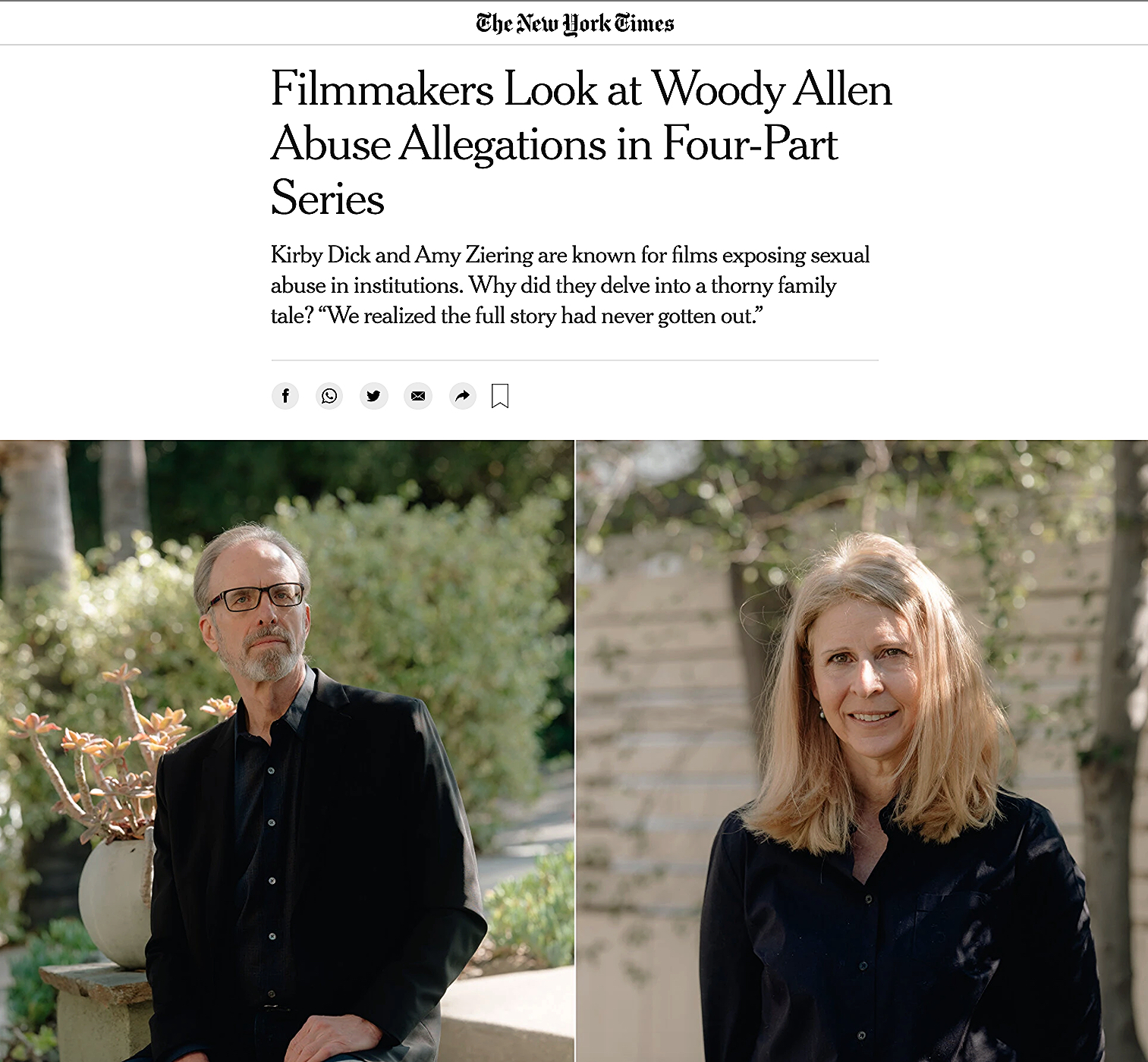
When Kirby Dick and Amy Ziering‘s four-part Woody Allen hatchet-job doc, Allen vs. Farrow, begins airing on HBO on Sunday, 2.21, and particularly when they show the then-seven-year-old Dylan Farrow‘s taped recitation of what “daddy did”, keep in mind a 9.2.93 Los Angeles Times article by John J. Goldman.

The article is titled “Nanny Casts Doubt on Farrow Charges” with a subhead that read “She tells Allen’s lawyers the actress pressured her to support molestation accusations against him. She says others have reservations.”

“Lawyers for Woody Allen said Monday that a former nanny who worked for Mia Farrow has testified she was pressured by the actress to support charges that the filmmaker molested their 7-year-old adopted daughter,” the article reads.

“The nanny, Monica Thompson, resigned from the Farrow household on Jan. 25 after being subpoenaed in the bitter custody battle between the actress and Allen. She told Allen’s lawyers in depositions that another baby sitter and one of the couple’s other adopted children told her they had serious doubts about the molestation accusation.

“Authorities in Connecticut are viewing a videotape made by Farrow as part of their investigation, which has included interviews with Allen and Farrow as well as the daughter, named Dylan.

“Farrow’s attorney, Eleanor Alter, issued a statement Monday saying, “It is my understanding…that Ms. Thompson has totally recanted” the statements attributed to her. She noted that Thompson’s salary, upwards of $40,000 a year, was paid by Allen. Thompson could not be reached for comment.

“Thompson said in a deposition that it took the actress two or three days to videotape Dylan making the accusations. At times the youngster appeared not to be interested in the process, the nanny said in sworn affidavits taken by Allen’s attorneys.

“’I know that the tape was made over the course of at least two and perhaps three days,’ Thompson said. ‘I was present when Ms. Farrow made a portion of that tape outdoors. I recall Ms. Farrow saying to Dylan at that time, ‘Dylan, what did daddy do…and what did he do next?’

Read more

Lohan’s Bankhead-Like Reputation

Acting-wise, Lindsay Lohan hit a triple at age 12 with The Parent Trap (’98), and then slammed two homers with her performances in Mean Girls (’04) and especially A Prairie Home Companion (’06). She’s made other films, of course, and has recorded some music and certainly made headlines, but let’s be honest — nowadays she’s primarily known as a stalled Rehab Queen (although she’s only 35) and a person who was happening a little less than a decade ago but no longer.

I’m not saying Lohan is a permanent trainwreck whose personal weaknesses and lack of discipline have overwhelmed her career, mind, but that’s the image that has sunk in…be honest, Trey Taylor! Does Lohan need to “be” her image for the rest of her life? Of course not. She could begin to turn things around today, if she wanted to give it a shot.

The bottom line is that since ’05 or thereabouts Lohan has been more or less vying for the title of the 21st Century’s Tallulah Bankhead, which is actually a half-flattering description as Bankhead had a great decades-long theatre career (The Little Foxes, The Skin of Our Teeth, Clash By Night) and gave an award-worthy performance in one great film (Alfred Hitchcock‘s Lifeboat). When it came to nervy, challenging interviewers (the David Lettermans of the ’30s, ’40s and ’50s) Bankhead would typically agree with every tawdry tabloid anecdote and own her reputation — she gave as good as she got.

But since the recent release of Hulu’s Framing Britney Spears (“I am deeply sorry“), Twitter has been revisiting other instances of brash insensitivity in terms of stars being raked over the coals for their perceived personal problems or for indelicate behavior in general.

Movie Poster Violation

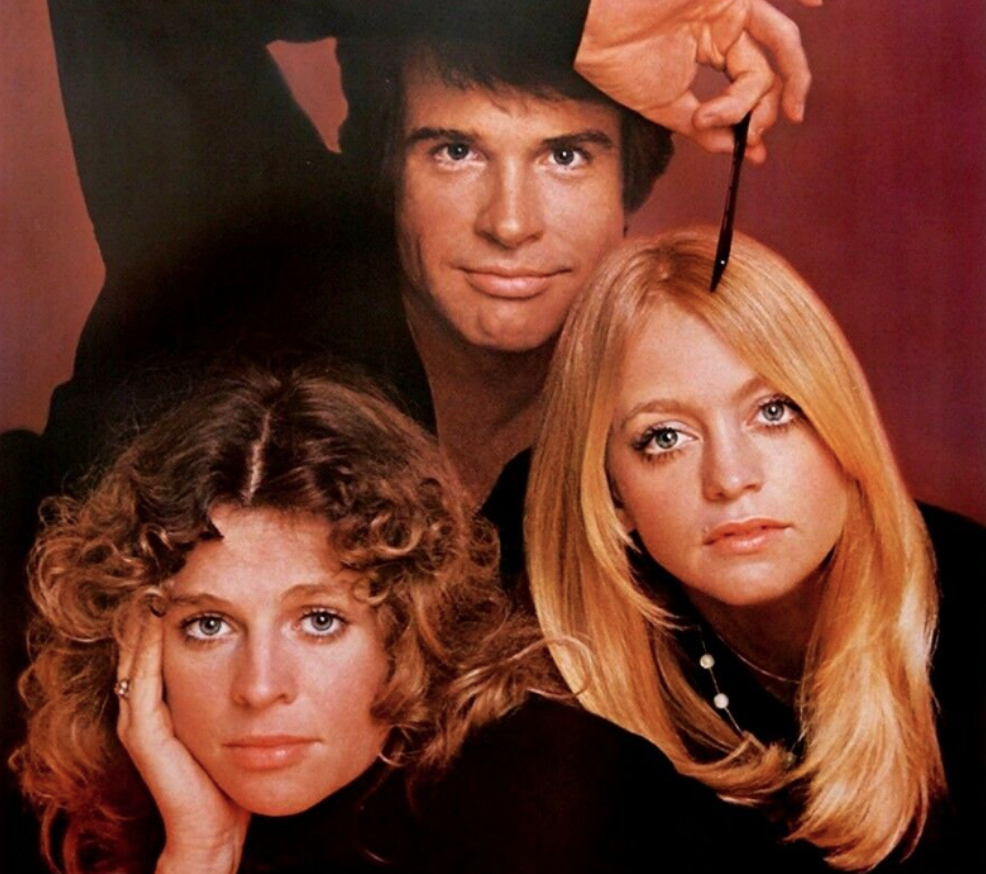
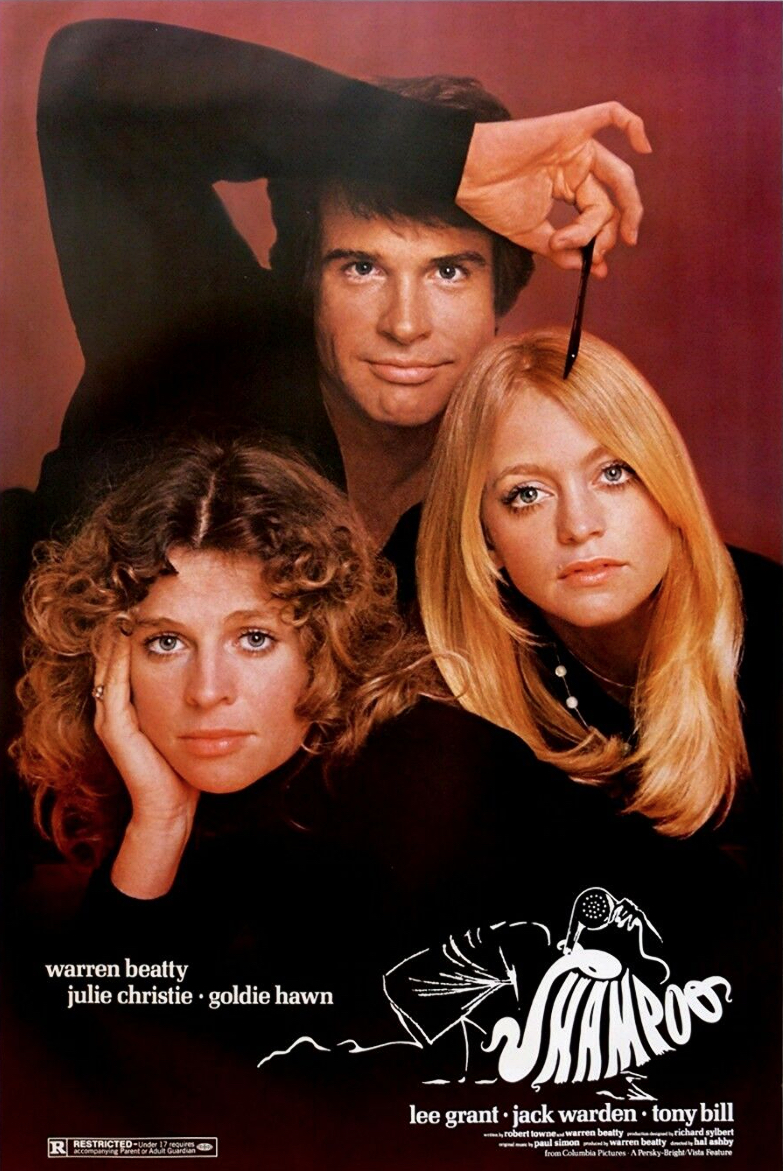
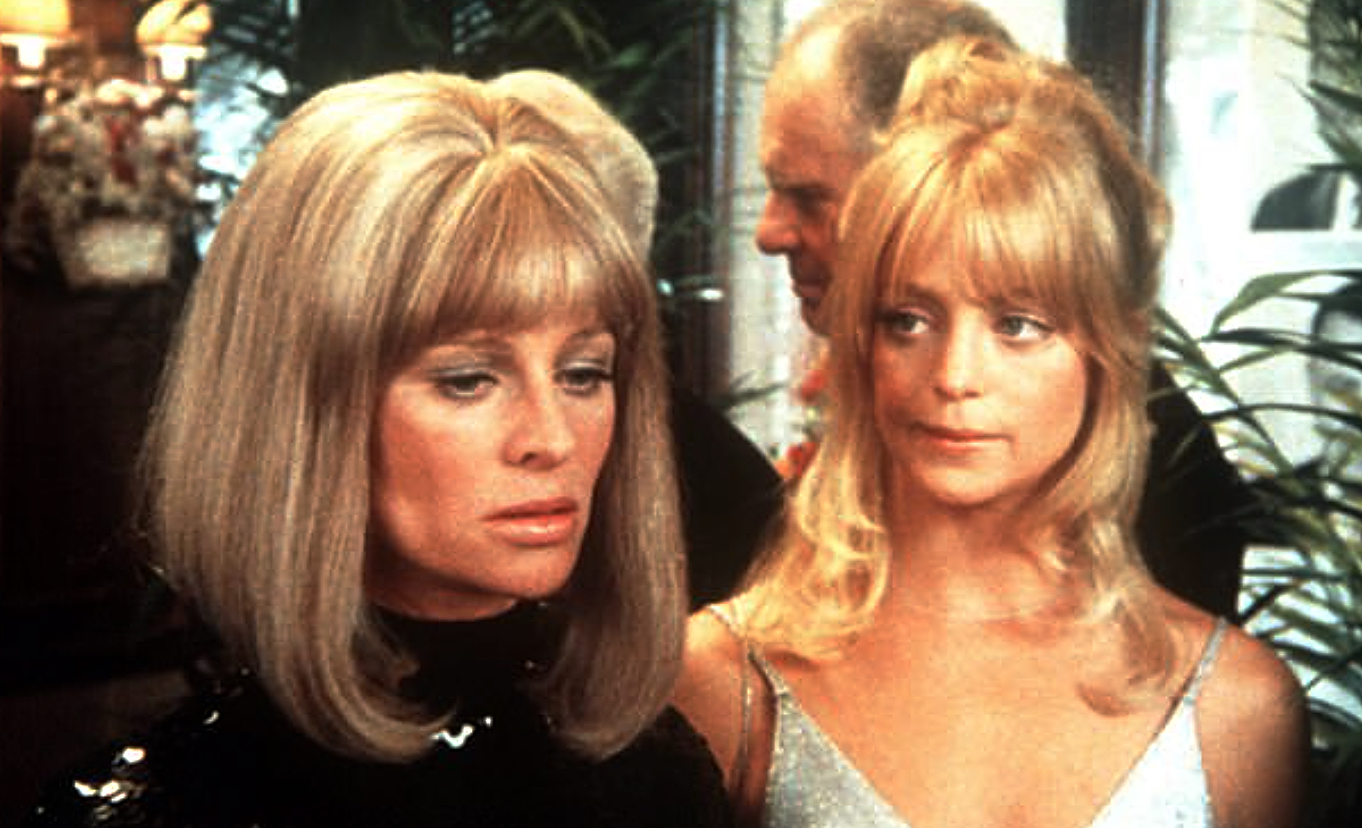
The appearance of actors in a movie poster should never, ever argue with how they look in the film itself. Violation #1: Julie Christie‘s wig in Shampoo is straight, thick and frosty blonde — her natural poster hair is blonde-brownish and curly. Violation #2: In the film Goldie Hawn‘s blonde hair is worn with bangs — in the poster it’s oddly parted in a slightly off-center fashion. Violation #3: In the poster Warren Beatty‘s hair is noticably shorter than it is in the film.

White Oscar-Race Narcissism

This morning I took part in a discussion about a 2.12 Wall Street Journal article titled “How Equality Lost to ‘Equity.’” The subhead reads “Civil-rights advocates abandon the old ideal for the new term, which ‘has no meaning‘ and promises no progress but makes it easy to impute bigotry, says Shelby Steele.”

Steele quote: “[The current meaning of the term] equity has no meaning, but it’s one that gives blacks power and leverage in American life. We can throw it around at any time, and wherever it lands, it carries this stigma that’ somebody’s a bigot.’ Its message is that there’s inequality that needs to be addressed, to be paid off. So if you hear me using the word ‘equity,’ I’m shaking you down.”

Here are some passages from the discussion that touched upon the Oscar race, and upon John McWhorter‘s “The Elect“:

Friendo #1: “The key concept is that ‘equity’ prioritizes equality of outcome over equality of opportunity.

“That’s where Martin Luther King Jr. would have reared up in protest against it. And where any sensible moral person today — e.g. the tiny fraction of those of us in media who actually resist woke mobthink — would stand up against it. Equality of opportunity should be the goal. Not outcome — that’s the social-cultural analogue of giving every kid a trophy.

“Applied to the Oscars, it’s especially ludicrous. Sure, you can have an Oscar slate where half the people are POCs, making up for past sins, etc., and we can all sing ‘Kumbaya’ and pat ourselves on the back when half the winners are black. But if that’s what you do, it’s such a contrivance, and you’re so cheapening what the awards are, that you’ve made it all mean next to nothing. ‘Look, Chadwick Boseman, Viola Davis and Delroy Lindo all won awards at the African-American Oscars! Hurray!! We woke white people really are something, aren’t we?!’

Friendo #2: ” The new enlightened white person religion [is about] atoning for past sins. I have a very privileged friend who lives in Ojai…married, rich, never had to work a day in her life. She’s now on a mission to explain white supremacy to all of her friends who ‘don’t get it.’ What does that do — it redeems and excuses her from accusations. I can’t wait until it all comes crashing down.”

Friendo #1: “If only it were driven by white guilt! The white liberals who Tom Wolfe mocked definitively half a century ago in ‘Radical Chic’ — Leonard Bernstein throwing his posh party for the Black Panthers, etc. — were driven, to a degree, by white guilt.

“The woke mob today is driven by white narcissism. By white vanity. Guilt would be too good for them. They’re adopted virtue-signaling as a lifestyle and as a cult. And as John McWhorter has brilliantly explained, these vanity rituals are so dependent upon reducing black people to a stupid masochistic permanent-victim status that, in fact, there’s no difference at all between white woke-ism and white supremacy.

Read more

If Woody Had Any Cojones…

Woody Allen needs to stop piddling around with relationship trifles like Rifkin’s Festival and make a movie that metaphorically grapples with the one great tragedy of his life — an alleged episode that happened nearly 30 years ago and is still hovering.

He needs to write a Crimes and Misdemeanors-level drama that might resemble David Mamet‘s Oleanna or Roman Polanski‘s J’Accuse, or might not resemble either of these. But he has to come to grips with the wokester mob in dramatic terms.

Make it a murder thing perhaps — a possibly innocent middle-aged guy appears to be guilty of murdering an ex-wife or ex-girlfriend. Or maybe an ex-business partner. Circumstantial evidence accumulates and he’s eventually charged and prosecuted. Maybe he goes to jail or maybe he gets off. Or maybe we learn at the last moment that he’s guilty. Something along those lines.

Allen has addressed the Farrow fiction in his autobiography, but it needs to be used for dramatic fodder.

57 Senators Voted To Condemn

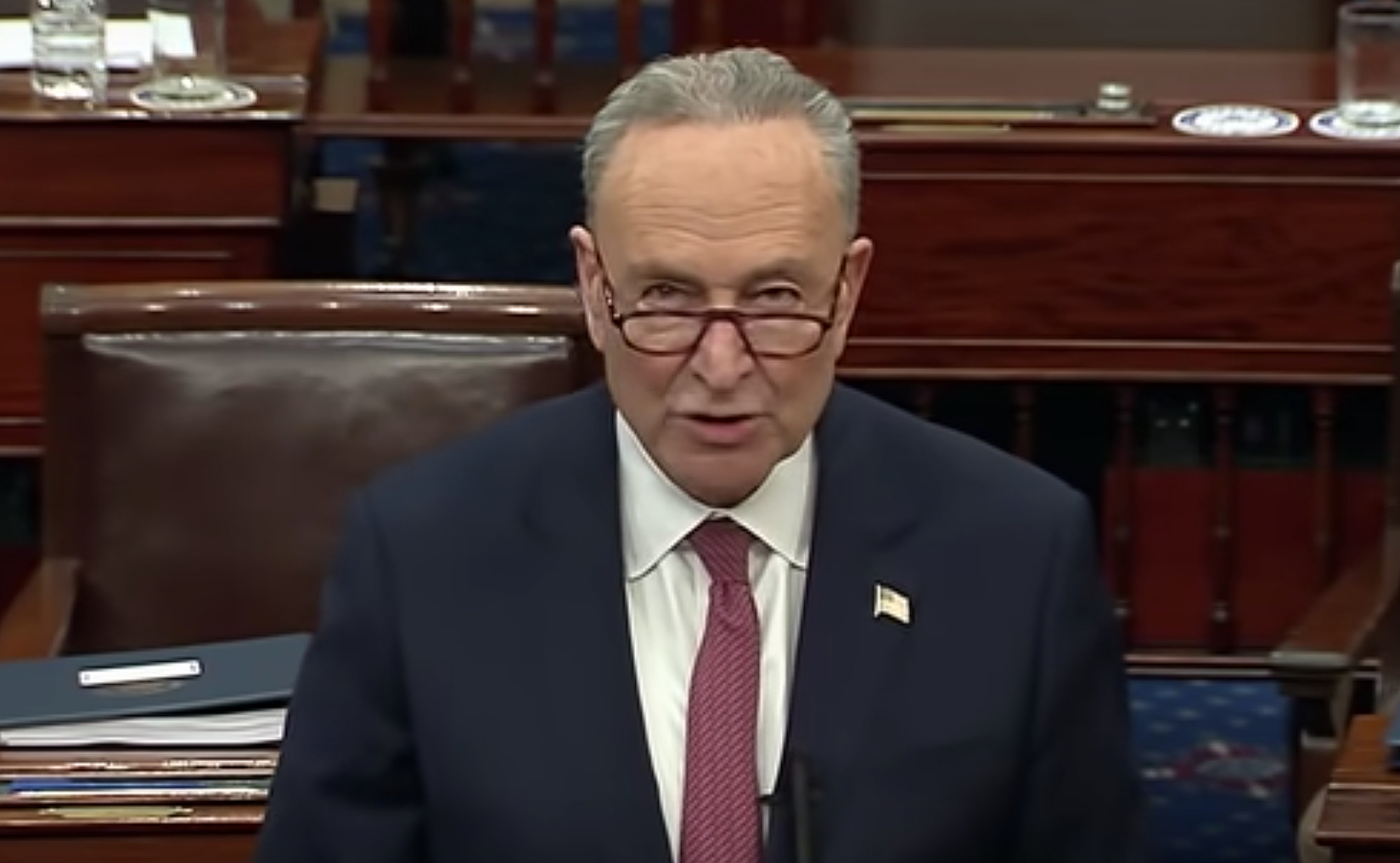
But a two-thirds majority (67 votes) was needed to convict the sociopathic Mar a Lago Beast. And so once again, due to the spineless, soul-less cowardice of red-state Republicans (even those who are planning to retire or aren’t facing re-election for another four to six years), Trump skates. The vote was 57 to 43 to convict.

Trump statement: “It is a sad commentary on our times that one political party in America is given a free pass to denigrate the rule of law, defame law enforcement, cheer mobs, excuse rioters, and transform justice into a tool of political vengeance, and persecute, blacklist, cancel and suppress all people and viewpoints with whom or which they disagree.”

Republican North Carolina Senator Richard Burr voted to convict — a surprise.

Read more

21st Century Fizz Whizz

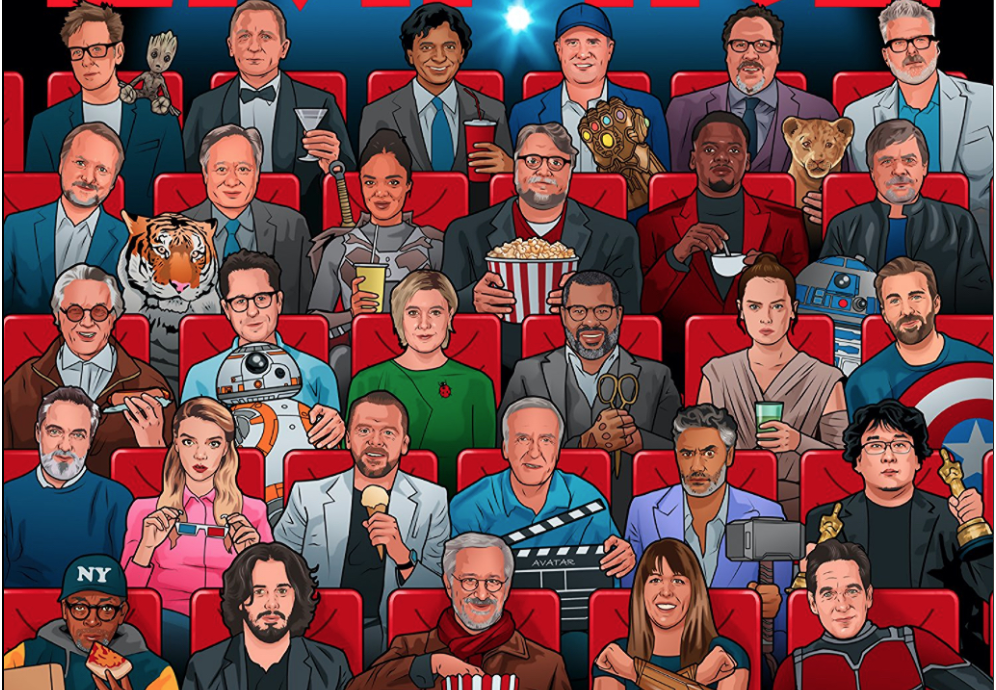
The banner headline on the March issue of Empire, which has been on sale for three weeks, teases “The Greatest Cinema Moments Ever.” Which, of course, is bullshit. The actual content (37 pages) could be more accurately described as “Edgar Wright‘s Favorite Mindlowing Holy-Shit Movie Moments Over The Last 20 Years.”

The epic journey of cinema from the dawn of the sound era to New Year’s Eve 1999 is pretty much ignored. But that’s the Empire readership for you — the ’90s are the good old days, memories of the ’80s are fading fast and anything before the Ronald Reagan era is Paleozoic. That’s Wright for you also — a 46 year-old director who knows all about the 20th Century landscape (and all the joy, pain, anxiety, struggle and exhilaration of that convulsive century) but who thinks about movies only in terms of (a) bang-boom-pow-CG-fizz-whizz for movie nerds and more specifically (b) “Jesus, that was so fucking iconic!” and (c) “My God, that was one fucking kewl adrenaline rush!”

The cover faces are said to include Steven Spielberg, Tessa Thompson, Patty Jenkins, Jordan Peele, Taika Waititi, Paul Rudd, Guillermo del Toro, Chris Evans, Simon Pegg, Daniel Kaluuya, M. Night Shyamalan, Kumail Nanjiani, George Miller, Greta Gerwig, Kevin Feige (pronounced FAYgee), Christopher McQuarrie, Joe Russo, J.J. Abrams, Bong Joon-ho, David Yates, Daisy (“Cary who?”) Ridley, Joe Cornish, Anya Taylor-Joy, James Gunn, Bill Hader, Alfonso Cuarón, Walter Hill, Rian Johnson, Spike Lee, James Cameron, Lily James, Robert Zemeckis, Ang Lee, Jon Hamm, Daniel Craig, Jon Favreau, Sam Mendes and Mark Hamill. But maybe not.

HE takes exception to the notion that Spike Lee, a serious scholastic movie buff, would watch a film within a packed house (remember packed houses?) while eating a greasy pepperoni pizza. Forget the Do The Right Thing reference — is there anything more rancid than stinking up the joint with the steamy smell of heated pepperoni while chewing and slurping and smacking his lips? I’m not kidding — only animals eat pizza during a film.

Sidesteppers

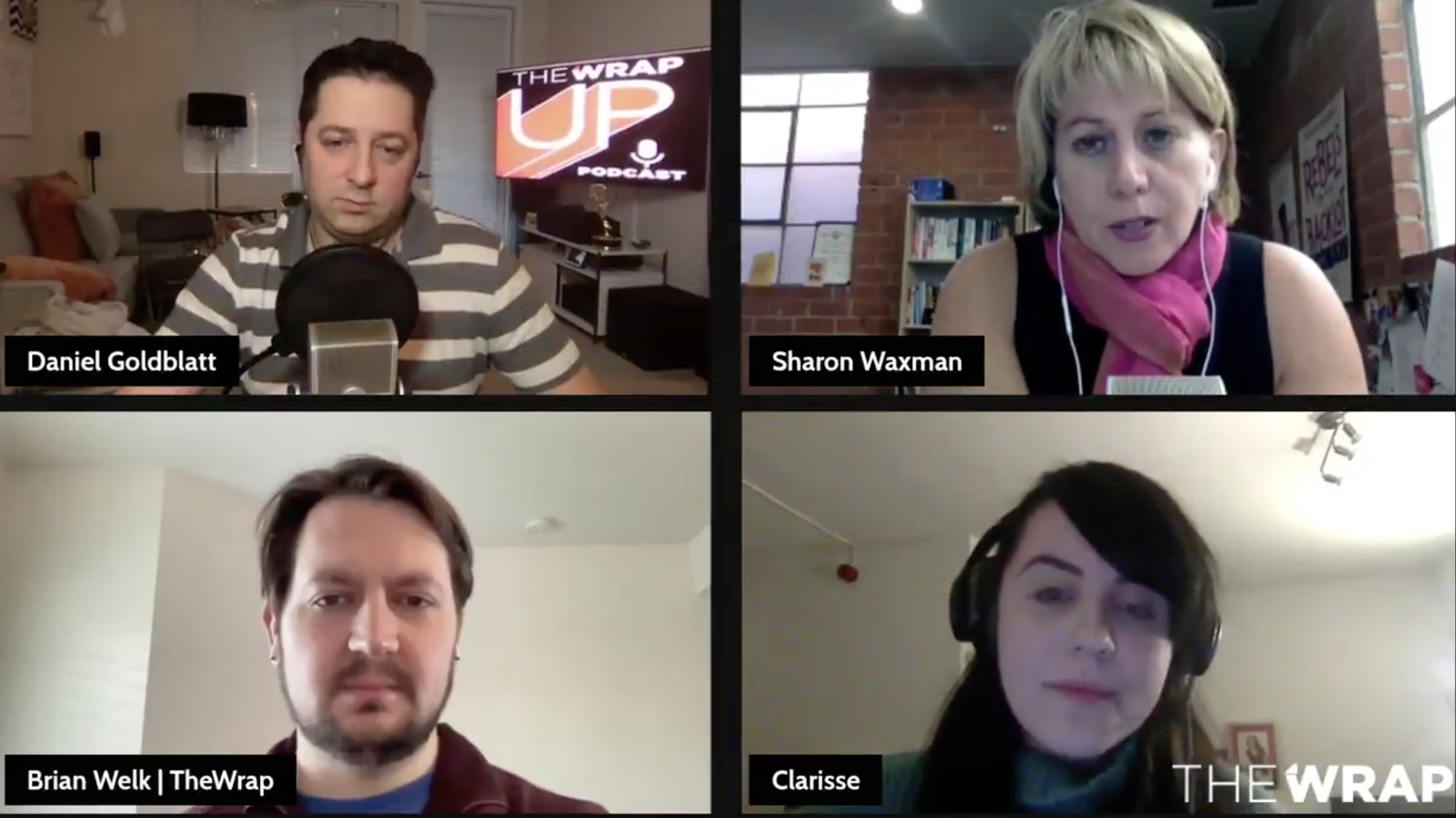
If you want to hear four film journalists — TheWrap editor Sharon Waxman, Independent film critic Clarisse Loughrey. Wrap assistant managing editor Daniel Goldblatt and Wrap reporter Brian Welk — totally tiptoe around the National Society of Film Critics having called on Variety to remove an apology it added to a review of Promising Young Woman and afford critic Dennis Harvey a bit more respect…if you want to hear four people dodge this issue like their lives depend on it and say almost nothing of substance, please click on the embedded link (“Summer of Soul Director Questlove”) and go to the 28:20 mark.

Waxman doesn’t tiptoe as much as the other three, but they mostly seem to feel that Harvey misunderstood the film and expressed himself inelegantly — that, to them, is the main issue. Otherwise they have zip to say about Variety undercutting Harvey and totally groveling before Mulligan and Focus Features, etc.

Clarisse Loughrey: “[I was] a little dismayed as a woman…I do think that we have to give room to women’s concerns about [Harvey’s] review….I did take issue with [it] although not in the sense that something should be done about this.”

Will you listen to her? Loughrey almost believes that Variety‘s 11-months-later apology was the right thing to do, and that Harvey was guilty of an actual mistake in perception. This is exactly what the NSFC didn’t say, of course, but nobody points this out to her.

I’ve said repeatedly that I don’t agree with what Harvey seemed to be saying in the review, and that relative hotness standards have nothing to do with sexually predatory behavior by young males, and that Mulligan’s dry, stylized performance was chilly but compelling.

Mulligan didn’t ask for an apology. Variety offered one willy-nilly after she mentioned her displeasure with a certain paragraph in mid-December ’20 to N.Y. Times award-season columnist Kyle Buchanan. If Variety editors had an issue with that paragraph they should have addressed it with a counter-review or an editorial after it first appeared in January ’20. But they didn’t say or do anything for a full 11 months.

30 Best Films of the ’80s

Cinematically speaking the ’80s was a big comedown decade — a time of relative shallowness, the end of the glorious ’70s, the flourishing of tits-and-zits sex comedies, the unfortunate advent of high-concept movies, a general climate of cheap highs + terrible fashion choices (shoulder pads, big hair), flash without substance plus Andrew Sarris writing that “the bottom has fallen out of badness in movies,” etc.

As we speak World of Reel‘s Jordan Ruimy is polling the usual suspects for their top ’80s picks, but I’m going to take a mad stab and pick some faves off the top of my head.

What makes a great ’80s film? Not just a relatable, well-crafted story but one that delivers (a) irony, (b) tangy or penetrating flavor, (c) the combination of intriguing characters and perfect acting, and (d) a compelling social echo factor…a mode of delivery that only portrays but sees right through to the essence of what was going on during this comparatively shallow, opportunistic, Reagan-ized period in U.S. history.

And so Hollywood Elsewhere’s choice for the Best (i.e., most arresting and perceptive) Film of the ’80s is — I’m perfectly serious — Paul Brickman‘s Risky Business. Because it’s (a) perfectly (and I mean exquisitely) made, and (b) because the ’80s was when everyone in the culture finally decided that the United States of America was a huge fucking sales opportunity and whorehouse, and that it was all about making money any way that could happen and fuck the consequences, and this movie, focused on a naive but entitled young lad fom Chicago’s North Shore and his smug, droll friends, nails that mindset perfectly. And — this is the master-stroke aspect — Brickman presents these kids as cool, laid-back and ironically self aware.

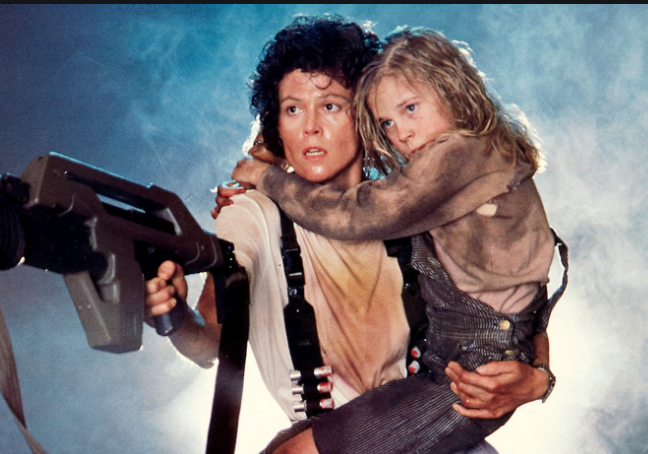
Here are the rest of my top ’80s picks, in no particular order and with the criteria being not just craft and charm but social resonsance: 2. Adrien Lyne‘s Fatal Attraction; 3 and 4. Peter Weir‘s Witness and Dead Poet’s Society; 5, 6 and 7. Woody Allen‘s Crimes and Misdemeanors, Hannah and Her sisters and The Purple Rose of Cairo; 8. Alan Pakula‘s Sophie’s Choice; 9 and 10. Sidney Lumet‘s Prince of the City and The Verdict; 11. David Lynch‘s Blue Velvet; 12. Oliver Stone‘s Platoon; 13. Spike Lee‘s Do The Right Thing; 14. Francois Truffaut‘s The Woman Next Door; 15 and 16. Stanley Kubrick‘s The Shining and Full Metal Jacket; 17 and 18. Brian DePalma‘s Scarface and The Untouchables; 19. Michael Mann‘s Thief; 20. Ridley Scott‘s Blade Runner; 21. Alain ResnaisMon Oncle d’Amérique; 22. Albert BrooksLost in America; 24. Alex Cox‘s Repo Man; 25. John McTiernan‘s Die Hard; 26. Martin Scorsese‘s The Last Temptation of Christ; 27. James Cameron‘s Aliens; 28. George Miller‘s The Road Warrior; 29. Steven Spielberg‘s E.T., the Extra Terrestrial; 30. John Carpenter‘s They Live.

Oh, wait, I forgot Lawrence Kasdan‘s Body Heat and The Big Chill…make it 32.

I’ve also forgotten The Hidden, Drugstore Cowboy, Raging Bull and Local Hero… make it 36.

Read more

Remember “Minari”?

Lee Isaac Chung‘s Minari premiered during the 2020 Sundance Film Festival. The well-reviewed film has since collected many award nominations, and is finally opening today (2.12). I reviewed it on 10.30.20 — here are portions of what I wrote:

A hard-knocks family drama about a South Korean family trying to succeed at subsistence farming in 1980s Arkansas, Minari qualifies as a “modest” Spirit Awards thing. And yet something about Steven Yeun’s complex character (i.e., Jacob) and performance really got to me.

I’m speaking of a proud, obstinate man determined to make a stand and not be pushed around by bad luck. In moments of stress and self-doubt he’s clearly weighing two ways of responding to the situation. He may have chosen the wrong path, but he’s determined to stick to it regardless. That makes him a possibly tragic figure and definitely an interesting one.

I’m not sure if Yeun’s touching performance will yield a Best Actor nomination, but it could. Or should I say “should”?

A while ago Variety‘s Clayton Davis was all excited about the possibility of Yeun possibly becoming the first Asian actor to be Oscar nominated for a lead role. That’s the wrong emphasis. Yeun has given a very strong and sad performance in a pretty good film, and he might snag a Best Actor nom for his trouble. But his South Korean heritage should be anecdotal, not a cornerstone of his campaign. Wokesters see it differently, of course.

I loved the grandmother (Youn Yuh-Jung) and the two kids (Alan Kim, Noel Kate Cho). Especially the little boy.

And Paul (Will Patton), a flaky but good-hearted Jesus freak whom the somewhat insensitive Yeun doesn’t sufficiently respect. I dislike Christians for their evangelical leanings and support of Donald Trump, but if I was acquainted with one and he/she offered to pray for me, I would respond with respect and gratitude. Because such a gesture would mean a lot to them.

Jacob’s wife Monica (Han Ye-ri) is a good person but not exactly a portrait of steadfast marital support. She has this shitty, dismissive “I don’t like this” attitude from the get-go. They’re in a bad marriage.

I didn’t get the water situation. Jacob has bought (or rented?) a place with no water supply or sewage system? Isn’t is super-expensive to install your own sewage system and septic tank? Jacob presumably buys his own water heater, but in one scene he doesn’t have $500 to pay a professional well digger? Jacob has drilled his own well with Patton’s assistance, but the water supply is limited — not enough to nourish the crop and also provide shower water, kitchen water and whatnot.

Read more