I Could Write A Book…

…about the whole 40-year saga that includes Hollywood Elsewhere, which is now 16 and 1/2 years old… the whole exciting, up-and-down, anxiety-fraught journey of pain and glory, euphoria and dogged reporting, intrepid workaholism and, yes, spotty alcoholism until the dawn of sobriety on 3.20.12…the whole magilla, 40 miles (or was it 500 miles?) of alternating pavement and potholes.

I know that “life of an exceptional movie maniac” books only sell on the coasts, and only to film devotees at that. But I have the whole eccentric oddball thing to work with, and a pattern of having gotten into trouble from time to time. So there’s a little bit of a flirting-with-danger element, a spritz of of James Caan‘s character in The Gambler, that line of country. The brief career blow-ups would be so much fun to recall.

Plus four or five decades worth of great stories, not to mention all the angry, painful and lonely upbringing-in-a-suburban-gulag stuff plus the usual sex, movies, drugs and rock ‘n’ roll material that was par for the course among young lads in the ’70s and ’80s. It’s the charge, the bolt, the buzz…the sheer fuck off-ness of it all.

Every half-talented writer has at least one decent book in them. I’ve got a bountiful tale of lust and incaution, and I could weave in 30 years of reporting, reviews and trend pieces going back to ’91 or thereabouts. Plus fights with my father, getting held on a suspicion of murder beef in South Carolina, a nearly fatal wipeout in rural Wisconsin, throwing up while leaning out of a Chevy Impala on a quiet road in Southport, the Great LSD Boston Freakout and the discovery of “the fear”…all of it.

Would I buy a book like this (i.e., in the vein of Owen Gleiberman‘s excellent “Movie Freak” only with a slightly crazier arc)? Yeah, but I’m atypical. What about an Average Joe or Jane who watches one or two movies a month, if that, and occasionally reads celebrity bios and mostly gravitates toward fiction when he/she wanders into a book store? What about them?

Sales would most likely be modest, be honest, but I could at least dine out on the book once it’s finished and circulating. Plus yesterday I came up with a title that I know would pique the interest of the above-described consumer:

LAST HONEST ASSHOLE: Life of an Intemperate Hollywood Columnist.

I would pick that book up, for sure. So would quite a few others. The first three words would be meant ironically, of course — okay, irony plus a few slivers of truth. There would also be those (the David Polands, the wokesters) who would take it literally, and that’s fine.

It’s half-written already. Much of the work to come would just be enhancing, re-arranging, re-writing, re-editing and so on. Not a difficult effort.

There have been a ton of “my life as a savvy film maven” books, but this would have more of self-doubting, self-flagellating, “who am I really?”, life-is-short-and-hard-and-then-you-die quality mixed with torrents of film fanaticism and blah blah blah.

I don’t have to write this, but I could easily bang it out. And I’d certainly like to.

Another “Third Man” Issue

May I confess something else about Carol Reed‘s The Third Man (’49), an opinion that no film buff is allowed to hold, much less convey? A view that only a very bad person would share in the first place? An opinion so outre and unmentionable that…well, I’ve said it.

I don’t like the damn zither music. I’m sorry but it’s always irritated me. Zither music is fine for a scene or two, but it’s heard through the whole film and after a while you feel worn down, and it’s like “enough already.”

I recognize, obviously, that the zither is The Third Man and vice versa. It’s the signature element, much more so than the ferris wheel or the deeply shadowed sewers or the cuckoo clock or that final scene in which Alida Valli walks right past Joseph Cotten outside the cemetery.

Read more

Anti-Mask Assholery vs. Miami Pepper Balls

CNN: “Miami Beach Police fired pepper balls into crowds of partiers and arrested at least a dozen people late Saturday night as the city took extraordinary measures to crack down on spring breakers who officials have said are out of control.

“The aggressive enforcement actions came just hours after Miami Beach Mayor Dan Gelber declared a state of emergency and set an 8 p.m. curfew, saying the crowds that have descended on the city recently are ‘more than we can handle.’

“‘Too many are coming, really, without the intention of following the rules, and the result has been a level of chaos and disorder that is just something more than we can endure,” Gelber told CNN’s Ana Cabrera.

“On Saturday night, hundreds of mostly maskless people remained in the streets well after the 8 p.m. curfew. With sirens blaring, police opened fire with pepper balls — a chemical irritant similar to paint balls — into the crowd, causing a stampede of people fleeing.

“More than 1,000 people have been arrested in Miami Beach since February 3 as spring break travelers have come to the city, Miami Beach City Manager Raul Aguila said during an emergency commission meeting Sunday. Of those arrests, more than 350 have been felony arrests, he said.

“Both Aguila and Gelber said the spring break crowd is not typical and they don’t believe it’s mostly students traveling down.

“‘These are individuals coming into the city…to engage in lawlessness and an anything-goes party attitude,’ Aguila said.

“While the city had been dealing with large crowds, Aguila said, things changed Friday when thousands gathered on Ocean Drive. There were no special events planned, and none of the people were patronizing restaurants or establishments, he said.

“‘It looked like a rock concert — you couldn’t see pavement, you couldn’t see grass — all you could see was wall-to-wall people,’ he said.

“Gelber said the city is an appealing destination for travelers due to its good weather and open businesses, but it is still dealing with a pandemic. There are still 1,000 infections reported daily, and 50 to 100 people checking into hospitals each day in Dade County, Gelber said.}

Underwhelming Characters

The usual deciding factor in whether or not a viewer likes a film or not is the presence of — major revelation! — likable or at least engaging characters. (And I’m saying this knowing, as we all do, that Jack Nicholson is “likable” in The Shining.) The opposite is also true, of course. If a good film has an especially dislikable major character, viewers are usually (or at least often) inclined to dismiss the film as a whole.

Joseph Cotten‘s Holly Martins has always been my main…actually my only Third Man stumbling block. I’ve been watching Carol Reed‘s 1949 classic since I was a teenager (my father turned me on to it), and time and again Martins has kept me from truly enjoying this otherwise brilliant noir.

Orson Welles‘ Harry Lime is the charming, charismatic headliner, Alida Valli is the most mysterious, Trevor Howard is unassumingly droll and matter-of-fact, and Cotten is a pill — a dour, uncomprehending, sour-faced drag.

Today I happened upon a commentary track on Studio Canal’s The Third Man Bluray, and two great directors, Tony Gilroy and Steven Soderbergh, kicking it around:

Gilroy: But Joseph Cotten….he’s empty…
Soderbergh: He’s a really unique presence in this. He came from the Mercury Theatre, and wasn’t really in movies before Welles put him in movies. [And] I always liked him enormously. He was perfect for this…this kind of part. It’s very possible, in a sense, to cast somebody [for this role] with too much personality.
Gilroy: He has to be lost and he’s just…so lost. It’s not [a matter of his] being sympathetic or unsympathetic. He’s just a shabby character all the way around, and his empty…his naivete and emptiness. It would be hard to take an established movie star with a really strong, established personality…
Soderbergh: And have him be that.
Gilroy: Either have him deliver that performance, ask him to do that, or find it along the way and have it work. But [Cotten] is so…he’s such a slug.

Please name some significant characters who are such a drag to hang with that they damn near kill otherwise good films.

Read more

Rough Sledding

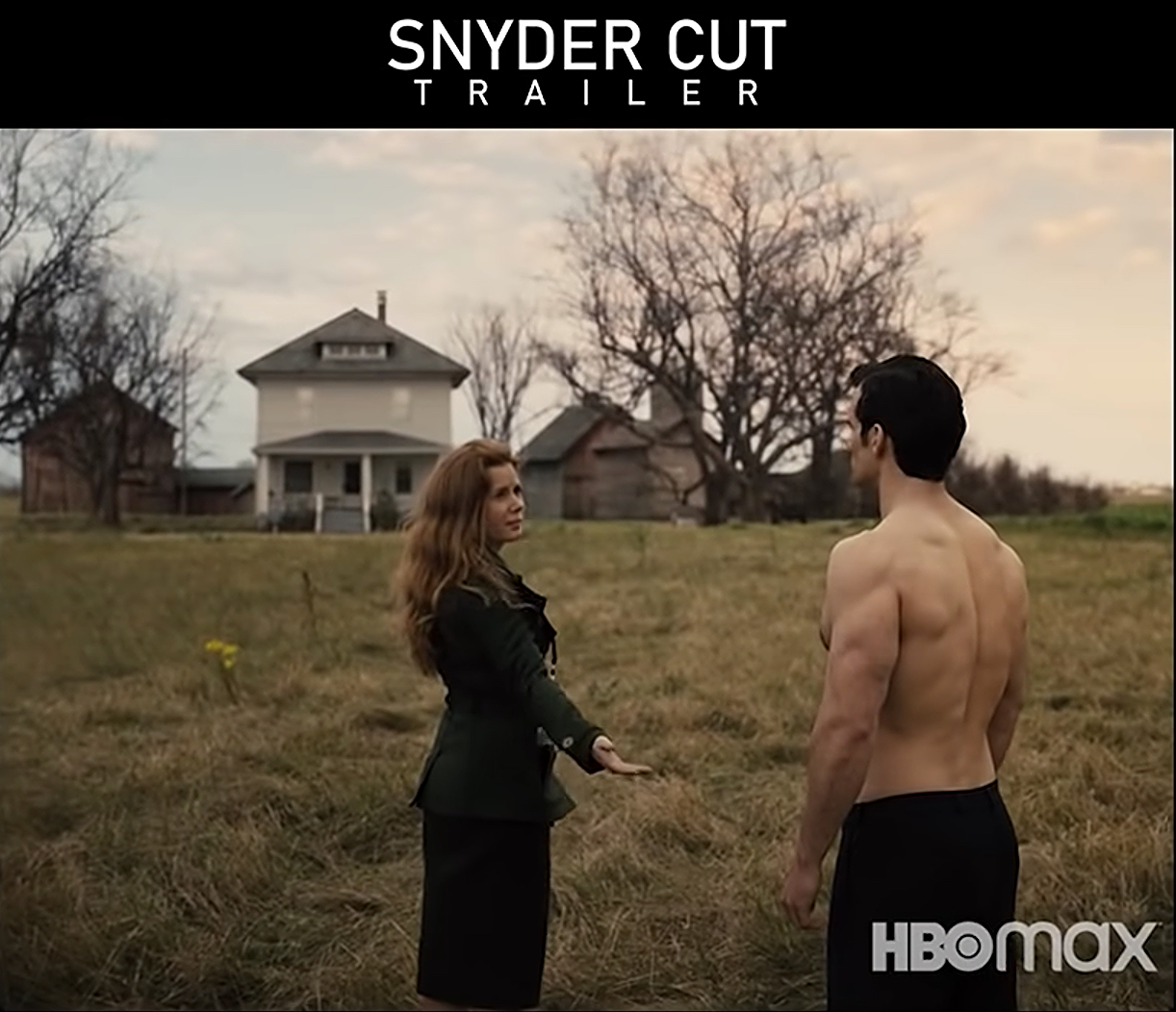
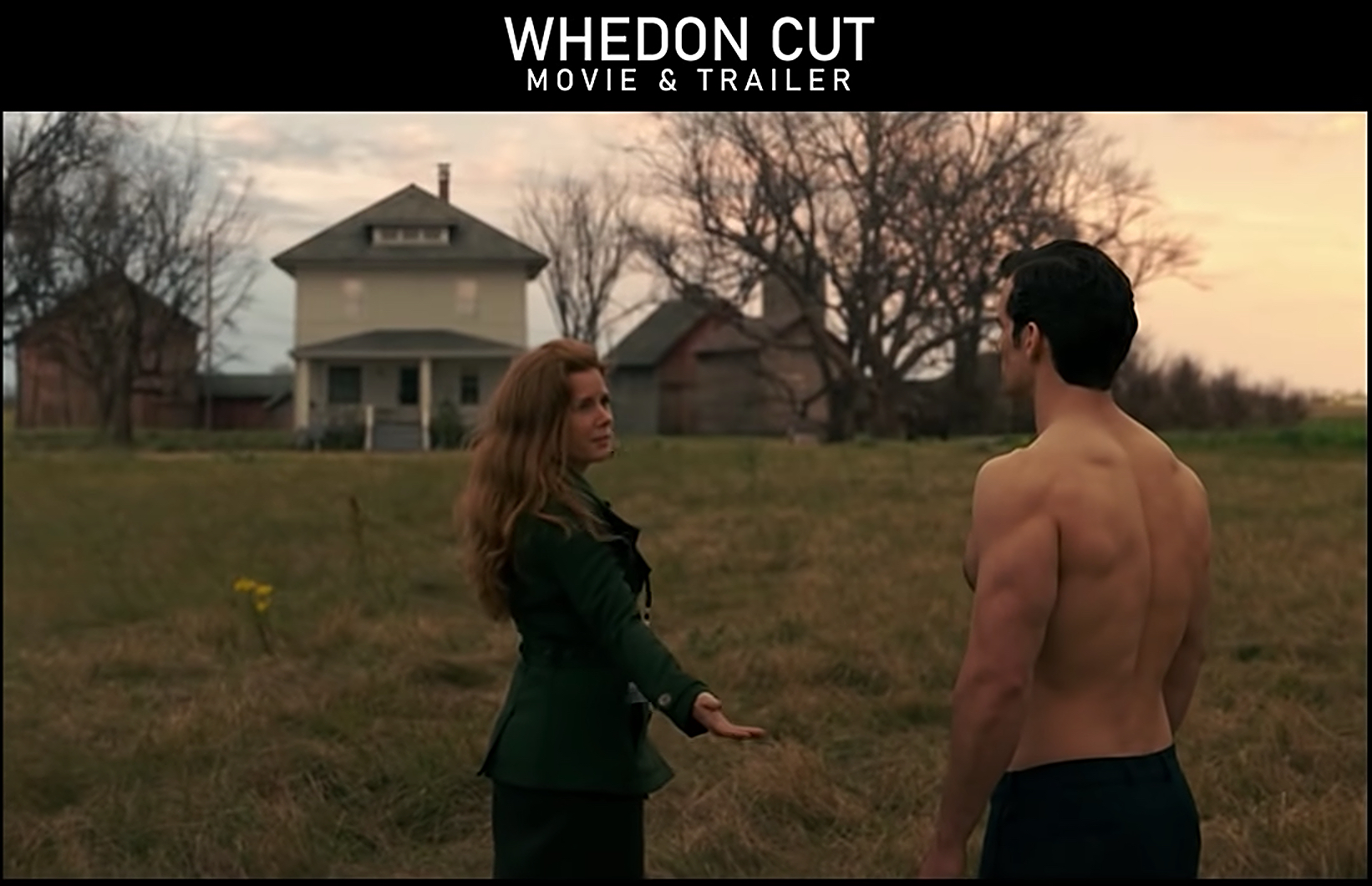
Because of my intense dislike for the bombastic Zack Snyder and the generally morose and haunted DC superhero gang and all their bullshit issues that I don’t care about, my only way into Zack Snyder’s Justice League was the 1.37 aspect ratio, which I dearly love. But I was quickly stopped in my tracks enough when I noticed the desaturated color scheme. And I said to myself, “Okay, kind of an arty deal but otherwise why? How does it improve matters exactly?” It struck me as affected, and I began to lose interest. So I quit around the 40-minute mark. Which means I have another 200 minutes to go before I finish the damn thing. God help me.

Whack-A-Mole

I’ve been trying to get rid of the HE pestilence known as “George” and previously as “Arpin Lusene” for months now. I’ve used Disqus protocol to ban him (I’ve successfully banned scores of ugly commenters over the years), but somehow he always re-appears. Every day I delete what he posts, and hours later he returns unfazed. Some days I won’t delete his posts but label them as spam, and once again he’s right back in the thread. There’s apparently a way to erase him for good, and that’s to “shadow ban” him. Except to do that I’d have to join Disqus Plus for $11 a month and $132 annually. Just to get rid of one toxic jerk.

Tatiana suggested reporting him to Disqus as a harasser, which I did. Maybe they’ll get back to me about this. It’s very annoying.

If anyone can suggest a remedy, please get in touch. I know this psycho’s email address, and I wrote him the following this morning: “Go away, leave this site and never return. You’re NUTS, man! If you don’t leave I will post your email address. I have already filed a harassment complaint against you with Disqus. Other aggressive measures are an option. Scram!”

Read more

High Priestess of Vapid

Maher again: “72% of GenZ say they’d like to be an online celebrity, and 54% of GenZ and Millennials say they would become an influencer, ‘given the opportunity’. If, you know, it wasn’t too much work, like making a sex tape. Speaking of which…

[Starting at 4:40] “I can’t be in this time when we’re madly on the hunt for anything with the slightest whiff of white privilege, and then feel badly for…Paris Hilton? Quite the reverse — maybe it’s Paris who owes us an apology. For being Patient Zero for today’s vapid, entitled, famous-for-nothing culture. She kind of birthed the world in which every 15 year-old with a phone aspires to be an influencer. She’s the face that launched a thousand little shits.

“Paris led directly to the Kardashians and then to housewives and teen moms and Heidis and Snooki…a generation of young girls who look up to the ‘role models’ who managed to turn an unenthusiastic blowjob into an empire. Young people who think talent…’my talent is being me! And you wanting to live my life.’ Kylie Jenner is a billionaire based on her ability to sit near a pool.”

Next Year’s Best Picture Contenders?

You can usually spot the likeliest Best Picture contenders from a pretty fair distance. Narrative, brand-name filmmakers, strong performances, woke-friendly theme, middle-class or family values, likely to be strongly promoted. By my count there are roughly 40 2021 films that could conceivably make the grade. But when you boil it all down and eliminate those are seemingly too popcorn, too genre, too weird or too indie-marginal…well, it cuts the list down.

Here’s a wild spitball roster based on intuitions, gut feelings, hairs on the back of the neck and little devils and angels sitting on either shoulder. By my count there are three films of color, and they’re all big musicals — Liesel Tommy‘s Respect, Lin-Manuel Miranda, Quiara Alegría Hudes and John Chu‘s In The Heights and, I suppose, Steven Spielberg‘s West Side Story, which is half Puerto Rican. The latter two could become contenders.

Other potential Best Pic nominees: (1) Paul Thomas Anderson‘s Soggy Bottom (9.10.21); (2)
Wes Anderson‘s The French Dispatch (Searchlight, fall ’21); (3) Andrew Dominik‘s Blonde (Netflix, fall); (4) Adam McKay‘s Don’t Look Up (Netflix, late ’21); (5) Taika Waititi‘s Next Goal Wins (Searchlight, fall ’21); (6) Paul Schrader‘s The Card Counter.

Plus the two Shakespeares — Joel Coen‘s The Tragedy of Macbeth (A24, presumably late ’24) and Robert EggersThe Northman (more or less based on the Hamlet saga, Focus, late ’21).

That’s a total of 8 plus the two musicals makes ten.

Other possibilities:

Guillermo del Toro‘s Nightmare Alley, (12.3.21); Denis Villeneuve‘s Dune (10.1.21); Sean Baker‘s Red Rocket, Edgar Wright‘s Last Night in Soho; Leos Carax‘s Annette, Apichatpong Weerasethaku‘s Memoria, James Gray‘s Armageddon Time; Jane Campion‘s The Power of the Dog; Ridley Scott‘s The Last Duel (10.15.21); Terrence Malick‘s The Way Of The Wind, Mission: Impossible 7 (11.19.21), No Time To Die (October 8)

Plus: Paul Verhoeven‘s Benedetta; Mike MillsC’mon C’mon; strong>Celine Sciamma’s Petite Maman; Mia Hansen-Løve‘s Bergman Island; Tom McCarthy‘s Stillwater; Adrien Lyne‘s Deep Water (8.13.21); Jeremy Saulnier‘s Rebel Ridge; Ruben Östlund‘s Triangle of Sadness; Steven Soderbergh‘s No Sudden; Doug Liman‘s Lockdown; Clint Eastwood‘s Cry Macho; Ridley Scott‘s House of Gucci (11.14.21).

Plus Top Gun: Maverick (July 2); The Beatles: Get Back (8.27); A Quiet Place Part II (5.28.21); Black Widow (5.7.21); The Many Saints of Newark (9.24.21); Michael Showalter‘s The Eyes of Tammy Faye (9.24.21).

What am I missing? Which of the top ten picks seems questionable?

Not Woke Enough Syndrome

Plot-wise, there isn’t a Bluray on my living room bookshelf that couldn’t be complained about by the 2021 woke mob. Bill Maher is correct — they’re almost all offensive by today’s standards. I’ll just put on a blindfold and pick at random…

Here’s one…Howard HawksRed River (’48)…a racist cattle baron from Texas (John Wayne, who vented his racist views in a 1960s Playboy interview) assembles a team of white cowboys to drive his cattle herd to Missouri, where the cattle will fetch a decent price. White guys and steers, white guys guys and steers…start to finish, no let-up. (And there were definitely Black cowboys in the Old West.) Despite the appalling history of what western white settlers did to Native Americans in the late 19th and early 20th Centuries, the natives are depicted as whooping savages looking to kill innocent whites. The one Native American character with dialogue, Chief Yowlachie‘s “Two Jaw Quo”, is described in denigrating terms to Walter Brennan‘s “Groot” character.

Here’s another…Tony Gilroy‘s Michael Clayton (’07) — a seemingly racist New York law firm (not a single prominent POC attorney in sight) is defending a chemical manufacturer called U-North in a multibillion-dollar, six-year-long class action lawsuit, the company having been accused of killing numerous users of a weed killer. George Clooney‘s titular character, an Irish “fixer” with a Black secretary but without Black friends or colleagues (and who regularly plays in a downtown, mostly all-white-guy card game), is told to handle an embarassing episode involving a white colleague, Arthur Edens (Tom Wilkinson)…enough.

One more…Michael Mann‘s Collateral (’04) — In a story that works as an across-the-board metaphor for white exploitation of Black victims, a Los Angeles cab driver of color is more or less forced by a sociopathic (and possibly racist?) white male assassin to passively participate in a series of murders. Worse, the white sociopath shoots an older man of color in a jazz club and thereby traumatizes the cabbie. Still worse, the sociopath charms the cab driver’s mother in a hospital room and thereby creates feelings of rage and resentment in the cabbie. Finally the white sociopath forces the lethargic cab driver to wake up, man up, save the life of a beautiful but vulnerable U.S. attorney who’s taken a shine to the cabbie, and to basically take charge of his life. Basically a film about trauma, terrorism and heartlessness, totally unmitigated by the climactic killing of the white sociopath by the cabbie, and the body of the dead assassin left sitting on a metro car and just making laps around the city, nobody noticing or caring. None of this matters — what matters is that a black cabbie is totally pushed around by a white killer.

Bag of Gas Analysis

Critics and audiences live on separate planets. And critics live within and certainly write for their own cloistered community. Joe and Jane Popcorn know this and regard their opinions accordingly. There are several independent, X-factor, emotionally attuned, basic instinct critics and columnists (like myself), but most critics wear the same monk robes and the same open-toed sandals and drink the same goat’s milk.

Plus critics tend to herd together for safety’s sake. Right now that means most of them are bending over backwards to praise films of a woke caste. Everyone knows or at least believes this. Nothing new here.

I’ve just read through a 3.15 report by statistician Stephen Fellows, titled “Are Film Critics Losing Sync With Audiences?” The answer, boiled down, is “yeah, but not actually or not altogether, or at least not so you’d notice.”

A 3.19 Daily Mail summary of Fellows’ report, written by Adam Schrader, concludes the following: (a) Fans are more likely to agree with films rated highly by critics than those rated poorly by critics; and (b) Fellows’ study concludes that a “de-synchronization” between how fans and critics review movies has taken place consistently over the past 20 year..

Fellows also notes that “factors that influence the discrepancies are a film’s budget and genre.” This seems to indicate what most of us have known for decades — audiences are more generally more supportive of tried-and-true familiarity — and therefore more willing to trust and submit to large-budget genre films than critics. Likewise critics tend to be more accepting or supportive of small-budget indie and non-genre films. Is anyone shocked?

Near the end of Fellows’ report, he states the following three conclusions:

“(1) There is a strong correlation between the average scores of critics and film audiences; (2) However there was never been complete synchronization; and (3) there has been a de-synchronisation taking place fairly consistently over the past two decades.”

So critics and audiences tend to agree about the good and the bad, but they’ve nonetheless been drifting apart for the last 20 years? What does that even mean? Fellows report is tell us nothing we don’t know, except he’s injected a tone of fuzzy vagueness.

HE default #1: “Most critics tend to be dweeby, cerebral, analytical-to-a-fault types. You can tell that by just looking at some of them. Guys who never got the girl in high school — portraits worth a thousand words. And for the most part they process films in cerebral, academic terms — as objects of study rather than journeys.

“Hollywood Elsewhere has always gotten the feeling thang, of course, along with a relative handful of top-dog critics — Ann Hornaday, Owen Gleiberman and Todd McCarthy, not to mention the late Roger Ebert, Pauline Kael and Andrew Sarris. An old truism still holds. If you suppress or sidestep the emotional current, you’re missing the essence of a film or certainly a good portion of it.” — “What 90% of Critics Don’t Understand,” posted on 4.26.20.

HE default #2: “[There’s long been] an elite cadre of ivory-tower snobs who have done and are continuing to do their level best to convince Average Joe ticket-buyers to be highly suspicious of critical opinion, if not utterly dismissive of it.

“RT & Metacritic ratings can certainly nudge them or intensify already established feelings or suspicions, but it’s rare when a tide is totally turned. Silver Linings Playbook was a rare example of a movie that really turned and gathered a following after an initial ‘naaah, don’t think so’ attitude on the part of younger women. There are exceptions, thank God, but mostly audiences can ‘smell’ something they want to see or vice versa.” — posted on 8.3.17.