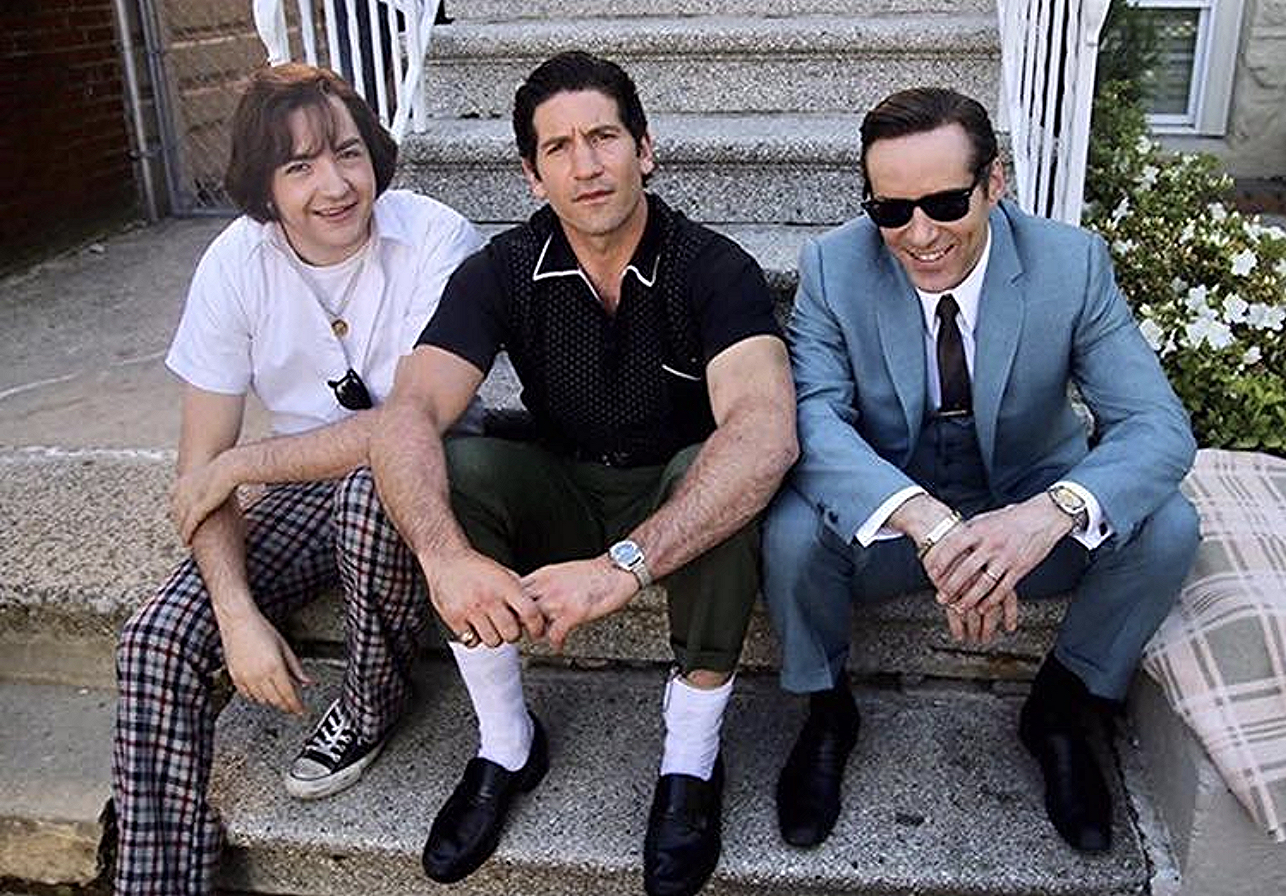
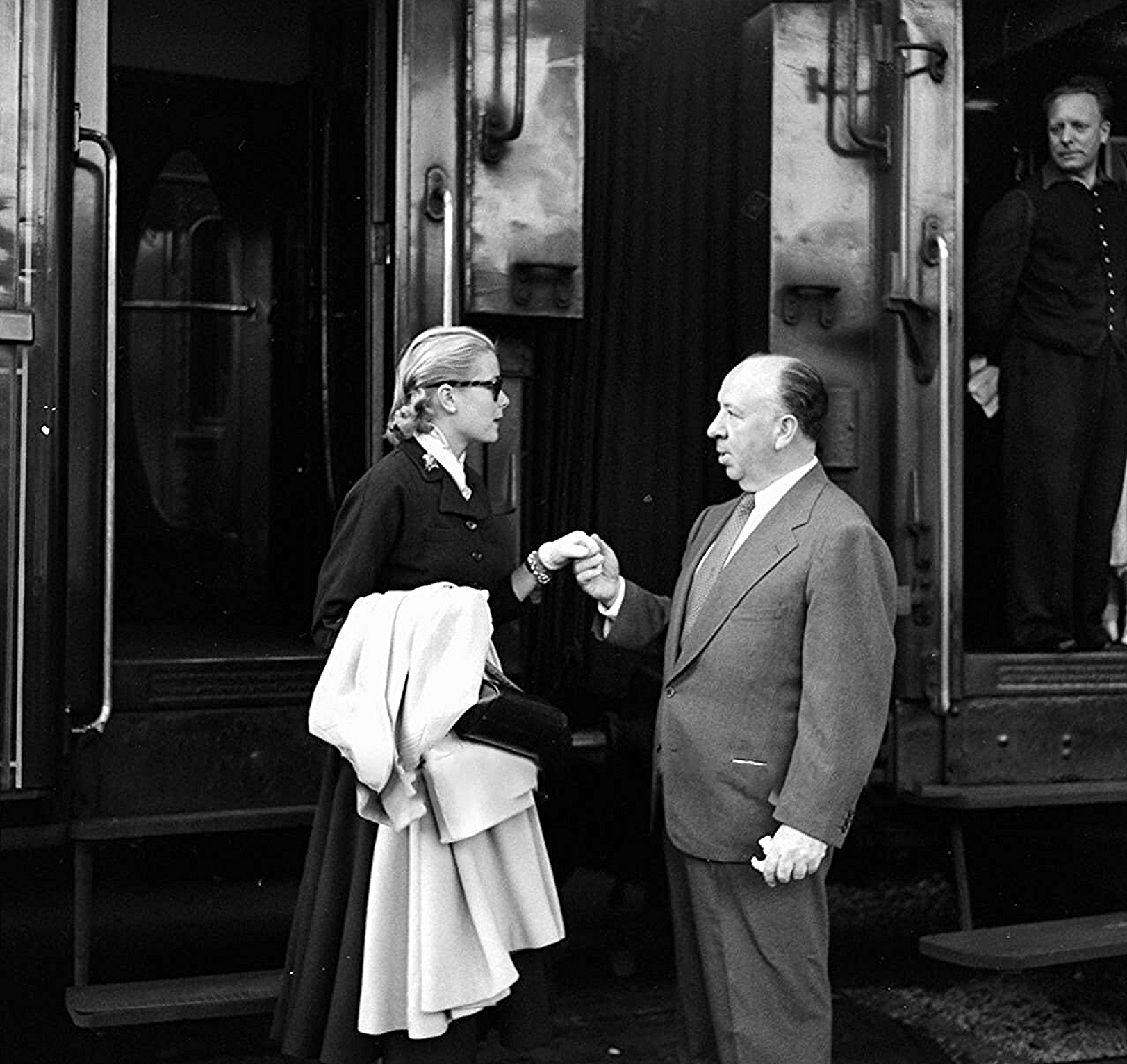
An Affair To Remember

When I first posted this recollection of a mid ’70s affair I was attacked (what else?) for having been a profligate libertine. I replied as follows: We’re living through a fairly conservative era right now. A whole lotta scolding going on. But in the mid ’70s there was a distinction between what was regarded as casual infidelity and the serious, hurtful, real-deal kind. It may sound cavalier in today’s realm, but middle-class sexual mores were different in those days. A randy current.

“My indiscretion was admitted to, duly regretted, apologized for. A subsequent casual infidelity happened on her end the following year, and I was in no position to do anything but accept and roll with it. (And it certainly doesn’t matter to me currently.) By ‘70s standards casual infidelity wasn’t necessarily a knife in the heart or a catastrophic deal-breaker. People were scampy. A different time.”

Originally posted on 7.12.19 on HE Plus: “I became an amateur stage actor between ’75 and ’76, when I was living in Westport, Connecticut. My big move to Manhattan was about a year and a half off. The usual nocturnal distractions prevailed, of course — carousing, partying, movies. But I also wrote program notes for the Westport Country Playhouse Cinema. And I acted in front of paying audiences.

“First I played the timid ‘Dr. Spivey’ in a Stamford Community Playhouse production of One Flew Over the Cuckoo’s Nest (which I mentioned to Ken Kesey when I interviewed him in Park City in ’98 or thereabouts), and then a macho backwoods type named ‘Marvin Hudgens’ in a Westport Playhouse production of Dark of the Moon.

“Sandra, a pretty married woman of 34, was also cast in Dark of the Moon. She and hubby Burt, a balding oil-company attorney, lived in a nice clapboard colonial not too far from the playhouse. She was one of those ‘passionate with a capital p’ types — a lover of theatre, intense eyes, great cheekbones. Plus she was a part-time dominatrix with all the necessary gear (black bustiere, fishnet stockings, a leather cat-o-nine-tails whip, tall spike-heeled boots). Every so often she would visit Manhattan and get into scenes with submissives.

“Sandra was playing a sexy witch in Dark of the Moon, and it wasn’t much of a reach. Fierce energy, quite the firecracker.

“Anyway we ‘hit it off,’ as the saying goes. I was in a fairly serious relationship at the time, but getting away with a hot side romance (i.e., not getting caught) seemed doable. Sandra was far too attractive to ignore, and the likelihood of our affair being discovered seemed low, her being married and all. She certainly didn’t want Burt to find out.

“Plus it was the mid ’70s, which was arguably the randiest, most bacchanalian era in U.S. history, certainly in the well-off Connecticut suburbs. Random couplings were fairly routine back then. I wasn’t George Roundy in Shampoo, but I was tasting that kind of activity, at least from time to time.

“The hot-and-heavy happened in Sandra’s car, in her home in the afternoons, once in my parents home in Wilton, once in the Westport woods. We never once got a motel room or spent a clandestine weekend in Manhattan. It was always along the lines of ‘let’s meet tomorrow at 4 pm near the train station.’

“The affair went on for roughly three months, maybe four. It was hottest during the run of the play, then it moved into a less intense Phase Two. After a while Sandra started to feel more and more ill-at-ease about our being seen together. She never wanted to catch any films in the Westport or Norwalk area — too easy to be spotted.

“Then came the shocker. After one of our get-togethers at her home, Sandra told me she’d been telling Burt everything about our affair. All the details, chapter and verse. Her reports were a turn-on for Burt, she said, and it put a charge into their sex life.

“On one level I was fascinated, but on another I felt…betrayed? I understood and respected the fact that her marriage was priority #1 in her life, but I thought our little affair was between us. I was partly amused, partly perplexed and a little bit thrown. My interest kind of diminished after that. The affair was running out of steam anyway.

“Sandra and Burt left Westport and moved to Dallas two or three years later. Late ’70s, early ’80s. I remember somehow finding her Dallas number in ’82 or ’83 and calling and chatting a bit. Good to hear her voice. She was moderately happy or at least content, she said.

“A couple of hours ago I did a Google search and discovered that poor Sandra passed from cancer three years ago. Shock and sadness. She was a great lady.”
Few Critics Have Mentioned This

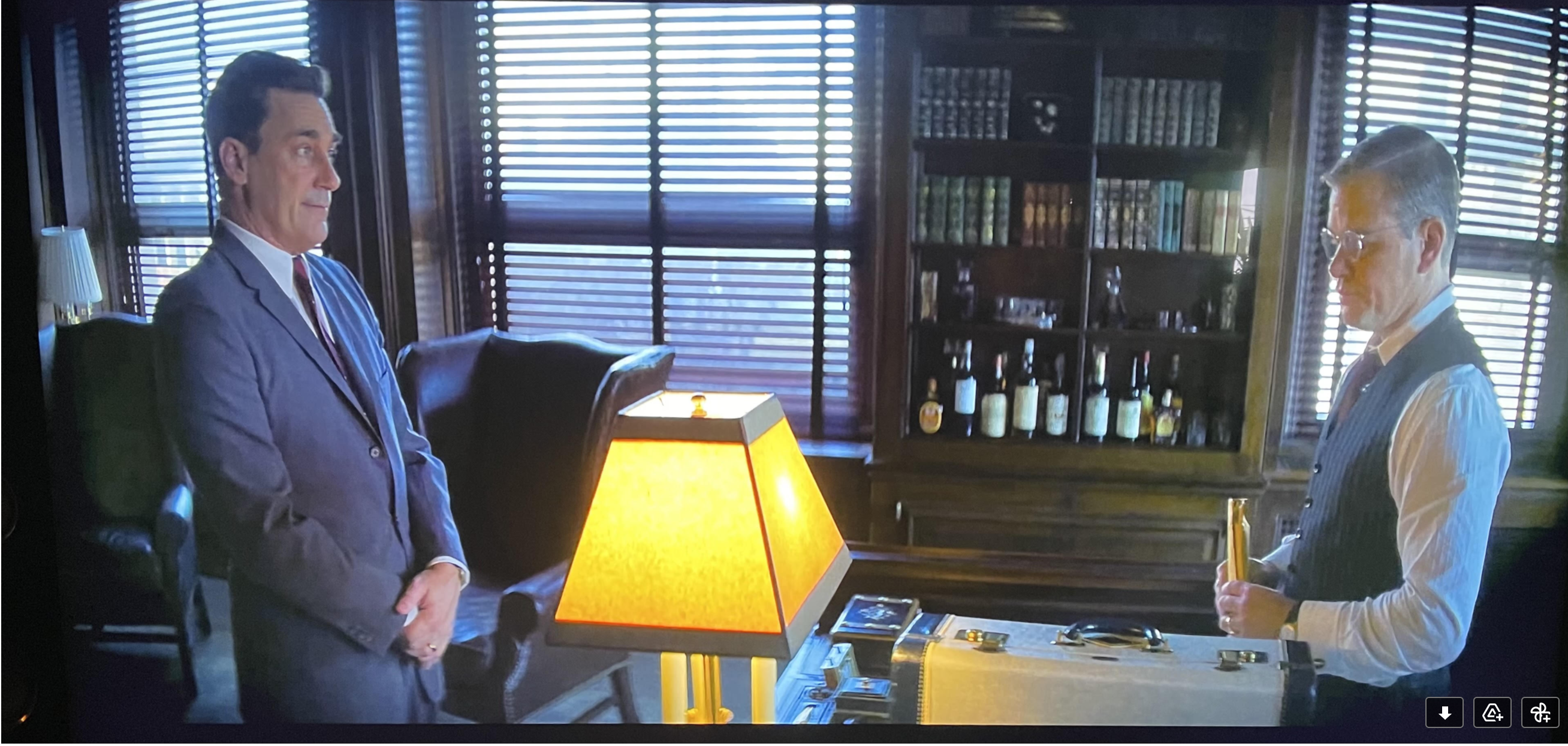
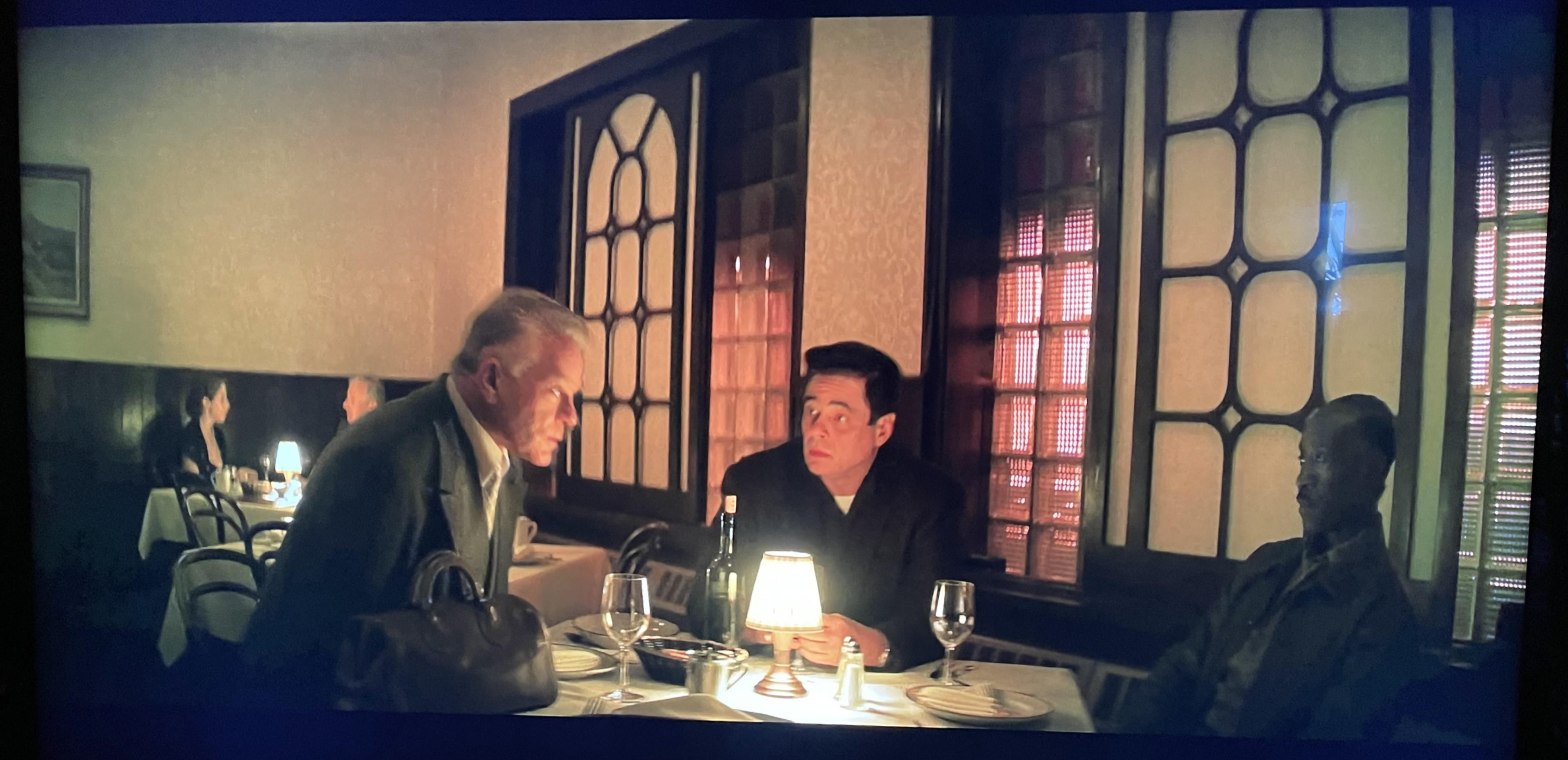
In keeping with longstanding tradition, Steven Soderbergh not only directed No Sudden Move but shot it (as Peter Andrews) and edited it (as Mary Ann Bernard). I was particularly struck by the visual signature this time as Soderbergh apparently used some kind of spherical wide-angled lens that occasionally delivers what looks like a 2.2:1 aspect ratio, and which compresses images on the sides.

In other words, Soderbergh doesn’t seem to be delivering a standard 2.39:1 (or 2.4:1) Scope aspect ratio but something closer to the slightly distorted cinematography seen in portions of Around The World in 80 Days — i.e., portions that used a spherical bug-eye lens.

The No Sudden Move visuals also struck me as similar to the distinctive framings that were seen in Alfonso Gomez-Rejon‘s The Current War, which was shot by Chung Chung-hoon. Lots of headroom and elbow room. Objects squeezed on the sides.

And yet very few critics have even mentioned this curious (or certainly noteworthy) visual approach.

Read more

Canned by Sid Geffen

Posted on 10.22.19: Sometime in early ’79 I worked as a manager or co-manager of the Carnegie Hall Cinema. It was such a fascinating and blessed place to work in that I didn’t mind being paid next to nothing. It was easily my second favorite job of my 20s, the first being a Checker Cab driver in Boston, which yielded intrigue and adventure on near-daily basis.

My employer was the late Sid Geffen, the eccentric, moustachioed real estate hotshot who had launched a not-for-profit repertory cinema company (the Center for Public Cinema), and at the time was running both the Carnegie and Bleecker Street Cinemas.

For a few months Sid was also the publisher of the Thousand Eyes Cinema Guide, for which I served as managing editor.

So I loved the CHC job and worked really at fulfilling my duties, but I was never much for math and accounting. I was eventually canned over this deficiency, although I wouldn’t say I had a cavalier attitude. I just didn’t (and still don’t) have the mentality of an exacting numbers guy.

Back in those days we sold numbered cardboard tickets at the upstairs, street-level booth, and it was my daily responsibility to insert the ticket roll under the booth desk and to note the number of the ticket when the day began, and of course the number at closing time.

Don’t ask me how this happened, but one day I put the ticket roll into the ticket-feeding device with the numbers reversed, starting high and ending low. I realized my error a couple of hours later, but by that time several tickets had been sold. I reasoned that ticket sales would simply have to be calculated in reverse order this one time. Awkward or irksome, but hardly a tragedy.

Sid didn’t see it that way. One accounting mistake would probably beget another, he figured. His exact words: “We’re going to have to terminate our relationship, Jeff.”

Sid fired a lot of people. One time a Carnegie ticket seller (female, 20something) was robbed at gunpoint, and then was hit by the exact same guy two days later. Sid fired her, figuring she was either in on it or a bad-luck Jonah.

I don’t recall Sid ever using conventional phrases like “I’m letting you go.” He had his own phrase-ology.

I recall hearing about a conversation between a fellow employee whom Sid had decided to get rid of, but was loathe to say this in so many words. Guy: “So Sid, you’re firing me, right?” Sid: “No, I’m graduating you. I’m holding you back from your destiny, and now you’re free.”

Not Half Bad

Why do I keep thinking that Steven Soderbergh‘s No Sudden Move (HBO Max, 7.1) is called One False Move? The latter is a title of a 1992 Carl Franklin thriller that starred Billy Bob Thornton. (The late Gene Siskel reportedly called Franklin’s film his favorite of that year.) All I’m saying (and this is not any kind of dismissing opinion) is that Soderbergh’s title refuses to stick in my head but Franklin’s does.

As squalid crime films go, No Sudden Move, which I watched yesterday, is relatively decent. Okay, better than decent. Okay, pretty good. The two main desperadoes, Curt Goynes and Ronald Russo, are played with a certain natural confidence by the relentlessly smoking Don Cheadle and the constantly booze-sipping Benicio del Toro…both of whom are in their early to mid 50s. They know how to play these kinds of guys without straining or overthinking, and their confidence is infectious. Make that seriously pleasurable.

One FalseNo Sudden Moves is basically about everyone betraying or double-crossing everyone else…what else is new? “Trust no one and act accordingly” is the mantra of every grubby crime film made over the last 75 years. Make that 80 or 90.

I loved, loved, LOVED the old (i.e., mid ’50s) cars! Then again all the cars are newish looking, and they all look like they just came out of a car wash. Where are the dusty or dented beaters from the mid to late ’40s?

Perhaps the plotting of Ed Solomon‘s script is a little too complex and labrynthian for its own good, but the density and mutterings and head-scratching aspects didn’t bother me much. Okay, I had to watch it a second time to figure out a couple of things, but at least I liked it sufficiently to want to do that.

Brendan Fraser totally owns his obesity here…he’s out-trollops Orson Welles in Touch of Evil with one hand tied behind his back…I’m telling you that he’s a fat, fat, fat, FATTER, TOTALLY take-it-or-leave-it FATASS in this thing and he doesn’t care, and his performance as some kind of amiable but judgmental middle-management criminal is really good besides. The man is back, I’m telling you. Is he fatter than Steven Schirripa‘s “Bobby Baccalieri“? You tell me.

Other standouts include a pair of conniving, sociopathic female characters (Frankie Shaw as Paula Cole and Uncut GemsJulia Fox as Vanessa Capelli, i.e., the wife of Ray Liotta‘s Frank Capelli). The spirit of Gloria Grahame lives within them.

But Matt Damon TOTALLY TAKES CHARGE during the final 20 or 25 minutes…he’s easily the most articulate character…hell, the ONLY smoothly articulate character in the entire film, and I fell for him right away. Because of this one cameo-level performance, Damon has earned 100% forgiveness for his performance in Alexander Payne‘s Downsizing. I’m also forgiving him for his forthcoming performance in Tom McCarthy‘s Stillwater, in which he plays an Oklahoma bumblefuck trying to clear his daughter (Abigail Breslin) of a murder conviction.

I honestly couldn’t figure out what the super-cool Bill Duke and his squad of Black henchmen had to do with catalytic converters. And I still don’t understand who those two guys were in the restaurant scene (one of them was bald) who started shooting when Cheadle, Fraser, Del Toro and Liotta drew their weapons.

HE approves of every damn performance in this film, but especially those from David Harbour (ethically compromised businessman), Jon Hamm (droll detective), Amy Seimetz (sullen, pissed-off housewife), Kieran Culkin (unshaven psycho), Noah Jupe (I’m getting sick of Jupe always playing brave, stand-up teenagers) and Liotta.

I liked No Sudden Move, but even now I couldn’t remember the title without looking it up. What could No Sudden Move even mean? If the title had been Life-Transforming Hetero Anal Sex in the Detroit Suburbs, I would’ve remembered that. I also would’ve remembered One Stupid-Ass Move After Another. Anyone would have. Bur No Sudden Move…what is that?

Apologies for Slowboat Patreon

HE has been merged with Patreon for a few days now, and I wish I could say I wasn’t embarassed and irritated by their sluggish behavior so far. But I am.

One, they make users sign in every damn time — you’d think they could adjust the mechanism so users would have to sign in every two or three weeks, like they do with the N.Y. Times. (Are they deliberately trying to irritate people?) Two, they won’t let me charge an annual fee of $49 ($11 cheaper than paying $5 monthly) as an incentive deal. And three, they seem to be making it difficult for HE management to hand out free entry codes to certain friends and colleagues. Why — because they’ll earn slightly less money if they allow people like me to offer comps for five or ten friendos?

Other paywall sites recognize your name and password instantly without requiring a laborious sign-in process. Patreon has been in operation for eight years now. You’d think they’d have the bugs ironed out by now.

I’m really starting to hate the paywall rackets and the racketeers who make and enforce their chickenshit rules.

I considered Substack but couldn’t go there — it would have meant moving out of the HE home that I built with my own two hands (not to mention the proverbial blood, sweat and tears) starting in August ’04 and moving into a small Substack condo unit…totally unacceptable. I tried to get going with Memberful but they also turned out to be obstinate jerks with poor communication skills. It’s such a heartache and a headache.

Why isn’t there an operation out there that offers a paywall structure partnership without a small-minded cheapskate mentality? There are designers who’ve created intelligent paywall software mechanisms (like the Texas-based guy who created the paywall for Graydon Carter‘s Air Mail) but I can’t afford that kind of arrangement. I’m unfortunately stuck with the two-bit racketeers.

What do I have to do — drive up to San Francisco and wait in the lobby of Patreon’s corporate office?

Why is everything in life ALWAYS an uphill slog?