
Month: July 2021
One Tasty Burger of a Novelization

Earlier today I spent a few hours reading this and that portion of Quentin Tarantino‘s “Once Upon A Time in Hollywood” paperback. I have to say that I relished almost all of it.
QT’s prose isn’t quite on the level of the great Elmore Leonard, but it reads straight and clean and without a hint of hesitance or snazziness for its own sake. Page by page it doesn’t fuck around, and delivers all kinds of ripe flavor and embroidery in terms of the various characters and their backstories, and overall you just fly through the chapters.
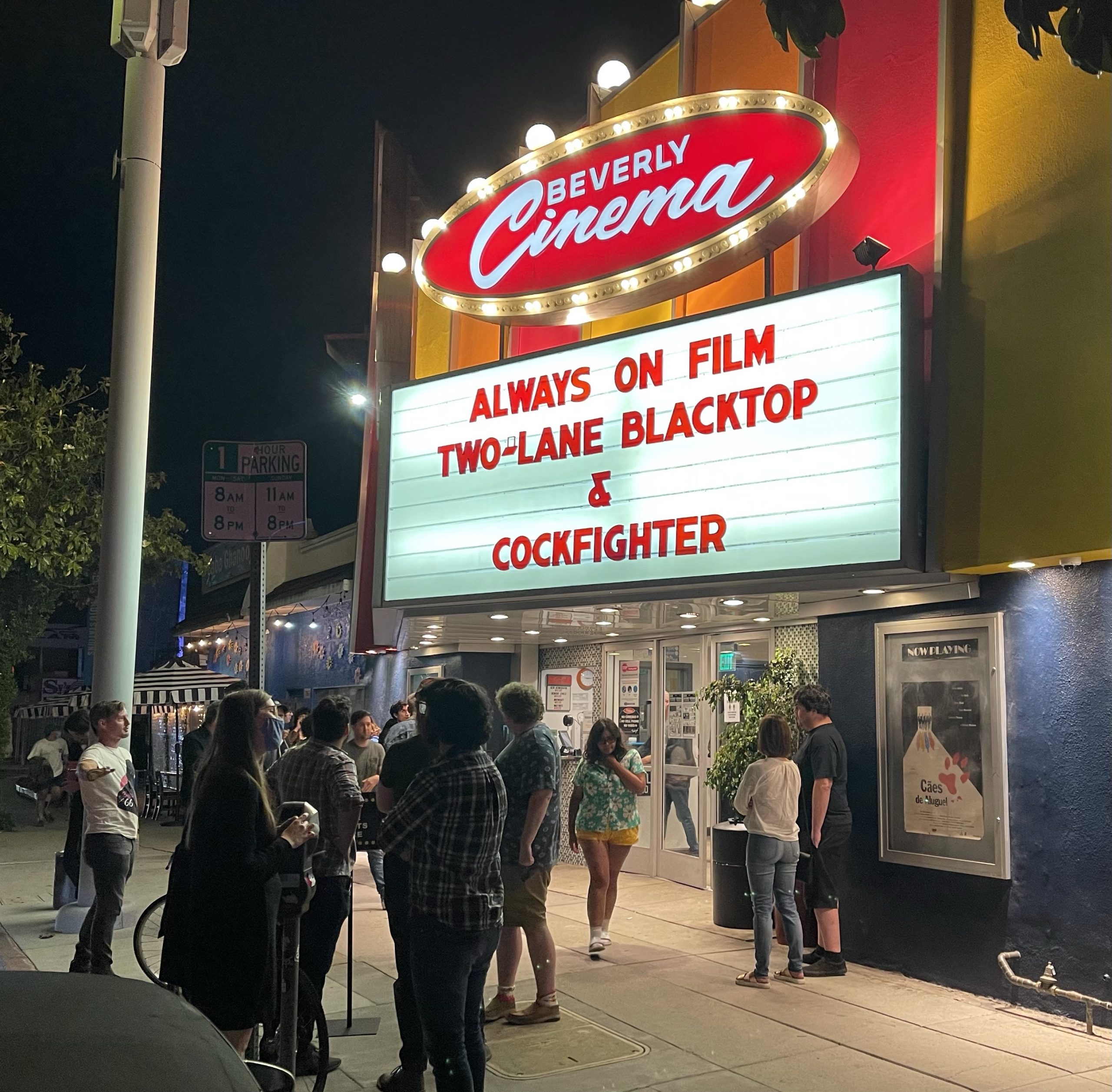
The book, which I bought last night at the New Beverly for $11 and change, is somewhat “better” than the film, to be honest, and the more I read the more I wished that OUATIH had become a ten-part Netflix series, using each and every line in this 400-page novel. Just go for it…just sprawl it all the fuck out.
I was especially taken with a two-page scene between a red-kimono-wearing, half-bombed Rick Dalton and the real Steve McQueen, the latter sitting behind the wheel of his car outside the gate to the Polanski-Tate home and kind of half-dismissing Dalton but at the same time half-listening to him. Then they reminisce how they once played three pool games (okay, two and a half) at Barney’s Beanery back in ’62.
Not in the movie, of course…
I also love a chapter called “The Twinkie Truck” (pgs. 156 to 175). It’s mostly about the adventures, ambitions and psychology of one Charles Manson, who really wanted to be a rich and famous rock star and knew deep down that all of his spiritual guru sermons and posturings were more or less a bullshit side activity.
This is real-deal history according to QT and common knowledge, and it’s fascinating to consider some of the particulars about Manson’s interactions with Dennis Wilson, Terry Melcher, Candice Bergen and Mark Lindsay, and how one night Manson even jammed with Neil Young.
There’s another chapter called “Misadventure”, and it basically focuses on Cliff Booth‘s half-accidental murder of his needling, boozy wife, Billie, with a “shark” gun (whatever the hell that is) and the ins and outs of that episode. Again, you’re asking yourself “why wasn’t some of this material used in the film, and if it couldn’t fit why didn’t Tarantino shoot it anyway and create a 10-hour version down the road?”
Excerpt: “No one really knew for sure if Cliff shot her on purpose. It could have been just a tragic mishandling of diving equipment, which is what Cliff always claimed. But anyone who had ever seen a drunken Billie Booth berate Cliff in public in front of his colleagues didn’t buy that.
“How did Cliff get away with it? Easy — his story was plausible and it couldn’t be disproven. Cliff felt real bad about what he did to Billie. But it never occured to him not to try and get away with murder.”
Excerpt #2, pg. 167, focusing on Sharon Tate: “She liked the bubble-gum hits she heard on KHJ. She liked that song ‘Yummy Yummy Yummy’ and the follow-up song by the same group, ‘Chewy Chewy.’ She liked Bobby Sherman and that ‘Julie’ song. She loved that ‘Snoopy vs. The Red Baron’ song.
Is This Movie Material?

If you were a Netflix, HBO or Showtime exec in charge of adapting real-life news stories into multi-part melodramas, and you knew that your boss was a fan of Ben Stiller‘s Escape at Dannemora (’18), would you try to make the sordid saga of Tina Gonzalez, the Fresno County Jail prison guard who was recently busted and sentenced for having sex with an inmate, into a two-hour drama or limited miniseries?
Stiller’s seven-part series was an emotional tragedy about a real-life prison employee, Joyce Mitchell (Patricia Arquette), who wound up punished and humiliated for having an intimate affair with a Dannemora prison inmate named Richard Matt (Benicio del Toro). As she was in real life, Mitchell is also punished for helping Matt and a fellow inmate, David Sweat (Paul Dano), pull off a daring escape.
The Gonzalez affair didn’t result in a prison break, but her sexual behavior was a little crazier than Mitchell’s. Plus (and this is a significant factor from a crude audience standpoint) the 26 year-old Gonzalez is seriously attractive, and could realistically be played by Selena Gomez or someone in that realm. Which makes Gonzalez’s wild behind-bars activity seem all the more odd, and yet at the same time more interesting.

From the beginning the general consensus was that Mitchell was on the homely, dumpy, overweight side. Unkind New York Post editors took to calling her “Shawskank”. I for one felt sorry for Arquette’s Mitchell — a lonely and unloved woman in a drab, dead-end marriage. Arquette’s performance was highly praised, and she won Best Actress trophies from the Critics Choice members as well as the Hollywood Foreign Press Association.
Here’s how the Fresno Bee‘s Robert Rodriguez reported Tina’s situation on 6.29:
“Tina Gonzalez, a 26 year-old Fresno County correctional officer, was sentenced Tuesday to two years probation and seven months in the county jail for having sex with an inmate.
“Gonzalez was facing up to three years and eight months in prison, but she avoided prison time despite harsh words from her former boss at the jail, Assistant Sheriff Steve McComas.
“McComas said not only did Gonzalez have sex with the inmate, she also supplied him razors [and] gave him inside information about when officers would be inspecting the inmate’s cell.
“Gonzalez allegedly cut a hole in her uniform to make it easier to have sex with the inmate she was involved with. McComas also accused her of having sex inside the jail in full view of 11 inmates. ‘That is something only a depraved mind can come up with,’ McComas said.”
Three Perfect Sentences
“Someone asked me once where I thought my resilience came from. I hesitated, then said, ‘For women, too often, I think what we mistake as resilience is actually just endurance.’ I don’t know if my endurance has served me well. It takes a special kind of endurance to look at the train barreling down the tracks and say, ‘But what if it doesn’t hit me this time?'”
— from Kelly Sundberg‘s “Some People Flip Real Estate — I Flip Men,” posted in the N.Y. Times on 7.2.21.
Early Bird Catches The Worm
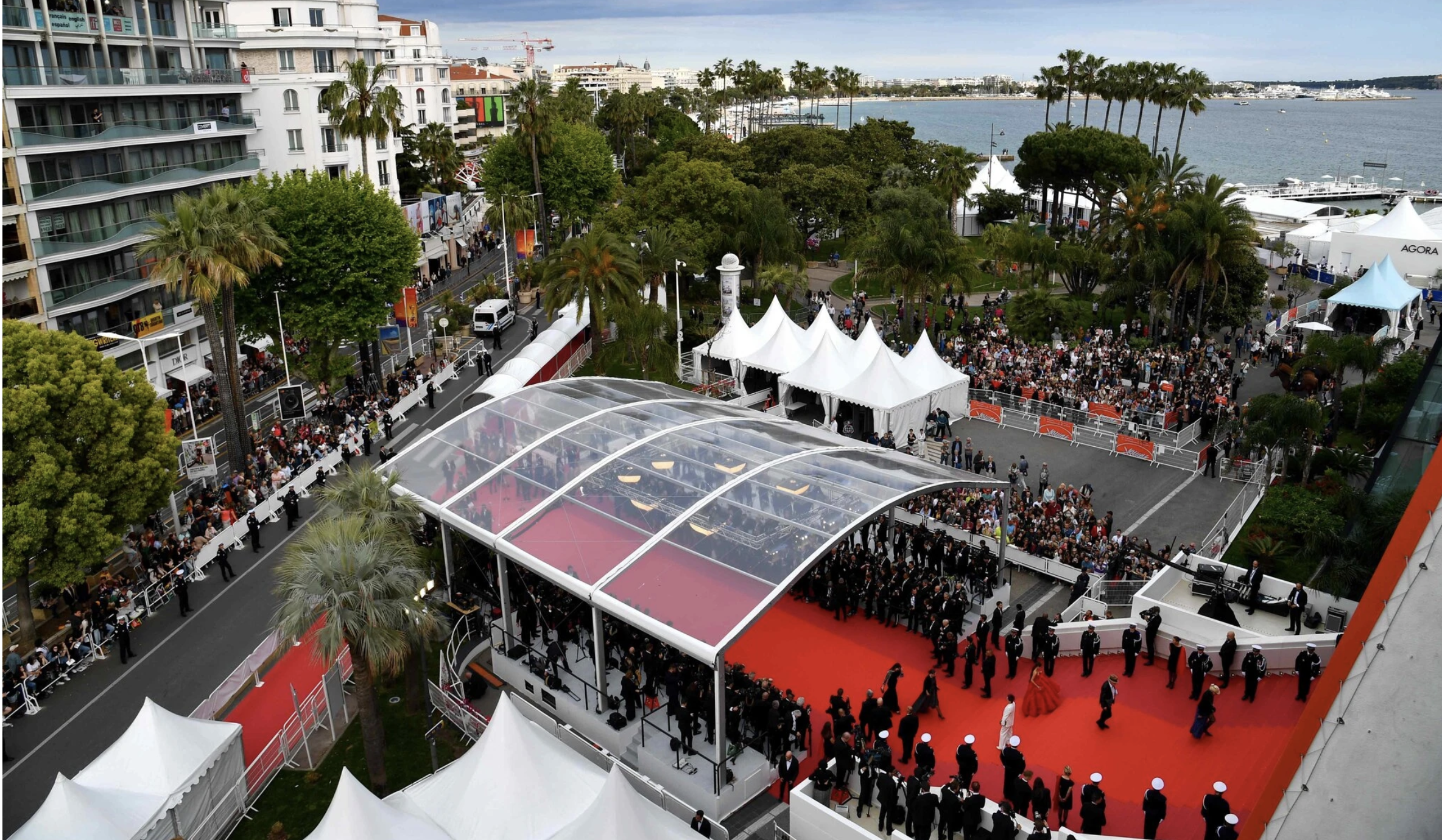
Hollywood Reporter columnist Scott Feinberg has never been one to let grass grow under his feet. The 2021 Cannes Film Festival starts the day after tomorrow — Tuesday, July 6 — and Scott is already shufflin’ up and down the Croisette. That’s because he’s fast on his feet and his middle name is Hopper — hip-hop, hip-hop, hippity-hop, hippity-hop, hippity-hoppity, hippity-hoppity, etc.
If it was my show I’d still be in Paris, man…strollin’ around Montparnasse and through the Jardin du Luxembourg and maybe over to Passy (the Last Tango in Paris building!) and the non-touristy parts of Montmartre, etc. And I’d be there tomorrow (7.5) also, and then I’d catch the Paris-to-Cannes train on Tuesday (7.6) at 7:15 am.
Incidentally: Always pan slowly, and sometimes it works better if you don’t pan at all. Go with a series of static tableaus, blending one into the other.
Back covering Cannes for the 1st time in 8 years! Last time: GATSBY, FRUITVALE & NEBRASKA; Harvey, Toback & Franco; breakouts JLaw & MBJ; legends Redford & Riva. This time: COVID tests/masks; Spike; a lineup with Damon, Cotillard, Baker, Kousmanen & Farhadi; that same great view. pic.twitter.com/Wx0U8sMxam
— Scott Feinberg (@ScottFeinberg) July 4, 2021
Finally Bought A Copy
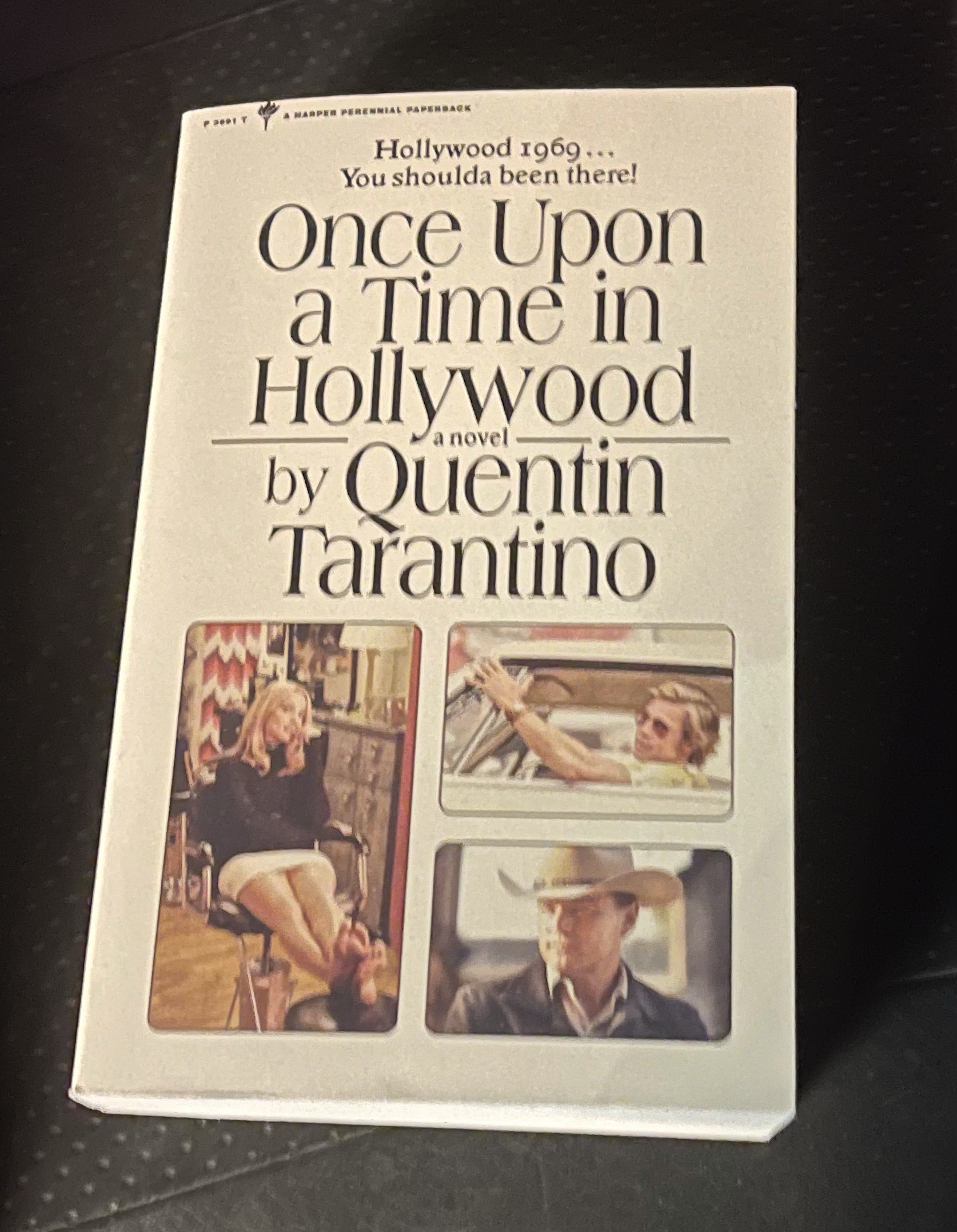
Copies at Amoeba (I’m told, didn’t get there). Book Soup was closed; sold out at Barnes & Noble at The Grove. The NewBev was my last resort…success!
From Dwight Garner’s 6.28 N.Y. Times review:

“Aida” Outpoints “In The Heights”
Seven or eight days ago I mentioned that World of Reel‘s Jordan Ruimy was polling critics on the five best films of 2021. My top five, submitted to Ruimy later that day, were Thomas Anders Jensen’s Riders of Justice, Jasmila Zbanić‘s Quo Vadis, Aida?, Simon Stone‘s The Dig, Phillip Noyce‘s Above Suspicion, and Jon Chu and Lin-Manuel Miranda‘s In The Heights.
I waffled later that night and deleted In The Heights in favor of Michel Franco‘s New Order.
I had a testy conversation with God that night. It was actually more of a threat than a debate. “All I can say is that Ruimy’s critics had better not vote In The Heights into the top slot,” I warned. “That wouldn’t be fair or right. It would be, in fact, hugely depressing, as it would be seen as a sympathetic bro hug from critics who’d approved of Chu and Miranda’s film only to see it dramatically underperform at the box-office and also disappoint as an HBO Max streamer.”
Yesterday Ruimy published the results of his poll, based on the preferences of more than 100 critics, and Quo Vadis, Aida? emerged as the top vote-getter. “Thank God,” I blurted out, although In The Heights polled a close second.
Ruimy: “Jasmila Žbanić’s Quo Vadis, Aida? has been named the best movie of the first six months of 2021. Although it had its world premiere at the Venice Film Festival last September, the film was only released Stateside on March 5th of this year. Tackling the harrowing journey of a Bosnian UN translator torn between family and work as the Serbian army takes over her town, the film earned rave reviews and even managed to garner a Best International Feature Film Oscar nomination.
“The newly installed Oscar eligibility rules made it possible for many critics to include films such as The Father (#7) and Judas and the Black Messiah (#8) into their lists. However, one future Oscar contender that is very much a 2022 movie finished as the runner-up to this poll — John Chu’s In the Heights.”
Penalizing A Pot Smoker Is Racist?
Sha’Carri Richardson, 21, is a legendary track and field sprinter who competes in the 100 meters and 200 meters. She was all set to race in the Tokyo Olympics but now has been banned from this (or at least suspended) because she recently admitted to getting ripped once or twice, and this led to the U.S. Anti-Doping Agency suspending her — obviously a silly and petty ruling on their part, given the overall.
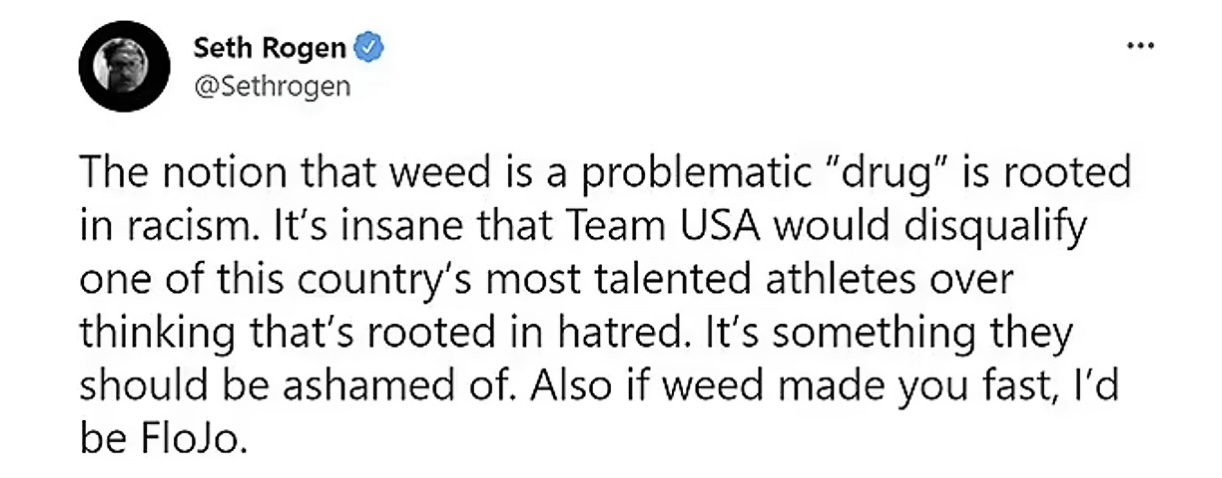
Even stranger, however, was a reaction bv Seth Rogen, to wit: “The notion that weed is a problematic ‘drug’ is rooted in racism,” he declared. “It’s insane that Team USA would disqualify one of this country’s most talented athletes over thinking that’s rooted in hatred. It’s something they should be ashamed of.”
White House press spokesperson Jen Psaki: “We will certainly leave [the U.S. Anti-Doping Agency] the space and room to make their decisions about anti-doping policies that need to be implemented. I will also note that Sha’Carri Richardson is an inspiring young woman[who’s] gone through a lot personally’ and “happens to be one of the fastest women in the world…that’s an important part of the story as well.”
Songs That Improve The Movie
Married journo pally to HE: “We were listening to sounds in the car when up popped a tune from Tom Waits’ score for One From the Heart. I’ve always loved this bluesy/jazzy collaboration with Crystal Gayle, and have long felt that it, along with Curtis Mayfield‘s ‘Superfly,’ may be the finest song composed exclusively for a film….ever, I mean.
“Maybe your readers could have some fun with this? What’s the best song score composed exclusively for a film? Broadway shows and previously recorded works don’t count.”
HE to Married Journo Pally: Excellent topic and thanks for suggesting it, although I’m frankly mystified that you would find Waits and Gayle’s One From The Heart song and especially their performance of it…I’m dumbfounded that you find it captivating.
I’m primarily talking about Waits, a seriously respected and certainly a distinctive song stylist, but he’s always infuriated me — to me he’s always has always sounded like a slurry, drunken, degenerate bullfrog lying in the gutter. And you can never understand a word he’s singing — Waits would rather die than fall into line on that score.
Again — I’m not putting Waits down. Well, I am but at the same time I’m acknowledging that he’s revered by people who know the music realm better than I. If I was smart I’d keep my yap shut about him, but I can’t help it. He always sounds the same and does the same thing every damn time with every lyric and song — same mood, same feeling, same “whoaaagghhh!!…rejoice and soak in the hoarse and gravelly boozer sounds I’m putting out here….like Charles Bukowski I’m a man of the bottle or at least I sound like one, and I tell the truth every damn time.”
I’ve never been that much of a fan of Mayfield’s “Superfly” either — a decent early ’70s AM-radio track but calm down.
My two favorite songs written directly for the screen were created in the early ’80s, and less than three years apart.
#1 is “We Don’t Need Another Hero,” the Tina Turner song from Mad Max: Beyond Thunderdome (’85) — lyrics by Terry Britten and Graham Lyle.
#2 is “Up Where We Belong” from Taylor Hackford‘s An Officer and a Gentleman (’82) — composed by Jack Nitzsche and Buffy Sainte-Marie, lyrics by Will Jennings.
And no, I don’t care if the music snobs put me down for having shallow or banal taste in movie tunes. I recognize and respect the artistry of Tom Waits but I’ve never really liked anything he’s ever performed. Sue me but “Up Where We Belong” and “We Don’t Need Another Hero” are pleasing, arresting — they have a catchy, hook-y quality, and are well produced, and they seem to enhance the value of the films from whence they sprang.
Neither Mad Max Beyond Thunderdome or An Officer and a Gentleman are grade-A films, but…I suppose what I’m actually saying is that the songs are better than the films. They reach in and turn the tumbler.
Say it loud, repeat often: Fuck the snobs.
Oh, and speaking of banal: Bill Conti‘s main-title melody for Broadcast News [after the jump] is about as drippy and whore-ish and old-farty as it gets, but it’s well-produced and it works. I’m sorry but it does.
“Porsche — There Is No Substitute”
Does anyone remember Dave Karnes? Or more precisely Michael Shannon‘s portrayal of Karnes in Oliver Stone‘s World Trade Center (’06)?
Karnes was the ex-Marine who ducked out of his office job in Wilton, Connecticut, and drove into Manhattan on the afternoon of 9/11/01 and made it through police barriers and onto the WTC site by dinner hour, and who later found Port Authority cops John McLoughlin (Nicolas Cage) and Will Jimeno (Michael Pena) buried under the mashed-up rubble, and brought the rescue teams to their aid.
World Trade Center was an odd Stone film because it had nothing to “say” except (1) “McLoughlin and Jimeo sure went through hell that day”, but (2) “thank God for Karnes and his dogged persistence.” No politics, no Hollywood leftie attitude — just a straight drama about a lot of good people pulling together to save a couple of guys from the jaws of death. A movie about caring, family, duty, perseverance.
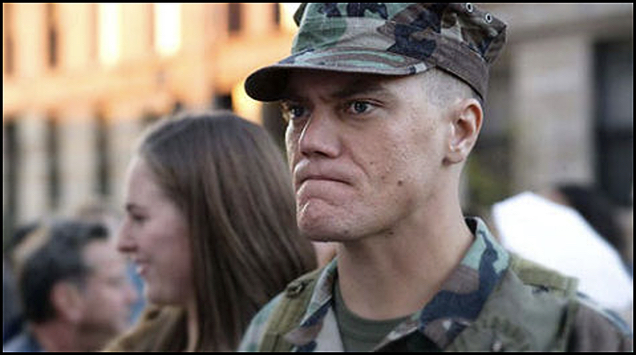
If Karnes hadn’t put on his Marine uniform and gotten himself a Marine haircut at a Stamford barbershop and driven down to Manhattan and all, it’s quite possible McLoughlin and Jimeno might not have survived. (Who knows?) Shannon portrays him as a bit of a nut, but a good kind of nut in a situation like 9/11 — a guy who laser-beams right into what needs to be done, and then does it.
Curiously, Stone decided to omit a character detail that I’ve always found really interesting. Karnes drove into Manhattan in a recently purchased Porsche 911 convertible, and at times, according to a 9.02 Slate story by Rebeca Liss, at speeds of 120 mph.
That’s a fascinating trait for a 9/11 savior — tear-assing down the Connecticut Turnpike and the Henry Hudson Parkway in a muscle car with the top down, and stopping at a McDonald’s along the way.
Why didn’t Stone show this? My theory is that he wanted Karnes to appear selfless and monk-like — a slightly loony military saint. And I think he knew this impression wouldn’t fly with audiences if he had Karnes driving a Porsche 911 because a lot of people think that guys who drive Porsches are dickheads.
But I had read about Karnes and his Porsche two or three years ago and was waiting for that shot. I felt that Stone sold Karnes short by trying to simplify him into a ex-Marine who resembled the real-deal Karnes in some ways but not entirely.
Occipital Intrigues, Part 2
Early this morning I requested streaming access to Oliver Stone‘s JFK Revisited: Through The Looking Glass, which will screen during the about-to-begin 2021 Cannes Film Festival. I just want to be able to see it and write about it concurrent with the Cannes-attending journos…that’s all.
“I’ve been all in on the JFK assassination particulars for decades,” I explained. “But I’m skeptical about the occipital head wound thing. I’m reluctant to accept that so many people could’ve worked so hard to alter the head wound, and none of them had a tearful deathbed confession moment…not a one? But I’m open to the testimony of those Parkland doctors who insisted that they saw a gaping occipital head wound on the stretcher in Emergency Trauma Room #1.”
“But it’s not just the Parkland doctors who saw the gaping hole in the rear of Kennedy’s skull,” I was told by a Stone colleague. “It’s also in the declassified files of the HSCA; there are also just as many witnesses [who saw the same] during the Bethesda autopsy.
“That is what the film focuses on — the declassified files made possible by the Assassination Records Review Board. Which the mainstream media ignored.
HE reply: “I’ve watched many, many interview videos with those Parkland doctors, particularly around the time of the 50th anniversary (i.e., 2013), and not a single interviewer or moderator followed up with an obvious follow-up question, to wit:
“’Nobody’s challenging the accuracy of your first-hand observations,’ they should have been asked, ‘but how do you explain the bizarre lack of ANY visual evidence in the Zapruder and Nix films…why is visual evidence that shows a rear-of-the-head blow-out…why is this supposed evidence completely missing in the Zapruder and Nix films? How do you explain this?”
“One could also mention the fact that LIFE’s Richard Stolley — the man who arranged for LIFE’s purchase of the Z film and who saw the raw Zapruder footage in Dallas right after it came out the lab — it’s surely significant that Stolley never once mentioned any discrepancy between the raw Z film and the various color versions that eventually became ubiquitous after the full Z film was aired by Geraldo Rivera in the late ‘70s.
“Think of all the people who were involved in the alleged alteration of the Z film…those at that alleged CIA secret Kodak lab in Rochester, not to mention Bethesda doctors who took pictures of Kennedy’s head wound during the autopsy, and how they all somehow managed to ignore or cover up the gaping occipital head wound WHILE AT THE SAME TIME creating fake images of the top of the head and right temple wounds…
“Remember also how the blood and cranial brain matter somehow caught the sun’s reflected glare in Dealey Plaza in the Z film and how difficult it would have been to fake this…
“Remember also that Jackie Kennedy’s white-gloved right hand touched the rear of JFK’s head right after the fatal shot and yet her glove wasn’t soaked in blood…
And then imagine the number of people involved in this alleged conspiracy to hide and deceive, and ask why none of them — NOT ONE ALLEGED CONSPIRATOR — blurted out any kind of deathbed confession. People are generally terrible at keeping a secret, especially over a period of several decades. And yet every last photographic conspirator kept their yaps shut for decades on end. EVERY LAST ONE stuck to Moscow Rules to their last dying breath.”
Villains Askew
All screen villains are perverse or flamboyant in one way or another, but it’s fairly rare to run into one with with a truly twisted or offbeat attitude. In an off-handed, no-big-deal, between-the-lines sort of way, I mean. Muddy-souled, less-than-admirable fellows who are both neurotic and a bit moronic. Not “comedic” figures, but dour, compromised souls whose bizarre manner, obsessions and quirks makes them a bit laughable or at least amusing to some extent.
For whatever reason screenwriters, directors and producers don’t seem to like this kind of ne’er-do-well. They seem to prefer hardcore fiends or clumsy criminals in comedies, guys who are so clumsy and unsure of themselves that you can’t regard them as dangerous or threatening. And nothing much in-between.
“Stacy the hitman“, portrayed by Nicky Katt in Steven Soderbergh‘s The Limey, is one such figure. He’s fairly sullen and hostile and always ready to clip someone if the money is right, but there’s something about his smart-ass manner that suggests a less-than-fully-malicious fellow. Something vaguely nihilistic. A guy who doesn’t seem to care all that much about anything.
Peter Ustinov‘s “Lentulus Batiatus“, the gladiator-school owner in Stanley Kubrick‘s Spartacus, is too dry and witty to fit the profile of a proper villain. He is, after all, someone who buys and sells human beings and sends a certain percentage of them to their deaths — obviously an ugly way to make a living. It’s just that Ustinov can’t help being self-effacing and philosophical, and therefore charming.
My favorite in-between villain is Richard Masur‘s Danskin, a grubby, bearded criminal in Karl Reisz’s Who’ll Stop The Rain (’78). A malcontent with an angry streak, Danskin has a contentious relationship with Ray Sharkey’s even more hapless “Smitty”. They both work for Anthony Zerbe‘s Antheil, a crooked narcotics detective who’s looking to abscond with two kilograms of heroin thhat’s been smuggled into the U.S. by Michael Moriarty‘s “John Converse”.
Danskin and Smitty are bottom-of-the-barrel types — foul, compulsive, insensitive — but they occasionally get into back-and-forth bickerings that are fairly hilarious.