“The Matrix: Regurgitations is a fucking ridiculous disaster of a film…that reads like a piece of clumsy fan fiction, written by a sweaty, overweight teenager from 2004…it accomplishes absolutely nothing….never should have been made.”


“The Matrix: Regurgitations is a fucking ridiculous disaster of a film…that reads like a piece of clumsy fan fiction, written by a sweaty, overweight teenager from 2004…it accomplishes absolutely nothing….never should have been made.”
I was diagnosed with Omicron eight days ago and had more or less shed the effects of the virus by last Friday (12.24). The CDC says if I’m triple vaxxed and masked I’m good for roaming around and shopping, etc. I’m now triple bullet-proofed (three stabs + naturally enhanced post-Covid defenses + German genes) — less likely than ever to succumb.




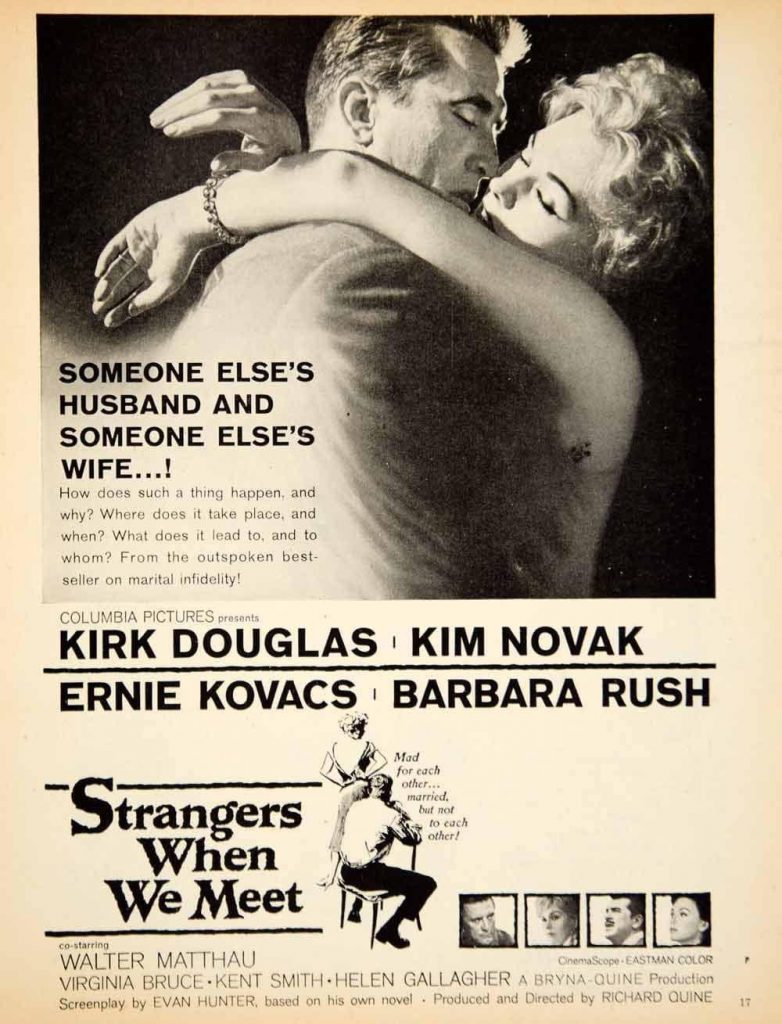

Four years and four months ago, Tobe Hooper died at age 74. There’s no question that Hooper did himself proud with The Texas Chain Saw Massacre (’74), a low-budget slasher thriller that I’ve never liked but have always “respected”. The following Wikipage sentence says it all: “It is credited with originating several elements common in the slasher genre, including the use of power tools as murder weapons and the characterization of the killer as a large, hulking, faceless figure.”
Hooper made a life out of his alleged facility with horror. He career-ed it to the max. But after The Texas Chainsaw Massacre he never struck the motherlode again, not really.
You can’t give Hooper serious credit for Poltergeist, which was mostly directed by Steven Spielberg. And no, I’m not a fan of Lifeforce. If you want to be cruel about it you could call him a feverish, moderately talented fellow who got lucky only once, and that was it. Hooper was tenacious and industrious and always kept going, and of course he dined out on the original Saw for decades. No harm in that.
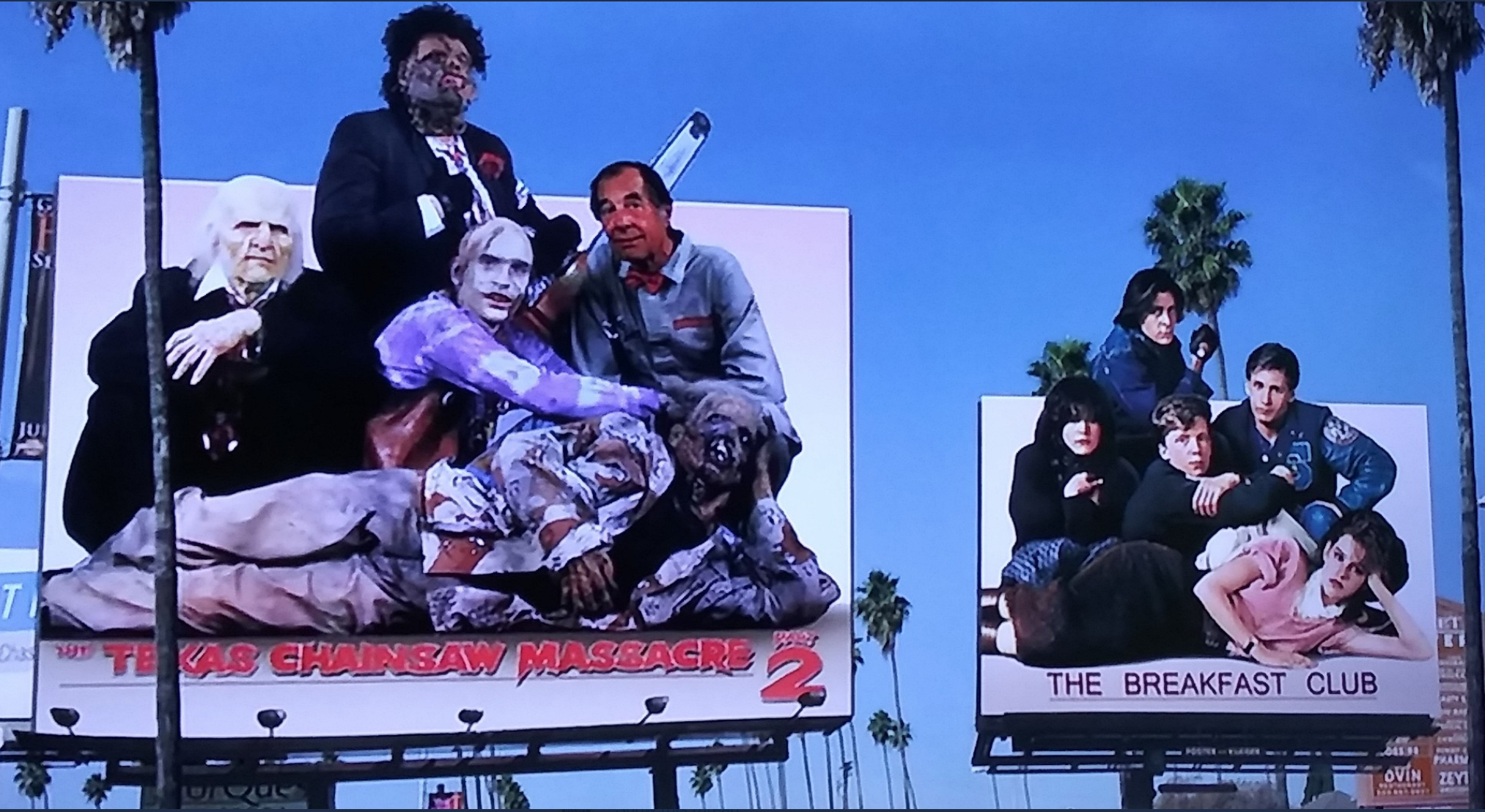
L.M. Kit Carson, the renowned screenwriter, producer and journalist whom I proudly called a friend and ally from ’86 until his passing in 2014, was friendly with Hooper. They shared a Texas heritage and worked together on The Texas Chain Saw Massacre 2 (’86), a misbegotten piece-of-shit sequel that Cannon Films produced and which I, a conflicted Cannon employee at the time, wrote the press notes for.
Carson introduced me to Hooper as a gifted writer who really understood the satirical tone of Carson’s brilliant Saw 2 script. If only Hooper had absorbed it as fully and translated it to the screen with a similar panache.
Here are six things I know or believe about Hooper, based on personal experience.
(1) As editor of The Film Journal, I began hearing in the early summer of ’82 that Hooper hadn’t really directed Poltergeist. Then I ran a freelancer’s interview with Poltergeist producer Kathy Kennedy in which she more or less confirmed that Spielberg had to step in and take charge because of Hooper’s overly deliberative approach to directing. Many articles have since reported or contended that this was the case.
(2) Carson’s screenplay for The Texas Chainsaw Massacre 2 was a total peach — a dry, darkly comedic kill-the-yuppies thing. It was heralded and excerpted in an issue of Film Comment; it might have been Harlan Jacobson who wrote “it’s okay to like it”. Alas, Hooper totally fucked it up. The sly social satire stuff was totally out the window. I was there for the very first in-house screening. The movie was shit.
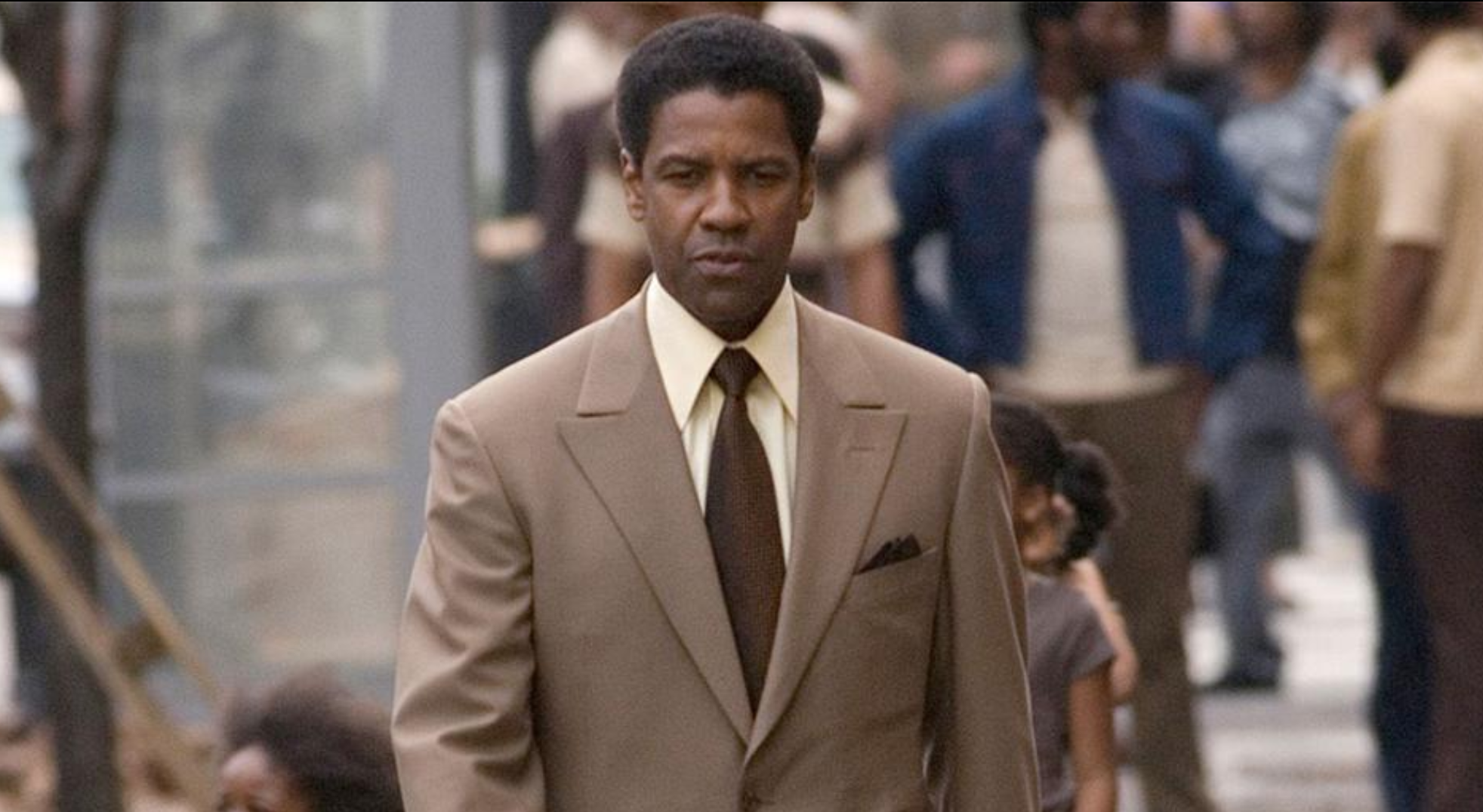
Last night, feeling jazzed about rediscovering Taylor Hackford‘s Proof of Life and realizing it’s a lot better than I’d recalled, I rewatched another violent, crime-related Russell Crowe film from the aughts — Ridley Scott‘s American Gangster (’07).
It remains a sturdy, absorbing, culturally fascinating, Sidney Lumet-like depiction of the rise and fall of heroin importer Frank Lucas (Denzel Washington) and the scrappy, scrupulously honest detective, Richie Roberts (Crowe), who eventually busted and prosecuted Lucas in ’75 and ’76.
AG opened 14 years ago, and plays just as grippingly as ever — no diminishment, constantly engaging, stepped in the lore of Harlem and North Jersey. And my God, Denzel (52 during filming, now 67) looks so young! Younger, in fact, than he did in Spike Lee‘s Inside Man (’06). And what a murderer’s row of African American (or African British) players — Chiwetel Ejiofor, RZA, Cuba Gooding Jr., Joe Morton, Idris Elba, Common, the late Clarence Williams III, Ruby Dee, Roger Guenveur Smith, Malcolm Goodwin.
I was struck again by how satisfyingly well made this film is, as good in its own New York City way (the clutter and crap of the streets, high on those uptown fumes) as Lumet’s Prince of the City (’81).
One reason it plays so well, I was telling myself last night, is that big-studio movies, free from the influence of the superhero plague that was just around the corner in ’06, were generally a lot better in the aughts than they are now. 2007, remember, was one of the great all-time years.
Incidentally: I’ve never watched the 176-minute “Unrated Extended Edition” of American Gangster. Has anyone?
…for the coming Democratic Party apocalypse is the anti–meritocracy education thing (i.e., deliberately lowering standards to make things more accessible for students of color). Instructing students about the history of American racism is a vital and necessary thing, but telling parents of smart or otherwise gifted students that merit and scholastic aptitude have no value or place in today’s system because we need to give less advantaged kids more of a chance…this + “parents need to butt out of this as their concerns are imaginary plus professional educators know best”…that is a FUCKING DEATH BOMB.
An excerpt from a 12.28 Matt Taibbi article titled “The Democrats Education Lunacies Will Bring Back Trump”:


…and in so doing proclaim your hyper–sensitivity and woke assholery for the benefit of all your social media pallies. I’ve half a mind to drive to Westwood to pay to see Paul Thomas Anderson’s modest and meandering period dramedy again, as a way of saying “many of us hear you, MANAA homies…we get what you’re saying, but PTA was being honest to the period, you see, and his refusal to follow the presentism crowd is an honorable thing.”